Anti bacterial agent
quinolones
Presented by: Zeel Mevada
(192280825005)
M.PHARM sem-II
Dept. Of Pharmacology
Content:
Introduction
Mechanism of action
Classification
Pharmacokinetics
Uses
ADR
Newer agent
2
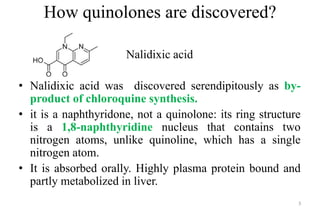
How quinolones are discovered?
3
Nalidixic acid
• Nalidixic acid was discovered serendipitously as by-
product of chloroquine synthesis.
• it is a naphthyridone, not a quinolone: its ring structure
is a 1,8-naphthyridine nucleus that contains two
nitrogen atoms, unlike quinoline, which has a single
nitrogen atom.
• It is absorbed orally. Highly plasma protein bound and
partly metabolized in liver.
Adverse effects
• These are relatively infrequent, consist mostly of g.i. upset
and rashes.
• Most important toxicity is neurological—head- ache,
drowsiness, vertigo, visual disturbances, occasionally
seizures (especially in children).
• Phototoxicity is rare. Individuals with G-6-PD deficiency
may develop haemolysis.
• Nalidixic acid is contraindicated in infants.
4
Spectrum of activity
• It is active against gram-negative bacteria, especially
coliforms: E. coli, Proteus, Klebsiella, Enterobacter,
Shigella but not Pseudomonas.
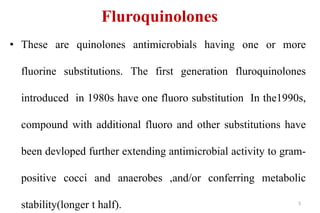
Fluroquinolones
• These are quinolones antimicrobials having one or more
fluorine substitutions. The first generation fluroquinolones
introduced in 1980s have one fluoro substitution In the1990s,
compound with additional fluoro and other substitutions have
been devloped further extending antimicrobial activity to gram-
positive cocci and anaerobes ,and/or conferring metabolic
stability(longer t half). 5
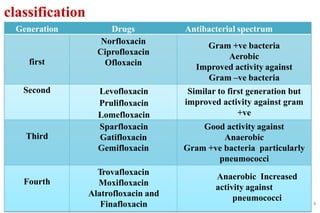
classification
Generation Drugs Antibacterial spectrum
first
Norfloxacin
Ciprofloxacin
Ofloxacin
Gram +ve bacteria
Aerobic
Improved activity against
Gram –ve bacteria
Second Levofloxacin
Prulifloxacin
Lomefloxacin
Similar to first generation but
improved activity against gram
+ve
Third
Sparfloxacin
Gatifloxacin
Gemifloxacin
Good activity against
Anaerobic
Gram +ve bacteria particularly
pneumococci
Fourth
Trovafloxacin
Moxifloxacin
Alatrofloxacin and
Finafloxacin
Anaerobic Increased
activity against
pneumococci 6
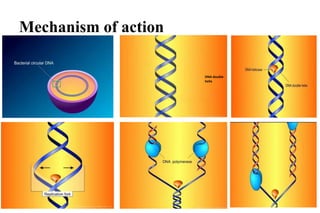
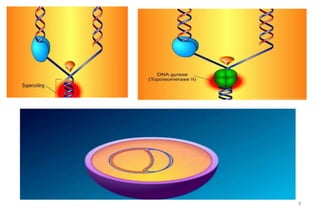
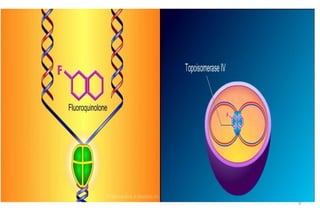
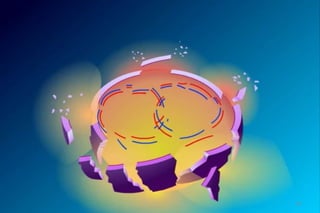
Mechanism of action
7
DNA double
helix
8
9
10
Mechanism of resistance
11
• resistance to fluoroquinolones is by
spontaneously occuring mutations in
chromosomal genes that alter the target
enzymes (DNA gyrase and
topoisomerase IV) or both .
• Enterococcus, Streptococcus Some
Enterobacteriaceae,Pseudomonas
aeruginosa,Bacteroside fragilis
• Show resistance through modification
of porin channel and by devlopment of
efflux mechanism .
• All these modes of resistance are
chromosamally mediated.
FIRST GENERATION
FLUROQUINOLONES
Examples: Norfloxacin ,Ciprofloxacin ,Ofloxacin
Pharmacokinetics:
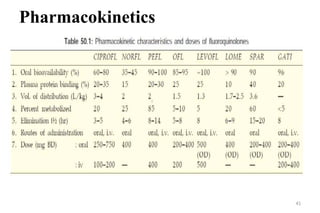
• Oral bioavailabity ranges from 80-90% except norfloxacin(30-
35%)
• Plasma protein binding –20-40%(high tissue penetration) and
get concentrated in mucosal tissue of GIT,genitourinary tract&
respiratory tract; in prostate, lungs, heart and macrophages .
• Can cross placental barrier & concentrate in amniotic fluid.
• Metabolized in liver and eliminated via kidney
• Half life 3-5hrs(norfloxacin) 8-10hrs (pefloxacin)
12
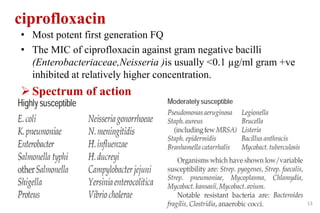
ciprofloxacin
• Most potent first generation FQ
• The MIC of ciprofloxacin against gram negative bacilli
(Enterobacteriaceae,Neisseria )is usually <0.1 µg/ml gram +ve
inhibited at relatively higher concentration.
Spectrum of action
13
Pharmacokinetics:
• Rapidly absorbed orally but food delays absorption,
• First pass metabolism occurs.
• Good tissue penetration permiability :concentration in lungs, sputum,
muscle, prostate and phagocytes exceeds that in plasma, but CSF and
aqueous levels are lower .
• Excreted in urine, both by glomerular filtration and tubular secretion
14
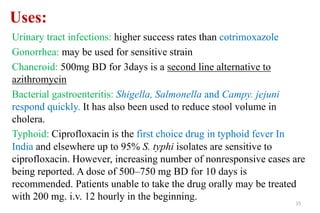
Uses:
Urinary tract infections: higher success rates than cotrimoxazole
Gonorrhea: may be used for sensitive strain
Chancroid: 500mg BD for 3days is a second line alternative to
azithromycin
Bacterial gastroenteritis: Shigella, Salmonella and Campy. jejuni
respond quickly. It has also been used to reduce stool volume in
cholera.
Typhoid: Ciprofloxacin is the first choice drug in typhoid fever In
India and elsewhere up to 95% S. typhi isolates are sensitive to
ciprofloxacin. However, increasing number of nonresponsive cases are
being reported. A dose of 500–750 mg BD for 10 days is
recommended. Patients unable to take the drug orally may be treated
with 200 mg. i.v. 12 hourly in the beginning.
15
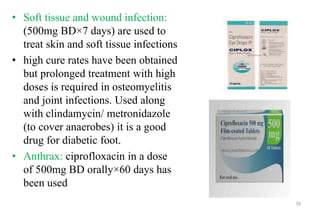
• Soft tissue and wound infection:
(500mg BD×7 days) are used to
treat skin and soft tissue infections
• high cure rates have been obtained
but prolonged treatment with high
doses is required in osteomyelitis
and joint infections. Used along
with clindamycin/ metronidazole
(to cover anaerobes) it is a good
drug for diabetic foot.
• Anthrax: ciprofloxacin in a dose
of 500mg BD orally×60 days has
been used
16
Respiratory infection
• Should Not be used primarily but it can treat mycoplasma,
legionella, H.influenza and some streptococcal and
pneumococcal infections besides gram negetive ones.
• Several newer FQs are used for pneumonias and chronic
bronchitis.
17
Tuberculosis:
• It is a second line drug which can be used as a component of
combination chemotherapy against multidrug resistant
tuberculosis.
meningitis:
• Though penetration of CSF is not very good but
ciprofloxacin is successfully used in gram-negative bacterial
meningitis, especially that occurring in
immunocompromised patients or those with CSF shunts.
18
Adverse effects:
• Ciprofloxacin has good safety record: side effects occur in ~10%
patients, but are generally mild; withdrawal is needed only in.5%.
• Gastrointestinal: nausea, vomiting, bad taste, anorexia. Because gut
anaerobes are not affected-- diarrhoea is infrequent.
• CNS: dizziness, headache, restlessness, anxiety, insomnia,
impairment of concentration and dexterity (caution while driving),
tremor. Seizures are rare, occur only at high doses or when
predisposing factors are present: possibly reflect GABA antagonistic
action of FQs.
• Skin/hypersensitivity: rash, pruritus, photosensitivity, urticarial,
swelling of lips, etc. Serious cutaneous reactions are rare.
• • Tendonitis and tendon rupture: a few cases have been reported.
• Ciprofloxacin and other FQs are contraindicated during pregnancy
19
interaction
• Plasma concentration of theophylline, caffeine and warfarin are
increased by ciprofloxacin (also by norfloxacin and pefloxacin)
due to inhibition of metabolism: toxicity of these drugs can
occur.
• NSAIDs may enhance the CNS toxicity of FQs; seizures are
reported.
• Antacids, sucralfate and iron salts given concurrently reduce
absorption of FQs.
20
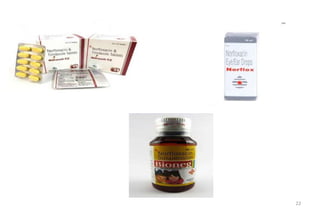
Norfloxacin
• Less potent than ciprofloxacin short half life(3-5hrs)
• It is not used to treat systemic infections because of its poor
bioavailability .(30-35%)
• Primarily used for urinary ,genital and GIT infections, given
for 8-12 weeks .
• Unchanged drug as well as metabolites are exctred in urine.
• It is also good for bacterial diarrhoeas, because high
concentations are present in the gut and normal gut flora is
not disturbed
• It attains lower concentrations in tissues which are non
theraputics
21
22
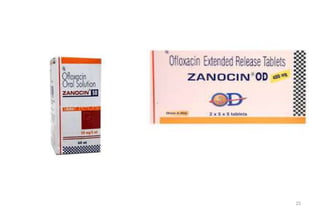
Ofloxacin
• This FQ is intermediate between ciprofloxacin and norfloxacin
in activity against gram-negative bacteria, but it is comparable
to or
• more potent than ciprofloxacin for gram-positive organisms
and certain anaerobes.
• Good activity against Chlamydia and Mycoplasma has been
noted: it is an alternative drug for nonspecific urethritis,
cervicitis and atypical pneumonia.
• It also inhibits M. tuberculosis; can be used in place of
ciprofloxacin. It is highly active against M.leprae: is being used
in alternative multidrug therapy regimens
23
24
pharmacokinetics
Ofloxacin is relatively lipid soluble; oral bioavailability is high:
attains higher plasma concentrations. Food does not interfere
with its absorption. It is excreted largely unchanged in
urine; dose needs to be reduced in renal failure.
Uses:
Ofloxacin is comparable to ciprofloxacin in the therapy of
systemic and mixed infections. It is particularly suitable for
chronic bronchitis and other respiratory or ENT infections.
Gonorrhoea caused by FQs sensitive strain has been treated with
a single 200-400 mg dose. It is also useful in chlamydia
urethritisas an alternative drug.
25
Second generation
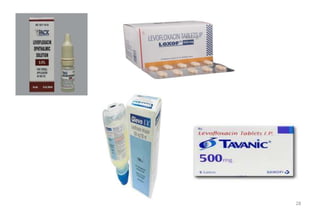
Levofloxacin
• It is the active levo isomer of Ofloxacin having improved
activity against Strep.pneumoniae and some other gram-
positive and gram-negative
bacteria(Pseudomonas,legionella,Proteusand Moraxella
catarrhalis).atypical pathogen(Chlamydia,Mycoplasma)
26
Pharmacokinetics:
Oral bioavailability of levofloxacin is nearly 95-100% Hence
their I.V. doses are similar
Protein binding is poor(30-45%) hence wider distribution in
body fluids and tissues but CSF penetration is poor
Longer half lives:8hrs(permits once daily dosing)
Primary route of elimination of these drugs is renal (excreted
unchanged)
27
28
Lomefloxacin
• It is second generation difluorinated quinolone
• Equal in activity to ciprofloxacin but more active against
some gram-negative bacteria and chlamydia.
• Because of longer t1/2 and persistance in tissues, it is
suitable for single administration.
ADR
 Q-T prolongation
 Higher incidence of phtotoxivity( drug is withdrawn)
29
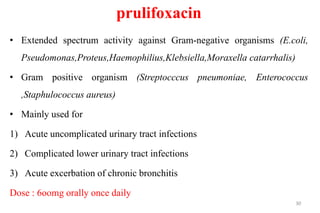
prulifoxacin
• Extended spectrum activity against Gram-negative organisms (E.coli,
Pseudomonas,Proteus,Haemophilius,Klebsiella,Moraxella catarrhalis)
• Gram positive organism (Streptocccus pneumoniae, Enterococcus
,Staphulococcus aureus)
• Mainly used for
1) Acute uncomplicated urinary tract infections
2) Complicated lower urinary tract infections
3) Acute excerbation of chronic bronchitis
Dose : 6oomg orally once daily
30
ADR
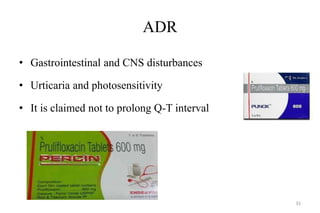
• Gastrointestinal and CNS disturbances
• Urticaria and photosensitivity
• It is claimed not to prolong Q-T interval
31
Third generation
• Sparfloxacin
• The drug exhibits enhanced activity against gram positive
bacteria ((Streptocccus pneumoniae, Enterococcus,
Staphulococcus) bacterioids fragilis, other anaerobes and
mycobacterium
• pharmacokinetics:
• Readily absorbed from the GIT after oral Administration with
an nearly absolute bioavailability.
• Widely distibuted in body fluid with minimal plasma protein
binding
• Longer half life ~18hrs
32
Uses:
• Its main inidication includes pneumonia,excerbation of chronic
bronchitis ,sinusitis and other ENT infections
• ADR:
• Frequent phototoxic reactions(5%)
• Cardiotoxicitiy : QT prolongation(3%)
• Fatal arrhythmias have occurred in patient taking other QT
prolonging drugs concurrently
• It has been discontinued in many countries including USA
• Dose 200-400mg OD oral. 33
Gatifloxacin
• Higher affinity for bacterial topoisomerase
• Was frequently used for gram positive coccal(mainly respiratory
and ENT) infections.
• Pharmacokinetics is same as sparfloxacin
• Side effects includes phototoxicity, and unpredictable
hypoglycemia, because of which it was discontinued in most
countries and has been banned in INDIA since march 2011
34
Gemifloxacin
• Another broad spectrum FQ, active mainly against aerobic gram
positive bacteria, especially Strep.pneumoniae,
H.influenzae,Moraxella, Mycoplasma pneumoniae,Klebsiealla
includind some multidrug resistant strains. Some anaerobes are
also inhibited.
• Pharmacokinetics: rapidly absorbed from GIT. Undergo
limited metabolism, and is excreted in urine as well as faeces,
both as unchanged and metabolites.
35
Side effects:
• Diarrhoea, nausea headache dizziness and rise in serum
amino-transferases
• Skin rashes are more common
• It can enhance warfarin effect,and carries the risk of
additive Q-T prolongation
• Causes Hypo as well as Hyper glycaemia(hence withdrawn
from market)
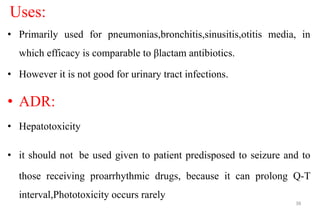
• Doses 320mg OD for 5-7 days
36
moxifloxacin
• Long acting FQ with higher activity against Str,pneumoniae,other
gram positive bacteria including βlactam/ macrolide resistant ones and
some anaerobes
• Most potent FQ against M.tuberculosis
• Pharmacokinetics
• Orally well absorbed bioavailability is 90-92%
• Primarily metabolized by liver via phaseII conjugation
• Elimination half life are longer(12-15 hrs.) allowing once daily dosing
37
Uses:
• Primarily used for pneumonias,bronchitis,sinusitis,otitis media, in
which efficacy is comparable to βlactam antibiotics.
• However it is not good for urinary tract infections.
• ADR:
• Hepatotoxicity
• it should not be used given to patient predisposed to seizure and to
those receiving proarrhythmic drugs, because it can prolong Q-T
interval,Phototoxicity occurs rarely
38
39
Trovafloxacin:
Spectrum of activity is similar to moxifloxacin
Oral bioavailability is 80-90% metabolized by liver
Half life: 10-12hrs
Due to the hepatotoxicity it’s use has been banned
40
Pharmacokinetics
41
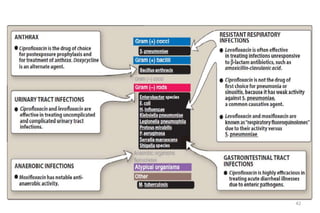
42
Newer agents
43
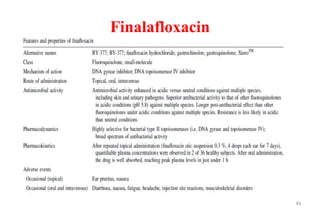
Finalafloxacin
• developed MerLion Pharmaceuticals(2015) to treat serious
bacterial infections associated with an acidic environment,
including urinary tract infections (UTIs) and Helicobacter
pylori infections
44
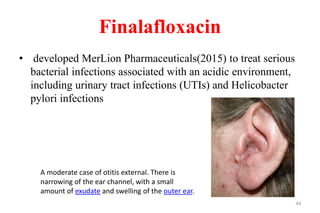
A moderate case of otitis external. There is
narrowing of the ear channel, with a small
amount of exudate and swelling of the outer ear.
Finalafloxacin
45
Delafloxacin(June 2017 )
• Delafloxacin was developed by Melinta Therapeutics
• Delafloxacin is used to treat acute bacterial skin and skin
structure infections caused by designated susceptible bacteria.
• Susceptible bacteria are:
• Gram-positive organisms: Staphylococcus aureus (including
methicillin-resistant [MRSA] and methicillin-susceptible
[MSSA] isolates), Staphylococcus haemolyticus, Staphylococcus
lugdunensis, Streptococcus agalactiae, Streptococcus
anginosus group, Streptococcus pyogenes, and Enterococcus
faecalis
• Gram-negative organisms: Escherichia coli, Enterobacter
cloacae, Klebsiella pneumoniae, and Pseudomonas aeruginosa.
46
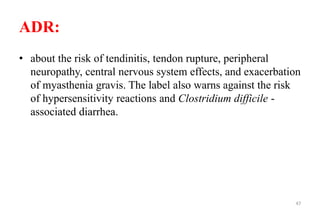
ADR:
• about the risk of tendinitis, tendon rupture, peripheral
neuropathy, central nervous system effects, and exacerbation
of myasthenia gravis. The label also warns against the risk
of hypersensitivity reactions and Clostridium difficile -
associated diarrhea.
47
reference
• “principle of pharmacology” by HL Sharma ,KK Sharma
2nd edition PARAS publication
• “Essentials of Medical Pharmacology” by KD Tripathi,7th
edition,Jaypee brothers publication
• https://youtu.be/IkKZ_gxAOXI
• McKeage K. Finafloxacin: first global approval. Drugs.
2015 Apr 1;75(6):687-93.
48
49
THANK

Quinolones and fluroquinolones

  • 1.
    Anti bacterial agent quinolones Presentedby: Zeel Mevada (192280825005) M.PHARM sem-II Dept. Of Pharmacology
  • 2.
  • 3.
    How quinolones arediscovered? 3 Nalidixic acid • Nalidixic acid was discovered serendipitously as by- product of chloroquine synthesis. • it is a naphthyridone, not a quinolone: its ring structure is a 1,8-naphthyridine nucleus that contains two nitrogen atoms, unlike quinoline, which has a single nitrogen atom. • It is absorbed orally. Highly plasma protein bound and partly metabolized in liver.
  • 4.
    Adverse effects • Theseare relatively infrequent, consist mostly of g.i. upset and rashes. • Most important toxicity is neurological—head- ache, drowsiness, vertigo, visual disturbances, occasionally seizures (especially in children). • Phototoxicity is rare. Individuals with G-6-PD deficiency may develop haemolysis. • Nalidixic acid is contraindicated in infants. 4 Spectrum of activity • It is active against gram-negative bacteria, especially coliforms: E. coli, Proteus, Klebsiella, Enterobacter, Shigella but not Pseudomonas.
  • 5.
    Fluroquinolones • These arequinolones antimicrobials having one or more fluorine substitutions. The first generation fluroquinolones introduced in 1980s have one fluoro substitution In the1990s, compound with additional fluoro and other substitutions have been devloped further extending antimicrobial activity to gram- positive cocci and anaerobes ,and/or conferring metabolic stability(longer t half). 5
  • 6.
    classification Generation Drugs Antibacterialspectrum first Norfloxacin Ciprofloxacin Ofloxacin Gram +ve bacteria Aerobic Improved activity against Gram –ve bacteria Second Levofloxacin Prulifloxacin Lomefloxacin Similar to first generation but improved activity against gram +ve Third Sparfloxacin Gatifloxacin Gemifloxacin Good activity against Anaerobic Gram +ve bacteria particularly pneumococci Fourth Trovafloxacin Moxifloxacin Alatrofloxacin and Finafloxacin Anaerobic Increased activity against pneumococci 6
  • 7.
  • 8.
  • 9.
  • 10.
  • 11.
    Mechanism of resistance 11 •resistance to fluoroquinolones is by spontaneously occuring mutations in chromosomal genes that alter the target enzymes (DNA gyrase and topoisomerase IV) or both . • Enterococcus, Streptococcus Some Enterobacteriaceae,Pseudomonas aeruginosa,Bacteroside fragilis • Show resistance through modification of porin channel and by devlopment of efflux mechanism . • All these modes of resistance are chromosamally mediated.
  • 12.
    FIRST GENERATION FLUROQUINOLONES Examples: Norfloxacin,Ciprofloxacin ,Ofloxacin Pharmacokinetics: • Oral bioavailabity ranges from 80-90% except norfloxacin(30- 35%) • Plasma protein binding –20-40%(high tissue penetration) and get concentrated in mucosal tissue of GIT,genitourinary tract& respiratory tract; in prostate, lungs, heart and macrophages . • Can cross placental barrier & concentrate in amniotic fluid. • Metabolized in liver and eliminated via kidney • Half life 3-5hrs(norfloxacin) 8-10hrs (pefloxacin) 12
  • 13.
    ciprofloxacin • Most potentfirst generation FQ • The MIC of ciprofloxacin against gram negative bacilli (Enterobacteriaceae,Neisseria )is usually <0.1 µg/ml gram +ve inhibited at relatively higher concentration. Spectrum of action 13
  • 14.
    Pharmacokinetics: • Rapidly absorbedorally but food delays absorption, • First pass metabolism occurs. • Good tissue penetration permiability :concentration in lungs, sputum, muscle, prostate and phagocytes exceeds that in plasma, but CSF and aqueous levels are lower . • Excreted in urine, both by glomerular filtration and tubular secretion 14
  • 15.
    Uses: Urinary tract infections:higher success rates than cotrimoxazole Gonorrhea: may be used for sensitive strain Chancroid: 500mg BD for 3days is a second line alternative to azithromycin Bacterial gastroenteritis: Shigella, Salmonella and Campy. jejuni respond quickly. It has also been used to reduce stool volume in cholera. Typhoid: Ciprofloxacin is the first choice drug in typhoid fever In India and elsewhere up to 95% S. typhi isolates are sensitive to ciprofloxacin. However, increasing number of nonresponsive cases are being reported. A dose of 500–750 mg BD for 10 days is recommended. Patients unable to take the drug orally may be treated with 200 mg. i.v. 12 hourly in the beginning. 15
  • 16.
    • Soft tissueand wound infection: (500mg BD×7 days) are used to treat skin and soft tissue infections • high cure rates have been obtained but prolonged treatment with high doses is required in osteomyelitis and joint infections. Used along with clindamycin/ metronidazole (to cover anaerobes) it is a good drug for diabetic foot. • Anthrax: ciprofloxacin in a dose of 500mg BD orally×60 days has been used 16
  • 17.
    Respiratory infection • ShouldNot be used primarily but it can treat mycoplasma, legionella, H.influenza and some streptococcal and pneumococcal infections besides gram negetive ones. • Several newer FQs are used for pneumonias and chronic bronchitis. 17
  • 18.
    Tuberculosis: • It isa second line drug which can be used as a component of combination chemotherapy against multidrug resistant tuberculosis. meningitis: • Though penetration of CSF is not very good but ciprofloxacin is successfully used in gram-negative bacterial meningitis, especially that occurring in immunocompromised patients or those with CSF shunts. 18
  • 19.
    Adverse effects: • Ciprofloxacinhas good safety record: side effects occur in ~10% patients, but are generally mild; withdrawal is needed only in.5%. • Gastrointestinal: nausea, vomiting, bad taste, anorexia. Because gut anaerobes are not affected-- diarrhoea is infrequent. • CNS: dizziness, headache, restlessness, anxiety, insomnia, impairment of concentration and dexterity (caution while driving), tremor. Seizures are rare, occur only at high doses or when predisposing factors are present: possibly reflect GABA antagonistic action of FQs. • Skin/hypersensitivity: rash, pruritus, photosensitivity, urticarial, swelling of lips, etc. Serious cutaneous reactions are rare. • • Tendonitis and tendon rupture: a few cases have been reported. • Ciprofloxacin and other FQs are contraindicated during pregnancy 19
  • 20.
    interaction • Plasma concentrationof theophylline, caffeine and warfarin are increased by ciprofloxacin (also by norfloxacin and pefloxacin) due to inhibition of metabolism: toxicity of these drugs can occur. • NSAIDs may enhance the CNS toxicity of FQs; seizures are reported. • Antacids, sucralfate and iron salts given concurrently reduce absorption of FQs. 20
  • 21.
    Norfloxacin • Less potentthan ciprofloxacin short half life(3-5hrs) • It is not used to treat systemic infections because of its poor bioavailability .(30-35%) • Primarily used for urinary ,genital and GIT infections, given for 8-12 weeks . • Unchanged drug as well as metabolites are exctred in urine. • It is also good for bacterial diarrhoeas, because high concentations are present in the gut and normal gut flora is not disturbed • It attains lower concentrations in tissues which are non theraputics 21
  • 22.
  • 23.
    Ofloxacin • This FQis intermediate between ciprofloxacin and norfloxacin in activity against gram-negative bacteria, but it is comparable to or • more potent than ciprofloxacin for gram-positive organisms and certain anaerobes. • Good activity against Chlamydia and Mycoplasma has been noted: it is an alternative drug for nonspecific urethritis, cervicitis and atypical pneumonia. • It also inhibits M. tuberculosis; can be used in place of ciprofloxacin. It is highly active against M.leprae: is being used in alternative multidrug therapy regimens 23
  • 24.
    24 pharmacokinetics Ofloxacin is relativelylipid soluble; oral bioavailability is high: attains higher plasma concentrations. Food does not interfere with its absorption. It is excreted largely unchanged in urine; dose needs to be reduced in renal failure. Uses: Ofloxacin is comparable to ciprofloxacin in the therapy of systemic and mixed infections. It is particularly suitable for chronic bronchitis and other respiratory or ENT infections. Gonorrhoea caused by FQs sensitive strain has been treated with a single 200-400 mg dose. It is also useful in chlamydia urethritisas an alternative drug.
  • 25.
  • 26.
    Second generation Levofloxacin • Itis the active levo isomer of Ofloxacin having improved activity against Strep.pneumoniae and some other gram- positive and gram-negative bacteria(Pseudomonas,legionella,Proteusand Moraxella catarrhalis).atypical pathogen(Chlamydia,Mycoplasma) 26
  • 27.
    Pharmacokinetics: Oral bioavailability oflevofloxacin is nearly 95-100% Hence their I.V. doses are similar Protein binding is poor(30-45%) hence wider distribution in body fluids and tissues but CSF penetration is poor Longer half lives:8hrs(permits once daily dosing) Primary route of elimination of these drugs is renal (excreted unchanged) 27
  • 28.
  • 29.
    Lomefloxacin • It issecond generation difluorinated quinolone • Equal in activity to ciprofloxacin but more active against some gram-negative bacteria and chlamydia. • Because of longer t1/2 and persistance in tissues, it is suitable for single administration. ADR  Q-T prolongation  Higher incidence of phtotoxivity( drug is withdrawn) 29
  • 30.
    prulifoxacin • Extended spectrumactivity against Gram-negative organisms (E.coli, Pseudomonas,Proteus,Haemophilius,Klebsiella,Moraxella catarrhalis) • Gram positive organism (Streptocccus pneumoniae, Enterococcus ,Staphulococcus aureus) • Mainly used for 1) Acute uncomplicated urinary tract infections 2) Complicated lower urinary tract infections 3) Acute excerbation of chronic bronchitis Dose : 6oomg orally once daily 30
  • 31.
    ADR • Gastrointestinal andCNS disturbances • Urticaria and photosensitivity • It is claimed not to prolong Q-T interval 31
  • 32.
    Third generation • Sparfloxacin •The drug exhibits enhanced activity against gram positive bacteria ((Streptocccus pneumoniae, Enterococcus, Staphulococcus) bacterioids fragilis, other anaerobes and mycobacterium • pharmacokinetics: • Readily absorbed from the GIT after oral Administration with an nearly absolute bioavailability. • Widely distibuted in body fluid with minimal plasma protein binding • Longer half life ~18hrs 32
  • 33.
    Uses: • Its maininidication includes pneumonia,excerbation of chronic bronchitis ,sinusitis and other ENT infections • ADR: • Frequent phototoxic reactions(5%) • Cardiotoxicitiy : QT prolongation(3%) • Fatal arrhythmias have occurred in patient taking other QT prolonging drugs concurrently • It has been discontinued in many countries including USA • Dose 200-400mg OD oral. 33
  • 34.
    Gatifloxacin • Higher affinityfor bacterial topoisomerase • Was frequently used for gram positive coccal(mainly respiratory and ENT) infections. • Pharmacokinetics is same as sparfloxacin • Side effects includes phototoxicity, and unpredictable hypoglycemia, because of which it was discontinued in most countries and has been banned in INDIA since march 2011 34
  • 35.
    Gemifloxacin • Another broadspectrum FQ, active mainly against aerobic gram positive bacteria, especially Strep.pneumoniae, H.influenzae,Moraxella, Mycoplasma pneumoniae,Klebsiealla includind some multidrug resistant strains. Some anaerobes are also inhibited. • Pharmacokinetics: rapidly absorbed from GIT. Undergo limited metabolism, and is excreted in urine as well as faeces, both as unchanged and metabolites. 35
  • 36.
    Side effects: • Diarrhoea,nausea headache dizziness and rise in serum amino-transferases • Skin rashes are more common • It can enhance warfarin effect,and carries the risk of additive Q-T prolongation • Causes Hypo as well as Hyper glycaemia(hence withdrawn from market) • Doses 320mg OD for 5-7 days 36
  • 37.
    moxifloxacin • Long actingFQ with higher activity against Str,pneumoniae,other gram positive bacteria including βlactam/ macrolide resistant ones and some anaerobes • Most potent FQ against M.tuberculosis • Pharmacokinetics • Orally well absorbed bioavailability is 90-92% • Primarily metabolized by liver via phaseII conjugation • Elimination half life are longer(12-15 hrs.) allowing once daily dosing 37
  • 38.
    Uses: • Primarily usedfor pneumonias,bronchitis,sinusitis,otitis media, in which efficacy is comparable to βlactam antibiotics. • However it is not good for urinary tract infections. • ADR: • Hepatotoxicity • it should not be used given to patient predisposed to seizure and to those receiving proarrhythmic drugs, because it can prolong Q-T interval,Phototoxicity occurs rarely 38
  • 39.
  • 40.
    Trovafloxacin: Spectrum of activityis similar to moxifloxacin Oral bioavailability is 80-90% metabolized by liver Half life: 10-12hrs Due to the hepatotoxicity it’s use has been banned 40
  • 41.
  • 42.
  • 43.
  • 44.
    Finalafloxacin • developed MerLionPharmaceuticals(2015) to treat serious bacterial infections associated with an acidic environment, including urinary tract infections (UTIs) and Helicobacter pylori infections 44 A moderate case of otitis external. There is narrowing of the ear channel, with a small amount of exudate and swelling of the outer ear.
  • 45.
  • 46.
    Delafloxacin(June 2017 ) •Delafloxacin was developed by Melinta Therapeutics • Delafloxacin is used to treat acute bacterial skin and skin structure infections caused by designated susceptible bacteria. • Susceptible bacteria are: • Gram-positive organisms: Staphylococcus aureus (including methicillin-resistant [MRSA] and methicillin-susceptible [MSSA] isolates), Staphylococcus haemolyticus, Staphylococcus lugdunensis, Streptococcus agalactiae, Streptococcus anginosus group, Streptococcus pyogenes, and Enterococcus faecalis • Gram-negative organisms: Escherichia coli, Enterobacter cloacae, Klebsiella pneumoniae, and Pseudomonas aeruginosa. 46
  • 47.
    ADR: • about therisk of tendinitis, tendon rupture, peripheral neuropathy, central nervous system effects, and exacerbation of myasthenia gravis. The label also warns against the risk of hypersensitivity reactions and Clostridium difficile - associated diarrhea. 47
  • 48.
    reference • “principle ofpharmacology” by HL Sharma ,KK Sharma 2nd edition PARAS publication • “Essentials of Medical Pharmacology” by KD Tripathi,7th edition,Jaypee brothers publication • https://youtu.be/IkKZ_gxAOXI • McKeage K. Finafloxacin: first global approval. Drugs. 2015 Apr 1;75(6):687-93. 48
  • 49.