1
 Definition
 Categories
 Mechanism of action (M.O.A)
 Adverse effects
2
3
 Naladixic acid is the predecessor to all fluoroquinolones.
 Introduction of the first fluorinated quinolone, norfloxacin, was rapidly
followed by development of other members of this group, such as
ciprofloxacin, which has had wide clinical application.
 Ciprofloxacin, the new compounds are more active against gram-
positive organisms, yet retain favorable activity against gram-negative
microorganisms.
 It seems likely that the number of drugs in this class of antibiotics will
increase due to its wide antibacterial spectrum, favorable
pharmacokinetic properties, and relatively infrequent adverse event
profile. Unfortunately, their overuse has already led to the emergence
of resistance, resulting in limitations to their clinical usefulness.
4
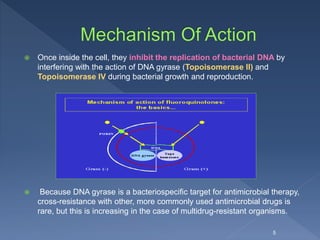
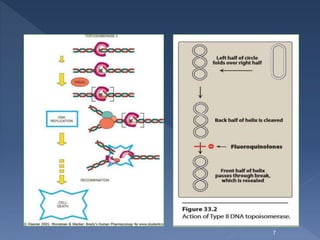
 Once inside the cell, they inhibit the replication of bacterial DNA by
interfering with the action of DNA gyrase (Topoisomerase II) and
Topoisomerase IV during bacterial growth and reproduction.
 Because DNA gyrase is a bacteriospecific target for antimicrobial therapy,
cross-resistance with other, more commonly used antimicrobial drugs is
rare, but this is increasing in the case of multidrug-resistant organisms.
5
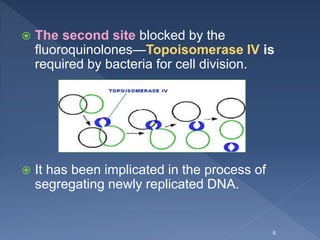
 The second site blocked by the
fluoroquinolones—Topoisomerase IV is
required by bacteria for cell division.
 It has been implicated in the process of
segregating newly replicated DNA.
6
7
 Fluoroquinolones are bactericidal...
 In general, they are effective against gram-negative organisms such
as the Enterobacteriaceae, Pseudomonas species, Haemophilus
influenzae, Moraxella catarrhalis, Legionellaceae, chlamydia,
mycoplasma and some mycobacteria.
 They are effective in the treatment of gonorrhea but not syphilis.
 The newer agents (for example, levofloxacin and moxifloxacin) also
have good activity against some gram-positive organisms, such as
Streptococcus pneumoniae. Moxifloxacin has activity against many
anaerobes.
 If used prophylactically before transurethral surgery, fluoroquinolones
lower the incidence of postsurgical urinary tract infections (UTIs).
8
9
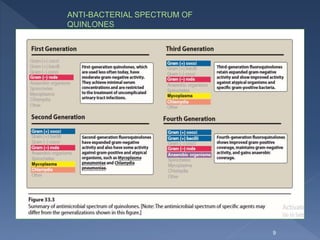
ANTI-BACTERIAL SPECTRUM OF
QUINLONES
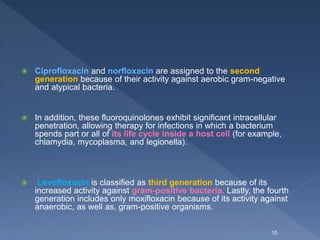
 Ciprofloxacin and norfloxacin are assigned to the second
generation because of their activity against aerobic gram-negative
and atypical bacteria.
 In addition, these fluoroquinolones exhibit significant intracellular
penetration, allowing therapy for infections in which a bacterium
spends part or all of its life cycle inside a host cell (for example,
chlamydia, mycoplasma, and legionella).
 Levofloxacin is classified as third generation because of its
increased activity against gram-positive bacteria. Lastly, the fourth
generation includes only moxifloxacin because of its activity against
anaerobic, as well as, gram-positive organisms.
10
11
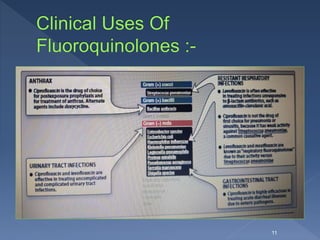
1. Ciprofloxacin: The serum levels of ciprofloxacin that are achieved are effective
against many systemic infections, with the exception of serious infections caused
by methicillin-resistant Staphylococcus aureus (MRSA), the enterococci, and
pneumococci . Ciprofloxacin is particularly useful in treating infections caused by
many Enterobacteriaceae and other gram-negative bacilli.
 For example, traveler’s diarrhea caused by E. coli can be effectively treated.
It is the most potent of the fluoroquinolones for Pseudomonas aeruginosa
infections and, therefore, is used in the treatment of pseudomonal
infections associated with cystic fibrosis.
 The drug is also used as an alternative to more toxic drugs, such as the
aminoglycosides. It may act synergistically with β-lactams and is also of
benefit in treating resistant tuberculosis. Ciprofloxacin is also commonly used
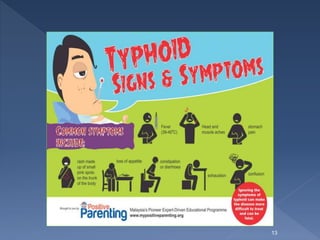
to treat typhoid fever in third-world countries.
12
13
2. Norfloxacin: is effective against both gram-negative (including P.
aeruginosa) and gram-positive organisms in treating complicated and
uncomplicated UTIs, prostatitis and traveler's diarrhea (unlabeled use). It
is not effective in systemic infections.
3. Levofloxacin: is an isomer of ofloxacin and has largely replaced it
clinically. It can be used in the treatment of prostatitis due to E. coli and of
sexually transmitted diseases, with the exception of syphilis. It may be used
as alternative therapy in patients with gonorrhea..
 Due to its broad spectrum of activity, levofloxacin is utilized in a wide
range of infections, including skin infections, acute sinusitis, acute
exacerbation of chronic bronchitis, community-acquired pneumonia
(CAP), as well as nosocomial pneumonia. Levofloxacin has excellent
activity against S. pneumoniae respiratory infections ….
14
4.Moxifloxacin: not only has enhanced
activity against gram-positive organisms
(for example, S. pneumoniae) but also has
excellent activity against many
anaerobes.
 Moxifloxacin does not concentrate in
urine and is not indicated for the
treatment of UTIs.
15
1. Absorption: Only 35 to 70 percent of orally administered
norfloxacin is absorbed ..
 IV preparations of ciprofloxacin and levofloxacin are available.
Ingestion of the fluoroquinolones with :
 Sucralfate
 Antacids containing aluminum or magnesium.
 Dietary supplements containing iron or zinc can interfere with
the absorption of these antibacterial drugs.
 Calcium and other divalent cations have also been shown to
interfere with the absorption of these agents .
 The fluoroquinolones with the longest half-lives (levofl oxacin
and moxifloxacin) permit once-daily dosing.
16
2. Elimination:
 All the fluoroquinolones distribute well into all tissues and body
fluids. Levels are high in bone, urine (except moxifloxacin),
kidney, and prostatic tissue (but not prostatic fluid), and
concentrations in the lung exceed those in serum.
 Penetration into cerebrospinal fluid is relatively low except for
ofloxacin, for which concentrations can be as high as 90 percent
of those in the serum. The fl uoroquinolones also accumulate in
macro phages and polymorphonuclear leukocytes, thus being
effective against intracellular organisms such as Legionella
pneumophila.
 Most fluoroquinolones are excreted renally, therefore, the dose
needs to be adjusted when renal function changes.
 Moxifloxacin, on the other hand, is excreted primarily by the
liver, and no dose adjustment is required with decreased renal
functioning.
17
1. Gastrointestinal: The most common adverse effects of the
fluoroquinolones are nausea, vomiting, and diarrhea, which
occur in three to six percent of patients.
2. Central nervous system problems: The most prominent
central nervous system (CNS) effects of fluoroquinolone
treatment are headache and dizziness or light-headedness.
 Thus, patients with CNS disorders, such as epilepsy,
should be treated cautiously with these drugs. [Note:
Ciprofloxacin interferes in the metabolism of theophylline
and may evoke seizures.]
18
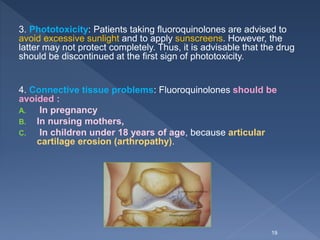
3. Phototoxicity: Patients taking fluoroquinolones are advised to
avoid excessive sunlight and to apply sunscreens. However, the
latter may not protect completely. Thus, it is advisable that the drug
should be discontinued at the first sign of phototoxicity.
4. Connective tissue problems: Fluoroquinolones should be
avoided :
A. In pregnancy
B. In nursing mothers,
C. In children under 18 years of age, because articular
cartilage erosion (arthropathy).
19
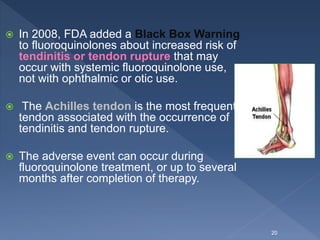
 In 2008, FDA added a Black Box Warning
to fluoroquinolones about increased risk of
tendinitis or tendon rupture that may
occur with systemic fluoroquinolone use,
not with ophthalmic or otic use.
 The Achilles tendon is the most frequent
tendon associated with the occurrence of
tendinitis and tendon rupture.
 The adverse event can occur during
fluoroquinolone treatment, or up to several
months after completion of therapy.
20
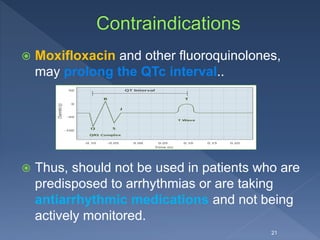
 Moxifloxacin and other fluoroquinolones,
may prolong the QTc interval..
 Thus, should not be used in patients who are
predisposed to arrhythmias or are taking
antiarrhythmic medications and not being
actively monitored.
21
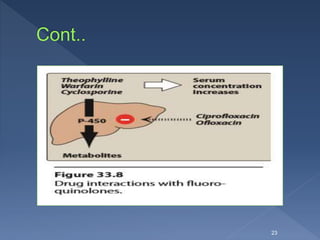
 Ciprofloxacin and ofloxacin can increase the
serum levels of theophylline by inhibiting its
metabolism .
 This is not the case with the third- and
fourth-generation fluoroquinolones, which
may raise the serum levels of warfarin,
caffeine, and cyclosporine.
22
23
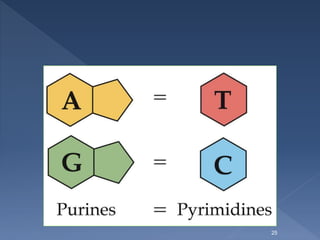
 Enzymes requiring folate-derived cofactors
are essential for the synthesis of purines
and pyrimidines (precursors of RNA and
DNA) and other compounds necessary for
cellular growth and replication.
 Therefore, in the absence of folate, cells
cannot grow or divide..
24
25
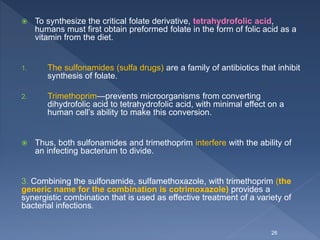
 To synthesize the critical folate derivative, tetrahydrofolic acid,
humans must first obtain preformed folate in the form of folic acid as a
vitamin from the diet.
1. The sulfonamides (sulfa drugs) are a family of antibiotics that inhibit
synthesis of folate.
2. Trimethoprim—prevents microorganisms from converting
dihydrofolic acid to tetrahydrofolic acid, with minimal effect on a
human cell’s ability to make this conversion.
 Thus, both sulfonamides and trimethoprim interfere with the ability of
an infecting bacterium to divide.
3. Combining the sulfonamide, sulfamethoxazole, with trimethoprim (the
generic name for the combination is cotrimoxazole) provides a
synergistic combination that is used as effective treatment of a variety of
bacterial infections.
26
The sulfa drugs are seldom prescribed alone
except in developing countries, where they are still
employed because of:
 Their low cost
 Their efficacy in certain bacterial infections,
such as trachoma and those of the urinary tract.
 However, when cotrimoxazole was introduced
in the mid-1970s, there was a renewed interest
in the sulfonamides.
27
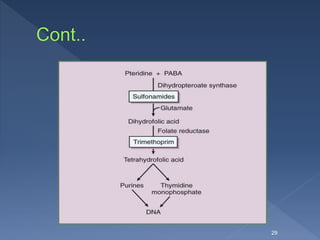
 In many microorganisms, dihydrofolic acid is synthesized from
p-aminobenzoic acid (PABA), pteridine, and glutamate .
 All the sulfonamides currently in clinical use are synthetic
analogs of PABA.
 Because of their structural similarity to PABA, the sulfonamides
compete with this substrate for the bacterial enzyme,
dihydropteroate synthetase. They inhibit the synthesis of
bacterial dihydrofolic acid and, thereby, the formation of its
essential cofactor forms.
 The sulfa drugs, including cotrimoxazole, are
bacteriostatic.
28
29
 Sulfa drugs are active against selected
Enterobacteria in the urinary tract Infection
.
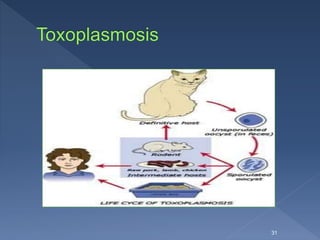
 In addition, sulfadiazine , in combination
with the dihydrofolate reductase inhibitor
pyrimethamine , is the preferred form of
treatment for Toxoplasmosis.
30
31
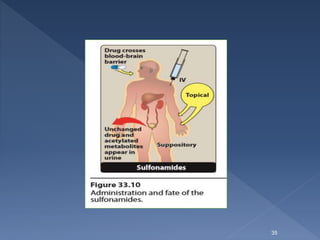
1. Administration: After oral administration,
most sulfa drugs are well absorbed via the
small intestine .
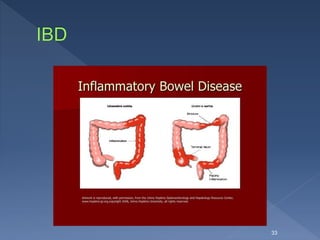
 An exception is sulfasalazine . It is not
absorbed when administered orally or as a
suppository and, therefore, is reserved for
treatment of chronic Inflammatory Bowel
Disease IBD (for example, Crohn’s
disease or ulcerative colitis).
32
33
 Absorption of the sulfapyridine can lead to toxicity in patients who are
slow acetylators .. Intravenous sulfonamides are generally reserved for
patients who are unable to take oral preparations.
 Because of the risk of sensitization, sulfas are not usually applied
topically. However, in burn units, creams of silver sulfadiazine or
mafenide acetate (α-amino-p-toluenesulfonamide) have been effective
in reducing burn-associated sepsis because they prevent colonization
of bacteria.
 Superinfections with resistant bacteria or fungi may still occur.
 [Note: Silver sulfadiazine is preferred because mafenide produces
pain on application. Furthermore, mafenide can be absorbed in burn
patients, causing an increased risk of acid-base imbalance.]
34
35
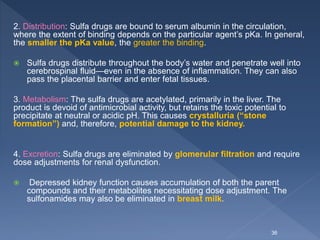
2. Distribution: Sulfa drugs are bound to serum albumin in the circulation,
where the extent of binding depends on the particular agent’s pKa. In general,
the smaller the pKa value, the greater the binding.
 Sulfa drugs distribute throughout the body’s water and penetrate well into
cerebrospinal fluid—even in the absence of inflammation. They can also
pass the placental barrier and enter fetal tissues.
3. Metabolism: The sulfa drugs are acetylated, primarily in the liver. The
product is devoid of antimicrobial activity, but retains the toxic potential to
precipitate at neutral or acidic pH. This causes crystalluria (“stone
formation”) and, therefore, potential damage to the kidney.
4. Excretion: Sulfa drugs are eliminated by glomerular filtration and require
dose adjustments for renal dysfunction.
 Depressed kidney function causes accumulation of both the parent
compounds and their metabolites necessitating dose adjustment. The
sulfonamides may also be eliminated in breast milk.
36
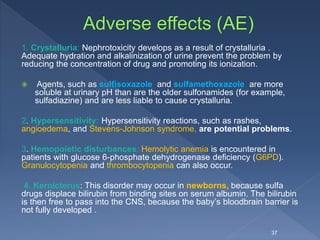
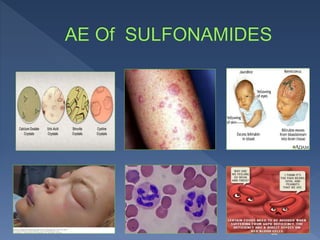
1. Crystalluria: Nephrotoxicity develops as a result of crystalluria .
Adequate hydration and alkalinization of urine prevent the problem by
reducing the concentration of drug and promoting its ionization.
 Agents, such as sulfisoxazole and sulfamethoxazole are more
soluble at urinary pH than are the older sulfonamides (for example,
sulfadiazine) and are less liable to cause crystalluria.
2. Hypersensitivity: Hypersensitivity reactions, such as rashes,
angioedema, and Stevens-Johnson syndrome, are potential problems.
3. Hemopoietic disturbances: Hemolytic anemia is encountered in
patients with glucose 6-phosphate dehydrogenase deficiency (G6PD).
Granulocytopenia and thrombocytopenia can also occur.
4. Kernicterus: This disorder may occur in newborns, because sulfa
drugs displace bilirubin from binding sites on serum albumin. The bilirubin
is then free to pass into the CNS, because the baby’s bloodbrain barrier is
not fully developed .
37
38
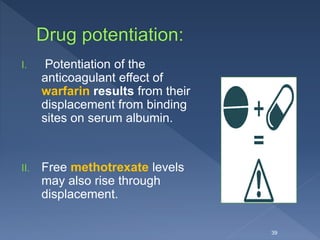
I. Potentiation of the
anticoagulant effect of
warfarin results from their
displacement from binding
sites on serum albumin.
II. Free methotrexate levels
may also rise through
displacement.
39
 Due to the danger of kernicterus, sulfa drugs
should be avoided in newborns and infants
less than 2 months of age as well as in
pregnant women at term.
 Because sulfonamides condense with
formaldehyde, they should not be given to
patients receiving methenamine for UTIs
.(Drug Drug Interaction) …
40
 Trimethoprim , a potent inhibitor of
bacterial dihydrofolate reductase, exhibits
an antibacterial spectrum similar to that of
the sulfonamides.
 Trimethoprim is most often compounded with
sulfamethoxazole, producing the
combination called cotrimoxazole.
41
 The active form of folate is the tetrahydro-derivative that is
formed through reduction of dihydrofolic acid by dihydrofolate
reductase.
 This enzymatic reaction is inhibited by trimethoprim, leading to
a decreased availability of the tetrahydrofolate coenzymes
required for purine, pyrimidine, and amino acid synthesis.
 The bacterial reductase has a much stronger affinity for
trimethoprim than does the mammalian enzyme, which accounts
for the drug’s selective toxicity.
 [ Examples of other drugs that function as folate reductase
inhibitors include pyrimethamine, which is used with
sulfonamides in treating parasitic infections, and
methotrexate, which is used in the treatment of cancer,
rheumatoid arthritis, and psoriasis].
42
 The antibacterial spectrum of trimethoprim is
similar to that of sulfamethoxazole.
 However, trimethoprim is 20- to 50-fold more
potent than the sulfonamide.
 Trimethoprim may be used alone in the
treatment of acute UTIs and in the treatment of
bacterial prostatitis (although fluoroquinolones
are preferred) and vaginitis.
43
 The half-life of trimethoprim is similar to that of
sulfamethoxazole.
 However, because the drug is a weak base,
higher concentrations of trimethoprim are
achieved in the relatively acidic prostatic and
vaginal fluids. The drug also penetrates the
cerebrospinal fluid (CSF).
 Trimethoprim undergoes some O-
demethylation, but most of it is excreted
unchanged through the kidney.
44
 Trimethoprim can produce the effects of folic
acid deficiency.
 These effects include megaloblastic anemia,
leukopenia especially in pregnant patients and
those having very poor diets.
 These blood disorders can be reversed by the
simultaneous administration of folinic acid,
which does not enter bacteria.
45
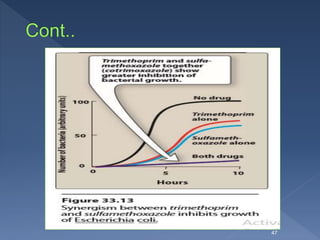
 The combination of trimethoprim with
sulfamethoxazole, called cotrimoxazole ,
shows greater antimicrobial activity than
equivalent quantities of either drug used
alone .
 The combination was selected because of
their synergistic activity and the similarity
in the half-lives of the two drugs.
46
47
 The synergistic antimicrobial activity of
cotrimoxazole results from its inhibition of
two sequential steps in the synthesis of
tetrahydrofolic acid…
A. Sulfamethoxazole inhibits the incorporation
of PABA into dihydrofolic acid precursors..
B. Trimethoprim prevents reduction of
dihydrofolate to tetrahydrofolate .
48
49
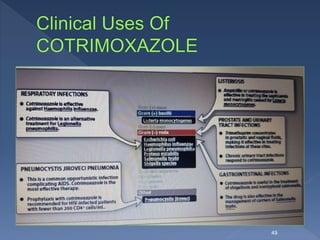
 Cotrimoxazole has a broader spectrum of antibacterial action than
the sulfa drugs .
It is effective in treating :
o UTIs
o Respiratory tract infections as well as in Pneumocystis jiroveci
pneumonia
o Ampicillin- or chlorampheni col-resistant systemic salmonella
infections.
 It has activity versus MRSA, and can be particularly useful for
community acquired skin and soft tissue infections caused by this
organism.
 It is the drug of choice for infections caused by susceptible Nocardia
species and Stenotrophamonas maltophilia.
50
 Trimethoprim is more lipid soluble than sulfamethoxazole and has a
greater volume of distribution.
 Cotrimoxazole is generally administered orally . Exceptions involve
intravenous administration to patients with bloodstream infections or
severe pneumonia caused by P. jiroveci, or to patients who cannot take the
drug by mouth. Both agents distribute throughout the body.
 Trimethoprim concentrates in the relatively acidic of prostatic and vaginal
fluids, and it accounts for the use of the trimethoprim-sulfamethoxazole
combination in infections at these sites.
 Both parent drugs and their metabolites are excreted in the urine.
51
1.Dermatologic: Reactions involving the skin are very common and may
be severe in the elderly .
2. Gastrointestinal: Nausea, vomiting, as well as, glossitis and stomatitis
are not unusual.
3. Hematologic: Megaloblastic anemia, leukopenia, and
thrombocytopenia may occur.
4. Patients infected with human immunodeficiency virus:
Immunocompromised patients with P. jiroveci pneumonia frequently show
drug-induced:
a. fever,
b. rashes,
c. diarrhea
d. pancytopenia.
52
 Prolonged prothrombin times (increased INR)
in patients receiving both sulfamethoxazole and
warfarin have been reported.
 The plasma half-life of phenytoin may be
increased due to an inhibition of its metabolism.
 Methotrexate levels may rise due to
displacement from albumin-binding sites by
sulfamethoxazole.
53
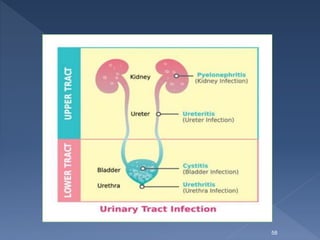
Urinary tract infections (most commonly uncomplicated acute cystitis
and pyelonephritis) in women of child-bearing age and in the elderly are
one of the most common problems seen by primary care physicians.
1. Escherichia coli is the most common pathogen, causing about 80
percent of uncomplicated upper and lower UTIs.
2. Staphylococcus saprophyticus is the second most common
bacterial pathogen causing UTIs, with other common causes
including Klebsiella pneumoniae and Proteus mirabilis.
These infections may be treated with any one of a group of agents called
urinary tract antiseptics, including :
 Methenamine,
 Nitrofurantoin,
 Nalidixic acid.
54
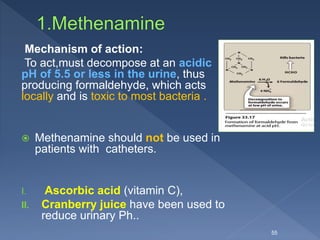
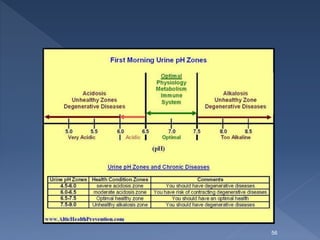
Mechanism of action:
To act,must decompose at an acidic
pH of 5.5 or less in the urine, thus
producing formaldehyde, which acts
locally and is toxic to most bacteria .
 Methenamine should not be used in
patients with catheters.
I. Ascorbic acid (vitamin C),
II. Cranberry juice have been used to
reduce urinary Ph..
55
56
 Methenamine is primarily used for chronic
suppressive therapy.
 Urea-splitting bacteria that alkalinize the
urine, such as Proteus species, are usually
resistant to the action of methenamine.
 Methenamine is used to treat lower UTIs but
is not effective in upper UTIs.
57
58
 Methenamine is administered orally.
 In addition to formaldehyde, ammonium ion is
produced in the bladder.
 Methylamine is distributed throughout the body
fluids, but no decomposition of the drug
occurs at pH 7.4.
 Thus, systemic toxicity does not occur and the
drug is eliminated in the urine.
59
The major side effect of methenamine are :
 Gastrointestinal distress, although at higher doses,
 Albuminuria,
 Hematuria,
 Rashes .
 Methenamine mandelate is contraindicated in patients
with renal insufficiency, because mandelic acid may
precipitate.
 [Sulfonamides, such as cotrimoxazole, react with form
aldehyde and must not be used concomitantly with
methenamine. The combination increases the risk of
crystalluria and mutual antagonism.]
60
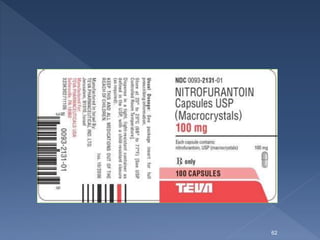
Sensitive bacteria reduce the drug to a highly
active intermediate that inhibits various enzymes
and damages bacterial DNA.
Bacteria that are susceptible rarely become
resistant during therapy. Antibiotic activity is
greater in acidic urine.
 It is useful against E. coli, but other common
urinary tract gram-negative bacteria may be
resistant. Gram-positive cocci are susceptible.
61
62
 Hemolytic anemia is encountered in patients with glucose
6-phosphate dehydrogenase deficiency.
Other adverse effects include :
 Gastrointestinal disturbances,
 Acute pneumonitis,
 Neurologic problems.
 Interstitial pulmonary fibrosis has occurred in patients
who take nitrofurantoin chronically.
 This is of critical importance, especially in the elderly.
63
 Anuria, oliguria, significant impairment of
renal function (not to be used in patients with
creatinine clearance less than 60 mL/min or
significantly elevated serum creatinine),
 Pregnancy at term or ≥ 38 weeks pregnant.
64
65
 Richard A.Harvey. (2009). In: Kathy
Fuller Lippincott’s Illustrated Reviews:
Pharmacology. Philadelphia: Steve Druding.
p 423-434.
66

Quinolone

  • 1.
  • 2.
     Definition  Categories Mechanism of action (M.O.A)  Adverse effects 2
  • 3.
  • 4.
     Naladixic acidis the predecessor to all fluoroquinolones.  Introduction of the first fluorinated quinolone, norfloxacin, was rapidly followed by development of other members of this group, such as ciprofloxacin, which has had wide clinical application.  Ciprofloxacin, the new compounds are more active against gram- positive organisms, yet retain favorable activity against gram-negative microorganisms.  It seems likely that the number of drugs in this class of antibiotics will increase due to its wide antibacterial spectrum, favorable pharmacokinetic properties, and relatively infrequent adverse event profile. Unfortunately, their overuse has already led to the emergence of resistance, resulting in limitations to their clinical usefulness. 4
  • 5.
     Once insidethe cell, they inhibit the replication of bacterial DNA by interfering with the action of DNA gyrase (Topoisomerase II) and Topoisomerase IV during bacterial growth and reproduction.  Because DNA gyrase is a bacteriospecific target for antimicrobial therapy, cross-resistance with other, more commonly used antimicrobial drugs is rare, but this is increasing in the case of multidrug-resistant organisms. 5
  • 6.
     The secondsite blocked by the fluoroquinolones—Topoisomerase IV is required by bacteria for cell division.  It has been implicated in the process of segregating newly replicated DNA. 6
  • 7.
  • 8.
     Fluoroquinolones arebactericidal...  In general, they are effective against gram-negative organisms such as the Enterobacteriaceae, Pseudomonas species, Haemophilus influenzae, Moraxella catarrhalis, Legionellaceae, chlamydia, mycoplasma and some mycobacteria.  They are effective in the treatment of gonorrhea but not syphilis.  The newer agents (for example, levofloxacin and moxifloxacin) also have good activity against some gram-positive organisms, such as Streptococcus pneumoniae. Moxifloxacin has activity against many anaerobes.  If used prophylactically before transurethral surgery, fluoroquinolones lower the incidence of postsurgical urinary tract infections (UTIs). 8
  • 9.
  • 10.
     Ciprofloxacin andnorfloxacin are assigned to the second generation because of their activity against aerobic gram-negative and atypical bacteria.  In addition, these fluoroquinolones exhibit significant intracellular penetration, allowing therapy for infections in which a bacterium spends part or all of its life cycle inside a host cell (for example, chlamydia, mycoplasma, and legionella).  Levofloxacin is classified as third generation because of its increased activity against gram-positive bacteria. Lastly, the fourth generation includes only moxifloxacin because of its activity against anaerobic, as well as, gram-positive organisms. 10
  • 11.
  • 12.
    1. Ciprofloxacin: Theserum levels of ciprofloxacin that are achieved are effective against many systemic infections, with the exception of serious infections caused by methicillin-resistant Staphylococcus aureus (MRSA), the enterococci, and pneumococci . Ciprofloxacin is particularly useful in treating infections caused by many Enterobacteriaceae and other gram-negative bacilli.  For example, traveler’s diarrhea caused by E. coli can be effectively treated. It is the most potent of the fluoroquinolones for Pseudomonas aeruginosa infections and, therefore, is used in the treatment of pseudomonal infections associated with cystic fibrosis.  The drug is also used as an alternative to more toxic drugs, such as the aminoglycosides. It may act synergistically with β-lactams and is also of benefit in treating resistant tuberculosis. Ciprofloxacin is also commonly used to treat typhoid fever in third-world countries. 12
  • 13.
  • 14.
    2. Norfloxacin: iseffective against both gram-negative (including P. aeruginosa) and gram-positive organisms in treating complicated and uncomplicated UTIs, prostatitis and traveler's diarrhea (unlabeled use). It is not effective in systemic infections. 3. Levofloxacin: is an isomer of ofloxacin and has largely replaced it clinically. It can be used in the treatment of prostatitis due to E. coli and of sexually transmitted diseases, with the exception of syphilis. It may be used as alternative therapy in patients with gonorrhea..  Due to its broad spectrum of activity, levofloxacin is utilized in a wide range of infections, including skin infections, acute sinusitis, acute exacerbation of chronic bronchitis, community-acquired pneumonia (CAP), as well as nosocomial pneumonia. Levofloxacin has excellent activity against S. pneumoniae respiratory infections …. 14
  • 15.
    4.Moxifloxacin: not onlyhas enhanced activity against gram-positive organisms (for example, S. pneumoniae) but also has excellent activity against many anaerobes.  Moxifloxacin does not concentrate in urine and is not indicated for the treatment of UTIs. 15
  • 16.
    1. Absorption: Only35 to 70 percent of orally administered norfloxacin is absorbed ..  IV preparations of ciprofloxacin and levofloxacin are available. Ingestion of the fluoroquinolones with :  Sucralfate  Antacids containing aluminum or magnesium.  Dietary supplements containing iron or zinc can interfere with the absorption of these antibacterial drugs.  Calcium and other divalent cations have also been shown to interfere with the absorption of these agents .  The fluoroquinolones with the longest half-lives (levofl oxacin and moxifloxacin) permit once-daily dosing. 16
  • 17.
    2. Elimination:  Allthe fluoroquinolones distribute well into all tissues and body fluids. Levels are high in bone, urine (except moxifloxacin), kidney, and prostatic tissue (but not prostatic fluid), and concentrations in the lung exceed those in serum.  Penetration into cerebrospinal fluid is relatively low except for ofloxacin, for which concentrations can be as high as 90 percent of those in the serum. The fl uoroquinolones also accumulate in macro phages and polymorphonuclear leukocytes, thus being effective against intracellular organisms such as Legionella pneumophila.  Most fluoroquinolones are excreted renally, therefore, the dose needs to be adjusted when renal function changes.  Moxifloxacin, on the other hand, is excreted primarily by the liver, and no dose adjustment is required with decreased renal functioning. 17
  • 18.
    1. Gastrointestinal: Themost common adverse effects of the fluoroquinolones are nausea, vomiting, and diarrhea, which occur in three to six percent of patients. 2. Central nervous system problems: The most prominent central nervous system (CNS) effects of fluoroquinolone treatment are headache and dizziness or light-headedness.  Thus, patients with CNS disorders, such as epilepsy, should be treated cautiously with these drugs. [Note: Ciprofloxacin interferes in the metabolism of theophylline and may evoke seizures.] 18
  • 19.
    3. Phototoxicity: Patientstaking fluoroquinolones are advised to avoid excessive sunlight and to apply sunscreens. However, the latter may not protect completely. Thus, it is advisable that the drug should be discontinued at the first sign of phototoxicity. 4. Connective tissue problems: Fluoroquinolones should be avoided : A. In pregnancy B. In nursing mothers, C. In children under 18 years of age, because articular cartilage erosion (arthropathy). 19
  • 20.
     In 2008,FDA added a Black Box Warning to fluoroquinolones about increased risk of tendinitis or tendon rupture that may occur with systemic fluoroquinolone use, not with ophthalmic or otic use.  The Achilles tendon is the most frequent tendon associated with the occurrence of tendinitis and tendon rupture.  The adverse event can occur during fluoroquinolone treatment, or up to several months after completion of therapy. 20
  • 21.
     Moxifloxacin andother fluoroquinolones, may prolong the QTc interval..  Thus, should not be used in patients who are predisposed to arrhythmias or are taking antiarrhythmic medications and not being actively monitored. 21
  • 22.
     Ciprofloxacin andofloxacin can increase the serum levels of theophylline by inhibiting its metabolism .  This is not the case with the third- and fourth-generation fluoroquinolones, which may raise the serum levels of warfarin, caffeine, and cyclosporine. 22
  • 23.
  • 24.
     Enzymes requiringfolate-derived cofactors are essential for the synthesis of purines and pyrimidines (precursors of RNA and DNA) and other compounds necessary for cellular growth and replication.  Therefore, in the absence of folate, cells cannot grow or divide.. 24
  • 25.
  • 26.
     To synthesizethe critical folate derivative, tetrahydrofolic acid, humans must first obtain preformed folate in the form of folic acid as a vitamin from the diet. 1. The sulfonamides (sulfa drugs) are a family of antibiotics that inhibit synthesis of folate. 2. Trimethoprim—prevents microorganisms from converting dihydrofolic acid to tetrahydrofolic acid, with minimal effect on a human cell’s ability to make this conversion.  Thus, both sulfonamides and trimethoprim interfere with the ability of an infecting bacterium to divide. 3. Combining the sulfonamide, sulfamethoxazole, with trimethoprim (the generic name for the combination is cotrimoxazole) provides a synergistic combination that is used as effective treatment of a variety of bacterial infections. 26
  • 27.
    The sulfa drugsare seldom prescribed alone except in developing countries, where they are still employed because of:  Their low cost  Their efficacy in certain bacterial infections, such as trachoma and those of the urinary tract.  However, when cotrimoxazole was introduced in the mid-1970s, there was a renewed interest in the sulfonamides. 27
  • 28.
     In manymicroorganisms, dihydrofolic acid is synthesized from p-aminobenzoic acid (PABA), pteridine, and glutamate .  All the sulfonamides currently in clinical use are synthetic analogs of PABA.  Because of their structural similarity to PABA, the sulfonamides compete with this substrate for the bacterial enzyme, dihydropteroate synthetase. They inhibit the synthesis of bacterial dihydrofolic acid and, thereby, the formation of its essential cofactor forms.  The sulfa drugs, including cotrimoxazole, are bacteriostatic. 28
  • 29.
  • 30.
     Sulfa drugsare active against selected Enterobacteria in the urinary tract Infection .  In addition, sulfadiazine , in combination with the dihydrofolate reductase inhibitor pyrimethamine , is the preferred form of treatment for Toxoplasmosis. 30
  • 31.
  • 32.
    1. Administration: Afteroral administration, most sulfa drugs are well absorbed via the small intestine .  An exception is sulfasalazine . It is not absorbed when administered orally or as a suppository and, therefore, is reserved for treatment of chronic Inflammatory Bowel Disease IBD (for example, Crohn’s disease or ulcerative colitis). 32
  • 33.
  • 34.
     Absorption ofthe sulfapyridine can lead to toxicity in patients who are slow acetylators .. Intravenous sulfonamides are generally reserved for patients who are unable to take oral preparations.  Because of the risk of sensitization, sulfas are not usually applied topically. However, in burn units, creams of silver sulfadiazine or mafenide acetate (α-amino-p-toluenesulfonamide) have been effective in reducing burn-associated sepsis because they prevent colonization of bacteria.  Superinfections with resistant bacteria or fungi may still occur.  [Note: Silver sulfadiazine is preferred because mafenide produces pain on application. Furthermore, mafenide can be absorbed in burn patients, causing an increased risk of acid-base imbalance.] 34
  • 35.
  • 36.
    2. Distribution: Sulfadrugs are bound to serum albumin in the circulation, where the extent of binding depends on the particular agent’s pKa. In general, the smaller the pKa value, the greater the binding.  Sulfa drugs distribute throughout the body’s water and penetrate well into cerebrospinal fluid—even in the absence of inflammation. They can also pass the placental barrier and enter fetal tissues. 3. Metabolism: The sulfa drugs are acetylated, primarily in the liver. The product is devoid of antimicrobial activity, but retains the toxic potential to precipitate at neutral or acidic pH. This causes crystalluria (“stone formation”) and, therefore, potential damage to the kidney. 4. Excretion: Sulfa drugs are eliminated by glomerular filtration and require dose adjustments for renal dysfunction.  Depressed kidney function causes accumulation of both the parent compounds and their metabolites necessitating dose adjustment. The sulfonamides may also be eliminated in breast milk. 36
  • 37.
    1. Crystalluria: Nephrotoxicitydevelops as a result of crystalluria . Adequate hydration and alkalinization of urine prevent the problem by reducing the concentration of drug and promoting its ionization.  Agents, such as sulfisoxazole and sulfamethoxazole are more soluble at urinary pH than are the older sulfonamides (for example, sulfadiazine) and are less liable to cause crystalluria. 2. Hypersensitivity: Hypersensitivity reactions, such as rashes, angioedema, and Stevens-Johnson syndrome, are potential problems. 3. Hemopoietic disturbances: Hemolytic anemia is encountered in patients with glucose 6-phosphate dehydrogenase deficiency (G6PD). Granulocytopenia and thrombocytopenia can also occur. 4. Kernicterus: This disorder may occur in newborns, because sulfa drugs displace bilirubin from binding sites on serum albumin. The bilirubin is then free to pass into the CNS, because the baby’s bloodbrain barrier is not fully developed . 37
  • 38.
  • 39.
    I. Potentiation ofthe anticoagulant effect of warfarin results from their displacement from binding sites on serum albumin. II. Free methotrexate levels may also rise through displacement. 39
  • 40.
     Due tothe danger of kernicterus, sulfa drugs should be avoided in newborns and infants less than 2 months of age as well as in pregnant women at term.  Because sulfonamides condense with formaldehyde, they should not be given to patients receiving methenamine for UTIs .(Drug Drug Interaction) … 40
  • 41.
     Trimethoprim ,a potent inhibitor of bacterial dihydrofolate reductase, exhibits an antibacterial spectrum similar to that of the sulfonamides.  Trimethoprim is most often compounded with sulfamethoxazole, producing the combination called cotrimoxazole. 41
  • 42.
     The activeform of folate is the tetrahydro-derivative that is formed through reduction of dihydrofolic acid by dihydrofolate reductase.  This enzymatic reaction is inhibited by trimethoprim, leading to a decreased availability of the tetrahydrofolate coenzymes required for purine, pyrimidine, and amino acid synthesis.  The bacterial reductase has a much stronger affinity for trimethoprim than does the mammalian enzyme, which accounts for the drug’s selective toxicity.  [ Examples of other drugs that function as folate reductase inhibitors include pyrimethamine, which is used with sulfonamides in treating parasitic infections, and methotrexate, which is used in the treatment of cancer, rheumatoid arthritis, and psoriasis]. 42
  • 43.
     The antibacterialspectrum of trimethoprim is similar to that of sulfamethoxazole.  However, trimethoprim is 20- to 50-fold more potent than the sulfonamide.  Trimethoprim may be used alone in the treatment of acute UTIs and in the treatment of bacterial prostatitis (although fluoroquinolones are preferred) and vaginitis. 43
  • 44.
     The half-lifeof trimethoprim is similar to that of sulfamethoxazole.  However, because the drug is a weak base, higher concentrations of trimethoprim are achieved in the relatively acidic prostatic and vaginal fluids. The drug also penetrates the cerebrospinal fluid (CSF).  Trimethoprim undergoes some O- demethylation, but most of it is excreted unchanged through the kidney. 44
  • 45.
     Trimethoprim canproduce the effects of folic acid deficiency.  These effects include megaloblastic anemia, leukopenia especially in pregnant patients and those having very poor diets.  These blood disorders can be reversed by the simultaneous administration of folinic acid, which does not enter bacteria. 45
  • 46.
     The combinationof trimethoprim with sulfamethoxazole, called cotrimoxazole , shows greater antimicrobial activity than equivalent quantities of either drug used alone .  The combination was selected because of their synergistic activity and the similarity in the half-lives of the two drugs. 46
  • 47.
  • 48.
     The synergisticantimicrobial activity of cotrimoxazole results from its inhibition of two sequential steps in the synthesis of tetrahydrofolic acid… A. Sulfamethoxazole inhibits the incorporation of PABA into dihydrofolic acid precursors.. B. Trimethoprim prevents reduction of dihydrofolate to tetrahydrofolate . 48
  • 49.
  • 50.
     Cotrimoxazole hasa broader spectrum of antibacterial action than the sulfa drugs . It is effective in treating : o UTIs o Respiratory tract infections as well as in Pneumocystis jiroveci pneumonia o Ampicillin- or chlorampheni col-resistant systemic salmonella infections.  It has activity versus MRSA, and can be particularly useful for community acquired skin and soft tissue infections caused by this organism.  It is the drug of choice for infections caused by susceptible Nocardia species and Stenotrophamonas maltophilia. 50
  • 51.
     Trimethoprim ismore lipid soluble than sulfamethoxazole and has a greater volume of distribution.  Cotrimoxazole is generally administered orally . Exceptions involve intravenous administration to patients with bloodstream infections or severe pneumonia caused by P. jiroveci, or to patients who cannot take the drug by mouth. Both agents distribute throughout the body.  Trimethoprim concentrates in the relatively acidic of prostatic and vaginal fluids, and it accounts for the use of the trimethoprim-sulfamethoxazole combination in infections at these sites.  Both parent drugs and their metabolites are excreted in the urine. 51
  • 52.
    1.Dermatologic: Reactions involvingthe skin are very common and may be severe in the elderly . 2. Gastrointestinal: Nausea, vomiting, as well as, glossitis and stomatitis are not unusual. 3. Hematologic: Megaloblastic anemia, leukopenia, and thrombocytopenia may occur. 4. Patients infected with human immunodeficiency virus: Immunocompromised patients with P. jiroveci pneumonia frequently show drug-induced: a. fever, b. rashes, c. diarrhea d. pancytopenia. 52
  • 53.
     Prolonged prothrombintimes (increased INR) in patients receiving both sulfamethoxazole and warfarin have been reported.  The plasma half-life of phenytoin may be increased due to an inhibition of its metabolism.  Methotrexate levels may rise due to displacement from albumin-binding sites by sulfamethoxazole. 53
  • 54.
    Urinary tract infections(most commonly uncomplicated acute cystitis and pyelonephritis) in women of child-bearing age and in the elderly are one of the most common problems seen by primary care physicians. 1. Escherichia coli is the most common pathogen, causing about 80 percent of uncomplicated upper and lower UTIs. 2. Staphylococcus saprophyticus is the second most common bacterial pathogen causing UTIs, with other common causes including Klebsiella pneumoniae and Proteus mirabilis. These infections may be treated with any one of a group of agents called urinary tract antiseptics, including :  Methenamine,  Nitrofurantoin,  Nalidixic acid. 54
  • 55.
    Mechanism of action: Toact,must decompose at an acidic pH of 5.5 or less in the urine, thus producing formaldehyde, which acts locally and is toxic to most bacteria .  Methenamine should not be used in patients with catheters. I. Ascorbic acid (vitamin C), II. Cranberry juice have been used to reduce urinary Ph.. 55
  • 56.
  • 57.
     Methenamine isprimarily used for chronic suppressive therapy.  Urea-splitting bacteria that alkalinize the urine, such as Proteus species, are usually resistant to the action of methenamine.  Methenamine is used to treat lower UTIs but is not effective in upper UTIs. 57
  • 58.
  • 59.
     Methenamine isadministered orally.  In addition to formaldehyde, ammonium ion is produced in the bladder.  Methylamine is distributed throughout the body fluids, but no decomposition of the drug occurs at pH 7.4.  Thus, systemic toxicity does not occur and the drug is eliminated in the urine. 59
  • 60.
    The major sideeffect of methenamine are :  Gastrointestinal distress, although at higher doses,  Albuminuria,  Hematuria,  Rashes .  Methenamine mandelate is contraindicated in patients with renal insufficiency, because mandelic acid may precipitate.  [Sulfonamides, such as cotrimoxazole, react with form aldehyde and must not be used concomitantly with methenamine. The combination increases the risk of crystalluria and mutual antagonism.] 60
  • 61.
    Sensitive bacteria reducethe drug to a highly active intermediate that inhibits various enzymes and damages bacterial DNA. Bacteria that are susceptible rarely become resistant during therapy. Antibiotic activity is greater in acidic urine.  It is useful against E. coli, but other common urinary tract gram-negative bacteria may be resistant. Gram-positive cocci are susceptible. 61
  • 62.
  • 63.
     Hemolytic anemiais encountered in patients with glucose 6-phosphate dehydrogenase deficiency. Other adverse effects include :  Gastrointestinal disturbances,  Acute pneumonitis,  Neurologic problems.  Interstitial pulmonary fibrosis has occurred in patients who take nitrofurantoin chronically.  This is of critical importance, especially in the elderly. 63
  • 64.
     Anuria, oliguria,significant impairment of renal function (not to be used in patients with creatinine clearance less than 60 mL/min or significantly elevated serum creatinine),  Pregnancy at term or ≥ 38 weeks pregnant. 64
  • 65.
  • 66.
     Richard A.Harvey.(2009). In: Kathy Fuller Lippincott’s Illustrated Reviews: Pharmacology. Philadelphia: Steve Druding. p 423-434. 66