Questioning and Listening
Skills
Facilitated by Ian J Seath

© Copyright ISC 2013
Stephen Covey - Seven habits of highly effective people

SEEK FIRST TO UNDERSTAND,
THEN TO BE UNDERSTOOD
© Copyright ISC 2013
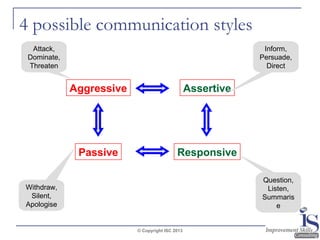
4 possible communication styles
Attack,
Dominate,
Threaten

Inform,
Persuade,
Direct

Aggressive

Assertive

Passive

Responsive
Question,
Listen,
Summaris
e

Withdraw,
Silent,
Apologise

© Copyright ISC 2013
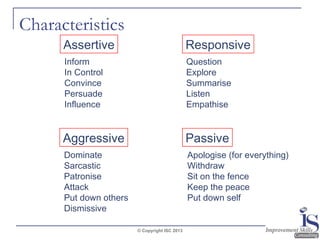
Characteristics
Assertive

Responsive

Inform
In Control
Convince
Persuade
Influence

Question
Explore
Summarise
Listen
Empathise

Aggressive

Passive

Dominate
Sarcastic
Patronise
Attack
Put down others
Dismissive

Apologise (for everything)
Withdraw
Sit on the fence
Keep the peace
Put down self

© Copyright ISC 2013
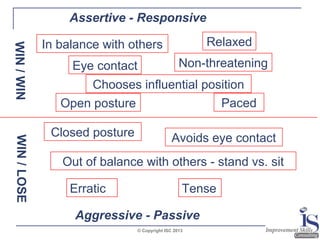
Assertive - Responsive
WIN / WIN

Relaxed

In balance with others
Eye contact

Non-threatening

Chooses influential position
Paced
Open posture

WIN / LOSE

Closed posture

Avoids eye contact

Out of balance with others - stand vs. sit
Erratic

Tense

Aggressive - Passive
© Copyright ISC 2013
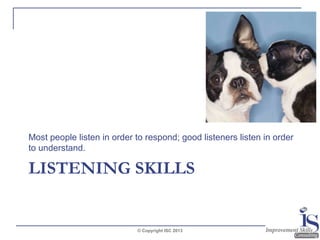
Most people listen in order to respond; good listeners listen in order
to understand.

LISTENING SKILLS

© Copyright ISC 2013
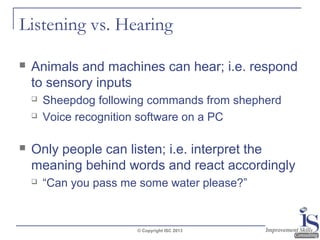
Listening vs. Hearing


Animals and machines can hear; i.e. respond
to sensory inputs





Sheepdog following commands from shepherd
Voice recognition software on a PC

Only people can listen; i.e. interpret the
meaning behind words and react accordingly


“Can you pass me some water please?”

© Copyright ISC 2013
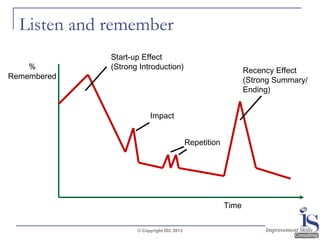
Listen and remember
%
Remembered

Start-up Effect
(Strong Introduction)

Recency Effect
(Strong Summary/
Ending)

Impact
Repetition

Time
© Copyright ISC 2013
Keys to effective listening







Find areas of interest
Judge content, not
delivery
Hold your fire
Listen for ideas
Be flexible in note-taking







Work at listening
Resist distractions
Exercise your mind
Keep your mind open
Capitalise on the fact that
thought is faster than
speech

© Copyright ISC 2013
Active listening


Behaviours which demonstrate active listening
include...










An attentive posture, leaning forward, with uncrossed
arms (“open” body language)
Nodding your head
Smiling (genuinely)
Verbal cues (“Uh huh”, “I see”, “Yes”, “Go on”)
Making eye contact (but not staring)
Asking Reflective Questions
Taking notes
Summarising
© Copyright ISC 2013
Active listening


Confirmation and acknowledgement





Showing empathy







“Yes, I agree”
“Uh huh, I see”

“What you seem to be saying is…”
“So, you feel…”
“If I were in your position…”
“I understand your points…”

Appropriate Body Language


Open and positive
© Copyright ISC 2013
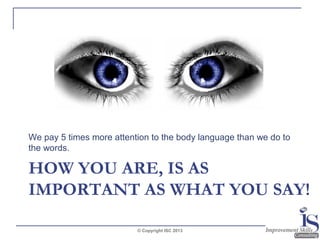
We pay 5 times more attention to the body language than we do to
the words.

HOW YOU ARE, IS AS
IMPORTANT AS WHAT YOU SAY!
© Copyright ISC 2013
© Copyright ISC
2013
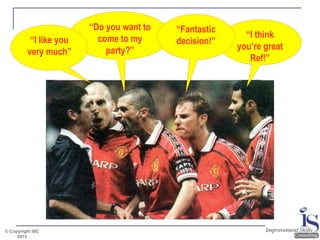
“I like you
very much”

© Copyright ISC
2013

“Do you want to
come to my
party?”

“Fantastic
decision!”

“I think
you’re great
Ref!”
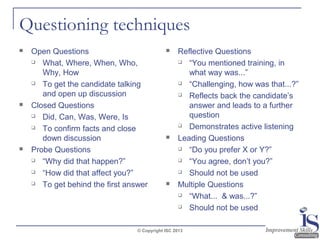
Questioning techniques






Open Questions
 What, Where, When, Who,
Why, How
 To get the candidate talking
and open up discussion
Closed Questions
 Did, Can, Was, Were, Is
 To confirm facts and close
down discussion
Probe Questions
 “Why did that happen?”
 “How did that affect you?”
 To get behind the first answer







Reflective Questions
 “You mentioned training, in
what way was...”
 “Challenging, how was that...?”
 Reflects back the candidate’s
answer and leads to a further
question
 Demonstrates active listening
Leading Questions
 “Do you prefer X or Y?”
 “You agree, don’t you?”
 Should not be used
Multiple Questions
 “What... & was...?”
 Should not be used

© Copyright ISC 2013
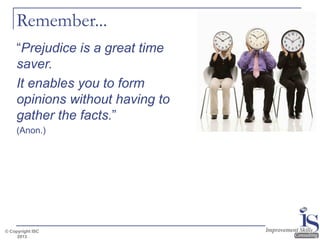
Remember...
“Prejudice is a great time
saver.
It enables you to form
opinions without having to
gather the facts.”
(Anon.)

© Copyright ISC
2013
Ian J Seath
Improvement Skills Consulting Ltd.
(November 2013)

ian.seath@improvement-skills.co.uk
07850 728506
@ianjseath
www.improvement-skills.co.uk

Questioning and Listening Skills - workshop

  • 1.
    Questioning and Listening Skills Facilitatedby Ian J Seath © Copyright ISC 2013
  • 2.
    Stephen Covey -Seven habits of highly effective people SEEK FIRST TO UNDERSTAND, THEN TO BE UNDERSTOOD © Copyright ISC 2013
  • 3.
    4 possible communicationstyles Attack, Dominate, Threaten Inform, Persuade, Direct Aggressive Assertive Passive Responsive Question, Listen, Summaris e Withdraw, Silent, Apologise © Copyright ISC 2013
  • 4.
  • 5.
    Assertive - Responsive WIN/ WIN Relaxed In balance with others Eye contact Non-threatening Chooses influential position Paced Open posture WIN / LOSE Closed posture Avoids eye contact Out of balance with others - stand vs. sit Erratic Tense Aggressive - Passive © Copyright ISC 2013
  • 6.
    Most people listenin order to respond; good listeners listen in order to understand. LISTENING SKILLS © Copyright ISC 2013
  • 7.
    Listening vs. Hearing  Animalsand machines can hear; i.e. respond to sensory inputs    Sheepdog following commands from shepherd Voice recognition software on a PC Only people can listen; i.e. interpret the meaning behind words and react accordingly  “Can you pass me some water please?” © Copyright ISC 2013
  • 8.
    Listen and remember % Remembered Start-upEffect (Strong Introduction) Recency Effect (Strong Summary/ Ending) Impact Repetition Time © Copyright ISC 2013
  • 9.
    Keys to effectivelistening      Find areas of interest Judge content, not delivery Hold your fire Listen for ideas Be flexible in note-taking      Work at listening Resist distractions Exercise your mind Keep your mind open Capitalise on the fact that thought is faster than speech © Copyright ISC 2013
  • 10.
    Active listening  Behaviours whichdemonstrate active listening include...         An attentive posture, leaning forward, with uncrossed arms (“open” body language) Nodding your head Smiling (genuinely) Verbal cues (“Uh huh”, “I see”, “Yes”, “Go on”) Making eye contact (but not staring) Asking Reflective Questions Taking notes Summarising © Copyright ISC 2013
  • 11.
    Active listening  Confirmation andacknowledgement    Showing empathy      “Yes, I agree” “Uh huh, I see” “What you seem to be saying is…” “So, you feel…” “If I were in your position…” “I understand your points…” Appropriate Body Language  Open and positive © Copyright ISC 2013
  • 12.
    We pay 5times more attention to the body language than we do to the words. HOW YOU ARE, IS AS IMPORTANT AS WHAT YOU SAY! © Copyright ISC 2013
  • 13.
  • 14.
    “I like you verymuch” © Copyright ISC 2013 “Do you want to come to my party?” “Fantastic decision!” “I think you’re great Ref!”
  • 15.
    Questioning techniques    Open Questions What, Where, When, Who, Why, How  To get the candidate talking and open up discussion Closed Questions  Did, Can, Was, Were, Is  To confirm facts and close down discussion Probe Questions  “Why did that happen?”  “How did that affect you?”  To get behind the first answer    Reflective Questions  “You mentioned training, in what way was...”  “Challenging, how was that...?”  Reflects back the candidate’s answer and leads to a further question  Demonstrates active listening Leading Questions  “Do you prefer X or Y?”  “You agree, don’t you?”  Should not be used Multiple Questions  “What... & was...?”  Should not be used © Copyright ISC 2013
  • 16.
    Remember... “Prejudice is agreat time saver. It enables you to form opinions without having to gather the facts.” (Anon.) © Copyright ISC 2013
  • 17.
    Ian J Seath ImprovementSkills Consulting Ltd. (November 2013) ian.seath@improvement-skills.co.uk 07850 728506 @ianjseath www.improvement-skills.co.uk