Pulmonary Embolism
Introduction
• Venous thromboembolism (VTE) encompasses
deep vein thrombosis(DVT) and pulmonary
embolism (PE).
• It is the third most frequent cardiovascular
disease with an overall annual incidence of 100–
200 per 100 000 inhabitants.
• The epidemiology of PE is difficult to determine
because it may remain asymptomatic, or its
diagnosis may be an incidental finding.
• in some cases, the first presentation of PE may be
sudden death
Predisposing factors
• VTE is considered to be ‘provoked’ in the
presence of a temporary or reversible risk
factor (such as surgery, trauma,
immobilization, pregnancy, oral contraceptive
use or hormone replacement therapy)within
the last 6 weeks to 3 months before diagnosis,
and ‘unprovoked’ in the absence thereof.
Modifiable Risk Factors
• Obesity
• Metabolic syndrome
• Cigarette smoking
• Hypertension
• Abnormal lipid profile
• High consumption of red meat
• low consumption of fish, fruits, and
vegetables
Not Readily Modifiable
• Advancing age
• Arterial disease, including carotid
and coronary disease
• Personal or family history of
venous thromboembolism
• Recent surgery, trauma, or
immobility, including stroke
• Congestive heart failure
• Chronic obstructive pulmonary
disease
• Acute infection
• Air pollution
• Long-haul air travel
• Pregnancy, OC pills, or
postmenopausal hormone
replacement therapy
• Pacemaker, implantable cardiac
defibrillator leads, or indwelling
central venous catheter
• Hypercoagulable states
• Factor V Leiden resulting in
activated protein C resistance
• Prothrombin gene mutation
20210
• Antithrombin deficiency
• Protein C deficiency
• Protein S deficiency
• Antiphospholipid antibody
syndrome
• Massive PE accounts for 5-10% of cases, and is characterized
by extensive thrombosis affecting at least half of the
pulmonary vasculature. Dyspnea, syncope, hypotension, and
cyanosis are hallmarks of massive PE.
• Patients with massive PE may present in cardiogenic shock and
can die from multisystem organ failure.
• Submassive PE accounts for 20-25% of patients, and is
characterized by RV dysfunction despite normal systemic
arterial pressure. The combination of right heart failure and
release of cardiac biomarkers indicates an increased likelihood
of clinical deterioration.
• Low-risk PE constitutes about 70-75% of cases. These patients
have an excellent prognosls.
Pathophysiology
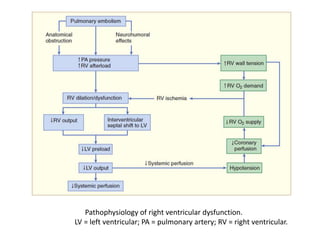
• Acute PE interferes with both the circulation and gas
exchange.
• Right ventricular (RV) failure due to pressure overload is
considered the primary cause of death in severe PE.
• PA pressure increases only if more than 30–50% of the
total cross-sectional area of the pulmonary arterial bed
is occluded by thromboemboli.
• PE-induced vasoconstriction, mediated by the release
of thromboxane A2 and serotonin, contributes to the
initial increase in pulmonary vascular resistance after
PE, an effect that can be reversed by vasodilators
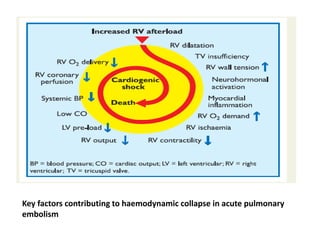
Key factors contributing to haemodynamic collapse in acute pulmonary
embolism
Pathophysiology of right ventricular dysfunction.
LV = left ventricular; PA = pulmonary artery; RV = right ventricular.
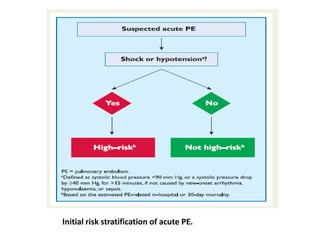
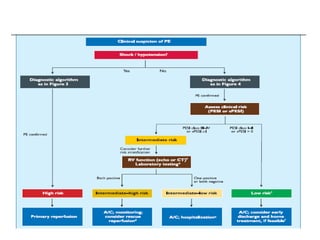
Initial risk stratification of acute PE.
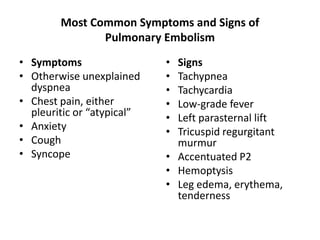
Most Common Symptoms and Signs of
Pulmonary Embolism
• Symptoms
• Otherwise unexplained
dyspnea
• Chest pain, either
pleuritic or “atypical”
• Anxiety
• Cough
• Syncope
• Signs
• Tachypnea
• Tachycardia
• Low-grade fever
• Left parasternal lift
• Tricuspid regurgitant
murmur
• Accentuated P2
• Hemoptysis
• Leg edema, erythema,
tenderness
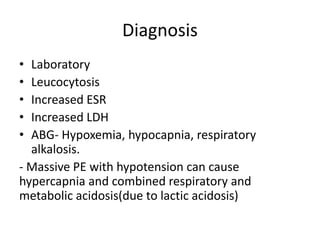
Diagnosis
• Laboratory
• Leucocytosis
• Increased ESR
• Increased LDH
• ABG- Hypoxemia, hypocapnia, respiratory
alkalosis.
- Massive PE with hypotension can cause
hypercapnia and combined respiratory and
metabolic acidosis(due to lactic acidosis)
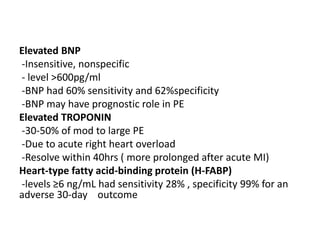
Elevated BNP
-Insensitive, nonspecific
- level >600pg/ml
-BNP had 60% sensitivity and 62%specificity
-BNP may have prognostic role in PE
Elevated TROPONIN
-30-50% of mod to large PE
-Due to acute right heart overload
-Resolve within 40hrs ( more prolonged after acute MI)
Heart-type fatty acid-binding protein (H-FABP)
-levels ≥6 ng/mL had sensitivity 28% , specificity 99% for an
adverse 30-day outcome
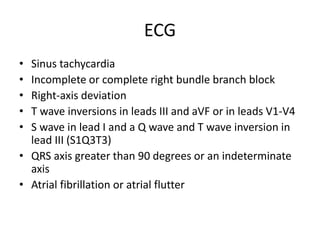
ECG
• Sinus tachycardia
• Incomplete or complete right bundle branch block
• Right-axis deviation
• T wave inversions in leads III and aVF or in leads V1-V4
• S wave in lead I and a Q wave and T wave inversion in
lead III (S1Q3T3)
• QRS axis greater than 90 degrees or an indeterminate
axis
• Atrial fibrillation or atrial flutter
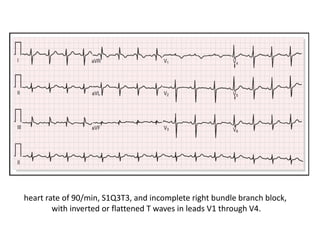
heart rate of 90/min, S1Q3T3, and incomplete right bundle branch block,
with inverted or flattened T waves in leads V1 through V4.
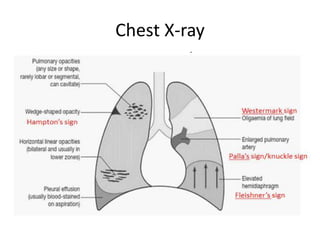
Chest X-ray
D-dimer
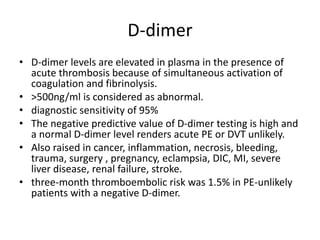
• D-dimer levels are elevated in plasma in the presence of
acute thrombosis because of simultaneous activation of
coagulation and fibrinolysis.
• >500ng/ml is considered as abnormal.
• diagnostic sensitivity of 95%
• The negative predictive value of D-dimer testing is high and
a normal D-dimer level renders acute PE or DVT unlikely.
• Also raised in cancer, inflammation, necrosis, bleeding,
trauma, surgery , pregnancy, eclampsia, DIC, MI, severe
liver disease, renal failure, stroke.
• three-month thromboembolic risk was 1.5% in PE-unlikely
patients with a negative D-dimer.
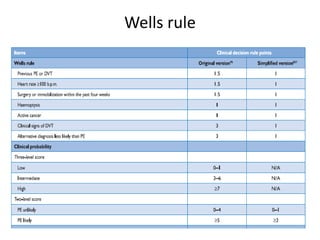
Wells rule
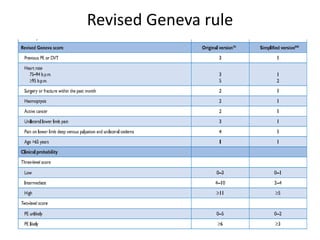
Revised Geneva rule
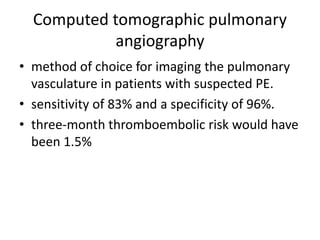
Computed tomographic pulmonary
angiography
• method of choice for imaging the pulmonary
vasculature in patients with suspected PE.
• sensitivity of 83% and a specificity of 96%.
• three-month thromboembolic risk would have
been 1.5%
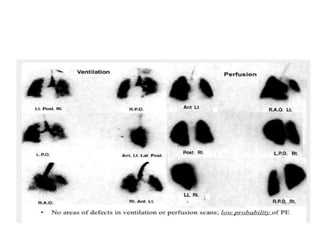
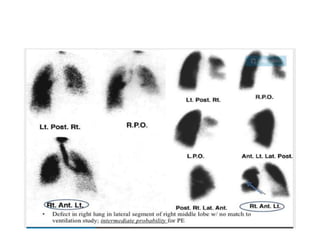
Lung scintigraphy (V/Q scan)
• Ventilation–perfusion scintigraphy (V/Q scan).
• Intravenous injection of technetium (Tc)-99m-
labelled macroaggregated albumin particles,
which block a small fraction of the pulmonary
capillaries and thereby enable scintigraphic
assessment of lung perfusion.
• Perfusion scans are combined with ventilation
studies, for which multiple tracers such as xenon-
133 gas, Tc-99m-labelled aerosols, or Tc-99m-
labelled carbon microparticles (Technegas) can
be used.
• Radiation exposure from a lung scan is 1.1
mSv for an average sized adult, and thus is
significantly lower than that of CT angiography
(2–6 mSv).
• Applied in young (particularly female)
patients, in pregnancy, h/o contrast medium-
induced anaphylaxis and strong allergic
history, in severe renal failure, and myeloma
and paraproteinaemia
Pulmonary angiography
• ‘gold standard’ for the diagnosis or exclusion
of PE.
• Pulmonary angiography is more often used to
guide percutaneous catheter-directed
treatment of acute PE.
Magnetic resonance angiography MRA
• low sensitivity,
• high proportion of inconclusive MRA scans,
• low availability in most emergency settings.
Echocardiography
• Right ventricular enlargement or hypokinesis, especially free wall
hypokinesis, with sparing of the apex (the McConnell sign)
• Interventricular septal flattening and paradoxical motion toward the left
ventricle, resulting in a D-shaped left ventricle in cross section
• Tricuspid regurgitation
• Pulmonary hypertension with a tricuspid regurgitant jet velocity >2.6
m/sec
• Loss of respiratory-phasic collapse of the inferior vena cava with
inspiration
• Dilated inferior vena cava without physiologic inspiratory collapse
• Direct visualization of thrombus (more likely with transesophageal
echocardiography)
Compression venous ultrasonography
• DVT was found in 30-50% of patients with
proven PE.
• sensitivity 90% and a specificity 95% for
symptomatic DVT
Diagnostic strategies
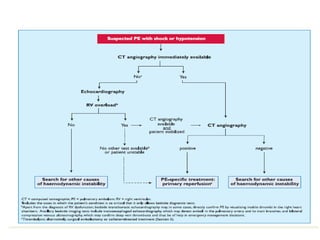
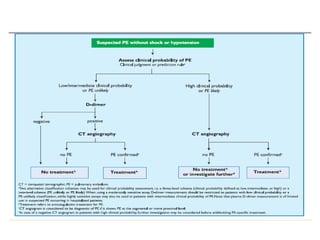
• Suspected pulmonary embolism with shock or
hypotension.
Prognostic assessment
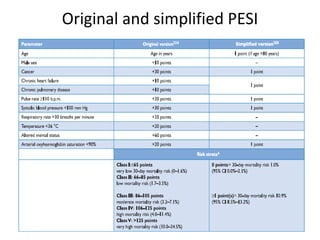
• pulmonary embolism severity index (PESI)
• PESI performed better than the older Geneva
prognostic score for identification of patients
with an adverse 30-day outcome.
Original and simplified PESI
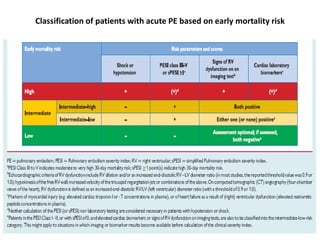
Classification of patients with acute PE based on early mortality risk
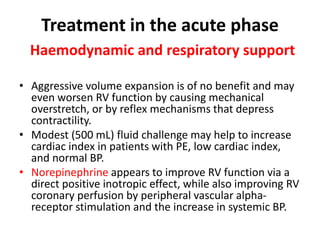
Treatment in the acute phase
Haemodynamic and respiratory support
• Aggressive volume expansion is of no benefit and may
even worsen RV function by causing mechanical
overstretch, or by reflex mechanisms that depress
contractility.
• Modest (500 mL) fluid challenge may help to increase
cardiac index in patients with PE, low cardiac index,
and normal BP.
• Norepinephrine appears to improve RV function via a
direct positive inotropic effect, while also improving RV
coronary perfusion by peripheral vascular alpha-
receptor stimulation and the increase in systemic BP.
• Epinephrine combines the beneficial properties of
norepinephrine and dobutamine, without the systemic
vasodilatory effects of the latter.
• Vasodilators decrease pulmonary arterial pressure and
pulmonary vascular resistance, but the main concern is the
lack of specificity of these drugs for the pulmonary
vasculature after systemic (intravenous)administration.
• Inhalation of nitric oxide may improve the haemodynamic
status and gas exchange of patients with PE.
• levosimendan may restore right ventricular–pulmonary
arterial coupling in acute PE by combining pulmonary
vasodilation with an increase in RV contractility
• Hypoxaemia and hypocapnia
• patent foramen ovale may aggravate
hypoxaemia due to Right to left shunting .
• Mechanical ventilation is required.
• Low tidal volumes (approximately 6 mL/kg
lean body weight) should be used in an
attempt to keep the end-inspiratory plateau
pressure,30 cm H2O.
Anticoagulation
• acute-phase treatment consists of administering
parenteral anticoagulation [unfractionated heparin
(UFH), low molecular weight heparin(LMWH), or
fondaparinux] over the first 5–10 days.
• Parenteral heparin should overlap with the initiation of
a vitamin K antagonist (VKA); alternatively, it can be
followed by administration of one of the new oral
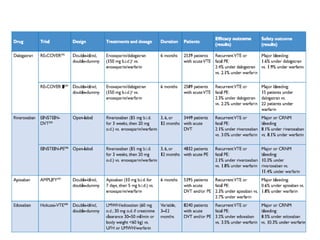
anticoagulants: dabigatran or edoxaban.
• If rivaroxaban or apixaban is given instead, oral
treatment with one of these agents should be started
directly or after a 1–2 day administration of UFH,
LMWH or fondaparinux.
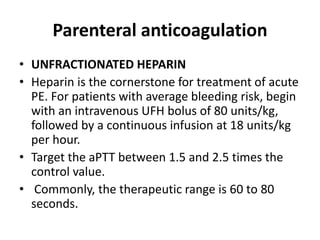
Parenteral anticoagulation
• UNFRACTIONATED HEPARIN
• Heparin is the cornerstone for treatment of acute
PE. For patients with average bleeding risk, begin
with an intravenous UFH bolus of 80 units/kg,
followed by a continuous infusion at 18 units/kg
per hour.
• Target the aPTT between 1.5 and 2.5 times the
control value.
• Commonly, the therapeutic range is 60 to 80
seconds.
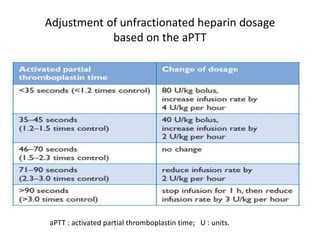
Adjustment of unfractionated heparin dosage
based on the aPTT
aPTT : activated partial thromboplastin time; U : units.
• LMWH or fondaparinux are preferred over
UFH for initial anticoagulation in PE, as they
carry a lower risk of inducing major bleeding
and heparin-induced thrombocytopenia (HIT).
• UFH is recommended in serious renal
impairment (creatinine clearance,30 mL/min),
or severe obesity.
• dosing of UFH is adjusted, based on the
activated partial thromboplastin time (aPTT)
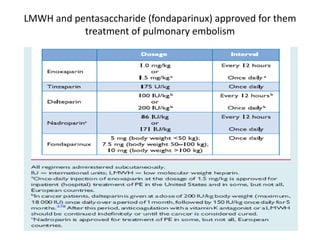
LMWH and pentasaccharide (fondaparinux) approved for them
treatment of pulmonary embolism
• Subcutaneous fondaparinux is contraindicated in
severe renal insufficiency (creatinine clearance -
30 mL/min).
• Moderate renal insufficiency (clearance 30–50
mL/min) - dose should be reduced by 50%.
• Anticoagulation with UFH, LMWH, or
fondaparinux should be continued for at least 5
days and until the international normalized ratio
(INR) has been 2.0–3.0 for two consecutive days.
Oral anticoagulation
Vitamin K antagonists
• Warfarin is a vitamin K antagonist that prevents
gammacarboxylation activation of coagulation factors
II, VII, IX, and X.
• The full anticoagulant effect of warfarin may not be
apparent for 5 to 7days, even if the prothrombin time,
used to monitor warfarin’s effect, becomes elevated
more rapidly
• Oral anticoagulants should be initiated as soon as
possible, and preferably on the same day as the
parenteral anticoagulant.
• The daily dose is adjusted according to the INR over
the next 5–7 days, aiming for an INR level of 2.0–3.0.
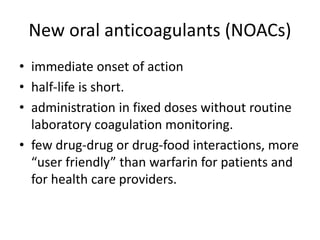
New oral anticoagulants (NOACs)
• immediate onset of action
• half-life is short.
• administration in fixed doses without routine
laboratory coagulation monitoring.
• few drug-drug or drug-food interactions, more
“user friendly” than warfarin for patients and
for health care providers.
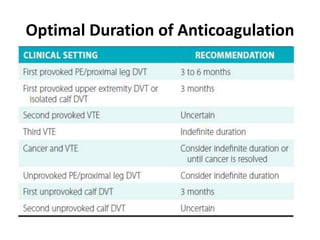
Optimal Duration of Anticoagulation
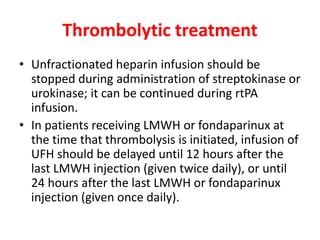
Thrombolytic treatment
• Unfractionated heparin infusion should be
stopped during administration of streptokinase or
urokinase; it can be continued during rtPA
infusion.
• In patients receiving LMWH or fondaparinux at
the time that thrombolysis is initiated, infusion of
UFH should be delayed until 12 hours after the
last LMWH injection (given twice daily), or until
24 hours after the last LMWH or fondaparinux
injection (given once daily).
• Greatest benefit is observed when treatment
is initiated within 48 hours of symptom onset.
• Thrombolysis can still be useful in patients
who have had symptoms for 6–14days.
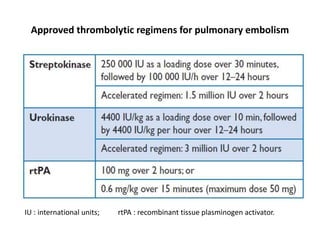
Approved thrombolytic regimens for pulmonary embolism
IU : international units; rtPA : recombinant tissue plasminogen activator.
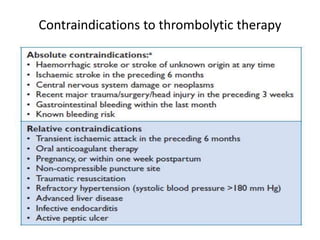
Contraindications to thrombolytic therapy
Surgical embolectomy
• The first successful surgical pulmonary
embolectomy was performed in 1924.
• Transportable extracorporeal assistance systems
with percutaneous femoral cannulation can be
helpful in critical situations, ensuring circulation
and oxygenation until definitive diagnosis.
• With bilateral PA incisions, clots can be removed
from both pulmonary arteries down to the
segmental level under direct vision.
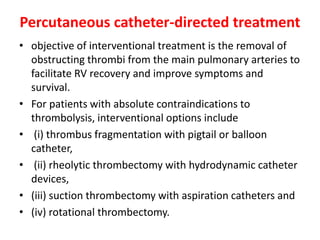
Percutaneous catheter-directed treatment
• objective of interventional treatment is the removal of
obstructing thrombi from the main pulmonary arteries to
facilitate RV recovery and improve symptoms and
survival.
• For patients with absolute contraindications to
thrombolysis, interventional options include
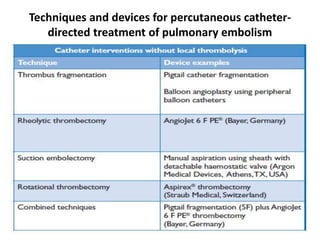
• (i) thrombus fragmentation with pigtail or balloon
catheter,
• (ii) rheolytic thrombectomy with hydrodynamic catheter
devices,
• (iii) suction thrombectomy with aspiration catheters and
• (iv) rotational thrombectomy.
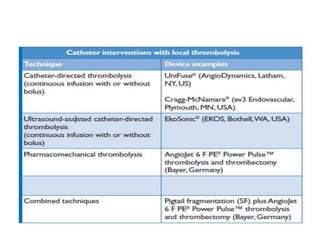
Techniques and devices for percutaneous catheter-
directed treatment of pulmonary embolism
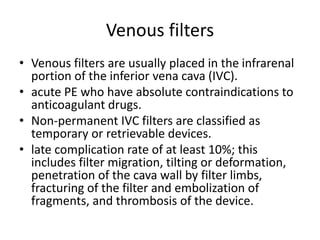
Venous filters
• Venous filters are usually placed in the infrarenal
portion of the inferior vena cava (IVC).
• acute PE who have absolute contraindications to
anticoagulant drugs.
• Non-permanent IVC filters are classified as
temporary or retrievable devices.
• late complication rate of at least 10%; this
includes filter migration, tilting or deformation,
penetration of the cava wall by filter limbs,
fracturing of the filter and embolization of
fragments, and thrombosis of the device.
• Thank you

Pulmonary embolism

  • 1.
  • 2.
    Introduction • Venous thromboembolism(VTE) encompasses deep vein thrombosis(DVT) and pulmonary embolism (PE). • It is the third most frequent cardiovascular disease with an overall annual incidence of 100– 200 per 100 000 inhabitants. • The epidemiology of PE is difficult to determine because it may remain asymptomatic, or its diagnosis may be an incidental finding. • in some cases, the first presentation of PE may be sudden death
  • 3.
    Predisposing factors • VTEis considered to be ‘provoked’ in the presence of a temporary or reversible risk factor (such as surgery, trauma, immobilization, pregnancy, oral contraceptive use or hormone replacement therapy)within the last 6 weeks to 3 months before diagnosis, and ‘unprovoked’ in the absence thereof.
  • 4.
    Modifiable Risk Factors •Obesity • Metabolic syndrome • Cigarette smoking • Hypertension • Abnormal lipid profile • High consumption of red meat • low consumption of fish, fruits, and vegetables
  • 5.
    Not Readily Modifiable •Advancing age • Arterial disease, including carotid and coronary disease • Personal or family history of venous thromboembolism • Recent surgery, trauma, or immobility, including stroke • Congestive heart failure • Chronic obstructive pulmonary disease • Acute infection • Air pollution • Long-haul air travel • Pregnancy, OC pills, or postmenopausal hormone replacement therapy • Pacemaker, implantable cardiac defibrillator leads, or indwelling central venous catheter • Hypercoagulable states • Factor V Leiden resulting in activated protein C resistance • Prothrombin gene mutation 20210 • Antithrombin deficiency • Protein C deficiency • Protein S deficiency • Antiphospholipid antibody syndrome
  • 6.
    • Massive PEaccounts for 5-10% of cases, and is characterized by extensive thrombosis affecting at least half of the pulmonary vasculature. Dyspnea, syncope, hypotension, and cyanosis are hallmarks of massive PE. • Patients with massive PE may present in cardiogenic shock and can die from multisystem organ failure. • Submassive PE accounts for 20-25% of patients, and is characterized by RV dysfunction despite normal systemic arterial pressure. The combination of right heart failure and release of cardiac biomarkers indicates an increased likelihood of clinical deterioration. • Low-risk PE constitutes about 70-75% of cases. These patients have an excellent prognosls.
  • 7.
    Pathophysiology • Acute PEinterferes with both the circulation and gas exchange. • Right ventricular (RV) failure due to pressure overload is considered the primary cause of death in severe PE. • PA pressure increases only if more than 30–50% of the total cross-sectional area of the pulmonary arterial bed is occluded by thromboemboli. • PE-induced vasoconstriction, mediated by the release of thromboxane A2 and serotonin, contributes to the initial increase in pulmonary vascular resistance after PE, an effect that can be reversed by vasodilators
  • 8.
    Key factors contributingto haemodynamic collapse in acute pulmonary embolism
  • 9.
    Pathophysiology of rightventricular dysfunction. LV = left ventricular; PA = pulmonary artery; RV = right ventricular.
  • 10.
  • 11.
    Most Common Symptomsand Signs of Pulmonary Embolism • Symptoms • Otherwise unexplained dyspnea • Chest pain, either pleuritic or “atypical” • Anxiety • Cough • Syncope • Signs • Tachypnea • Tachycardia • Low-grade fever • Left parasternal lift • Tricuspid regurgitant murmur • Accentuated P2 • Hemoptysis • Leg edema, erythema, tenderness
  • 12.
    Diagnosis • Laboratory • Leucocytosis •Increased ESR • Increased LDH • ABG- Hypoxemia, hypocapnia, respiratory alkalosis. - Massive PE with hypotension can cause hypercapnia and combined respiratory and metabolic acidosis(due to lactic acidosis)
  • 13.
    Elevated BNP -Insensitive, nonspecific -level >600pg/ml -BNP had 60% sensitivity and 62%specificity -BNP may have prognostic role in PE Elevated TROPONIN -30-50% of mod to large PE -Due to acute right heart overload -Resolve within 40hrs ( more prolonged after acute MI) Heart-type fatty acid-binding protein (H-FABP) -levels ≥6 ng/mL had sensitivity 28% , specificity 99% for an adverse 30-day outcome
  • 14.
    ECG • Sinus tachycardia •Incomplete or complete right bundle branch block • Right-axis deviation • T wave inversions in leads III and aVF or in leads V1-V4 • S wave in lead I and a Q wave and T wave inversion in lead III (S1Q3T3) • QRS axis greater than 90 degrees or an indeterminate axis • Atrial fibrillation or atrial flutter
  • 15.
    heart rate of90/min, S1Q3T3, and incomplete right bundle branch block, with inverted or flattened T waves in leads V1 through V4.
  • 16.
  • 17.
    D-dimer • D-dimer levelsare elevated in plasma in the presence of acute thrombosis because of simultaneous activation of coagulation and fibrinolysis. • >500ng/ml is considered as abnormal. • diagnostic sensitivity of 95% • The negative predictive value of D-dimer testing is high and a normal D-dimer level renders acute PE or DVT unlikely. • Also raised in cancer, inflammation, necrosis, bleeding, trauma, surgery , pregnancy, eclampsia, DIC, MI, severe liver disease, renal failure, stroke. • three-month thromboembolic risk was 1.5% in PE-unlikely patients with a negative D-dimer.
  • 18.
  • 19.
  • 20.
    Computed tomographic pulmonary angiography •method of choice for imaging the pulmonary vasculature in patients with suspected PE. • sensitivity of 83% and a specificity of 96%. • three-month thromboembolic risk would have been 1.5%
  • 21.
    Lung scintigraphy (V/Qscan) • Ventilation–perfusion scintigraphy (V/Q scan). • Intravenous injection of technetium (Tc)-99m- labelled macroaggregated albumin particles, which block a small fraction of the pulmonary capillaries and thereby enable scintigraphic assessment of lung perfusion. • Perfusion scans are combined with ventilation studies, for which multiple tracers such as xenon- 133 gas, Tc-99m-labelled aerosols, or Tc-99m- labelled carbon microparticles (Technegas) can be used.
  • 22.
    • Radiation exposurefrom a lung scan is 1.1 mSv for an average sized adult, and thus is significantly lower than that of CT angiography (2–6 mSv). • Applied in young (particularly female) patients, in pregnancy, h/o contrast medium- induced anaphylaxis and strong allergic history, in severe renal failure, and myeloma and paraproteinaemia
  • 25.
    Pulmonary angiography • ‘goldstandard’ for the diagnosis or exclusion of PE. • Pulmonary angiography is more often used to guide percutaneous catheter-directed treatment of acute PE.
  • 26.
    Magnetic resonance angiographyMRA • low sensitivity, • high proportion of inconclusive MRA scans, • low availability in most emergency settings.
  • 27.
    Echocardiography • Right ventricularenlargement or hypokinesis, especially free wall hypokinesis, with sparing of the apex (the McConnell sign) • Interventricular septal flattening and paradoxical motion toward the left ventricle, resulting in a D-shaped left ventricle in cross section • Tricuspid regurgitation • Pulmonary hypertension with a tricuspid regurgitant jet velocity >2.6 m/sec • Loss of respiratory-phasic collapse of the inferior vena cava with inspiration • Dilated inferior vena cava without physiologic inspiratory collapse • Direct visualization of thrombus (more likely with transesophageal echocardiography)
  • 28.
    Compression venous ultrasonography •DVT was found in 30-50% of patients with proven PE. • sensitivity 90% and a specificity 95% for symptomatic DVT
  • 29.
    Diagnostic strategies • Suspectedpulmonary embolism with shock or hypotension.
  • 32.
    Prognostic assessment • pulmonaryembolism severity index (PESI) • PESI performed better than the older Geneva prognostic score for identification of patients with an adverse 30-day outcome.
  • 33.
  • 34.
    Classification of patientswith acute PE based on early mortality risk
  • 35.
    Treatment in theacute phase Haemodynamic and respiratory support • Aggressive volume expansion is of no benefit and may even worsen RV function by causing mechanical overstretch, or by reflex mechanisms that depress contractility. • Modest (500 mL) fluid challenge may help to increase cardiac index in patients with PE, low cardiac index, and normal BP. • Norepinephrine appears to improve RV function via a direct positive inotropic effect, while also improving RV coronary perfusion by peripheral vascular alpha- receptor stimulation and the increase in systemic BP.
  • 36.
    • Epinephrine combinesthe beneficial properties of norepinephrine and dobutamine, without the systemic vasodilatory effects of the latter. • Vasodilators decrease pulmonary arterial pressure and pulmonary vascular resistance, but the main concern is the lack of specificity of these drugs for the pulmonary vasculature after systemic (intravenous)administration. • Inhalation of nitric oxide may improve the haemodynamic status and gas exchange of patients with PE. • levosimendan may restore right ventricular–pulmonary arterial coupling in acute PE by combining pulmonary vasodilation with an increase in RV contractility
  • 37.
    • Hypoxaemia andhypocapnia • patent foramen ovale may aggravate hypoxaemia due to Right to left shunting . • Mechanical ventilation is required. • Low tidal volumes (approximately 6 mL/kg lean body weight) should be used in an attempt to keep the end-inspiratory plateau pressure,30 cm H2O.
  • 38.
    Anticoagulation • acute-phase treatmentconsists of administering parenteral anticoagulation [unfractionated heparin (UFH), low molecular weight heparin(LMWH), or fondaparinux] over the first 5–10 days. • Parenteral heparin should overlap with the initiation of a vitamin K antagonist (VKA); alternatively, it can be followed by administration of one of the new oral anticoagulants: dabigatran or edoxaban. • If rivaroxaban or apixaban is given instead, oral treatment with one of these agents should be started directly or after a 1–2 day administration of UFH, LMWH or fondaparinux.
  • 39.
    Parenteral anticoagulation • UNFRACTIONATEDHEPARIN • Heparin is the cornerstone for treatment of acute PE. For patients with average bleeding risk, begin with an intravenous UFH bolus of 80 units/kg, followed by a continuous infusion at 18 units/kg per hour. • Target the aPTT between 1.5 and 2.5 times the control value. • Commonly, the therapeutic range is 60 to 80 seconds.
  • 40.
    Adjustment of unfractionatedheparin dosage based on the aPTT aPTT : activated partial thromboplastin time; U : units.
  • 41.
    • LMWH orfondaparinux are preferred over UFH for initial anticoagulation in PE, as they carry a lower risk of inducing major bleeding and heparin-induced thrombocytopenia (HIT). • UFH is recommended in serious renal impairment (creatinine clearance,30 mL/min), or severe obesity. • dosing of UFH is adjusted, based on the activated partial thromboplastin time (aPTT)
  • 42.
    LMWH and pentasaccharide(fondaparinux) approved for them treatment of pulmonary embolism
  • 43.
    • Subcutaneous fondaparinuxis contraindicated in severe renal insufficiency (creatinine clearance - 30 mL/min). • Moderate renal insufficiency (clearance 30–50 mL/min) - dose should be reduced by 50%. • Anticoagulation with UFH, LMWH, or fondaparinux should be continued for at least 5 days and until the international normalized ratio (INR) has been 2.0–3.0 for two consecutive days.
  • 44.
    Oral anticoagulation Vitamin Kantagonists • Warfarin is a vitamin K antagonist that prevents gammacarboxylation activation of coagulation factors II, VII, IX, and X. • The full anticoagulant effect of warfarin may not be apparent for 5 to 7days, even if the prothrombin time, used to monitor warfarin’s effect, becomes elevated more rapidly • Oral anticoagulants should be initiated as soon as possible, and preferably on the same day as the parenteral anticoagulant. • The daily dose is adjusted according to the INR over the next 5–7 days, aiming for an INR level of 2.0–3.0.
  • 45.
    New oral anticoagulants(NOACs) • immediate onset of action • half-life is short. • administration in fixed doses without routine laboratory coagulation monitoring. • few drug-drug or drug-food interactions, more “user friendly” than warfarin for patients and for health care providers.
  • 47.
    Optimal Duration ofAnticoagulation
  • 48.
    Thrombolytic treatment • Unfractionatedheparin infusion should be stopped during administration of streptokinase or urokinase; it can be continued during rtPA infusion. • In patients receiving LMWH or fondaparinux at the time that thrombolysis is initiated, infusion of UFH should be delayed until 12 hours after the last LMWH injection (given twice daily), or until 24 hours after the last LMWH or fondaparinux injection (given once daily).
  • 49.
    • Greatest benefitis observed when treatment is initiated within 48 hours of symptom onset. • Thrombolysis can still be useful in patients who have had symptoms for 6–14days.
  • 50.
    Approved thrombolytic regimensfor pulmonary embolism IU : international units; rtPA : recombinant tissue plasminogen activator.
  • 51.
  • 52.
    Surgical embolectomy • Thefirst successful surgical pulmonary embolectomy was performed in 1924. • Transportable extracorporeal assistance systems with percutaneous femoral cannulation can be helpful in critical situations, ensuring circulation and oxygenation until definitive diagnosis. • With bilateral PA incisions, clots can be removed from both pulmonary arteries down to the segmental level under direct vision.
  • 53.
    Percutaneous catheter-directed treatment •objective of interventional treatment is the removal of obstructing thrombi from the main pulmonary arteries to facilitate RV recovery and improve symptoms and survival. • For patients with absolute contraindications to thrombolysis, interventional options include • (i) thrombus fragmentation with pigtail or balloon catheter, • (ii) rheolytic thrombectomy with hydrodynamic catheter devices, • (iii) suction thrombectomy with aspiration catheters and • (iv) rotational thrombectomy.
  • 54.
    Techniques and devicesfor percutaneous catheter- directed treatment of pulmonary embolism
  • 56.
    Venous filters • Venousfilters are usually placed in the infrarenal portion of the inferior vena cava (IVC). • acute PE who have absolute contraindications to anticoagulant drugs. • Non-permanent IVC filters are classified as temporary or retrievable devices. • late complication rate of at least 10%; this includes filter migration, tilting or deformation, penetration of the cava wall by filter limbs, fracturing of the filter and embolization of fragments, and thrombosis of the device.
  • 58.