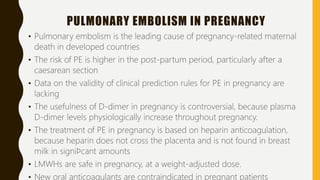
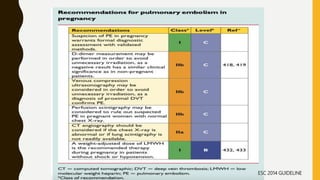
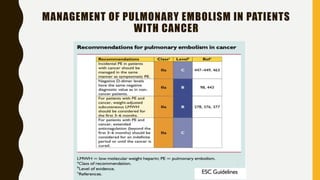
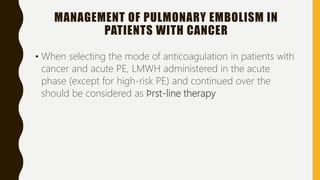
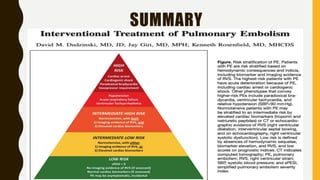
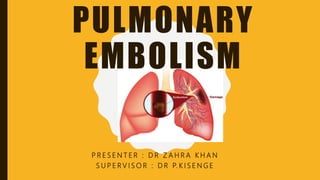
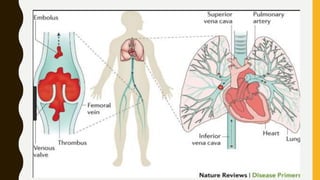
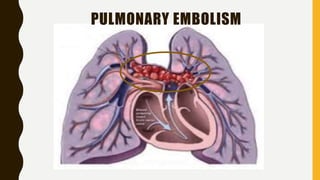
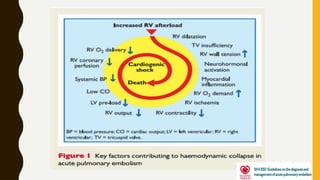
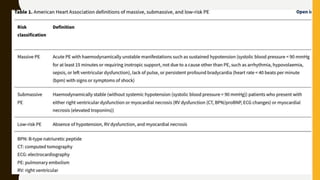
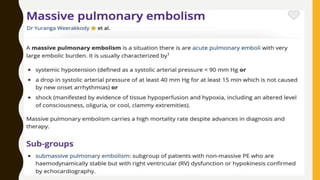
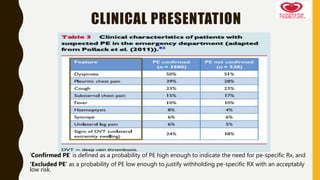
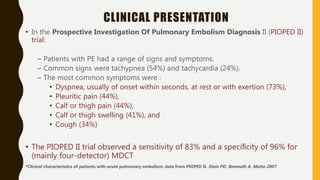
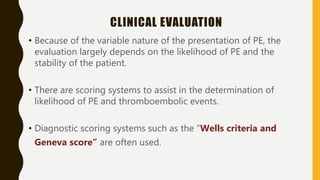
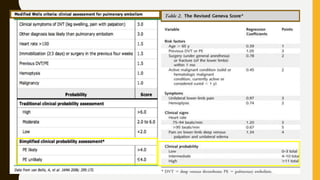
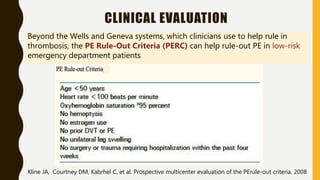
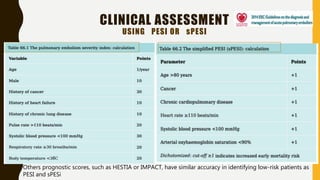
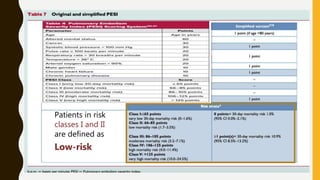
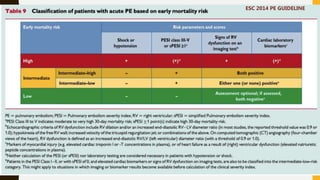
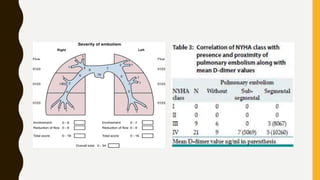
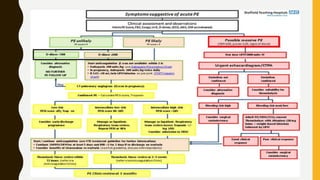
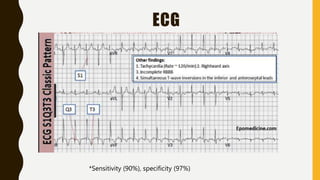
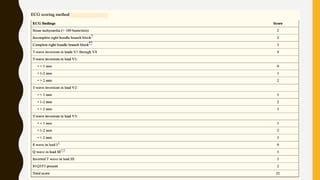
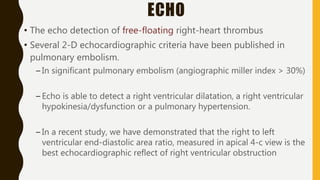
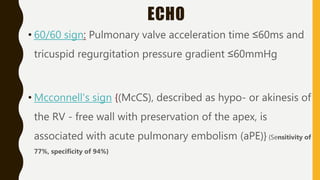
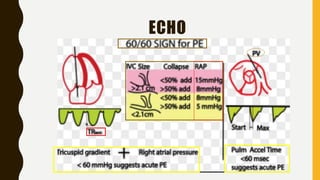
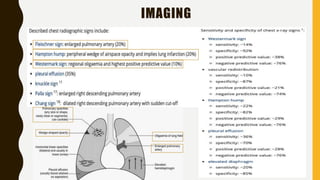
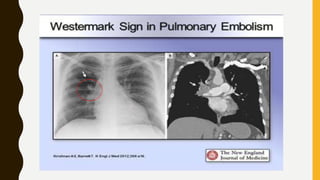
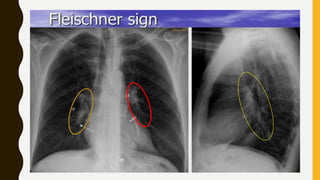
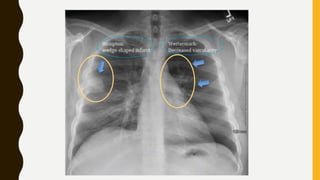
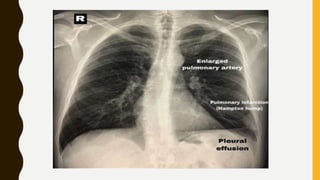
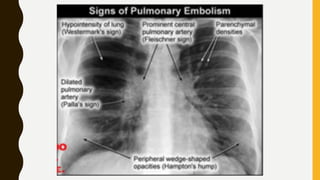
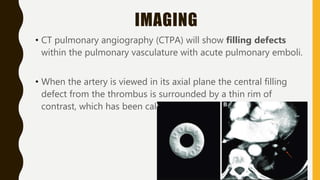
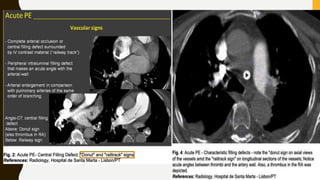
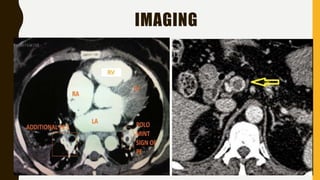
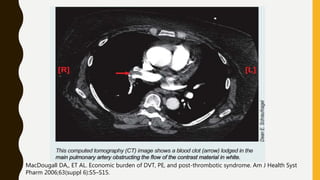
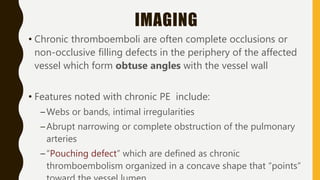
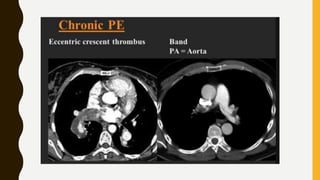
Pulmonary embolism is a blockage in one of the pulmonary arteries in the lungs. It can be life-threatening and cause symptoms like shortness of breath, chest pain, and coughing up blood. The document discusses the pathophysiology, risk factors, clinical presentation, diagnostic workup and imaging for pulmonary embolism. It notes that imaging tests like CT scans, ultrasound of the heart and lungs, and ventilation-perfusion scans are used to diagnose pulmonary embolism, and that electrocardiograms and blood tests are also part of the evaluation. Assessment tools like the PESI score are used to determine the severity and risk.




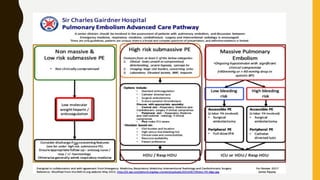
![LABORATORY INVESTIGATION
• In blood gas analysis:
– Hypoxaemia is considered a typical finding in acute PE, but up to 40% of the
the patients have normal arterial oxygen saturation and 20% a normal
alveolar-arterial oxygen gradient.[normal PaO2 (ABG: 75-100mmHg vs VBG
35-40mmhg)]
– Hypocapnia is also often present [normal PCO2 (ABG: 38-42mmHg vs VBG
41-51mmhg)]
– Respiratory alkalosis (normal PH :7.38-7.42 ; HCO3 : 22-28mEq/L)](https://image.slidesharecdn.com/pulmonaryembolism-190629085041-220812055002-65821b36/85/pulmonaryembolism-190629085041-pdf-31-320.jpg)
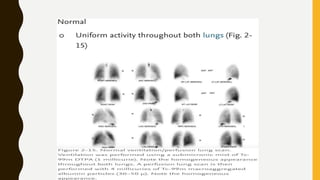
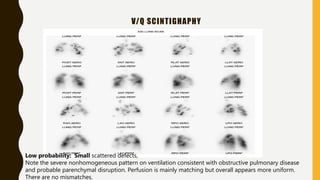
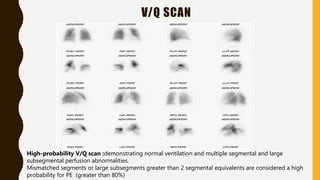

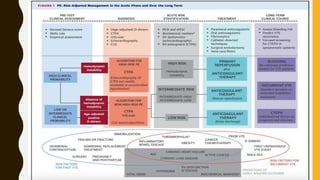
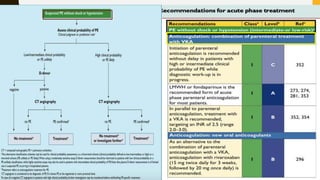
![TREATMENT
• Anticoagulation
– In patients with acute PE, anticoagulation is recommended, with the
objective of preventing both early death and recurrent symptomatic
or fatal VTE.
– The standard duration of anticoagulation, at least 3 months :Within
this period, acute-phase Rx consists of administering parenteral
anticoagulation
• Unfractionated heparin (UFH) : 75U/kg iv bolus then infusion of
18U/kg/hr
• Low molecular weight heparin (LMWH) 1mg/kg s/c , or fondaparinux]
• Over the first 5–10 days
• Target INR (2.0 -3.0)
• STG guideline 2017
• ACCP guidelines 2008](https://image.slidesharecdn.com/pulmonaryembolism-190629085041-220812055002-65821b36/85/pulmonaryembolism-190629085041-pdf-74-320.jpg)
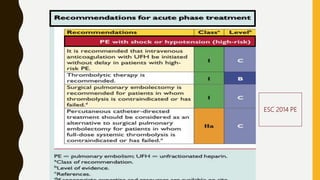
![MANAGEMENT OF BLEEDING
• The first step is to discontinue both the thrombolytic and anticoagulation
infusions.
• The next step is to institute supportive therapy, which may include the
application of pressure to bleeding sites, volume repletion with blood
products and fluids, and emergency surgery.
– Protamine sulfate is an antidote to heparin overdose.
• The dose required for heparin reversal is 1mg of protamine for every 100U of
heparin, for a max. 50 mg [Considering heparin’s t1/2 (60 to 90 minutes) when
calculating the protamine dose]
– Aminocaproic acid: 4 g to 5 g should be injected into a 250-ml bag of
diluent and administered over one hour.
– Cryoprecipitate may be indicated in pts (treatment should be reserved for
life-threatening situations)
– IV tranexamic acid has also been used in patients with post-tPA bleeding.](https://image.slidesharecdn.com/pulmonaryembolism-190629085041-220812055002-65821b36/85/pulmonaryembolism-190629085041-pdf-99-320.jpg)