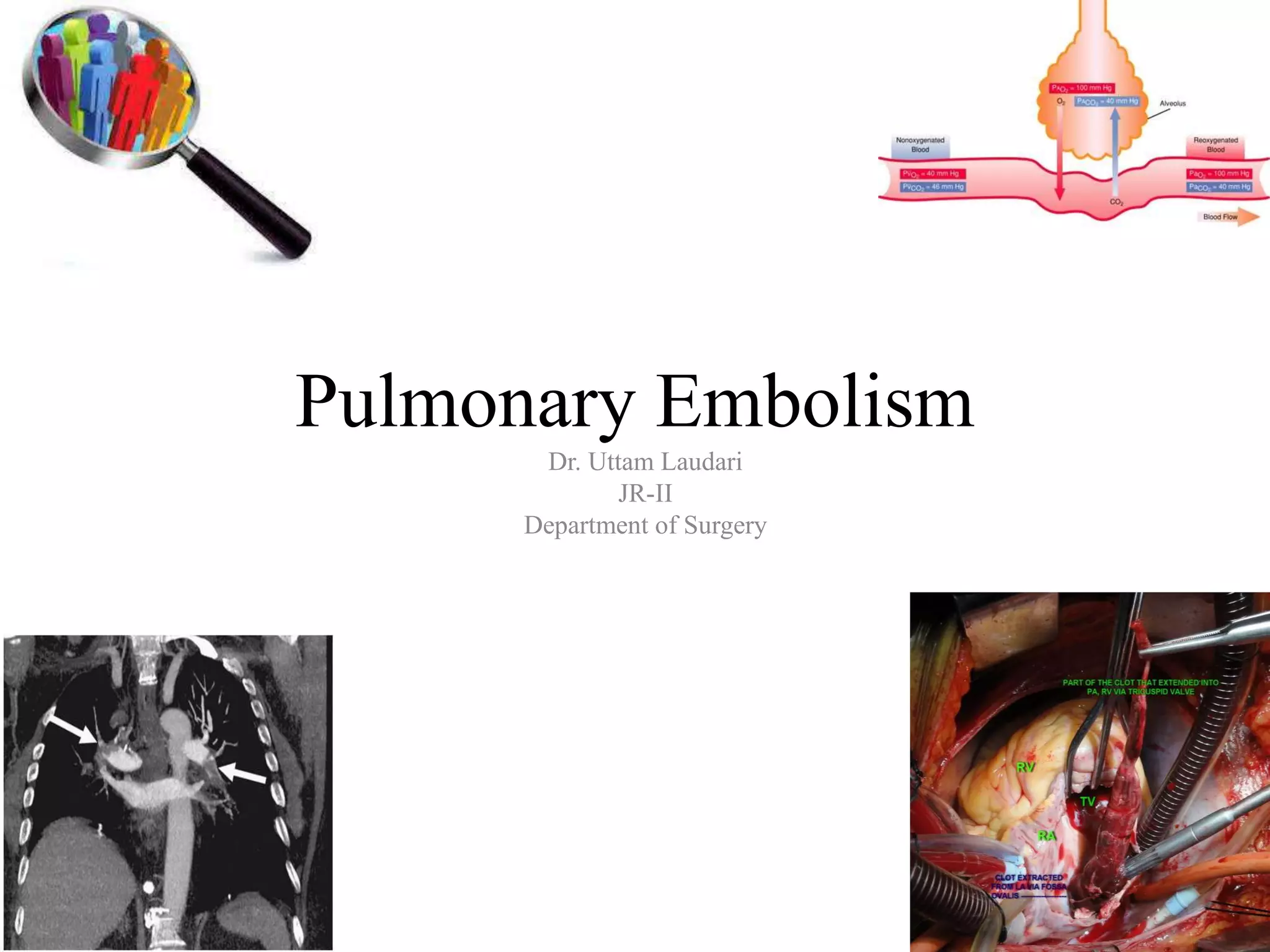


Pulmonary Embolism
Dr. Uttam Laudari
JR-II
Department of Surgery
Epidemiology
• Venous thromboembolism (VTE) encompasses deep vein thrombosis
(DVT) and pulmonary embolism (PE).
• It is the third most frequent cardiovascular disease with an overall annual
incidence of 100–200 per 100 000 inhabitants.1
• VTE may be lethal in the acute phase or lead to chronic disease and
disability, but it is also often preventable.
Heit JA. The epidemiology of venous thromboembolism in the community. Arterioscler
Thromb Vasc Biol 2008;28(3):370–372.
Disease burden
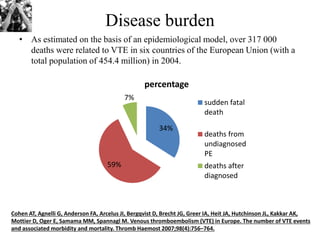
• As estimated on the basis of an epidemiological model, over 317 000
deaths were related to VTE in six countries of the European Union (with a
total population of 454.4 million) in 2004.
34%
59%
7%
percentage
sudden fatal
death
deaths from
undiagnosed
PE
deaths after
diagnosed
Cohen AT, Agnelli G, Anderson FA, Arcelus JI, Bergqvist D, Brecht JG, Greer IA, Heit JA, Hutchinson JL, Kakkar AK,
Mottier D, Oger E, Samama MM, Spannagl M. Venous thromboembolism (VTE) in Europe. The number of VTE events
and associated morbidity and mortality. Thromb Haemost 2007;98(4):756–764.
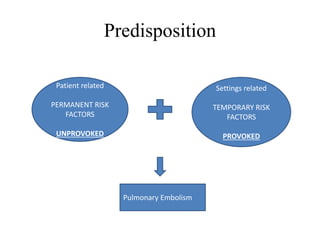
Predisposition
Patient related
PERMANENT RISK
FACTORS
UNPROVOKED
Settings related
TEMPORARY RISK
FACTORS
PROVOKED
Pulmonary Embolism
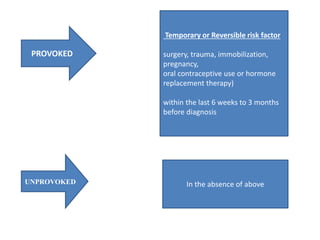
Temporary or Reversible risk factor
surgery, trauma, immobilization,
pregnancy,
oral contraceptive use or hormone
replacement therapy)
within the last 6 weeks to 3 months
before diagnosis
PROVOKED
UNPROVOKED In the absence of above
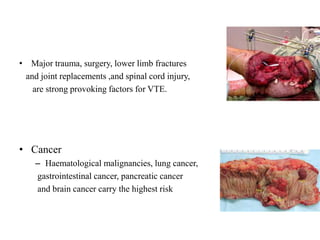
• Major trauma, surgery, lower limb fractures
and joint replacements ,and spinal cord injury,
are strong provoking factors for VTE.
• Cancer
– Haematological malignancies, lung cancer,
gastrointestinal cancer, pancreatic cancer
and brain cancer carry the highest risk
• OCPS
• Pregnancy
– risk is highest in the third trimester of pregnancy and over the 6 weeks of the postpartum
period, being up to 60 times higher compared with the risk in non-pregnant women
• post-menopausal women who receive hormone replacement therapy
• Infection
• Blood transfusion and erythropoiesis-stimulating agents
• Children's- chronic medical conditions, Central lines
• cigarette smoking, obesity, hypercholesterolaemia, hypertension and diabetes
mellitus
• Myocardial infarction and heart failure
Pathophysiology
Embolization
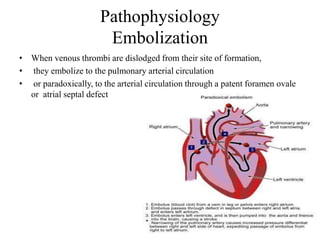
• When venous thrombi are dislodged from their site of formation,
• they embolize to the pulmonary arterial circulation
• or paradoxically, to the arterial circulation through a patent foramen ovale
or atrial septal defect
• About one-half of patients with pelvic vein thrombosis or proximal leg DVT
develop PE, which is often asymptomatic.
• Isolated calf vein thrombi pose a much lower risk of PE but
are the most common source of paradoxical embolism.
• These tiny thrombi can traverse a patent foramen ovale or
atrial septal defect, unlike larger, more proximal leg thrombi.
Physiology
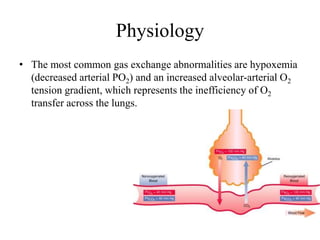
• The most common gas exchange abnormalities are hypoxemia
(decreased arterial PO2) and an increased alveolar-arterial O2
tension gradient, which represents the inefficiency of O2
transfer across the lungs.
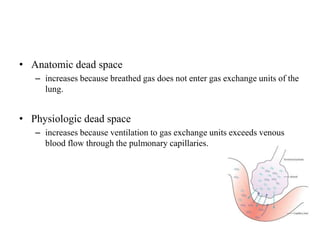
• Anatomic dead space
– increases because breathed gas does not enter gas exchange units of the
lung.
• Physiologic dead space
– increases because ventilation to gas exchange units exceeds venous
blood flow through the pulmonary capillaries.
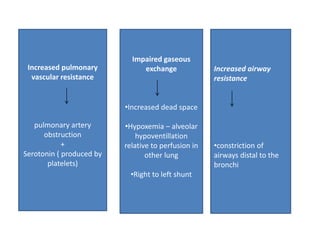
Increased pulmonary
vascular resistance
pulmonary artery
obstruction
+
Serotonin ( produced by
platelets)
Impaired gaseous
exchange
•Increased dead space
•Hypoxemia – alveolar
hypoventillation
relative to perfusion in
other lung
•Right to left shunt
Increased airway
resistance
•constriction of
airways distal to the
bronchi
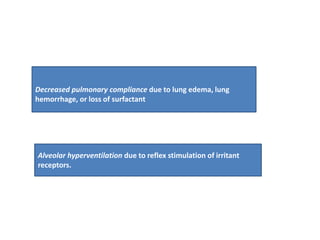
Decreased pulmonary compliance due to lung edema, lung
hemorrhage, or loss of surfactant
Alveolar hyperventilation due to reflex stimulation of irritant
receptors.
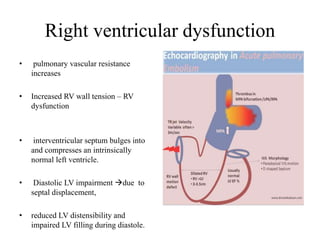
Right ventricular dysfunction
• pulmonary vascular resistance
increases
• Increased RV wall tension – RV
dysfunction
• interventricular septum bulges into
and compresses an intrinsically
normal left ventricle.
• Diastolic LV impairment due to
septal displacement,
• reduced LV distensibility and
impaired LV filling during diastole.
Right ventricular dysfunction
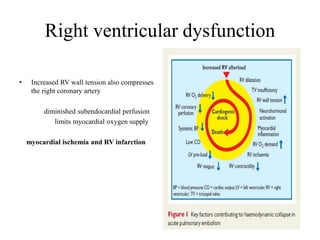
• Increased RV wall tension also compresses
the right coronary artery
diminished subendocardial perfusion
limits myocardial oxygen supply
myocardial ischemia and RV infarction
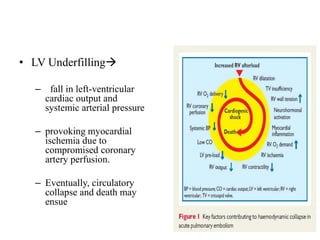
• LV Underfilling
– fall in left-ventricular
cardiac output and
systemic arterial pressure
– provoking myocardial
ischemia due to
compromised coronary
artery perfusion.
– Eventually, circulatory
collapse and death may
ensue
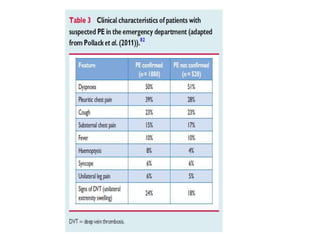
• Dyspnoea
– may be acute and severe in central PE
– in small peripheral PE, it is often mild and may be transient.
– In patients with pre-existing heart failure or pulmonary disease,
worsening dyspnoea may be the only symptom indicative of PE
• Chest pain
– caused by pleural irritation due to distal emboli causing pulmonary
infarction
– In central PE, chest pain may have a typical angina character, possibly
reflecting RV ischaemia and requiring differential diagnosis with
acute coronary syndrome (ACS) or aortic dissection
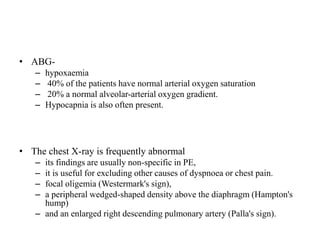
• ABG-
– hypoxaemia
– 40% of the patients have normal arterial oxygen saturation
– 20% a normal alveolar-arterial oxygen gradient.
– Hypocapnia is also often present.
• The chest X-ray is frequently abnormal
– its findings are usually non-specific in PE,
– it is useful for excluding other causes of dyspnoea or chest pain.
– focal oligemia (Westermark's sign),
– a peripheral wedged-shaped density above the diaphragm (Hampton's
hump)
– and an enlarged right descending pulmonary artery (Palla's sign).
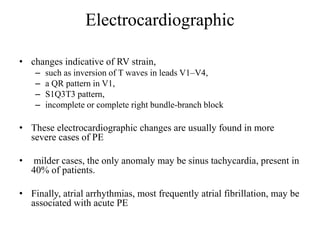
Electrocardiographic
• changes indicative of RV strain,
– such as inversion of T waves in leads V1–V4,
– a QR pattern in V1,
– S1Q3T3 pattern,
– incomplete or complete right bundle-branch block
• These electrocardiographic changes are usually found in more
severe cases of PE
• milder cases, the only anomaly may be sinus tachycardia, present in
40% of patients.
• Finally, atrial arrhythmias, most frequently atrial fibrillation, may be
associated with acute PE
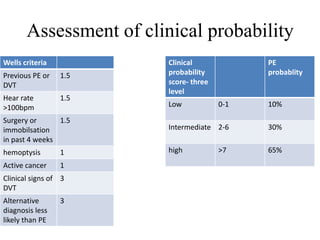
Assessment of clinical probability
Wells criteria
Previous PE or
DVT
1.5
Hear rate
>100bpm
1.5
Surgery or
immobilsation
in past 4 weeks
1.5
hemoptysis 1
Active cancer 1
Clinical signs of
DVT
3
Alternative
diagnosis less
likely than PE
3
Clinical
probability
score- three
level
PE
probablity
Low 0-1 10%
Intermediate 2-6 30%
high >7 65%
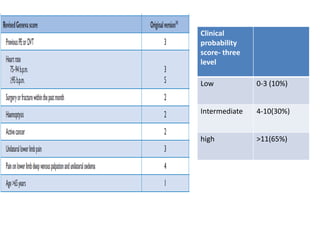
Clinical
probability
score- three
level
Low 0-3 (10%)
Intermediate 4-10(30%)
high >11(65%)
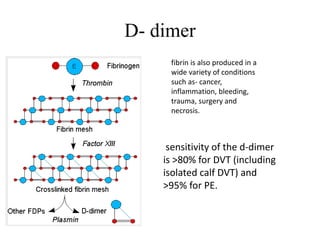
D- dimer
fibrin is also produced in a
wide variety of conditions
such as- cancer,
inflammation, bleeding,
trauma, surgery and
necrosis.
sensitivity of the d-dimer
is >80% for DVT (including
isolated calf DVT) and
>95% for PE.
D- dimer
• The d-dimer is less sensitive for DVT than for PE because the
DVT thrombus size is smaller.
• The d-dimer is a useful "rule out" test.
• More than 95% of patients with a normal (<500 ng/mL) d-
dimer do not have PE.
• The specificity of D-dimer in suspected PE decreases steadily with age, to
almost 10% in patients >80 years
• Recent evidence suggests using age-adjusted cut-offs to improve the
performance of D-dimer testing in the elderly
• In a recent meta-analysis, age-adjusted cut-off values (age x 10 mg/L
above 50 years) allowed increasing specificity from 34–46% while
retaining a sensitivity above 97%
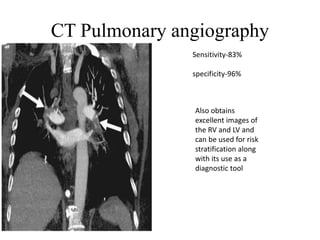
CT Pulmonary angiography
Sensitivity-83%
specificity-96%
Also obtains
excellent images of
the RV and LV and
can be used for risk
stratification along
with its use as a
diagnostic tool
CT Pulmonary angiography
• It allows adequate visualization of the pulmonary arteries down to at least the
segmental level
• RV enlargement on chest CT indicates an increased likelihood of death within the
next 30 days compared with PE patients who have normal RV size on chest CT.
• imaging is continued below the chest to the knee pelvic and proximal leg DVT
also can be diagnosed by CT scanning.
• Rules out other
– pneumonia, emphysema, pulmonary fibrosis, pulmonary mass, and aortic pathology.
Lung scintigraphy
• second-line diagnostic test for PE
• used mostly for patients who cannot tolerate intravenous contrast
• Small particulate aggregates of albumin labeled with a gamma-
emitting radionuclide are injected intravenously and are trapped in
the pulmonary capillary bed
• perfusion scan defect indicates absent or decreased blood flow,
possibly due to PE.
• Ventilation scans, obtained with a radiolabeled inhaled gas such as
xenon or krypton, improve the specificity of the perfusion scan.
Lung scintigraphy
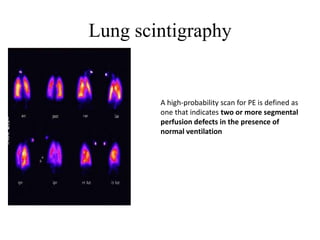
A high-probability scan for PE is defined as
one that indicates two or more segmental
perfusion defects in the presence of
normal ventilation
Lung scintigraphy
• Being a radiation- and contrast medium-sparing procedure, the V/Q scan
may preferentially be applied in outpatients with low clinical probability
and a normal chest X-ray,
– in young (particularly female) patients
– pregnancy
– history of contrast medium-induced anaphylaxis and strong allergic history,
– severe renal failure,
– myeloma and paraproteinaemia
Magnetic Resonance (MR)
• suspected VTE patients with renal insufficiency or contrast
dye allergy.
• may detect large proximal PE but is not reliable for smaller
segmental and subsegmental PE.
Echocardiography
• useful diagnostic tool for detecting conditions that may mimic
PE, such as acute myocardial infarction, pericardial
tamponade, and aortic dissection
• The best-known indirect sign of PE on transthoracic
echocardiography is McConnell's sign: hypokinesis of the RV
free wall with normal motion of the RV apex
Pulmonary angiography
• technically unsatisfactory chest CTs
• interventional procedure such as catheter-directed
thrombolysis or embolectomy is planned.
• visualization of an intraluminal filling defect in more than
one projection.
• Secondary signs of PE include abrupt occlusion ("cut-off")
of vessels, segmental oligemia or avascularity, a prolonged
arterial phase with slow filling, and tortuous, tapering
peripheral vessels.
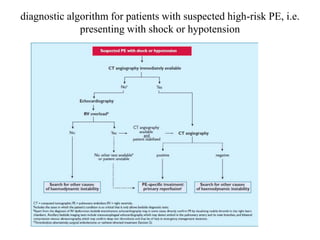
diagnostic algorithm for patients with suspected high-risk PE, i.e.
presenting with shock or hypotension
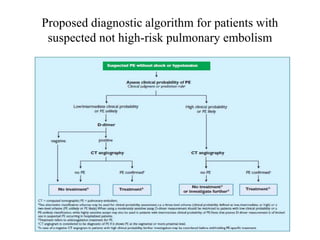
Proposed diagnostic algorithm for patients with
suspected not high-risk pulmonary embolism
Treatment in Acute phase
• Hemodynamic and respiratory support
• Acute RV failure with resulting low systemic output is the
leading cause of death in patients with high-risk PE.
• Therefore, supportive treatment is vital in patients with PE and
RV failure
• Fluid
– aggressive volume expansion is of no benefit
– worsen RV function by causing mechanical overstretch, or
by reflex mechanisms that depress contractility
– modest (500 mL) fluid challenge may help to increase
cardiac index in patients with PE, low cardiac index, and
normal BP
Vasopressors
• often necessary, in parallel with (or while waiting for) pharmacological,
surgical, or interventional reperfusion treatment.
• Norepinephrine
– improve RV function via a direct positive inotropic effect
– improves RV coronary perfusion by peripheral vascular alpha-receptor
stimulation and the increase in systemic BP
– Its use should probably be limited to hypotensive patient
• Epinephrine combines the beneficial properties of
norepinephrine and dobutamine, without the systemic
vasodilatory effects of the latter.
• It may therefore exert beneficial effects in patients with PE and
shock.
Vasodilators
– decrease pulmonary arterial pressure and pulmonary vascular
resistance,
– but the main concern is the lack of specificity of these drugs for the
pulmonary vasculature after systemic (intravenous) administration
– Inhalation of nitric oxide may improve the haemodynamic status and
gas exchange of patients with PE
Respiratory support
• Hypoxaemia and hypocapnia are frequently encountered in
patients with PE, but they are of moderate severity in most
cases.
– oxygen
– mechanical ventilation
• Mechanical ventilation
– Careful to limit its adverse haemodynamic effects
– the positive intrathoracic pressuremay reduce venous
return and worsen RV failure in patients with massive PE
– Low tidal volumes (approximately 6 mL/kg lean body
weight) and end-inspiratory plateau pressure 30 cm H2O.
Anticoagulation
• In patients with acute PE, anticoagulation is recommended, with the
objective of preventing both early death and recurrent symptomatic or fatal
VTE
• The standard duration of anticoagulation should cover at least 3 months
• acute-phase treatment consists of administering parenteral anticoagulation
[unfractionated heparin (UFH), LMWH or fondaparinux] over the first 5–
10 days.
• Parenteral heparin should overlap with the initiation of a vitamin K
antagonist (VKA)
UFH
• Binds to antithombin III
• inhibits factor IIa ( Thrombin) and facto Xa and also F
IXa,XIa and XIIA of coagulation cascade
• Dose-
– IV bolus- 80u/kg
– Followed by continious IV drip at 18units/kg/hr
– T1/2- 45-90min (dose dependent)
– Monitoring- aPTT 6hourly
– aPTT goal- 1.5 to 2 times the control value
Complication of UFH
1.Hemorrahage
– Fatal, intracranial hemorrhage, retroperitoneal or
requiring >2 unit of packed red cell is aprox 5 % in
hospitalized patient
• Management
– Discontinue UFH
– Protamine sulphate
• 1mg protamine neutralizes 90-115 unit of heparin
• Dose not to exceed 50mg IV over any 10 min
Complication of UFH
2. HIT
• Results due to heparin associated antiplatelets antibody
complex
• Repeated heparin exposure( vascular Sx- 21%)
• Occurs m/c in 2nd week of therapy
• Platelet counts to be monitored periodically
• Dx- exposure to Heparin + platelets <100,000 and/ or
decline in 50% of platelet following exposure
Complication of UFH
3. Heparin induced osteopenia
impairment of bone formation and enhancement of
bone resorption by heparin
LMWH(enoxaparin)
• Derived from polymerization of porcine UFH
• Act more on F Xa
• Increased bioavailability
• 2-4 times longer half life
• Can be administered S.C without lab monitoring
• Img/kg 12hrly and 1.5mg/kg OD
• Partially reversible by protamine (60%)
• Patient requiring monitoring
– Severe renal impairment, pediatrics,pregnants, wt>120kg
• HIT <2%
• Established HIT- not be used
• Outpatient treatment
• Reduce hospital stay
Fondaparinux
• Synthetic petasaccharide
• Activated antithrombin and Xa inhibiion
• Recurrent VTE- 3.8-5%
• Major bleeding- 2-2.6%
• Administered – SC once daily dose
• Half life 17 hour
Direct thrombin inhibitors
• Hirudin,argatroban and bivalirudin
• Binds thrombin and inhibiting conversion of fribrinogen to
fibrin and fribrin induced thrombocytopenia
• Used for high suspicion/confirmed HIT or with history of
HIT or HAAb positive cases
• Requires aPTT adjustment
Vitamin K antagonist
• Main stay of long term antithrombotic therapy
• Warfarin and other coumarin derivatives
• Inhibits gamma carboxyaltion of Vit K dependent factors and protein C and S
• Requires several days to achieve full effect ( 4-5 days)
• Monitored by INR
• INR= (patient PT/lab normal PT)*ISI
• ISI- international senstivity index- strength of thromboplastin that is added to
activate the extrinsic coagualtion pathway
warfarin
• Therapeutic range- 2-3
• To be started on same day of starting parenteral
anticoagualation ( except with concomitant thrombolysis and
venous thrombectomy)
• Usual starting dose 50-10mg
• Smaller dose for older, malnourished, liver disease and CHF
• Variability of response
– Depends upon Liver funtion, diet, age and medicaitons used
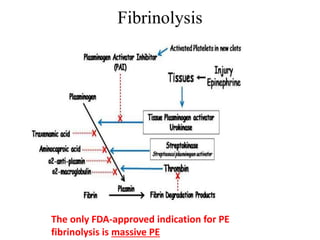
Fibrinolysis
The only FDA-approved indication for PE
fibrinolysis is massive PE
Fibrinolysis
• rapidly reverses right heart failure and may result in a lower
rate of death and recurrent PE
– dissolving much of the anatomically obstructing pulmonary arterial
thrombus
– preventing the continued release of serotonin and other neurohumoral
factors that exacerbate pulmonary hypertension
– lysing much of the source of the thrombus in the pelvic or deep leg
veins, thereby decreasing the likelihood of recurrent PE.
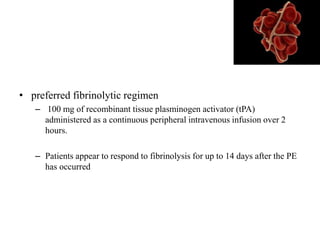
• preferred fibrinolytic regimen
– 100 mg of recombinant tissue plasminogen activator (tPA)
administered as a continuous peripheral intravenous infusion over 2
hours.
– Patients appear to respond to fibrinolysis for up to 14 days after the PE
has occurred
Contraindication of Fibrinolysis
• intracranial disease
• recent surgery and trauma
• The overall major bleeding rate is about 10%, including a 1–
3% risk of intracranial hemorrhage.
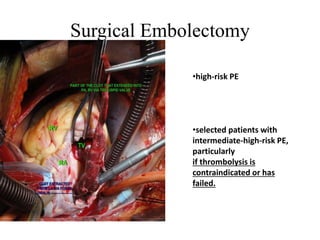
Surgical Embolectomy
•high-risk PE
•selected patients with
intermediate-high-risk PE,
particularly
if thrombolysis is
contraindicated or has
failed.
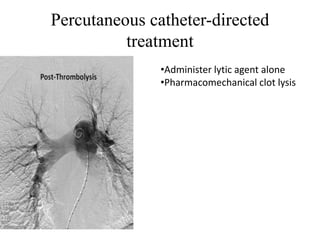
Percutaneous catheter-directed
treatment
•Administer lytic agent alone
•Pharmacomechanical clot lysis
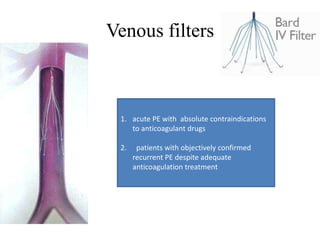
Venous filters
1. acute PE with absolute contraindications
to anticoagulant drugs
2. patients with objectively confirmed
recurrent PE despite adequate
anticoagulation treatment
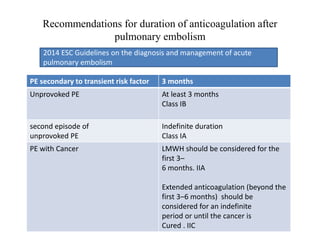
Recommendations for duration of anticoagulation after
pulmonary embolism
PE secondary to transient risk factor 3 months
Unprovoked PE At least 3 months
Class IB
second episode of
unprovoked PE
Indefinite duration
Class IA
PE with Cancer LMWH should be considered for the
first 3–
6 months. IIA
Extended anticoagulation (beyond the
first 3–6 months) should be
considered for an indefinite
period or until the cancer is
Cured . IIC
2014 ESC Guidelines on the diagnosis and management of acute
pulmonary embolism
In patients who receive extended anticoagulation, the risk–benefit ratio
of continuing such treatment should be reassessed at regular intervals. IC
In patients who refuse to take or are unable to tolerate any form of oral
anticoagulants, aspirin may be considered for extended secondary VTE
prophylaxis. IIB
2014 ESC Guidelines on the diagnosis and management of acute
pulmonary embolism
Summary

Pulmonary embolism

  • 1.
    Pulmonary Embolism Dr. UttamLaudari JR-II Department of Surgery
  • 2.
    Epidemiology • Venous thromboembolism(VTE) encompasses deep vein thrombosis (DVT) and pulmonary embolism (PE). • It is the third most frequent cardiovascular disease with an overall annual incidence of 100–200 per 100 000 inhabitants.1 • VTE may be lethal in the acute phase or lead to chronic disease and disability, but it is also often preventable. Heit JA. The epidemiology of venous thromboembolism in the community. Arterioscler Thromb Vasc Biol 2008;28(3):370–372.
  • 3.
    Disease burden • Asestimated on the basis of an epidemiological model, over 317 000 deaths were related to VTE in six countries of the European Union (with a total population of 454.4 million) in 2004. 34% 59% 7% percentage sudden fatal death deaths from undiagnosed PE deaths after diagnosed Cohen AT, Agnelli G, Anderson FA, Arcelus JI, Bergqvist D, Brecht JG, Greer IA, Heit JA, Hutchinson JL, Kakkar AK, Mottier D, Oger E, Samama MM, Spannagl M. Venous thromboembolism (VTE) in Europe. The number of VTE events and associated morbidity and mortality. Thromb Haemost 2007;98(4):756–764.
  • 5.
    Predisposition Patient related PERMANENT RISK FACTORS UNPROVOKED Settingsrelated TEMPORARY RISK FACTORS PROVOKED Pulmonary Embolism
  • 6.
    Temporary or Reversiblerisk factor surgery, trauma, immobilization, pregnancy, oral contraceptive use or hormone replacement therapy) within the last 6 weeks to 3 months before diagnosis PROVOKED UNPROVOKED In the absence of above
  • 7.
    • Major trauma,surgery, lower limb fractures and joint replacements ,and spinal cord injury, are strong provoking factors for VTE. • Cancer – Haematological malignancies, lung cancer, gastrointestinal cancer, pancreatic cancer and brain cancer carry the highest risk
  • 8.
    • OCPS • Pregnancy –risk is highest in the third trimester of pregnancy and over the 6 weeks of the postpartum period, being up to 60 times higher compared with the risk in non-pregnant women • post-menopausal women who receive hormone replacement therapy • Infection • Blood transfusion and erythropoiesis-stimulating agents • Children's- chronic medical conditions, Central lines • cigarette smoking, obesity, hypercholesterolaemia, hypertension and diabetes mellitus • Myocardial infarction and heart failure
  • 9.
    Pathophysiology Embolization • When venousthrombi are dislodged from their site of formation, • they embolize to the pulmonary arterial circulation • or paradoxically, to the arterial circulation through a patent foramen ovale or atrial septal defect
  • 10.
    • About one-halfof patients with pelvic vein thrombosis or proximal leg DVT develop PE, which is often asymptomatic. • Isolated calf vein thrombi pose a much lower risk of PE but are the most common source of paradoxical embolism. • These tiny thrombi can traverse a patent foramen ovale or atrial septal defect, unlike larger, more proximal leg thrombi.
  • 11.
    Physiology • The mostcommon gas exchange abnormalities are hypoxemia (decreased arterial PO2) and an increased alveolar-arterial O2 tension gradient, which represents the inefficiency of O2 transfer across the lungs.
  • 12.
    • Anatomic deadspace – increases because breathed gas does not enter gas exchange units of the lung. • Physiologic dead space – increases because ventilation to gas exchange units exceeds venous blood flow through the pulmonary capillaries.
  • 13.
    Increased pulmonary vascular resistance pulmonaryartery obstruction + Serotonin ( produced by platelets) Impaired gaseous exchange •Increased dead space •Hypoxemia – alveolar hypoventillation relative to perfusion in other lung •Right to left shunt Increased airway resistance •constriction of airways distal to the bronchi
  • 14.
    Decreased pulmonary compliancedue to lung edema, lung hemorrhage, or loss of surfactant Alveolar hyperventilation due to reflex stimulation of irritant receptors.
  • 15.
    Right ventricular dysfunction •pulmonary vascular resistance increases • Increased RV wall tension – RV dysfunction • interventricular septum bulges into and compresses an intrinsically normal left ventricle. • Diastolic LV impairment due to septal displacement, • reduced LV distensibility and impaired LV filling during diastole.
  • 16.
    Right ventricular dysfunction •Increased RV wall tension also compresses the right coronary artery diminished subendocardial perfusion limits myocardial oxygen supply myocardial ischemia and RV infarction
  • 17.
    • LV Underfilling –fall in left-ventricular cardiac output and systemic arterial pressure – provoking myocardial ischemia due to compromised coronary artery perfusion. – Eventually, circulatory collapse and death may ensue
  • 19.
    • Dyspnoea – maybe acute and severe in central PE – in small peripheral PE, it is often mild and may be transient. – In patients with pre-existing heart failure or pulmonary disease, worsening dyspnoea may be the only symptom indicative of PE • Chest pain – caused by pleural irritation due to distal emboli causing pulmonary infarction – In central PE, chest pain may have a typical angina character, possibly reflecting RV ischaemia and requiring differential diagnosis with acute coronary syndrome (ACS) or aortic dissection
  • 20.
    • ABG- – hypoxaemia –40% of the patients have normal arterial oxygen saturation – 20% a normal alveolar-arterial oxygen gradient. – Hypocapnia is also often present. • The chest X-ray is frequently abnormal – its findings are usually non-specific in PE, – it is useful for excluding other causes of dyspnoea or chest pain. – focal oligemia (Westermark's sign), – a peripheral wedged-shaped density above the diaphragm (Hampton's hump) – and an enlarged right descending pulmonary artery (Palla's sign).
  • 21.
    Electrocardiographic • changes indicativeof RV strain, – such as inversion of T waves in leads V1–V4, – a QR pattern in V1, – S1Q3T3 pattern, – incomplete or complete right bundle-branch block • These electrocardiographic changes are usually found in more severe cases of PE • milder cases, the only anomaly may be sinus tachycardia, present in 40% of patients. • Finally, atrial arrhythmias, most frequently atrial fibrillation, may be associated with acute PE
  • 23.
    Assessment of clinicalprobability Wells criteria Previous PE or DVT 1.5 Hear rate >100bpm 1.5 Surgery or immobilsation in past 4 weeks 1.5 hemoptysis 1 Active cancer 1 Clinical signs of DVT 3 Alternative diagnosis less likely than PE 3 Clinical probability score- three level PE probablity Low 0-1 10% Intermediate 2-6 30% high >7 65%
  • 24.
    Clinical probability score- three level Low 0-3(10%) Intermediate 4-10(30%) high >11(65%)
  • 25.
    D- dimer fibrin isalso produced in a wide variety of conditions such as- cancer, inflammation, bleeding, trauma, surgery and necrosis. sensitivity of the d-dimer is >80% for DVT (including isolated calf DVT) and >95% for PE.
  • 26.
    D- dimer • Thed-dimer is less sensitive for DVT than for PE because the DVT thrombus size is smaller. • The d-dimer is a useful "rule out" test. • More than 95% of patients with a normal (<500 ng/mL) d- dimer do not have PE.
  • 27.
    • The specificityof D-dimer in suspected PE decreases steadily with age, to almost 10% in patients >80 years • Recent evidence suggests using age-adjusted cut-offs to improve the performance of D-dimer testing in the elderly • In a recent meta-analysis, age-adjusted cut-off values (age x 10 mg/L above 50 years) allowed increasing specificity from 34–46% while retaining a sensitivity above 97%
  • 28.
    CT Pulmonary angiography Sensitivity-83% specificity-96% Alsoobtains excellent images of the RV and LV and can be used for risk stratification along with its use as a diagnostic tool
  • 29.
    CT Pulmonary angiography •It allows adequate visualization of the pulmonary arteries down to at least the segmental level • RV enlargement on chest CT indicates an increased likelihood of death within the next 30 days compared with PE patients who have normal RV size on chest CT. • imaging is continued below the chest to the knee pelvic and proximal leg DVT also can be diagnosed by CT scanning. • Rules out other – pneumonia, emphysema, pulmonary fibrosis, pulmonary mass, and aortic pathology.
  • 30.
    Lung scintigraphy • second-linediagnostic test for PE • used mostly for patients who cannot tolerate intravenous contrast • Small particulate aggregates of albumin labeled with a gamma- emitting radionuclide are injected intravenously and are trapped in the pulmonary capillary bed • perfusion scan defect indicates absent or decreased blood flow, possibly due to PE. • Ventilation scans, obtained with a radiolabeled inhaled gas such as xenon or krypton, improve the specificity of the perfusion scan.
  • 31.
    Lung scintigraphy A high-probabilityscan for PE is defined as one that indicates two or more segmental perfusion defects in the presence of normal ventilation
  • 32.
    Lung scintigraphy • Beinga radiation- and contrast medium-sparing procedure, the V/Q scan may preferentially be applied in outpatients with low clinical probability and a normal chest X-ray, – in young (particularly female) patients – pregnancy – history of contrast medium-induced anaphylaxis and strong allergic history, – severe renal failure, – myeloma and paraproteinaemia
  • 33.
    Magnetic Resonance (MR) •suspected VTE patients with renal insufficiency or contrast dye allergy. • may detect large proximal PE but is not reliable for smaller segmental and subsegmental PE.
  • 34.
    Echocardiography • useful diagnostictool for detecting conditions that may mimic PE, such as acute myocardial infarction, pericardial tamponade, and aortic dissection • The best-known indirect sign of PE on transthoracic echocardiography is McConnell's sign: hypokinesis of the RV free wall with normal motion of the RV apex
  • 35.
    Pulmonary angiography • technicallyunsatisfactory chest CTs • interventional procedure such as catheter-directed thrombolysis or embolectomy is planned. • visualization of an intraluminal filling defect in more than one projection. • Secondary signs of PE include abrupt occlusion ("cut-off") of vessels, segmental oligemia or avascularity, a prolonged arterial phase with slow filling, and tortuous, tapering peripheral vessels.
  • 36.
    diagnostic algorithm forpatients with suspected high-risk PE, i.e. presenting with shock or hypotension
  • 37.
    Proposed diagnostic algorithmfor patients with suspected not high-risk pulmonary embolism
  • 38.
    Treatment in Acutephase • Hemodynamic and respiratory support • Acute RV failure with resulting low systemic output is the leading cause of death in patients with high-risk PE. • Therefore, supportive treatment is vital in patients with PE and RV failure
  • 39.
    • Fluid – aggressivevolume expansion is of no benefit – worsen RV function by causing mechanical overstretch, or by reflex mechanisms that depress contractility – modest (500 mL) fluid challenge may help to increase cardiac index in patients with PE, low cardiac index, and normal BP
  • 40.
    Vasopressors • often necessary,in parallel with (or while waiting for) pharmacological, surgical, or interventional reperfusion treatment. • Norepinephrine – improve RV function via a direct positive inotropic effect – improves RV coronary perfusion by peripheral vascular alpha-receptor stimulation and the increase in systemic BP – Its use should probably be limited to hypotensive patient
  • 41.
    • Epinephrine combinesthe beneficial properties of norepinephrine and dobutamine, without the systemic vasodilatory effects of the latter. • It may therefore exert beneficial effects in patients with PE and shock.
  • 42.
    Vasodilators – decrease pulmonaryarterial pressure and pulmonary vascular resistance, – but the main concern is the lack of specificity of these drugs for the pulmonary vasculature after systemic (intravenous) administration – Inhalation of nitric oxide may improve the haemodynamic status and gas exchange of patients with PE
  • 43.
    Respiratory support • Hypoxaemiaand hypocapnia are frequently encountered in patients with PE, but they are of moderate severity in most cases. – oxygen – mechanical ventilation
  • 44.
    • Mechanical ventilation –Careful to limit its adverse haemodynamic effects – the positive intrathoracic pressuremay reduce venous return and worsen RV failure in patients with massive PE – Low tidal volumes (approximately 6 mL/kg lean body weight) and end-inspiratory plateau pressure 30 cm H2O.
  • 45.
    Anticoagulation • In patientswith acute PE, anticoagulation is recommended, with the objective of preventing both early death and recurrent symptomatic or fatal VTE • The standard duration of anticoagulation should cover at least 3 months • acute-phase treatment consists of administering parenteral anticoagulation [unfractionated heparin (UFH), LMWH or fondaparinux] over the first 5– 10 days. • Parenteral heparin should overlap with the initiation of a vitamin K antagonist (VKA)
  • 46.
    UFH • Binds toantithombin III • inhibits factor IIa ( Thrombin) and facto Xa and also F IXa,XIa and XIIA of coagulation cascade • Dose- – IV bolus- 80u/kg – Followed by continious IV drip at 18units/kg/hr – T1/2- 45-90min (dose dependent) – Monitoring- aPTT 6hourly – aPTT goal- 1.5 to 2 times the control value
  • 47.
    Complication of UFH 1.Hemorrahage –Fatal, intracranial hemorrhage, retroperitoneal or requiring >2 unit of packed red cell is aprox 5 % in hospitalized patient • Management – Discontinue UFH – Protamine sulphate • 1mg protamine neutralizes 90-115 unit of heparin • Dose not to exceed 50mg IV over any 10 min
  • 48.
    Complication of UFH 2.HIT • Results due to heparin associated antiplatelets antibody complex • Repeated heparin exposure( vascular Sx- 21%) • Occurs m/c in 2nd week of therapy • Platelet counts to be monitored periodically • Dx- exposure to Heparin + platelets <100,000 and/ or decline in 50% of platelet following exposure
  • 49.
    Complication of UFH 3.Heparin induced osteopenia impairment of bone formation and enhancement of bone resorption by heparin
  • 50.
    LMWH(enoxaparin) • Derived frompolymerization of porcine UFH • Act more on F Xa • Increased bioavailability • 2-4 times longer half life • Can be administered S.C without lab monitoring • Img/kg 12hrly and 1.5mg/kg OD • Partially reversible by protamine (60%) • Patient requiring monitoring – Severe renal impairment, pediatrics,pregnants, wt>120kg • HIT <2% • Established HIT- not be used • Outpatient treatment • Reduce hospital stay
  • 51.
    Fondaparinux • Synthetic petasaccharide •Activated antithrombin and Xa inhibiion • Recurrent VTE- 3.8-5% • Major bleeding- 2-2.6% • Administered – SC once daily dose • Half life 17 hour
  • 52.
    Direct thrombin inhibitors •Hirudin,argatroban and bivalirudin • Binds thrombin and inhibiting conversion of fribrinogen to fibrin and fribrin induced thrombocytopenia • Used for high suspicion/confirmed HIT or with history of HIT or HAAb positive cases • Requires aPTT adjustment
  • 53.
    Vitamin K antagonist •Main stay of long term antithrombotic therapy • Warfarin and other coumarin derivatives • Inhibits gamma carboxyaltion of Vit K dependent factors and protein C and S • Requires several days to achieve full effect ( 4-5 days) • Monitored by INR • INR= (patient PT/lab normal PT)*ISI • ISI- international senstivity index- strength of thromboplastin that is added to activate the extrinsic coagualtion pathway
  • 54.
    warfarin • Therapeutic range-2-3 • To be started on same day of starting parenteral anticoagualation ( except with concomitant thrombolysis and venous thrombectomy) • Usual starting dose 50-10mg • Smaller dose for older, malnourished, liver disease and CHF • Variability of response – Depends upon Liver funtion, diet, age and medicaitons used
  • 55.
    Fibrinolysis The only FDA-approvedindication for PE fibrinolysis is massive PE
  • 56.
    Fibrinolysis • rapidly reversesright heart failure and may result in a lower rate of death and recurrent PE – dissolving much of the anatomically obstructing pulmonary arterial thrombus – preventing the continued release of serotonin and other neurohumoral factors that exacerbate pulmonary hypertension – lysing much of the source of the thrombus in the pelvic or deep leg veins, thereby decreasing the likelihood of recurrent PE.
  • 57.
    • preferred fibrinolyticregimen – 100 mg of recombinant tissue plasminogen activator (tPA) administered as a continuous peripheral intravenous infusion over 2 hours. – Patients appear to respond to fibrinolysis for up to 14 days after the PE has occurred
  • 58.
    Contraindication of Fibrinolysis •intracranial disease • recent surgery and trauma • The overall major bleeding rate is about 10%, including a 1– 3% risk of intracranial hemorrhage.
  • 59.
    Surgical Embolectomy •high-risk PE •selectedpatients with intermediate-high-risk PE, particularly if thrombolysis is contraindicated or has failed.
  • 60.
    Percutaneous catheter-directed treatment •Administer lyticagent alone •Pharmacomechanical clot lysis
  • 61.
    Venous filters 1. acutePE with absolute contraindications to anticoagulant drugs 2. patients with objectively confirmed recurrent PE despite adequate anticoagulation treatment
  • 62.
    Recommendations for durationof anticoagulation after pulmonary embolism PE secondary to transient risk factor 3 months Unprovoked PE At least 3 months Class IB second episode of unprovoked PE Indefinite duration Class IA PE with Cancer LMWH should be considered for the first 3– 6 months. IIA Extended anticoagulation (beyond the first 3–6 months) should be considered for an indefinite period or until the cancer is Cured . IIC 2014 ESC Guidelines on the diagnosis and management of acute pulmonary embolism
  • 63.
    In patients whoreceive extended anticoagulation, the risk–benefit ratio of continuing such treatment should be reassessed at regular intervals. IC In patients who refuse to take or are unable to tolerate any form of oral anticoagulants, aspirin may be considered for extended secondary VTE prophylaxis. IIB 2014 ESC Guidelines on the diagnosis and management of acute pulmonary embolism
  • 65.