Learning OutcomesDefine psychological disorders and describe their prevalence.Describe the symptoms and possible origins of each disorder.
Truth or Fiction?In the Middle Ages, innocent people were drowned as a way of proving that they were not possessed by the Devil.
People with schizophrenia may see and hear things that are not really there.Truth or Fiction?Feeling elated may not be a good thing.
Some people have more than one personality dwelling within them, and each one may have different allergies and eyeglass prescriptions.
Some people can kill or maim others without feelings of guilt.What arePsychological Disorders?
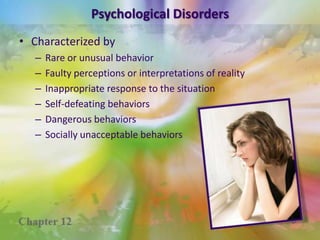
Psychological DisordersCharacterized byRare or unusual behaviorFaulty perceptions or interpretations of realityInappropriate response to the situationSelf-defeating behaviorsDangerous behaviorsSocially unacceptable behaviors
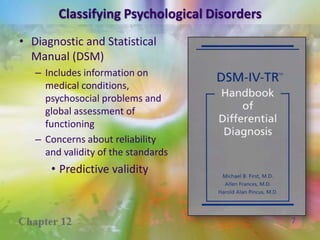
Classifying Psychological DisordersDiagnostic and Statistical Manual (DSM)Includes information on medical conditions, psychosocial problems and global assessment of functioningConcerns about reliability and validity of the standardsPredictive validity
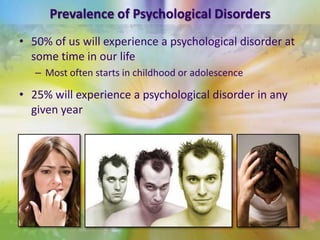
Prevalence of Psychological Disorders50% of us will experience a psychological disorder at some time in our lifeMost often starts in childhood or adolescence25% will experience a psychological disorder in any given year
Schizophrenia
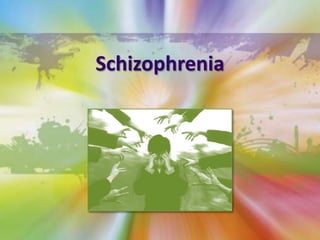
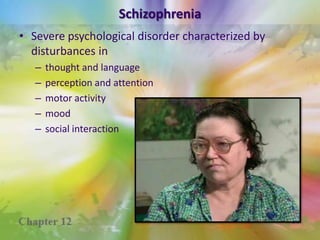
SchizophreniaSevere psychological disorder characterized by disturbances in thought and languageperception and attentionmotor activitymoodsocial interaction
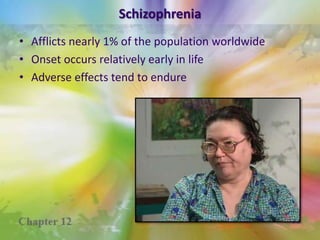
SchizophreniaAfflicts nearly 1% of the population worldwideOnset occurs relatively early in lifeAdverse effects tend to endure
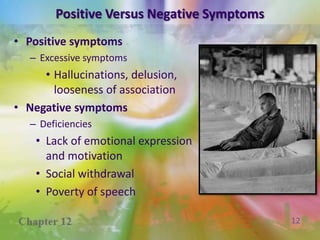
Positive Versus Negative SymptomsPositive symptomsExcessive symptoms Hallucinations, delusion,looseness of associationNegative symptomsDeficiencies Lack of emotional expressionand motivationSocial withdrawalPoverty of speech
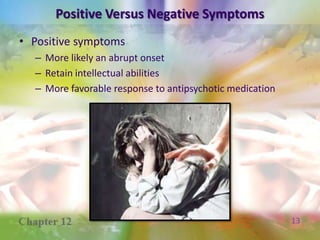
Positive Versus Negative SymptomsPositive symptomsMore likely an abrupt onsetRetain intellectual abilitiesMore favorable response to antipsychotic medication
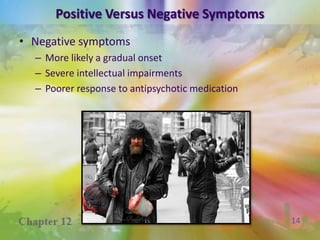
Positive Versus Negative SymptomsNegative symptomsMore likely a gradual onsetSevere intellectual impairmentsPoorer response to antipsychotic medication
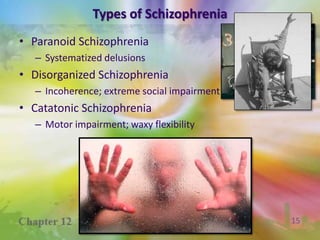
Types of SchizophreniaParanoid SchizophreniaSystematized delusionsDisorganized SchizophreniaIncoherence; extreme social impairmentCatatonic SchizophreniaMotor impairment; waxy flexibility
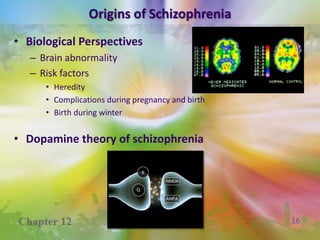
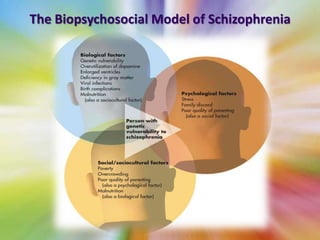
Origins of Schizophrenia Biological PerspectivesBrain abnormalityRisk factorsHeredityComplications during pregnancy and birthBirth during winterDopamine theory of schizophrenia
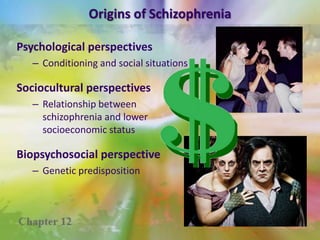
Origins of Schizophrenia Psychological perspectivesConditioning and social situationsSociocultural perspectivesRelationship between schizophrenia and lower socioeconomic statusBiopsychosocial perspectiveGenetic predisposition
The Biopsychosocial Model of Schizophrenia
Mood Disorders
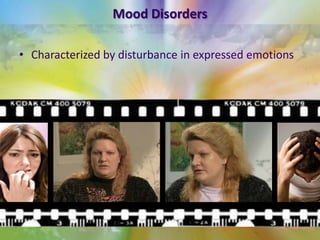
Mood Disorders Characterized by disturbance in expressed emotions
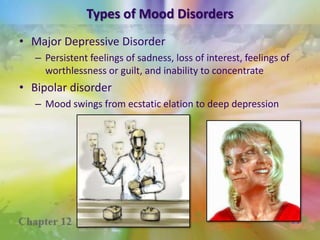
Types of Mood Disorders Major Depressive DisorderPersistent feelings of sadness, loss of interest, feelings of worthlessness or guilt, and inability to concentrateBipolar disorderMood swings from ecstatic elation to deep depression
Origins of Mood Disorders BiologicalGenetic factorsPsychologicalLearned helplessnessPerfectionism and unrealistic expectationsAttributional stylesBiopsychosocialBiologically predisposed interact with self-efficacy expectations and attitudes
Mood Disorders
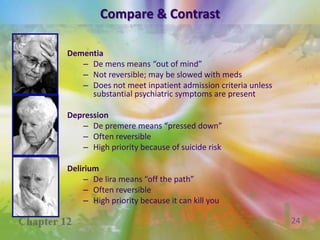
Compare & ContrastDementiaDe mens means “out of mind”Not reversible; may be slowed with medsDoes not meet inpatient admission criteria unless substantial psychiatric symptoms are presentDepressionDe premere means “pressed down”Often reversibleHigh priority because of suicide riskDeliriumDe lira means “off the path”Often reversibleHigh priority because it can kill you
DepressionOnset – weeks to monthsBiological brain disorderNot part of normal aging7-12% of populationSuicide one of top ten causes of deathSome medicines cause depression30-40% SMI persons have depression70-90% depressed improve with medicationsand “talk” therapy
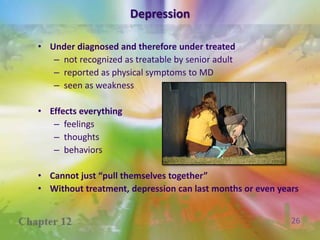
DepressionUnder diagnosed and therefore under treatednot recognized as treatable by senior adult reported as physical symptoms to MDseen as weaknessEffects everythingfeelingsthoughtsbehaviorsCannot just “pull themselves together”Without treatment, depression can last months or even years
Symptoms of DepressionFeelings –  mood, loss of pleasure, hopeless, wish to dieBehaviors – crying, uncooperative, withdrawnAppetite – eating less, eating moreThoughts – memory problems, poor self esteem, difficulty making decisions, poor concentrationSleep – poor sleep, “sleep all the timeEnergy – loss of energy, apathy, “tired all the time”
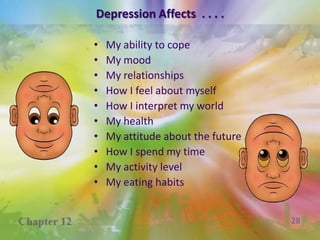
Depression Affects  . . . .My ability to copeMy moodMy relationshipsHow I feel about myselfHow I interpret my worldMy healthMy attitude about the futureHow I spend my timeMy activity levelMy eating habits
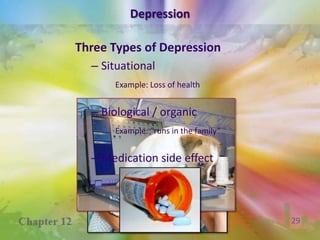
DepressionThree Types of DepressionSituationalExample: Loss of healthBiological / organicExample: “runs in the family”Medication side effect
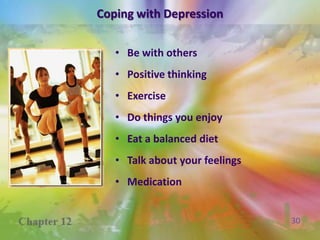
Coping with DepressionBe with othersPositive thinkingExerciseDo things you enjoyEat a balanced dietTalk about your feelingsMedication
Risk Factors in SuicideFeelings of depression, hopelessnessStressful life eventsAnxiety over “discovery”Poor problem solverFamilial experience with psychological disorders and/or suicide
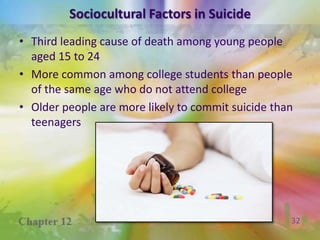
Sociocultural Factors in SuicideThird leading cause of death among young people aged 15 to 24More common among college students than people of the same age who do not attend collegeOlder people are more likely to commit suicide than teenagers
Sociocultural Factors in SuicideOne in six Native Americans has attempted suicideAfrican Americans are least likely to attempt suicideThree times as many females attempt suicideFour times as many males succeed in suicide
Myths about SuicideIndividuals who threaten suicide are only seeking attention.		You should never mention suicide to a depressed person because you might give them an idea.
Anxiety Disorders
Anxiety Disorders Psychological features of anxietyWorrying, fear of worst case scenario, nervousness, inability to relaxPhysical features of anxietyArousal of sympathetic branch of autonomic nervous system
Phobias Specific phobiasIrrational fears of specific objects or situationsSocial phobiasPersistent fears of scrutiny by othersAgoraphobiaFear of being in places from which it would be difficult to escape or receive help
Panic Disorder Abrupt attack of acute anxiety not triggered by a specific object or situationPhysical symptomsShortness of breath, heavy sweating, tremors, pounding of the heartOther symptoms that may “feel” like a heart attack
Generalized Anxiety Disorder Persistent anxietyCannot be attributed to object, situation, or activitySymptoms includeMotor tensionAutonomic overarousalExcessive vigilance
Obsessive-Compulsive Disorder ObsessionsRecurrent, anxiety-provoking thoughts or images that seem irrational and beyond controlCompulsionsThoughts or behaviors that tend to reduce the anxiety connected with obsessionsIrresistible urges to engage in specific acts, often repeatedly
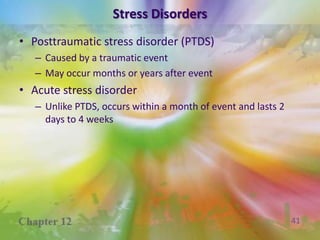
Stress DisordersPosttraumatic stress disorder (PTDS)Caused by a traumatic eventMay occur months or years after eventAcute stress disorderUnlike PTDS, occurs within a month of event and lasts 2 days to 4 weeks
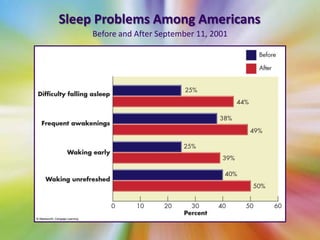
Sleep Problems Among AmericansBefore and After September 11, 2001
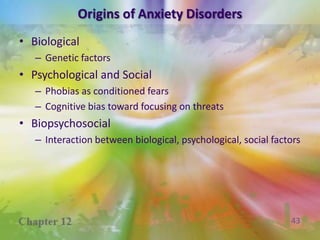
Origins of Anxiety DisordersBiologicalGenetic factorsPsychological and SocialPhobias as conditioned fearsCognitive bias toward focusing on threatsBiopsychosocial Interaction between biological, psychological, social factors
Somatoform Disorders
Somatoform DisordersPhysical problems (such as paralysis, pain, or persistent belief of serious disease) with no evidence of a physical abnormality
Conversion DisorderMajor change in, or loss of, physical functioning, although there are no medical findings to explain the loss of functioning.Not intentionally producedla belle indifférence
HypochondriasisInsistence of serious physical illness, even though no medical evidence of illness can be foundMay seek opinion of one doctor after another
Body Dysmorphic DisorderPreoccupation with a fantasized or exaggerated physical defect in their appearanceMay assume others see them as deformed
Origins of Somatoform DisordersBiopsychosocial perspectivePsychologically, the disorder has to do with what one focuses on to the exclusion of conflicting informationTendencies toward perfectionism and rumination (heritable)
Dissociative Disorders
Dissociative DisordersA separation of mental processes such as thoughts, emotions, identity, memory, or consciousness
Types of Dissociative DisordersDissociative AmnesiaSuddenly unable to recall important personal information; not due to biological problemsDissociative FugueAbruptly leaves home or work and travels to another place, no memory of previous life
Types of Dissociative DisordersDissociative Identity DisorderTwo or more identities, each with distinct traits, “occupy” the same personFormerly known as multiple personality disorder
Origins of Dissociative DisordersBiopsychosocialLearning/cognitive – may help keep disturbing ideas out of one’s mindBiological – Trauma (abuse) related dissociation may have neurological basis
Personality Disorders
Personality DisordersCharacterized by enduring patterns of behavior that are maladaptive and inflexibleImpair personal or social functioningSource of distress
Types of Personality DisordersParanoid Personality DisorderInterpret other’s behavior as threatening or demeaningSchizotypal Personality DisorderPeculiarities of thought, perception, or behaviorSchizoid Personality DisorderIndifference to relationships and flat emotional response
Types of Personality DisordersBorderline Personality DisorderInstability in relationships, self-image, and moodAntisocial Personality DisorderPersistently violate the lawShow no guilt or remorse and are largely undeterred by punishmentAvoidant Personality DisorderAvoid relationships for fear of rejection
Origins of Personality DisordersBiologicalGenetic factorsPersonality traits that may be inheritedAntisocial personality – less gray matter in prefrontal cortex
Origins of Personality DisordersPsychologicalLearning theoryChildhood experiencesCognitiveMisinterpretation of other people’s behaviorsSocioculturalBorderline personality – may reflect the fragmented society in which one lives
Beyond The BookSlides To Help Expand Your Lectures
Explaining Psychological DisordersBiological PerspectiveGenetics, evolution, the brain, neurotransmitters, hormonesPsychological PerspectiveFocuses on behavior and mental processes
Explaining Psychological DisordersPsychodynamic theoryDisorders are symptoms of underlying unconscious processes that stem from childhood conflicts
Explaining Psychological DisordersBehavioral perspectiveDisorders reflect the learning of maladaptive responsesCognitive perspectiveFocus on faulty thinking and misperceptions and beliefs
Explaining Psychological DisordersHumanistic perspectiveDisorders result when tendencies toward self-actualization are frustratedSociocultural perspectiveSocial ills can contribute to development of disordersSome disorders may be culture-bound
Three Dimensional Model of Schizophrenic SymptomsPsychotic dimensionDelusions and hallucinationsNegative dimensionNegative symptoms (affect, poverty of speech and thought)Disorganized dimensionInappropriate affect and disordered thought and speech
What types of methods do clinicians and researchers use to determine whether or not a person is experiencing hallucinations?  Do you consider these methods to be valid or foolproof?Suffering From Schizophrenia
Warning Signs of SuicideChanges in eating and sleeping patternsDifficulty concentrating on school or the jobA sharp decline in performance and attendance at school or on the jobLoss of interest in previously enjoyed activitiesGiving away prized possessionsComplaints about physical problems when no medical basis for problems can be found
Warning Signs of SuicideWithdrawal from social relationshipsPersonality or mood changesTalking or writing about death or dyingAbuse of drugs or alcoholAn attempted suicideAvailability of a handgunA precipitating event

Psych 200 Psych Disorders

  • 2.
    Learning OutcomesDefine psychologicaldisorders and describe their prevalence.Describe the symptoms and possible origins of each disorder.
  • 3.
    Truth or Fiction?Inthe Middle Ages, innocent people were drowned as a way of proving that they were not possessed by the Devil.
  • 4.
    People with schizophreniamay see and hear things that are not really there.Truth or Fiction?Feeling elated may not be a good thing.
  • 5.
    Some people havemore than one personality dwelling within them, and each one may have different allergies and eyeglass prescriptions.
  • 6.
    Some people cankill or maim others without feelings of guilt.What arePsychological Disorders?
  • 7.
    Psychological DisordersCharacterized byRareor unusual behaviorFaulty perceptions or interpretations of realityInappropriate response to the situationSelf-defeating behaviorsDangerous behaviorsSocially unacceptable behaviors
  • 8.
    Classifying Psychological DisordersDiagnosticand Statistical Manual (DSM)Includes information on medical conditions, psychosocial problems and global assessment of functioningConcerns about reliability and validity of the standardsPredictive validity
  • 9.
    Prevalence of PsychologicalDisorders50% of us will experience a psychological disorder at some time in our lifeMost often starts in childhood or adolescence25% will experience a psychological disorder in any given year
  • 10.
  • 11.
    SchizophreniaSevere psychological disordercharacterized by disturbances in thought and languageperception and attentionmotor activitymoodsocial interaction
  • 12.
    SchizophreniaAfflicts nearly 1%of the population worldwideOnset occurs relatively early in lifeAdverse effects tend to endure
  • 13.
    Positive Versus NegativeSymptomsPositive symptomsExcessive symptoms Hallucinations, delusion,looseness of associationNegative symptomsDeficiencies Lack of emotional expressionand motivationSocial withdrawalPoverty of speech
  • 14.
    Positive Versus NegativeSymptomsPositive symptomsMore likely an abrupt onsetRetain intellectual abilitiesMore favorable response to antipsychotic medication
  • 15.
    Positive Versus NegativeSymptomsNegative symptomsMore likely a gradual onsetSevere intellectual impairmentsPoorer response to antipsychotic medication
  • 16.
    Types of SchizophreniaParanoidSchizophreniaSystematized delusionsDisorganized SchizophreniaIncoherence; extreme social impairmentCatatonic SchizophreniaMotor impairment; waxy flexibility
  • 17.
    Origins of SchizophreniaBiological PerspectivesBrain abnormalityRisk factorsHeredityComplications during pregnancy and birthBirth during winterDopamine theory of schizophrenia
  • 18.
    Origins of SchizophreniaPsychological perspectivesConditioning and social situationsSociocultural perspectivesRelationship between schizophrenia and lower socioeconomic statusBiopsychosocial perspectiveGenetic predisposition
  • 19.
  • 20.
  • 21.
    Mood Disorders Characterizedby disturbance in expressed emotions
  • 22.
    Types of MoodDisorders Major Depressive DisorderPersistent feelings of sadness, loss of interest, feelings of worthlessness or guilt, and inability to concentrateBipolar disorderMood swings from ecstatic elation to deep depression
  • 23.
    Origins of MoodDisorders BiologicalGenetic factorsPsychologicalLearned helplessnessPerfectionism and unrealistic expectationsAttributional stylesBiopsychosocialBiologically predisposed interact with self-efficacy expectations and attitudes
  • 24.
  • 25.
    Compare & ContrastDementiaDemens means “out of mind”Not reversible; may be slowed with medsDoes not meet inpatient admission criteria unless substantial psychiatric symptoms are presentDepressionDe premere means “pressed down”Often reversibleHigh priority because of suicide riskDeliriumDe lira means “off the path”Often reversibleHigh priority because it can kill you
  • 26.
    DepressionOnset – weeksto monthsBiological brain disorderNot part of normal aging7-12% of populationSuicide one of top ten causes of deathSome medicines cause depression30-40% SMI persons have depression70-90% depressed improve with medicationsand “talk” therapy
  • 27.
    DepressionUnder diagnosed andtherefore under treatednot recognized as treatable by senior adult reported as physical symptoms to MDseen as weaknessEffects everythingfeelingsthoughtsbehaviorsCannot just “pull themselves together”Without treatment, depression can last months or even years
  • 28.
    Symptoms of DepressionFeelings– mood, loss of pleasure, hopeless, wish to dieBehaviors – crying, uncooperative, withdrawnAppetite – eating less, eating moreThoughts – memory problems, poor self esteem, difficulty making decisions, poor concentrationSleep – poor sleep, “sleep all the timeEnergy – loss of energy, apathy, “tired all the time”
  • 29.
    Depression Affects . . . .My ability to copeMy moodMy relationshipsHow I feel about myselfHow I interpret my worldMy healthMy attitude about the futureHow I spend my timeMy activity levelMy eating habits
  • 30.
    DepressionThree Types ofDepressionSituationalExample: Loss of healthBiological / organicExample: “runs in the family”Medication side effect
  • 31.
    Coping with DepressionBewith othersPositive thinkingExerciseDo things you enjoyEat a balanced dietTalk about your feelingsMedication
  • 32.
    Risk Factors inSuicideFeelings of depression, hopelessnessStressful life eventsAnxiety over “discovery”Poor problem solverFamilial experience with psychological disorders and/or suicide
  • 33.
    Sociocultural Factors inSuicideThird leading cause of death among young people aged 15 to 24More common among college students than people of the same age who do not attend collegeOlder people are more likely to commit suicide than teenagers
  • 34.
    Sociocultural Factors inSuicideOne in six Native Americans has attempted suicideAfrican Americans are least likely to attempt suicideThree times as many females attempt suicideFour times as many males succeed in suicide
  • 35.
    Myths about SuicideIndividualswho threaten suicide are only seeking attention. You should never mention suicide to a depressed person because you might give them an idea.
  • 36.
  • 37.
    Anxiety Disorders Psychologicalfeatures of anxietyWorrying, fear of worst case scenario, nervousness, inability to relaxPhysical features of anxietyArousal of sympathetic branch of autonomic nervous system
  • 38.
    Phobias Specific phobiasIrrationalfears of specific objects or situationsSocial phobiasPersistent fears of scrutiny by othersAgoraphobiaFear of being in places from which it would be difficult to escape or receive help
  • 39.
    Panic Disorder Abruptattack of acute anxiety not triggered by a specific object or situationPhysical symptomsShortness of breath, heavy sweating, tremors, pounding of the heartOther symptoms that may “feel” like a heart attack
  • 40.
    Generalized Anxiety DisorderPersistent anxietyCannot be attributed to object, situation, or activitySymptoms includeMotor tensionAutonomic overarousalExcessive vigilance
  • 41.
    Obsessive-Compulsive Disorder ObsessionsRecurrent,anxiety-provoking thoughts or images that seem irrational and beyond controlCompulsionsThoughts or behaviors that tend to reduce the anxiety connected with obsessionsIrresistible urges to engage in specific acts, often repeatedly
  • 42.
    Stress DisordersPosttraumatic stressdisorder (PTDS)Caused by a traumatic eventMay occur months or years after eventAcute stress disorderUnlike PTDS, occurs within a month of event and lasts 2 days to 4 weeks
  • 43.
    Sleep Problems AmongAmericansBefore and After September 11, 2001
  • 44.
    Origins of AnxietyDisordersBiologicalGenetic factorsPsychological and SocialPhobias as conditioned fearsCognitive bias toward focusing on threatsBiopsychosocial Interaction between biological, psychological, social factors
  • 45.
  • 46.
    Somatoform DisordersPhysical problems(such as paralysis, pain, or persistent belief of serious disease) with no evidence of a physical abnormality
  • 47.
    Conversion DisorderMajor changein, or loss of, physical functioning, although there are no medical findings to explain the loss of functioning.Not intentionally producedla belle indifférence
  • 48.
    HypochondriasisInsistence of seriousphysical illness, even though no medical evidence of illness can be foundMay seek opinion of one doctor after another
  • 49.
    Body Dysmorphic DisorderPreoccupationwith a fantasized or exaggerated physical defect in their appearanceMay assume others see them as deformed
  • 50.
    Origins of SomatoformDisordersBiopsychosocial perspectivePsychologically, the disorder has to do with what one focuses on to the exclusion of conflicting informationTendencies toward perfectionism and rumination (heritable)
  • 51.
  • 52.
    Dissociative DisordersA separationof mental processes such as thoughts, emotions, identity, memory, or consciousness
  • 53.
    Types of DissociativeDisordersDissociative AmnesiaSuddenly unable to recall important personal information; not due to biological problemsDissociative FugueAbruptly leaves home or work and travels to another place, no memory of previous life
  • 54.
    Types of DissociativeDisordersDissociative Identity DisorderTwo or more identities, each with distinct traits, “occupy” the same personFormerly known as multiple personality disorder
  • 55.
    Origins of DissociativeDisordersBiopsychosocialLearning/cognitive – may help keep disturbing ideas out of one’s mindBiological – Trauma (abuse) related dissociation may have neurological basis
  • 56.
  • 57.
    Personality DisordersCharacterized byenduring patterns of behavior that are maladaptive and inflexibleImpair personal or social functioningSource of distress
  • 58.
    Types of PersonalityDisordersParanoid Personality DisorderInterpret other’s behavior as threatening or demeaningSchizotypal Personality DisorderPeculiarities of thought, perception, or behaviorSchizoid Personality DisorderIndifference to relationships and flat emotional response
  • 59.
    Types of PersonalityDisordersBorderline Personality DisorderInstability in relationships, self-image, and moodAntisocial Personality DisorderPersistently violate the lawShow no guilt or remorse and are largely undeterred by punishmentAvoidant Personality DisorderAvoid relationships for fear of rejection
  • 60.
    Origins of PersonalityDisordersBiologicalGenetic factorsPersonality traits that may be inheritedAntisocial personality – less gray matter in prefrontal cortex
  • 61.
    Origins of PersonalityDisordersPsychologicalLearning theoryChildhood experiencesCognitiveMisinterpretation of other people’s behaviorsSocioculturalBorderline personality – may reflect the fragmented society in which one lives
  • 62.
    Beyond The BookSlidesTo Help Expand Your Lectures
  • 63.
    Explaining Psychological DisordersBiologicalPerspectiveGenetics, evolution, the brain, neurotransmitters, hormonesPsychological PerspectiveFocuses on behavior and mental processes
  • 64.
    Explaining Psychological DisordersPsychodynamictheoryDisorders are symptoms of underlying unconscious processes that stem from childhood conflicts
  • 65.
    Explaining Psychological DisordersBehavioralperspectiveDisorders reflect the learning of maladaptive responsesCognitive perspectiveFocus on faulty thinking and misperceptions and beliefs
  • 66.
    Explaining Psychological DisordersHumanisticperspectiveDisorders result when tendencies toward self-actualization are frustratedSociocultural perspectiveSocial ills can contribute to development of disordersSome disorders may be culture-bound
  • 67.
    Three Dimensional Modelof Schizophrenic SymptomsPsychotic dimensionDelusions and hallucinationsNegative dimensionNegative symptoms (affect, poverty of speech and thought)Disorganized dimensionInappropriate affect and disordered thought and speech
  • 68.
    What types ofmethods do clinicians and researchers use to determine whether or not a person is experiencing hallucinations? Do you consider these methods to be valid or foolproof?Suffering From Schizophrenia
  • 69.
    Warning Signs ofSuicideChanges in eating and sleeping patternsDifficulty concentrating on school or the jobA sharp decline in performance and attendance at school or on the jobLoss of interest in previously enjoyed activitiesGiving away prized possessionsComplaints about physical problems when no medical basis for problems can be found
  • 70.
    Warning Signs ofSuicideWithdrawal from social relationshipsPersonality or mood changesTalking or writing about death or dyingAbuse of drugs or alcoholAn attempted suicideAvailability of a handgunA precipitating event