Crises in Schools
Chapter Thirteen
The New-Millennium, Violence-
        Proof School Building
   Increased use of the following safety measures
    from 1999-2008
         Controlled access to the school buildings and grounds
         Students/faculty required to wear picture identification
         Security cameras to monitor facilities
         Telephones in all classrooms
         Uniforms for students
         Drug testing for students involved in athletics or clubs

   Conflicting Statistics
         Incidents of Crime
         Fear and Avoidance
         Threats to Teachers
         Disciplinary Action
Gangs
   Types of Gangs
      Homegrown Copycats/Wannabes
      Homegrown Survivalist, Aryan Nation, Neo-
       Nazi, Extreme Right-Wingers
      Transients From Megagangs
      Megagangs Opening New Territory
      Smorgasbord Home Boys


   Emergence of Suburban and Rural
    Gangs
Gang Intervention/Prevention
             Programs
 Counseling
 School Resource Officer
 Guidance Programs
 Peer Counseling/Peer Mediation
 Anger Management
 After-School and Community Outreach
  Programs
 Schools
 The Community
Bullying
   Three Components:
      Bully has more power than the victim
      Use of intimidation via threats
      Pattern of behavior rather than a one time incident

   Cyberbullying
      Using technology to harass, humiliate, or threaten
       someone
      Eight types:
          Flaming
          Harassment
          Denigration
          Masquerading
          Outing
          Social exclusion
          Cyberstalking
          Cyberthreats
Bullying Intervention
 Punishment Approach


 Consequences Approach


 Feelings Approach
SVJO vs. EVJO
   Abusive Childhood
   Academic Problems
   Altered States of Consciousness
   Anger/Low Frustration Tolerance
   Bully/Bullied
   Chemical and Substance Abuse
   Criminal Behavior
   Delayed Cognitive and Affective Development
   Emotional Lability/Depression
   External Locus of Control
   History and Threats of Violence
SVJO vs. EVJO Cont.
   Hypersensitivity
   Impulsivity
   Mental Illness
   Negative Role Models
   Odd/Bizarre Beliefs
   Pathology and Deviance
   Physical Problems
   Preoccupation With Violent Themes
   Social Status
   Suicidal Ideation
   Weapons
Screening the EVJO
   Leakage

   Writings, Drawings, Pictures, Videos, a
    nd E-Mails

   Peer Referral

   Threat Assessment Team
Interviewing the Potential EVJO
   Three Level Threat Assessment:
      Low threat
      Medium threat
      High threat

   Ensuring Safety
        Motive
        Opportunity
        Method/plan
        Means

   Providing Support
   Action
School-Based Suicide
         Prevention and Intervention
   Risk Factors/Predictors/Cues

   Pre-adolescent Suicide

   Postvention
        Clustering of suicides
        Contagion
        Publicity and contagion
        Imperatives for SCRTs in suicides
        Grief and mourning after adolescent suicide
Legal and Ethical Issues of
      Potentially Violent Behavior
   Confidentiality and Duty to Warn
      Keeping records
      Consultation

   Consistency of Intervention
      Zero tolerance

   The Problem of “Doing Something” in a
    University Setting
      TASSLE
      Threat Assessment Team
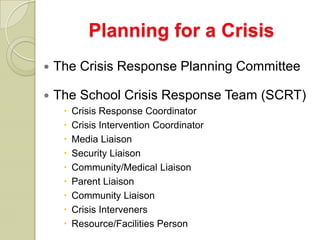
Planning for a Crisis
   The Crisis Response Planning Committee

   The School Crisis Response Team (SCRT)
        Crisis Response Coordinator
        Crisis Intervention Coordinator
        Media Liaison
        Security Liaison
        Community/Medical Liaison
        Parent Liaison
        Community Liaison
        Crisis Interveners
        Resource/Facilities Person
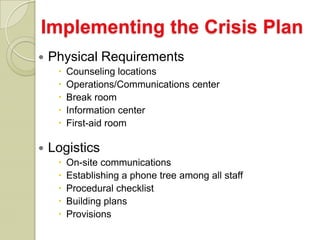
Implementing the Crisis Plan
   Physical Requirements
        Counseling locations
        Operations/Communications center
        Break room
        Information center
        First-aid room

   Logistics
        On-site communications
        Establishing a phone tree among all staff
        Procedural checklist
        Building plans
        Provisions
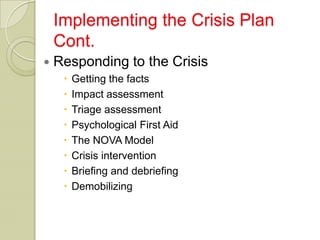
Implementing the Crisis Plan
    Cont.
   Responding to the Crisis
        Getting the facts
        Impact assessment
        Triage assessment
        Psychological First Aid
        The NOVA Model
        Crisis intervention
        Briefing and debriefing
        Demobilizing
Bereavement in Schools
   What the School Should Do:
      Become educated about grief
      Give permission to grieve
      Allow time to grieve
      LISTEN
      Reminiscing is essential
      Give support for a variety of feelings
      Know you can not “fix” the pain
      Engage with the adolescents, support them, and follow
       through
      Design a support group
      Let them know they are not alone

   Group Work
   Defining the Boundaries
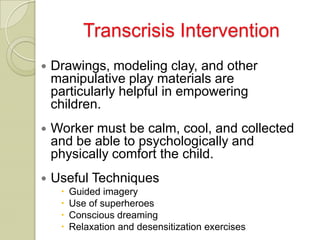
Transcrisis Intervention
   Drawings, modeling clay, and other
    manipulative play materials are
    particularly helpful in empowering
    children.
   Worker must be calm, cool, and collected
    and be able to psychologically and
    physically comfort the child.
   Useful Techniques
        Guided imagery
        Use of superheroes
        Conscious dreaming
        Relaxation and desensitization exercises

13 crisis in schools

  • 1.
  • 2.
    The New-Millennium, Violence- Proof School Building  Increased use of the following safety measures from 1999-2008  Controlled access to the school buildings and grounds  Students/faculty required to wear picture identification  Security cameras to monitor facilities  Telephones in all classrooms  Uniforms for students  Drug testing for students involved in athletics or clubs  Conflicting Statistics  Incidents of Crime  Fear and Avoidance  Threats to Teachers  Disciplinary Action
  • 3.
    Gangs  Types of Gangs  Homegrown Copycats/Wannabes  Homegrown Survivalist, Aryan Nation, Neo- Nazi, Extreme Right-Wingers  Transients From Megagangs  Megagangs Opening New Territory  Smorgasbord Home Boys  Emergence of Suburban and Rural Gangs
  • 4.
    Gang Intervention/Prevention Programs  Counseling  School Resource Officer  Guidance Programs  Peer Counseling/Peer Mediation  Anger Management  After-School and Community Outreach Programs  Schools  The Community
  • 5.
    Bullying  Three Components:  Bully has more power than the victim  Use of intimidation via threats  Pattern of behavior rather than a one time incident  Cyberbullying  Using technology to harass, humiliate, or threaten someone  Eight types:  Flaming  Harassment  Denigration  Masquerading  Outing  Social exclusion  Cyberstalking  Cyberthreats
  • 6.
    Bullying Intervention  PunishmentApproach  Consequences Approach  Feelings Approach
  • 7.
    SVJO vs. EVJO  Abusive Childhood  Academic Problems  Altered States of Consciousness  Anger/Low Frustration Tolerance  Bully/Bullied  Chemical and Substance Abuse  Criminal Behavior  Delayed Cognitive and Affective Development  Emotional Lability/Depression  External Locus of Control  History and Threats of Violence
  • 8.
    SVJO vs. EVJOCont.  Hypersensitivity  Impulsivity  Mental Illness  Negative Role Models  Odd/Bizarre Beliefs  Pathology and Deviance  Physical Problems  Preoccupation With Violent Themes  Social Status  Suicidal Ideation  Weapons
  • 9.
    Screening the EVJO  Leakage  Writings, Drawings, Pictures, Videos, a nd E-Mails  Peer Referral  Threat Assessment Team
  • 10.
    Interviewing the PotentialEVJO  Three Level Threat Assessment:  Low threat  Medium threat  High threat  Ensuring Safety  Motive  Opportunity  Method/plan  Means  Providing Support  Action
  • 11.
    School-Based Suicide Prevention and Intervention  Risk Factors/Predictors/Cues  Pre-adolescent Suicide  Postvention  Clustering of suicides  Contagion  Publicity and contagion  Imperatives for SCRTs in suicides  Grief and mourning after adolescent suicide
  • 12.
    Legal and EthicalIssues of Potentially Violent Behavior  Confidentiality and Duty to Warn  Keeping records  Consultation  Consistency of Intervention  Zero tolerance  The Problem of “Doing Something” in a University Setting  TASSLE  Threat Assessment Team
  • 13.
    Planning for aCrisis  The Crisis Response Planning Committee  The School Crisis Response Team (SCRT)  Crisis Response Coordinator  Crisis Intervention Coordinator  Media Liaison  Security Liaison  Community/Medical Liaison  Parent Liaison  Community Liaison  Crisis Interveners  Resource/Facilities Person
  • 14.
    Implementing the CrisisPlan  Physical Requirements  Counseling locations  Operations/Communications center  Break room  Information center  First-aid room  Logistics  On-site communications  Establishing a phone tree among all staff  Procedural checklist  Building plans  Provisions
  • 15.
    Implementing the CrisisPlan Cont.  Responding to the Crisis  Getting the facts  Impact assessment  Triage assessment  Psychological First Aid  The NOVA Model  Crisis intervention  Briefing and debriefing  Demobilizing
  • 16.
    Bereavement in Schools  What the School Should Do:  Become educated about grief  Give permission to grieve  Allow time to grieve  LISTEN  Reminiscing is essential  Give support for a variety of feelings  Know you can not “fix” the pain  Engage with the adolescents, support them, and follow through  Design a support group  Let them know they are not alone  Group Work  Defining the Boundaries
  • 17.
    Transcrisis Intervention  Drawings, modeling clay, and other manipulative play materials are particularly helpful in empowering children.  Worker must be calm, cool, and collected and be able to psychologically and physically comfort the child.  Useful Techniques  Guided imagery  Use of superheroes  Conscious dreaming  Relaxation and desensitization exercises