HUMAN SERVICES WORKERS
IN CRISIS:

BURNOUT, VICARIOUS TRAUMATIZATION, AND COMPASSION FATIGUE


    Chapter Sixteen
HELPING PROFESSIONALS:
                 PRIME CANDIDATES
   Nature of the job is to be intensely involved with
    people who are in need of assistance.

   Recipe for burnout:
        High levels of motivation
        Idealistic

        Expectation that their work will give their life a sense of
         meaning


   Many helping professions have historically low
    success rates.

   Human service field is becoming more difficult .
DEFINING BURNOUT
   Historical roots from the 1970s
          “Burned out” physically, emotionally, spiritually,
           interpersonally, and behaviorally to the point of exhaustion.


   Herbert Freudenberger (1974, 1975)
          Described young, idealistic volunteers working in
           alternative health-care settings who started to look and act
           worse than many of their clients.


   Burnout consists of the following:
        Lost energy to the point of exhaustion
        Lost enthusiasm to the point of absolute indifference

        Passion is replaced by cynicism

        Complete lack of confidence that your work is having any
         positive impact
DYNAMICS OF BURNOUT
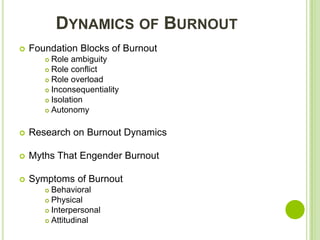
   Foundation Blocks of Burnout
        Role ambiguity
        Role conflict

        Role overload

        Inconsequentiality

        Isolation

        Autonomy


   Research on Burnout Dynamics

   Myths That Engender Burnout

   Symptoms of Burnout
        Behavioral
        Physical

        Interpersonal

        Attitudinal
DYNAMICS OF BURNOUT

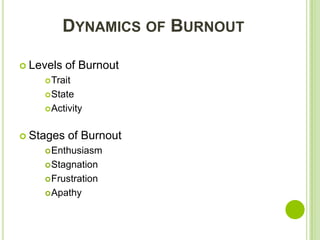
 Levels   of Burnout
     Trait

     State

     Activity


 Stages   of Burnout
     Enthusiasm

     Stagnation

     Frustration

     Apathy
WORKER–CLIENT RELATIONSHIPS
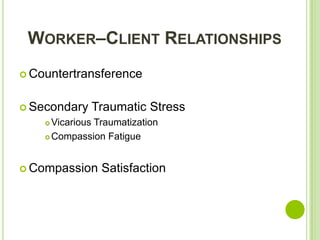
 Countertransference


 Secondary   Traumatic Stress
     Vicarious Traumatization
     Compassion Fatigue


 Compassion     Satisfaction
THE CULPABILITY OF ORGANIZATIONS
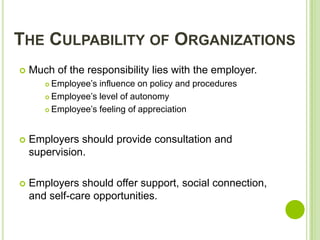
   Much of the responsibility lies with the employer.
        Employee’s influence on policy and procedures
        Employee’s level of autonomy

        Employee’s feeling of appreciation


   Employers should provide consultation and
    supervision.

   Employers should offer support, social connection,
    and self-care opportunities.
SELF-RECOGNITION OF BURNOUT
 NO   ONE IS IMMUNE!

 Everyone   has a blind spot.

 Typical
        MO is to increase effort (actually
 increases the problem) rather than attempting
 to change the situation.
INTERVENTION STRATEGIES
   Assessment
        Burnout
        Compassion Fatigue and Compassion Satisfaction

        Work Environment


   Intervention Through Training

   Intervention With the Organization
        Burnout-Proofing an Agency
        Social Support Systems

        Support Groups

        The Individual and the Organization


   Self-Care
PRIVATE PRACTITIONERS AND BURNOUT

   Isolation

   Business Concerns
        Financial
        Client base

        Marketing services


   Maintaining a Public Presence

   Difficult Work Schedule
        Evenings
        Weekends

        Few vacations
INTERVENTION WITH THE INDIVIDUAL
 Direct Action
 Palliative Action

 BASIC IDS
      Behavior
      Affect

      Sensation

      Imagery

      Cognition

      Interpersonal relationships

      Drugs/biology

      Setting
EPILOGUE:
  CROSS-CULTURAL COMPARISONS

 Victor
       Savicki (2002) landmark study using
 the Maslach Burnout Inventory subscales

 General   environmental work measures

 Individual   conformity measures

16 human service workers in crisis

  • 1.
    HUMAN SERVICES WORKERS INCRISIS: BURNOUT, VICARIOUS TRAUMATIZATION, AND COMPASSION FATIGUE Chapter Sixteen
  • 2.
    HELPING PROFESSIONALS: PRIME CANDIDATES  Nature of the job is to be intensely involved with people who are in need of assistance.  Recipe for burnout:  High levels of motivation  Idealistic  Expectation that their work will give their life a sense of meaning  Many helping professions have historically low success rates.  Human service field is becoming more difficult .
  • 3.
    DEFINING BURNOUT  Historical roots from the 1970s  “Burned out” physically, emotionally, spiritually, interpersonally, and behaviorally to the point of exhaustion.  Herbert Freudenberger (1974, 1975)  Described young, idealistic volunteers working in alternative health-care settings who started to look and act worse than many of their clients.  Burnout consists of the following:  Lost energy to the point of exhaustion  Lost enthusiasm to the point of absolute indifference  Passion is replaced by cynicism  Complete lack of confidence that your work is having any positive impact
  • 4.
    DYNAMICS OF BURNOUT  Foundation Blocks of Burnout  Role ambiguity  Role conflict  Role overload  Inconsequentiality  Isolation  Autonomy  Research on Burnout Dynamics  Myths That Engender Burnout  Symptoms of Burnout  Behavioral  Physical  Interpersonal  Attitudinal
  • 5.
    DYNAMICS OF BURNOUT Levels of Burnout  Trait  State  Activity  Stages of Burnout  Enthusiasm  Stagnation  Frustration  Apathy
  • 6.
    WORKER–CLIENT RELATIONSHIPS  Countertransference Secondary Traumatic Stress  Vicarious Traumatization  Compassion Fatigue  Compassion Satisfaction
  • 7.
    THE CULPABILITY OFORGANIZATIONS  Much of the responsibility lies with the employer.  Employee’s influence on policy and procedures  Employee’s level of autonomy  Employee’s feeling of appreciation  Employers should provide consultation and supervision.  Employers should offer support, social connection, and self-care opportunities.
  • 8.
    SELF-RECOGNITION OF BURNOUT NO ONE IS IMMUNE!  Everyone has a blind spot.  Typical MO is to increase effort (actually increases the problem) rather than attempting to change the situation.
  • 9.
    INTERVENTION STRATEGIES  Assessment  Burnout  Compassion Fatigue and Compassion Satisfaction  Work Environment  Intervention Through Training  Intervention With the Organization  Burnout-Proofing an Agency  Social Support Systems  Support Groups  The Individual and the Organization  Self-Care
  • 10.
    PRIVATE PRACTITIONERS ANDBURNOUT  Isolation  Business Concerns  Financial  Client base  Marketing services  Maintaining a Public Presence  Difficult Work Schedule  Evenings  Weekends  Few vacations
  • 11.
    INTERVENTION WITH THEINDIVIDUAL  Direct Action  Palliative Action  BASIC IDS  Behavior  Affect  Sensation  Imagery  Cognition  Interpersonal relationships  Drugs/biology  Setting
  • 12.
    EPILOGUE: CROSS-CULTURALCOMPARISONS  Victor Savicki (2002) landmark study using the Maslach Burnout Inventory subscales  General environmental work measures  Individual conformity measures