Prosthetics in SportsBy Jonathan Powell
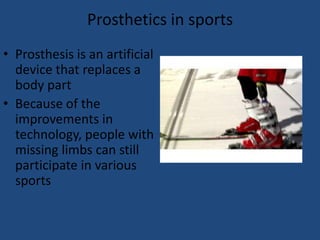
Prosthetics in sportsProsthesis is an artificial device that replaces a body partBecause of the improvements in technology, people with missing limbs can still participate in various sports
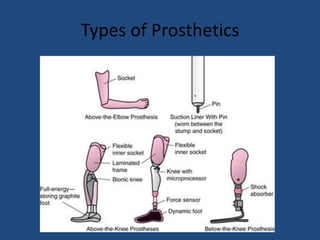
Types of Prosthetics
Sport Specific ProstheticsMost pro level competing people who use a prosthetic have custom made prostheticsThese prosthetics are customized to fit a need for any specific sport
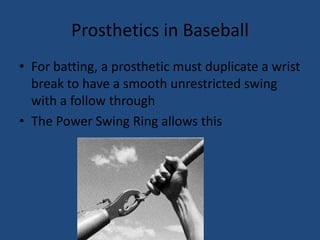
Prosthetics in BaseballFor batting, a prosthetic must duplicate a wrist break to have a smooth unrestricted swing with a follow throughThe Power Swing Ring allows this
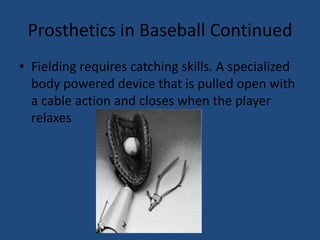
Prosthetics in Baseball ContinuedFielding requires catching skills. A specialized body powered device that is pulled open with a cable action and closes when the player relaxes
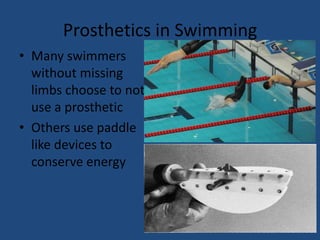
Prosthetics in SwimmingMany swimmers without missing limbs choose to not use a prostheticOthers use paddle like devices to conserve energy
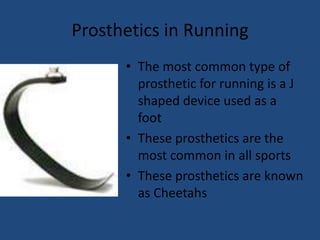
Prosthetics in RunningThe most common type of prosthetic for running is a J shaped device used as a footThese prosthetics are the most common in all sportsThese prosthetics are known as Cheetahs
ControversyOn January 14, South African sprinter Oscar Pistorius was banned from the 2008 Olympics by the IAAF(The International Association of Athletics Federations). Tests by Dr. Briggemann, a leading expert in biomechanics of running, showed that Pistorius’ prosthetics gave him an advantage over runners with human legs. His legs allow him to loose less energy with a larger energy return and less fatigue.
Controversy ContinuedWhen running, the human foot touches the ground and goes through a pause and then a push off phase. Energy is lost in this process. The tests by Briggeman showed that the Cheetahs lost 30 percent less energy than an average human would without a prosthetic would. Also, the Cheetahs would allow a sprinter to use 25 percent less oxygen than a sprinter without the prosthetics.
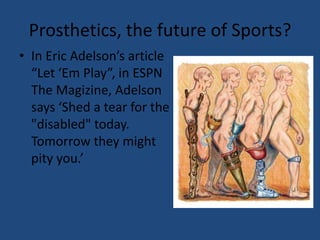
Prosthetics, the future of Sports?In Eric Adelson’s article “Let ‘Em Play”, in ESPN The Magizine, Adelson says ‘Shed a tear for the "disabled" today. Tomorrow they might pity you.’

Prosthetics in sports

  • 1.
  • 2.
    Prosthetics in sportsProsthesisis an artificial device that replaces a body partBecause of the improvements in technology, people with missing limbs can still participate in various sports
  • 3.
  • 4.
    Sport Specific ProstheticsMostpro level competing people who use a prosthetic have custom made prostheticsThese prosthetics are customized to fit a need for any specific sport
  • 5.
    Prosthetics in BaseballForbatting, a prosthetic must duplicate a wrist break to have a smooth unrestricted swing with a follow throughThe Power Swing Ring allows this
  • 6.
    Prosthetics in BaseballContinuedFielding requires catching skills. A specialized body powered device that is pulled open with a cable action and closes when the player relaxes
  • 7.
    Prosthetics in SwimmingManyswimmers without missing limbs choose to not use a prostheticOthers use paddle like devices to conserve energy
  • 8.
    Prosthetics in RunningThemost common type of prosthetic for running is a J shaped device used as a footThese prosthetics are the most common in all sportsThese prosthetics are known as Cheetahs
  • 9.
    ControversyOn January 14,South African sprinter Oscar Pistorius was banned from the 2008 Olympics by the IAAF(The International Association of Athletics Federations). Tests by Dr. Briggemann, a leading expert in biomechanics of running, showed that Pistorius’ prosthetics gave him an advantage over runners with human legs. His legs allow him to loose less energy with a larger energy return and less fatigue.
  • 10.
    Controversy ContinuedWhen running,the human foot touches the ground and goes through a pause and then a push off phase. Energy is lost in this process. The tests by Briggeman showed that the Cheetahs lost 30 percent less energy than an average human would without a prosthetic would. Also, the Cheetahs would allow a sprinter to use 25 percent less oxygen than a sprinter without the prosthetics.
  • 11.
    Prosthetics, the futureof Sports?In Eric Adelson’s article “Let ‘Em Play”, in ESPN The Magizine, Adelson says ‘Shed a tear for the "disabled" today. Tomorrow they might pity you.’