Prokaryote Classification
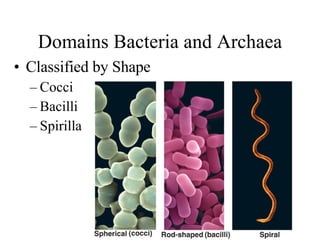
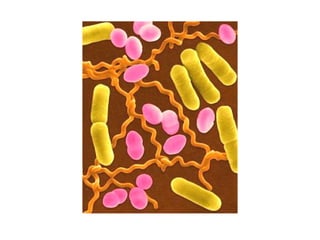
Domains Bacteria and Archaea Classified by Shape Cocci Bacilli Spirilla
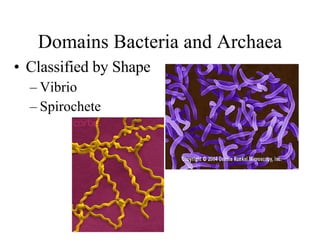
Domains Bacteria and Archaea Classified by Shape Vibrio Spirochete
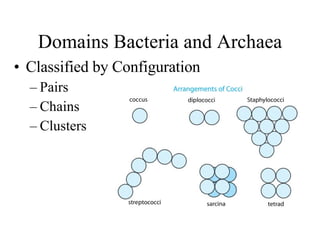
Domains Bacteria and Archaea Classified by Configuration Pairs Chains Clusters
 
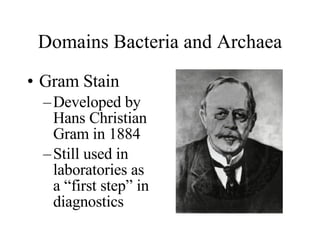
Domains Bacteria and Archaea Gram Stain Developed by Hans Christian Gram in 1884 Still used in laboratories as a “first step” in diagnostics
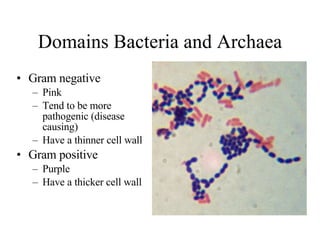
Domains Bacteria and Archaea Gram negative Pink Tend to be more pathogenic (disease causing) Have a thinner cell wall Gram positive Purple Have a thicker cell wall
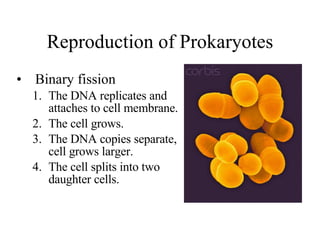
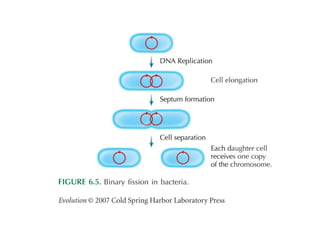
Reproduction of Prokaryotes Binary fission The DNA replicates and attaches to cell membrane. The cell grows. The DNA copies separate, cell grows larger. The cell splits into two daughter cells.
 
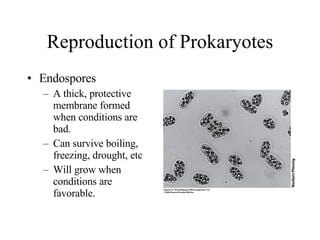
Reproduction of Prokaryotes Endospores A thick, protective membrane formed when conditions are bad. Can survive boiling, freezing, drought, etc Will grow when conditions are favorable.
Prokaryotes in the Ecosystem Nitrogen Fixation Recycling Nutrients Cleaning up Pollution Production of Medicines Production of Food Products Digestion of Food for Animals Pathogenic Bacteria
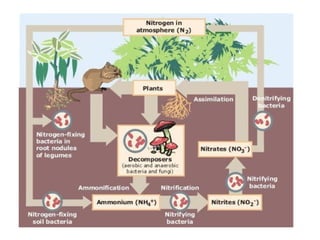
Nitrogen Fixation All eukaryotes need nitrogen for basic cellular function. Nitrogen is a major component of proteins and DNA. Bacteria take nitrogen out of the air and convert it to a form plants can use.
 
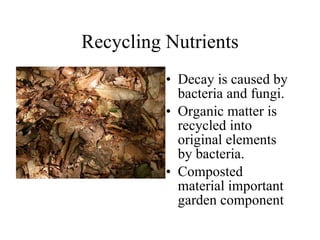
Recycling Nutrients Decay is caused by bacteria and fungi. Organic matter is recycled into original elements by bacteria. Composted material important garden component
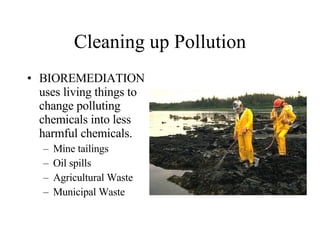
Cleaning up Pollution BIOREMEDIATION uses living things to change polluting chemicals into less harmful chemicals. Mine tailings Oil spills Agricultural Waste Municipal Waste
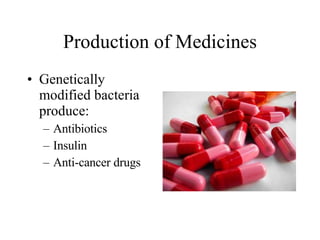
Production of Medicines Genetically modified bacteria produce: Antibiotics Insulin Anti-cancer drugs
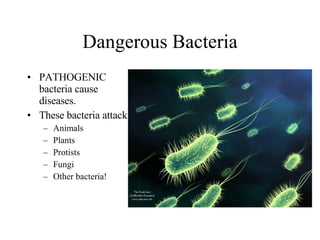
Dangerous Bacteria PATHOGENIC bacteria cause diseases. These bacteria attack: Animals Plants Protists Fungi Other bacteria!

Prokaryote Classification

  • 1.
  • 2.
    Domains Bacteria andArchaea Classified by Shape Cocci Bacilli Spirilla
  • 3.
    Domains Bacteria andArchaea Classified by Shape Vibrio Spirochete
  • 4.
    Domains Bacteria andArchaea Classified by Configuration Pairs Chains Clusters
  • 5.
  • 6.
    Domains Bacteria andArchaea Gram Stain Developed by Hans Christian Gram in 1884 Still used in laboratories as a “first step” in diagnostics
  • 7.
    Domains Bacteria andArchaea Gram negative Pink Tend to be more pathogenic (disease causing) Have a thinner cell wall Gram positive Purple Have a thicker cell wall
  • 8.
    Reproduction of ProkaryotesBinary fission The DNA replicates and attaches to cell membrane. The cell grows. The DNA copies separate, cell grows larger. The cell splits into two daughter cells.
  • 9.
  • 10.
    Reproduction of ProkaryotesEndospores A thick, protective membrane formed when conditions are bad. Can survive boiling, freezing, drought, etc Will grow when conditions are favorable.
  • 11.
    Prokaryotes in theEcosystem Nitrogen Fixation Recycling Nutrients Cleaning up Pollution Production of Medicines Production of Food Products Digestion of Food for Animals Pathogenic Bacteria
  • 12.
    Nitrogen Fixation Alleukaryotes need nitrogen for basic cellular function. Nitrogen is a major component of proteins and DNA. Bacteria take nitrogen out of the air and convert it to a form plants can use.
  • 13.
  • 14.
    Recycling Nutrients Decayis caused by bacteria and fungi. Organic matter is recycled into original elements by bacteria. Composted material important garden component
  • 15.
    Cleaning up PollutionBIOREMEDIATION uses living things to change polluting chemicals into less harmful chemicals. Mine tailings Oil spills Agricultural Waste Municipal Waste
  • 16.
    Production of MedicinesGenetically modified bacteria produce: Antibiotics Insulin Anti-cancer drugs
  • 17.
    Dangerous Bacteria PATHOGENICbacteria cause diseases. These bacteria attack: Animals Plants Protists Fungi Other bacteria!