KINGDOM MONERA and the VIRUS
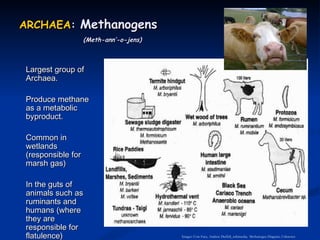
Characteristics of  Bacteria Prokaryote means “before a nucleus.”  They are single-celled organisms and the smallest, simplest organisms. This kingdom is subdivided into two kingdoms: I.  Archaebacteria - Found in anaerobic conditions with high salt concentrations, high temperatures and a low pH.  These are believed to be the conditions on the primitive Earth.  Earth’s early atmosphere didn’t contain oxygen.  (anaerobic)  Scientists believe that all life kingdoms are descended from this group.  Archabacteria’s phyla are based on their habitats. Anaerobic Methanogens - live in the gut of animals, swamps and marshes and produce all of the methane gas found in the Earth’s atmosphere.
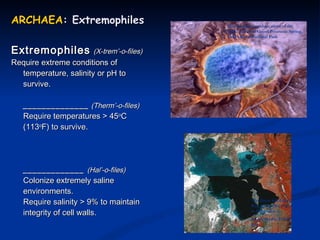
Halophiles - “salt-lovers” found in salt lakes such as the Dead Sea. Thermophiles  – inhabit hot, acidic environments such as hot springs.
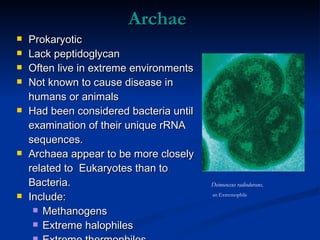
Archae Prokaryotic Lack peptidoglycan Often live in extreme environments Not known to cause disease in humans or animals Had been considered bacteria until examination of their unique rRNA sequences. Archaea appear to be more closely related to  Eukaryotes than to Bacteria.  Include: Methanogens Extreme halophiles Extreme thermophiles Deinococcus radiodurans , an Extremophile
ARCHAEA : Extremophiles Extremophiles   (X-trem’-o-files) Require extreme conditions of temperature, salinity or pH to survive. ______________   (Therm’-o-files) Require temperatures > 45 o C (113 o F) to survive. _____________  (Hal’-o-files) Colonize extremely saline environments. Require salinity > 9% to maintain integrity of cell walls.  Thermophiles produce some of the bright colors of Grand Prismatic Spring, Yellowstone National Park The Great Salt Lake. Red areas color due to halophiles.  Image Credit: USGS gov
ARCHAEA :  Methanogens   (Meth-ann’-o-jens) Largest group of Archaea. Produce methane as a metabolic byproduct.  Common in wetlands (responsible for marsh gas) In the guts of animals such as ruminants and humans (where they are responsible for flatulence) Images: Cow Face, Andrew Duffell_wikimedia;  Methanogen Diagram, Unknown
II. Eubacteria  – This group includes the traditional bacteria and is the largest and most successful of the two kingdoms.  Eubacteria species have allowed scientists to separate them into six phyla .
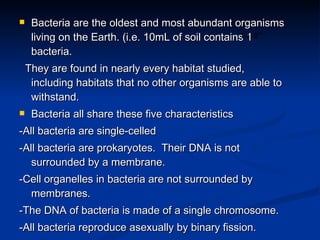
Bacteria are the oldest and most abundant organisms living on the Earth. (i.e. 10mL of soil contains 1  bacteria. They are found in nearly every habitat studied, including habitats that no other organisms are able to withstand. Bacteria all share these five characteristics -All bacteria are single-celled -All bacteria are prokaryotes.  Their DNA is not surrounded by a membrane. -Cell organelles in bacteria are not surrounded by membranes. -The DNA of bacteria is made of a single chromosome. -All bacteria reproduce asexually by binary fission.
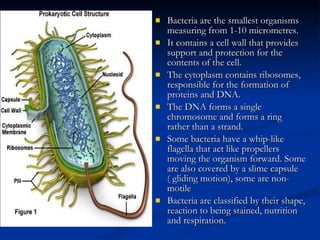
Bacteria are the smallest organisms measuring from 1-10 micrometres. It contains a cell wall that provides support and protection for the contents of the cell. The cytoplasm contains ribosomes, responsible for the formation of proteins and DNA. The DNA forms a single chromosome and forms a ring rather than a strand. Some bacteria have a whip-like flagella that act like propellers moving the organism forward. Some are also covered by a slime capsule ( gliding motion), some are non-motile Bacteria are classified by their shape, reaction to being stained, nutrition and respiration.
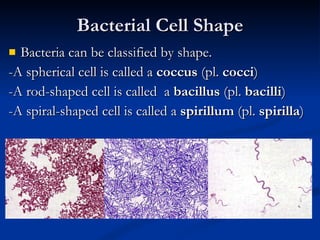
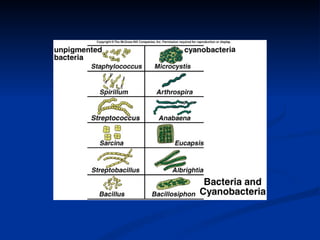
Bacterial Cell Shape Bacteria can be classified by shape. -A spherical cell is called a  coccus  (pl.  cocci ) -A rod-shaped cell is called  a  bacillus  (pl.  bacilli ) -A spiral-shaped cell is called a  spirillum  (pl.  spirilla )
Cocci living as separate cells are called  monococci , pairs are called  diplococci , chains are called  streptococci , and grapelike clusters are called  staphlococci . Bacilli also exist as single cells, pairs (diplobacilli), or chains (streptobacilli).  Spiral bacteria exist only as single cells. Staining bacteria results in two forms:  gram-positive  (purple) vs.  gram negative  (pink).
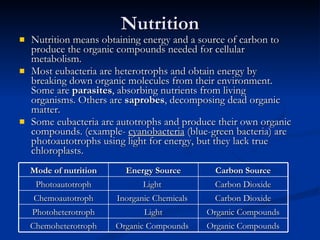
Nutrition Nutrition means obtaining energy and a source of carbon to produce the organic compounds needed for cellular metabolism. Most eubacteria are heterotrophs and obtain energy by breaking down organic molecules from their environment. Some are  parasites , absorbing nutrients from living organisms. Others are  saprobes , decomposing dead organic matter. Some eubacteria are autotrophs and produce their own organic compounds. (example-  cyanobacteria  (blue-green bacteria) are photoautotrophs using light for energy, but they lack true chloroplasts. Mode of nutrition Energy Source Carbon Source Photoautotroph Light  Carbon Dioxide Chemoautotroph Inorganic Chemicals  Carbon Dioxide Photoheterotroph Light Organic Compounds Chemoheterotroph Organic Compounds  Organic Compounds
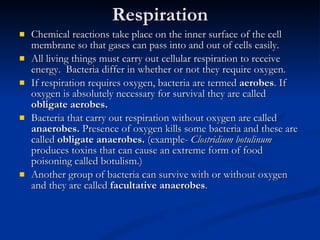
Respiration Chemical reactions take place on the inner surface of the cell membrane so that gases can pass into and out of cells easily. All living things must carry out cellular respiration to receive energy.  Bacteria differ in whether or not they require oxygen. If respiration requires oxygen, bacteria are termed  aerobes . If oxygen is absolutely necessary for survival they are called  obligate aerobes. Bacteria that carry out respiration without oxygen are called  anaerobes.  Presence of oxygen kills some bacteria and these are called  obligate anaerobes.  (example-  Clostridium botulinum   produces toxins that can cause an extreme form of food poisoning called botulism.) Another group of bacteria can survive with or without oxygen and they are called  facultative anaerobes .
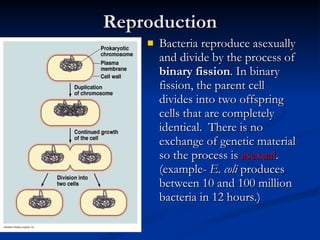
Reproduction Bacteria reproduce asexually and divide by the process of  binary fission . In binary fission, the parent cell divides into two offspring cells that are completely identical.  There is no exchange of genetic material so the process is  asexual . (example-  E. coli  produces between 10 and 100 million bacteria in 12 hours.)
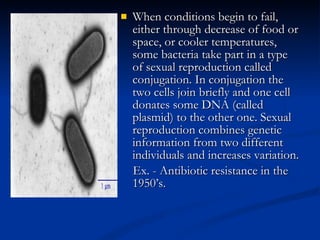
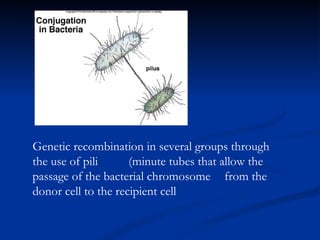
When conditions begin to fail, either through decrease of food or space, or cooler temperatures, some bacteria take part in a type of sexual reproduction called conjugation. In conjugation the two cells join briefly and one cell donates some DNA (called plasmid) to the other one. Sexual reproduction combines genetic information from two different individuals and increases variation. Ex. - Antibiotic resistance in the 1950’s.
Genetic recombination in several groups through the use of pili  (minute tubes that allow the passage of the bacterial chromosome  from the donor cell to the recipient cell
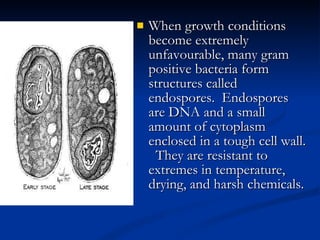
When growth conditions become extremely unfavourable, many gram positive bacteria form structures called endospores.  Endospores are DNA and a small amount of cytoplasm enclosed in a tough cell wall.  They are resistant to extremes in temperature, drying, and harsh chemicals.
Endospores Dormant state No reproduction Metabolic activity is shut down Protects bacteria against hostile environments “ Come back to life” when favorable
The pros and cons of Bacteria Bacteria convert atmospheric nitrogen into a useable form of nitrogen. (nitrogen-fixers) Bacteria play an important role in recycling by breaking down dead and decaying organic matter. Used to eliminate or neutralize toxic and hazardous waste and spills.  Also used in sewage treatment to decompose the 5 billion kg of solid waste produced daily. Bacteria is used to produce dairy foods that help maintain a healthy balance of microorganisms in the digestive system. Only a small percentage of prokaryotes are pathogenic, or disease causing.  These bacteria produce deadly toxins in the human body that cause disease symptoms. Endotoxins are seldom fatal and cause fever, vomiting and diarrhea.  E. coli ,  Salmonella.  Exotoxins are highly toxic, do not cause a fever and are often fatal.  Tetanus and botulism. Example- Toxins released by the bacterium  Streptococcus pneumoniae  may result in symptoms of pneumonia.
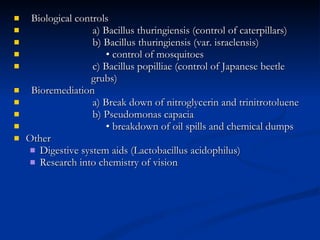
Biological controls a) Bacillus thuringiensis (control of caterpillars) b) Bacillus thuringiensis (var. israelensis) •  control of mosquitoes c) Bacillus popilliae (control of Japanese beetle    grubs) Bioremediation a) Break down of nitroglycerin and trinitrotoluene b) Pseudomonas capacia •  breakdown of oil spills and chemical dumps Other Digestive system aids (Lactobacillus acidophilus) Research into chemistry of vision
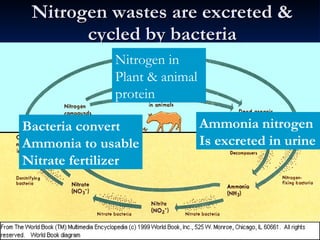
Nitrogen wastes are excreted & cycled by bacteria Nitrogen in Plant & animal protein Ammonia nitrogen Is excreted in urine Bacteria convert Ammonia to usable Nitrate fertilizer
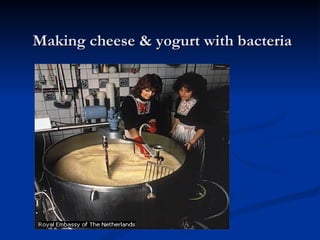
Making cheese & yogurt with bacteria
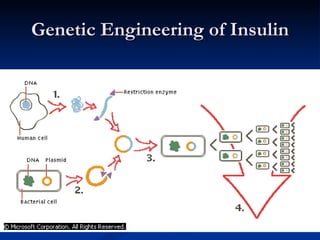
Genetic Engineering of Insulin
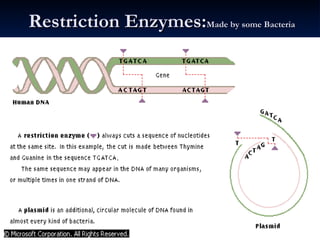
Restriction Enzymes: Made by some Bacteria
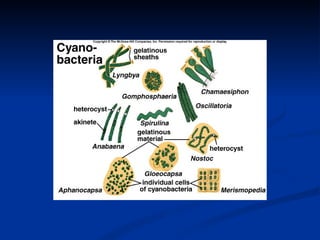
B . Class Cyanobacteriae—The Blue-Green Bacteria 1. Introduction a. Pigments 1) Chlorophyll a 2) Phycocyanin 3) Phycoerythrin b. Can both fix nitrogen and produce oxygen 2. Distribution a. Widely distributed in fresh and marine waters b. Some precipitate carbonate deposits (travertine)
 
3 . Form, metabolism, and reproduction   a. Form 1) Cells often occur in chains or hair-like filaments 2) Some species occur as colonies 3) Color varies depending on pigments present, although  half are blue-green b. Metabolism •  store carbohydrates, lipids, and the nitrogenous  cyanophycin c. Reproduction 1) New cells formed by fission 2) New colonies may be formed by fragmentation at: a) Heterocysts (nitrogen-fixing cells) b) Akinetes 3) Genetic recombination
 
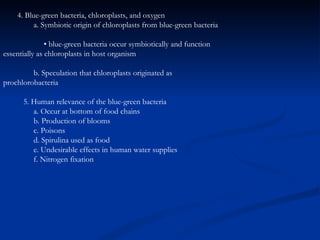
4. Blue-green bacteria, chloroplasts, and oxygen a. Symbiotic origin of chloroplasts from blue-green bacteria •  blue-green bacteria occur symbiotically and function  essentially as chloroplasts in host organism b. Speculation that chloroplasts originated as  prochlorobacteria 5. Human relevance of the blue-green bacteria a. Occur at bottom of food chains b. Production of blooms c. Poisons d. Spirulina used as food e. Undesirable effects in human water supplies f. Nitrogen fixation
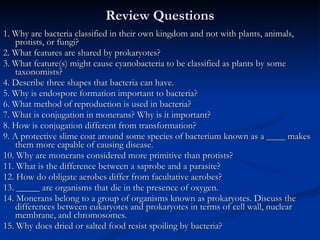
Review Questions 1. Why are bacteria classified in their own kingdom and not with plants, animals, protists, or fungi? 2. What features are shared by prokaryotes? 3. What feature(s) might cause cyanobacteria to be classified as plants by some taxonomists? 4. Describe three shapes that bacteria can have. 5. Why is endospore formation important to bacteria? 6. What method of reproduction is used in bacteria?  7. What is conjugation in monerans? Why is it important? 8. How is conjugation different from transformation?  9. A protective slime coat around some species of bacterium known as a ____ makes them more capable of causing disease. 10. Why are monerans considered more primitive than protists? 11. What is the difference between a saprobe and a parasite?  12. How do obligate aerobes differ from facultative aerobes?  13. _____ are organisms that die in the presence of oxygen. 14. Monerans belong to a group of organisms known as prokaryotes. Discuss the differences between eukaryotes and prokaryotes in terms of cell wall, nuclear membrane, and chromosomes. 15. Why does dried or salted food resist spoiling by bacteria?
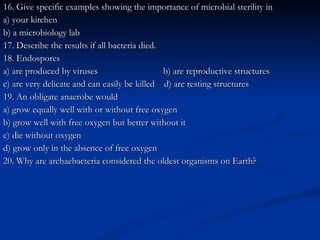
16. Give specific examples showing the importance of microbial sterility in a) your kitchen b) a microbiology lab 17. Describe the results if all bacteria died. 18. Endospores a) are produced by viruses  b) are reproductive structures  c) are very delicate and can easily be killed  d) are resting structures 19. An obligate anaerobe would a) grow equally well with or without free oxygen  b) grow well with free oxygen but better without it c) die without oxygen d) grow only in the absence of free oxygen 20. Why are archaebacteria considered the oldest organisms on Earth?
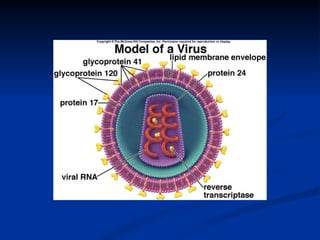
At the boundary of life, between the macromolecules (which are not alive) and the prokaryotic cells (which are), lie the viruses and bacteriophages (phages).  These twilight creatures are parasites responsible for causing many diseases in living things (herpes and HIV in humans, for example). Viruses are found everywhere. Viruses consist of a  core of nucleic acid, either DNA or RNA, and a protective coat of protein molecules and sometimes lipids.  Viruses - The Boundary of Life
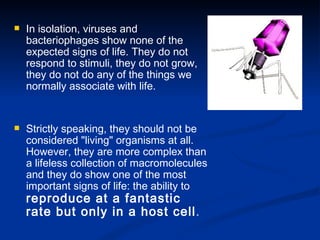
In isolation, viruses and bacteriophages show none of the expected signs of life. They do not respond to stimuli, they do not grow, they do not do any of the things we normally associate with life.  Strictly speaking, they should not be considered "living" organisms at all. However, they are more complex than a lifeless collection of macromolecules and they do show one of the most important signs of life: the ability to  reproduce at a fantastic rate but only in a host cell .
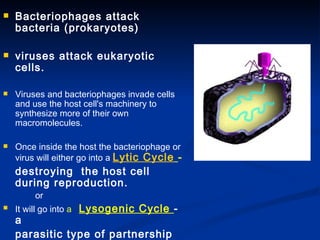
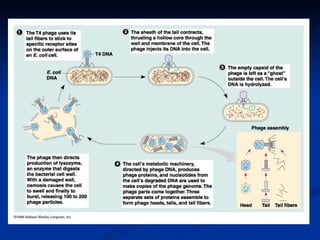
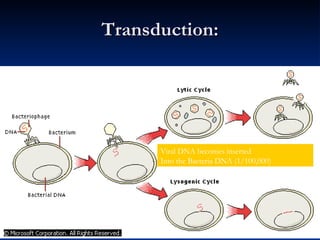
Bacteriophages attack bacteria (prokaryotes) viruses attack eukaryotic cells. Viruses and bacteriophages invade cells and use the host cell's machinery to synthesize more of their own macromolecules.  Once inside the host the bacteriophage or virus will either go into a  Lytic Cycle   -  destroying  the host cell during reproduction. or  It will go into  a  Lysogenic Cycle  - a parasitic type of partnership with the cell
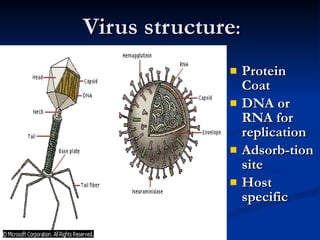
Virus structure : Protein Coat DNA or RNA for replication Adsorb-tion site Host specific
 
Anatomy of a Virus
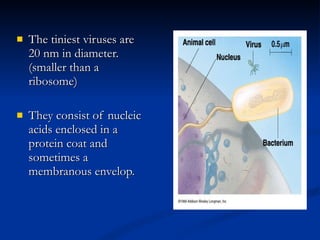
The tiniest viruses are 20 nm in diameter.  (smaller than a ribosome) They consist of nucleic acids enclosed in a protein coat and sometimes a membranous envelop.
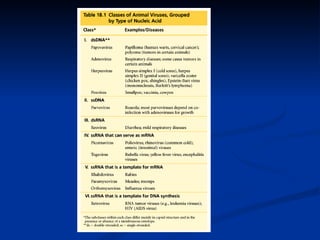
The genomes (sets of genes) maybe Double stranded DNA Single stranded DNA Double stranded RNA Single stranded RNA They are called either a DNA or RNA virus depending on the type of nucleotide in the make-up. They may be linear or circular The smallest have only 4 genes and largest have several hundred.
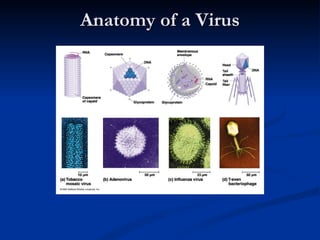
Capsid – a protein shell that covers the viral genome.  They may be Rod-shaped Polyhedral More complex Capsids are built from large numbers of protein subunits called CAPSOMERES The most complex capsids are found in viruses that infect bacteria – BACTERIOPHAGES (T1-T7).  They have a protein tail piece with tail fibers that attach to the bacterium
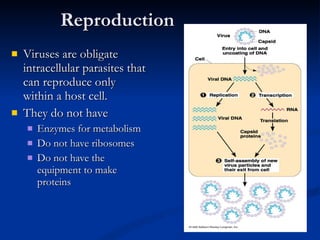
Reproduction Viruses are obligate intracellular parasites that can reproduce only within a host cell. They do not have Enzymes for metabolism Do not have ribosomes Do not have the equipment to make proteins
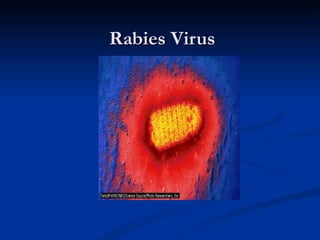
Each type of virus can infect and parasitize only a limited range of host cells called its HOST RANGE. Some are broad based while others are not. Swine flu virus can infect swine or humans Rabies can infect may mammals Some can parasitize only E. coli Eukaryote viruses are usually tissue specific Viruses use a “lock and key” fit to identify hosts.
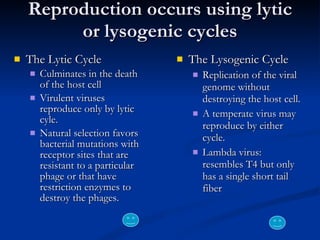
Reproduction occurs using lytic or lysogenic cycles The Lytic Cycle Culminates in the death of the host cell Virulent viruses reproduce only by lytic cyle. Natural selection favors bacterial mutations with receptor sites that are resistant to a particular phage or that have restriction enzymes to destroy the phages. The Lysogenic Cycle Replication of the viral genome without destroying the host cell. A temperate virus may reproduce by either cycle.  Lambda virus:  resembles T4 but only has a single short tail fiber
 
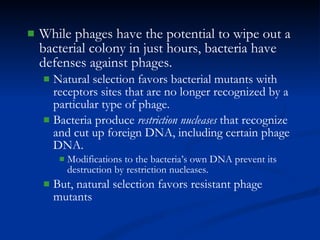
While phages have the potential to wipe out a bacterial colony in just hours, bacteria have defenses against phages. Natural selection favors bacterial mutants with receptors sites that are no longer recognized by a particular type of phage. Bacteria produce  restriction nucleases  that recognize and cut up foreign DNA, including certain phage DNA. Modifications to the bacteria’s own DNA prevent its destruction by restriction nucleases. But, natural selection favors resistant phage mutants
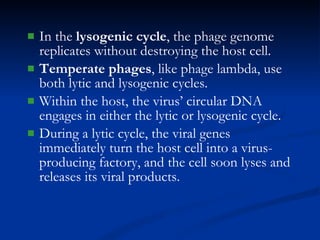
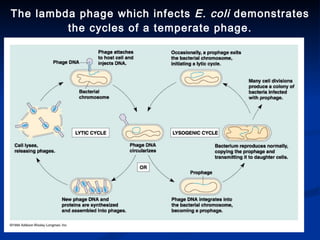
In the  lysogenic cycle , the phage genome replicates without destroying the host cell. Temperate phages , like phage lambda, use both lytic and lysogenic cycles. Within the host, the virus’ circular DNA engages in either the lytic or lysogenic cycle. During a lytic cycle, the viral genes immediately turn the host cell into a virus-producing factory, and the cell soon lyses and releases its viral products.
The lambda phage which infects  E.   coli  demonstrates the cycles of a temperate phage.
Lambda reproduction Infects an  E. coli  cell by injecting its DNA The lambda  DNA molecule forms a circle. Lytic or lysogenic  cycles begin In a lytic cycle, the cell is turned into a lambda producing factory, the cell lyses and releases its products. In a lysogenic cycle, the viral genome is incorporated into by genetic recombination into a specific site on the host cell’s chromosome. It is now known as a prophage
Every time the E. coli divides, it replicated the phage DNA and passes it along to the daughter cells. This enables the phage to replicate without destroying the host. The phages may at some point in time become active phages that lyse their host cell and releasing infectious particles. There is usually an environment trigger. There may be other prophages released as well and this may change the phenotype of the host.  This is of medical importance.  Examples:  diphtheria, botulism and scarlet fever.
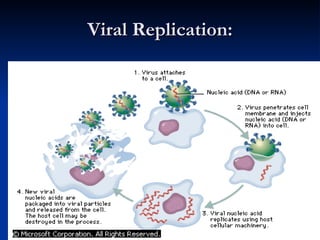
Regardless of the type of virus, the parasite diverts the host cell’s resources for viral production.  The host cell provides: Nucleotides for nucleic acid production Enzymes Ribosomes tRNA Amino acids ATP
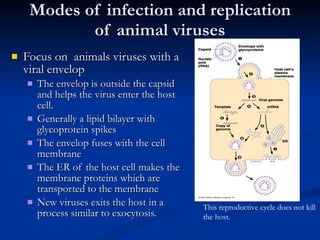
Modes of infection and replication of animal viruses Focus on  animals viruses with a viral envelop The envelop is outside the capsid and helps the virus enter the host cell. Generally a lipid bilayer with glycoprotein spikes The envelop fuses with the cell membrane The ER of the host cell makes the membrane proteins which are transported to the membrane New viruses exits the host in a process similar to exocytosis. This reproductive cycle does not kill the host.
Some viruses have envelopes that are not derived from the plasma membrane. Herpesvirus has an envelop that is derived from the nuclear membrane. These become integrated into the host genome as a provirus.  Once these viruses are acquired they tend to reoccur through out a person’s life.
RNA as Viral Genetic Material The broadest variety of RNA genomes is found among viruses are those that infect animals. There are three types of single stranded RNA genomes The genome of class IV can directly serve as mRNA and can be translated into viral protein immediately after infection
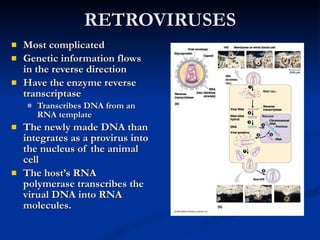
RETROVIRUSES Most complicated Genetic information flows in the reverse direction Have the enzyme reverse transcriptase Transcribes DNA from an RNA template The newly made DNA than integrates as a provirus into the nucleus of the animal cell The host’s RNA polymerase transcribes the virual DNA into RNA molecules.
Viral Diseases in Animals The damage caused by a viral disease depends on the ability of the tissue infected to regenerate by cell division. Cold virus – we recover from Poliovirus - attacks Vaccines are harmless variants of pathogenic microbes that stimulate the immune system to defenses against the pathogen.
 
The link between viral infection and the symptoms it produces is often obscure. Some viruses damage or kill cells by triggering the release of hydrolytic enzymes from lysosomes. Some viruses cause the infected cell to produce toxins that lead to disease symptoms. Other have molecular components, such as envelope proteins, that are toxic. In some cases, viral damage is easily repaired (respiratory epithelium after a cold), but in others, infection causes permanent damage (nerve cells after polio).
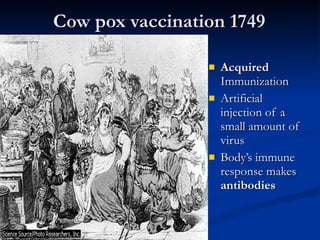
The first vaccine was developed in the late 1700s by Edward Jenner to fight smallpox. Jenner learned from his patients that milkmaids who had contracted cowpox, a milder disease that usually infects cows, were resistant to smallpox. In his famous experiment in 1796, Jenner infected a farmboy with cowpox, acquired from the sore of a milkmaid with the disease. When exposed to smallpox, the boy resisted the disease. Because of their similarities, vaccination with the cowpox virus sensitizes the immune system to react vigorously if exposed to actual smallpox virus. Effective vaccines against many other viruses exist.
Vaccines can help prevent viral infections, but they can do little to cure most viral infection once they occur. Antibiotics which can kill bacteria by inhibiting enzyme or processes specific to bacteria are powerless again viruses, which have few or no enzymes of their own. Some recently-developed drugs do combat some viruses, mostly by interfering with viral nucleic acid synthesis. AZT interferes with reverse transcriptase of HIV. Acyclovir inhibits herpes virus DNA synthesis.
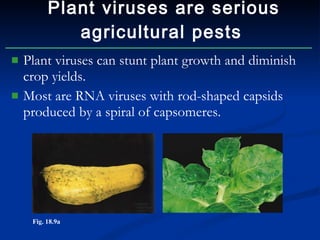
Plant viruses can stunt plant growth and diminish crop yields. Most are RNA viruses with rod-shaped capsids produced by a spiral of capsomeres. Plant viruses are serious agricultural pests Fig. 18.9a
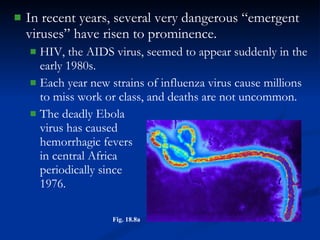
In recent years, several very dangerous “emergent viruses” have risen to prominence. HIV, the AIDS virus, seemed to appear suddenly in the early 1980s. Each year new strains of influenza virus cause millions to miss work or class, and deaths are not uncommon. The deadly Ebola  virus has caused  hemorrhagic fevers  in central Africa  periodically since  1976. Fig. 18.8a
Viroids , smaller and simpler than even viruses, consist of tiny molecules of naked circular RNA that infect plants. Their several hundred nucleotides do not encode for proteins but can be replicated by the host’s cellular enzymes. These RNA molecules can disrupt plant metabolism and stunt plant growth, perhaps by causing errors in the regulatory systems that control plant growth. Viroids and prions are infectious agents even simpler than viruses
Viruses are in the semantic fog between life and nonlife. An isolated virus is biologically inert and yet it has a genetic program written in the universal language of life. Although viruses are obligate intracellular parasites that cannot reproduce independently, it is hard to deny their evolutionary connection to the living world. Viruses may have evolved from other mobile genetic elements
Because viruses depend on cells for their own propagation, it is reasonable to assume that they evolved  after  the first cells appeared. Most molecular biologists favor the hypothesis that viruses originated from fragments of cellular nucleic acids that could move from one cell to another. A viral genome usually has more in common with the genome of its host than with those of viruses infecting other hosts. Perhaps the earliest viruses were naked bits of nucleic acids that passed between cells via injured cell surfaces. The evolution of capsid genes may have facilitated the infection of undamaged cells.
Candidates for the original sources of viral genomes include plasmids and transposons. Plasmids are small, circular DNA molecules that are separate from chromosomes. Plasmids, found in bacteria and in the eukaryote yeast, can replicate independently of the rest of the cell and are occasionally be transferred between cells. Transposons are DNA segments that can move from one location to another within a cell’s genome. Both plasmids and transposons are mobile genetic elements.
D . Viral Reproduction 1. Viruses replicate only at the expense of their host cells 2. Viruses must become attached to a susceptible cell 3. Once inside the host cell, their DNA or RNA directs the  synthesis of new viral particles 4. Some viruses mutate rapidly 5. Viruses may affect the metabolism of their host cells 6. Infected cells can produce interferon which protects   uninfected cells
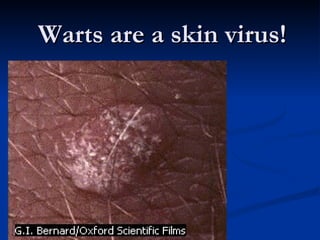
Warts are a skin virus!
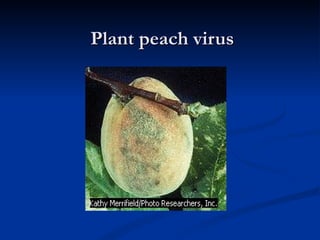
Plant peach virus
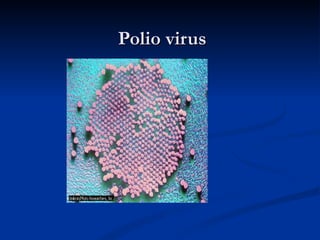
Polio virus
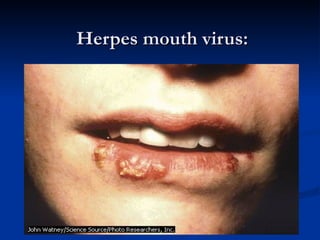
Herpes mouth virus:
Rabies Virus
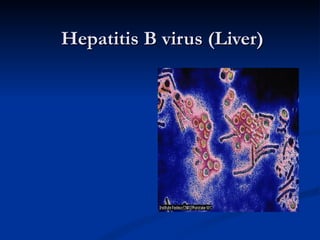
Hepatitis B virus (Liver)
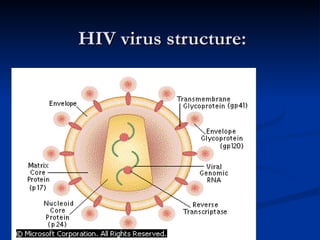
HIV virus structure:
Cow pox vaccination 1749 Acquired  Immunization Artificial injection of a small amount of virus Body’s immune response makes  antibodies
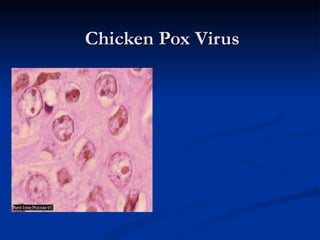
Chicken Pox Virus
Viral Replication:
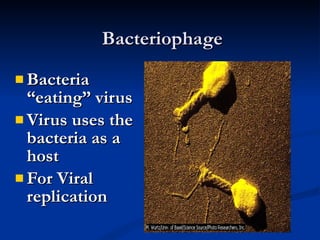
Bacteriophage Bacteria “eating” virus Virus uses the bacteria as a host For Viral replication
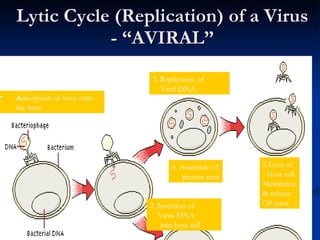
Lytic Cycle (Replication) of a Virus - “AVIRAL” A dsorption of virus onto the host 2. Insertion of  Virus DNA into host cell 3. Replication of  Viral DNA 4. Assembly of protein coat 5.Lysis of Host cell Membrane & release  Of virus
Transduction: Viral DNA becomes inserted  Into the Bacteria DNA (1/100,000)
HIV Virus
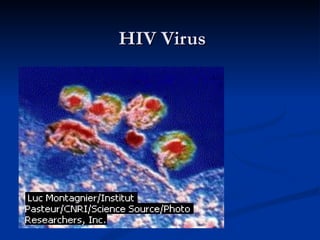
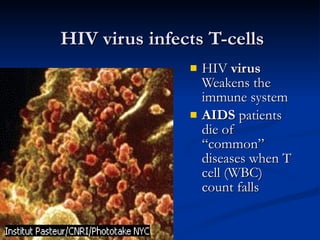
HIV virus infects T-cells HIV  virus  Weakens the immune system AIDS  patients die of “common” diseases when T cell (WBC) count falls
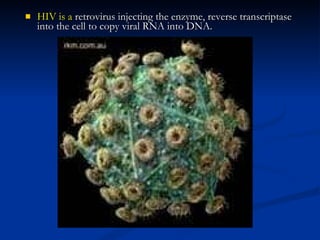
HIV is a  retrovirus injecting the enzyme, reverse transcriptase into the cell to copy viral RNA into DNA.
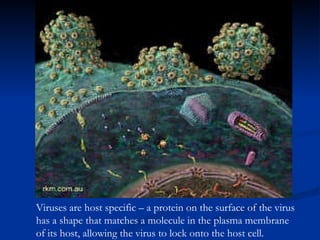
Viruses are host specific – a protein on the surface of the virus  has a shape that matches a molecule in the plasma membrane  of its host, allowing the virus to lock onto the host cell.
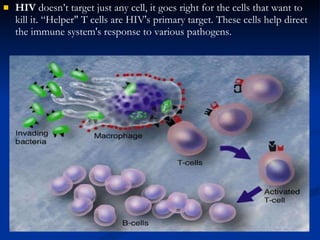
HIV  doesn’t target just any cell, it goes right for the cells that want to kill it. “Helper" T cells are HIV's primary target. These cells help direct the immune system's response to various pathogens.
HIV undermines the body's ability to protect against disease by depleting T cells thus  destroying the immune system . The virus can infect 10 billion cells a day, yet only 1.8 billion can be replaced daily.
After many years of a constant battle, the body has insufficient numbers of T-Cells to mount an immune response against infections. At the point when the body is unable to fight off infections, a person is said to have the disease  AIDS . It is not the virus or the disease that ultimately kills a person; it is the inability to fight off something as minor as the common cold.

Kingdom Monera and Virus

  • 1.
  • 2.
    Characteristics of Bacteria Prokaryote means “before a nucleus.” They are single-celled organisms and the smallest, simplest organisms. This kingdom is subdivided into two kingdoms: I. Archaebacteria - Found in anaerobic conditions with high salt concentrations, high temperatures and a low pH. These are believed to be the conditions on the primitive Earth. Earth’s early atmosphere didn’t contain oxygen. (anaerobic) Scientists believe that all life kingdoms are descended from this group. Archabacteria’s phyla are based on their habitats. Anaerobic Methanogens - live in the gut of animals, swamps and marshes and produce all of the methane gas found in the Earth’s atmosphere.
  • 3.
    Halophiles - “salt-lovers”found in salt lakes such as the Dead Sea. Thermophiles – inhabit hot, acidic environments such as hot springs.
  • 4.
    Archae Prokaryotic Lackpeptidoglycan Often live in extreme environments Not known to cause disease in humans or animals Had been considered bacteria until examination of their unique rRNA sequences. Archaea appear to be more closely related to Eukaryotes than to Bacteria. Include: Methanogens Extreme halophiles Extreme thermophiles Deinococcus radiodurans , an Extremophile
  • 5.
    ARCHAEA : ExtremophilesExtremophiles (X-trem’-o-files) Require extreme conditions of temperature, salinity or pH to survive. ______________ (Therm’-o-files) Require temperatures > 45 o C (113 o F) to survive. _____________ (Hal’-o-files) Colonize extremely saline environments. Require salinity > 9% to maintain integrity of cell walls. Thermophiles produce some of the bright colors of Grand Prismatic Spring, Yellowstone National Park The Great Salt Lake. Red areas color due to halophiles. Image Credit: USGS gov
  • 6.
    ARCHAEA : Methanogens (Meth-ann’-o-jens) Largest group of Archaea. Produce methane as a metabolic byproduct. Common in wetlands (responsible for marsh gas) In the guts of animals such as ruminants and humans (where they are responsible for flatulence) Images: Cow Face, Andrew Duffell_wikimedia; Methanogen Diagram, Unknown
  • 7.
    II. Eubacteria – This group includes the traditional bacteria and is the largest and most successful of the two kingdoms. Eubacteria species have allowed scientists to separate them into six phyla .
  • 8.
    Bacteria are theoldest and most abundant organisms living on the Earth. (i.e. 10mL of soil contains 1 bacteria. They are found in nearly every habitat studied, including habitats that no other organisms are able to withstand. Bacteria all share these five characteristics -All bacteria are single-celled -All bacteria are prokaryotes. Their DNA is not surrounded by a membrane. -Cell organelles in bacteria are not surrounded by membranes. -The DNA of bacteria is made of a single chromosome. -All bacteria reproduce asexually by binary fission.
  • 9.
    Bacteria are thesmallest organisms measuring from 1-10 micrometres. It contains a cell wall that provides support and protection for the contents of the cell. The cytoplasm contains ribosomes, responsible for the formation of proteins and DNA. The DNA forms a single chromosome and forms a ring rather than a strand. Some bacteria have a whip-like flagella that act like propellers moving the organism forward. Some are also covered by a slime capsule ( gliding motion), some are non-motile Bacteria are classified by their shape, reaction to being stained, nutrition and respiration.
  • 10.
    Bacterial Cell ShapeBacteria can be classified by shape. -A spherical cell is called a coccus (pl. cocci ) -A rod-shaped cell is called a bacillus (pl. bacilli ) -A spiral-shaped cell is called a spirillum (pl. spirilla )
  • 11.
    Cocci living asseparate cells are called monococci , pairs are called diplococci , chains are called streptococci , and grapelike clusters are called staphlococci . Bacilli also exist as single cells, pairs (diplobacilli), or chains (streptobacilli). Spiral bacteria exist only as single cells. Staining bacteria results in two forms: gram-positive (purple) vs. gram negative (pink).
  • 12.
    Nutrition Nutrition meansobtaining energy and a source of carbon to produce the organic compounds needed for cellular metabolism. Most eubacteria are heterotrophs and obtain energy by breaking down organic molecules from their environment. Some are parasites , absorbing nutrients from living organisms. Others are saprobes , decomposing dead organic matter. Some eubacteria are autotrophs and produce their own organic compounds. (example- cyanobacteria (blue-green bacteria) are photoautotrophs using light for energy, but they lack true chloroplasts. Mode of nutrition Energy Source Carbon Source Photoautotroph Light Carbon Dioxide Chemoautotroph Inorganic Chemicals Carbon Dioxide Photoheterotroph Light Organic Compounds Chemoheterotroph Organic Compounds Organic Compounds
  • 13.
    Respiration Chemical reactionstake place on the inner surface of the cell membrane so that gases can pass into and out of cells easily. All living things must carry out cellular respiration to receive energy. Bacteria differ in whether or not they require oxygen. If respiration requires oxygen, bacteria are termed aerobes . If oxygen is absolutely necessary for survival they are called obligate aerobes. Bacteria that carry out respiration without oxygen are called anaerobes. Presence of oxygen kills some bacteria and these are called obligate anaerobes. (example- Clostridium botulinum produces toxins that can cause an extreme form of food poisoning called botulism.) Another group of bacteria can survive with or without oxygen and they are called facultative anaerobes .
  • 14.
    Reproduction Bacteria reproduceasexually and divide by the process of binary fission . In binary fission, the parent cell divides into two offspring cells that are completely identical. There is no exchange of genetic material so the process is asexual . (example- E. coli produces between 10 and 100 million bacteria in 12 hours.)
  • 15.
    When conditions beginto fail, either through decrease of food or space, or cooler temperatures, some bacteria take part in a type of sexual reproduction called conjugation. In conjugation the two cells join briefly and one cell donates some DNA (called plasmid) to the other one. Sexual reproduction combines genetic information from two different individuals and increases variation. Ex. - Antibiotic resistance in the 1950’s.
  • 16.
    Genetic recombination inseveral groups through the use of pili (minute tubes that allow the passage of the bacterial chromosome from the donor cell to the recipient cell
  • 17.
    When growth conditionsbecome extremely unfavourable, many gram positive bacteria form structures called endospores. Endospores are DNA and a small amount of cytoplasm enclosed in a tough cell wall. They are resistant to extremes in temperature, drying, and harsh chemicals.
  • 18.
    Endospores Dormant stateNo reproduction Metabolic activity is shut down Protects bacteria against hostile environments “ Come back to life” when favorable
  • 19.
    The pros andcons of Bacteria Bacteria convert atmospheric nitrogen into a useable form of nitrogen. (nitrogen-fixers) Bacteria play an important role in recycling by breaking down dead and decaying organic matter. Used to eliminate or neutralize toxic and hazardous waste and spills. Also used in sewage treatment to decompose the 5 billion kg of solid waste produced daily. Bacteria is used to produce dairy foods that help maintain a healthy balance of microorganisms in the digestive system. Only a small percentage of prokaryotes are pathogenic, or disease causing. These bacteria produce deadly toxins in the human body that cause disease symptoms. Endotoxins are seldom fatal and cause fever, vomiting and diarrhea. E. coli , Salmonella. Exotoxins are highly toxic, do not cause a fever and are often fatal. Tetanus and botulism. Example- Toxins released by the bacterium Streptococcus pneumoniae may result in symptoms of pneumonia.
  • 20.
    Biological controls a)Bacillus thuringiensis (control of caterpillars) b) Bacillus thuringiensis (var. israelensis) • control of mosquitoes c) Bacillus popilliae (control of Japanese beetle grubs) Bioremediation a) Break down of nitroglycerin and trinitrotoluene b) Pseudomonas capacia • breakdown of oil spills and chemical dumps Other Digestive system aids (Lactobacillus acidophilus) Research into chemistry of vision
  • 21.
    Nitrogen wastes areexcreted & cycled by bacteria Nitrogen in Plant & animal protein Ammonia nitrogen Is excreted in urine Bacteria convert Ammonia to usable Nitrate fertilizer
  • 22.
    Making cheese &yogurt with bacteria
  • 23.
  • 24.
    Restriction Enzymes: Madeby some Bacteria
  • 25.
    B . ClassCyanobacteriae—The Blue-Green Bacteria 1. Introduction a. Pigments 1) Chlorophyll a 2) Phycocyanin 3) Phycoerythrin b. Can both fix nitrogen and produce oxygen 2. Distribution a. Widely distributed in fresh and marine waters b. Some precipitate carbonate deposits (travertine)
  • 26.
  • 27.
    3 . Form,metabolism, and reproduction a. Form 1) Cells often occur in chains or hair-like filaments 2) Some species occur as colonies 3) Color varies depending on pigments present, although half are blue-green b. Metabolism • store carbohydrates, lipids, and the nitrogenous cyanophycin c. Reproduction 1) New cells formed by fission 2) New colonies may be formed by fragmentation at: a) Heterocysts (nitrogen-fixing cells) b) Akinetes 3) Genetic recombination
  • 28.
  • 29.
    4. Blue-green bacteria,chloroplasts, and oxygen a. Symbiotic origin of chloroplasts from blue-green bacteria • blue-green bacteria occur symbiotically and function essentially as chloroplasts in host organism b. Speculation that chloroplasts originated as prochlorobacteria 5. Human relevance of the blue-green bacteria a. Occur at bottom of food chains b. Production of blooms c. Poisons d. Spirulina used as food e. Undesirable effects in human water supplies f. Nitrogen fixation
  • 30.
    Review Questions 1.Why are bacteria classified in their own kingdom and not with plants, animals, protists, or fungi? 2. What features are shared by prokaryotes? 3. What feature(s) might cause cyanobacteria to be classified as plants by some taxonomists? 4. Describe three shapes that bacteria can have. 5. Why is endospore formation important to bacteria? 6. What method of reproduction is used in bacteria? 7. What is conjugation in monerans? Why is it important? 8. How is conjugation different from transformation? 9. A protective slime coat around some species of bacterium known as a ____ makes them more capable of causing disease. 10. Why are monerans considered more primitive than protists? 11. What is the difference between a saprobe and a parasite? 12. How do obligate aerobes differ from facultative aerobes? 13. _____ are organisms that die in the presence of oxygen. 14. Monerans belong to a group of organisms known as prokaryotes. Discuss the differences between eukaryotes and prokaryotes in terms of cell wall, nuclear membrane, and chromosomes. 15. Why does dried or salted food resist spoiling by bacteria?
  • 31.
    16. Give specificexamples showing the importance of microbial sterility in a) your kitchen b) a microbiology lab 17. Describe the results if all bacteria died. 18. Endospores a) are produced by viruses b) are reproductive structures c) are very delicate and can easily be killed d) are resting structures 19. An obligate anaerobe would a) grow equally well with or without free oxygen b) grow well with free oxygen but better without it c) die without oxygen d) grow only in the absence of free oxygen 20. Why are archaebacteria considered the oldest organisms on Earth?
  • 32.
    At the boundaryof life, between the macromolecules (which are not alive) and the prokaryotic cells (which are), lie the viruses and bacteriophages (phages). These twilight creatures are parasites responsible for causing many diseases in living things (herpes and HIV in humans, for example). Viruses are found everywhere. Viruses consist of a core of nucleic acid, either DNA or RNA, and a protective coat of protein molecules and sometimes lipids. Viruses - The Boundary of Life
  • 33.
    In isolation, virusesand bacteriophages show none of the expected signs of life. They do not respond to stimuli, they do not grow, they do not do any of the things we normally associate with life. Strictly speaking, they should not be considered "living" organisms at all. However, they are more complex than a lifeless collection of macromolecules and they do show one of the most important signs of life: the ability to reproduce at a fantastic rate but only in a host cell .
  • 34.
    Bacteriophages attack bacteria(prokaryotes) viruses attack eukaryotic cells. Viruses and bacteriophages invade cells and use the host cell's machinery to synthesize more of their own macromolecules. Once inside the host the bacteriophage or virus will either go into a Lytic Cycle - destroying the host cell during reproduction. or It will go into a Lysogenic Cycle - a parasitic type of partnership with the cell
  • 35.
    Virus structure :Protein Coat DNA or RNA for replication Adsorb-tion site Host specific
  • 36.
  • 37.
  • 38.
    The tiniest virusesare 20 nm in diameter. (smaller than a ribosome) They consist of nucleic acids enclosed in a protein coat and sometimes a membranous envelop.
  • 39.
    The genomes (setsof genes) maybe Double stranded DNA Single stranded DNA Double stranded RNA Single stranded RNA They are called either a DNA or RNA virus depending on the type of nucleotide in the make-up. They may be linear or circular The smallest have only 4 genes and largest have several hundred.
  • 40.
    Capsid – aprotein shell that covers the viral genome. They may be Rod-shaped Polyhedral More complex Capsids are built from large numbers of protein subunits called CAPSOMERES The most complex capsids are found in viruses that infect bacteria – BACTERIOPHAGES (T1-T7). They have a protein tail piece with tail fibers that attach to the bacterium
  • 41.
    Reproduction Viruses areobligate intracellular parasites that can reproduce only within a host cell. They do not have Enzymes for metabolism Do not have ribosomes Do not have the equipment to make proteins
  • 42.
    Each type ofvirus can infect and parasitize only a limited range of host cells called its HOST RANGE. Some are broad based while others are not. Swine flu virus can infect swine or humans Rabies can infect may mammals Some can parasitize only E. coli Eukaryote viruses are usually tissue specific Viruses use a “lock and key” fit to identify hosts.
  • 43.
    Reproduction occurs usinglytic or lysogenic cycles The Lytic Cycle Culminates in the death of the host cell Virulent viruses reproduce only by lytic cyle. Natural selection favors bacterial mutations with receptor sites that are resistant to a particular phage or that have restriction enzymes to destroy the phages. The Lysogenic Cycle Replication of the viral genome without destroying the host cell. A temperate virus may reproduce by either cycle. Lambda virus: resembles T4 but only has a single short tail fiber
  • 44.
  • 45.
    While phages havethe potential to wipe out a bacterial colony in just hours, bacteria have defenses against phages. Natural selection favors bacterial mutants with receptors sites that are no longer recognized by a particular type of phage. Bacteria produce restriction nucleases that recognize and cut up foreign DNA, including certain phage DNA. Modifications to the bacteria’s own DNA prevent its destruction by restriction nucleases. But, natural selection favors resistant phage mutants
  • 46.
    In the lysogenic cycle , the phage genome replicates without destroying the host cell. Temperate phages , like phage lambda, use both lytic and lysogenic cycles. Within the host, the virus’ circular DNA engages in either the lytic or lysogenic cycle. During a lytic cycle, the viral genes immediately turn the host cell into a virus-producing factory, and the cell soon lyses and releases its viral products.
  • 47.
    The lambda phagewhich infects E. coli demonstrates the cycles of a temperate phage.
  • 48.
    Lambda reproduction Infectsan E. coli cell by injecting its DNA The lambda DNA molecule forms a circle. Lytic or lysogenic cycles begin In a lytic cycle, the cell is turned into a lambda producing factory, the cell lyses and releases its products. In a lysogenic cycle, the viral genome is incorporated into by genetic recombination into a specific site on the host cell’s chromosome. It is now known as a prophage
  • 49.
    Every time theE. coli divides, it replicated the phage DNA and passes it along to the daughter cells. This enables the phage to replicate without destroying the host. The phages may at some point in time become active phages that lyse their host cell and releasing infectious particles. There is usually an environment trigger. There may be other prophages released as well and this may change the phenotype of the host. This is of medical importance. Examples: diphtheria, botulism and scarlet fever.
  • 50.
    Regardless of thetype of virus, the parasite diverts the host cell’s resources for viral production. The host cell provides: Nucleotides for nucleic acid production Enzymes Ribosomes tRNA Amino acids ATP
  • 51.
    Modes of infectionand replication of animal viruses Focus on animals viruses with a viral envelop The envelop is outside the capsid and helps the virus enter the host cell. Generally a lipid bilayer with glycoprotein spikes The envelop fuses with the cell membrane The ER of the host cell makes the membrane proteins which are transported to the membrane New viruses exits the host in a process similar to exocytosis. This reproductive cycle does not kill the host.
  • 52.
    Some viruses haveenvelopes that are not derived from the plasma membrane. Herpesvirus has an envelop that is derived from the nuclear membrane. These become integrated into the host genome as a provirus. Once these viruses are acquired they tend to reoccur through out a person’s life.
  • 53.
    RNA as ViralGenetic Material The broadest variety of RNA genomes is found among viruses are those that infect animals. There are three types of single stranded RNA genomes The genome of class IV can directly serve as mRNA and can be translated into viral protein immediately after infection
  • 54.
    RETROVIRUSES Most complicatedGenetic information flows in the reverse direction Have the enzyme reverse transcriptase Transcribes DNA from an RNA template The newly made DNA than integrates as a provirus into the nucleus of the animal cell The host’s RNA polymerase transcribes the virual DNA into RNA molecules.
  • 55.
    Viral Diseases inAnimals The damage caused by a viral disease depends on the ability of the tissue infected to regenerate by cell division. Cold virus – we recover from Poliovirus - attacks Vaccines are harmless variants of pathogenic microbes that stimulate the immune system to defenses against the pathogen.
  • 56.
  • 57.
    The link betweenviral infection and the symptoms it produces is often obscure. Some viruses damage or kill cells by triggering the release of hydrolytic enzymes from lysosomes. Some viruses cause the infected cell to produce toxins that lead to disease symptoms. Other have molecular components, such as envelope proteins, that are toxic. In some cases, viral damage is easily repaired (respiratory epithelium after a cold), but in others, infection causes permanent damage (nerve cells after polio).
  • 58.
    The first vaccinewas developed in the late 1700s by Edward Jenner to fight smallpox. Jenner learned from his patients that milkmaids who had contracted cowpox, a milder disease that usually infects cows, were resistant to smallpox. In his famous experiment in 1796, Jenner infected a farmboy with cowpox, acquired from the sore of a milkmaid with the disease. When exposed to smallpox, the boy resisted the disease. Because of their similarities, vaccination with the cowpox virus sensitizes the immune system to react vigorously if exposed to actual smallpox virus. Effective vaccines against many other viruses exist.
  • 59.
    Vaccines can helpprevent viral infections, but they can do little to cure most viral infection once they occur. Antibiotics which can kill bacteria by inhibiting enzyme or processes specific to bacteria are powerless again viruses, which have few or no enzymes of their own. Some recently-developed drugs do combat some viruses, mostly by interfering with viral nucleic acid synthesis. AZT interferes with reverse transcriptase of HIV. Acyclovir inhibits herpes virus DNA synthesis.
  • 60.
    Plant viruses canstunt plant growth and diminish crop yields. Most are RNA viruses with rod-shaped capsids produced by a spiral of capsomeres. Plant viruses are serious agricultural pests Fig. 18.9a
  • 61.
    In recent years,several very dangerous “emergent viruses” have risen to prominence. HIV, the AIDS virus, seemed to appear suddenly in the early 1980s. Each year new strains of influenza virus cause millions to miss work or class, and deaths are not uncommon. The deadly Ebola virus has caused hemorrhagic fevers in central Africa periodically since 1976. Fig. 18.8a
  • 62.
    Viroids , smallerand simpler than even viruses, consist of tiny molecules of naked circular RNA that infect plants. Their several hundred nucleotides do not encode for proteins but can be replicated by the host’s cellular enzymes. These RNA molecules can disrupt plant metabolism and stunt plant growth, perhaps by causing errors in the regulatory systems that control plant growth. Viroids and prions are infectious agents even simpler than viruses
  • 63.
    Viruses are inthe semantic fog between life and nonlife. An isolated virus is biologically inert and yet it has a genetic program written in the universal language of life. Although viruses are obligate intracellular parasites that cannot reproduce independently, it is hard to deny their evolutionary connection to the living world. Viruses may have evolved from other mobile genetic elements
  • 64.
    Because viruses dependon cells for their own propagation, it is reasonable to assume that they evolved after the first cells appeared. Most molecular biologists favor the hypothesis that viruses originated from fragments of cellular nucleic acids that could move from one cell to another. A viral genome usually has more in common with the genome of its host than with those of viruses infecting other hosts. Perhaps the earliest viruses were naked bits of nucleic acids that passed between cells via injured cell surfaces. The evolution of capsid genes may have facilitated the infection of undamaged cells.
  • 65.
    Candidates for theoriginal sources of viral genomes include plasmids and transposons. Plasmids are small, circular DNA molecules that are separate from chromosomes. Plasmids, found in bacteria and in the eukaryote yeast, can replicate independently of the rest of the cell and are occasionally be transferred between cells. Transposons are DNA segments that can move from one location to another within a cell’s genome. Both plasmids and transposons are mobile genetic elements.
  • 66.
    D . ViralReproduction 1. Viruses replicate only at the expense of their host cells 2. Viruses must become attached to a susceptible cell 3. Once inside the host cell, their DNA or RNA directs the synthesis of new viral particles 4. Some viruses mutate rapidly 5. Viruses may affect the metabolism of their host cells 6. Infected cells can produce interferon which protects uninfected cells
  • 67.
    Warts are askin virus!
  • 68.
  • 69.
  • 70.
  • 71.
  • 72.
  • 73.
  • 74.
    Cow pox vaccination1749 Acquired Immunization Artificial injection of a small amount of virus Body’s immune response makes antibodies
  • 75.
  • 76.
  • 77.
    Bacteriophage Bacteria “eating”virus Virus uses the bacteria as a host For Viral replication
  • 78.
    Lytic Cycle (Replication)of a Virus - “AVIRAL” A dsorption of virus onto the host 2. Insertion of Virus DNA into host cell 3. Replication of Viral DNA 4. Assembly of protein coat 5.Lysis of Host cell Membrane & release Of virus
  • 79.
    Transduction: Viral DNAbecomes inserted Into the Bacteria DNA (1/100,000)
  • 80.
  • 81.
    HIV virus infectsT-cells HIV virus Weakens the immune system AIDS patients die of “common” diseases when T cell (WBC) count falls
  • 82.
    HIV is a retrovirus injecting the enzyme, reverse transcriptase into the cell to copy viral RNA into DNA.
  • 83.
    Viruses are hostspecific – a protein on the surface of the virus has a shape that matches a molecule in the plasma membrane of its host, allowing the virus to lock onto the host cell.
  • 84.
    HIV doesn’ttarget just any cell, it goes right for the cells that want to kill it. “Helper" T cells are HIV's primary target. These cells help direct the immune system's response to various pathogens.
  • 85.
    HIV undermines thebody's ability to protect against disease by depleting T cells thus destroying the immune system . The virus can infect 10 billion cells a day, yet only 1.8 billion can be replaced daily.
  • 86.
    After many yearsof a constant battle, the body has insufficient numbers of T-Cells to mount an immune response against infections. At the point when the body is unable to fight off infections, a person is said to have the disease AIDS . It is not the virus or the disease that ultimately kills a person; it is the inability to fight off something as minor as the common cold.

Editor's Notes

  • #5 Archaea Eukaryotes
  • #6 Thermophiles Halophiles
  • #7 Methanogens