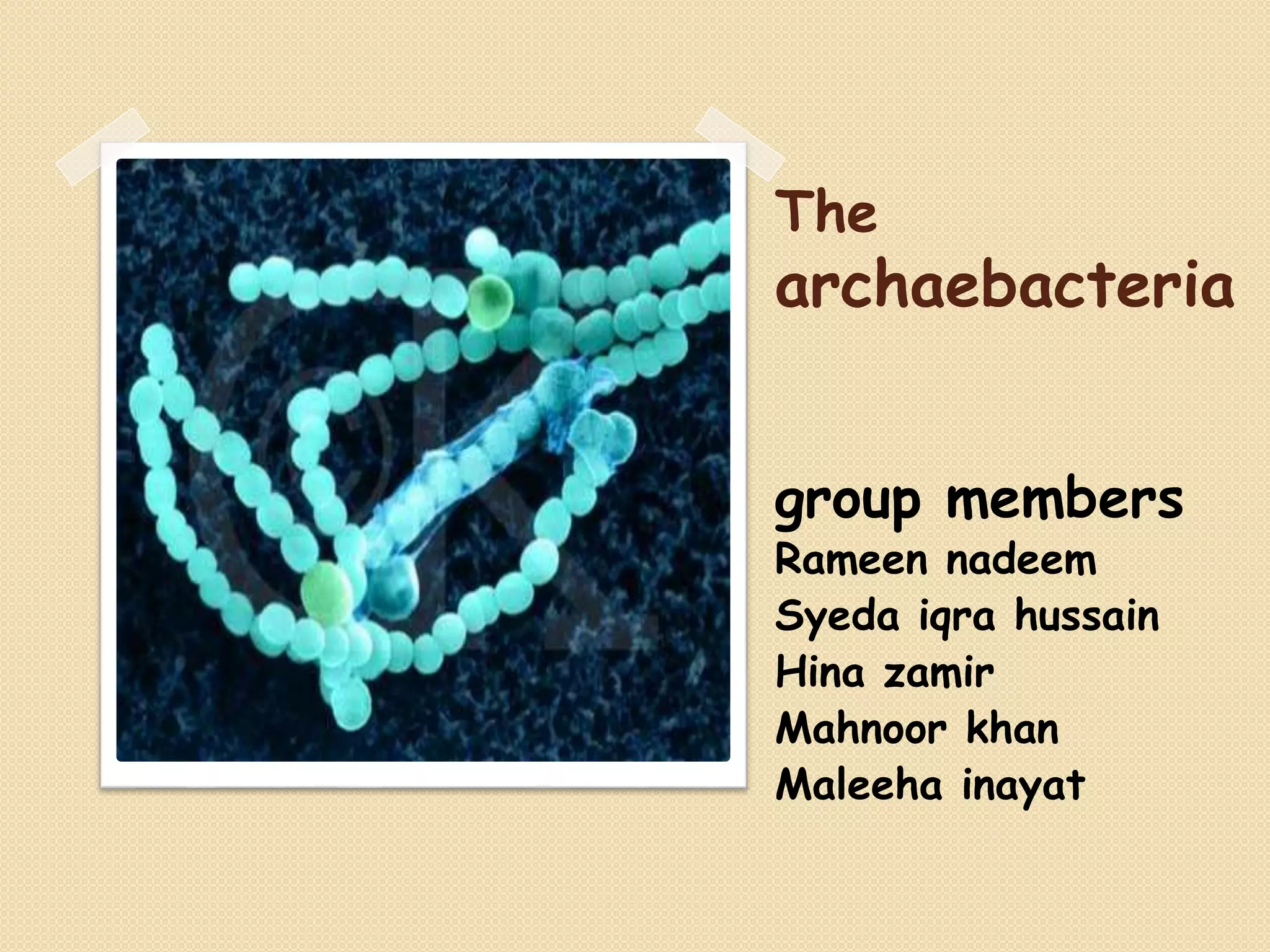
The
archaebacteria
group members
Rameen nadeem
Syeda iqra hussain
Hina zamir
Mahnoor khan
Maleeha inayat
Background
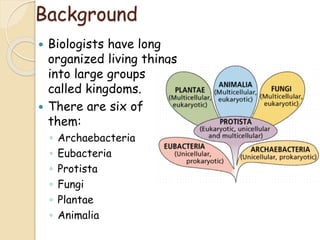
 Biologists have long
organized living things
into large groups
called kingdoms.
 There are six of
them:
◦ Archaebacteria
◦ Eubacteria
◦ Protista
◦ Fungi
◦ Plantae
◦ Animalia
Some recent findings…
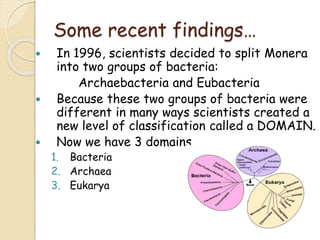
 In 1996, scientists decided to split Monera
into two groups of bacteria:
Archaebacteria and Eubacteria
 Because these two groups of bacteria were
different in many ways scientists created a
new level of classification called a DOMAIN.
 Now we have 3 domains
1. Bacteria
2. Archaea
3. Eukarya
Kingdom
Archaebacteria
Any of a large group of primitive bacteria
having unusual cell walls, membrane lipids,
ribosomes, and RNA sequences, and having the
ability to produce methane and to live in
anaerobic, extremely hot, salty, or acidic
conditions
The Domain Archaea
 “ancient” bacteria
 Some of the first
archaebacteria were
discovered in
Yellowstone National
Park’s hot springs
 Prokaryotes are
structurally simple,
but biochemically
complex
Basic Facts
 They live in extreme environments (like hot
springs or salty lakes) and normal
environments (like soil and ocean water).
 All are unicellular (each individual is only one
cell).
 No peptidoglycan in their cell wall.
 Some have a flagella that aids in their
locomotion.
 Most don’t need oxygen to survive
 They can produce ATP (energy) from
sunlight
 They can survive enormous temperature
extremes
 They can survive under rocks and in ocean
floor vents deep below the ocean’s
surface
 They can tolerate huge pressure
differences
STRUCTURE
Size
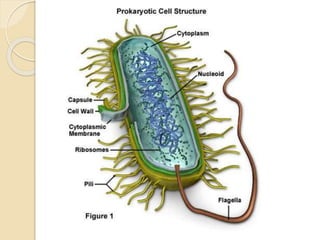
 Archaea are slightly less than 1 micron long.
 A micron is 1/1,000 of a millimeter.
 In order to see their cellular features, scientists use
powerful electron microscopes.
Shape
• Shapes can be spherical or ball shaped and are called
coccus.
• Others are rod shaped, long and thin, and labeled bacillus.
• Variations of cells have been discovered in square and
triangular shapes.
STRUCTURE
Locomotion
• Some archaea have flagella, hair-like structures that assist in
movement.
• There can be one or many attached to the cell's outer
membrane. Protein networks can also be found on the cell
membrane, which allow cells to attach themselves in groups.
Cell Features
• Within the cell membrane, the archaea cell contains
cytoplasm and DNA, which are in single-looped forms
called plasmids.
• Most archaeal cells also have a semi-rigid cell wall that
helps it to maintain its shape and chemical balance.
• This protects the cytoplasm, which is the semi-liquid gel
that fills the cell and enables the various parts to
function.
STRUCTURE
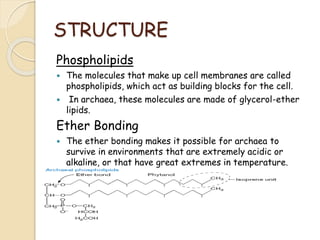
Phospholipids
 The molecules that make up cell membranes are called
phospholipids, which act as building blocks for the cell.
 In archaea, these molecules are made of glycerol-ether
lipids.
Ether Bonding
 The ether bonding makes it possible for archaea to
survive in environments that are extremely acidic or
alkaline, or that have great extremes in temperature.
CLASSIFICATION
FIVE PHYLUMS
1. Crenarchaeota
2. Euryarchaeota
3. Korarchaeota
4. Thuamarchaeota
5. Nanoarchaeota
CRENARCHEOTA
• The name Crenarchaeota means “scalloped
archaea.” they are often irregular in shape
•All crenarchaeotes synthesize a distinctive
tetraether lipid, called crenarchaeol. Originally
containing thermophylic & hyperthermophilic sulfur
metabolizing archaea.
•Recently discovered Crenarchaeota are inhibited
by sulfur & grow at lower temperatures.
•These organisms stain Gram negative & are
morphologically diverse having rod, cocci,
filamentous & oddly shaped cells
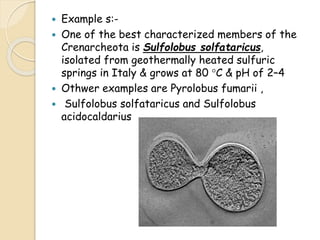
 Example s:-
 One of the best characterized members of the
Crenarcheota is Sulfolobus solfataricus,
isolated from geothermally heated sulfuric
springs in Italy & grows at 80 °C & pH of 2–4
 Othwer examples are Pyrolobus fumarii ,
 Sulfolobus solfataricus and Sulfolobus
acidocaldarius
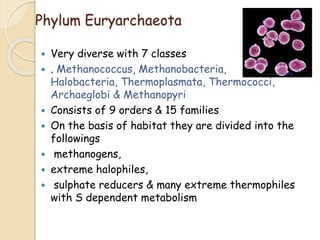
Phylum Euryarchaeota
 Very diverse with 7 classes
 . Methanococcus, Methanobacteria,
Halobacteria, Thermoplasmata, Thermococci,
Archaeglobi & Methanopyri
 Consists of 9 orders & 15 families
 On the basis of habitat they are divided into the
followings
 methanogens,
 extreme halophiles,
 sulphate reducers & many extreme thermophiles
with S dependent metabolism
Halophiles :-
 Halo = salt
phil = loving
 The halophilic organisms require salty environment for
survival
 Occurance :-they are found in salts lakes & areas where
evaporation of sea water occurs such as the Great Salt
Lake in the U.S. and the Dead Sea.
 Can live in water with salt concentrations exceeding 15%
 The ocean’s concentration is roughly 4%
 Example:-
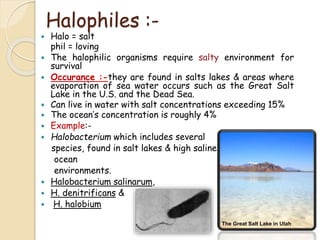
 Halobacterium which includes several
species, found in salt lakes & high saline
ocean
environments.
 Halobacterium salinarum,
 H. denitrificans &
 H. halobium
The Great Salt Lake in Utah
Methanogens
 Methanogens are microorganisms that produce methane as
a metabolic byproduct in anoxic conditions..
 They are strictly anaerobic organisms & are killed when
exposed to O2. They reduce CO2 using H2 & release CH4 in
swamps & marshes that is called marsh gas.
 Occurance :-
 Many live in mud at the bottom of lakes and swamps
because it lacks oxygen
 They are also found in the gut of some herbivores like
cows , humans
 dead & decaying matter.
 Importance :-
 They are added to biogas reactors for production of CH4
gas for cooking & sewage treatment plants.
 Examples :-
 Methanofollis aquaemaris, M. ethanolicus, M. formosanus,
M. liminatans
Thermophilic & Sulfur-reducing
archaea
 All thermophiles require hot water but differ in other
habitat needs.
 Some thrive in only acidic water, others require sulphur
or calcium carbonate & others live in alkaline springs.
 Depending on characteristics which it may possess, They
can be described with more specific terms such as
 Thermoacidophile (heat and acid lover) they have both
aerobic and anaerobic species.
 Hyperthermophile (extreme heat lover).
 Pyrolobus fumarii, currently holds the record for high-
temperature growth, it can grown in temperatures up to
113oC.
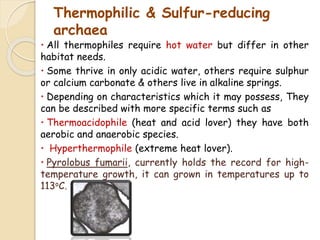
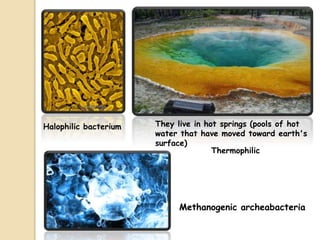
They live in hot springs (pools of hot
water that have moved toward earth's
surface)
Halophilic bacterium
Methanogenic archeabacteria
Thermophilic
KORARCHAEOTA
The name is derived from the Greek noun koros
or kore, meaning ‘‘young man’’ or ‘‘young woman,’’
and the Greek adjective archaios which means
‘‘ancient.’’ They are also known as Xenarchaeota.
The Korarchaeota have only been found in high
temperature hydrothermal environments. In
Yellowstone National Park
(YNP), Korarchaeota were most abundant in
springs with a pH range of 5.7 to 7.0
The Korarchaeota were originally discovered by
microbial community analysis of ribosomal RNA
genes from environmental samples of a hot spring
in Yellowstone National Park.
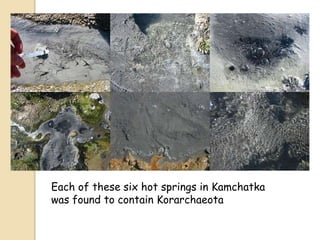
Each of these six hot springs in Kamchatka
was found to contain Korarchaeota
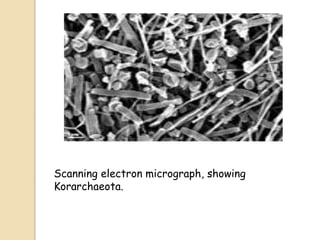
Scanning electron micrograph, showing
Korarchaeota.
THAUMARCHAEOTA
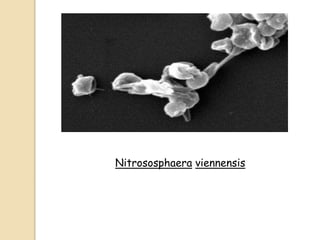
 The Thaumarchaeota (from the Greek 'thaumas',
meaning wonder) are proposed in 2008 after the
genome of C.symbiosum was sequenced and found to
differ significantly from other members of
phylum Crenarchaeota. All organisms of this lineage
thus far identified are
chemolithoautotrophic ammonia-oxidizers and may
play important roles in biogeochemical cycles, such as
the nitrogen cycle and the carbon cycle.
 It was promosed on basis of phylogenetic data, such
as the sequences of these organisms' ribosomal
RNA genes, and the presence of a form of type I
topoisomerase that was previously thought to be
unique to the eukaryotes.
Nitrososphaera viennensis
NANOARCHAEOTA
In taxonomy, the Nanoarchaeota from Greek meaning
"old dwarf“.
They inhabit high-temperature environments with an
optimal growth of 90 C; and are highly unusual because
they grow and divide on the surface of another
archaea, Ignicoccus. Nanoarchaea, which were
discovered in 2002, contain both the smallest known
living cell (1/100th the size of Escherichia coli) and
the smallest known genome (480 kilobases [1 kilobase =
1,000 base pairs of DNA]; . Members of this phyla
have not been detected in pure culture.
Cells of Nanoarchaeum are about 0.4 μm in diameter
and replicate only when attached to the surface
of Ignicoccus.
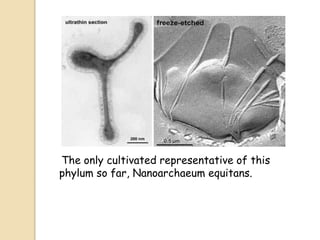
The only cultivated representative of this
phylum so far, Nanoarchaeum equitans.
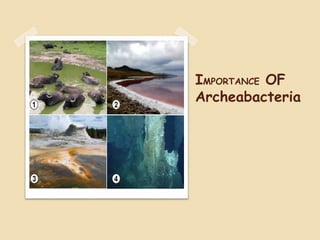
IMPORTANCE OF
Archeabacteria
Exthermophilic enzymes:
Exthermophilic Archae
Resistant to either to heat or to extremes of
acidity and alkalinity
Uses
Thermostable DNA polymerases, such as the Pfu
DNA polymerase from Pyrococcus furiosus are
used in PCR.
 amylases, galactosidases and pullulanases in
other species of Pyrococcus that function at over
100 °C allow food processing at high temperature.
Sewage Treatment:
 Methanogenic Archae
 They carry out anaerobic digestion and produce
biogas
Extraction of Metals:
 Acidophilic Archae
 Extract gold,copper and cobalt from their ores.
Methane Gas Production:
 Methanogenic Archae
 can decomposgrow in biogas fermentors e cow
dung into methane gas as a by-product.
Role in chemical cycles:
 Play important role in carbon cycle,nitrogen cycle,
sulphur cycle etc.
Help in reasearches:
 Their ability to tolerate extreme conditions helps
researchers learn about the climatic conditions,
environment and their survival on ancient earth.
Anti-biotics:
 Archaea host a new class of potentially useful
antibiotics.

Archeabacteria presentation

  • 1.
    The archaebacteria group members Rameen nadeem Syedaiqra hussain Hina zamir Mahnoor khan Maleeha inayat
  • 2.
    Background  Biologists havelong organized living things into large groups called kingdoms.  There are six of them: ◦ Archaebacteria ◦ Eubacteria ◦ Protista ◦ Fungi ◦ Plantae ◦ Animalia
  • 3.
    Some recent findings… In 1996, scientists decided to split Monera into two groups of bacteria: Archaebacteria and Eubacteria  Because these two groups of bacteria were different in many ways scientists created a new level of classification called a DOMAIN.  Now we have 3 domains 1. Bacteria 2. Archaea 3. Eukarya
  • 4.
    Kingdom Archaebacteria Any of alarge group of primitive bacteria having unusual cell walls, membrane lipids, ribosomes, and RNA sequences, and having the ability to produce methane and to live in anaerobic, extremely hot, salty, or acidic conditions
  • 5.
    The Domain Archaea “ancient” bacteria  Some of the first archaebacteria were discovered in Yellowstone National Park’s hot springs  Prokaryotes are structurally simple, but biochemically complex
  • 6.
    Basic Facts  Theylive in extreme environments (like hot springs or salty lakes) and normal environments (like soil and ocean water).  All are unicellular (each individual is only one cell).  No peptidoglycan in their cell wall.  Some have a flagella that aids in their locomotion.
  • 7.
     Most don’tneed oxygen to survive  They can produce ATP (energy) from sunlight  They can survive enormous temperature extremes  They can survive under rocks and in ocean floor vents deep below the ocean’s surface  They can tolerate huge pressure differences
  • 8.
    STRUCTURE Size  Archaea areslightly less than 1 micron long.  A micron is 1/1,000 of a millimeter.  In order to see their cellular features, scientists use powerful electron microscopes. Shape • Shapes can be spherical or ball shaped and are called coccus. • Others are rod shaped, long and thin, and labeled bacillus. • Variations of cells have been discovered in square and triangular shapes.
  • 9.
    STRUCTURE Locomotion • Some archaeahave flagella, hair-like structures that assist in movement. • There can be one or many attached to the cell's outer membrane. Protein networks can also be found on the cell membrane, which allow cells to attach themselves in groups. Cell Features • Within the cell membrane, the archaea cell contains cytoplasm and DNA, which are in single-looped forms called plasmids. • Most archaeal cells also have a semi-rigid cell wall that helps it to maintain its shape and chemical balance. • This protects the cytoplasm, which is the semi-liquid gel that fills the cell and enables the various parts to function.
  • 10.
    STRUCTURE Phospholipids  The moleculesthat make up cell membranes are called phospholipids, which act as building blocks for the cell.  In archaea, these molecules are made of glycerol-ether lipids. Ether Bonding  The ether bonding makes it possible for archaea to survive in environments that are extremely acidic or alkaline, or that have great extremes in temperature.
  • 12.
    CLASSIFICATION FIVE PHYLUMS 1. Crenarchaeota 2.Euryarchaeota 3. Korarchaeota 4. Thuamarchaeota 5. Nanoarchaeota
  • 13.
    CRENARCHEOTA • The nameCrenarchaeota means “scalloped archaea.” they are often irregular in shape •All crenarchaeotes synthesize a distinctive tetraether lipid, called crenarchaeol. Originally containing thermophylic & hyperthermophilic sulfur metabolizing archaea. •Recently discovered Crenarchaeota are inhibited by sulfur & grow at lower temperatures. •These organisms stain Gram negative & are morphologically diverse having rod, cocci, filamentous & oddly shaped cells
  • 14.
     Example s:- One of the best characterized members of the Crenarcheota is Sulfolobus solfataricus, isolated from geothermally heated sulfuric springs in Italy & grows at 80 °C & pH of 2–4  Othwer examples are Pyrolobus fumarii ,  Sulfolobus solfataricus and Sulfolobus acidocaldarius
  • 15.
    Phylum Euryarchaeota  Verydiverse with 7 classes  . Methanococcus, Methanobacteria, Halobacteria, Thermoplasmata, Thermococci, Archaeglobi & Methanopyri  Consists of 9 orders & 15 families  On the basis of habitat they are divided into the followings  methanogens,  extreme halophiles,  sulphate reducers & many extreme thermophiles with S dependent metabolism
  • 16.
    Halophiles :-  Halo= salt phil = loving  The halophilic organisms require salty environment for survival  Occurance :-they are found in salts lakes & areas where evaporation of sea water occurs such as the Great Salt Lake in the U.S. and the Dead Sea.  Can live in water with salt concentrations exceeding 15%  The ocean’s concentration is roughly 4%  Example:-  Halobacterium which includes several species, found in salt lakes & high saline ocean environments.  Halobacterium salinarum,  H. denitrificans &  H. halobium The Great Salt Lake in Utah
  • 17.
    Methanogens  Methanogens aremicroorganisms that produce methane as a metabolic byproduct in anoxic conditions..  They are strictly anaerobic organisms & are killed when exposed to O2. They reduce CO2 using H2 & release CH4 in swamps & marshes that is called marsh gas.  Occurance :-  Many live in mud at the bottom of lakes and swamps because it lacks oxygen  They are also found in the gut of some herbivores like cows , humans  dead & decaying matter.  Importance :-  They are added to biogas reactors for production of CH4 gas for cooking & sewage treatment plants.  Examples :-  Methanofollis aquaemaris, M. ethanolicus, M. formosanus, M. liminatans
  • 18.
    Thermophilic & Sulfur-reducing archaea All thermophiles require hot water but differ in other habitat needs.  Some thrive in only acidic water, others require sulphur or calcium carbonate & others live in alkaline springs.  Depending on characteristics which it may possess, They can be described with more specific terms such as  Thermoacidophile (heat and acid lover) they have both aerobic and anaerobic species.  Hyperthermophile (extreme heat lover).  Pyrolobus fumarii, currently holds the record for high- temperature growth, it can grown in temperatures up to 113oC.
  • 19.
    They live inhot springs (pools of hot water that have moved toward earth's surface) Halophilic bacterium Methanogenic archeabacteria Thermophilic
  • 20.
    KORARCHAEOTA The name isderived from the Greek noun koros or kore, meaning ‘‘young man’’ or ‘‘young woman,’’ and the Greek adjective archaios which means ‘‘ancient.’’ They are also known as Xenarchaeota. The Korarchaeota have only been found in high temperature hydrothermal environments. In Yellowstone National Park (YNP), Korarchaeota were most abundant in springs with a pH range of 5.7 to 7.0 The Korarchaeota were originally discovered by microbial community analysis of ribosomal RNA genes from environmental samples of a hot spring in Yellowstone National Park.
  • 21.
    Each of thesesix hot springs in Kamchatka was found to contain Korarchaeota
  • 22.
    Scanning electron micrograph,showing Korarchaeota.
  • 23.
    THAUMARCHAEOTA  The Thaumarchaeota(from the Greek 'thaumas', meaning wonder) are proposed in 2008 after the genome of C.symbiosum was sequenced and found to differ significantly from other members of phylum Crenarchaeota. All organisms of this lineage thus far identified are chemolithoautotrophic ammonia-oxidizers and may play important roles in biogeochemical cycles, such as the nitrogen cycle and the carbon cycle.  It was promosed on basis of phylogenetic data, such as the sequences of these organisms' ribosomal RNA genes, and the presence of a form of type I topoisomerase that was previously thought to be unique to the eukaryotes.
  • 24.
  • 25.
    NANOARCHAEOTA In taxonomy, theNanoarchaeota from Greek meaning "old dwarf“. They inhabit high-temperature environments with an optimal growth of 90 C; and are highly unusual because they grow and divide on the surface of another archaea, Ignicoccus. Nanoarchaea, which were discovered in 2002, contain both the smallest known living cell (1/100th the size of Escherichia coli) and the smallest known genome (480 kilobases [1 kilobase = 1,000 base pairs of DNA]; . Members of this phyla have not been detected in pure culture. Cells of Nanoarchaeum are about 0.4 μm in diameter and replicate only when attached to the surface of Ignicoccus.
  • 26.
    The only cultivatedrepresentative of this phylum so far, Nanoarchaeum equitans.
  • 27.
  • 28.
    Exthermophilic enzymes: Exthermophilic Archae Resistantto either to heat or to extremes of acidity and alkalinity Uses Thermostable DNA polymerases, such as the Pfu DNA polymerase from Pyrococcus furiosus are used in PCR.  amylases, galactosidases and pullulanases in other species of Pyrococcus that function at over 100 °C allow food processing at high temperature.
  • 29.
    Sewage Treatment:  MethanogenicArchae  They carry out anaerobic digestion and produce biogas Extraction of Metals:  Acidophilic Archae  Extract gold,copper and cobalt from their ores. Methane Gas Production:  Methanogenic Archae  can decomposgrow in biogas fermentors e cow dung into methane gas as a by-product.
  • 30.
    Role in chemicalcycles:  Play important role in carbon cycle,nitrogen cycle, sulphur cycle etc. Help in reasearches:  Their ability to tolerate extreme conditions helps researchers learn about the climatic conditions, environment and their survival on ancient earth. Anti-biotics:  Archaea host a new class of potentially useful antibiotics.