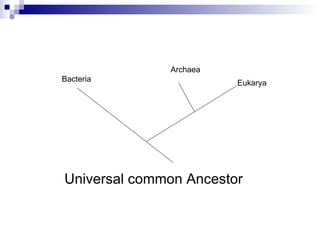
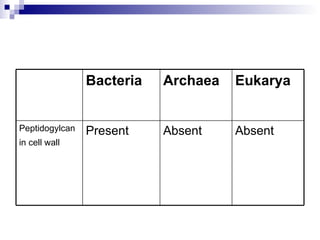
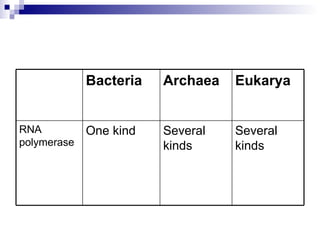
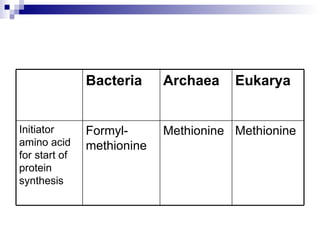
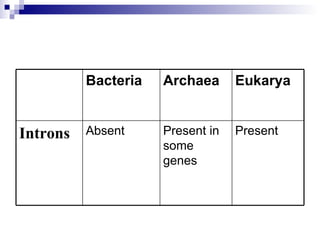
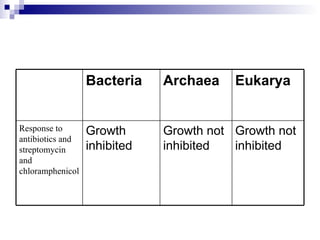
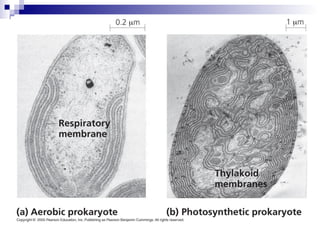
1. Prokaryotes are ubiquitous and outnumber eukaryotes, inhabiting nearly all environments through symbiotic relationships. They are divided into bacteria and archaea.
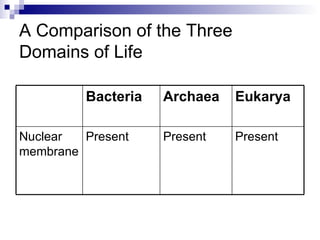
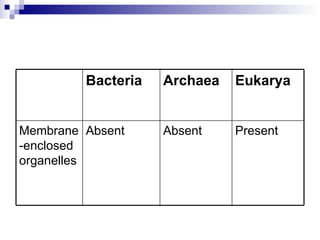
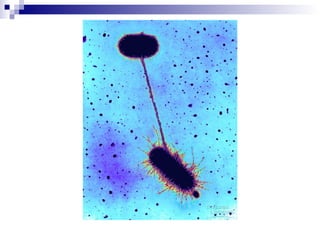
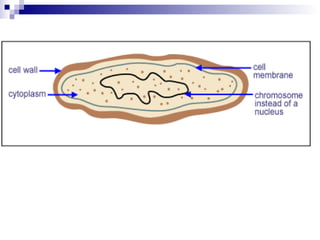
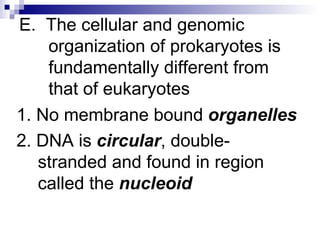
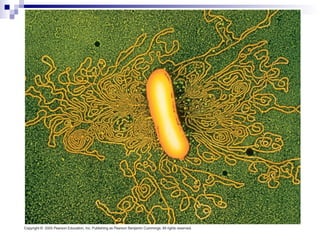
2. Prokaryotes differ from eukaryotes in their lack of membrane-bound organelles and smaller genome size. They reproduce through binary fission and genetic variation occurs through transformation, conjugation, and transduction.
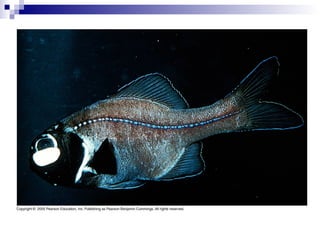
3. Prokaryotes play important ecological roles in nutrient cycling as decomposers and through symbiotic relationships, but some are also agents of disease.