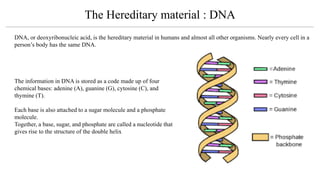
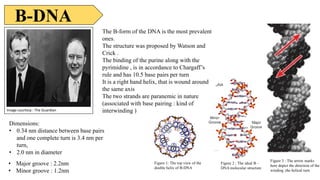
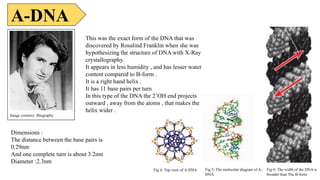
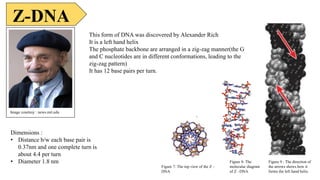
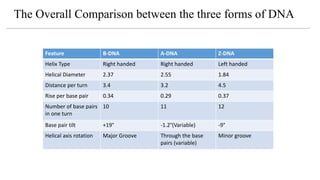
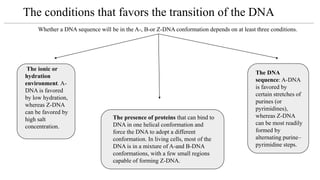
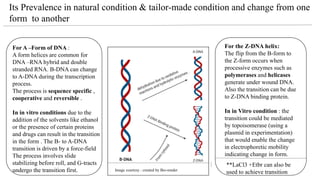
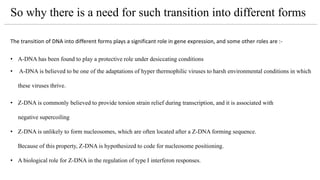
DNA is composed of four chemical bases (adenine, guanine, cytosine, and thymine) and exists primarily in three forms: B-DNA, A-DNA, and Z-DNA, each having distinct structural properties and conditions for stability. B-DNA is the most common form, while A-DNA is favored under low hydration and Z-DNA under high salt concentrations, with transitions between these forms occurring due to various environmental factors and molecular interactions. Understanding these forms and their transitions is important for elucidating mechanisms in gene expression and DNA-function relationships.