Bacteria
Two kingdoms of bacteria:
•Eubacteria – “true” bacteria
•Archaebacteria – oldest
organisms on earth, live in
extreme conditions
Bacteria are:
•Unicellular
•Prokaryotic…which means?
Fact: Each square centimeter of
your skin averages about 100,000
bacteria. A single teaspoon of topsoil
contains more than a billion
(1,000,000,000) bacteria.
Bacteria Characteristics
• Some bacteria are aerobic, meaning
that they require oxygen in order to
survive. Other bacteria are anaerobes,
meaning that they do not require
oxygen to survive.
• Most bacteria are harmless and offer
beneficial functions to living things and
humanity.
Bacteria contain:
•a singular, circular
piece of DNA
•tiny circular pieces
of DNA called
plasmids
•ribosomes
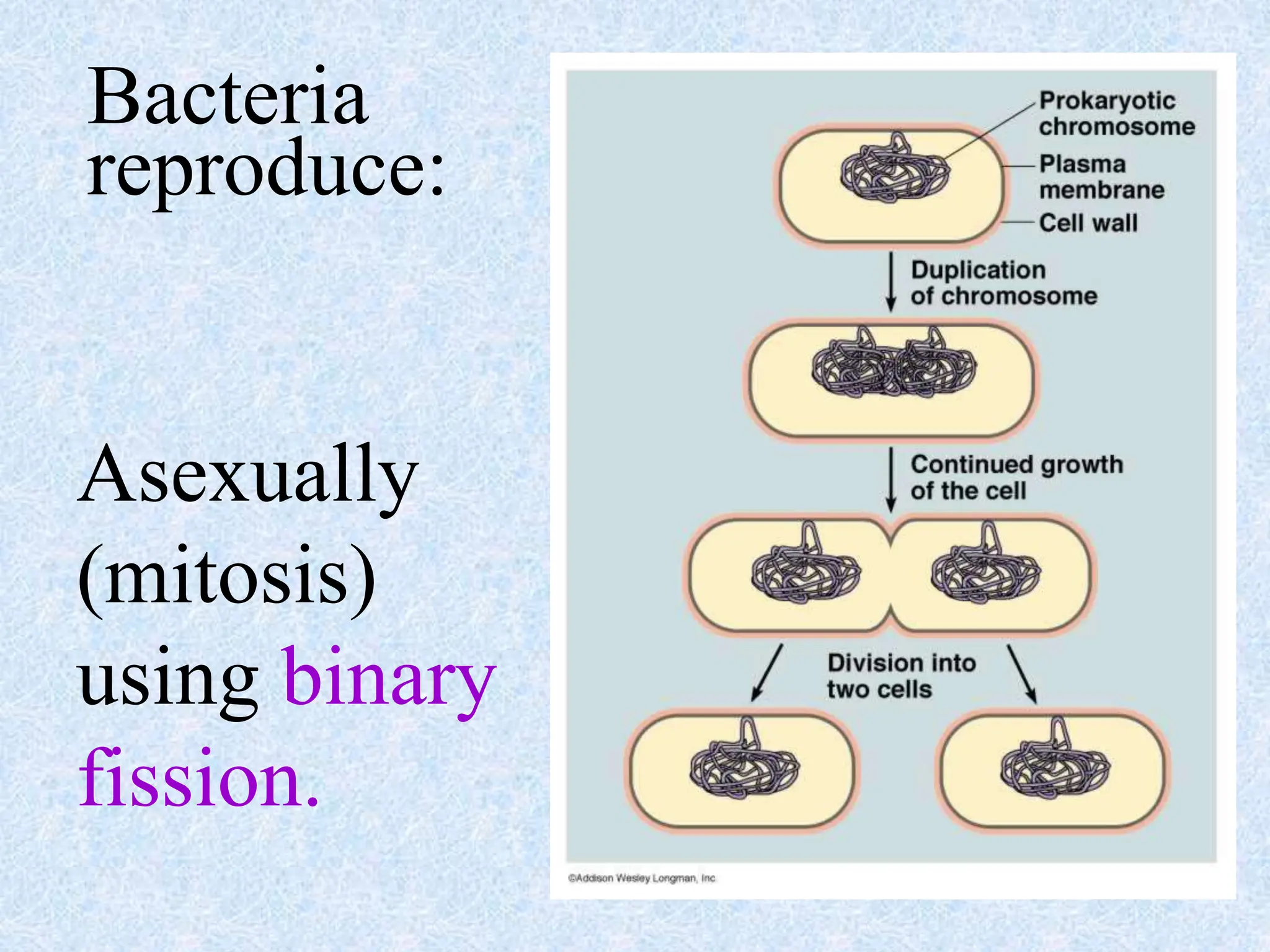
Bacteria
reproduce:
Asexually
(mitosis)
using binary
fission.
Bacteria reproduce:
Bacteria exchange
plasmid DNA.
This is how bacteria
become antibiotic
resistant.
sexually using
conjugation.
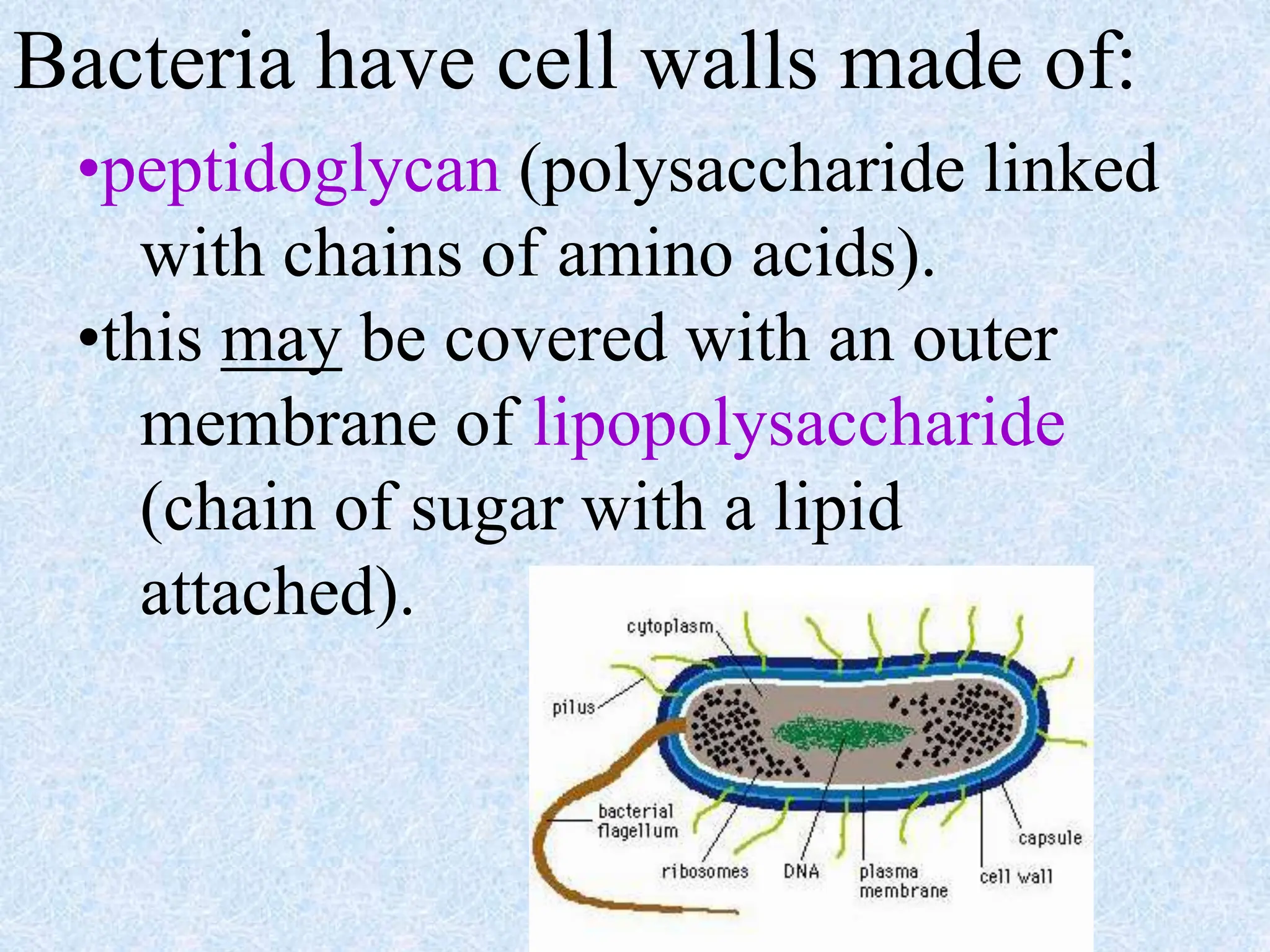
Bacteria have cell walls made of:
•peptidoglycan (polysaccharide linked
with chains of amino acids).
•this may be covered with an outer
membrane of lipopolysaccharide
(chain of sugar with a lipid
attached).
Some bacteria:
• have a gelatinous layer called a
capsule surrounding the cell wall.
• form thick-walled endospores around
chromosomes when they are
exposed to harsh conditions
(drought, high temperatures) -
these types cause botulism
Some bacteria have:
• flagella for
locomotion.
• pili (short, thicker
outgrowths that
help cell to
attach to
surfaces)
• Bacteria can be moved by air and water
currents, and on any surface such as
clothing, hands, or any object.
¨Three bacterial shapes:
1.Rod shaped are called bacillus(i)
2.Sphere shaped are called coccus(i)
3.Spiral shaped are called
spirillum(I)
Gram stains:
• Important in medicine because provides
information for treatment of bacterial
disease.
•Bacteria stain either gram positive
(purple) or gram negative (pink).
•Gram positive tend to respond to
penicillin and like antibiotics.
•Gram negative respond to types of
antibiotics unrelated to penicillin.
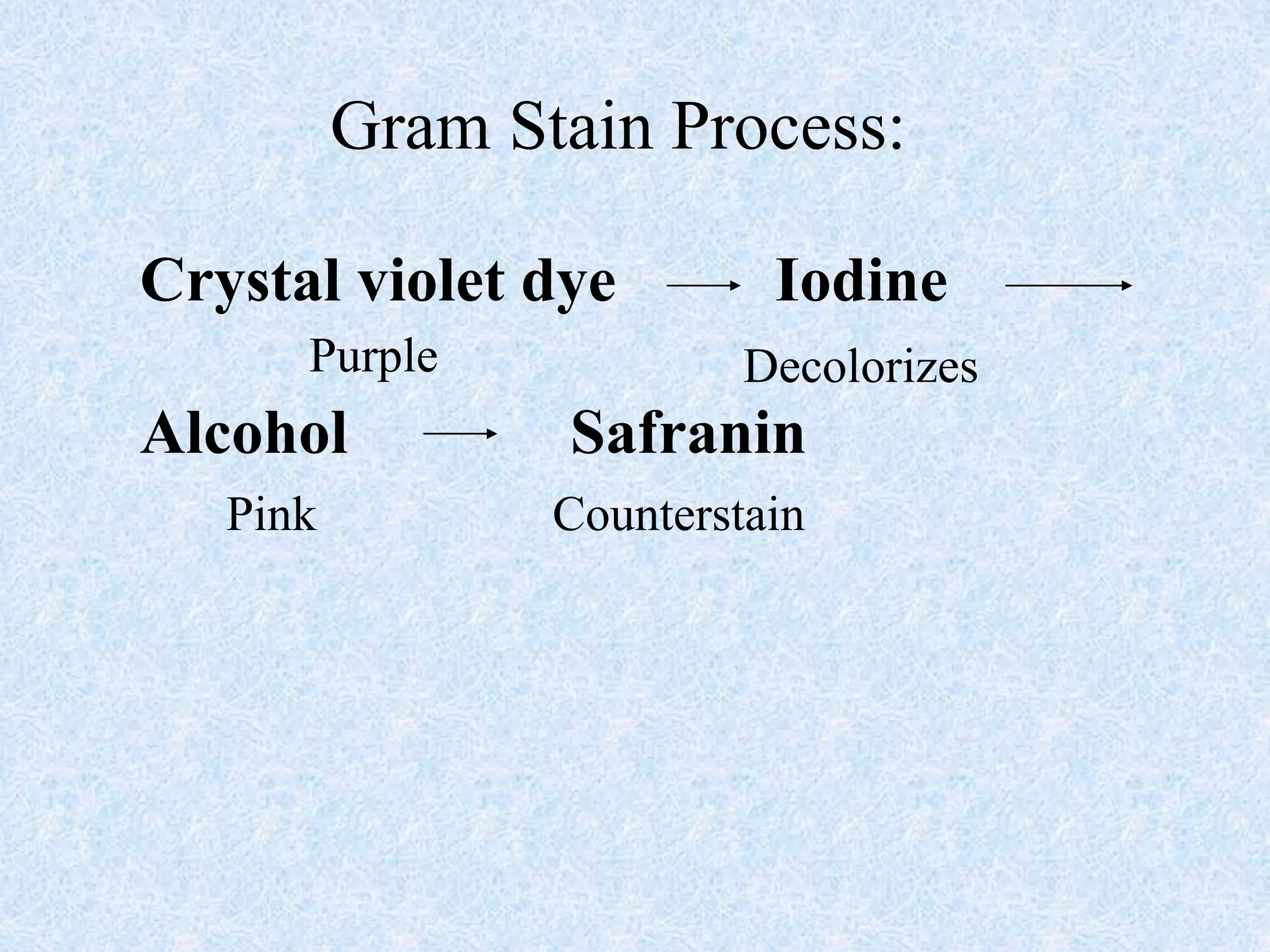
Crystal violet dye Iodine
Alcohol Safranin
Gram Stain Process:
Purple Decolorizes
Pink Counterstain
A Gram Stain is
usually performed
on a smear
preparation that
has been heat
fixed. One
function of
fixation is to
secure (fix) the
cells to the slide.
Gram positive = purple because of large
amount of peptidoglycan in cell wall.
Polymer consisting of sugars and amino acids that forms a mesh-
like layer outside the plasma membrane of eubacteria.
Gram negative = pink because¨ lipopolysaccharide
membrane is removed by alcohol and thin
peptidoglycan layer allows dye to escape.
(LPS) is a large molecule consisting of a lipid and a
polysaccharide (carbohydrate) joined by a covalent
bond.
• work by preventing cell wall
formation, breaking up cell
membranes, or disrupting
chemical processes.
•Antibiotics cannot treat viral
infections.
There are three types of
bacteria based on how they
obtain energy: heterotrophs,
photosynthetic, and
chemoautotrophs.
This is the
anthrax
bacterium.
1.Most are heterotrophs:
a. Decomposers – feed on and recycle organic
material
b. Pathogens – parasitic, disease-causing
bacteria
• Either attack cells or secrete toxins
c. Nitrogen-fixing bacteria (Rhizobium)
• Found in nodules of soybeans, peanuts,
alfalfa, and clover
• Convert atmospheric nitrogen (N2) into
ammonia, called nitrogen fixation.
• Used in crop rotation
Decomposers
• Bacteria are decomposers, they break
down the chemical elements inside
other living or dead organisms. Some
bacteria live in the intestines of humans
and animals
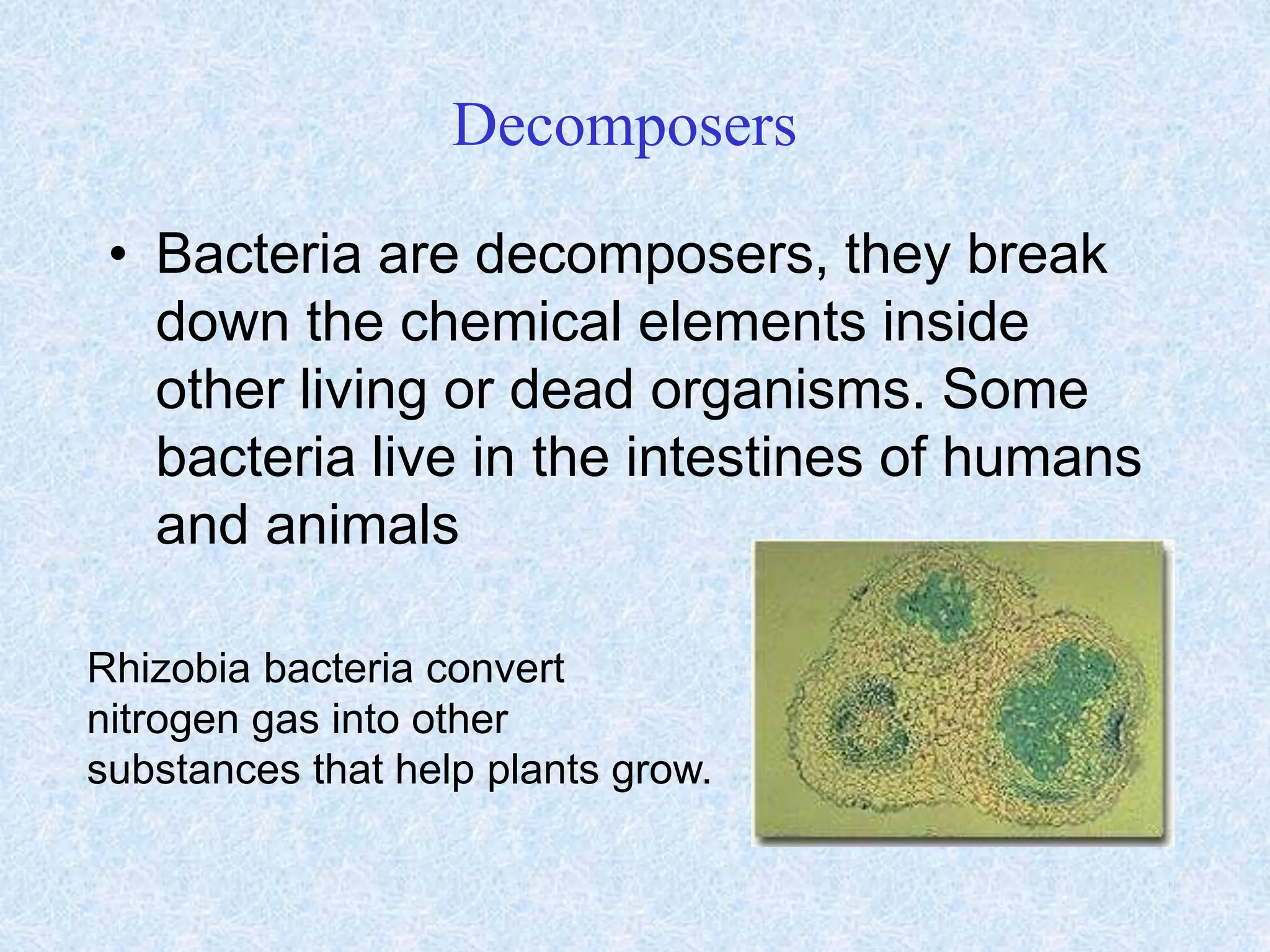
Rhizobia bacteria convert
nitrogen gas into other
substances that help plants grow.
Streptococcus
Strep
throat
Staphylococcus
Pathogens
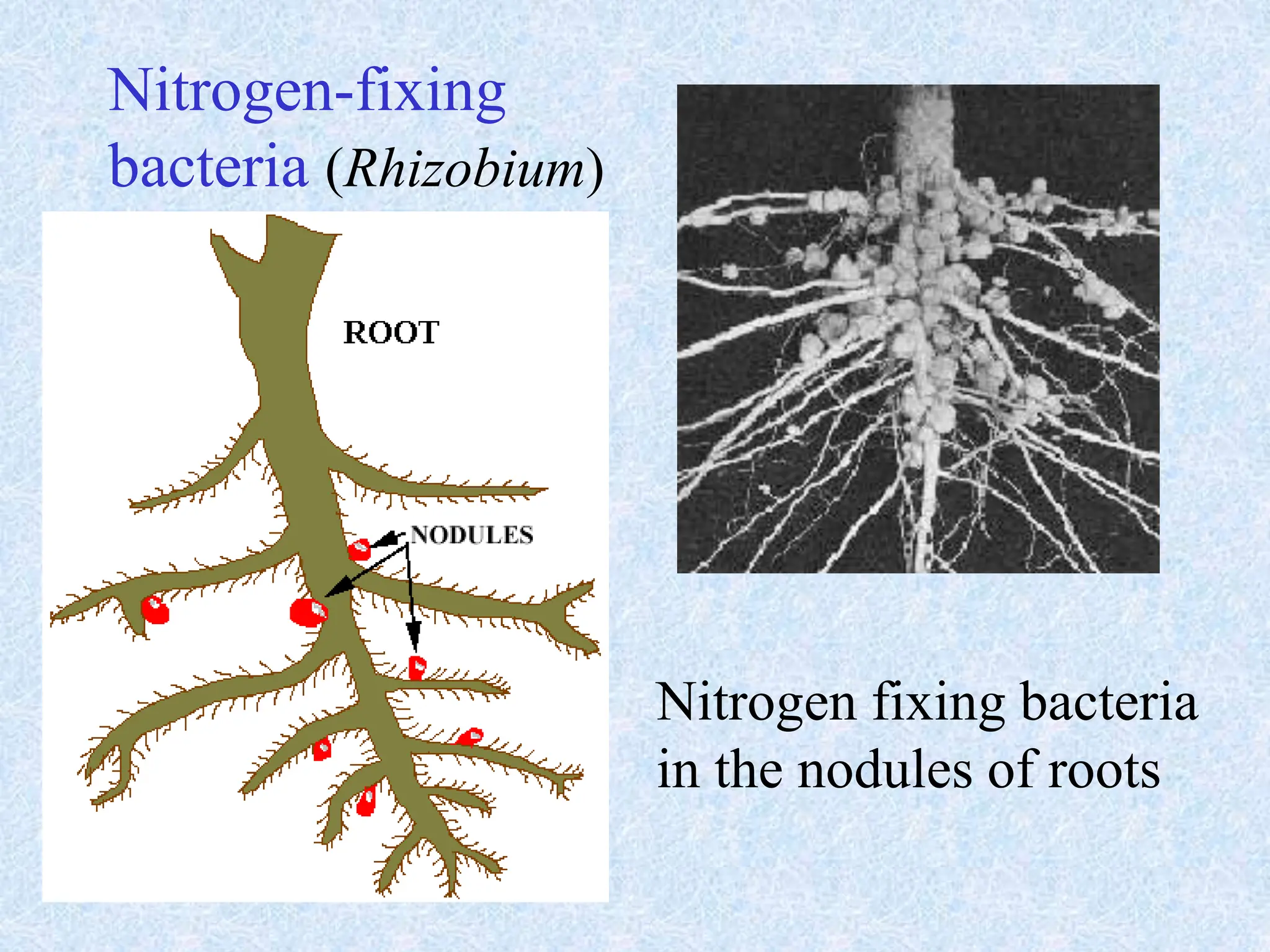
Nitrogen fixing bacteria
in the nodules of roots
Nitrogen-fixing
bacteria (Rhizobium)
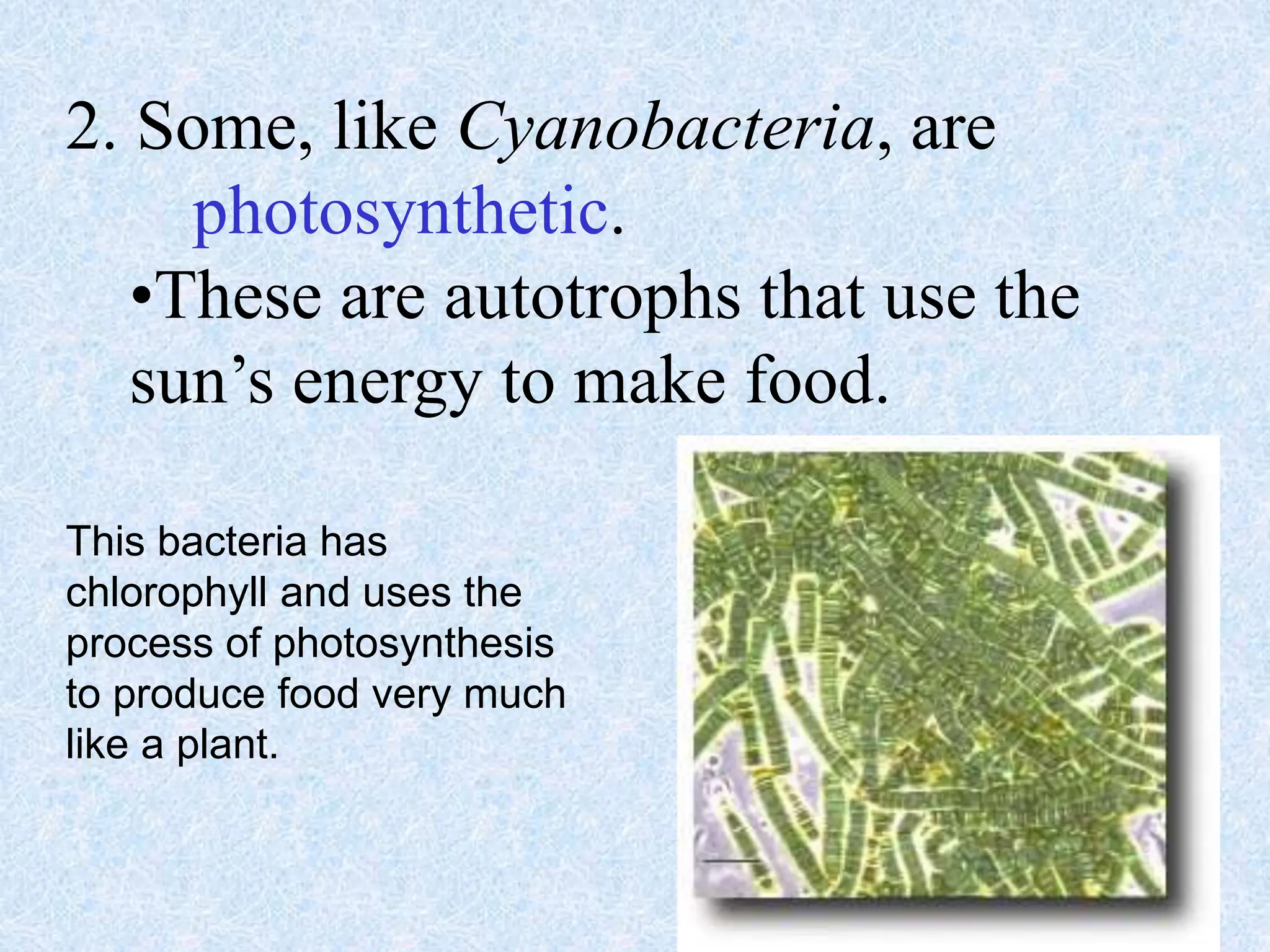
2. Some, like Cyanobacteria, are
photosynthetic.
•These are autotrophs that use the
sun’s energy to make food.
This bacteria has
chlorophyll and uses the
process of photosynthesis
to produce food very much
like a plant.
3. Chemoautotrophs
•Obtain energy by removing electrons from
inorganic molecules such as ammonia
and methane to make food.
•Examples: Nitrobacter and Nitrosomonas
- live in soil
- have a crucial role in nitrification (turn
ammonia into nitrates, the
form of nitrogen commonly
used by plants).
Some Good Bacteria
• Lactic acid bacteria have been used to ferment or
culture foods for at least 4000 years.
• Examples: products like yogurt and cheese
• Wastewater bacteria feed on everything from
solid human waste matter to last night's leftovers.
As the bacteria eat, they convert organic matter to
carbon dioxide, releasing electrons, the basic
element of electrical current.
Bacteria         _               ppt.ppt

Bacteria _ ppt.ppt

  • 1.
  • 2.
    Two kingdoms ofbacteria: •Eubacteria – “true” bacteria •Archaebacteria – oldest organisms on earth, live in extreme conditions
  • 3.
    Bacteria are: •Unicellular •Prokaryotic…which means? Fact:Each square centimeter of your skin averages about 100,000 bacteria. A single teaspoon of topsoil contains more than a billion (1,000,000,000) bacteria.
  • 4.
    Bacteria Characteristics • Somebacteria are aerobic, meaning that they require oxygen in order to survive. Other bacteria are anaerobes, meaning that they do not require oxygen to survive. • Most bacteria are harmless and offer beneficial functions to living things and humanity.
  • 5.
    Bacteria contain: •a singular,circular piece of DNA •tiny circular pieces of DNA called plasmids •ribosomes
  • 6.
  • 7.
    Bacteria reproduce: Bacteria exchange plasmidDNA. This is how bacteria become antibiotic resistant. sexually using conjugation.
  • 8.
    Bacteria have cellwalls made of: •peptidoglycan (polysaccharide linked with chains of amino acids). •this may be covered with an outer membrane of lipopolysaccharide (chain of sugar with a lipid attached).
  • 9.
    Some bacteria: • havea gelatinous layer called a capsule surrounding the cell wall. • form thick-walled endospores around chromosomes when they are exposed to harsh conditions (drought, high temperatures) - these types cause botulism
  • 10.
    Some bacteria have: •flagella for locomotion. • pili (short, thicker outgrowths that help cell to attach to surfaces)
  • 11.
    • Bacteria canbe moved by air and water currents, and on any surface such as clothing, hands, or any object.
  • 12.
    ¨Three bacterial shapes: 1.Rodshaped are called bacillus(i) 2.Sphere shaped are called coccus(i) 3.Spiral shaped are called spirillum(I)
  • 13.
    Gram stains: • Importantin medicine because provides information for treatment of bacterial disease. •Bacteria stain either gram positive (purple) or gram negative (pink). •Gram positive tend to respond to penicillin and like antibiotics. •Gram negative respond to types of antibiotics unrelated to penicillin.
  • 14.
    Crystal violet dyeIodine Alcohol Safranin Gram Stain Process: Purple Decolorizes Pink Counterstain
  • 15.
    A Gram Stainis usually performed on a smear preparation that has been heat fixed. One function of fixation is to secure (fix) the cells to the slide.
  • 16.
    Gram positive =purple because of large amount of peptidoglycan in cell wall. Polymer consisting of sugars and amino acids that forms a mesh- like layer outside the plasma membrane of eubacteria.
  • 17.
    Gram negative =pink because¨ lipopolysaccharide membrane is removed by alcohol and thin peptidoglycan layer allows dye to escape. (LPS) is a large molecule consisting of a lipid and a polysaccharide (carbohydrate) joined by a covalent bond.
  • 18.
    • work bypreventing cell wall formation, breaking up cell membranes, or disrupting chemical processes. •Antibiotics cannot treat viral infections.
  • 19.
    There are threetypes of bacteria based on how they obtain energy: heterotrophs, photosynthetic, and chemoautotrophs. This is the anthrax bacterium.
  • 20.
    1.Most are heterotrophs: a.Decomposers – feed on and recycle organic material b. Pathogens – parasitic, disease-causing bacteria • Either attack cells or secrete toxins c. Nitrogen-fixing bacteria (Rhizobium) • Found in nodules of soybeans, peanuts, alfalfa, and clover • Convert atmospheric nitrogen (N2) into ammonia, called nitrogen fixation. • Used in crop rotation
  • 21.
    Decomposers • Bacteria aredecomposers, they break down the chemical elements inside other living or dead organisms. Some bacteria live in the intestines of humans and animals Rhizobia bacteria convert nitrogen gas into other substances that help plants grow.
  • 22.
  • 23.
    Nitrogen fixing bacteria inthe nodules of roots Nitrogen-fixing bacteria (Rhizobium)
  • 24.
    2. Some, likeCyanobacteria, are photosynthetic. •These are autotrophs that use the sun’s energy to make food. This bacteria has chlorophyll and uses the process of photosynthesis to produce food very much like a plant.
  • 25.
    3. Chemoautotrophs •Obtain energyby removing electrons from inorganic molecules such as ammonia and methane to make food. •Examples: Nitrobacter and Nitrosomonas - live in soil - have a crucial role in nitrification (turn ammonia into nitrates, the form of nitrogen commonly used by plants).
  • 26.
    Some Good Bacteria •Lactic acid bacteria have been used to ferment or culture foods for at least 4000 years. • Examples: products like yogurt and cheese • Wastewater bacteria feed on everything from solid human waste matter to last night's leftovers. As the bacteria eat, they convert organic matter to carbon dioxide, releasing electrons, the basic element of electrical current.