PRODUCTIONPRODUCTION
PLANNING ANDPLANNING AND
CONTROL (PPC)CONTROL (PPC)
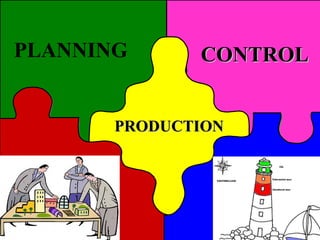
PLANNING CONTROLCONTROLCONTROLCONTROL
PRODUCTIONPRODUCTION
ELİF TOROS
11020002091
PINAR KORKMAZ
09020002033
CONTENT
Production System
Production Planning Items
Controlling Items
Nature of MRP
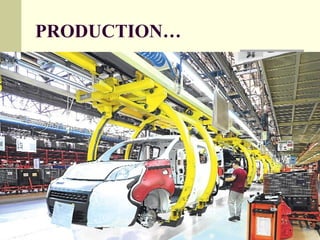
PRODUCTION…
PRODUCTION PLANNING
AND CONTROL (PPC)
 PRODUCTION: that transformation of raw
materials to finished goods.
 PLANNING: looks ahead, anticipates possible
difficulties and decides in advance as to how the
production, best, be carried out.
 CONTROL: phase makes sure that the
programmed production is constantly maintained.
PRODUCTION SYSTEM
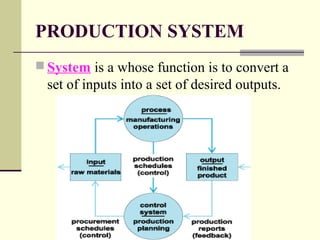
 System is a whose function is to convert a
set of inputs into a set of desired outputs.
PRODUCTION PLANNING
 Given a specific process planning, process
technologies and production conditions
 predetermine varieties, quantities, qualitiy, and
scheduled of products to be produced according
to market demand of products..
TIME DIMENSIONS
 Long Range Planning; is done annually and
focus on a planning horizon greater than one year.
 Medium Range Planning; usually covers a
period from 6 months to 18 months, with monthly
or sometimes quarterly time increments.
 Short Range Planning; covers a period from one
day or less to six months, with weekly time
increment usually.
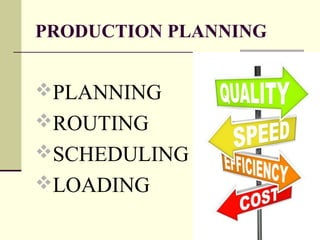
PRODUCTION PLANNING
PLANNING
ROUTING
SCHEDULING
LOADING
PRODUCTION PLANNING
PLANNING
 That may be defined as the technique of
foreseeing every step in a long series of seperate
operations.
 Each step to be taken at the right time, and in the
right place and each operation to be performed in
maximum efficiency.
PRODUCTION PLANNING
ROUTING
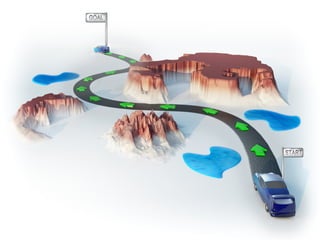
 Under this operations , their path and sequence are
established.
 The main aim of routing; determine the best and
cheapest sequence of operations and to ensure that
this sequence is strictly followed.
PRODUCTION PLANNING
Routing procedure involves following different
activities;
 An analysis of the article to determine what to
make and what to buy
 To determine the quality and type of material
 Determining the manufacturing operations and
their sequence
 An analysis of cost of the article
 Determination of scrap factors
PRODUCTION PLANNING
SCHEDULING
 It mainly concerns with time element and
priorities of a job.
 The pattern of scheduling differs from one job to
another which is explained as below:
Production Schedule
Master Schedule
Manufacturing Schedule
PRODUCTION PLANNING
LOADING
 Defined as the relationship between load and
capacity, so as to assign the work for the
production.
Capacity: the time available for work at work
centres expressed in machine hours or in man
hours.
Load: to assign work to the capacity available at
particular work centres.
 It includes the assignment of the work to the
operators at their machines or work places.
PRODUCTION PLANNING
 Loading determines; who will do the work as
routing determines; where and scheduling
determines; when it shall be done.
PLANNING PHASE
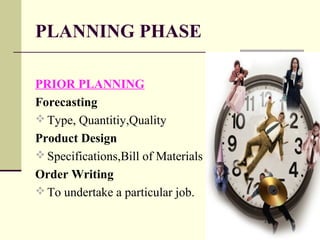
PRIOR PLANNING
Forecasting
 Type, Quantitiy,Quality
Product Design
 Specifications,Bill of Materials
Order Writing
 To undertake a particular job.
PLANNING PHASE
ACTIVE PLANNING
Process Planning and Routing
 Economic Process, How to do, Where to Work
Materials and Tools Control
 Requirements, Controls
Loading
 Assignment of Work, Manpower, Machinery
Scheduling
 Time Phase, Sequence of Work
PLANNING PHASE
ACTION PHASE
Dispatching
 Ordering to start the working
CONTROL PHASE
Progress Reporting
 Data Reporting, Performance Comparison
Corrective Phase
 Expediting, Replanning
PRODUCTION CONTROL
DISPATCHING
FOLLOWING UP
INSPECTION
CORRECTIVE
PRODUCTION CONTROL
 Production control; is the process of planning
production in advance of operations, establishing
the extract route of each individual item part or
assembly, setting, starting and finishing for each
important item, assembly
 the finishing production and releasing the
necessary orders as well as initiating the necessary
follow-up to have the smooth function of the
enterprise.
PRODUCTION CONTROL
DISPATCHING
Involves issue of production orders for starting the
operations.
 Movement of materials to different workstations
 Movement of tools and fixtures necessary for each
operation
 Beginning of work on each operation
PRODUCTION CONTROL
DISPATCHING
 Recording of time and cost involved in each
operation
 Movement of work from one operation to another
in accordance with the route sheet
 Inspecting or supervision of work
PRODUCTION CONTROL
FOLLOW UP
 It includes delays or deviations from the
production plans.
 It helps to reveal detects in routing and
scheduling, misunderstanding of orders and
instruction, under loading or overloading of work.
PRODUCTION CONTROL
INSPECTION
 To ensure the quality of goods. It can be required
as effective agency of production
CORRECTIVE MEASURES
 involve any of those activities of adjusting the
route, rescheduling of work changing the
workloads, repairs and maintenance of machinery
or equipment, control over inventories of the cause
of deviation is the poor performance of the
employees
MATERIAL REQUIREMENT
PLANNING (MRP)
PHILOSOPHY MRP- Materials should be
expedited when their lack would delay the overall
production schedule.
AIM of MRP
 Renawal of products inventory
 To meet customer orders
FACTORS OF MRP
Main Production Plan
Product Tree
Inventory Situation Folder
Performance Report
Planned Order Schedule
Special Situation Report
ADVANTAGES OF MRP
 Ability to price more competitively
 Reduced inventory
 Reduced price
 Better customer service
 Better response to market demand
 Ability to change master schedule
 Reduced idle time
THANK YOU FOR YOUR
LISTENING 

Production planning-and-control

  • 1.
  • 2.
  • 3.
  • 4.
    CONTENT Production System Production PlanningItems Controlling Items Nature of MRP
  • 5.
  • 6.
    PRODUCTION PLANNING AND CONTROL(PPC)  PRODUCTION: that transformation of raw materials to finished goods.  PLANNING: looks ahead, anticipates possible difficulties and decides in advance as to how the production, best, be carried out.  CONTROL: phase makes sure that the programmed production is constantly maintained.
  • 7.
    PRODUCTION SYSTEM  Systemis a whose function is to convert a set of inputs into a set of desired outputs.
  • 8.
    PRODUCTION PLANNING  Givena specific process planning, process technologies and production conditions  predetermine varieties, quantities, qualitiy, and scheduled of products to be produced according to market demand of products..
  • 10.
    TIME DIMENSIONS  LongRange Planning; is done annually and focus on a planning horizon greater than one year.  Medium Range Planning; usually covers a period from 6 months to 18 months, with monthly or sometimes quarterly time increments.  Short Range Planning; covers a period from one day or less to six months, with weekly time increment usually.
  • 11.
  • 12.
    PRODUCTION PLANNING PLANNING  Thatmay be defined as the technique of foreseeing every step in a long series of seperate operations.  Each step to be taken at the right time, and in the right place and each operation to be performed in maximum efficiency.
  • 13.
    PRODUCTION PLANNING ROUTING  Underthis operations , their path and sequence are established.  The main aim of routing; determine the best and cheapest sequence of operations and to ensure that this sequence is strictly followed.
  • 14.
    PRODUCTION PLANNING Routing procedureinvolves following different activities;  An analysis of the article to determine what to make and what to buy  To determine the quality and type of material  Determining the manufacturing operations and their sequence  An analysis of cost of the article  Determination of scrap factors
  • 15.
    PRODUCTION PLANNING SCHEDULING  Itmainly concerns with time element and priorities of a job.  The pattern of scheduling differs from one job to another which is explained as below: Production Schedule Master Schedule Manufacturing Schedule
  • 16.
    PRODUCTION PLANNING LOADING  Definedas the relationship between load and capacity, so as to assign the work for the production. Capacity: the time available for work at work centres expressed in machine hours or in man hours. Load: to assign work to the capacity available at particular work centres.  It includes the assignment of the work to the operators at their machines or work places.
  • 17.
    PRODUCTION PLANNING  Loadingdetermines; who will do the work as routing determines; where and scheduling determines; when it shall be done.
  • 18.
    PLANNING PHASE PRIOR PLANNING Forecasting Type, Quantitiy,Quality Product Design  Specifications,Bill of Materials Order Writing  To undertake a particular job.
  • 19.
    PLANNING PHASE ACTIVE PLANNING ProcessPlanning and Routing  Economic Process, How to do, Where to Work Materials and Tools Control  Requirements, Controls Loading  Assignment of Work, Manpower, Machinery Scheduling  Time Phase, Sequence of Work
  • 20.
    PLANNING PHASE ACTION PHASE Dispatching Ordering to start the working CONTROL PHASE Progress Reporting  Data Reporting, Performance Comparison Corrective Phase  Expediting, Replanning
  • 21.
  • 23.
    PRODUCTION CONTROL  Productioncontrol; is the process of planning production in advance of operations, establishing the extract route of each individual item part or assembly, setting, starting and finishing for each important item, assembly  the finishing production and releasing the necessary orders as well as initiating the necessary follow-up to have the smooth function of the enterprise.
  • 24.
    PRODUCTION CONTROL DISPATCHING Involves issueof production orders for starting the operations.  Movement of materials to different workstations  Movement of tools and fixtures necessary for each operation  Beginning of work on each operation
  • 25.
    PRODUCTION CONTROL DISPATCHING  Recordingof time and cost involved in each operation  Movement of work from one operation to another in accordance with the route sheet  Inspecting or supervision of work
  • 26.
    PRODUCTION CONTROL FOLLOW UP It includes delays or deviations from the production plans.  It helps to reveal detects in routing and scheduling, misunderstanding of orders and instruction, under loading or overloading of work.
  • 27.
    PRODUCTION CONTROL INSPECTION  Toensure the quality of goods. It can be required as effective agency of production CORRECTIVE MEASURES  involve any of those activities of adjusting the route, rescheduling of work changing the workloads, repairs and maintenance of machinery or equipment, control over inventories of the cause of deviation is the poor performance of the employees
  • 28.
    MATERIAL REQUIREMENT PLANNING (MRP) PHILOSOPHYMRP- Materials should be expedited when their lack would delay the overall production schedule. AIM of MRP  Renawal of products inventory  To meet customer orders
  • 29.
    FACTORS OF MRP MainProduction Plan Product Tree Inventory Situation Folder Performance Report Planned Order Schedule Special Situation Report
  • 30.
    ADVANTAGES OF MRP Ability to price more competitively  Reduced inventory  Reduced price  Better customer service  Better response to market demand  Ability to change master schedule  Reduced idle time
  • 31.
    THANK YOU FORYOUR LISTENING 