Production Planning &
Control(PPC)
Introduction
 Planned production is an important feature of the
small industry.
 Planning and control involve generally the
organization and planning of manufacturing process.
 The ultimate objective is the organization of the
supply and movement of materials and labour,
machines utilization and related activities, in order to
bring about the desired manufacturing results in
terms of quality, quantity, time and place.
Objective of PPC
 Optimum Utilization of Capacity
 Inventory control
 Economy in production time
 Ensure quality
 To sum up we may say that PPC is of immense value to
the entrepreneur in capacity utilization and inventory
control.
 More importantly it improves his response time and
quality. As such effective PPC contributes to time,
quality and cost parameters of entrepreneurial success.
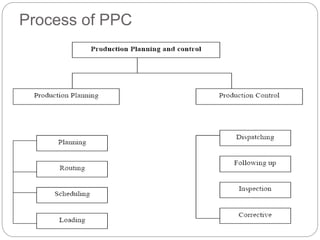
Process of PPC
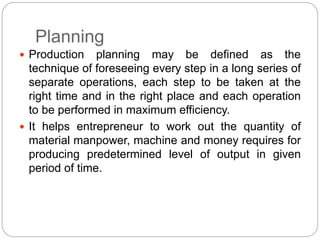
Planning
 Production planning may be defined as the
technique of foreseeing every step in a long series of
separate operations, each step to be taken at the
right time and in the right place and each operation
to be performed in maximum efficiency.
 It helps entrepreneur to work out the quantity of
material manpower, machine and money requires for
producing predetermined level of output in given
period of time.
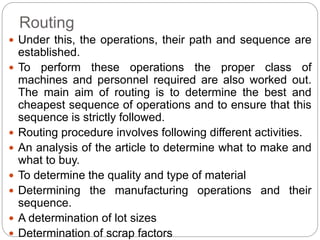
Routing
 Under this, the operations, their path and sequence are
established.
 To perform these operations the proper class of
machines and personnel required are also worked out.
The main aim of routing is to determine the best and
cheapest sequence of operations and to ensure that this
sequence is strictly followed.
 Routing procedure involves following different activities.
 An analysis of the article to determine what to make and
what to buy.
 To determine the quality and type of material
 Determining the manufacturing operations and their
sequence.
 A determination of lot sizes
 Determination of scrap factors
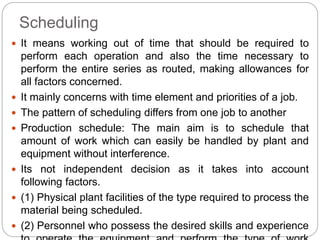
Scheduling
 It means working out of time that should be required to
perform each operation and also the time necessary to
perform the entire series as routed, making allowances for
all factors concerned.
 It mainly concerns with time element and priorities of a job.
 The pattern of scheduling differs from one job to another
 Production schedule: The main aim is to schedule that
amount of work which can easily be handled by plant and
equipment without interference.
 Its not independent decision as it takes into account
following factors.
 (1) Physical plant facilities of the type required to process the
material being scheduled.
 (2) Personnel who possess the desired skills and experience
Loading
 The next step is the execution of the schedule plan as
per the route chalked out it includes the assignment of
the work to the operators at their machines or work
places.
 So loading determines who will do the work as routing
determines where and scheduling determines when it
shall be done.
Production control
 Production control is the process of planning
production in advance of operations, establishing the
exact route of each individual item part or assembly,
setting, starting and finishing for each important item,
assembly or the finishing production and releasing
the necessary orders as well as initiating the
necessary follow-up to have the smooth function of
the enterprise.
Dispatching
 Dispatching involves issue of production orders for
starting the operations. Necessary authority and
conformation is given for:
 Movement of materials to different workstations.
 Movement of tools and fixtures necessary for each
operation.
 Beginning of work on each operation.
 Recording of time and cost involved in each
operation.
 Movement of work from one operation to another in
accordance with the route sheet.
 Inspecting or supervision of work
Follow up
 Every production programme involves determination
of the progress of work, removing bottlenecks in the
flow of work and ensuring that the productive
operations are taking place in accordance with the
plans.
 It spots delays or deviations from the production plans.
It helps to reveal detects in routing and scheduling,
misunderstanding of orders and instruction, under
loading or overloading of work etc.
 All problems or deviations are investigated and
remedial measurer are undertaken to ensure the
completion of work by the planned date.
Inspection
 This is mainly to ensure the quality of goods. It can
be required as effective agency of production
control.
Corrective measures
 Corrective action may involve any of those activities
of
 adjusting the route,
 rescheduling of work
 changing the workloads,
 repairs and
 maintenance of machinery or equipment,
 control over inventories of the cause of deviation is
the poor performance of the employees.
 Certain personnel decisions like training, transfer,
demotion etc. may have to be taken. Alternate
methods may be suggested to handle peak loads.
Thank you Very
Much

production planning and control

  • 1.
  • 2.
    Introduction  Planned productionis an important feature of the small industry.  Planning and control involve generally the organization and planning of manufacturing process.  The ultimate objective is the organization of the supply and movement of materials and labour, machines utilization and related activities, in order to bring about the desired manufacturing results in terms of quality, quantity, time and place.
  • 3.
    Objective of PPC Optimum Utilization of Capacity  Inventory control  Economy in production time  Ensure quality  To sum up we may say that PPC is of immense value to the entrepreneur in capacity utilization and inventory control.  More importantly it improves his response time and quality. As such effective PPC contributes to time, quality and cost parameters of entrepreneurial success.
  • 4.
  • 5.
    Planning  Production planningmay be defined as the technique of foreseeing every step in a long series of separate operations, each step to be taken at the right time and in the right place and each operation to be performed in maximum efficiency.  It helps entrepreneur to work out the quantity of material manpower, machine and money requires for producing predetermined level of output in given period of time.
  • 6.
    Routing  Under this,the operations, their path and sequence are established.  To perform these operations the proper class of machines and personnel required are also worked out. The main aim of routing is to determine the best and cheapest sequence of operations and to ensure that this sequence is strictly followed.  Routing procedure involves following different activities.  An analysis of the article to determine what to make and what to buy.  To determine the quality and type of material  Determining the manufacturing operations and their sequence.  A determination of lot sizes  Determination of scrap factors
  • 7.
    Scheduling  It meansworking out of time that should be required to perform each operation and also the time necessary to perform the entire series as routed, making allowances for all factors concerned.  It mainly concerns with time element and priorities of a job.  The pattern of scheduling differs from one job to another  Production schedule: The main aim is to schedule that amount of work which can easily be handled by plant and equipment without interference.  Its not independent decision as it takes into account following factors.  (1) Physical plant facilities of the type required to process the material being scheduled.  (2) Personnel who possess the desired skills and experience
  • 8.
    Loading  The nextstep is the execution of the schedule plan as per the route chalked out it includes the assignment of the work to the operators at their machines or work places.  So loading determines who will do the work as routing determines where and scheduling determines when it shall be done.
  • 9.
    Production control  Productioncontrol is the process of planning production in advance of operations, establishing the exact route of each individual item part or assembly, setting, starting and finishing for each important item, assembly or the finishing production and releasing the necessary orders as well as initiating the necessary follow-up to have the smooth function of the enterprise.
  • 10.
    Dispatching  Dispatching involvesissue of production orders for starting the operations. Necessary authority and conformation is given for:  Movement of materials to different workstations.  Movement of tools and fixtures necessary for each operation.  Beginning of work on each operation.  Recording of time and cost involved in each operation.  Movement of work from one operation to another in accordance with the route sheet.  Inspecting or supervision of work
  • 11.
    Follow up  Everyproduction programme involves determination of the progress of work, removing bottlenecks in the flow of work and ensuring that the productive operations are taking place in accordance with the plans.  It spots delays or deviations from the production plans. It helps to reveal detects in routing and scheduling, misunderstanding of orders and instruction, under loading or overloading of work etc.  All problems or deviations are investigated and remedial measurer are undertaken to ensure the completion of work by the planned date.
  • 12.
    Inspection  This ismainly to ensure the quality of goods. It can be required as effective agency of production control.
  • 13.
    Corrective measures  Correctiveaction may involve any of those activities of  adjusting the route,  rescheduling of work  changing the workloads,  repairs and  maintenance of machinery or equipment,  control over inventories of the cause of deviation is the poor performance of the employees.  Certain personnel decisions like training, transfer, demotion etc. may have to be taken. Alternate methods may be suggested to handle peak loads.
  • 14.