PROBLEM SOLVING
By /
Mahmoud Shaqria
‫شقريه‬ ‫محمد‬ ‫محمود‬
:OUT LINE
1- Definition of Problem Solving:
2-Types of Problem
3-Importance of problem solving skills
4-Steps OF the Problem Solving cycle
DEFINITIONS
Thinking:
formation of a new mental representation through the
transformation of information by complex interaction of
the mental attributes of judging,abstracting, reasoning,
imagining, and problem solving.
• Problem Solving:
thinking directed toward the handling of a particular
situation involving both the formation of responses
and the selection among possible
responses.
:TYPES OF PROBLEMS
1-Defined problems –
*defined problems, as the name suggests, are those
problems which are not defined properly.
*These are the problems that do not have any clear
goals, or information, or solution paths, or any clear
expected solutions. In defined problems, it is not clear
what information one should start from.
*It is also not clear when the solution has been
reached, or what rules apply in finding out
that solution.
2-Well-Defined problems –
*Well- defined problems, in contrast, are those in which all
the aspects of the problem are clearly laid out.
*These problems have specific goals, clearly defined
solution paths, and clear expected solutions.
*Well defined problems generally present with a small set of
information from where one can start, and often come with a
set of rules or guidelines to abide by while working towards a
goal
IMPORTANCE OF PROBLEM SOLVING SKILLS
1-Make the impossible possible. Knowledge alone is not the
key to solving problems but rather, complimenting it with
systematic problem solving approaches makes the difference.
This helps individuals and organizations overcome perilous
challenges.
Noticed, recognized, and appreciated.
2-Makes you a stand out.
People are trained to do the usual. They have
acquired skills and knowledge in what they do.
However, people can hardly solve problems
when they are unexpected or unprecedented
ones. If you become a regular problem solver at
your workplace, you are easily
3-Increased confidence. No matter where you work or
what your profession is, having the ability to solve problems
will boost your confidence level. Because you are sure of
your ability to solve problems, you don’t spend time worrying
about what you will do if a problem should arise.
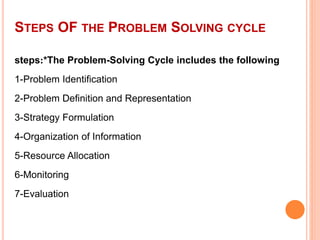
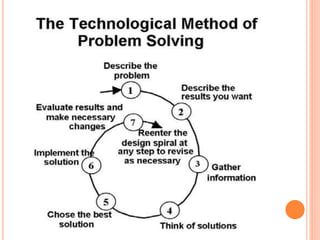
STEPS OF THE PROBLEM SOLVING CYCLE
*The Problem-Solving Cycle includes the following:steps
1-Problem Identification
2-Problem Definition and Representation
3-Strategy Formulation
4-Organization of Information
5-Resource Allocation
6-Monitoring
7-Evaluation
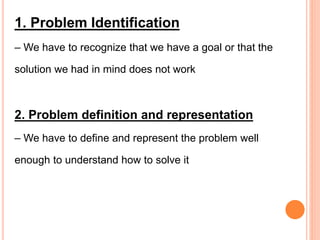
1. Problem Identification
– We have to recognize that we have a goal or that the
solution we had in mind does not work
2. Problem definition and representation
– We have to define and represent the problem well
enough to understand how to solve it
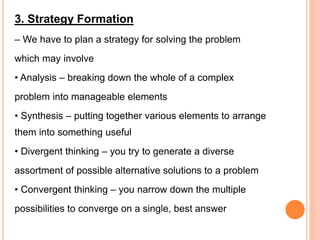
3. Strategy Formation
– We have to plan a strategy for solving the problem
which may involve
• Analysis – breaking down the whole of a complex
problem into manageable elements
• Synthesis – putting together various elements to arrange
them into something useful
• Divergent thinking – you try to generate a diverse
assortment of possible alternative solutions to a problem
• Convergent thinking – you narrow down the multiple
possibilities to converge on a single, best answer
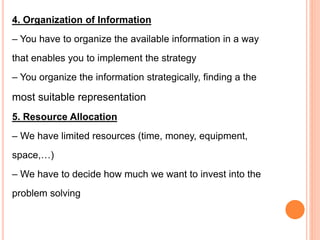
4. Organization of Information
– You have to organize the available information in a way
that enables you to implement the strategy
– You organize the information strategically, finding a the
most suitable representation
5. Resource Allocation
– We have limited resources (time, money, equipment,
space,…)
– We have to decide how much we want to invest into the
problem solving
6. Monitoring
– It is necessary to monitor the process of solving the problem
to make sure that we are getting closer to the goal
– We need to reassess what we are doing to be able to
compensate for possible flaws
7. Evaluation
– You need to evaluate your solution after you have finished
– New problems can be recognized, the problem may be
redefined, new strategies may come to light, and new
resources may become available
Problem solving

Problem solving

  • 1.
    PROBLEM SOLVING By / MahmoudShaqria ‫شقريه‬ ‫محمد‬ ‫محمود‬
  • 2.
    :OUT LINE 1- Definitionof Problem Solving: 2-Types of Problem 3-Importance of problem solving skills 4-Steps OF the Problem Solving cycle
  • 3.
    DEFINITIONS Thinking: formation of anew mental representation through the transformation of information by complex interaction of the mental attributes of judging,abstracting, reasoning, imagining, and problem solving. • Problem Solving: thinking directed toward the handling of a particular situation involving both the formation of responses and the selection among possible responses.
  • 4.
    :TYPES OF PROBLEMS 1-Definedproblems – *defined problems, as the name suggests, are those problems which are not defined properly. *These are the problems that do not have any clear goals, or information, or solution paths, or any clear expected solutions. In defined problems, it is not clear what information one should start from. *It is also not clear when the solution has been reached, or what rules apply in finding out that solution.
  • 5.
    2-Well-Defined problems – *Well-defined problems, in contrast, are those in which all the aspects of the problem are clearly laid out. *These problems have specific goals, clearly defined solution paths, and clear expected solutions. *Well defined problems generally present with a small set of information from where one can start, and often come with a set of rules or guidelines to abide by while working towards a goal
  • 6.
    IMPORTANCE OF PROBLEMSOLVING SKILLS 1-Make the impossible possible. Knowledge alone is not the key to solving problems but rather, complimenting it with systematic problem solving approaches makes the difference. This helps individuals and organizations overcome perilous challenges. Noticed, recognized, and appreciated.
  • 7.
    2-Makes you astand out. People are trained to do the usual. They have acquired skills and knowledge in what they do. However, people can hardly solve problems when they are unexpected or unprecedented ones. If you become a regular problem solver at your workplace, you are easily
  • 8.
    3-Increased confidence. Nomatter where you work or what your profession is, having the ability to solve problems will boost your confidence level. Because you are sure of your ability to solve problems, you don’t spend time worrying about what you will do if a problem should arise.
  • 9.
    STEPS OF THEPROBLEM SOLVING CYCLE *The Problem-Solving Cycle includes the following:steps 1-Problem Identification 2-Problem Definition and Representation 3-Strategy Formulation 4-Organization of Information 5-Resource Allocation 6-Monitoring 7-Evaluation
  • 10.
    1. Problem Identification –We have to recognize that we have a goal or that the solution we had in mind does not work 2. Problem definition and representation – We have to define and represent the problem well enough to understand how to solve it
  • 11.
    3. Strategy Formation –We have to plan a strategy for solving the problem which may involve • Analysis – breaking down the whole of a complex problem into manageable elements • Synthesis – putting together various elements to arrange them into something useful • Divergent thinking – you try to generate a diverse assortment of possible alternative solutions to a problem • Convergent thinking – you narrow down the multiple possibilities to converge on a single, best answer
  • 12.
    4. Organization ofInformation – You have to organize the available information in a way that enables you to implement the strategy – You organize the information strategically, finding a the most suitable representation 5. Resource Allocation – We have limited resources (time, money, equipment, space,…) – We have to decide how much we want to invest into the problem solving
  • 13.
    6. Monitoring – Itis necessary to monitor the process of solving the problem to make sure that we are getting closer to the goal – We need to reassess what we are doing to be able to compensate for possible flaws 7. Evaluation – You need to evaluate your solution after you have finished – New problems can be recognized, the problem may be redefined, new strategies may come to light, and new resources may become available