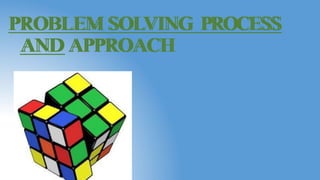
PROBLEM SOLVING PROCESS
AND APPROACH
PROBLEM SOLVING PROCESS
AND APPROACH
DEFINITION
The problem solving is a process of overcoming
difficulties that appear to interfere with the
attainment of goal.
(SKINNER)
The problem solving is a systematic approach
to the solution or alleviation of problems
characterised by sequential execution of the
following observation through action process.
PURPOSE
• Train the students in the act of reasoning.
• Gain and improve the knowledge
• Solve puzzling question
• Overcome the obstacles in the attainment of
objectives.
APPROACHES
•INDUCTIVE APPROACH
It is the process of developing generalization from
specific observations
•DEDUCTIVE APPROACH
It is the process of developing specific predictions from
general principles
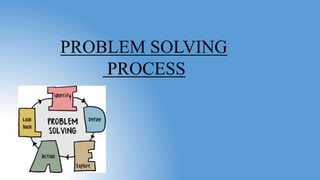
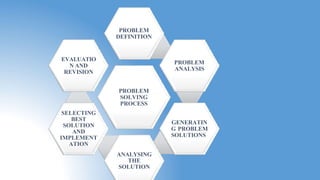
PROBLEM
SOLVING
PROCESS
PROBLEM
DEFINITION
PROBLEM
ANALYSIS
GENERATIN
G PROBLEM
SOLUTIONS
ANALYSING
THE
SOLUTION
SELECTING
BEST
SOLUTION
AND
IMPLEMENT
ATION
EVALUATIO
N AND
REVISION
1 ) PROBLEM DEFINITION:
The normal process for solving a problem
initially involves defining the problem that is to
be solved. In this first stage there is a need to
write down what exactly the problem entails,
which helps to identify the real problem that is
under study and needs an immediate solution.
This is considered as most essential step of the
problem-solving process
2)PROBLEM ANALYSIS:
• Analyse how the problem affects the researcher and his or her
Current situation and the other people involved in the
situation.
• The analysis helps in understanding the source of the
problem and how it affects the current developments and the
researcher’s environment.
• It is often good to reconfirm, if the initial problem definition
is still valid.
3) GENERATING POSSIBLE SOLUTIONS:
•Focus must be on identifying and
generating all possible solutions for a
problem. Each potential idea for solution
of a problem must be considered without
discarding it through value judgement
4) ANALYSING THE SOLUTIONS
Various factors about each of the potential
solutions are investigated, wherein all the
positive and negative aspects of each solution
are analysed.
5) SELECTING THE BEST SOLUTION
AND IMPLEMENTATION
•Best solution is selected based on the careful
judgement, which is supposed to solve the
problem swiftly and smoothly.
•The final step of the problem-solving
process is to practically solve the problem by
implementing the selected solution
6) EVALUATION AND REVISION
Evaluation is made to judge the effectiveness
of the solution in resolving the problem. This
stage also helps to redefine the problem and
revise the problem-solving process In case the
initial solution fails to manage the problem
effectively.
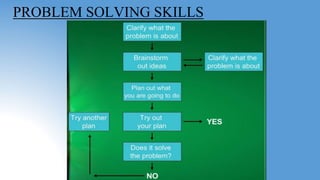
PROBLEM SOLVING SKILLS
• Develop ability to analyze the problem and to take
proper judgement/solution in the critical condition that
encounter in the clinical setting.
• Problem solving method also helps the students to
solve this problem in real life situation without
much stress.
USES OF PROBLEM SOLVING IN
NURSING
• It helps the student to solve the similar problem in
future with confidence.
• It develops critical thinking of pupil.
• In the class/group it will develop mutual
understanding among the group members.
• It helps the care giver/nurse to develop a skill to help
the patient.
• Develop ability in nurse to select the problem solving
strategy according to patient’s abilities and life style
THANK
YOU

PROBLEM SOLVING PROCESS AND APPROACH.pptx

  • 1.
    PROBLEM SOLVING PROCESS ANDAPPROACH PROBLEM SOLVING PROCESS AND APPROACH
  • 2.
    DEFINITION The problem solvingis a process of overcoming difficulties that appear to interfere with the attainment of goal. (SKINNER)
  • 3.
    The problem solvingis a systematic approach to the solution or alleviation of problems characterised by sequential execution of the following observation through action process.
  • 4.
    PURPOSE • Train thestudents in the act of reasoning. • Gain and improve the knowledge • Solve puzzling question • Overcome the obstacles in the attainment of objectives.
  • 5.
    APPROACHES •INDUCTIVE APPROACH It isthe process of developing generalization from specific observations •DEDUCTIVE APPROACH It is the process of developing specific predictions from general principles
  • 7.
  • 8.
    1 ) PROBLEMDEFINITION: The normal process for solving a problem initially involves defining the problem that is to be solved. In this first stage there is a need to write down what exactly the problem entails, which helps to identify the real problem that is under study and needs an immediate solution. This is considered as most essential step of the problem-solving process
  • 9.
    2)PROBLEM ANALYSIS: • Analysehow the problem affects the researcher and his or her Current situation and the other people involved in the situation. • The analysis helps in understanding the source of the problem and how it affects the current developments and the researcher’s environment. • It is often good to reconfirm, if the initial problem definition is still valid.
  • 10.
    3) GENERATING POSSIBLESOLUTIONS: •Focus must be on identifying and generating all possible solutions for a problem. Each potential idea for solution of a problem must be considered without discarding it through value judgement
  • 11.
    4) ANALYSING THESOLUTIONS Various factors about each of the potential solutions are investigated, wherein all the positive and negative aspects of each solution are analysed.
  • 12.
    5) SELECTING THEBEST SOLUTION AND IMPLEMENTATION •Best solution is selected based on the careful judgement, which is supposed to solve the problem swiftly and smoothly. •The final step of the problem-solving process is to practically solve the problem by implementing the selected solution
  • 13.
    6) EVALUATION ANDREVISION Evaluation is made to judge the effectiveness of the solution in resolving the problem. This stage also helps to redefine the problem and revise the problem-solving process In case the initial solution fails to manage the problem effectively.
  • 14.
  • 15.
    • Develop abilityto analyze the problem and to take proper judgement/solution in the critical condition that encounter in the clinical setting. • Problem solving method also helps the students to solve this problem in real life situation without much stress. USES OF PROBLEM SOLVING IN NURSING
  • 16.
    • It helpsthe student to solve the similar problem in future with confidence. • It develops critical thinking of pupil. • In the class/group it will develop mutual understanding among the group members. • It helps the care giver/nurse to develop a skill to help the patient. • Develop ability in nurse to select the problem solving strategy according to patient’s abilities and life style
  • 17.