Stages of Problem Solving
Dr Rajesh Verma
Assistant Professor in Psychology
Govt. College Adampur, Hisar (Haryana)
Definition
“The process of finding solutions to problem”.
“The cognitive process starts in the event of some
problems or hurdles and ends when a solution is found or
goal is reached”.
Problem solving is
“thinking that is directed
toward the solving of a
specific problem that
involves both the formation
of responses and the
selection among possible
responses” (Solso, 2006).
Introduction
The psychological resources such as goal-directed
creative thinking, are pooled together to come up with
solutions. The individuals who use
these resources intelligently and
tactfully solve complex problems easily.
Being a cognitive process it follows a
certain sequence or we can say that
there is a well ordered pattern to be
followed to solve a problem. Some
psychologists call it ‘Problem-solving
cycle’. The problem is half solved when
it is optimally represented in the
landscape of mind. It is achieved by
following a stereotypical sequence as
suggested by Hayes (1989) (Solso, 2006).
Stages
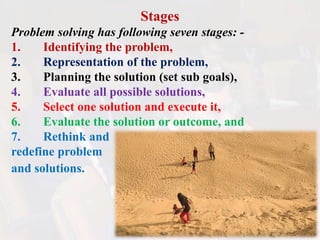
Problem solving has following seven stages: -
1. Identifying the problem,
2. Representation of the problem,
3. Planning the solution (set sub goals),
4. Evaluate all possible solutions,
5. Select one solution and execute it,
6. Evaluate the solution or outcome, and
7. Rethink and
redefine problem
and solutions.
Let us understand these stages in the light of a
hypothetical problem or challenge.
“Your big day, of course, marriage is approaching fast
and you have to do lots of things!”
1. Identifying the problem – The most important step is
identification of the problem through differentiating facts
from opinion. In this process problem’s all possible causes
are identified,
defined and
understood.
“Only 9 days are
left for the big
day you need to
plan and do a lot”
2. Representation of the problem – Representation
means integration and translation of problem within
the cognitive domain. A working mental model of the
problem is constructed (eduhk.hk) where each
component of the problem is taken into account. The
representation of a problem is as important as finding
solution of the problem.
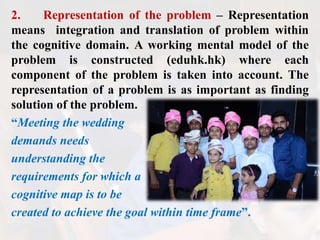
“Meeting the wedding
demands needs
understanding the
requirements for which a
cognitive map is to be
created to achieve the goal within time frame”.
3. Planning the solution (set sub goals) – This is
decision making stage where probable solutions are
listed. The solutions are subdivided into smaller goals
that helps in generating alternatives. A comprehensive
thought generally known as brainstorming, is applied to
these potential solutions and sub-solutions.
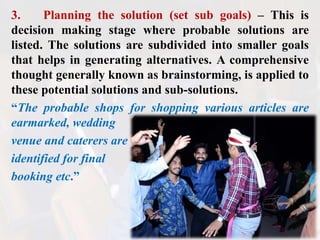
“The probable shops for shopping various articles are
earmarked, wedding
venue and caterers are
identified for final
booking etc.”
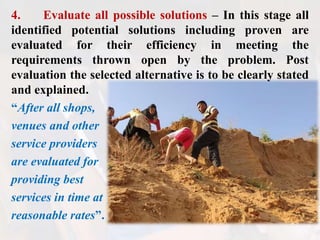
4. Evaluate all possible solutions – In this stage all
identified potential solutions including proven are
evaluated for their efficiency in meeting the
requirements thrown open by the problem. Post
evaluation the selected alternative is to be clearly stated
and explained.
“After all shops,
venues and other
service providers
are evaluated for
providing best
services in time at
reasonable rates”.
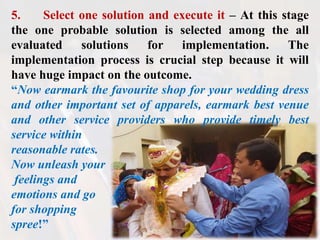
5. Select one solution and execute it – At this stage
the one probable solution is selected among the all
evaluated solutions for implementation. The
implementation process is crucial step because it will
have huge impact on the outcome.
“Now earmark the favourite shop for your wedding dress
and other important set of apparels, earmark best venue
and other service providers who provide timely best
service within
reasonable rates.
Now unleash your
feelings and
emotions and go
for shopping
spree!”
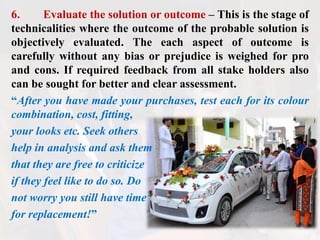
6. Evaluate the solution or outcome – This is the stage of
technicalities where the outcome of the probable solution is
objectively evaluated. The each aspect of outcome is
carefully without any bias or prejudice is weighed for pro
and cons. If required feedback from all stake holders also
can be sought for better and clear assessment.
“After you have made your purchases, test each for its colour
combination, cost, fitting,
your looks etc. Seek others
help in analysis and ask them
that they are free to criticize
if they feel like to do so. Do
not worry you still have time
for replacement!”
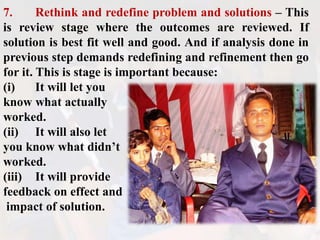
7. Rethink and redefine problem and solutions – This
is review stage where the outcomes are reviewed. If
solution is best fit well and good. And if analysis done in
previous step demands redefining and refinement then go
for it. This is stage is important because:
(i) It will let you
know what actually
worked.
(ii) It will also let
you know what didn’t
worked.
(iii) It will provide
feedback on effect and
impact of solution.
(iv) Offer scope for modification, and reasons for
success and of course failure too.
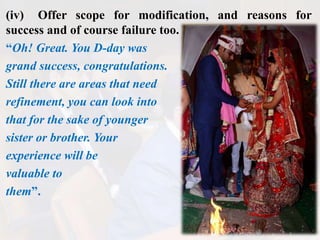
“Oh! Great. You D-day was
grand success, congratulations.
Still there are areas that need
refinement, you can look into
that for the sake of younger
sister or brother. Your
experience will be
valuable to
them”.
References:
1. NCERT, XI Psychology Text book.
2. Solso, R. S . (2006). Cognitive Psychology. New
Delhi: Pearson.
3. Ciccarelli, S. K.
& Meyer, G. E.
(2016). Psychology.
New Delhi: Pearson.
4. https://www.
eduhk.hk/apfslt/v8_
issue2/joan/ joan3.
htm.
vermasujit@yahoo.com
Next
Discussion
Convergent Thinking

stages of problem solving

  • 1.
    Stages of ProblemSolving Dr Rajesh Verma Assistant Professor in Psychology Govt. College Adampur, Hisar (Haryana)
  • 2.
    Definition “The process offinding solutions to problem”. “The cognitive process starts in the event of some problems or hurdles and ends when a solution is found or goal is reached”. Problem solving is “thinking that is directed toward the solving of a specific problem that involves both the formation of responses and the selection among possible responses” (Solso, 2006).
  • 3.
    Introduction The psychological resourcessuch as goal-directed creative thinking, are pooled together to come up with solutions. The individuals who use these resources intelligently and tactfully solve complex problems easily. Being a cognitive process it follows a certain sequence or we can say that there is a well ordered pattern to be followed to solve a problem. Some psychologists call it ‘Problem-solving cycle’. The problem is half solved when it is optimally represented in the landscape of mind. It is achieved by following a stereotypical sequence as suggested by Hayes (1989) (Solso, 2006).
  • 4.
    Stages Problem solving hasfollowing seven stages: - 1. Identifying the problem, 2. Representation of the problem, 3. Planning the solution (set sub goals), 4. Evaluate all possible solutions, 5. Select one solution and execute it, 6. Evaluate the solution or outcome, and 7. Rethink and redefine problem and solutions.
  • 6.
    Let us understandthese stages in the light of a hypothetical problem or challenge. “Your big day, of course, marriage is approaching fast and you have to do lots of things!” 1. Identifying the problem – The most important step is identification of the problem through differentiating facts from opinion. In this process problem’s all possible causes are identified, defined and understood. “Only 9 days are left for the big day you need to plan and do a lot”
  • 7.
    2. Representation ofthe problem – Representation means integration and translation of problem within the cognitive domain. A working mental model of the problem is constructed (eduhk.hk) where each component of the problem is taken into account. The representation of a problem is as important as finding solution of the problem. “Meeting the wedding demands needs understanding the requirements for which a cognitive map is to be created to achieve the goal within time frame”.
  • 8.
    3. Planning thesolution (set sub goals) – This is decision making stage where probable solutions are listed. The solutions are subdivided into smaller goals that helps in generating alternatives. A comprehensive thought generally known as brainstorming, is applied to these potential solutions and sub-solutions. “The probable shops for shopping various articles are earmarked, wedding venue and caterers are identified for final booking etc.”
  • 9.
    4. Evaluate allpossible solutions – In this stage all identified potential solutions including proven are evaluated for their efficiency in meeting the requirements thrown open by the problem. Post evaluation the selected alternative is to be clearly stated and explained. “After all shops, venues and other service providers are evaluated for providing best services in time at reasonable rates”.
  • 10.
    5. Select onesolution and execute it – At this stage the one probable solution is selected among the all evaluated solutions for implementation. The implementation process is crucial step because it will have huge impact on the outcome. “Now earmark the favourite shop for your wedding dress and other important set of apparels, earmark best venue and other service providers who provide timely best service within reasonable rates. Now unleash your feelings and emotions and go for shopping spree!”
  • 11.
    6. Evaluate thesolution or outcome – This is the stage of technicalities where the outcome of the probable solution is objectively evaluated. The each aspect of outcome is carefully without any bias or prejudice is weighed for pro and cons. If required feedback from all stake holders also can be sought for better and clear assessment. “After you have made your purchases, test each for its colour combination, cost, fitting, your looks etc. Seek others help in analysis and ask them that they are free to criticize if they feel like to do so. Do not worry you still have time for replacement!”
  • 12.
    7. Rethink andredefine problem and solutions – This is review stage where the outcomes are reviewed. If solution is best fit well and good. And if analysis done in previous step demands redefining and refinement then go for it. This is stage is important because: (i) It will let you know what actually worked. (ii) It will also let you know what didn’t worked. (iii) It will provide feedback on effect and impact of solution.
  • 13.
    (iv) Offer scopefor modification, and reasons for success and of course failure too. “Oh! Great. You D-day was grand success, congratulations. Still there are areas that need refinement, you can look into that for the sake of younger sister or brother. Your experience will be valuable to them”.
  • 14.
    References: 1. NCERT, XIPsychology Text book. 2. Solso, R. S . (2006). Cognitive Psychology. New Delhi: Pearson. 3. Ciccarelli, S. K. & Meyer, G. E. (2016). Psychology. New Delhi: Pearson. 4. https://www. eduhk.hk/apfslt/v8_ issue2/joan/ joan3. htm.
  • 15.