SRADHANJALI BISWAL
TUTOR
KALINGA INSTITUTE OF NURSING
SCIENCES
KIIT UNIVERSITY
CONCEPTS OF NORMAL AND
ABNORMAL BEHAVIOUR
INTRODUCTION
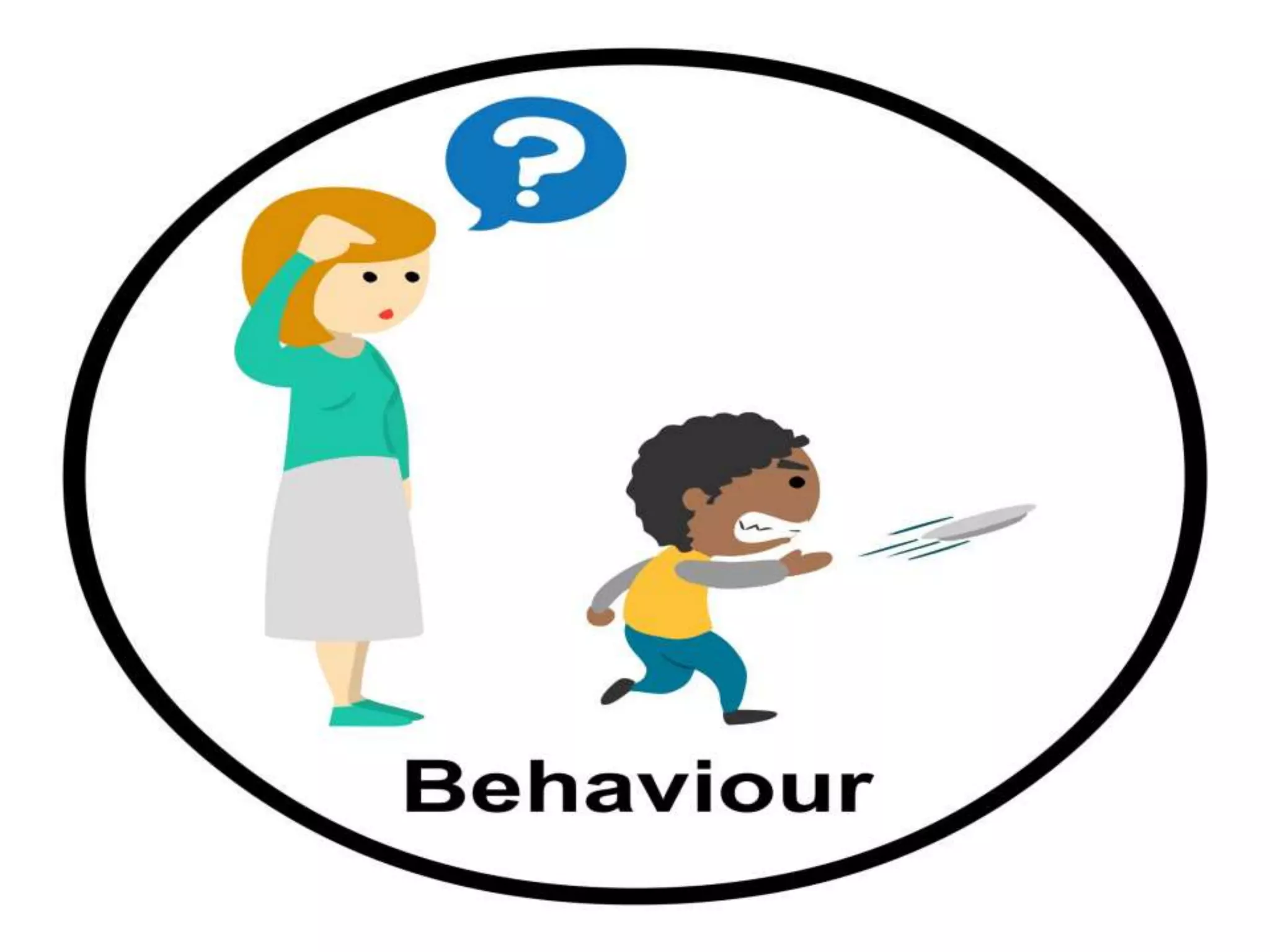
What is Behaviour?
 Behaviour is the manner in which a person
behaves, whether they can conform to the
standards, or not.
Types Of Behaviour
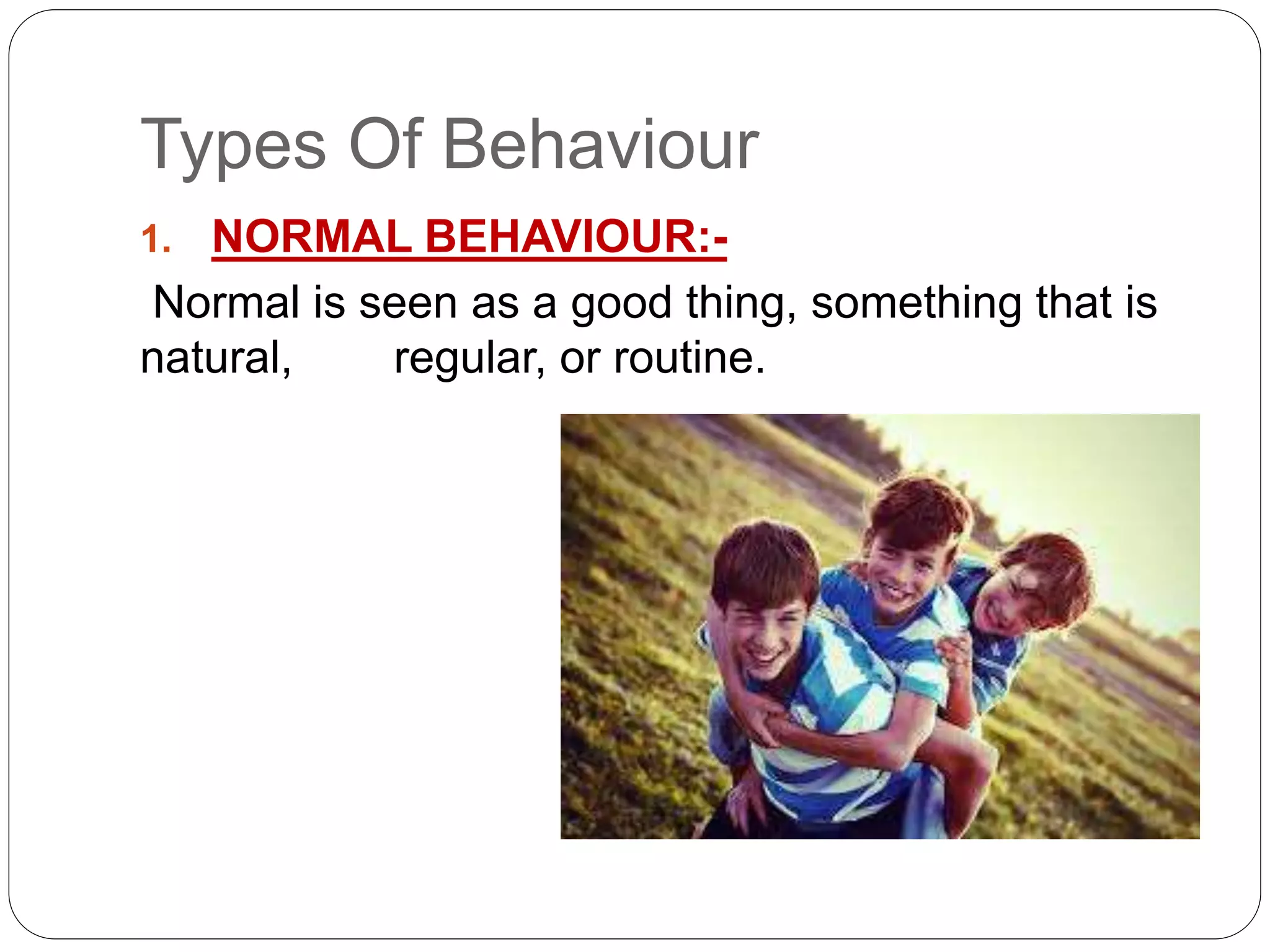
1. NORMAL BEHAVIOUR:-
Normal is seen as a good thing, something that is
natural, regular, or routine.
TYPES CONT…
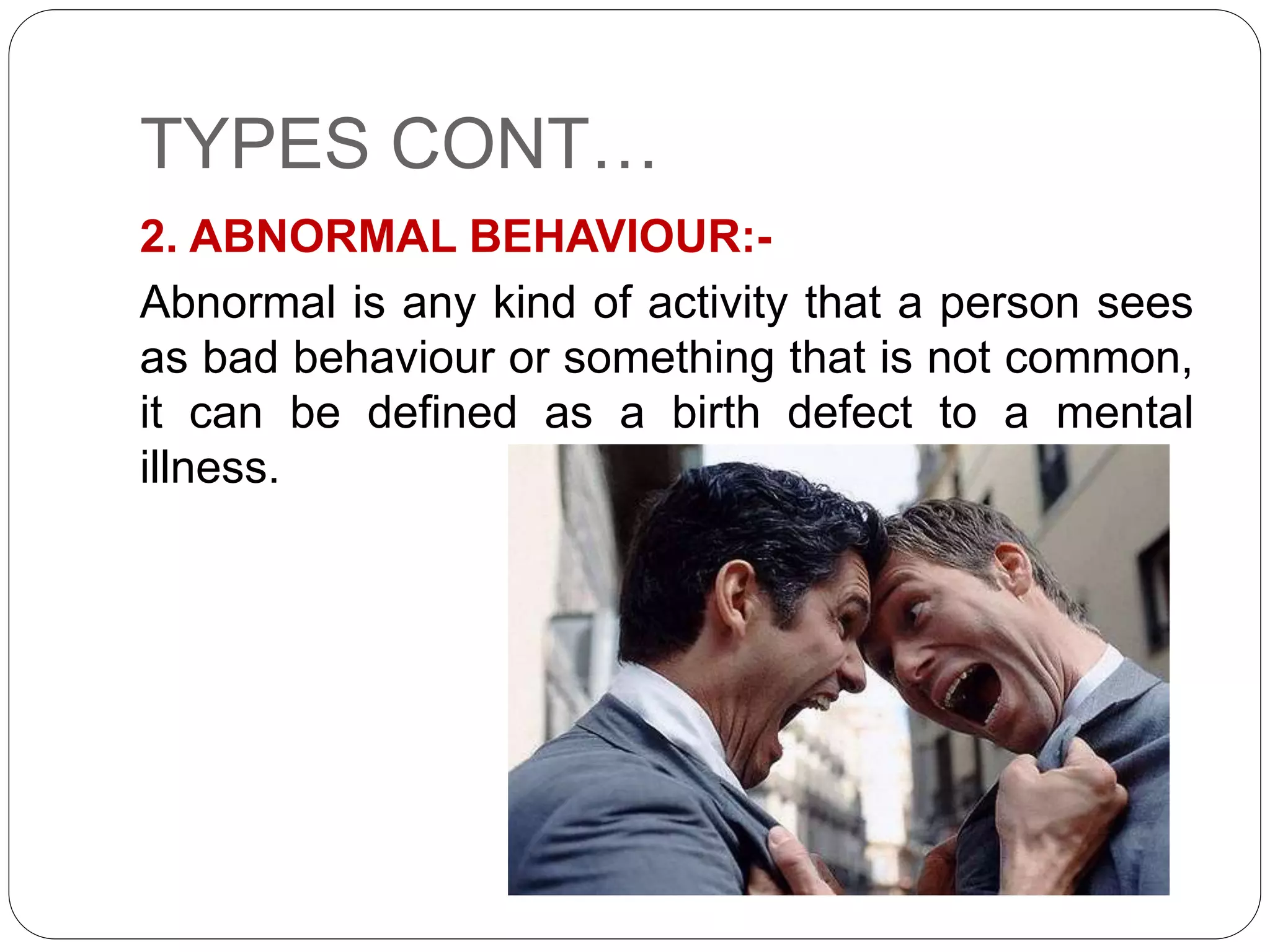
2. ABNORMAL BEHAVIOUR:-
Abnormal is any kind of activity that a person sees
as bad behaviour or something that is not common,
it can be defined as a birth defect to a mental
illness.
Characteristics Of Normal
Behaviour
Jahoda (1958) attempted to establish what is
abnormal by identifying the characteristics of
people who are normal. She identified six
characteristics of mental health.
 Efficient self-perception
 Realistic self-esteem and acceptance
 Voluntary control of behavior
 True perception of the world
 Sustaining relationships and giving affection
 Self-direction and productivity
 The 4 "D's" of Abnormality:-
D – dysfunction ,
D – distress,
D – deviance ,
D – dangerousness
Characteristics Of Abnormal
Behaviour
CONT…
1. Dysfunctional: Behaviors and feelings are
dysfunctional when they interfere with person's
ability to function in daily life, to hold a job, or
form relationships.
2. Distress: Behaviors and feelings that cause
distress to the individual or to others around him
or her are considered abnormal.
3. Deviant: Highly deviant behaviors like chronic
lying or stealing lead to judgements of
abnormality.
4. Dangerous: Behaviors and feelings that are
potentially harmful to an individual or the
individuals around them are seen as abnormal.
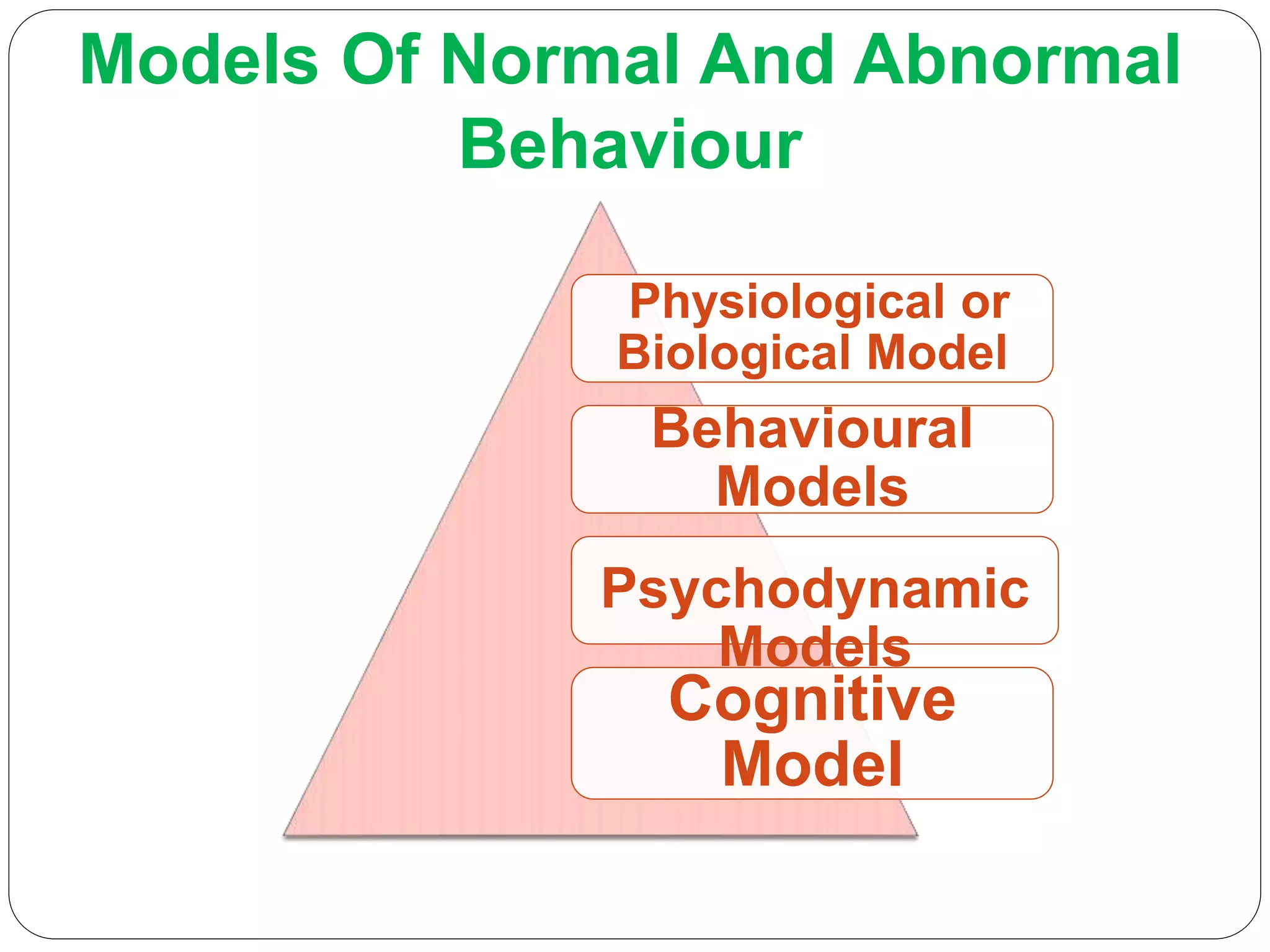
Models Of Normal And Abnormal
Behaviour
Physiological or
Biological Model
Behavioural
Models
Psychodynamic
Models
Cognitive
Model
Biological Model
 The biological model of abnormality (the only model not
based on psychological principles) is based on the
assumptions that if the brain, neuro-anatomy and
related biochemicals are all physical entities and work
together to mediate psychological processes, then
treating any mental abnormality must be
physical/biological.
 Part of this theory stems from much research into the
major neurotransmitter, serotonin, which seems to show
that major psychological illnesses such as bipolar
disorder and anorexia nervosa are caused by abnormally
Cont..
 The model also suggests that psychological
illness could and should be treated like any
physical illness (being caused
by chemical imbalance, microbes or physical
stress) and hence can be treated
with surgery or drugs.
Behavioural model
 The behavioural model to abnormality assumes that
all maladaptive behaviour is essentially acquired
through one's environment.
 Therefore, psychiatrists practising the beliefs of this
model would be to prioritise changing the behaviour
over identifying the cause of the dysfunctional
behaviour.
Cont….
 The main solution to psychological illness under
this model is aversion therapy, where
the stimulus that provokes the dysfunctional
behaviour is coupled with a second stimulus, with
aims to produce a new reaction to the first
stimulus based on the experiences of the
second.
Psychodynamic Model
 The psychodynamic model is the fourth
psychological model of abnormality, and is based on
the work of Sigmund Freud.
 It is based on the principles that psychological
illnesses come about from repressed emotions and
thoughts from experiences in the past (usually
childhood), and as a result of this repression,
Cont…
 The patient is believed to be cured when they can
admit that which is currently being repressed
Cognitive model
 The cognitive model of abnormality focuses on
the cognitive distortions or the dysfunctions in the
thought processes and the cognitive deficiencies,
particularly the absence of sufficient thinking and
planning.
 This model holds that these variables are the cause of
many psychological disorders and that psychologists
following this outlook explain abnormality in terms of
irrational and negative thinking with the main position
Cont.…
 The cognitive model of abnormality is one of the
dominant forces in academic psychology beginning in the
1970s and its appeal is partly attributed to the way it
emphasizes the evaluation of internal mental processes
such as perception, attention, memory, and problem-
solving.
 The process allows psychologists to explain the
development of mental disorders and the link between
cognition and brain function especially to develop

Concept of normal and abnormal behaviour

  • 1.
    SRADHANJALI BISWAL TUTOR KALINGA INSTITUTEOF NURSING SCIENCES KIIT UNIVERSITY CONCEPTS OF NORMAL AND ABNORMAL BEHAVIOUR
  • 2.
  • 3.
    What is Behaviour? Behaviour is the manner in which a person behaves, whether they can conform to the standards, or not.
  • 4.
    Types Of Behaviour 1.NORMAL BEHAVIOUR:- Normal is seen as a good thing, something that is natural, regular, or routine.
  • 5.
    TYPES CONT… 2. ABNORMALBEHAVIOUR:- Abnormal is any kind of activity that a person sees as bad behaviour or something that is not common, it can be defined as a birth defect to a mental illness.
  • 6.
    Characteristics Of Normal Behaviour Jahoda(1958) attempted to establish what is abnormal by identifying the characteristics of people who are normal. She identified six characteristics of mental health.  Efficient self-perception  Realistic self-esteem and acceptance  Voluntary control of behavior  True perception of the world  Sustaining relationships and giving affection  Self-direction and productivity
  • 7.
     The 4"D's" of Abnormality:- D – dysfunction , D – distress, D – deviance , D – dangerousness Characteristics Of Abnormal Behaviour
  • 8.
    CONT… 1. Dysfunctional: Behaviorsand feelings are dysfunctional when they interfere with person's ability to function in daily life, to hold a job, or form relationships. 2. Distress: Behaviors and feelings that cause distress to the individual or to others around him or her are considered abnormal. 3. Deviant: Highly deviant behaviors like chronic lying or stealing lead to judgements of abnormality. 4. Dangerous: Behaviors and feelings that are potentially harmful to an individual or the individuals around them are seen as abnormal.
  • 9.
    Models Of NormalAnd Abnormal Behaviour Physiological or Biological Model Behavioural Models Psychodynamic Models Cognitive Model
  • 10.
    Biological Model  Thebiological model of abnormality (the only model not based on psychological principles) is based on the assumptions that if the brain, neuro-anatomy and related biochemicals are all physical entities and work together to mediate psychological processes, then treating any mental abnormality must be physical/biological.  Part of this theory stems from much research into the major neurotransmitter, serotonin, which seems to show that major psychological illnesses such as bipolar disorder and anorexia nervosa are caused by abnormally
  • 11.
    Cont..  The modelalso suggests that psychological illness could and should be treated like any physical illness (being caused by chemical imbalance, microbes or physical stress) and hence can be treated with surgery or drugs.
  • 12.
    Behavioural model  Thebehavioural model to abnormality assumes that all maladaptive behaviour is essentially acquired through one's environment.  Therefore, psychiatrists practising the beliefs of this model would be to prioritise changing the behaviour over identifying the cause of the dysfunctional behaviour.
  • 13.
    Cont….  The mainsolution to psychological illness under this model is aversion therapy, where the stimulus that provokes the dysfunctional behaviour is coupled with a second stimulus, with aims to produce a new reaction to the first stimulus based on the experiences of the second.
  • 14.
    Psychodynamic Model  Thepsychodynamic model is the fourth psychological model of abnormality, and is based on the work of Sigmund Freud.  It is based on the principles that psychological illnesses come about from repressed emotions and thoughts from experiences in the past (usually childhood), and as a result of this repression,
  • 15.
    Cont…  The patientis believed to be cured when they can admit that which is currently being repressed
  • 16.
    Cognitive model  Thecognitive model of abnormality focuses on the cognitive distortions or the dysfunctions in the thought processes and the cognitive deficiencies, particularly the absence of sufficient thinking and planning.  This model holds that these variables are the cause of many psychological disorders and that psychologists following this outlook explain abnormality in terms of irrational and negative thinking with the main position
  • 17.
    Cont.…  The cognitivemodel of abnormality is one of the dominant forces in academic psychology beginning in the 1970s and its appeal is partly attributed to the way it emphasizes the evaluation of internal mental processes such as perception, attention, memory, and problem- solving.  The process allows psychologists to explain the development of mental disorders and the link between cognition and brain function especially to develop