Downloaded 477 times
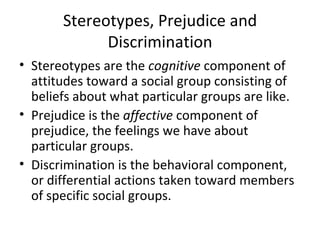
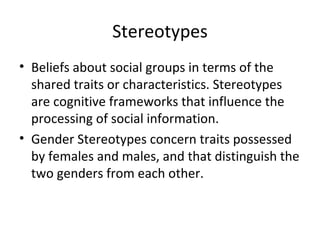
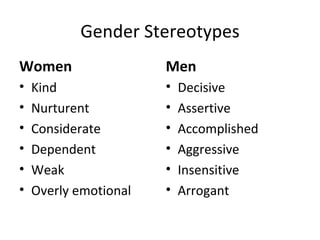
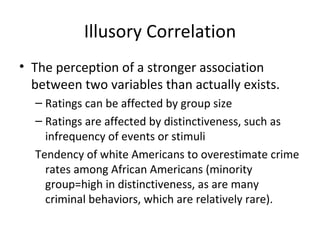
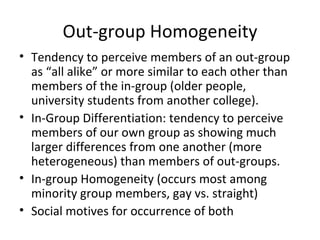
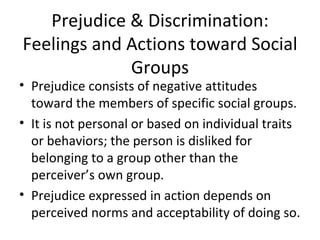
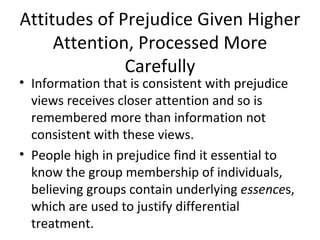

Prejudice has cognitive, affective, and behavioral components known as stereotypes, prejudice, and discrimination. Stereotypes are beliefs about social groups while prejudice consists of negative feelings toward those groups. Discrimination involves differential actions toward group members. Gender stereotypes see women as kind but dependent and men as assertive but insensitive. Prejudice and discrimination stem from threats to social groups, such as threats to status, resources, or self-esteem. Changing attitudes requires addressing the underlying emotions that drive prejudice.


