1) Social beliefs and judgments can be primed or influenced without awareness through exposure to related concepts, ideas, or stimuli. Experiments show this priming effect can influence thoughts and actions.
2) Embodied cognition refers to the influence of bodily sensations on social judgments and cognitive preferences. For example, holding a warm drink can make people rate others more warmly.
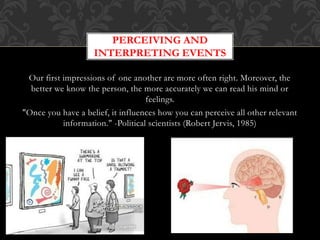
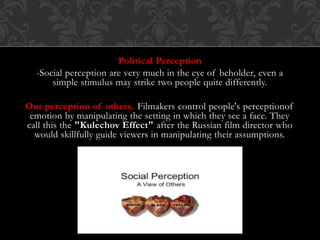
3) People's perceptions of events and others are shaped both by their initial beliefs and biases as well as situational factors, even when exposed to the same objective information or stimuli. First impressions tend to persist despite later evidence.