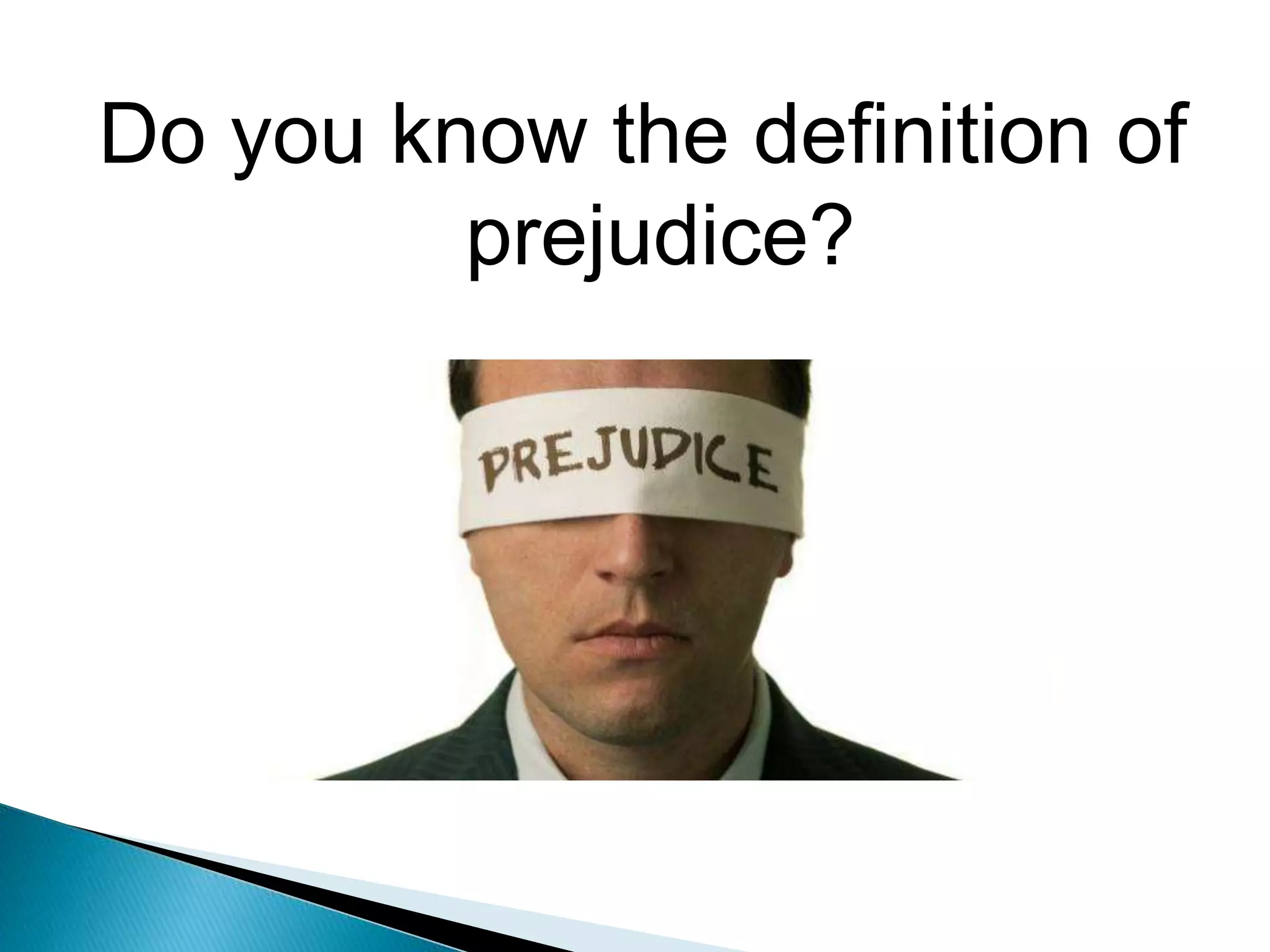
Do you know the definition of
prejudice?
 A widely held but fixed and oversimplified image or
idea of a particular type of person or thing.
 The use of stereotypes is a major way in which we
simplify our social world; since they reduce the
amount of processing (i.e. thinking) we have to do
when we meet a new person.

By stereotyping we infer that a person has a whole
range of characteristics and abilities that we assume
all members of that group have. Stereotypes lead
to social categorization, which is one of the reasons
for prejudice attitudes (i.e. “them” and “us” mentality)
which leads to in-groups and out-groups.
 Prejudice is prejudgment or forming an opinion
before becoming aware of the relevant facts of
a case. The word is often used to refer to
preconceived, usually unfavorable, judgments
toward people or a person because of their
gender, beliefs, values, social, class, age,
disability, religion, sexuality, race/ethnicity,
language, nationality, beauty, occupation,
education, criminality or other personal
characteristics. In this case, it refers to a
positive or negative evaluation of another
person based on their perceived group
membership, but the usually is negative.
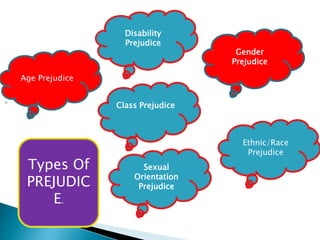
Types Of
PREJUDIC
E.
Gender
Prejudice
Ethnic/Race
Prejudice
Class Prejudice
Age Prejudice
Sexual
Orientation
Prejudice
Disability
Prejudice
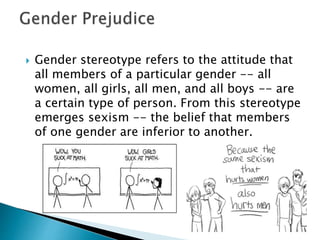
 Gender stereotype refers to the attitude that
all members of a particular gender -- all
women, all girls, all men, and all boys -- are
a certain type of person. From this stereotype
emerges sexism -- the belief that members
of one gender are inferior to another.
 Ethnic prejudice is the holding of negative
opinions, beliefs, or attitudes about people
for the simple reason that they belong to a
specific ethnic group.
 Racial prejudice can be defined by either
making an adverse judgment or opinion
based on race or having an irrational hatred
or suspicion based on racial or religious
group's stereotypes. Racial prejudice in
society has the potential to be a damaging
factor in even the most normal settings
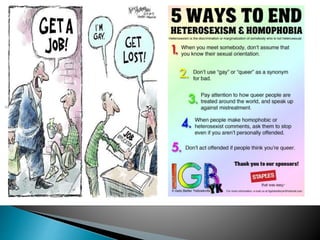
 Prejudging someone because of their sexual
orientation is called homophobia, and it's often
based on the stereotype that all gay men or
lesbians are a certain way and thus inferior. Also
commonly lumped in this category are people's
attitudes towards transgender or transsexual
individuals, even though these are genders and not
sexual orientations. Individuals who exist
somewhere along the gender continuum but who
defy being classified as either male or female are
often the victims of prejudice.
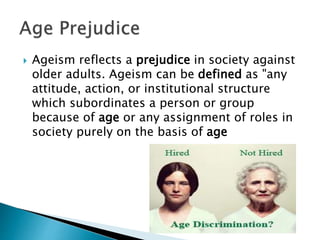
 Ageism reflects a prejudice in society against
older adults. Ageism can be defined as "any
attitude, action, or institutional structure
which subordinates a person or group
because of age or any assignment of roles in
society purely on the basis of age
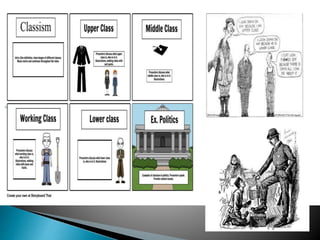
 Classism is the belief or attitude that those of a
certain economic class are inferior to another
class. Classism is defined by dictionary.com as "a
biased or discriminatory attitude on distinctions
made between social or economic classes." The
idea of separating people based on class is
controversial in itself. Some argue that economic
inequality is an unavoidable aspect of society, so
there will always be a ruling class. Some also
argue that, even within the most egalitarian
societies in history, some form of ranking based
on social status takes place. Therefore, one may
believe the existence of social classes is a natural
feature of society.
 Ableism refers to the belief that those with
physical or mental disabilities or handicaps
are inferior to able-bodied people.
Discrimination against the disabled is born of
this belief and involves limiting the rights of
disabled individuals to basic things that able-
bodied people take for granted, such as
adequate housing, health care, employment
and education.
 Mindfulness of negative attitudes and
assumptions is a vital step to prevent
prejudice. It is important to be careful of
prejudiced language and avoid stereotypical
statements about other groups of people.
Preventing prejudice also means speaking out
against intolerant statements and jokes made
by others. Remaining silent when this kind of
speech emerges sends a message of consent.
Acting against prejudice means more than
just refusing to laugh. It means actively
working against these hostile statements.
 Surround yourself with a variety of people. Diversity
may also be a factor that contributes to an ability to
cope well with prejudice. If you are not exposed to
different races, cultures, sexual orientations, and
religions, you cannot fully accept the diversity that
exists in the world. When we really get to know
someone is when we stop judging and start listening
and learning. One way to experience diversity it to
travel to another country, or even town. Every small
city has its own culture including popular foods,
traditions, and activities. For example, people in the
city may have different experiences than people in
the country – simply because of the environment.
 A stereotype is a belief about a certain group of
people. Prejudice is a feeling about a person
based on their membership in a group.
Both stereotypes and prejudice can be either
positive or negative. Discrimination is an action
that denies the rights of a person due to their
membership in a group
 A prejudiced person may not act on their
attitude.
 Someone can be prejudiced towards a certain
group but not discriminate against them.
 Prejudice includes all three components of an
attitude (affective, behavioral and cognitive),
whereas discrimination just involves behavior.

What is prejudice

  • 1.
    Do you knowthe definition of prejudice?
  • 2.
     A widelyheld but fixed and oversimplified image or idea of a particular type of person or thing.  The use of stereotypes is a major way in which we simplify our social world; since they reduce the amount of processing (i.e. thinking) we have to do when we meet a new person.  By stereotyping we infer that a person has a whole range of characteristics and abilities that we assume all members of that group have. Stereotypes lead to social categorization, which is one of the reasons for prejudice attitudes (i.e. “them” and “us” mentality) which leads to in-groups and out-groups.
  • 3.
     Prejudice isprejudgment or forming an opinion before becoming aware of the relevant facts of a case. The word is often used to refer to preconceived, usually unfavorable, judgments toward people or a person because of their gender, beliefs, values, social, class, age, disability, religion, sexuality, race/ethnicity, language, nationality, beauty, occupation, education, criminality or other personal characteristics. In this case, it refers to a positive or negative evaluation of another person based on their perceived group membership, but the usually is negative.
  • 4.
    Types Of PREJUDIC E. Gender Prejudice Ethnic/Race Prejudice Class Prejudice AgePrejudice Sexual Orientation Prejudice Disability Prejudice
  • 5.
     Gender stereotyperefers to the attitude that all members of a particular gender -- all women, all girls, all men, and all boys -- are a certain type of person. From this stereotype emerges sexism -- the belief that members of one gender are inferior to another.
  • 6.
     Ethnic prejudiceis the holding of negative opinions, beliefs, or attitudes about people for the simple reason that they belong to a specific ethnic group.  Racial prejudice can be defined by either making an adverse judgment or opinion based on race or having an irrational hatred or suspicion based on racial or religious group's stereotypes. Racial prejudice in society has the potential to be a damaging factor in even the most normal settings
  • 8.
     Prejudging someonebecause of their sexual orientation is called homophobia, and it's often based on the stereotype that all gay men or lesbians are a certain way and thus inferior. Also commonly lumped in this category are people's attitudes towards transgender or transsexual individuals, even though these are genders and not sexual orientations. Individuals who exist somewhere along the gender continuum but who defy being classified as either male or female are often the victims of prejudice.
  • 10.
     Ageism reflectsa prejudice in society against older adults. Ageism can be defined as "any attitude, action, or institutional structure which subordinates a person or group because of age or any assignment of roles in society purely on the basis of age
  • 11.
     Classism isthe belief or attitude that those of a certain economic class are inferior to another class. Classism is defined by dictionary.com as "a biased or discriminatory attitude on distinctions made between social or economic classes." The idea of separating people based on class is controversial in itself. Some argue that economic inequality is an unavoidable aspect of society, so there will always be a ruling class. Some also argue that, even within the most egalitarian societies in history, some form of ranking based on social status takes place. Therefore, one may believe the existence of social classes is a natural feature of society.
  • 13.
     Ableism refersto the belief that those with physical or mental disabilities or handicaps are inferior to able-bodied people. Discrimination against the disabled is born of this belief and involves limiting the rights of disabled individuals to basic things that able- bodied people take for granted, such as adequate housing, health care, employment and education.
  • 15.
     Mindfulness ofnegative attitudes and assumptions is a vital step to prevent prejudice. It is important to be careful of prejudiced language and avoid stereotypical statements about other groups of people. Preventing prejudice also means speaking out against intolerant statements and jokes made by others. Remaining silent when this kind of speech emerges sends a message of consent. Acting against prejudice means more than just refusing to laugh. It means actively working against these hostile statements.
  • 18.
     Surround yourselfwith a variety of people. Diversity may also be a factor that contributes to an ability to cope well with prejudice. If you are not exposed to different races, cultures, sexual orientations, and religions, you cannot fully accept the diversity that exists in the world. When we really get to know someone is when we stop judging and start listening and learning. One way to experience diversity it to travel to another country, or even town. Every small city has its own culture including popular foods, traditions, and activities. For example, people in the city may have different experiences than people in the country – simply because of the environment.
  • 21.
     A stereotypeis a belief about a certain group of people. Prejudice is a feeling about a person based on their membership in a group. Both stereotypes and prejudice can be either positive or negative. Discrimination is an action that denies the rights of a person due to their membership in a group  A prejudiced person may not act on their attitude.  Someone can be prejudiced towards a certain group but not discriminate against them.  Prejudice includes all three components of an attitude (affective, behavioral and cognitive), whereas discrimination just involves behavior.