Presented by :
Arvind Singh Heer
MSc-II
(Sem-III)
Analytical Chemistry
Paper-III
MITHIBAI COLLEGE
POTABLE WATER
CONTENT
 Introduction
 Water Quality
 Requirement of potable water
 Direct and Indirect pollutants
 Water treatment
 Potable water purification
INTRODUCTION
 What is Potable Water?
 If something is potable that means it's safe to
drink. In developed countries, tap water is
usually potable.
WATER QUALITY
 Parameters for drinking water quality typically fall
under three categories:
 physical
 chemical
 microbiological
 Physical and chemical parameters include heavy
metals, trace organic compounds, total
suspended solids (TSS), and turbidity.
 Microbiological parameters include Coliform
bacteria, E. coli, and specific pathogenic species
of bacteria (such as cholera-causing Vibrio
cholerae),viruses, and protozoan parasites.
 Chemical parameters tend to pose more of a chronic
health risk through buildup of heavy metals although
some components like nitrates/nitrites and arsenic can
have a more immediate impact. Physical parameters
affect the aesthetics and taste of the drinking water and
may complicate the removal of microbial pathogens.
 Originally, fecal contamination was determined with the
presence of coliform bacteria, a convenient marker for a
class of harmful fecal pathogens. The presence of fecal
coliforms (like E. Coli) serves as an indication of
contamination by sewage. Additional contaminants
include protozoan oocysts such
as Cryptosporidium sp., Giardia lamblia, Legionella,
and viruses (enteric).[44] Microbial pathogenic
REQUIREMENT OF POTABLE
WATER
 The amount of drinking water required is variable. It
depends on physical activity, age, health, and
environmental conditions. It is estimated that the average
American drinks about one liter of water a day with 95%
drinking less than three liters per day. In those working in a
hot climate up to 16 liters a day may be required.
 Some health authorities have suggested that at least eight
glasses of eight fl oz each (240 mL) are required by an
adult per day (64 fl oz, or 1.89 litres).The British Dietetic
Association recommends 1.8 litres. However, various
reviews of the evidence performed in 2002 and 2008 could
not find any solid scientific evidence recommending eight
glasses of water per day. In the United States,
the reference daily intake (RDI) for total water intake is 3.7
litres per day (L/day) for human males older than 18, and
2.7 L/day for human females older than 18 which includes
drinking water, water in beverages, and water contained in
food.An individual's thirst provides a better guide for how
much water they require rather than a specific, fixed
 The drinking water contribution to mineral nutrients intake is also
unclear. Inorganic minerals generally enter surface water and
ground water via storm water runoff or through the Earth's crust.
Treatment processes also lead to the presence of some
minerals. Examples
include calcium, zinc,manganese, phosphate, fluoride and sodiu
m compounds. Water generated from
the biochemical metabolism of nutrients provides a significant
proportion of the daily water requirements for
some arthropods and desert animals, but provides only a small
fraction of a human's necessary intake. There are a variety of
trace elements present in virtually all potable water, some of
which play a role in metabolism. For example,
sodium, potassiumand chloride are common chemicals found in
small quantities in most waters, and these elements play a role
in body metabolism. Other elements such as fluoride, while
beneficial in low concentrations, can cause dental problems and
other issues when present at high levels.
 Fluid balance is key. Profuse sweating can increase the need
for electrolyte (salt) replacement. Water intoxication (which
results in hyponatremia), the process of consuming too much
DIRECT AND INDIRECT
POLLUTION
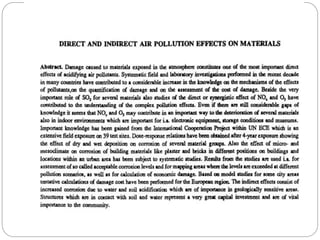
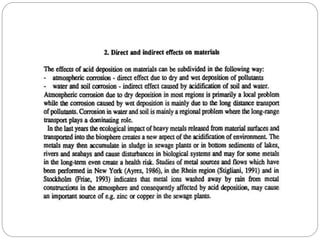
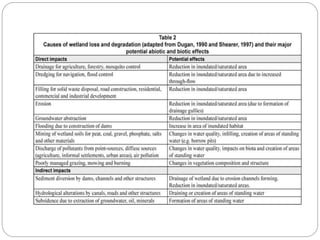
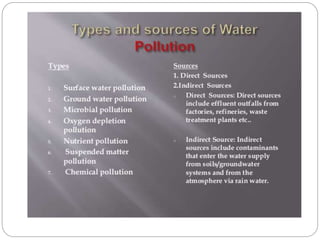
 Direct pollution: This is when the polluting
material is discharged directly to the body of
water.
 Indirect pollution: Indirect water pollution is
when a polluting material finds its way indirectly
into the body of water. An example of this is
nitrogen pollution of ditches by the run-off from
fertilised agricultural land.
WATER TREATMENT
 Water treatment is, collectively, the industrial-scale
processes that makes water more acceptable for an
end-use, which may be drinking, industry, or
medicine. Water treatment is unlike small-scale water
sterilization that campers and other people in
wilderness areas practice. Water treatment should
remove existing water contaminants or so reduce
their concentration that their water becomes fit for its
desired end-use, which may be safely returning used
water to the environment.
 The processes involved in treating water for drinking
purposes to provide a safe source of water
supply may be solids separation using physical
processes such as settling and filtration, and chemical
POTABLE WATER
PURIFICATION
 Water purification is the removal of contaminants from untreated
water to produce drinking water that is pure enough for the most
critical of its intended uses, usually for human consumption.
Substances that are removed during the process of drinking
water treatment include suspended
solids, bacteria, algae, viruses, fungi, minerals such
as iron, manganese and sulfur, and other
chemical pollutants such as fertilisers.
 Measures taken to ensure water quality not only relate to the
treatment of the water, but to its conveyance and distribution
after treatment as well. It is therefore common practice to have
residual disinfectants in the treated water in order to kill any
bacteriological contamination during distribution.
 World Health Organisation (WHO) guidelines are generally
followed throughout the world for drinking water quality
requirements. In addition to the WHO guidelines, each country or
territory or water supply body can have their own guidelines in
order for consumers to have access to safe drinking water.
REFERENCE
Introduction to Potable water Treatment
process
Simon parsons and Bruce Jefferson
Water Pollution
Arvind Kumar
-
THANK YOU

POTABLE WATER

  • 1.
    Presented by : ArvindSingh Heer MSc-II (Sem-III) Analytical Chemistry Paper-III MITHIBAI COLLEGE POTABLE WATER
  • 2.
    CONTENT  Introduction  WaterQuality  Requirement of potable water  Direct and Indirect pollutants  Water treatment  Potable water purification
  • 3.
    INTRODUCTION  What isPotable Water?  If something is potable that means it's safe to drink. In developed countries, tap water is usually potable.
  • 4.
    WATER QUALITY  Parametersfor drinking water quality typically fall under three categories:  physical  chemical  microbiological  Physical and chemical parameters include heavy metals, trace organic compounds, total suspended solids (TSS), and turbidity.  Microbiological parameters include Coliform bacteria, E. coli, and specific pathogenic species of bacteria (such as cholera-causing Vibrio cholerae),viruses, and protozoan parasites.
  • 5.
     Chemical parameterstend to pose more of a chronic health risk through buildup of heavy metals although some components like nitrates/nitrites and arsenic can have a more immediate impact. Physical parameters affect the aesthetics and taste of the drinking water and may complicate the removal of microbial pathogens.  Originally, fecal contamination was determined with the presence of coliform bacteria, a convenient marker for a class of harmful fecal pathogens. The presence of fecal coliforms (like E. Coli) serves as an indication of contamination by sewage. Additional contaminants include protozoan oocysts such as Cryptosporidium sp., Giardia lamblia, Legionella, and viruses (enteric).[44] Microbial pathogenic
  • 6.
    REQUIREMENT OF POTABLE WATER The amount of drinking water required is variable. It depends on physical activity, age, health, and environmental conditions. It is estimated that the average American drinks about one liter of water a day with 95% drinking less than three liters per day. In those working in a hot climate up to 16 liters a day may be required.  Some health authorities have suggested that at least eight glasses of eight fl oz each (240 mL) are required by an adult per day (64 fl oz, or 1.89 litres).The British Dietetic Association recommends 1.8 litres. However, various reviews of the evidence performed in 2002 and 2008 could not find any solid scientific evidence recommending eight glasses of water per day. In the United States, the reference daily intake (RDI) for total water intake is 3.7 litres per day (L/day) for human males older than 18, and 2.7 L/day for human females older than 18 which includes drinking water, water in beverages, and water contained in food.An individual's thirst provides a better guide for how much water they require rather than a specific, fixed
  • 7.
     The drinkingwater contribution to mineral nutrients intake is also unclear. Inorganic minerals generally enter surface water and ground water via storm water runoff or through the Earth's crust. Treatment processes also lead to the presence of some minerals. Examples include calcium, zinc,manganese, phosphate, fluoride and sodiu m compounds. Water generated from the biochemical metabolism of nutrients provides a significant proportion of the daily water requirements for some arthropods and desert animals, but provides only a small fraction of a human's necessary intake. There are a variety of trace elements present in virtually all potable water, some of which play a role in metabolism. For example, sodium, potassiumand chloride are common chemicals found in small quantities in most waters, and these elements play a role in body metabolism. Other elements such as fluoride, while beneficial in low concentrations, can cause dental problems and other issues when present at high levels.  Fluid balance is key. Profuse sweating can increase the need for electrolyte (salt) replacement. Water intoxication (which results in hyponatremia), the process of consuming too much
  • 8.
    DIRECT AND INDIRECT POLLUTION Direct pollution: This is when the polluting material is discharged directly to the body of water.  Indirect pollution: Indirect water pollution is when a polluting material finds its way indirectly into the body of water. An example of this is nitrogen pollution of ditches by the run-off from fertilised agricultural land.
  • 13.
    WATER TREATMENT  Watertreatment is, collectively, the industrial-scale processes that makes water more acceptable for an end-use, which may be drinking, industry, or medicine. Water treatment is unlike small-scale water sterilization that campers and other people in wilderness areas practice. Water treatment should remove existing water contaminants or so reduce their concentration that their water becomes fit for its desired end-use, which may be safely returning used water to the environment.  The processes involved in treating water for drinking purposes to provide a safe source of water supply may be solids separation using physical processes such as settling and filtration, and chemical
  • 14.
    POTABLE WATER PURIFICATION  Waterpurification is the removal of contaminants from untreated water to produce drinking water that is pure enough for the most critical of its intended uses, usually for human consumption. Substances that are removed during the process of drinking water treatment include suspended solids, bacteria, algae, viruses, fungi, minerals such as iron, manganese and sulfur, and other chemical pollutants such as fertilisers.  Measures taken to ensure water quality not only relate to the treatment of the water, but to its conveyance and distribution after treatment as well. It is therefore common practice to have residual disinfectants in the treated water in order to kill any bacteriological contamination during distribution.  World Health Organisation (WHO) guidelines are generally followed throughout the world for drinking water quality requirements. In addition to the WHO guidelines, each country or territory or water supply body can have their own guidelines in order for consumers to have access to safe drinking water.
  • 15.
    REFERENCE Introduction to Potablewater Treatment process Simon parsons and Bruce Jefferson Water Pollution Arvind Kumar - THANK YOU