BY
LECTURER AKASH BAJAJ
VISHWESHWARAYYA POLYTECNIC,
ALMALA
(DIST. LATUR)
INCINERATION AND
PYROLYSIS
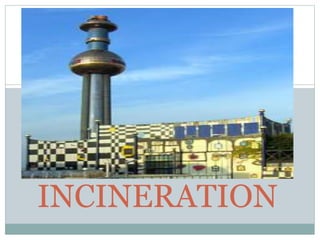
INCINERATION
Introduction of incineration process
 Incineration is a waste treatment process that involves
the combustion of organic substances contained in waste
materials.
 Incineration of waste materials converts the waste
into ash, flue gas and heat.
 The ash is mostly formed by the inorganic constituents of the
waste, and may take the form of solid lumps
or particulates carried by the flue gas. The flue gases must be
cleaned of gaseous and particulate pollutants before they are
dispersed into the atmosphere.
 heat generated by incineration can be used to
generate electric power.
Types of incinerators
 Multiple chamber incinerators
 Municipal incinerators
Types of incinerators
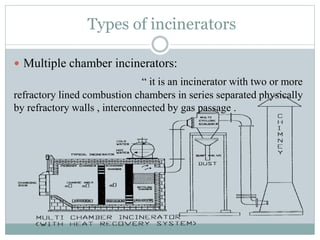
 Multiple chamber incinerators:
“ it is an incinerator with two or more
refractory lined combustion chambers in series separated physically
by refractory walls , interconnected by gas passage .
WORKING OF MUNICIPAL INCINERATOR
It involves the combustion
of solid waste at 1000ᵒc
Waste converted into ash,
gas, and heat.
Use and by product of incineration (S15)
 After the incineration process the left out product
can be used as aggregate for low grade concrete
 Also used as road metal.
 Ash is used for making bricks or block
manufacturing.
 Steam used for electricity generation by running
turbine.
 Also used as filler material.
Products of incineration process with their use
HEAT
 Heat is used for generating Steam which is used for
electricity generation by running turbine.
Furans and Dioxins
 It is the most biggest concern for environmentalists.
 These are injurious to health.
CARBON DIOXIDE
 CO2 plays a vital role in global warming , as this is
green house gases.
 Generally it is seen that every thing which has carbon
in its composition is when processed by incineration
evoles out as co2.
PYROLISIS OF WASTE
 Pyrolysis can be defined as the thermal decomposition of organic
material through the application of heat without the addition of extra
air or oxygen.
 In this process thermal decomposition of organic matter at high
temperature take place.
 Pyrolysis is an endothermic process which requires heat for an
external source.
 In this method solid waste material is heated in specially designed
chamber which is called as pyrolysis reactor. In pyrolysis reactor,
heating is carried out in closed environment which is almost oxygen
free at an average temperature above 650o c which may rise to
1000o c.
 The end products are Hydrogen, methane, carbon mono-oxide, tar or
oil, char, inert material.
Methods of Pyrolysis:
Dry pyrolysis
Oxidizing pyrolysis
Dry pyrolysis
 Process of thermal decomposition without access of
oxygen (O₂)
 Products of dry pyrolysis are gas with high heat of
combustion, liquid and solid carbon residue.
 Type of dry pyrolysis depend on the temperature of
the process i.e. Low Temperature Analysis, Medium
Temperature Analysis, High Temperature Analysis.
Oxidizing pyrolysis
 It’s impossible to achieve a completely oxygen-free
atmosphere.
 Thus, a small amount of oxidation occurs. If volatile or semi-
volatile materials are present in the waste, thermal desorption
will also occur.
 Thermal decomposition of industrial waste by its partial
burning or direct contact with end product of fuel combustion
 This method is used for neutralization of most wastes
including “inconvenient” ones for burning are present in the
waste, thermal desorption will also occur.
 Thermal decomposition of industrial waste by its partial
burning or direct contact with end product of fuel combustion
 This method is used for neutralization of most wastes
including “inconvenient” ones for burning
MERITS OF PYROLISIS
 REDUCE GREENHOUSE GAS EMISSION
 WASTE GOING TO LANDFILL
 PRODUCE MARKETABLE PRODUCT LIKE GASES,
BIO OIL , BIO CHEMICAL, CHARCOAL.
 LOW RISK OF WATER POLLUTION
 LOW RISK OF ODOURS
 HIGH ROCOVERY RATE OF RESOURCES
 MINIMUM HEALTH CONSEQUENCE
DEMERITS OF PYROLISIS
 LESS CAPACITY
 LESS EFFICIENCY
 MORE EXPENSIVE
 TECHNOLOGY IS STILL EVOLVING
ADVANTAGES
 i) This is most hygienic method, since it ensures the
complete destructions of pathogens
 ii) There is no odour trouble or dust nuisance
 iii) The heat generated can be used for raising the
steam power
 iv) Clinkers produce can be used for the road
purpose
DISADVANTAGE
 i) Large initial expenditure
 ii) Improper operation results air pollution problems
and incomplete reduction of waste materials
 iii) Disposal of remaining residue is required
 iv) High stacks are needed for the natural draft
chimneys present safety problems

Incineration

  • 1.
    BY LECTURER AKASH BAJAJ VISHWESHWARAYYAPOLYTECNIC, ALMALA (DIST. LATUR) INCINERATION AND PYROLYSIS
  • 2.
  • 3.
    Introduction of incinerationprocess  Incineration is a waste treatment process that involves the combustion of organic substances contained in waste materials.  Incineration of waste materials converts the waste into ash, flue gas and heat.  The ash is mostly formed by the inorganic constituents of the waste, and may take the form of solid lumps or particulates carried by the flue gas. The flue gases must be cleaned of gaseous and particulate pollutants before they are dispersed into the atmosphere.  heat generated by incineration can be used to generate electric power.
  • 4.
    Types of incinerators Multiple chamber incinerators  Municipal incinerators
  • 5.
    Types of incinerators Multiple chamber incinerators: “ it is an incinerator with two or more refractory lined combustion chambers in series separated physically by refractory walls , interconnected by gas passage .
  • 6.
    WORKING OF MUNICIPALINCINERATOR It involves the combustion of solid waste at 1000ᵒc Waste converted into ash, gas, and heat.
  • 7.
    Use and byproduct of incineration (S15)  After the incineration process the left out product can be used as aggregate for low grade concrete  Also used as road metal.  Ash is used for making bricks or block manufacturing.  Steam used for electricity generation by running turbine.  Also used as filler material.
  • 8.
    Products of incinerationprocess with their use
  • 9.
    HEAT  Heat isused for generating Steam which is used for electricity generation by running turbine.
  • 10.
    Furans and Dioxins It is the most biggest concern for environmentalists.  These are injurious to health.
  • 11.
    CARBON DIOXIDE  CO2plays a vital role in global warming , as this is green house gases.  Generally it is seen that every thing which has carbon in its composition is when processed by incineration evoles out as co2.
  • 12.
    PYROLISIS OF WASTE Pyrolysis can be defined as the thermal decomposition of organic material through the application of heat without the addition of extra air or oxygen.  In this process thermal decomposition of organic matter at high temperature take place.  Pyrolysis is an endothermic process which requires heat for an external source.  In this method solid waste material is heated in specially designed chamber which is called as pyrolysis reactor. In pyrolysis reactor, heating is carried out in closed environment which is almost oxygen free at an average temperature above 650o c which may rise to 1000o c.  The end products are Hydrogen, methane, carbon mono-oxide, tar or oil, char, inert material.
  • 13.
    Methods of Pyrolysis: Drypyrolysis Oxidizing pyrolysis
  • 14.
    Dry pyrolysis  Processof thermal decomposition without access of oxygen (O₂)  Products of dry pyrolysis are gas with high heat of combustion, liquid and solid carbon residue.  Type of dry pyrolysis depend on the temperature of the process i.e. Low Temperature Analysis, Medium Temperature Analysis, High Temperature Analysis.
  • 15.
    Oxidizing pyrolysis  It’simpossible to achieve a completely oxygen-free atmosphere.  Thus, a small amount of oxidation occurs. If volatile or semi- volatile materials are present in the waste, thermal desorption will also occur.  Thermal decomposition of industrial waste by its partial burning or direct contact with end product of fuel combustion  This method is used for neutralization of most wastes including “inconvenient” ones for burning are present in the waste, thermal desorption will also occur.  Thermal decomposition of industrial waste by its partial burning or direct contact with end product of fuel combustion  This method is used for neutralization of most wastes including “inconvenient” ones for burning
  • 16.
    MERITS OF PYROLISIS REDUCE GREENHOUSE GAS EMISSION  WASTE GOING TO LANDFILL  PRODUCE MARKETABLE PRODUCT LIKE GASES, BIO OIL , BIO CHEMICAL, CHARCOAL.  LOW RISK OF WATER POLLUTION  LOW RISK OF ODOURS  HIGH ROCOVERY RATE OF RESOURCES  MINIMUM HEALTH CONSEQUENCE
  • 17.
    DEMERITS OF PYROLISIS LESS CAPACITY  LESS EFFICIENCY  MORE EXPENSIVE  TECHNOLOGY IS STILL EVOLVING
  • 18.
    ADVANTAGES  i) Thisis most hygienic method, since it ensures the complete destructions of pathogens  ii) There is no odour trouble or dust nuisance  iii) The heat generated can be used for raising the steam power  iv) Clinkers produce can be used for the road purpose
  • 19.
    DISADVANTAGE  i) Largeinitial expenditure  ii) Improper operation results air pollution problems and incomplete reduction of waste materials  iii) Disposal of remaining residue is required  iv) High stacks are needed for the natural draft chimneys present safety problems