9.4 Synthetic
Polymers
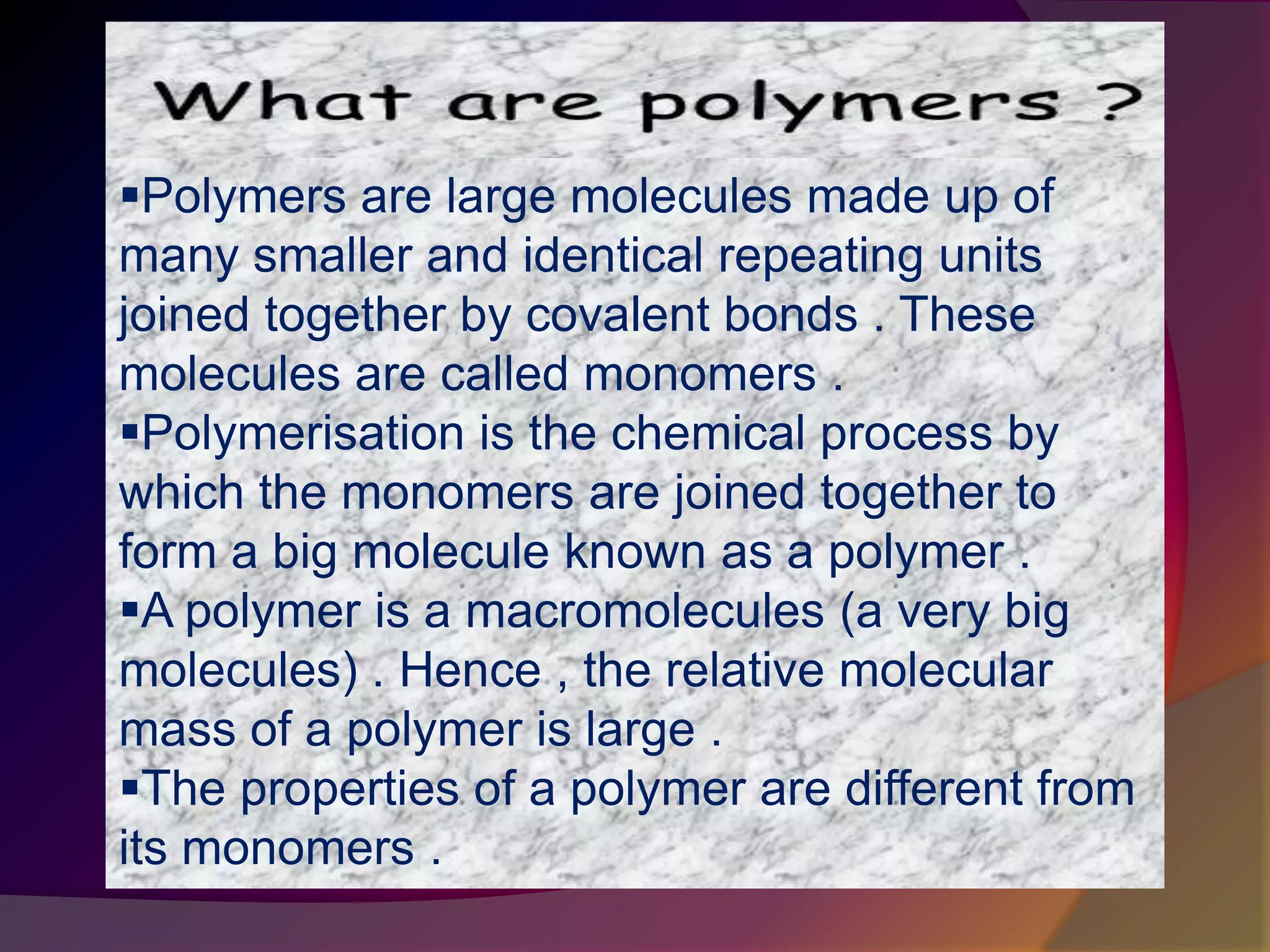
Polymers are large molecules made up of
many smaller and identical repeating units
joined together by covalent bonds . These
molecules are called monomers .
Polymerisation is the chemical process by
which the monomers are joined together to
form a big molecule known as a polymer .
A polymer is a macromolecules (a very big
molecules) . Hence , the relative molecular
mass of a polymer is large .
The properties of a polymer are different from
its monomers .
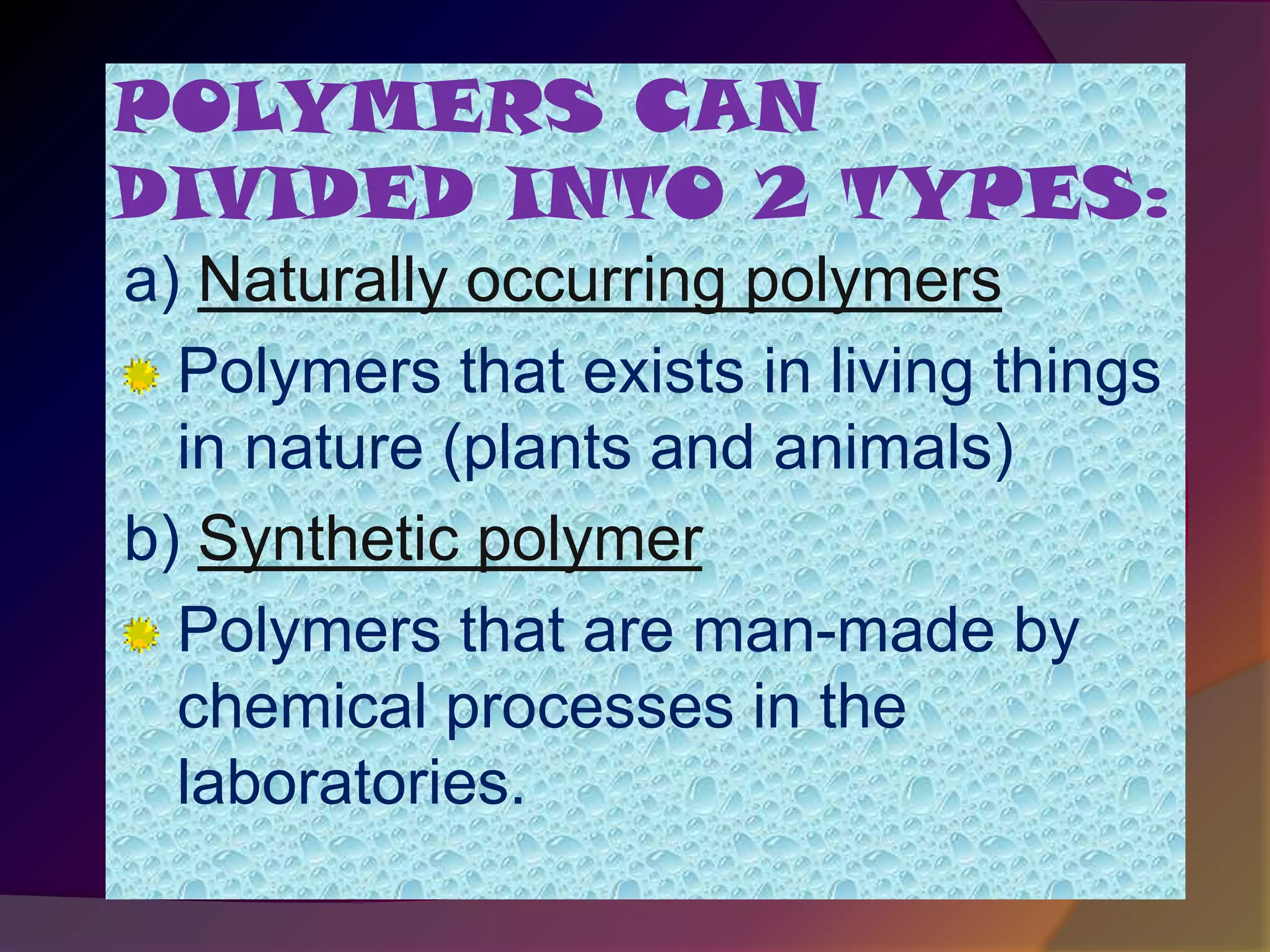
POLYMERS CAN
DIVIDED INTO 2 TYPES:
a) Naturally occurring polymers
Polymers that exists in living things
in nature (plants and animals)
b) Synthetic polymer
Polymers that are man-made by
chemical processes in the
laboratories.
NATURALLY OCCURRING
POLYMERS
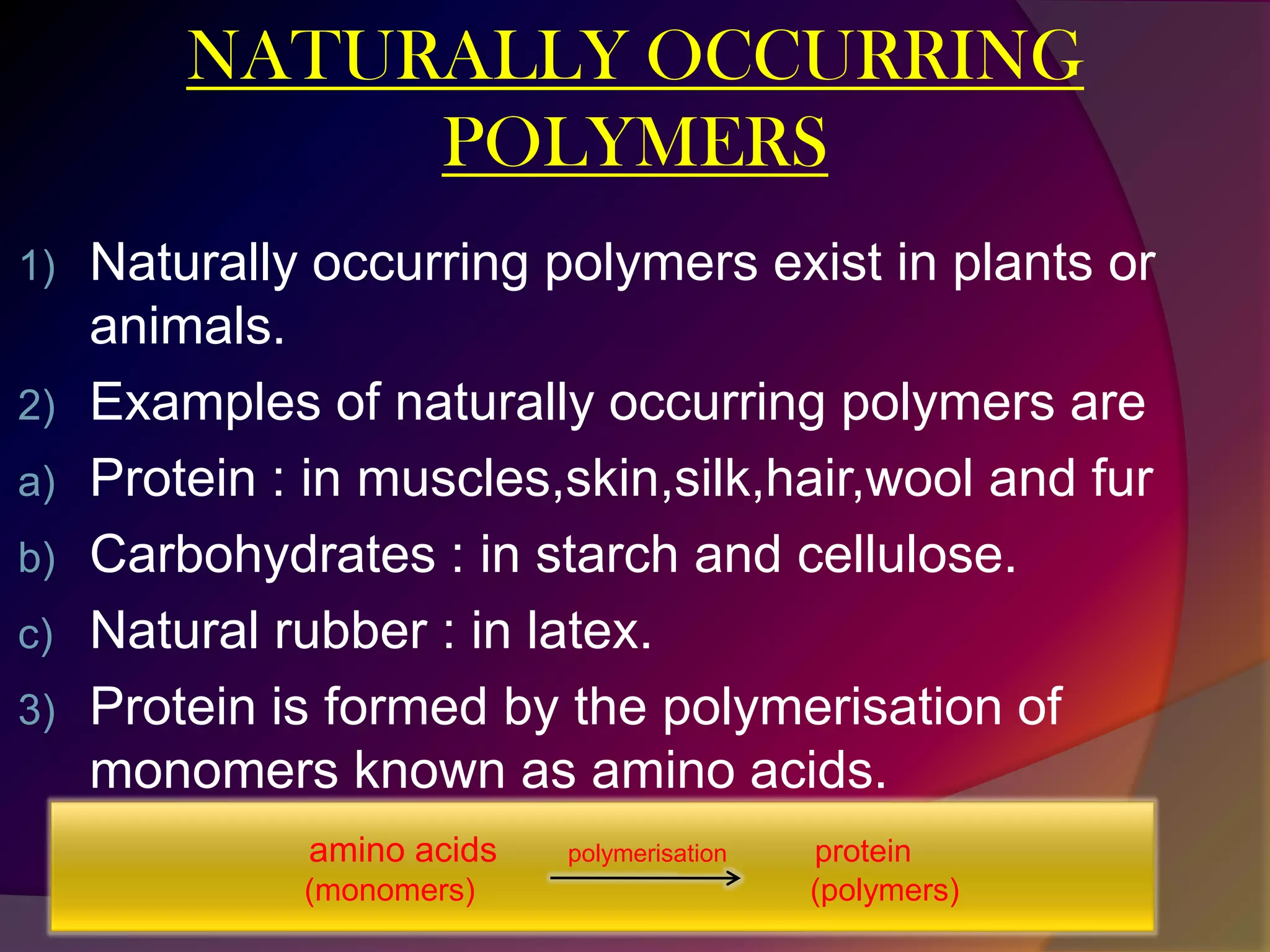
1) Naturally occurring polymers exist in plants or
animals.
2) Examples of naturally occurring polymers are
a) Protein : in muscles,skin,silk,hair,wool and fur
b) Carbohydrates : in starch and cellulose.
c) Natural rubber : in latex.
3) Protein is formed by the polymerisation of
monomers known as amino acids.
amino acids polymerisation protein
(monomers) (polymers)
4) Carbohydrates such as starch and cellulose
consist of monomers known as glucose joined
together chemically.
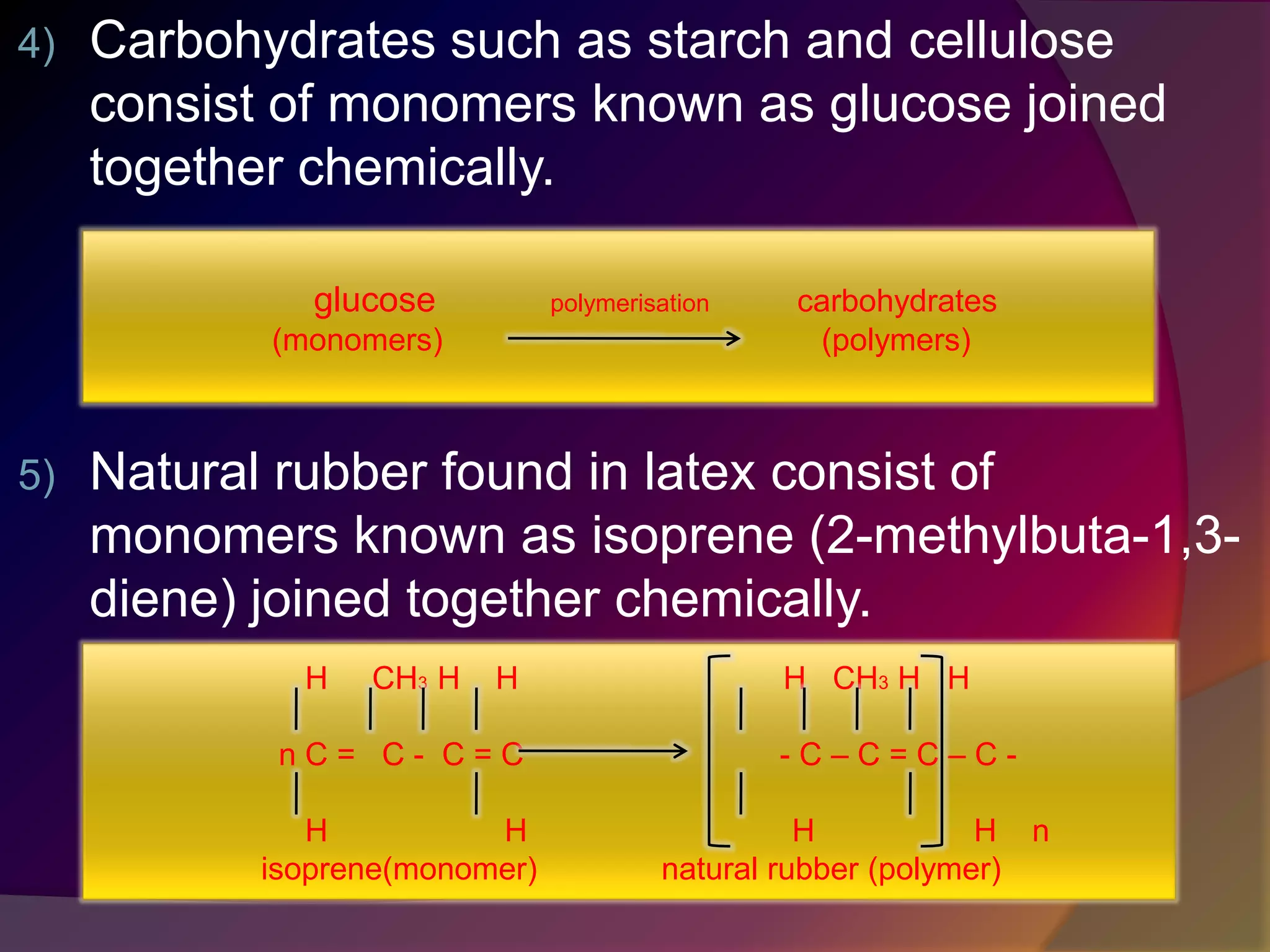
5) Natural rubber found in latex consist of
monomers known as isoprene (2-methylbuta-1,3-
diene) joined together chemically.
glucose polymerisation carbohydrates
(monomers) (polymers)
H CH3 H H H CH3 H H
n C = C - C = C - C – C = C – C -
H H H H n
isoprene(monomer) natural rubber (polymer)
SYNTHETIC POLYMERS
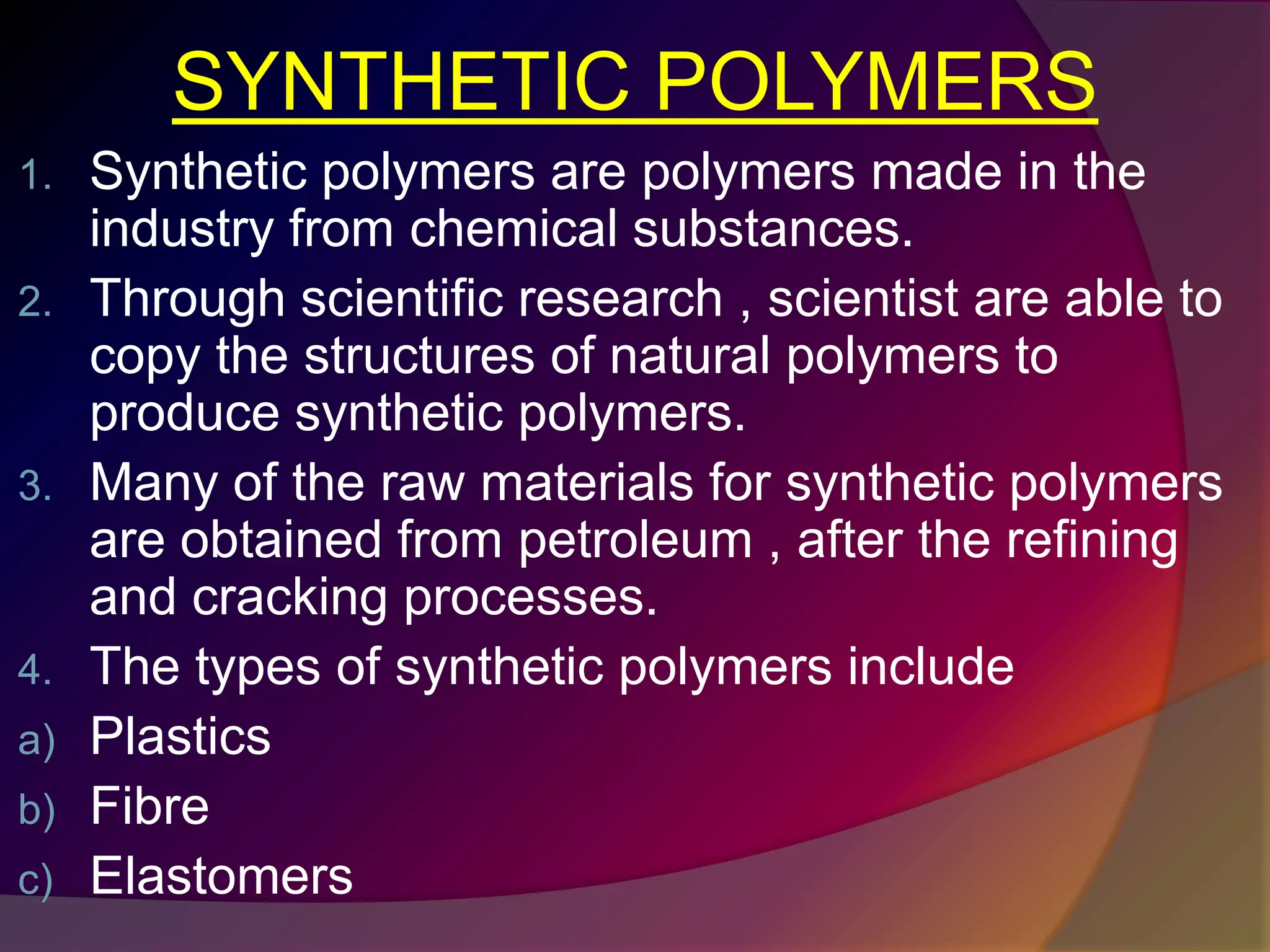
1. Synthetic polymers are polymers made in the
industry from chemical substances.
2. Through scientific research , scientist are able to
copy the structures of natural polymers to
produce synthetic polymers.
3. Many of the raw materials for synthetic polymers
are obtained from petroleum , after the refining
and cracking processes.
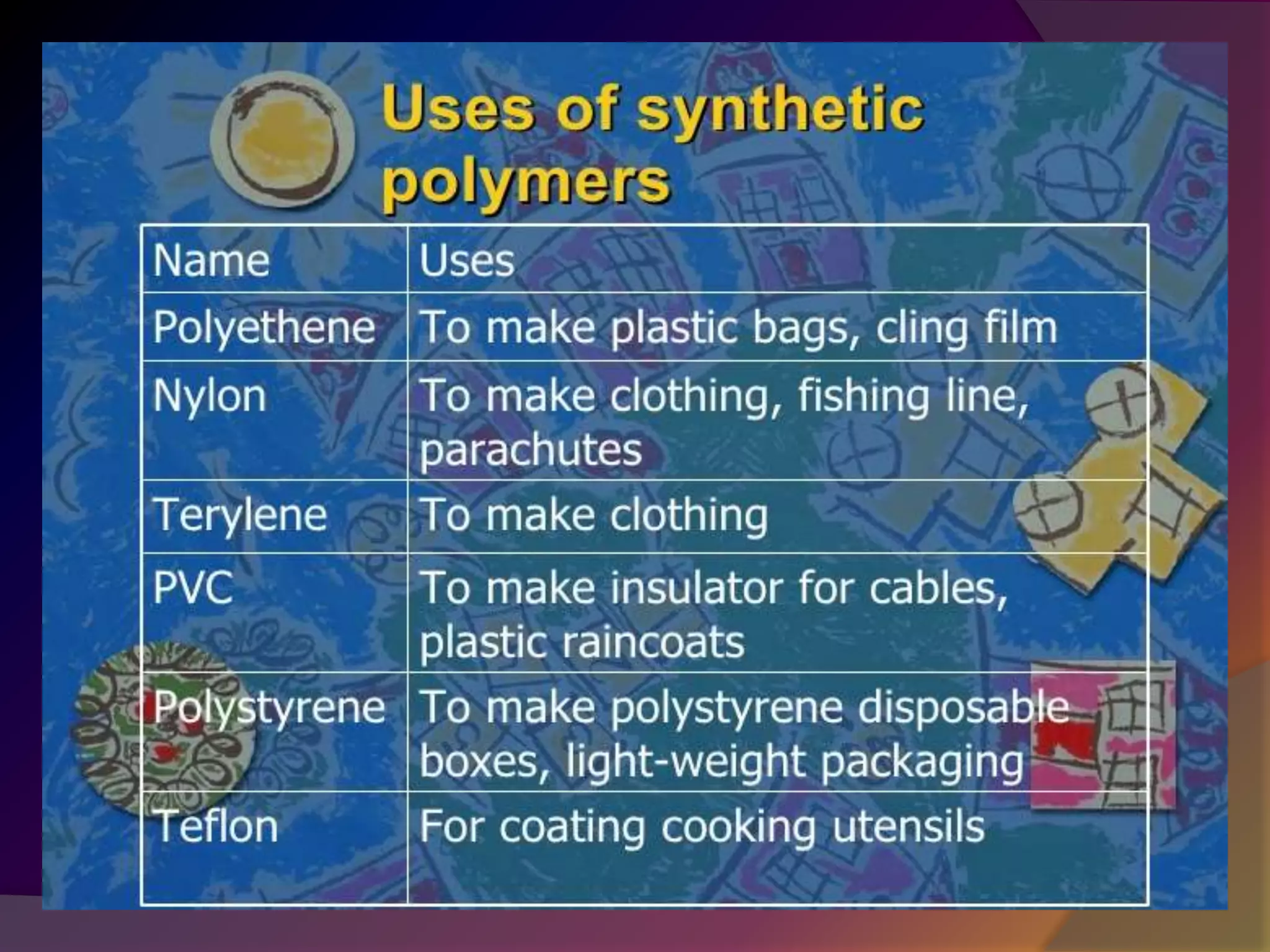
4. The types of synthetic polymers include
a) Plastics
b) Fibre
c) Elastomers
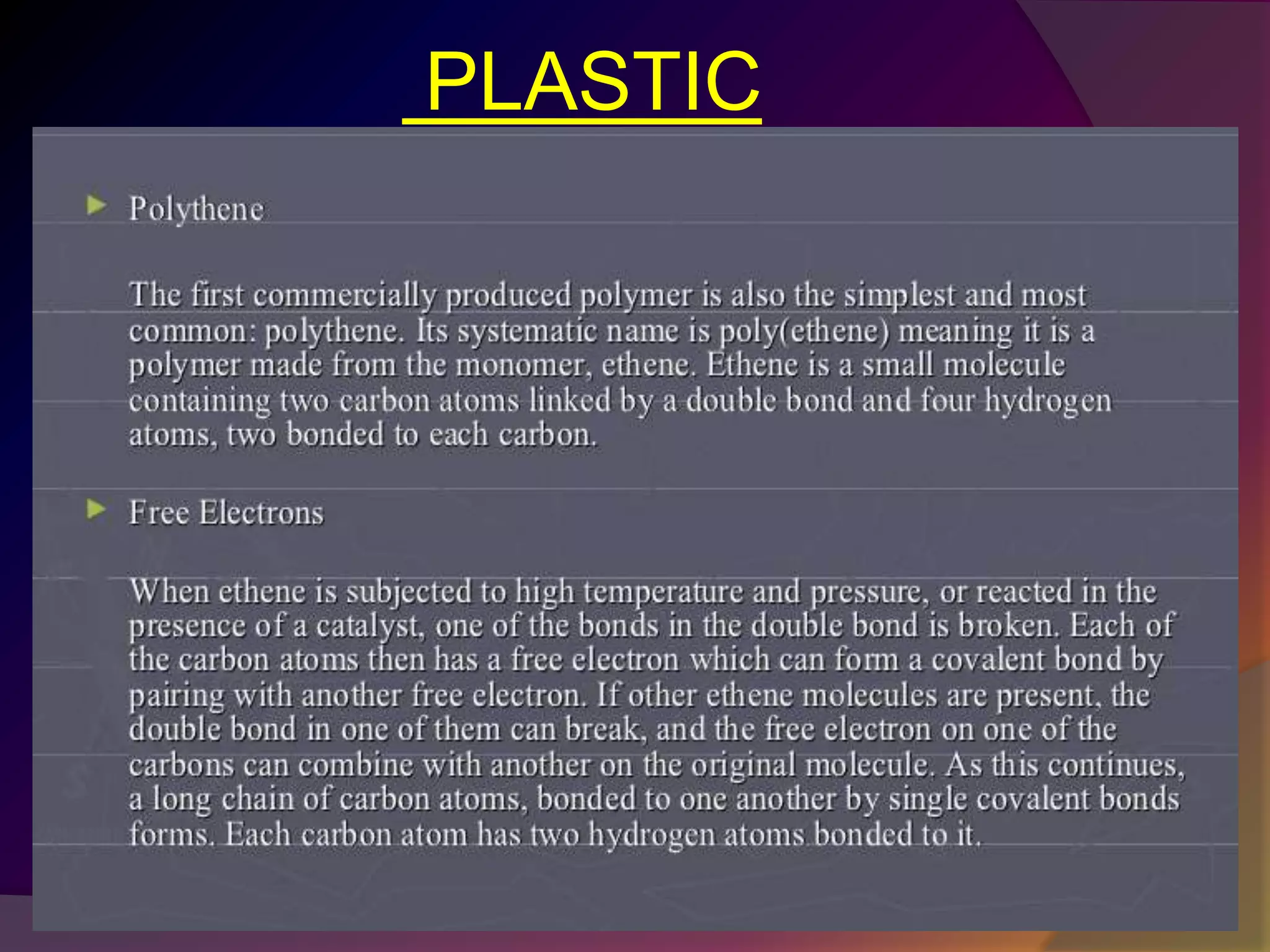
PLASTIC
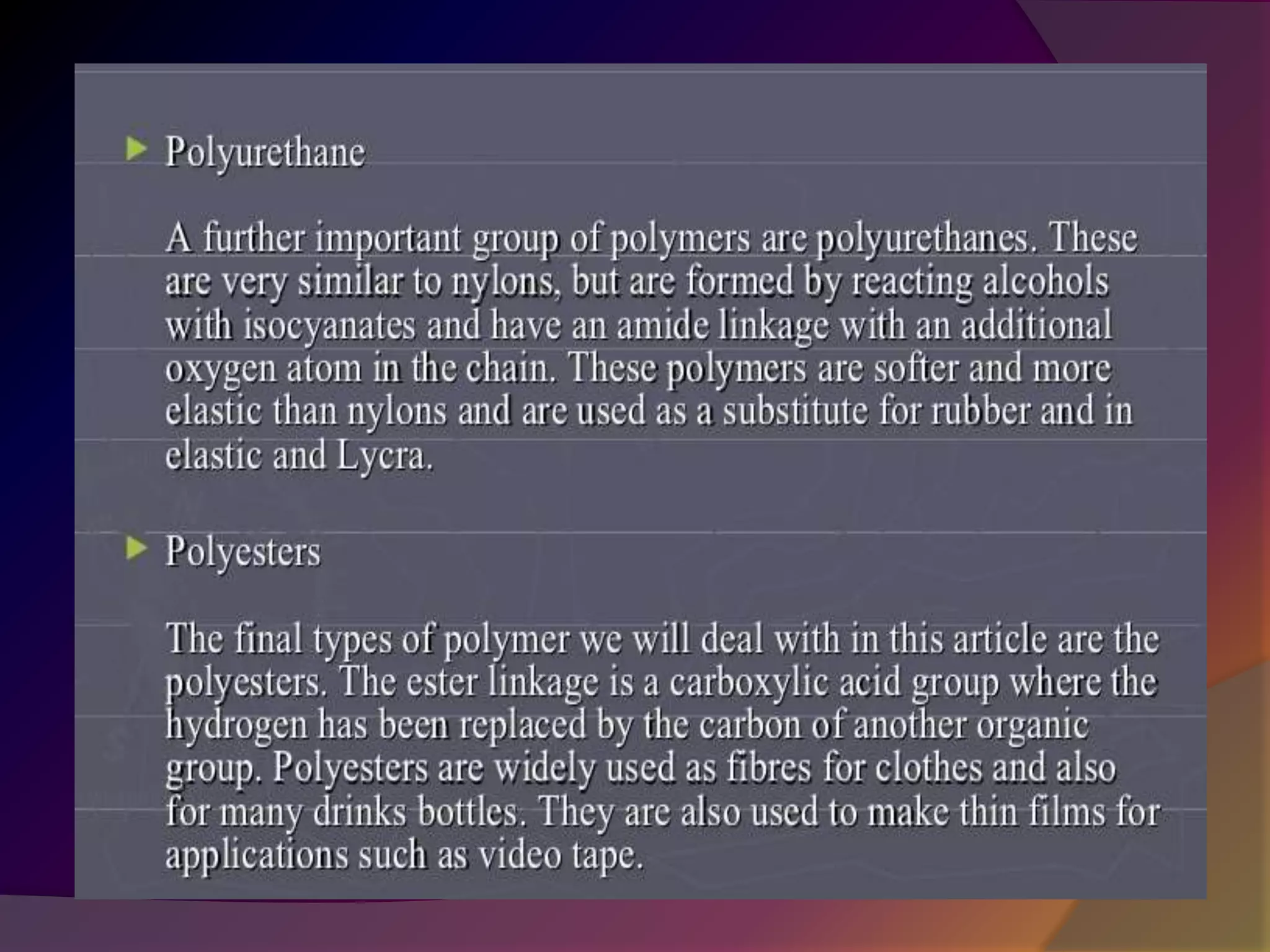
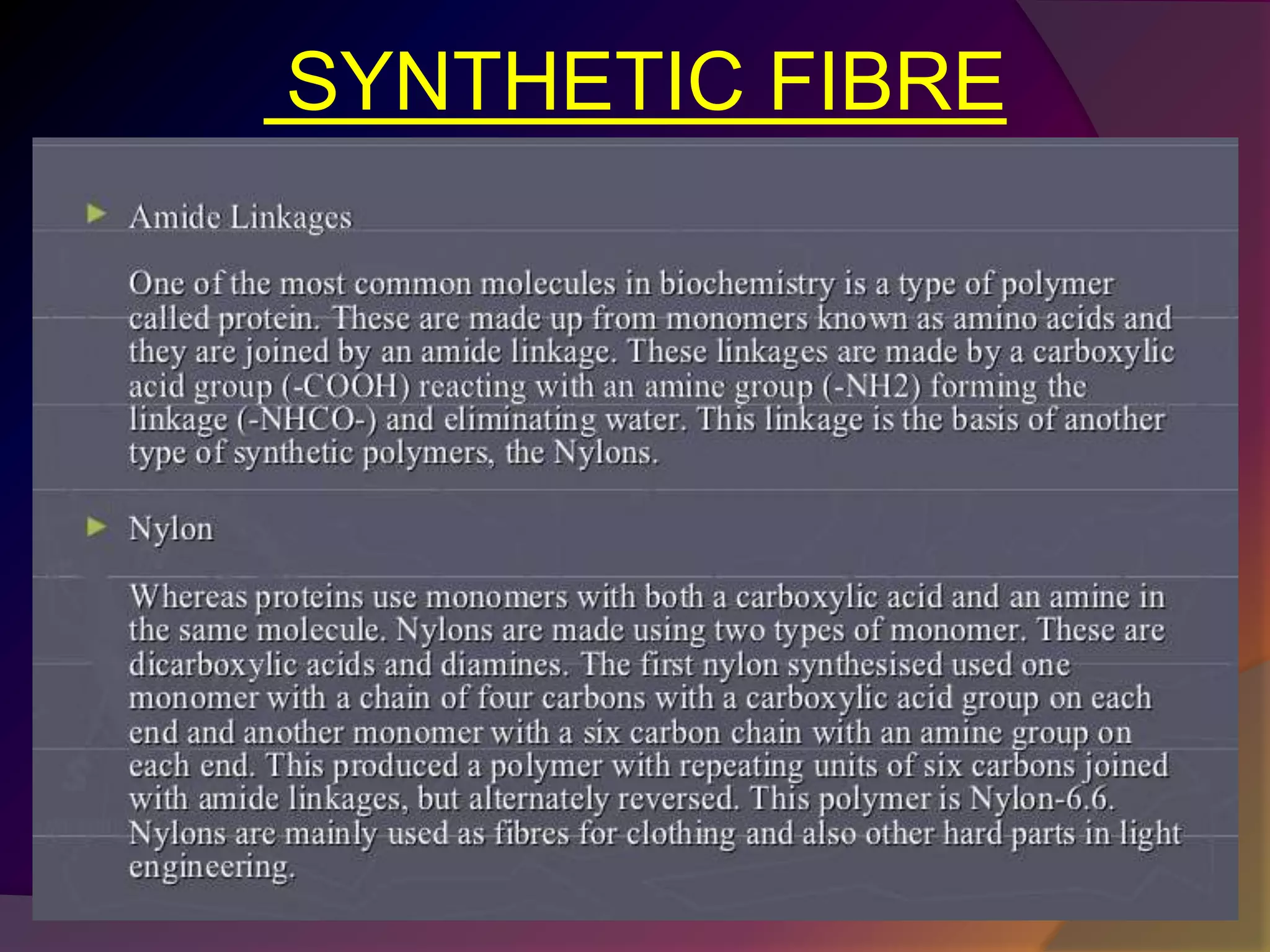
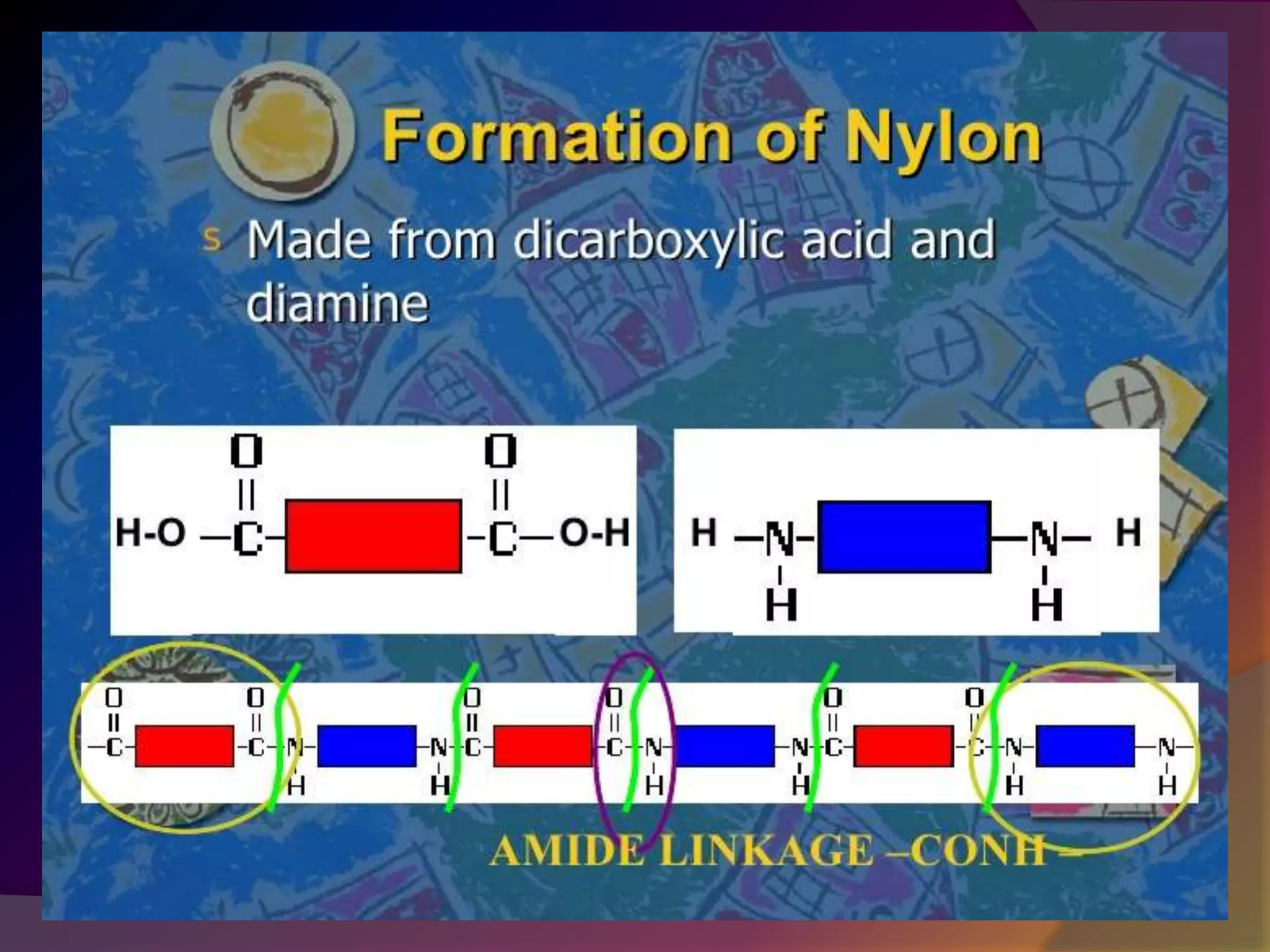
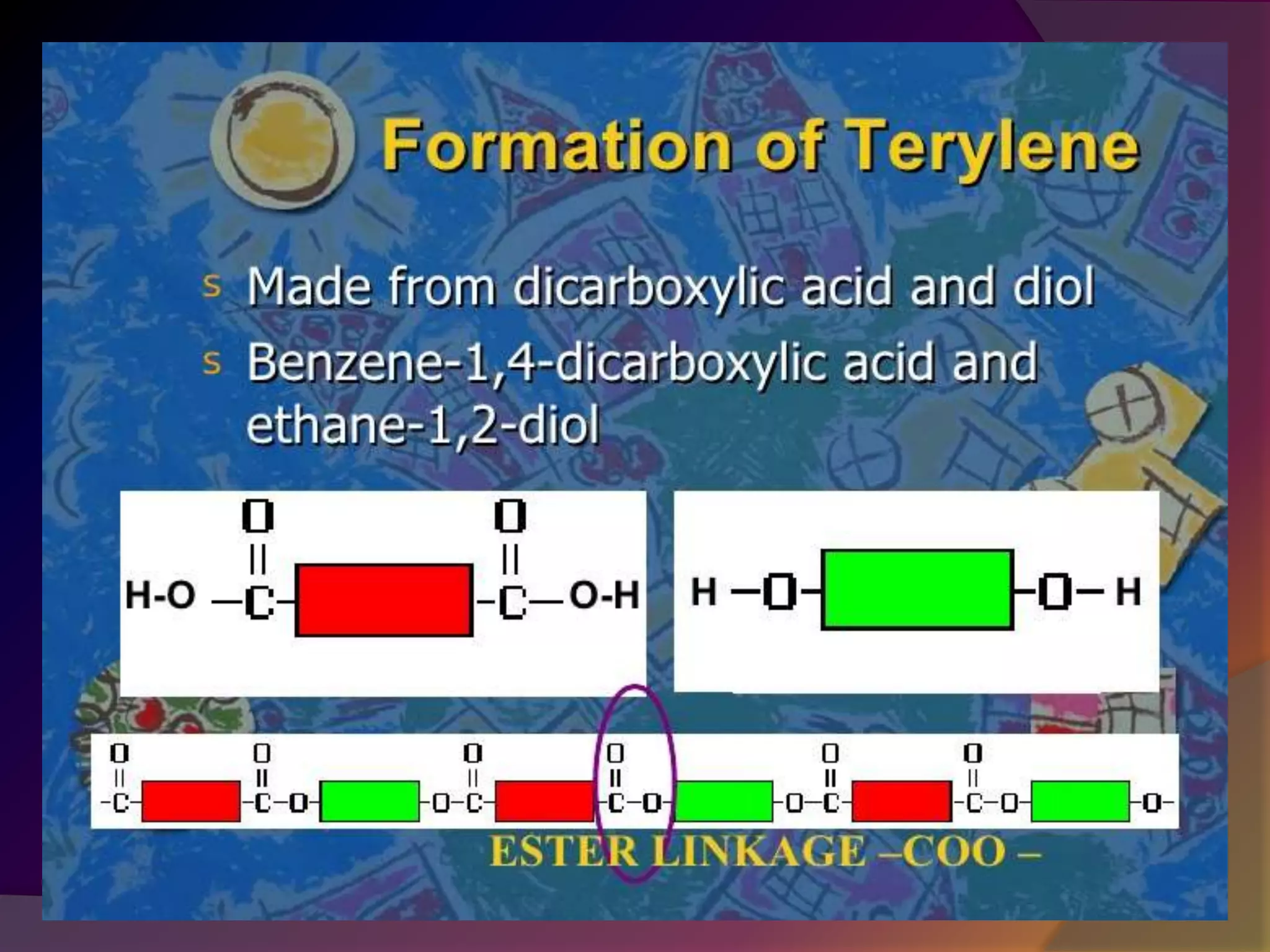
SYNTHETIC FIBRE
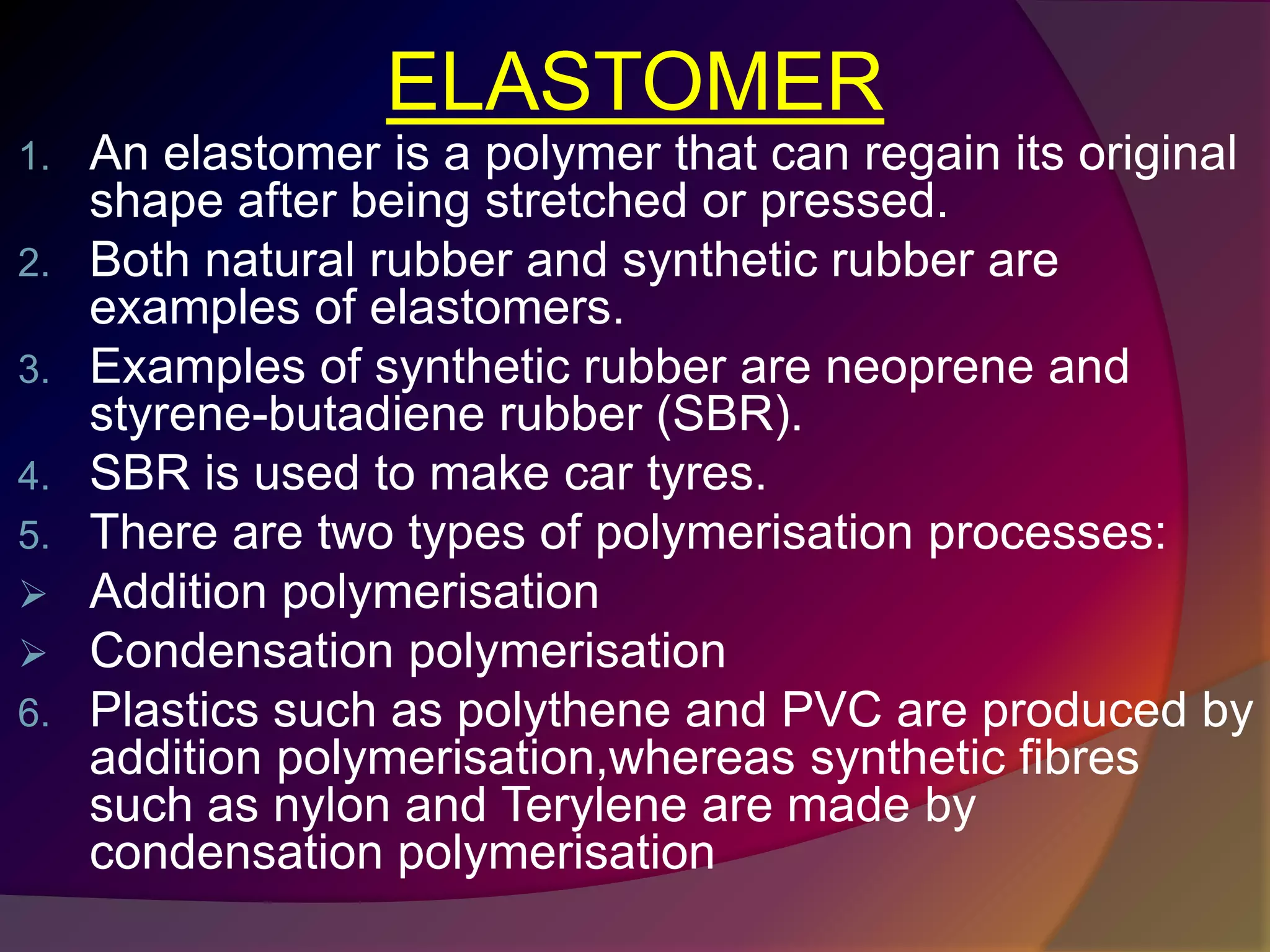
ELASTOMER
1. An elastomer is a polymer that can regain its original
shape after being stretched or pressed.
2. Both natural rubber and synthetic rubber are
examples of elastomers.
3. Examples of synthetic rubber are neoprene and
styrene-butadiene rubber (SBR).
4. SBR is used to make car tyres.
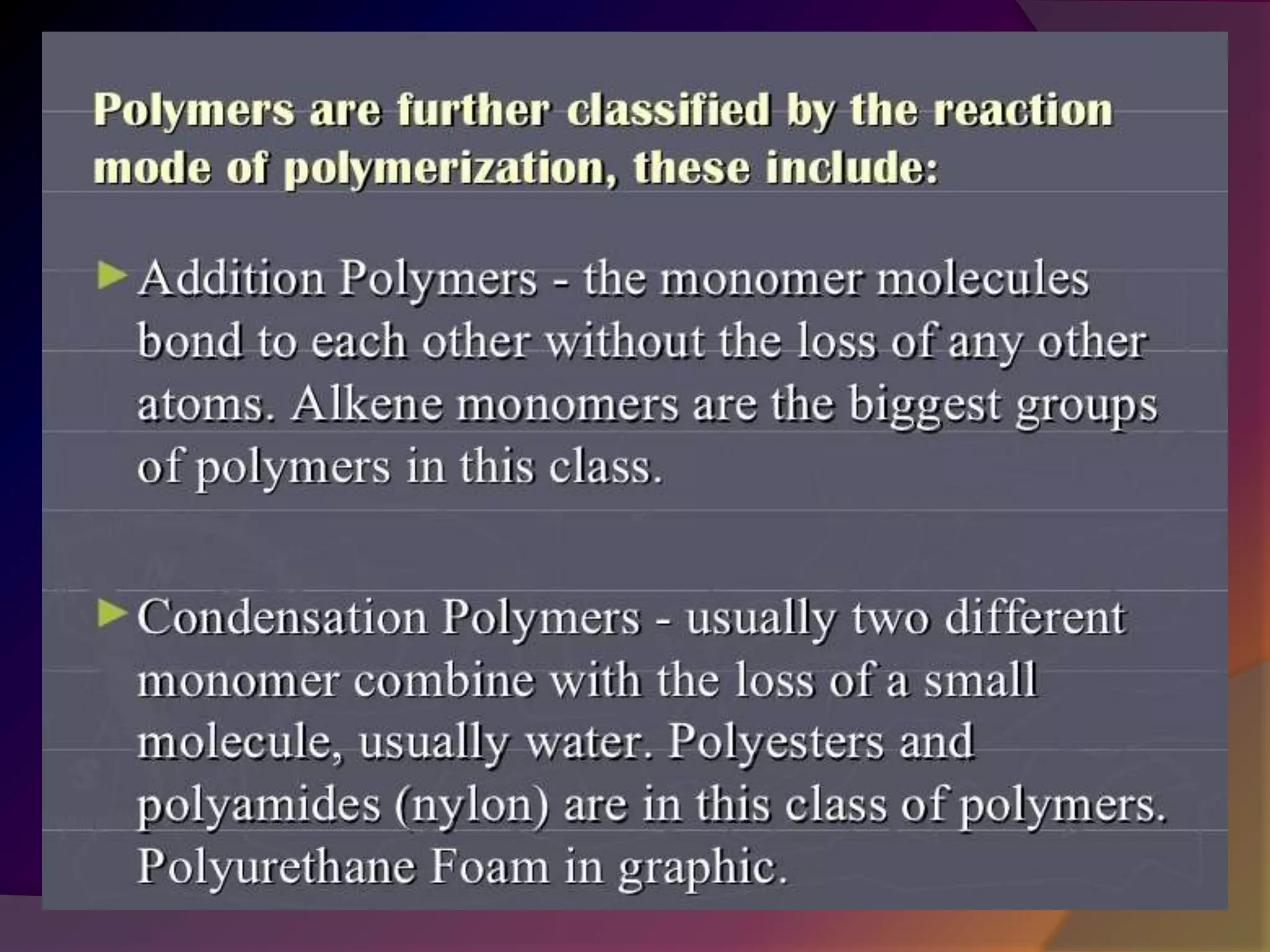
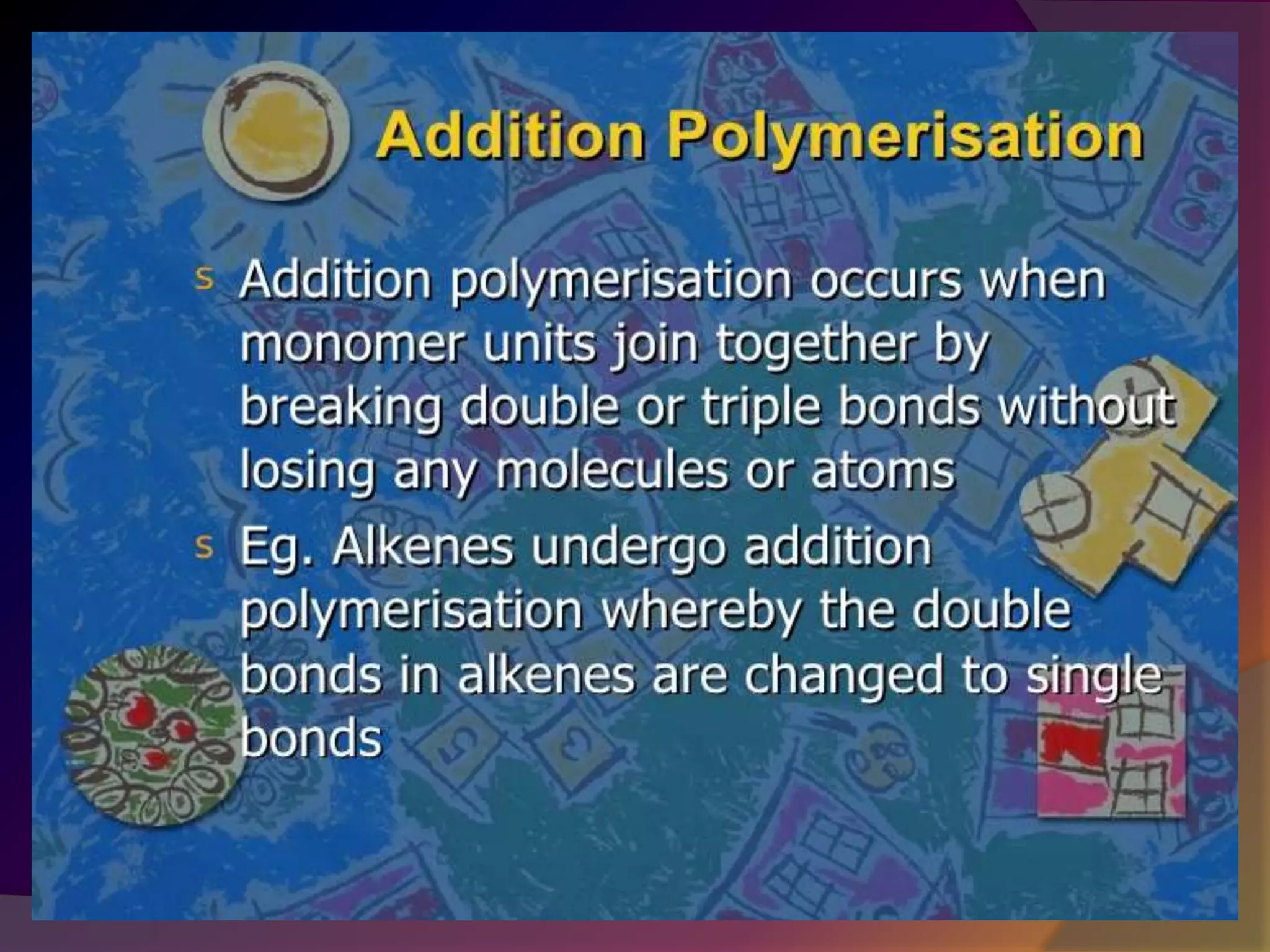
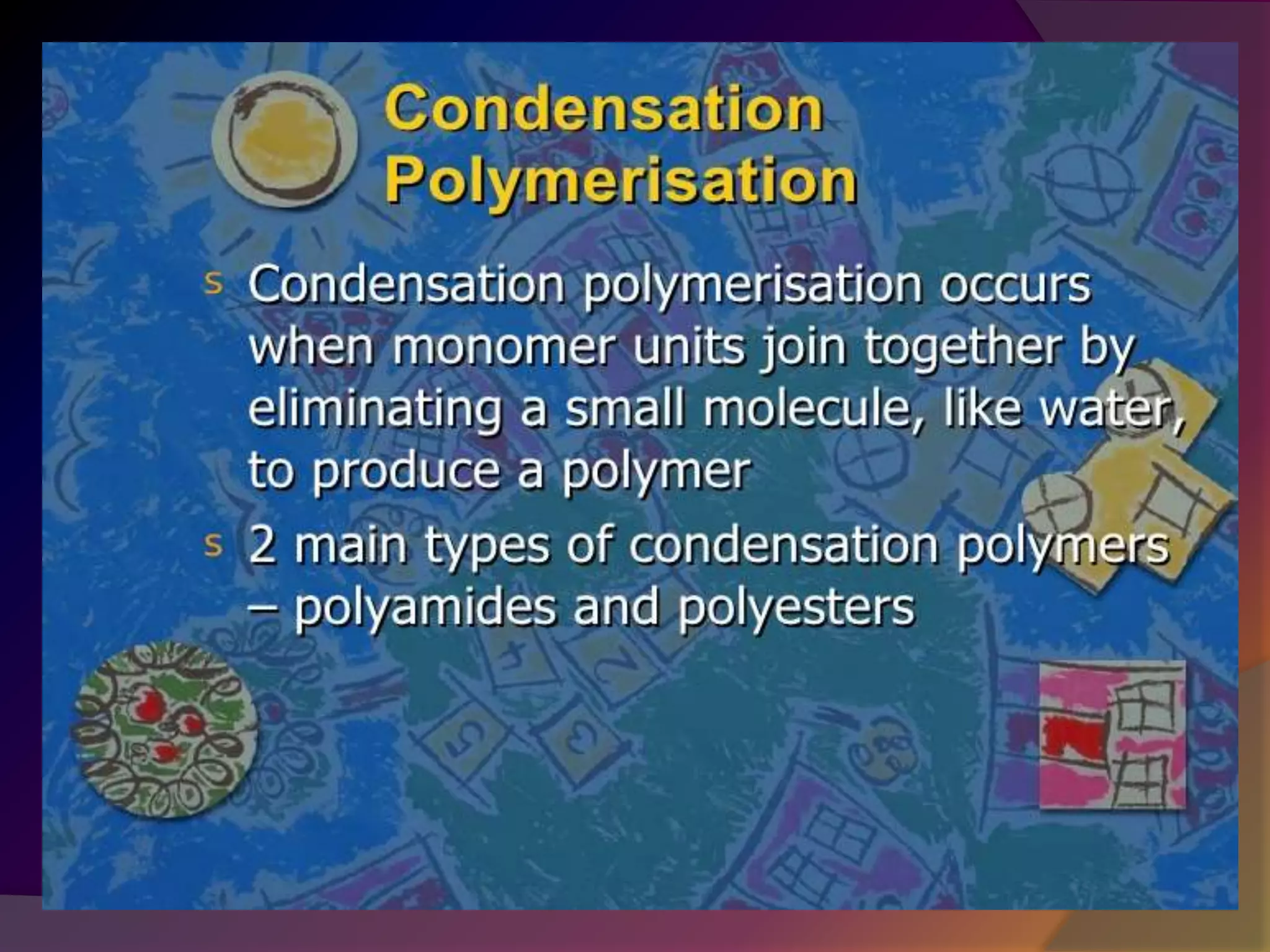
5. There are two types of polymerisation processes:
 Addition polymerisation
 Condensation polymerisation
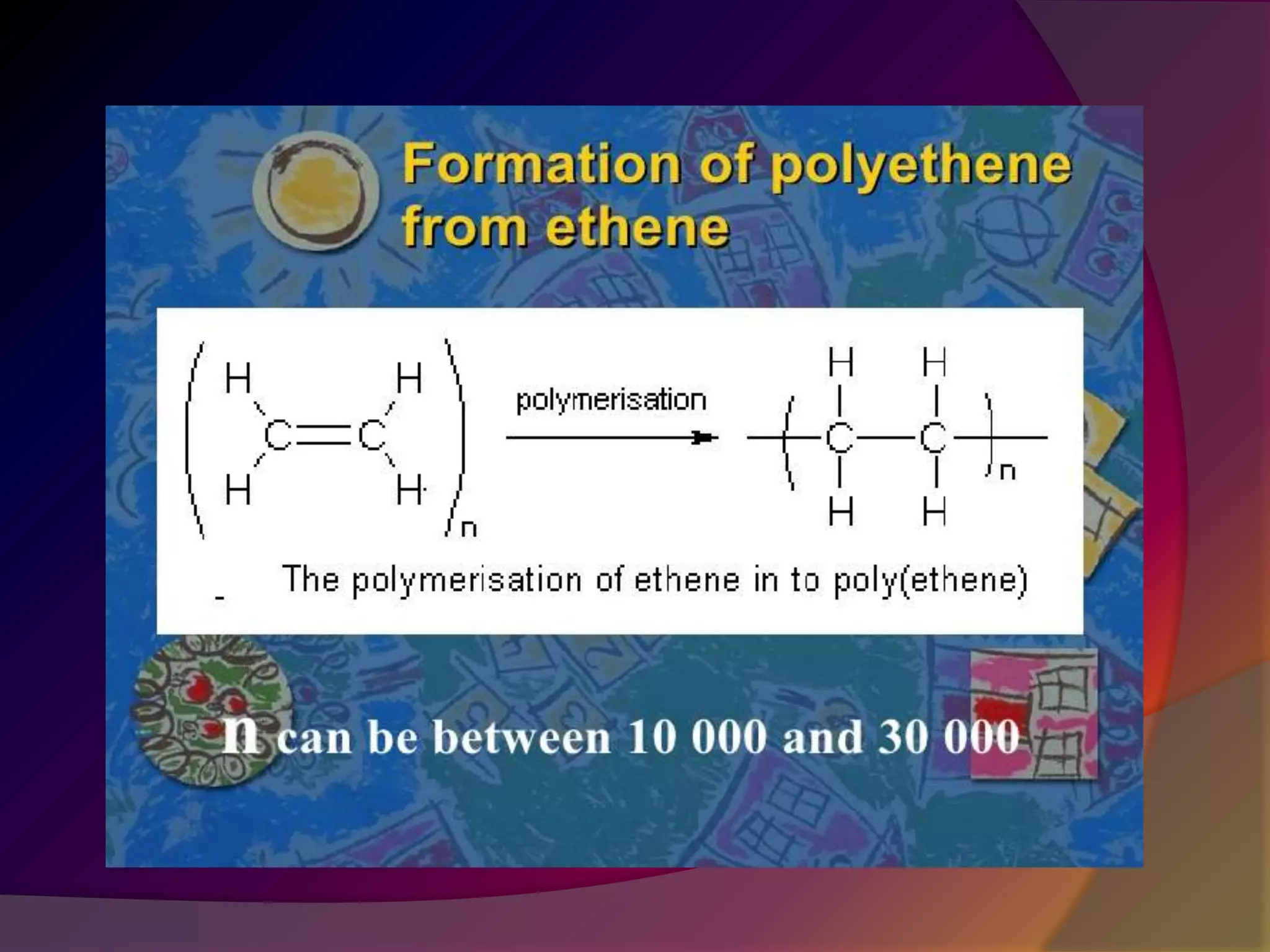
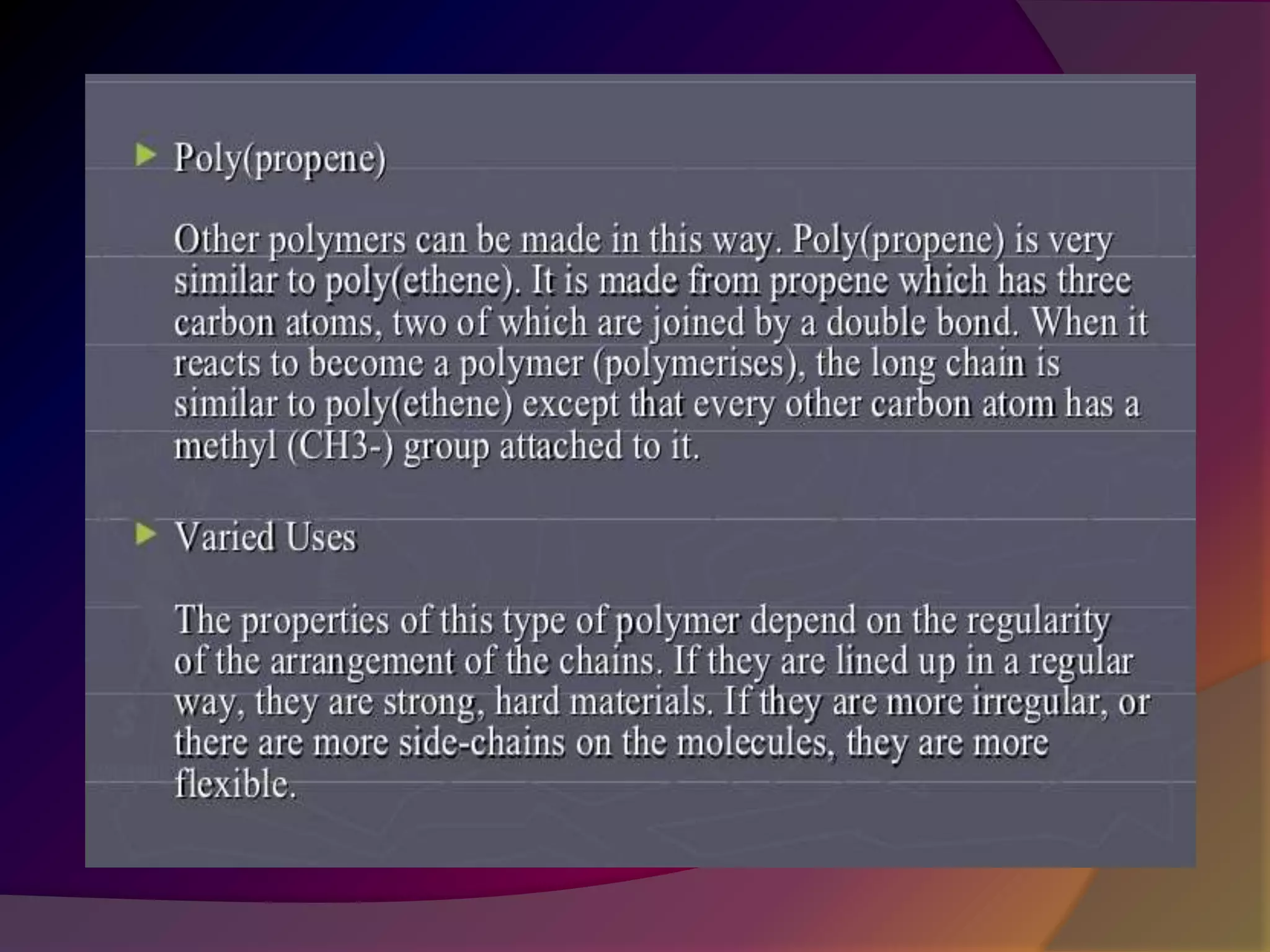
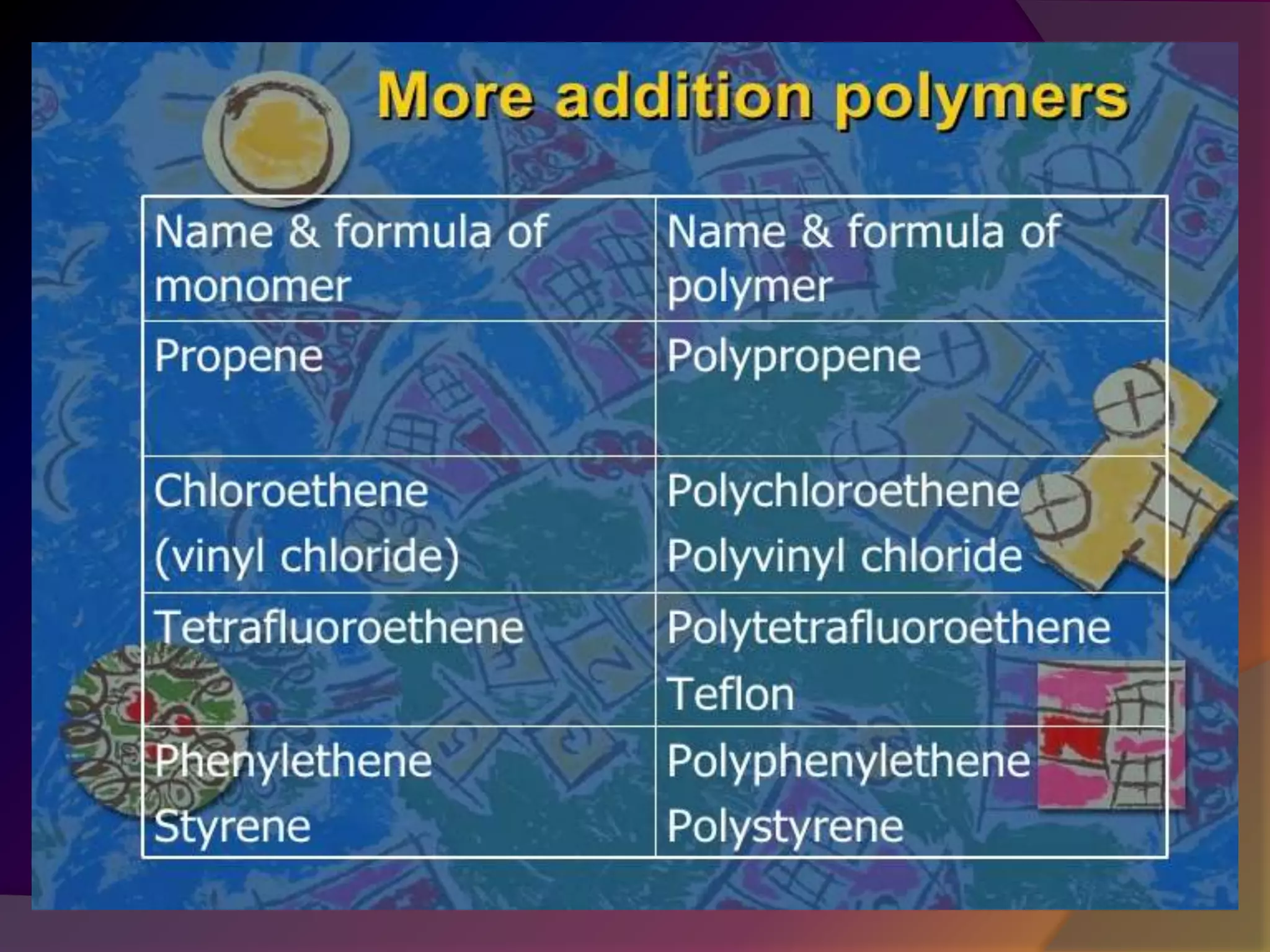
6. Plastics such as polythene and PVC are produced by
addition polymerisation,whereas synthetic fibres
such as nylon and Terylene are made by
condensation polymerisation
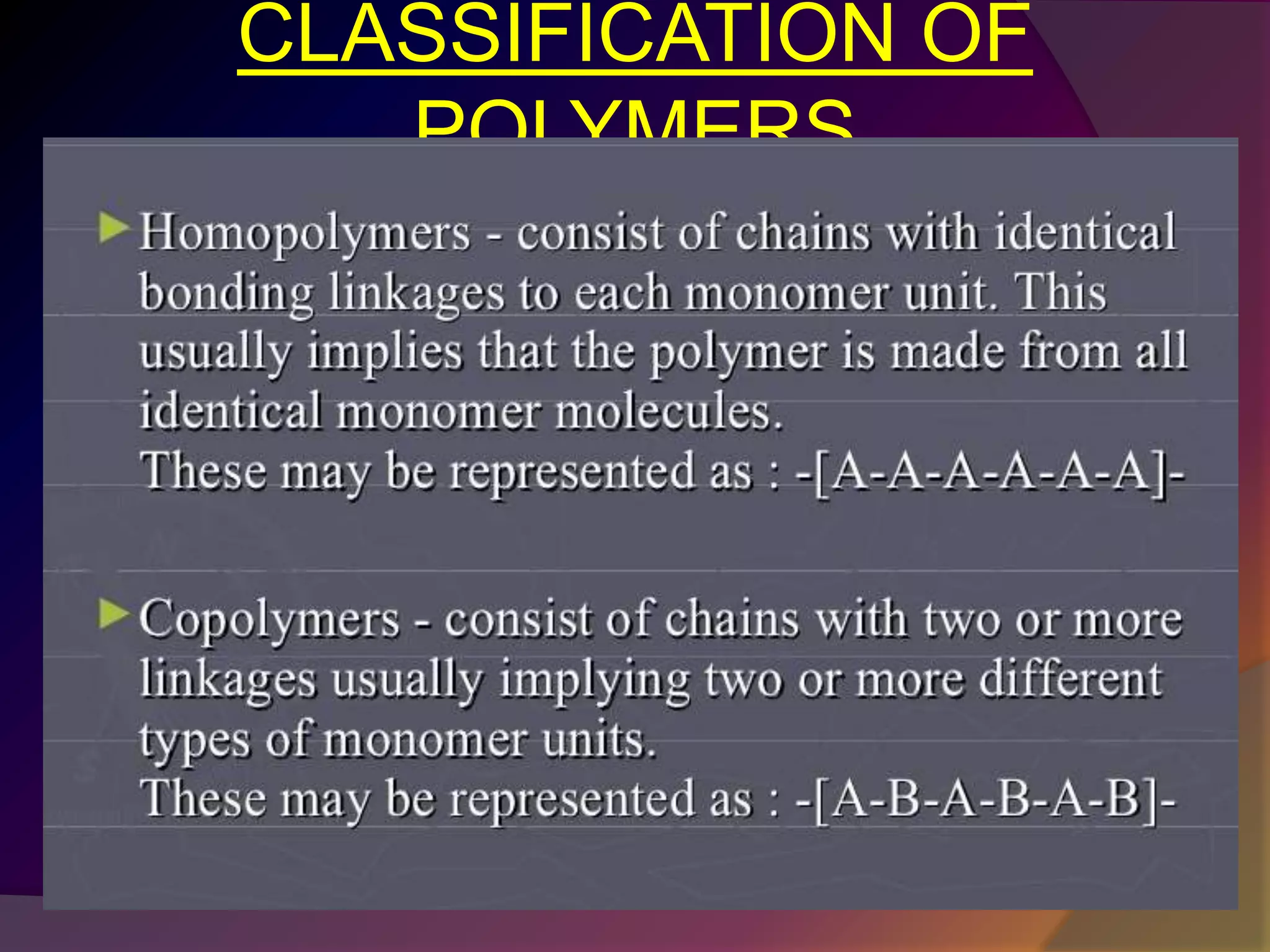
CLASSIFICATION OF
POLYMERS
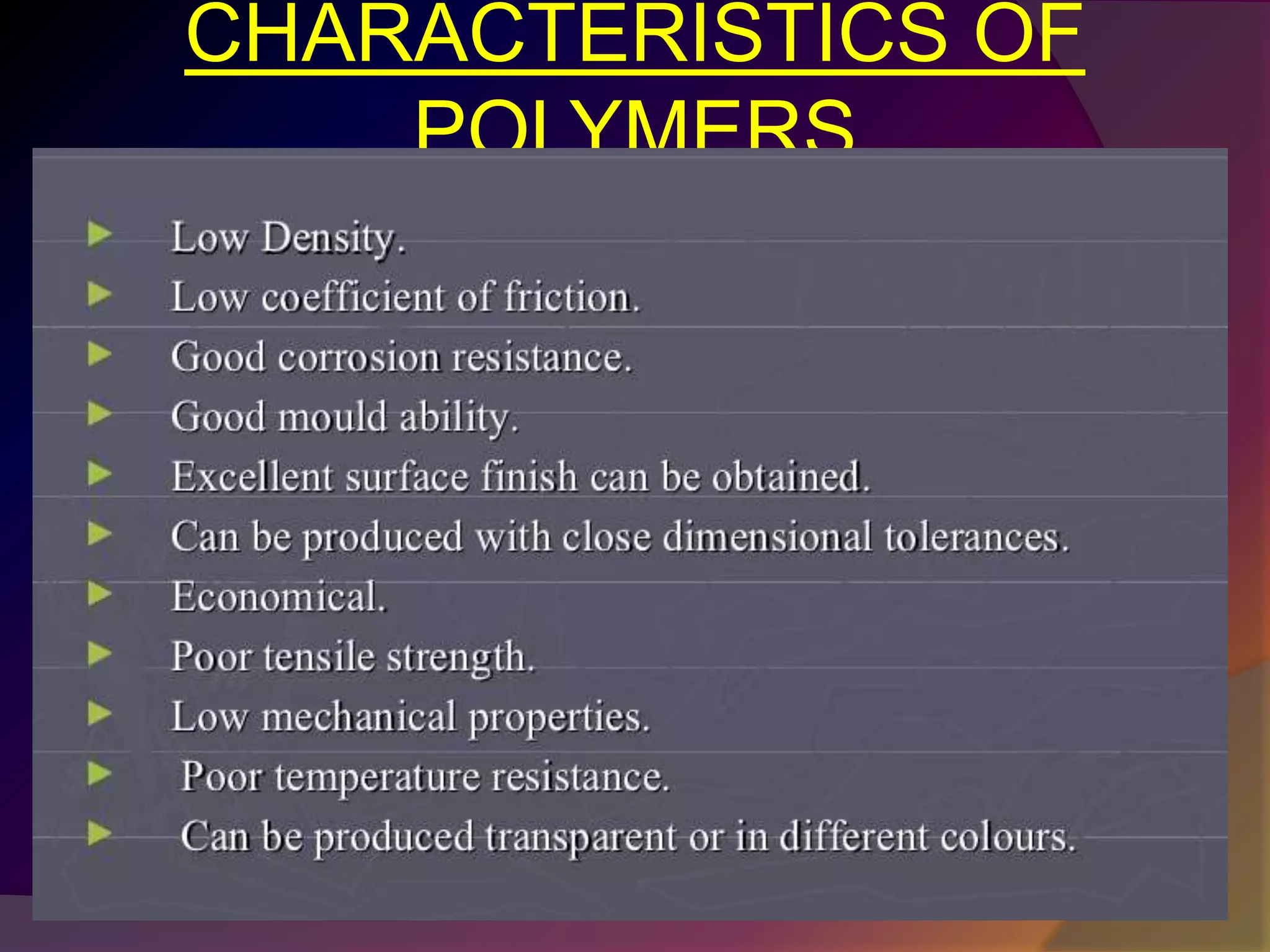
CHARACTERISTICS OF
POLYMERS
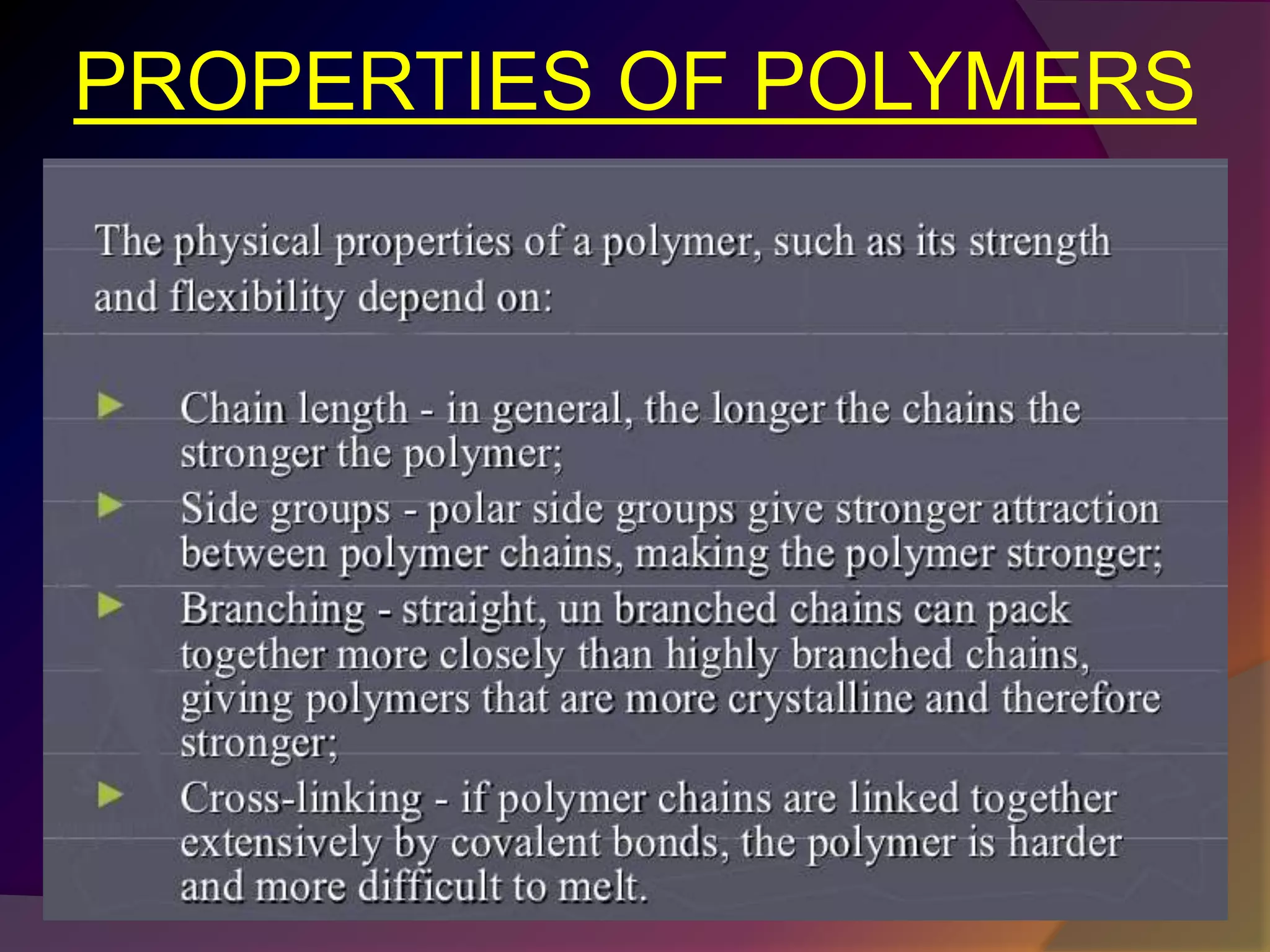
PROPERTIES OF POLYMERS
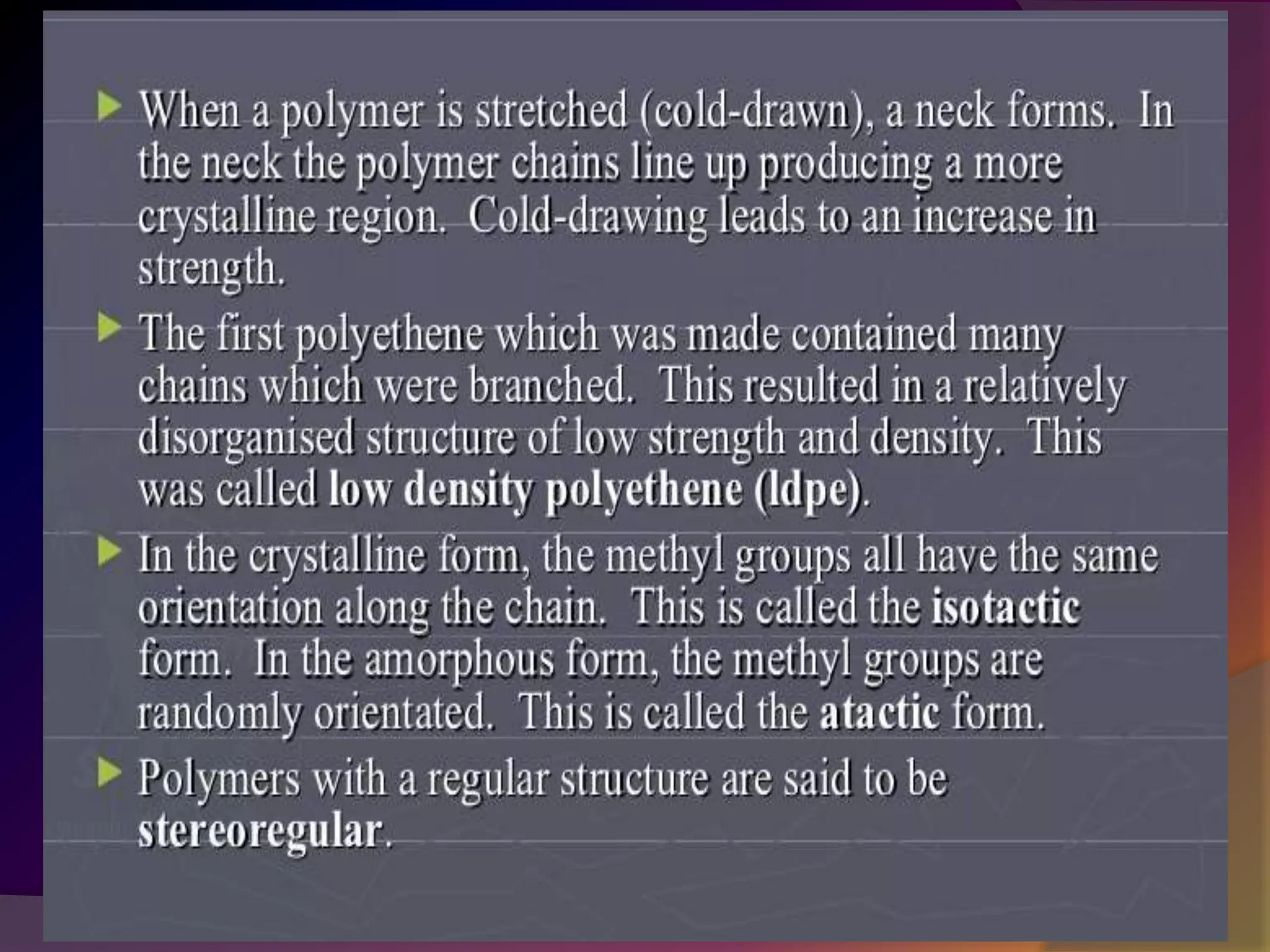
STRENGTH OF POLYMERS
APPLICATIONS OF POLYMERS
POLLUTION PROBLEM CAUSED BY
SYNTHETIC POLYMERS
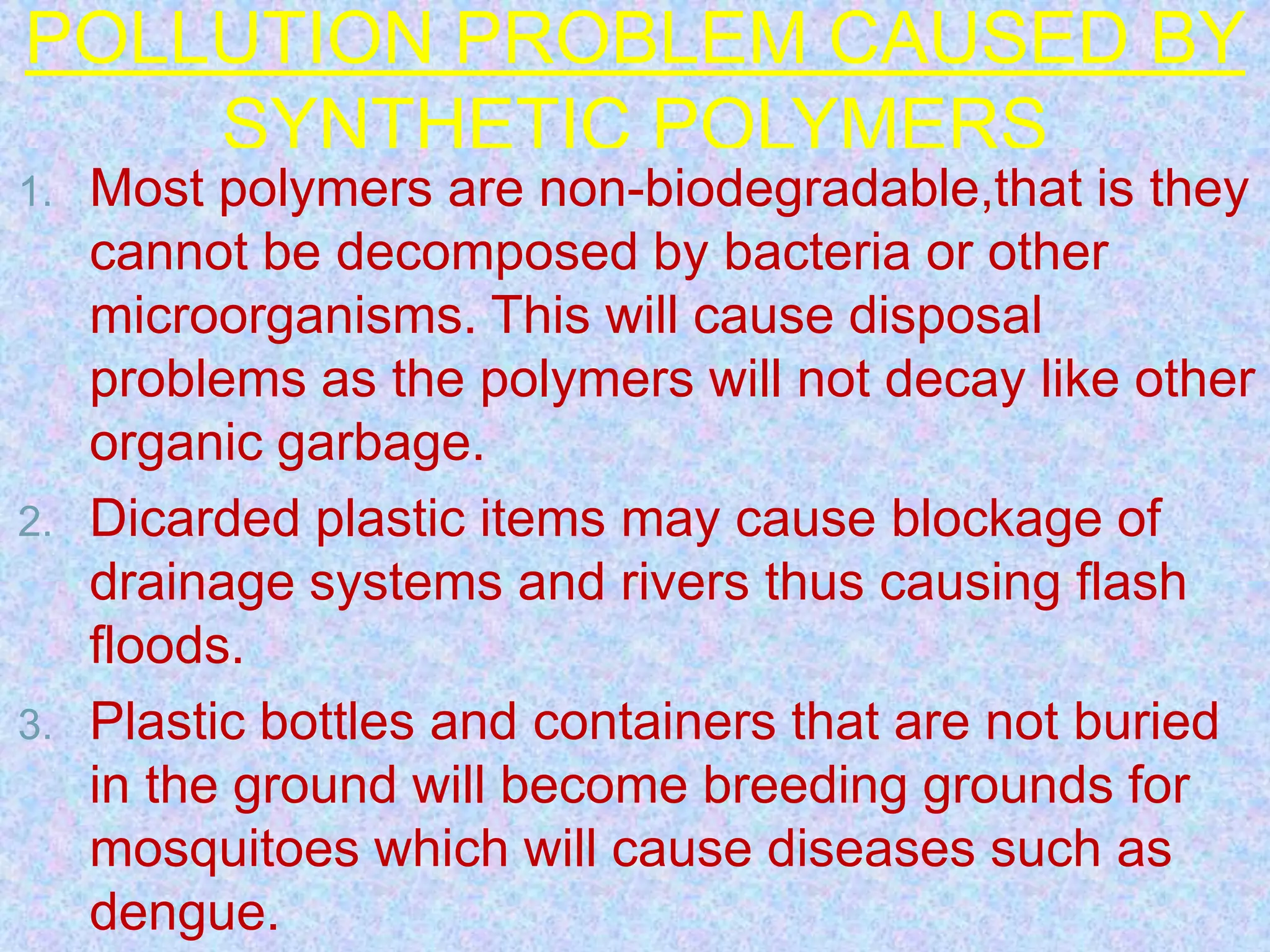
1. Most polymers are non-biodegradable,that is they
cannot be decomposed by bacteria or other
microorganisms. This will cause disposal
problems as the polymers will not decay like other
organic garbage.
2. Dicarded plastic items may cause blockage of
drainage systems and rivers thus causing flash
floods.
3. Plastic bottles and containers that are not buried
in the ground will become breeding grounds for
mosquitoes which will cause diseases such as
dengue.
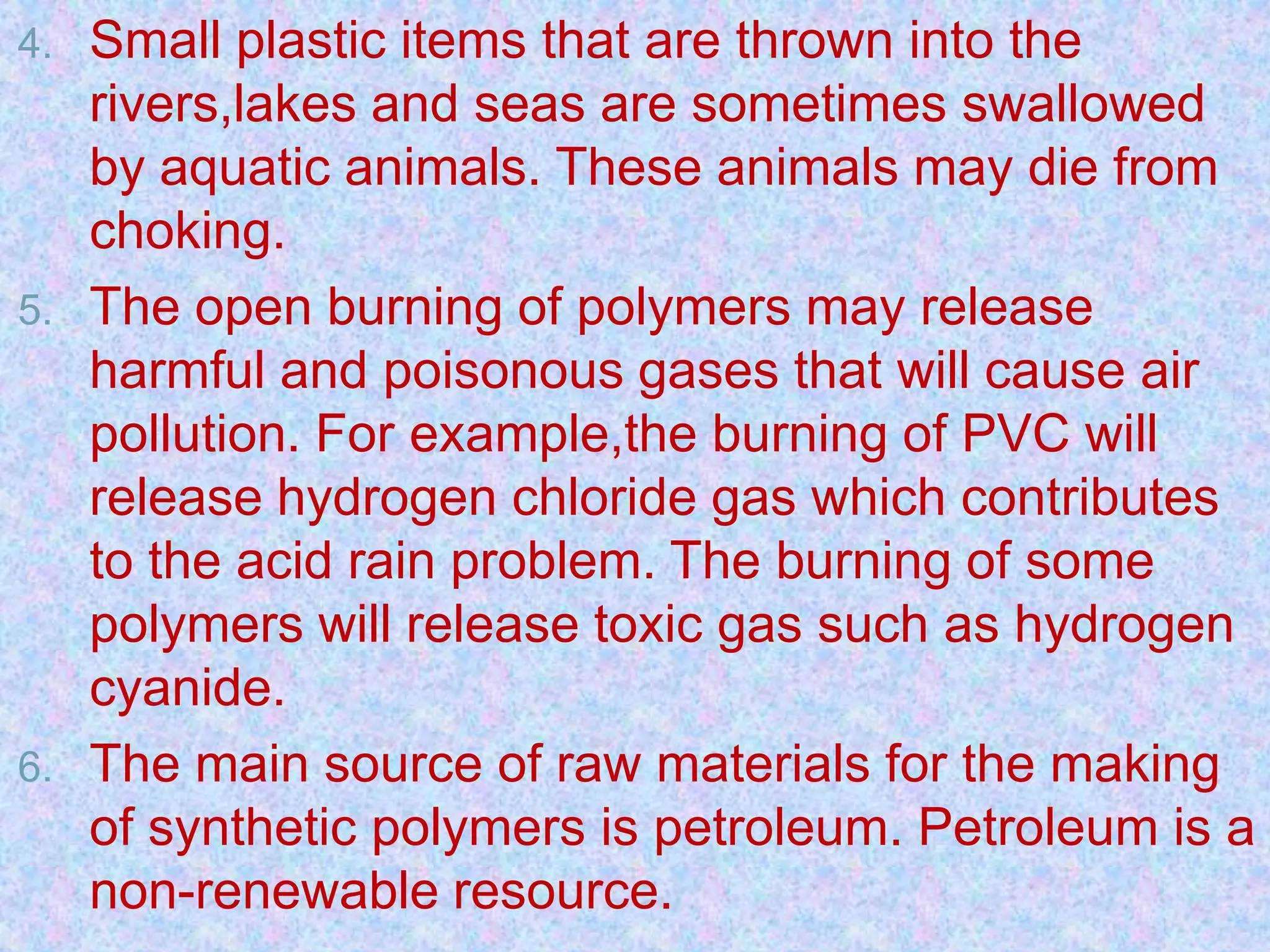
4. Small plastic items that are thrown into the
rivers,lakes and seas are sometimes swallowed
by aquatic animals. These animals may die from
choking.
5. The open burning of polymers may release
harmful and poisonous gases that will cause air
pollution. For example,the burning of PVC will
release hydrogen chloride gas which contributes
to the acid rain problem. The burning of some
polymers will release toxic gas such as hydrogen
cyanide.
6. The main source of raw materials for the making
of synthetic polymers is petroleum. Petroleum is a
non-renewable resource.
METHODS TO OVERCOME
ENVIRONMENTAL PROBLEMS OF
POLYMERS
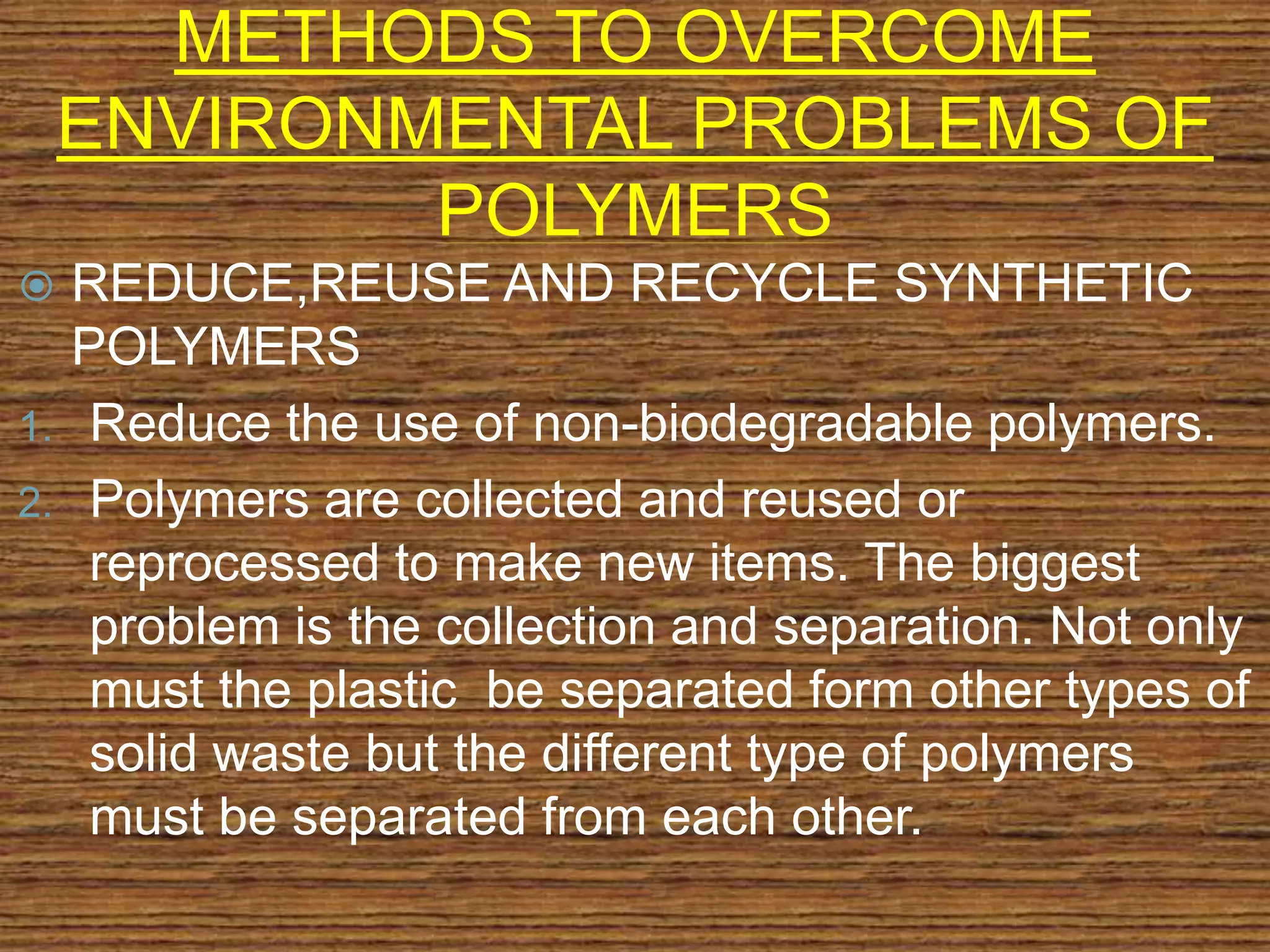
 REDUCE,REUSE AND RECYCLE SYNTHETIC
POLYMERS
1. Reduce the use of non-biodegradable polymers.
2. Polymers are collected and reused or
reprocessed to make new items. The biggest
problem is the collection and separation. Not only
must the plastic be separated form other types of
solid waste but the different type of polymers
must be separated from each other.
 DEVELOP BIODEGRADABLE POLYMERS
 The polymers can be decomposed by
bacteria,other microorganisms or simply by
sunlight (photodegradable). One type of
biodegradable polymer was developed by
incorporating starch molecules into the plastic
materials so that they can be decomposed by
bacteria. However, biodegradable polymers
are usually more expensive.

Synthetic polymer

  • 1.
  • 4.
    Polymers are largemolecules made up of many smaller and identical repeating units joined together by covalent bonds . These molecules are called monomers . Polymerisation is the chemical process by which the monomers are joined together to form a big molecule known as a polymer . A polymer is a macromolecules (a very big molecules) . Hence , the relative molecular mass of a polymer is large . The properties of a polymer are different from its monomers .
  • 6.
    POLYMERS CAN DIVIDED INTO2 TYPES: a) Naturally occurring polymers Polymers that exists in living things in nature (plants and animals) b) Synthetic polymer Polymers that are man-made by chemical processes in the laboratories.
  • 7.
    NATURALLY OCCURRING POLYMERS 1) Naturallyoccurring polymers exist in plants or animals. 2) Examples of naturally occurring polymers are a) Protein : in muscles,skin,silk,hair,wool and fur b) Carbohydrates : in starch and cellulose. c) Natural rubber : in latex. 3) Protein is formed by the polymerisation of monomers known as amino acids. amino acids polymerisation protein (monomers) (polymers)
  • 8.
    4) Carbohydrates suchas starch and cellulose consist of monomers known as glucose joined together chemically. 5) Natural rubber found in latex consist of monomers known as isoprene (2-methylbuta-1,3- diene) joined together chemically. glucose polymerisation carbohydrates (monomers) (polymers) H CH3 H H H CH3 H H n C = C - C = C - C – C = C – C - H H H H n isoprene(monomer) natural rubber (polymer)
  • 9.
    SYNTHETIC POLYMERS 1. Syntheticpolymers are polymers made in the industry from chemical substances. 2. Through scientific research , scientist are able to copy the structures of natural polymers to produce synthetic polymers. 3. Many of the raw materials for synthetic polymers are obtained from petroleum , after the refining and cracking processes. 4. The types of synthetic polymers include a) Plastics b) Fibre c) Elastomers
  • 10.
  • 14.
  • 17.
    ELASTOMER 1. An elastomeris a polymer that can regain its original shape after being stretched or pressed. 2. Both natural rubber and synthetic rubber are examples of elastomers. 3. Examples of synthetic rubber are neoprene and styrene-butadiene rubber (SBR). 4. SBR is used to make car tyres. 5. There are two types of polymerisation processes:  Addition polymerisation  Condensation polymerisation 6. Plastics such as polythene and PVC are produced by addition polymerisation,whereas synthetic fibres such as nylon and Terylene are made by condensation polymerisation
  • 22.
  • 24.
  • 25.
  • 26.
  • 28.
  • 31.
    POLLUTION PROBLEM CAUSEDBY SYNTHETIC POLYMERS 1. Most polymers are non-biodegradable,that is they cannot be decomposed by bacteria or other microorganisms. This will cause disposal problems as the polymers will not decay like other organic garbage. 2. Dicarded plastic items may cause blockage of drainage systems and rivers thus causing flash floods. 3. Plastic bottles and containers that are not buried in the ground will become breeding grounds for mosquitoes which will cause diseases such as dengue.
  • 32.
    4. Small plasticitems that are thrown into the rivers,lakes and seas are sometimes swallowed by aquatic animals. These animals may die from choking. 5. The open burning of polymers may release harmful and poisonous gases that will cause air pollution. For example,the burning of PVC will release hydrogen chloride gas which contributes to the acid rain problem. The burning of some polymers will release toxic gas such as hydrogen cyanide. 6. The main source of raw materials for the making of synthetic polymers is petroleum. Petroleum is a non-renewable resource.
  • 33.
    METHODS TO OVERCOME ENVIRONMENTALPROBLEMS OF POLYMERS  REDUCE,REUSE AND RECYCLE SYNTHETIC POLYMERS 1. Reduce the use of non-biodegradable polymers. 2. Polymers are collected and reused or reprocessed to make new items. The biggest problem is the collection and separation. Not only must the plastic be separated form other types of solid waste but the different type of polymers must be separated from each other.
  • 34.
     DEVELOP BIODEGRADABLEPOLYMERS  The polymers can be decomposed by bacteria,other microorganisms or simply by sunlight (photodegradable). One type of biodegradable polymer was developed by incorporating starch molecules into the plastic materials so that they can be decomposed by bacteria. However, biodegradable polymers are usually more expensive.