-Presented by
Cindrella Burge
Msc nursing 1st year
Dept. of Medical surgical nursing
 Also called polio, infantile paralysis.
 Poliomyelitis is a highly infectious
disease caused by polio virus I, II, III.
 This is a disease of digestive tract but
since it can cause paralysis and
deformity.
 Usually attacks the children below 5 years.
 Infection increases in dirty, overcrowded
place, where personal health is neglected.
 Polio virus remains in the throat secretions,
stools of infected persons which can infect
water, milk, food, & other substances.
 Transmission- through fecal-oral
contamination, or through droplets;
 flies play an important role in spreading the
disease.
 Can occur more in rainy season.
 Caused by polio virus
 Colonizes in the gastrointestinal tract (
specifically) in intestine
 Spread through
 fecal-oral route,
 Oral-oral route,
 Intake of contaminated food/ water
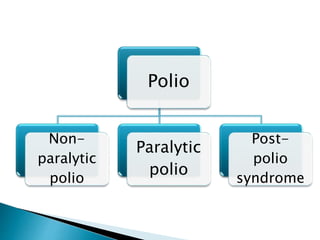
Polio
Non-
paralytic
polio
Paralytic
polio
Post-
polio
syndrome
 Obortive polio
 Type of polio that doesn’t lead to paralysis
 Symptoms last up to 10 days
 Like
fever, sore throat, headache, vomiting,
fatigue, backache, neck pain, stiffness,
pain/ stiffness in the legs, muscle weakness
or tenderness.
 Main symptoms are-
 loss of reflexes
 Severe muscle aches or weakness
 Loose limbs
 Disabling signs and symptoms that affect
some people years after having polio
 Like-
 progressive muscle/joint weakness pain,
 fatigue,
 breathing problems,
 swallowing problems,
 decreased tolerance of cold temperature
 7 – 14 days
 Fever,
 Headache
 Fatigue
 Restlessness
 Vomiting
 diarrhea
 Cough/ cold
 Paralysis in
 Lower extremities (most common)
 Face
 Esophagus
 Muscular weakness
 Stiffness & pain in the neck, back and lower
part of body
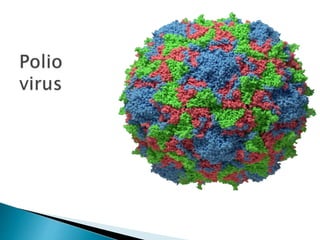
 Polio is caused by a virus called polio virus
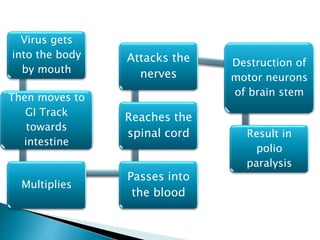
Virus gets
into the body
by mouth
Then moves to
GI Track
towards
intestine
Multiplies
Passes into
the blood
Reaches the
spinal cord
Attacks the
nerves
Destruction of
motor neurons
of brain stem
Result in
polio
paralysis
 Detected by signs and symptoms
 Physical examination
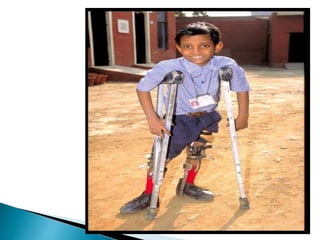
 Permanent deformity, paralysis, handicaps
 If Respiratory muscles are paralyzed,
death can also occur.
 Due to unavailability of any cure till
date, vaccination is the best way of
protection and the only way to control
the spread of disease.
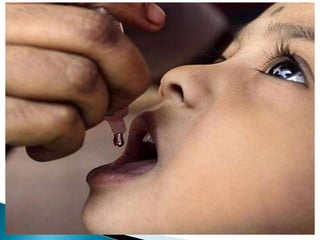
 There are 2 types of vaccines
oral polio vaccine ( OPV )
and
inactivated polio vaccine ( IPV ).
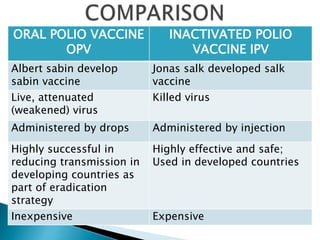
ORAL POLIO VACCINE
OPV
INACTIVATED POLIO
VACCINE IPV
Albert sabin develop
sabin vaccine
Jonas salk developed salk
vaccine
Live, attenuated
(weakened) virus
Killed virus
Administered by drops Administered by injection
Highly successful in
reducing transmission in
developing countries as
part of eradication
strategy
Highly effective and safe;
Used in developed countries
Inexpensive Expensive
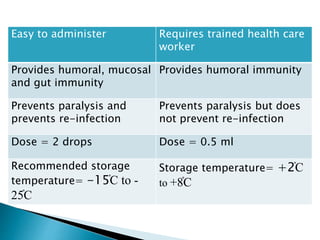
Easy to administer Requires trained health care
worker
Provides humoral, mucosal
and gut immunity
Provides humoral immunity
Prevents paralysis and
prevents re-infection
Prevents paralysis but does
not prevent re-infection
Dose = 2 drops Dose = 0.5 ml
Recommended storage
temperature= -15֯C to -
25֯C
Storage temperature= +2֯C
to +8֯C
 Is a system of storing and transporting
vaccine at the recommended temperature
range from the point of manufacture to point
of use.
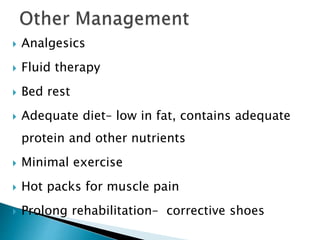
 Analgesics
 Fluid therapy
 Bed rest
 Adequate diet– low in fat, contains adequate
protein and other nutrients
 Minimal exercise
 Hot packs for muscle pain
 Prolong rehabilitation– corrective shoes
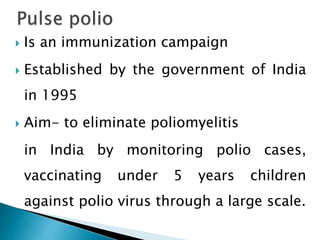
 Is an immunization campaign
 Established by the government of India
in 1995
 Aim- to eliminate poliomyelitis
in India by monitoring polio cases,
vaccinating under 5 years children
against polio virus through a large scale.
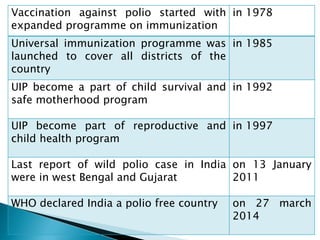
Vaccination against polio started with
expanded programme on immunization
in 1978
Universal immunization programme was
launched to cover all districts of the
country
in 1985
UIP become a part of child survival and
safe motherhood program
in 1992
UIP become part of reproductive and
child health program
in 1997
Last report of wild polio case in India
were in west Bengal and Gujarat
on 13 January
2011
WHO declared India a polio free country on 27 march
2014
Polio is a contagious viral illness that in its
most severe form causes nerve injury leading
to paralysis, difficulty breathing and
sometimes death. This disease result in the
destruction of motor neurons caused by the
polio virus.
Poliomyelitis

Poliomyelitis

  • 2.
    -Presented by Cindrella Burge Mscnursing 1st year Dept. of Medical surgical nursing
  • 3.
     Also calledpolio, infantile paralysis.  Poliomyelitis is a highly infectious disease caused by polio virus I, II, III.  This is a disease of digestive tract but since it can cause paralysis and deformity.
  • 4.
     Usually attacksthe children below 5 years.  Infection increases in dirty, overcrowded place, where personal health is neglected.  Polio virus remains in the throat secretions, stools of infected persons which can infect water, milk, food, & other substances.
  • 5.
     Transmission- throughfecal-oral contamination, or through droplets;  flies play an important role in spreading the disease.  Can occur more in rainy season.
  • 6.
     Caused bypolio virus  Colonizes in the gastrointestinal tract ( specifically) in intestine  Spread through  fecal-oral route,  Oral-oral route,  Intake of contaminated food/ water
  • 9.
  • 10.
     Obortive polio Type of polio that doesn’t lead to paralysis  Symptoms last up to 10 days  Like fever, sore throat, headache, vomiting, fatigue, backache, neck pain, stiffness, pain/ stiffness in the legs, muscle weakness or tenderness.
  • 11.
     Main symptomsare-  loss of reflexes  Severe muscle aches or weakness  Loose limbs
  • 12.
     Disabling signsand symptoms that affect some people years after having polio  Like-  progressive muscle/joint weakness pain,  fatigue,  breathing problems,  swallowing problems,  decreased tolerance of cold temperature
  • 13.
     7 –14 days
  • 14.
     Fever,  Headache Fatigue  Restlessness  Vomiting  diarrhea  Cough/ cold
  • 15.
     Paralysis in Lower extremities (most common)  Face  Esophagus
  • 16.
     Muscular weakness Stiffness & pain in the neck, back and lower part of body
  • 17.
     Polio iscaused by a virus called polio virus
  • 18.
    Virus gets into thebody by mouth Then moves to GI Track towards intestine Multiplies Passes into the blood Reaches the spinal cord Attacks the nerves Destruction of motor neurons of brain stem Result in polio paralysis
  • 19.
     Detected bysigns and symptoms  Physical examination
  • 20.
     Permanent deformity,paralysis, handicaps  If Respiratory muscles are paralyzed, death can also occur.
  • 22.
     Due tounavailability of any cure till date, vaccination is the best way of protection and the only way to control the spread of disease.  There are 2 types of vaccines oral polio vaccine ( OPV ) and inactivated polio vaccine ( IPV ).
  • 24.
    ORAL POLIO VACCINE OPV INACTIVATEDPOLIO VACCINE IPV Albert sabin develop sabin vaccine Jonas salk developed salk vaccine Live, attenuated (weakened) virus Killed virus Administered by drops Administered by injection Highly successful in reducing transmission in developing countries as part of eradication strategy Highly effective and safe; Used in developed countries Inexpensive Expensive
  • 25.
    Easy to administerRequires trained health care worker Provides humoral, mucosal and gut immunity Provides humoral immunity Prevents paralysis and prevents re-infection Prevents paralysis but does not prevent re-infection Dose = 2 drops Dose = 0.5 ml Recommended storage temperature= -15֯C to - 25֯C Storage temperature= +2֯C to +8֯C
  • 26.
     Is asystem of storing and transporting vaccine at the recommended temperature range from the point of manufacture to point of use.
  • 28.
     Analgesics  Fluidtherapy  Bed rest  Adequate diet– low in fat, contains adequate protein and other nutrients  Minimal exercise  Hot packs for muscle pain  Prolong rehabilitation– corrective shoes
  • 29.
     Is animmunization campaign  Established by the government of India in 1995  Aim- to eliminate poliomyelitis in India by monitoring polio cases, vaccinating under 5 years children against polio virus through a large scale.
  • 30.
    Vaccination against poliostarted with expanded programme on immunization in 1978 Universal immunization programme was launched to cover all districts of the country in 1985 UIP become a part of child survival and safe motherhood program in 1992 UIP become part of reproductive and child health program in 1997 Last report of wild polio case in India were in west Bengal and Gujarat on 13 January 2011 WHO declared India a polio free country on 27 march 2014
  • 31.
    Polio is acontagious viral illness that in its most severe form causes nerve injury leading to paralysis, difficulty breathing and sometimes death. This disease result in the destruction of motor neurons caused by the polio virus.