KYPOSIS-LORDOSIS
Dr.Yusuf CINGIRLAR
Definition
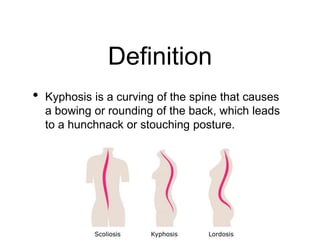
• Kyphosis is a curving of the spine that causes
a bowing or rounding of the back, which leads
to a hunchnack or stouching posture.
Types
There are three main types of kyphosis.
• Postural kyphosis.
• Scheuemann’s kyphosis.
• Congenital kyphosis.
Postural kyphosis
• It is the most common type of kyphosis.
• More common in girls than in boys which is typically noticed in
adolescent age.
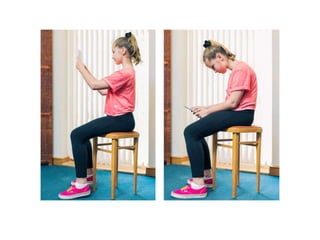
• It is caused by poor posture and weakening of the muscle,
ligaments in the back (paraspinous muscles).
• The vertebrae are typically placed in postural kyphosis.It
progressively gets worse with time.
• These people will have symptoms of pain and muscle fatigue.
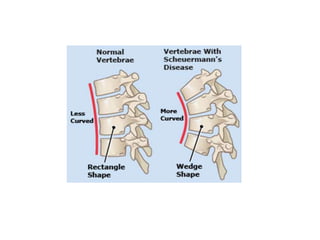
Scheuemann’s kyphosis
• It is also first noticed during adolescence
period.
• It is a result of structural deformity.
• It commonly develops with scoliosis.
• Reasons are not well understood.
Congenital kyphosis
• It is the least common type of abnormal
kyphosis.
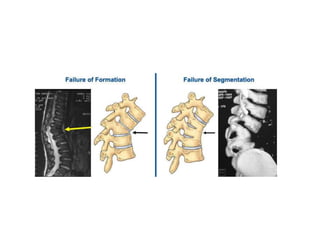
• It is caused by abnormal development of the
vertebrae prior to birth.
• Occurs due to fusion of many vertebrae
together.
Etiyology,Incidense and
Risk Factors
• It can occur at any age.
• Very rare at birth.
• Postural kyphosis occurs as a result of poor
posture and weakening of muscle and ligaments.
• Congenital kyphosis occurs as a results of
improper development of vertebrae or fusion of
vertebrae.
Other Cause include
• Certain endocrine disorders.
• Connective tissue disorders.
• Infection.
• Muscular dystrophy.
• Poliomyelitis.
• Spina bifida.
• Tumors.
Clinical Features
• Difficulty in breathing (only in severe cases).
• Mild back pain.
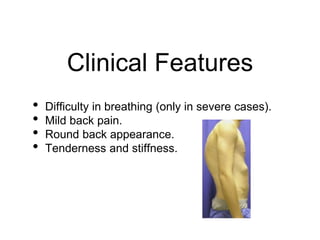
• Round back appearance.
• Tenderness and stiffness.
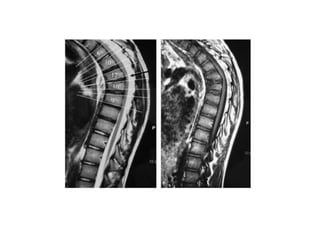
Diagnostic evaluation
• X-ray spine.
• PFT
• MRI
Manegment
• Treatment depends upon the cause of
disorder.
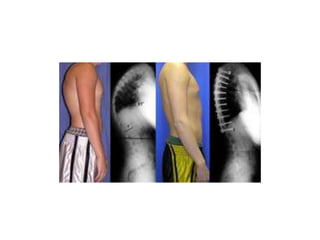
• Congenital kyphosis requires corrective
surgery at early age.
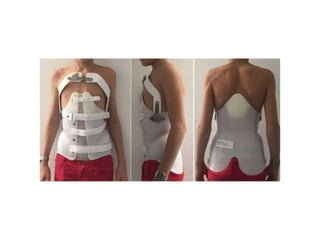
• Scheuemann’s disorder is treated with braces
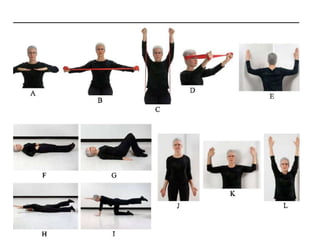
and physical therapy.
• Kyphosis caused by tumors needs surgical
correction.
Prognosis
• Scheuemann’s disorder in adolescents stops
once their growth stops.
• If the disorders occurs due to degenerative
types, then they may need a surgical
correction.
Complication
• Decreased lung capacity .
• Disabling pain.
• Neurological symptoms including leg
weakening or paralysis.
• Round back deformity.
LORDOSIS
• A normal spine when viewed from behind
appears straight.
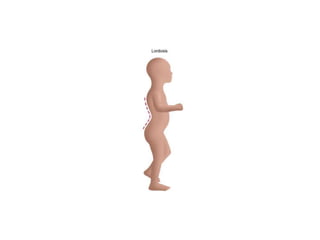
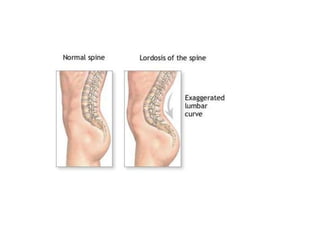
• Lordosis is a medical term used to describe an
inward curvature of a portion of the lumbar and
cervical vertebral column.
Etiology
• Cause of lordosis has been linked to
achondroplasia and spondylolisthesis.
• Lordosis is also associated with poor posture,
a congenital problem with the vertebrae,
neuromuscular problems, back surgery or a hip
problem.
• In children rickets may also leads to lordosis.
Clinical Features
• Prominence of buttocks.
• Back pain.
• Pain down the legs.
Diagnostic Evaluation
• X- rays: done to measure and evaluate curve.
• Bone scans: to evaluate degenerative or arthritic
changes.Also helps to find out bone tumors.
• MRI: to rule out associated problems.
• CT scan.
• Blood investigations.
• Early detection of Lordosis is important for proper
and successful treatment.
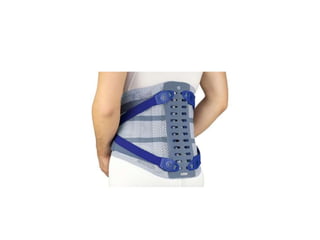
Management
Based on-
• Childs age, overall health, medical history,
cause and extent of the condition.
• Goal of treatment is to stop the progression of
the curve, prevent deformity.
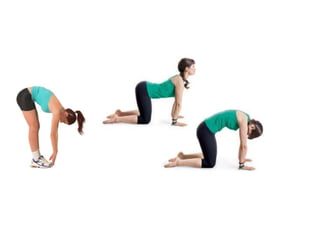
• Simple exercises are sufficient , If Lordosis is
associated with poor posture.
Prognosis
• Prognosis depends on child's age, amount of
curvature.
• Requires frequent examination by the
physician to monitor curve as the child grows
and develop.
• Early detection helps in proper management.
THANK YOU

Kyphosis and Lordosis

  • 1.
  • 2.
    Definition • Kyphosis isa curving of the spine that causes a bowing or rounding of the back, which leads to a hunchnack or stouching posture.
  • 3.
    Types There are threemain types of kyphosis. • Postural kyphosis. • Scheuemann’s kyphosis. • Congenital kyphosis.
  • 4.
    Postural kyphosis • Itis the most common type of kyphosis. • More common in girls than in boys which is typically noticed in adolescent age. • It is caused by poor posture and weakening of the muscle, ligaments in the back (paraspinous muscles). • The vertebrae are typically placed in postural kyphosis.It progressively gets worse with time. • These people will have symptoms of pain and muscle fatigue.
  • 6.
    Scheuemann’s kyphosis • Itis also first noticed during adolescence period. • It is a result of structural deformity. • It commonly develops with scoliosis. • Reasons are not well understood.
  • 9.
    Congenital kyphosis • Itis the least common type of abnormal kyphosis. • It is caused by abnormal development of the vertebrae prior to birth. • Occurs due to fusion of many vertebrae together.
  • 11.
    Etiyology,Incidense and Risk Factors •It can occur at any age. • Very rare at birth. • Postural kyphosis occurs as a result of poor posture and weakening of muscle and ligaments. • Congenital kyphosis occurs as a results of improper development of vertebrae or fusion of vertebrae.
  • 12.
    Other Cause include •Certain endocrine disorders. • Connective tissue disorders. • Infection. • Muscular dystrophy. • Poliomyelitis. • Spina bifida. • Tumors.
  • 13.
    Clinical Features • Difficultyin breathing (only in severe cases). • Mild back pain. • Round back appearance. • Tenderness and stiffness.
  • 14.
    Diagnostic evaluation • X-rayspine. • PFT • MRI
  • 15.
    Manegment • Treatment dependsupon the cause of disorder. • Congenital kyphosis requires corrective surgery at early age. • Scheuemann’s disorder is treated with braces and physical therapy. • Kyphosis caused by tumors needs surgical correction.
  • 19.
    Prognosis • Scheuemann’s disorderin adolescents stops once their growth stops. • If the disorders occurs due to degenerative types, then they may need a surgical correction.
  • 20.
    Complication • Decreased lungcapacity . • Disabling pain. • Neurological symptoms including leg weakening or paralysis. • Round back deformity.
  • 21.
    LORDOSIS • A normalspine when viewed from behind appears straight. • Lordosis is a medical term used to describe an inward curvature of a portion of the lumbar and cervical vertebral column.
  • 23.
    Etiology • Cause oflordosis has been linked to achondroplasia and spondylolisthesis. • Lordosis is also associated with poor posture, a congenital problem with the vertebrae, neuromuscular problems, back surgery or a hip problem. • In children rickets may also leads to lordosis.
  • 24.
    Clinical Features • Prominenceof buttocks. • Back pain. • Pain down the legs.
  • 26.
    Diagnostic Evaluation • X-rays: done to measure and evaluate curve. • Bone scans: to evaluate degenerative or arthritic changes.Also helps to find out bone tumors. • MRI: to rule out associated problems. • CT scan. • Blood investigations. • Early detection of Lordosis is important for proper and successful treatment.
  • 27.
    Management Based on- • Childsage, overall health, medical history, cause and extent of the condition. • Goal of treatment is to stop the progression of the curve, prevent deformity. • Simple exercises are sufficient , If Lordosis is associated with poor posture.
  • 32.
    Prognosis • Prognosis dependson child's age, amount of curvature. • Requires frequent examination by the physician to monitor curve as the child grows and develop. • Early detection helps in proper management.
  • 33.