SPINA BIFIDA
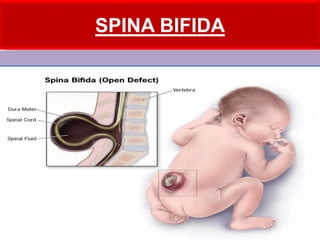
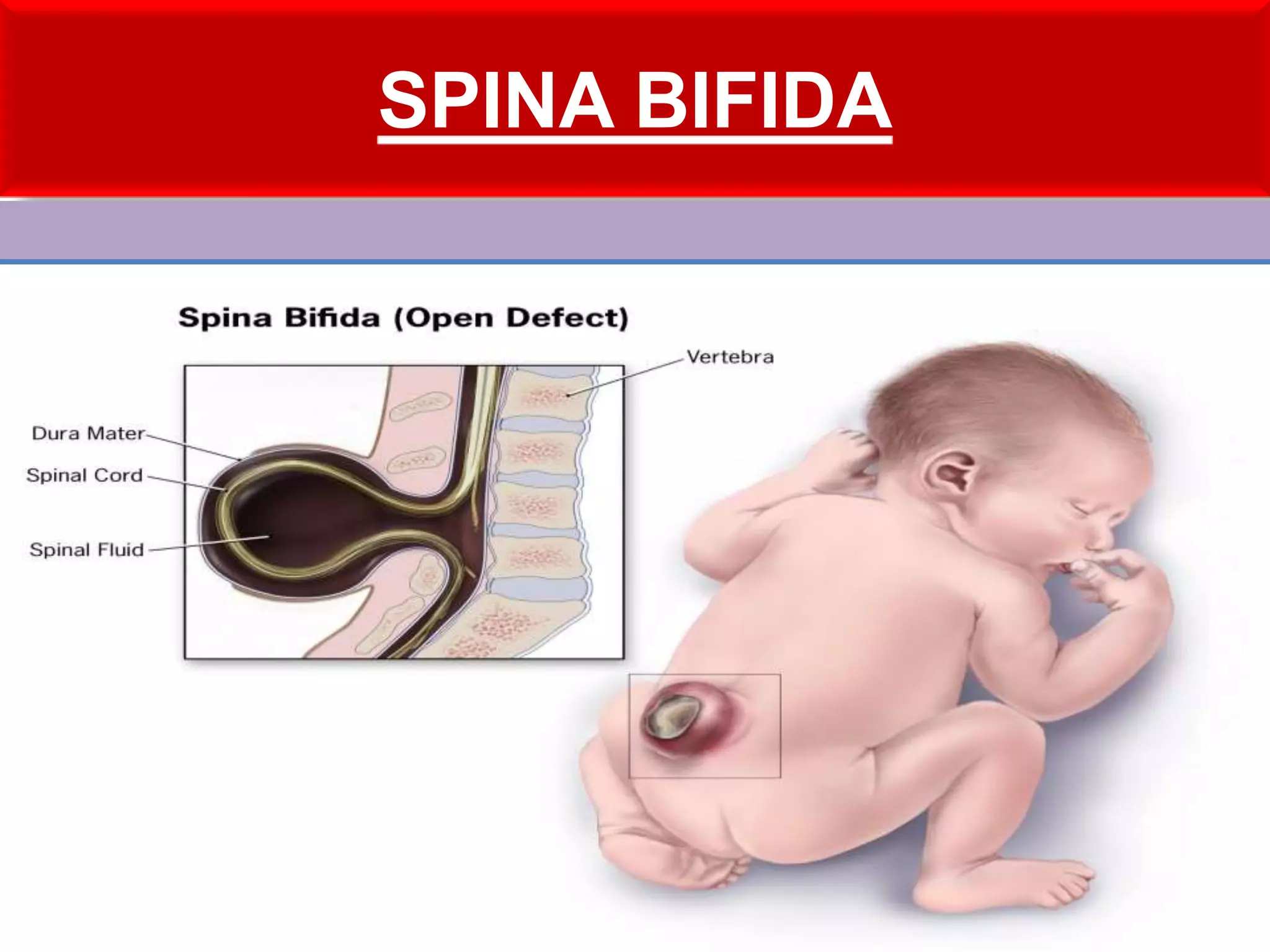
SPINA BIFIDA
DEFINITION:
Spina bifida is a malformation of spine, in which
posterior portion of lamina of vertebra fail to close
with or without defective development of spinal
cord.
INCIDENCE:
1 or 2 per 1000 live births
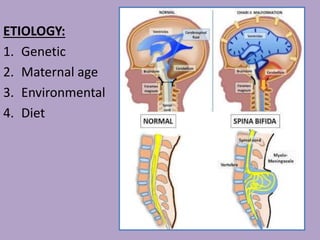
ETIOLOGY:
1. Genetic
2. Maternal age
3. Environmental
4. Diet
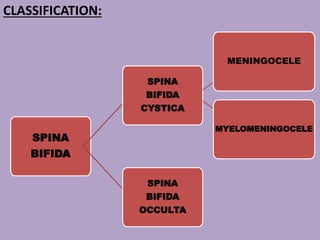
CLASSIFICATION:
SPINA
BIFIDA
SPINA
BIFIDA
CYSTICA
MENINGOCELE
MYELOMENINGOCELE
SPINA
BIFIDA
OCCULTA
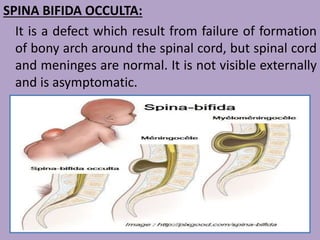
SPINA BIFIDA OCCULTA:
It is a defect which result from failure of formation
of bony arch around the spinal cord, but spinal cord
and meninges are normal. It is not visible externally
and is asymptomatic.
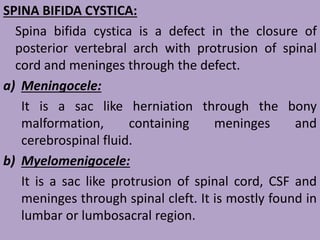
SPINA BIFIDA CYSTICA:
Spina bifida cystica is a defect in the closure of
posterior vertebral arch with protrusion of spinal
cord and meninges through the defect.
a) Meningocele:
It is a sac like herniation through the bony
malformation, containing meninges and
cerebrospinal fluid.
b) Myelomenigocele:
It is a sac like protrusion of spinal cord, CSF and
meninges through spinal cleft. It is mostly found in
lumbar or lumbosacral region.
PATHOPHYSIOLOGY:
It occurs due to defect in the orderly closure of
vertebral column and formation of spinal cord
during 4th or 6th weeks of gestation.
During the 3rd week of gestation, a depression
forms in the dorsal of the ectoderm in embryo.
This depression becomes deeper and its margins
close dorsally to create neural tube and that
becomes spinal cord and brain.
Exact mechanism by which neural tube defect
occurs is not certain.
CLINICAL FEATURES:
A. Spina bifida occulta:
Spina bifida occulta are asymptomatic, the only
features seen are:
• Dimple in the skin or growth of hair over
malformed vertebra.
• As the child grows, he may develop foot weakness
or disturbances of bladder and bowel sphincter.
B. Spina bifida cystica:
1. Meningocele:
• External cystic defect
• Weakness of leg or lack of sphincter control.
2. Myelomeningocele:
• Herniated mass in lumbosacral region
• Hydrocephalus
• Loss of motor control
• Congenital skeletal anomalies
DIAGNOSTIC EVALUATION:
Ultrasound
Fetal MRI
Amniocentesis
Sac may be seen on the back of the baby
CT scan and MRI of spinal cord and brain
MANAGEMENT:
 It depends on the nature and extent of defect.
Usually no intervention is required for spina bifida
occulta.
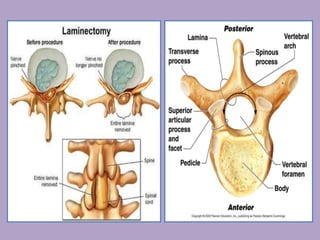
 For spina bifida cystica surgery is required
laminectomy and closure of the defect is done
within 24- 48 hours of birth.
NURSING MANAGEMENT:
The main aim of pre and post- operative nursing care
are:
• Prevention of infection
• Preventing injury to the sac
• Prevention of skin breakdown
• Preventing urinary tract infection
• Preventing leg and hip deformities
• Provision of adequate nutrition
PROGNOSIS:
Myelomeningocele can usually be surgically
corrected. With treatment, length of life is not
affected, but quality of life is improved.
COMPLICATION:
• Frequent urinary tract infection
• Hydrocephalus
• Loss of bladder and bowel control
• Meningitis
• Permanent weakness or paralysis of legs
PREVENTION:
• Genetic counseling of at risk couple may be
recommended.
• If severe defect is detected early in pregnancy,
therapeutic abortion may be considered.
• Folic acid supplements.
Spina bifida Neurological disorder

Spina bifida Neurological disorder

  • 1.
  • 2.
    SPINA BIFIDA DEFINITION: Spina bifidais a malformation of spine, in which posterior portion of lamina of vertebra fail to close with or without defective development of spinal cord. INCIDENCE: 1 or 2 per 1000 live births
  • 3.
    ETIOLOGY: 1. Genetic 2. Maternalage 3. Environmental 4. Diet
  • 4.
  • 5.
    SPINA BIFIDA OCCULTA: Itis a defect which result from failure of formation of bony arch around the spinal cord, but spinal cord and meninges are normal. It is not visible externally and is asymptomatic.
  • 6.
    SPINA BIFIDA CYSTICA: Spinabifida cystica is a defect in the closure of posterior vertebral arch with protrusion of spinal cord and meninges through the defect. a) Meningocele: It is a sac like herniation through the bony malformation, containing meninges and cerebrospinal fluid. b) Myelomenigocele: It is a sac like protrusion of spinal cord, CSF and meninges through spinal cleft. It is mostly found in lumbar or lumbosacral region.
  • 7.
    PATHOPHYSIOLOGY: It occurs dueto defect in the orderly closure of vertebral column and formation of spinal cord during 4th or 6th weeks of gestation. During the 3rd week of gestation, a depression forms in the dorsal of the ectoderm in embryo. This depression becomes deeper and its margins close dorsally to create neural tube and that becomes spinal cord and brain. Exact mechanism by which neural tube defect occurs is not certain.
  • 8.
    CLINICAL FEATURES: A. Spinabifida occulta: Spina bifida occulta are asymptomatic, the only features seen are: • Dimple in the skin or growth of hair over malformed vertebra. • As the child grows, he may develop foot weakness or disturbances of bladder and bowel sphincter.
  • 9.
    B. Spina bifidacystica: 1. Meningocele: • External cystic defect • Weakness of leg or lack of sphincter control. 2. Myelomeningocele: • Herniated mass in lumbosacral region • Hydrocephalus • Loss of motor control • Congenital skeletal anomalies
  • 10.
    DIAGNOSTIC EVALUATION: Ultrasound Fetal MRI Amniocentesis Sacmay be seen on the back of the baby CT scan and MRI of spinal cord and brain
  • 11.
    MANAGEMENT:  It dependson the nature and extent of defect. Usually no intervention is required for spina bifida occulta.  For spina bifida cystica surgery is required laminectomy and closure of the defect is done within 24- 48 hours of birth.
  • 13.
    NURSING MANAGEMENT: The mainaim of pre and post- operative nursing care are: • Prevention of infection • Preventing injury to the sac • Prevention of skin breakdown • Preventing urinary tract infection • Preventing leg and hip deformities • Provision of adequate nutrition
  • 14.
    PROGNOSIS: Myelomeningocele can usuallybe surgically corrected. With treatment, length of life is not affected, but quality of life is improved. COMPLICATION: • Frequent urinary tract infection • Hydrocephalus • Loss of bladder and bowel control • Meningitis • Permanent weakness or paralysis of legs
  • 15.
    PREVENTION: • Genetic counselingof at risk couple may be recommended. • If severe defect is detected early in pregnancy, therapeutic abortion may be considered. • Folic acid supplements.