




POLAROGRAPHY Ayesha shafi
Objectives
 Introduction
 Principle
 Instrumentation
 Working
 Characteristics features of polarogram
 Polarogram
 Pharmaceutical Applications
Introduction
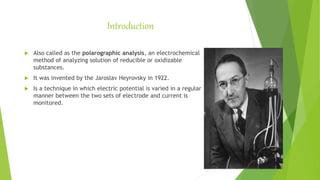
 Also called as the polarographic analysis, an electrochemical
method of analyzing solution of reducible or oxidizable
substances.
 It was invented by the Jaroslav Heyrovsky in 1922.
 Is a technique in which electric potential is varied in a regular
manner between the two sets of electrode and current is
monitored.
PRINCIPLE
 Study of solutions or of electrode processes by means of electrolysis with two
electrodes, one polarizable and other is un-polarizable, the former formed by
mercury regularly dropping from capillary tube.
 POLARIZED ELECTRODE: Dropping Mercury Electrode (DME).
 Un-Polarizable ELECTRODE: Saturated Calomel Electrode.
Instrumentation
Construction:
 Potentiometer
 Polarizable electrode (if the electrode potential has great changes when the current flow
through the electrode).
 Non-polarizable electrode (if the electrode potential does not change with the current).
Working
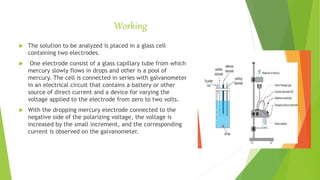
 The solution to be analyzed is placed in a glass cell
containing two electrodes.
 One electrode consist of a glass capillary tube from which
mercury slowly flows in drops and other is a pool of
mercury. The cell is connected in series with galvanometer
in an electrical circuit that contains a battery or other
source of direct current and a device for varying the
voltage applied to the electrode from zero to two volts.
 With the dropping mercury electrode connected to the
negative side of the polarizing voltage, the voltage is
increased by the small increment, and the corresponding
current is observed on the galvanometer.
Working
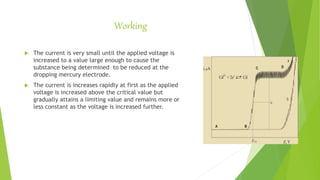
 The current is very small until the applied voltage is
increased to a value large enough to cause the
substance being determined to be reduced at the
dropping mercury electrode.
 The current is increases rapidly at first as the applied
voltage is increased above the critical value but
gradually attains a limiting value and remains more or
less constant as the voltage is increased further.
Characteristics features of polarography
 Applied voltage: it varies from 0-2.5 V.
 Current value: applied current 0.12-100micro ampere.
 Polarogram: the resulting current voltage graph is known as the polarogram.
 Half wave potential: it is an oxidation and reduction potential at the current mid point of a
polarographic curve. It is the characteristic of an electrolysable specie and is independent of
concentration.
3 categories:
A. collectively referred to as residual current
B. referred to as diffusion current resulting from the reduction of the sample
C. called the limiting current
 The diffusion current of a known concentration of reference standard are first determined followed
by the determination of the diffusion current of the unknown concentration.
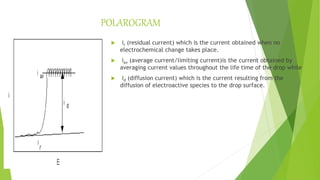
POLAROGRAM
 ir (residual current) which is the current obtained when no
electrochemical change takes place.
 iav (average current/limiting current)is the current obtained by
averaging current values throughout the life time of the drop while
 id (diffusion current) which is the current resulting from the
diffusion of electroactive species to the drop surface.
PHARMACEUTICAL APPLICATIONS
 Dissolved oxygen and peroxides
 Trace metals and metal –containing drugs
 Antiseptics and insecticides
 Vitamins
 Hormones
 Antibiotics
 Alkaloids
 Blood serum and cancer diagnosis

Polarography

  • 1.
  • 2.
    Objectives  Introduction  Principle Instrumentation  Working  Characteristics features of polarogram  Polarogram  Pharmaceutical Applications
  • 3.
    Introduction  Also calledas the polarographic analysis, an electrochemical method of analyzing solution of reducible or oxidizable substances.  It was invented by the Jaroslav Heyrovsky in 1922.  Is a technique in which electric potential is varied in a regular manner between the two sets of electrode and current is monitored.
  • 4.
    PRINCIPLE  Study ofsolutions or of electrode processes by means of electrolysis with two electrodes, one polarizable and other is un-polarizable, the former formed by mercury regularly dropping from capillary tube.  POLARIZED ELECTRODE: Dropping Mercury Electrode (DME).  Un-Polarizable ELECTRODE: Saturated Calomel Electrode.
  • 5.
    Instrumentation Construction:  Potentiometer  Polarizableelectrode (if the electrode potential has great changes when the current flow through the electrode).  Non-polarizable electrode (if the electrode potential does not change with the current).
  • 6.
    Working  The solutionto be analyzed is placed in a glass cell containing two electrodes.  One electrode consist of a glass capillary tube from which mercury slowly flows in drops and other is a pool of mercury. The cell is connected in series with galvanometer in an electrical circuit that contains a battery or other source of direct current and a device for varying the voltage applied to the electrode from zero to two volts.  With the dropping mercury electrode connected to the negative side of the polarizing voltage, the voltage is increased by the small increment, and the corresponding current is observed on the galvanometer.
  • 7.
    Working  The currentis very small until the applied voltage is increased to a value large enough to cause the substance being determined to be reduced at the dropping mercury electrode.  The current is increases rapidly at first as the applied voltage is increased above the critical value but gradually attains a limiting value and remains more or less constant as the voltage is increased further.
  • 8.
    Characteristics features ofpolarography  Applied voltage: it varies from 0-2.5 V.  Current value: applied current 0.12-100micro ampere.  Polarogram: the resulting current voltage graph is known as the polarogram.  Half wave potential: it is an oxidation and reduction potential at the current mid point of a polarographic curve. It is the characteristic of an electrolysable specie and is independent of concentration. 3 categories: A. collectively referred to as residual current B. referred to as diffusion current resulting from the reduction of the sample C. called the limiting current  The diffusion current of a known concentration of reference standard are first determined followed by the determination of the diffusion current of the unknown concentration.
  • 9.
    POLAROGRAM  ir (residualcurrent) which is the current obtained when no electrochemical change takes place.  iav (average current/limiting current)is the current obtained by averaging current values throughout the life time of the drop while  id (diffusion current) which is the current resulting from the diffusion of electroactive species to the drop surface.
  • 10.
    PHARMACEUTICAL APPLICATIONS  Dissolvedoxygen and peroxides  Trace metals and metal –containing drugs  Antiseptics and insecticides  Vitamins  Hormones  Antibiotics  Alkaloids  Blood serum and cancer diagnosis