SEMINAR
ON
SOIL MICRONUTRIENTS
DEPARTMENT OF SOIL SCIENCE AND AGRICULTURAL CHEMISTRY
NAINI AGRICULTURAL INSTITUTE
SAM HIGGINBOTTOM UNIVERSITY OF AGRICULTURE, TECHNOLOGY AND
SCIENCES, PRAYAGRAJ – 211007 (U.P) INDIA
2021
SUBMITTED BY
VISHNU GOPAN GM
M.Sc. Soil science and
Agricultural Chemistry
SUBMITTED TO
DEPARTMENT OF SOIL SCIENCE
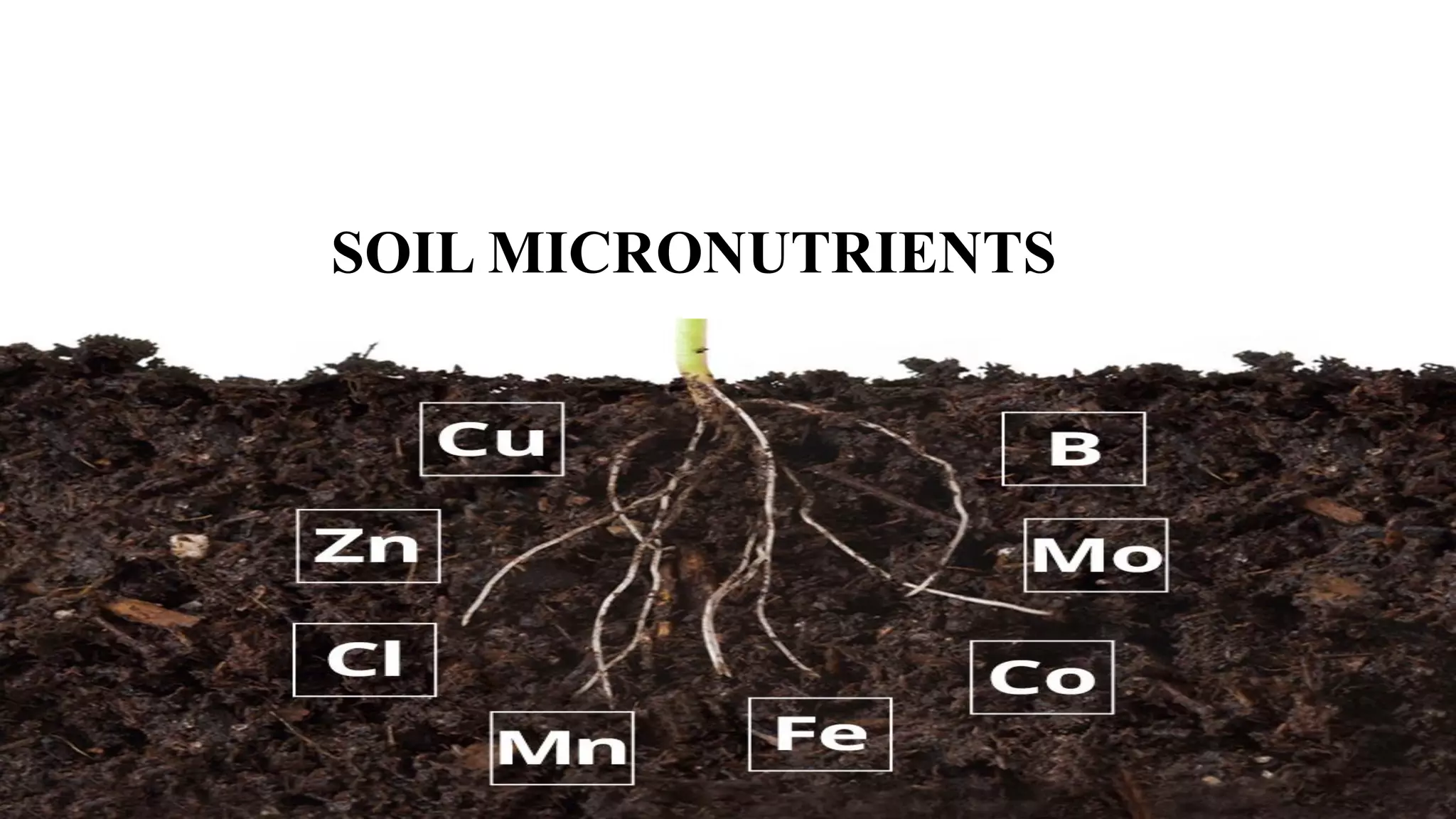
SOIL MICRONUTRIENTS
INTRODUCTION
 There are two basic type of nutrients that are present in the soil to make it a fertile one:
1. Macro Nutrients
2. Micro Nutrients
 The world ‘Micronutrients’ represents some essential nutrients that are required very small quantities for the
growth of plants and micro-organisms
 There are 17 essential elements for plant growth, out of these elements 8 elements are considered as
Micronutrients. They are – iron (Fe), manganese(Mn), copper(Cu), zinc(Zn), boron(B) molybdenum(Mo),
nickel(Ni) and chlorine(Cl).
 Out of these micronutrients Iron (Fe), manganese(Mn), copper(cu), zinc(Zn) - Cations(+ve),
boron(b) molybdenum(Mo), and chlorine(cl) - Anion(-ve).
 So that the chemistry of micro- nutrients cations are different from micro- nutrients anions.
 Among these 8 micro- nutrients, the content of iron (Fe) in soil as well as in plants is the highest and
sometimes higher than even P and S content.
 Micronutrients are also called Trace elements (whose conc: is low)
Source – Kumar et al., (2016)
MACRO NUTRIENTS VS MICRO NUTRIENTS
 MACRO NUTRIENTS are required by the plant in relatively large amounts
C,H,O (Non mineral element)
N,P,K (Primary Nutrients)
Ca, Mg, S (Secondary nutrients)
 MICRO NUTRIENTS are required only in small amounts.
General micronutrients - Fe, Mn, Cu, Zn, B, Mo, Cl, Ni
Beneficial Micronutrients - Silicon, Cobalt, Sodium, Aluminum, Selenium
Source – Kumar et al., (2016)
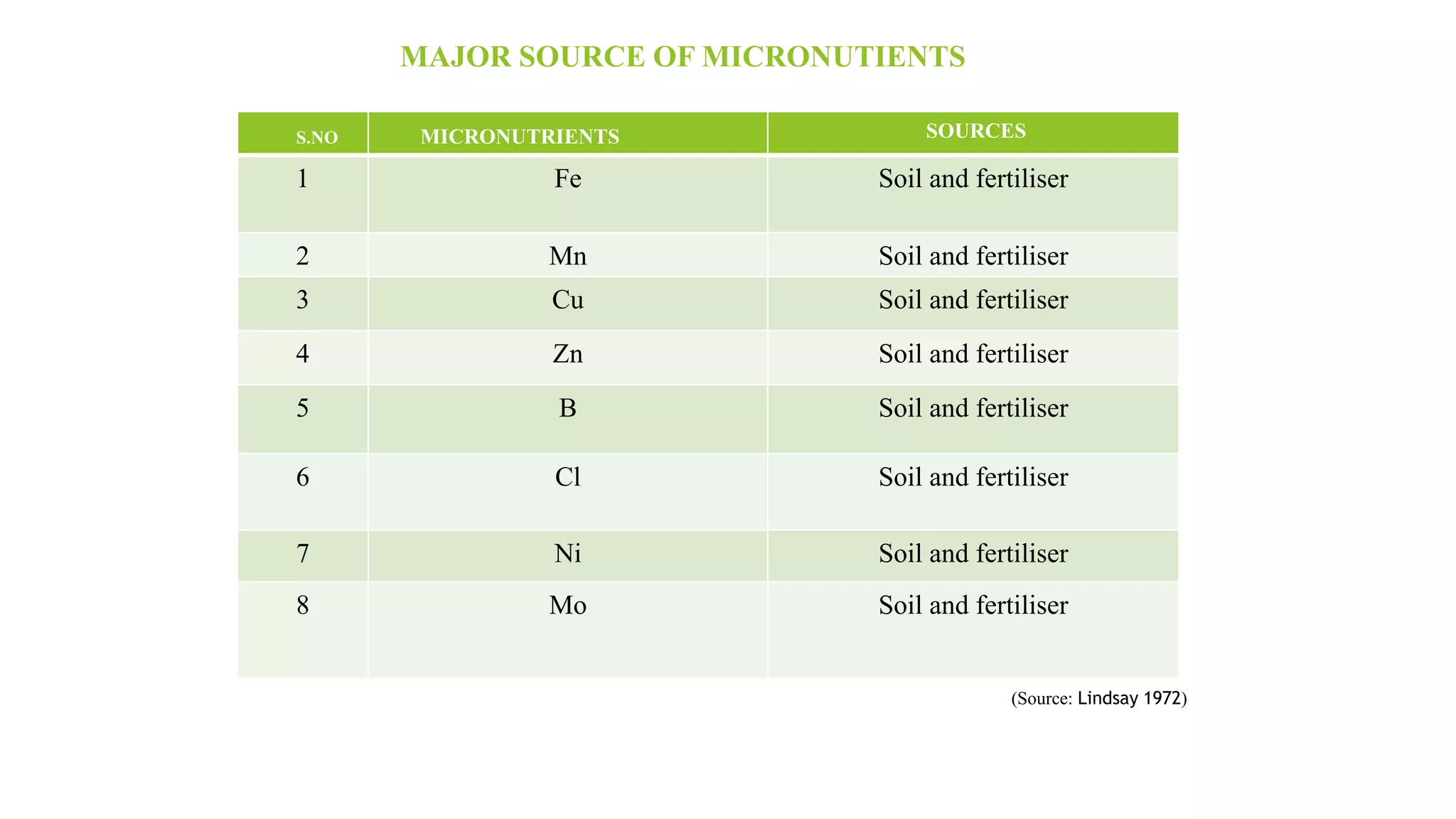
MAJOR SOURCE OF MICRONUTIENTS
S.NO MICRONUTRIENTS SOURCES
1 Fe Soil and fertiliser
2 Mn Soil and fertiliser
3 Cu Soil and fertiliser
4 Zn Soil and fertiliser
5 B Soil and fertiliser
6 Cl Soil and fertiliser
7 Ni Soil and fertiliser
8 Mo Soil and fertiliser
(Source: Lindsay 1972)
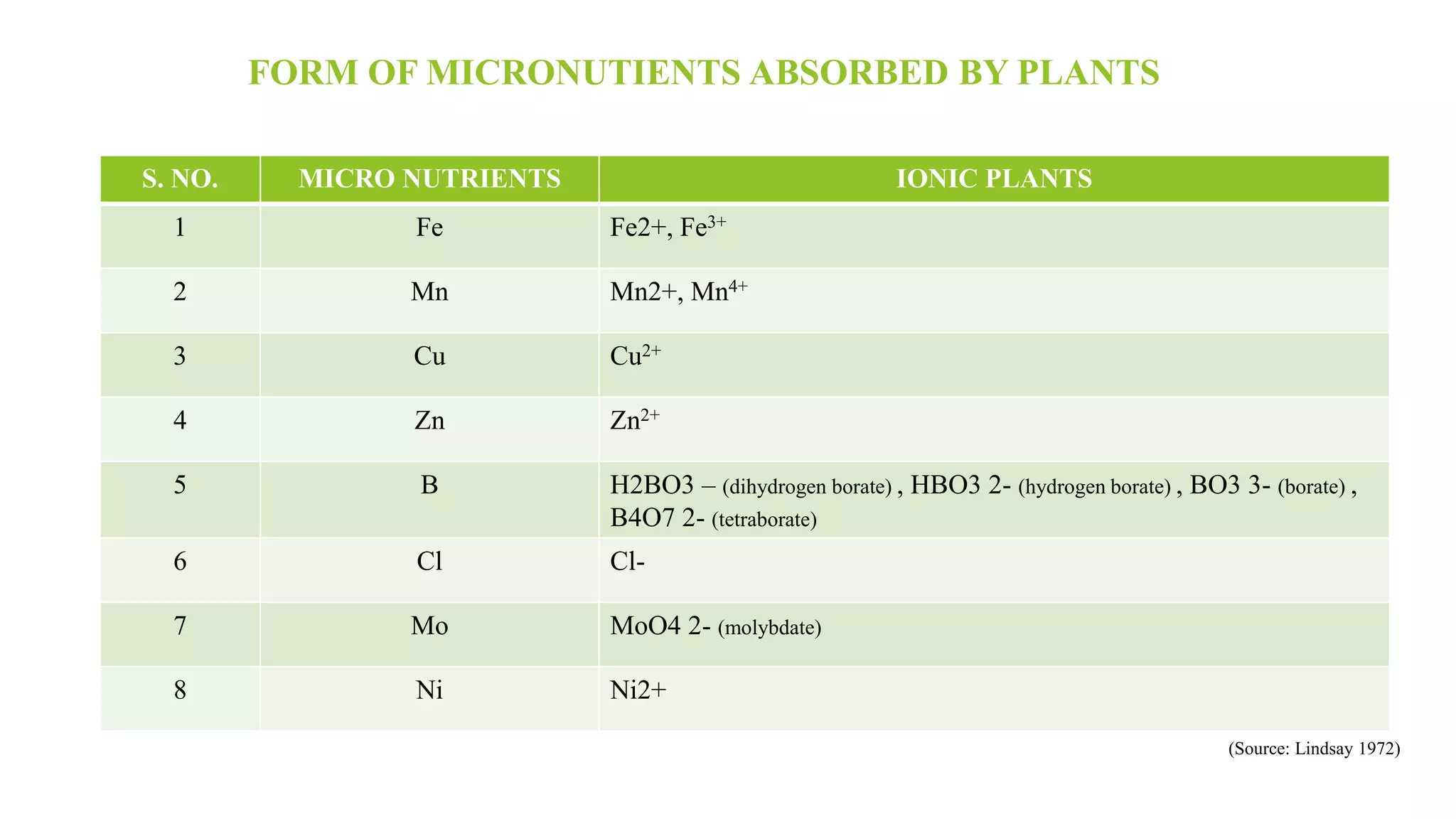
FORM OF MICRONUTIENTS ABSORBED BY PLANTS
S. NO. MICRO NUTRIENTS IONIC PLANTS
1 Fe Fe2+, Fe3+
2 Mn Mn2+, Mn4+
3 Cu Cu2+
4 Zn Zn2+
5 B H2BO3 – (dihydrogen borate) , HBO3 2- (hydrogen borate) , BO3 3- (borate) ,
B4O7 2- (tetraborate)
6 Cl Cl-
7 Mo MoO4 2- (molybdate)
8 Ni Ni2+
(Source: Lindsay 1972)
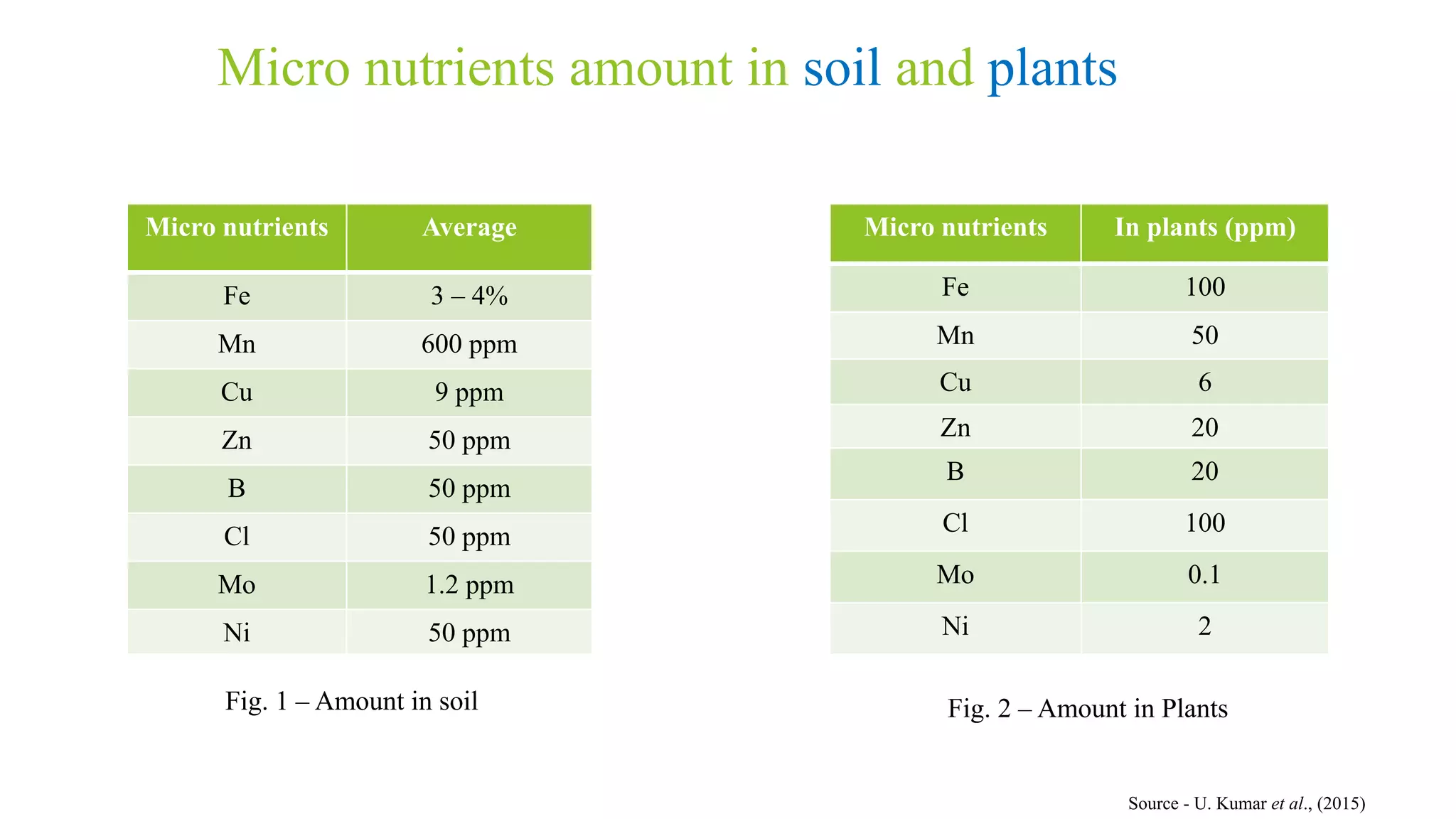
Micro nutrients amount in soil and plants
Micro nutrients Average
Fe 3 – 4%
Mn 600 ppm
Cu 9 ppm
Zn 50 ppm
B 50 ppm
Cl 50 ppm
Mo 1.2 ppm
Ni 50 ppm
Fig. 1 – Amount in soil
Micro nutrients In plants (ppm)
Fe 100
Mn 50
Cu 6
Zn 20
B 20
Cl 100
Mo 0.1
Ni 2
Fig. 2 – Amount in Plants
Source - U. Kumar et al., (2015)
IRON
✓ MAJOR FUNCTION
 Involved in the production of chlorophyll.
 Oxygen carrier.
 Nucleic acid metabolism.
 Chlorophyll synthesis.
 Protein synthesis.
 Structural component of phorphyrin (active center in chlorophyll).
 Required for nitrogen fixation.
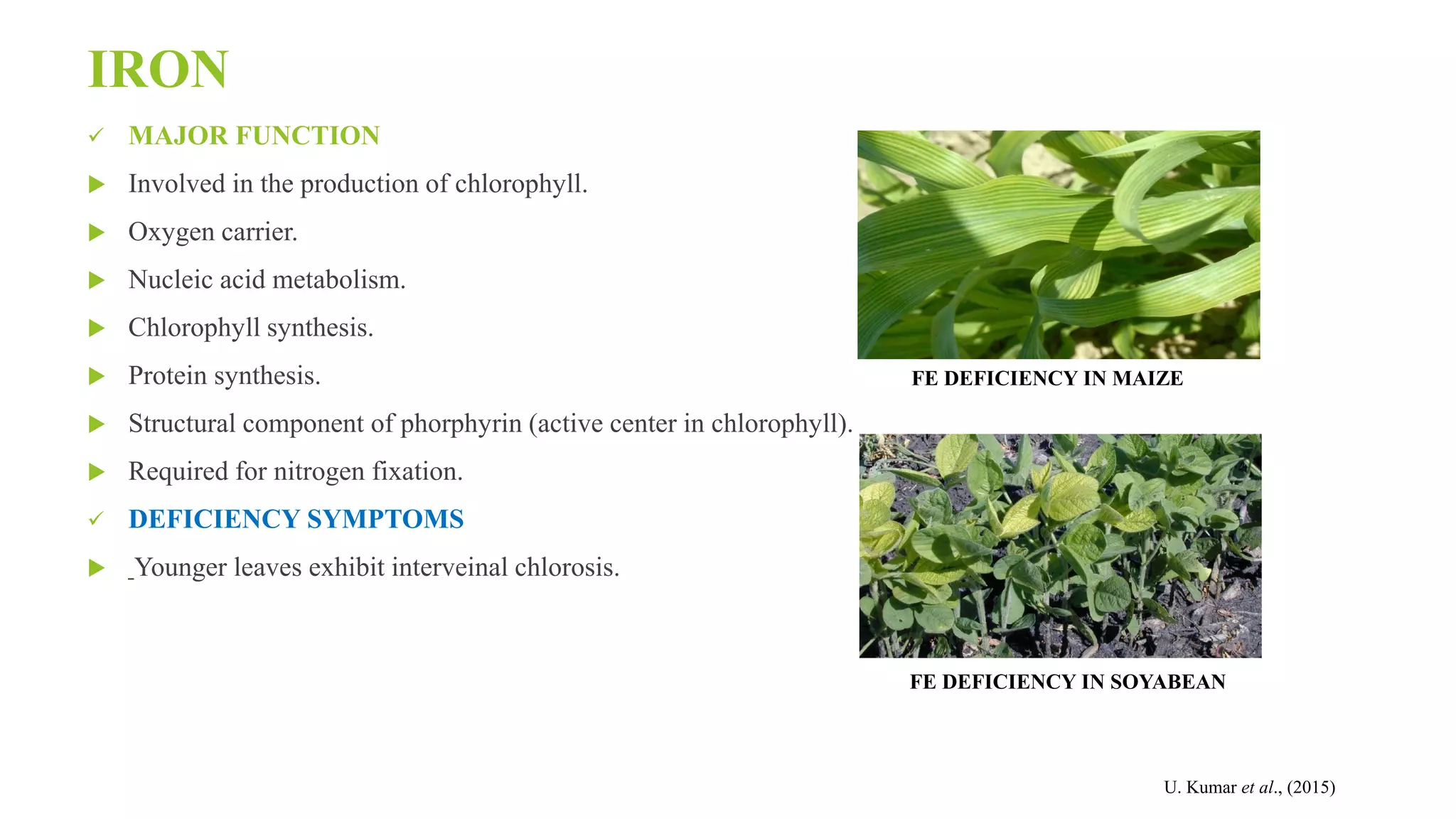
✓ DEFICIENCY SYMPTOMS
 Younger leaves exhibit interveinal chlorosis.
FE DEFICIENCY IN MAIZE
FE DEFICIENCY IN SOYABEAN
U. Kumar et al., (2015)
MANGANESE
✓ MAJOR FUNCTIONS
 Photosynthesis, Nitrogen metabolism.
 Play an important role in plant nodulation and nitrogen fixation
 Mn act as enzyme activation, and this enzyme produce amino acid.
✓ DEFICIENCY SYMPTOMS
 Interveinal chlorosis on young leaves (much like Fe deficiency)
 Plant containing less than 25 ppm Mn then deficiency symptoms will occur.
Grey speck in oat Chlorosis in soybean
Source - U. Kumar et al., (2015)
COPPER
✓ MAJOR FUNCTION
 Important in photosynthesis, protein and carbohydrate metabolism.
 Helps respiration, chlorophyll production
 Improves flavor of fruits and vegetable
 Enhance disease resistance in plants.
✓ DEFICIENCY SYMPTOMS
 Light overall chlorosis, leaf tips die back and tips are twisted, loss of turgor in young leaves
Die back in citrus
Source - U. Kumar et al., (2015)
ZINC
✓ MAJOR FUNCTION
 Helps form growth hormones, Starch formation, Carbohydrates
 Reproduction and promotes seed maturation
 Necessary for chlorophyll production.
 Essential for water uptake and Oxygen carrier
 Play important role in stabilization of protein.
✓ DEFICIENCY SYMPTOMS
 Stunted growth, reduced internode length
 Interveinal chlorosis first appear in younger leaves.
 Reduce the size of the leaves - little leaf.
 Mainly occur in calcareous soils (composed of calcium carbonate).
 Khaira disease in rice ( discolored leaves)
Khaira disease in rice
Source - U. Kumar et al., (2015)
BORON
✓ MAJOR FUNCTION
 Seed and Cell wall formation
 Important for pollination and pollen germination
 Promotes maturity
 Translocation and synthesis of nucleic acids and plant hormones
✓ DEFICIENCY SYMPTOMS
 Light general chlorosis
 Deformed leaves with areas of discoloration
 Young leaves crinkled White rolled leaf tips of young leaves. Reduced
height with leaf tips white in color and rolled.
Death of the growing point. (source-Uttam Kumar,
28 SEP. 2015)
Source - U. Kumar et al., (2015)
MOLYBDENUM
✓ MAJOR FUNCTION
 help in N2 fixation in legumes crops
 Play an important role in plant nodulation
 protein synthesis and pollen formation
 Convert inorganic phosphates to organic forms in the plant
✓ DEFICIENCY SYMPTOMS
 General chlorosis (yellowing) of young plants
A. Whip tail in cauliflower.
B. Yellow spot in citrus.
C. Scald in beans
A
B C
Source - U. Kumar et al., (2015)
CHLORINE
✓ MAJOR FUNCTION
 Essential for stomatal opening
 Electrical charge balance in physiological functions in plants.
 It indirectly affects plant growth by stomatal regulation of water loss (Turgor regulation)
 Resisting diseases
✓ DEFICIENCY SYMPTOMS.
 Chloride deficiencies have been reported on sandy soils, humid region with high rainfall area.
 Chlorosis and wilting of young leaves
 Deficiency rarely seen on crop plants in field
Source - U. Kumar et al., (2015)
NICKEL
✓ MAJOR FUNCTION
 Nickel was established as an essential micronutrient for the growth of temperate cereal crops
 Benefited the growth of nitrogen-fixing species (nodule weight and seed yield (Bertrand and Wolf 1967))
 Ni should be considered a micronutrient for cereals. Because Ni is required by legumes, and is now established
as essential for cereals, we conclude that Ni should be added to the list of micronutrients essential for all higher
plant growth.
 Component of nitrogen-fixing hydrogenase bacteria (Cammack 1995)
 Impart plant disease resistance
✓ DEFICIENCY SYMPTOMS
 Deficiency symptoms are exhibited as whole young leaf chlorosis along with necrotic leaf tips (like Fe
deficiency) (Eskew et al. 1983; Walker et al. 1985)
Source - U. Kumar et al., (2015)
General micronutrient toxicity symptoms
Element Toxicity symptoms
B Young leaves develop chlorosis between veins and become reddish brown in colour
Cl Reduced size and number of leaves having bronze or yellow coloration
Cu Interveinal chlorosis in young leaves
Fe Bronzing and stippling of leaves
Mo Tints of golden yellow or blue color of leaves
Mn Chlorosis of young leaves
Zn Rolling of leaves margins
Ni Interveinal chlorosis and restricted leaf expansion
Al Development of thick, stubby and distorted root systems
Source - U. Singh et al,. (2016)
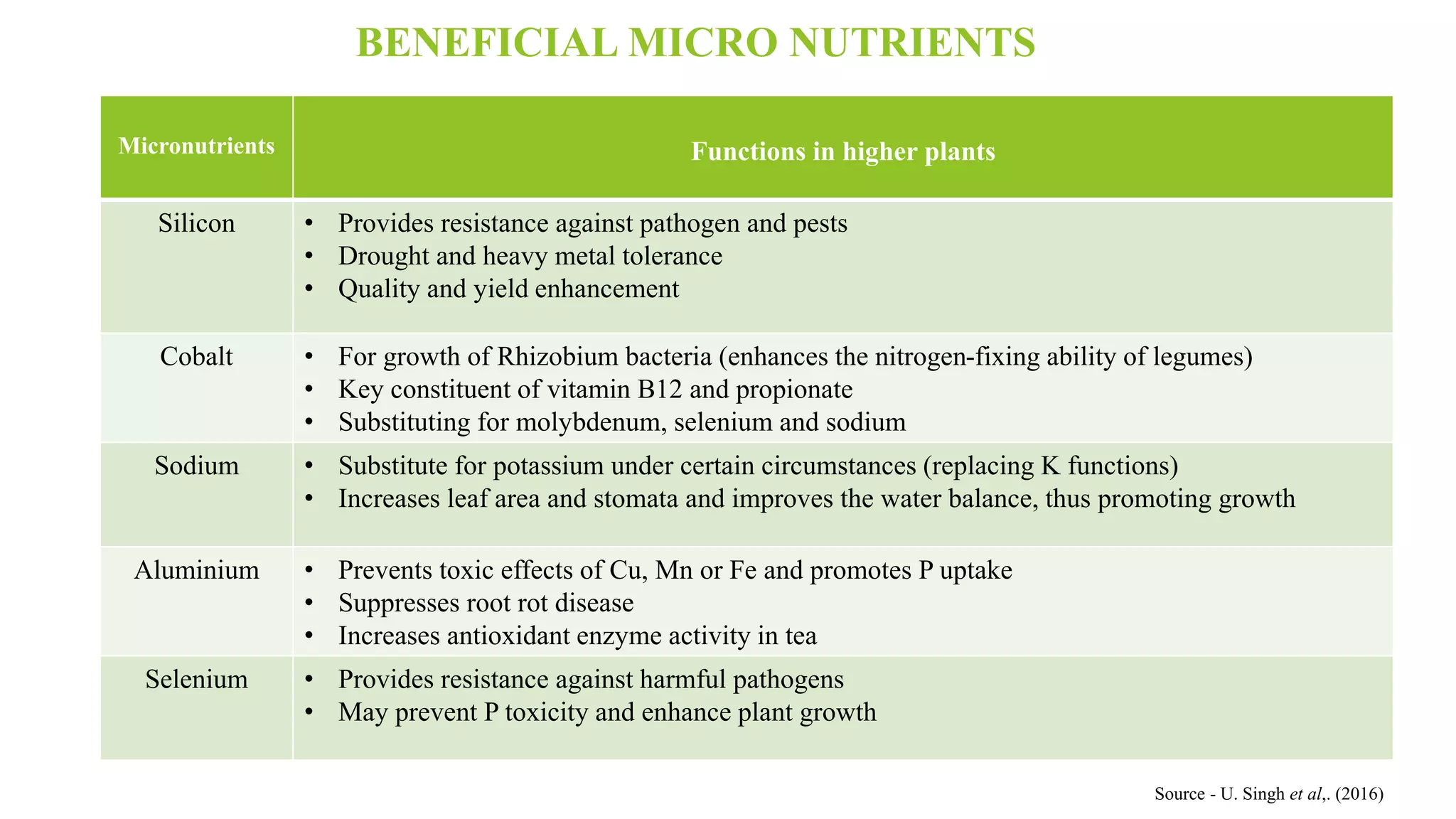
BENEFICIAL MICRO NUTRIENTS
Micronutrients Functions in higher plants
Silicon • Provides resistance against pathogen and pests
• Drought and heavy metal tolerance
• Quality and yield enhancement
Cobalt • For growth of Rhizobium bacteria (enhances the nitrogen-fixing ability of legumes)
• Key constituent of vitamin B12 and propionate
• Substituting for molybdenum, selenium and sodium
Sodium • Substitute for potassium under certain circumstances (replacing K functions)
• Increases leaf area and stomata and improves the water balance, thus promoting growth
Aluminium • Prevents toxic effects of Cu, Mn or Fe and promotes P uptake
• Suppresses root rot disease
• Increases antioxidant enzyme activity in tea
Selenium • Provides resistance against harmful pathogens
• May prevent P toxicity and enhance plant growth
Source - U. Singh et al,. (2016)
CONCLUSION
The availability of micronutrients to plants depends on several factors such as soil texture, soil reaction,
organic matter, clay content, soil moisture, nutrient interactions in soil, microbial activity, aeration, etc.
It is also not possible to select the most important soil factors influencing micronutrient availability to
plants, because all factors are equally important and their importance can vary between elements.
Maintenance of optimum soil organic matter status and balanced fertilization or soil test-based fertilizer
application also lead to biofortified farm produce, eliminate micronutrient deficiency and improve soil
and plant health
 Soil micronutrients

Soil micronutrients

  • 1.
    SEMINAR ON SOIL MICRONUTRIENTS DEPARTMENT OFSOIL SCIENCE AND AGRICULTURAL CHEMISTRY NAINI AGRICULTURAL INSTITUTE SAM HIGGINBOTTOM UNIVERSITY OF AGRICULTURE, TECHNOLOGY AND SCIENCES, PRAYAGRAJ – 211007 (U.P) INDIA 2021 SUBMITTED BY VISHNU GOPAN GM M.Sc. Soil science and Agricultural Chemistry SUBMITTED TO DEPARTMENT OF SOIL SCIENCE
  • 2.
  • 3.
    INTRODUCTION  There aretwo basic type of nutrients that are present in the soil to make it a fertile one: 1. Macro Nutrients 2. Micro Nutrients  The world ‘Micronutrients’ represents some essential nutrients that are required very small quantities for the growth of plants and micro-organisms  There are 17 essential elements for plant growth, out of these elements 8 elements are considered as Micronutrients. They are – iron (Fe), manganese(Mn), copper(Cu), zinc(Zn), boron(B) molybdenum(Mo), nickel(Ni) and chlorine(Cl).  Out of these micronutrients Iron (Fe), manganese(Mn), copper(cu), zinc(Zn) - Cations(+ve), boron(b) molybdenum(Mo), and chlorine(cl) - Anion(-ve).  So that the chemistry of micro- nutrients cations are different from micro- nutrients anions.  Among these 8 micro- nutrients, the content of iron (Fe) in soil as well as in plants is the highest and sometimes higher than even P and S content.  Micronutrients are also called Trace elements (whose conc: is low) Source – Kumar et al., (2016)
  • 4.
    MACRO NUTRIENTS VSMICRO NUTRIENTS  MACRO NUTRIENTS are required by the plant in relatively large amounts C,H,O (Non mineral element) N,P,K (Primary Nutrients) Ca, Mg, S (Secondary nutrients)  MICRO NUTRIENTS are required only in small amounts. General micronutrients - Fe, Mn, Cu, Zn, B, Mo, Cl, Ni Beneficial Micronutrients - Silicon, Cobalt, Sodium, Aluminum, Selenium Source – Kumar et al., (2016)
  • 5.
    MAJOR SOURCE OFMICRONUTIENTS S.NO MICRONUTRIENTS SOURCES 1 Fe Soil and fertiliser 2 Mn Soil and fertiliser 3 Cu Soil and fertiliser 4 Zn Soil and fertiliser 5 B Soil and fertiliser 6 Cl Soil and fertiliser 7 Ni Soil and fertiliser 8 Mo Soil and fertiliser (Source: Lindsay 1972)
  • 6.
    FORM OF MICRONUTIENTSABSORBED BY PLANTS S. NO. MICRO NUTRIENTS IONIC PLANTS 1 Fe Fe2+, Fe3+ 2 Mn Mn2+, Mn4+ 3 Cu Cu2+ 4 Zn Zn2+ 5 B H2BO3 – (dihydrogen borate) , HBO3 2- (hydrogen borate) , BO3 3- (borate) , B4O7 2- (tetraborate) 6 Cl Cl- 7 Mo MoO4 2- (molybdate) 8 Ni Ni2+ (Source: Lindsay 1972)
  • 7.
    Micro nutrients amountin soil and plants Micro nutrients Average Fe 3 – 4% Mn 600 ppm Cu 9 ppm Zn 50 ppm B 50 ppm Cl 50 ppm Mo 1.2 ppm Ni 50 ppm Fig. 1 – Amount in soil Micro nutrients In plants (ppm) Fe 100 Mn 50 Cu 6 Zn 20 B 20 Cl 100 Mo 0.1 Ni 2 Fig. 2 – Amount in Plants Source - U. Kumar et al., (2015)
  • 8.
    IRON ✓ MAJOR FUNCTION Involved in the production of chlorophyll.  Oxygen carrier.  Nucleic acid metabolism.  Chlorophyll synthesis.  Protein synthesis.  Structural component of phorphyrin (active center in chlorophyll).  Required for nitrogen fixation. ✓ DEFICIENCY SYMPTOMS  Younger leaves exhibit interveinal chlorosis. FE DEFICIENCY IN MAIZE FE DEFICIENCY IN SOYABEAN U. Kumar et al., (2015)
  • 9.
    MANGANESE ✓ MAJOR FUNCTIONS Photosynthesis, Nitrogen metabolism.  Play an important role in plant nodulation and nitrogen fixation  Mn act as enzyme activation, and this enzyme produce amino acid. ✓ DEFICIENCY SYMPTOMS  Interveinal chlorosis on young leaves (much like Fe deficiency)  Plant containing less than 25 ppm Mn then deficiency symptoms will occur. Grey speck in oat Chlorosis in soybean Source - U. Kumar et al., (2015)
  • 10.
    COPPER ✓ MAJOR FUNCTION Important in photosynthesis, protein and carbohydrate metabolism.  Helps respiration, chlorophyll production  Improves flavor of fruits and vegetable  Enhance disease resistance in plants. ✓ DEFICIENCY SYMPTOMS  Light overall chlorosis, leaf tips die back and tips are twisted, loss of turgor in young leaves Die back in citrus Source - U. Kumar et al., (2015)
  • 11.
    ZINC ✓ MAJOR FUNCTION Helps form growth hormones, Starch formation, Carbohydrates  Reproduction and promotes seed maturation  Necessary for chlorophyll production.  Essential for water uptake and Oxygen carrier  Play important role in stabilization of protein. ✓ DEFICIENCY SYMPTOMS  Stunted growth, reduced internode length  Interveinal chlorosis first appear in younger leaves.  Reduce the size of the leaves - little leaf.  Mainly occur in calcareous soils (composed of calcium carbonate).  Khaira disease in rice ( discolored leaves) Khaira disease in rice Source - U. Kumar et al., (2015)
  • 12.
    BORON ✓ MAJOR FUNCTION Seed and Cell wall formation  Important for pollination and pollen germination  Promotes maturity  Translocation and synthesis of nucleic acids and plant hormones ✓ DEFICIENCY SYMPTOMS  Light general chlorosis  Deformed leaves with areas of discoloration  Young leaves crinkled White rolled leaf tips of young leaves. Reduced height with leaf tips white in color and rolled. Death of the growing point. (source-Uttam Kumar, 28 SEP. 2015) Source - U. Kumar et al., (2015)
  • 13.
    MOLYBDENUM ✓ MAJOR FUNCTION help in N2 fixation in legumes crops  Play an important role in plant nodulation  protein synthesis and pollen formation  Convert inorganic phosphates to organic forms in the plant ✓ DEFICIENCY SYMPTOMS  General chlorosis (yellowing) of young plants A. Whip tail in cauliflower. B. Yellow spot in citrus. C. Scald in beans A B C Source - U. Kumar et al., (2015)
  • 14.
    CHLORINE ✓ MAJOR FUNCTION Essential for stomatal opening  Electrical charge balance in physiological functions in plants.  It indirectly affects plant growth by stomatal regulation of water loss (Turgor regulation)  Resisting diseases ✓ DEFICIENCY SYMPTOMS.  Chloride deficiencies have been reported on sandy soils, humid region with high rainfall area.  Chlorosis and wilting of young leaves  Deficiency rarely seen on crop plants in field Source - U. Kumar et al., (2015)
  • 15.
    NICKEL ✓ MAJOR FUNCTION Nickel was established as an essential micronutrient for the growth of temperate cereal crops  Benefited the growth of nitrogen-fixing species (nodule weight and seed yield (Bertrand and Wolf 1967))  Ni should be considered a micronutrient for cereals. Because Ni is required by legumes, and is now established as essential for cereals, we conclude that Ni should be added to the list of micronutrients essential for all higher plant growth.  Component of nitrogen-fixing hydrogenase bacteria (Cammack 1995)  Impart plant disease resistance ✓ DEFICIENCY SYMPTOMS  Deficiency symptoms are exhibited as whole young leaf chlorosis along with necrotic leaf tips (like Fe deficiency) (Eskew et al. 1983; Walker et al. 1985) Source - U. Kumar et al., (2015)
  • 16.
    General micronutrient toxicitysymptoms Element Toxicity symptoms B Young leaves develop chlorosis between veins and become reddish brown in colour Cl Reduced size and number of leaves having bronze or yellow coloration Cu Interveinal chlorosis in young leaves Fe Bronzing and stippling of leaves Mo Tints of golden yellow or blue color of leaves Mn Chlorosis of young leaves Zn Rolling of leaves margins Ni Interveinal chlorosis and restricted leaf expansion Al Development of thick, stubby and distorted root systems Source - U. Singh et al,. (2016)
  • 17.
    BENEFICIAL MICRO NUTRIENTS MicronutrientsFunctions in higher plants Silicon • Provides resistance against pathogen and pests • Drought and heavy metal tolerance • Quality and yield enhancement Cobalt • For growth of Rhizobium bacteria (enhances the nitrogen-fixing ability of legumes) • Key constituent of vitamin B12 and propionate • Substituting for molybdenum, selenium and sodium Sodium • Substitute for potassium under certain circumstances (replacing K functions) • Increases leaf area and stomata and improves the water balance, thus promoting growth Aluminium • Prevents toxic effects of Cu, Mn or Fe and promotes P uptake • Suppresses root rot disease • Increases antioxidant enzyme activity in tea Selenium • Provides resistance against harmful pathogens • May prevent P toxicity and enhance plant growth Source - U. Singh et al,. (2016)
  • 18.
    CONCLUSION The availability ofmicronutrients to plants depends on several factors such as soil texture, soil reaction, organic matter, clay content, soil moisture, nutrient interactions in soil, microbial activity, aeration, etc. It is also not possible to select the most important soil factors influencing micronutrient availability to plants, because all factors are equally important and their importance can vary between elements. Maintenance of optimum soil organic matter status and balanced fertilization or soil test-based fertilizer application also lead to biofortified farm produce, eliminate micronutrient deficiency and improve soil and plant health