CONTENT
 Introduction
 Types of nutrients
 Macronutrients
 Micro nutrients
 fertilizers
INTRODUCTION
 FERTILITY
The ability of the soil to supply essential plant
nutrients and soil water in adequate amounts
and proportions for plant growth and
reproduction in the absence of toxic
substances which may inhibit plant growth.
INTRODUCTION
 NUTRIENT
Nutrients are chemical elements that are essential for the
growth and fertility.
 DEFICENCY
Plant condition where an essential nutrient is not sufficiently
available.
 MICRO NUTRIENTS
 Nutrient needed in smaller quantities
CONT.
 MACRO NUTRIENTS
Nutrient needed in larger quantities
 TOXICITY
A point that is reached where too much of a nutrient
becomes poisonous
TYPES OF NUTRIENTS
 There are two basic type of nutrients that are presnt in
the soil to make it a fertile one:
1. Macro nutrients
2. Micro nutrients
 MACRO VS MICRO
 Macro nutrients are required by the plant in
relatively large amounts
 Micro nutrients are required only in small amounts
MACRO NUTRIENTS
 NON MINERAL
ELEMENTS
 carbon (C)
 hydrogen (H)
 oxygen (O)
 PRIMARY
NUTRIENTS
 Nitrogen (N)
 Phosphorus (P)
 Potassium (K)
 SECONDARY
NUTRIENTS
 calcium (Ca)
 magnesium (Mg)
 sulfur (S)
NITROGEN
 ABUNDANCE
98% of the planet’s nitrogen is in the primary rock of
the Earth, the remaining 2% is in the atmosphere
 IMPORTANT FOR PLANT
Promotes growth of leaves and stems
Makes up 1% to 4% of plant’s harvested material
Crops absorbed more nitrogen from the soil than any
other nutrient.
Most frequently the limiting factor in crop
production.
Necessary to develop cell proteins and chlorophyll
NITROGEN
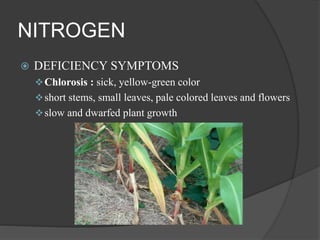
 DEFICIENCY SYMPTOMS
Chlorosis : sick, yellow-green color
short stems, small leaves, pale colored leaves and flowers
slow and dwarfed plant growth
PHOSPHOROUS
 3rd most readily absorbed nutrient
 Stimulates early formation and growth of roots
 Provides for fast and vigorous growth and
speeds maturity
 Stimulates flowering and seed development
 Necessary for the enzyme action of many plant
processes
PHOSPHOROUS
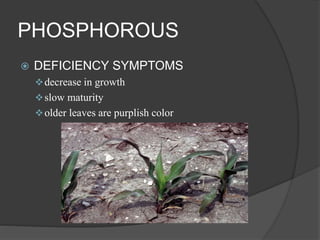
 DEFICIENCY SYMPTOMS
decrease in growth
slow maturity
older leaves are purplish color
POTASSIUM
 2nd most readily absorbed
 Used to form carbohydrates and proteins
 Water intake and respiration
 Formation and transfer of starches, sugars and
oils
 Increases disease resistance and hardiness
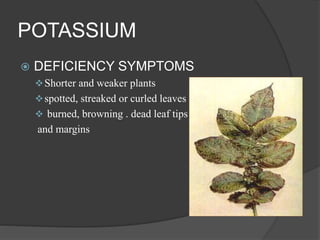
POTASSIUM
 DEFICIENCY SYMPTOMS
Shorter and weaker plants
spotted, streaked or curled leaves
 burned, browning . dead leaf tips
and margins
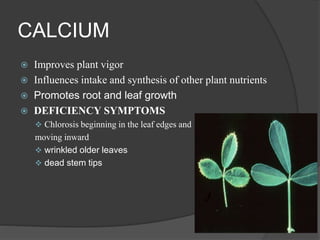
CALCIUM
 Improves plant vigor
 Influences intake and synthesis of other plant nutrients
 Promotes root and leaf growth
 DEFICIENCY SYMPTOMS
 Chlorosis beginning in the leaf edges and
moving inward
 wrinkled older leaves
 dead stem tips
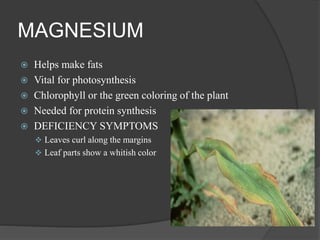
MAGNESIUM
 Helps make fats
 Vital for photosynthesis
 Chlorophyll or the green coloring of the plant
 Needed for protein synthesis
 DEFICIENCY SYMPTOMS
 Leaves curl along the margins
 Leaf parts show a whitish color
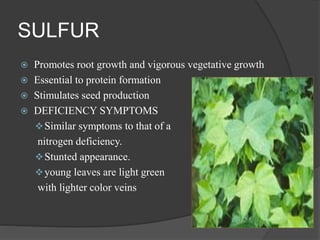
SULFUR
 Promotes root growth and vigorous vegetative growth
 Essential to protein formation
 Stimulates seed production
 DEFICIENCY SYMPTOMS
Similar symptoms to that of a
nitrogen deficiency.
Stunted appearance.
young leaves are light green
with lighter color veins
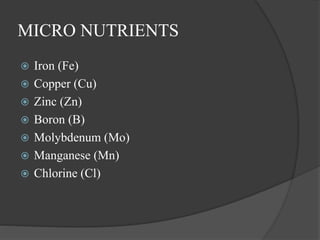
MICRO NUTRIENTS
 Iron (Fe)
 Copper (Cu)
 Zinc (Zn)
 Boron (B)
 Molybdenum (Mo)
 Manganese (Mn)
 Chlorine (Cl)
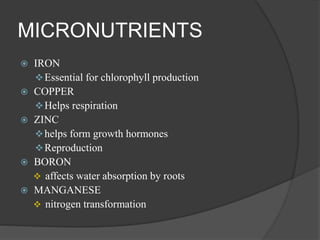
MICRONUTRIENTS
 IRON
Essential for chlorophyll production
 COPPER
Helps respiration
 ZINC
helps form growth hormones
Reproduction
 BORON
 affects water absorption by roots
 MANGANESE
 nitrogen transformation
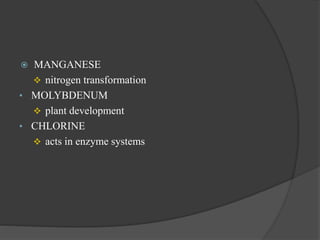
 MANGANESE
 nitrogen transformation
• MOLYBDENUM
 plant development
• CHLORINE
 acts in enzyme systems
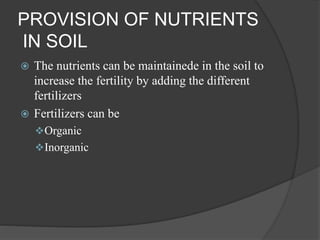
PROVISION OF NUTRIENTS
IN SOIL
 The nutrients can be maintainede in the soil to
increase the fertility by adding the different
fertilizers
 Fertilizers can be
Organic
Inorganic
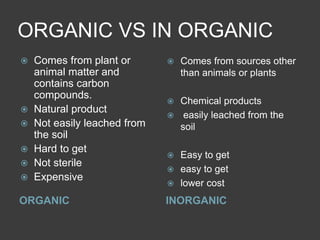
ORGANIC VS IN ORGANIC
ORGANIC INORGANIC
 Comes from plant or
animal matter and
contains carbon
compounds.
 Natural product
 Not easily leached from
the soil
 Hard to get
 Not sterile
 Expensive
 Comes from sources other
than animals or plants
 Chemical products
 easily leached from the
soil
 Easy to get
 easy to get
 lower cost
THANK YOU

Soil nutrients

  • 2.
    CONTENT  Introduction  Typesof nutrients  Macronutrients  Micro nutrients  fertilizers
  • 3.
    INTRODUCTION  FERTILITY The abilityof the soil to supply essential plant nutrients and soil water in adequate amounts and proportions for plant growth and reproduction in the absence of toxic substances which may inhibit plant growth.
  • 4.
    INTRODUCTION  NUTRIENT Nutrients arechemical elements that are essential for the growth and fertility.  DEFICENCY Plant condition where an essential nutrient is not sufficiently available.  MICRO NUTRIENTS  Nutrient needed in smaller quantities
  • 5.
    CONT.  MACRO NUTRIENTS Nutrientneeded in larger quantities  TOXICITY A point that is reached where too much of a nutrient becomes poisonous
  • 6.
    TYPES OF NUTRIENTS There are two basic type of nutrients that are presnt in the soil to make it a fertile one: 1. Macro nutrients 2. Micro nutrients  MACRO VS MICRO  Macro nutrients are required by the plant in relatively large amounts  Micro nutrients are required only in small amounts
  • 7.
    MACRO NUTRIENTS  NONMINERAL ELEMENTS  carbon (C)  hydrogen (H)  oxygen (O)  PRIMARY NUTRIENTS  Nitrogen (N)  Phosphorus (P)  Potassium (K)  SECONDARY NUTRIENTS  calcium (Ca)  magnesium (Mg)  sulfur (S)
  • 8.
    NITROGEN  ABUNDANCE 98% ofthe planet’s nitrogen is in the primary rock of the Earth, the remaining 2% is in the atmosphere  IMPORTANT FOR PLANT Promotes growth of leaves and stems Makes up 1% to 4% of plant’s harvested material Crops absorbed more nitrogen from the soil than any other nutrient. Most frequently the limiting factor in crop production. Necessary to develop cell proteins and chlorophyll
  • 9.
    NITROGEN  DEFICIENCY SYMPTOMS Chlorosis: sick, yellow-green color short stems, small leaves, pale colored leaves and flowers slow and dwarfed plant growth
  • 10.
    PHOSPHOROUS  3rd mostreadily absorbed nutrient  Stimulates early formation and growth of roots  Provides for fast and vigorous growth and speeds maturity  Stimulates flowering and seed development  Necessary for the enzyme action of many plant processes
  • 11.
    PHOSPHOROUS  DEFICIENCY SYMPTOMS decreasein growth slow maturity older leaves are purplish color
  • 12.
    POTASSIUM  2nd mostreadily absorbed  Used to form carbohydrates and proteins  Water intake and respiration  Formation and transfer of starches, sugars and oils  Increases disease resistance and hardiness
  • 13.
    POTASSIUM  DEFICIENCY SYMPTOMS Shorterand weaker plants spotted, streaked or curled leaves  burned, browning . dead leaf tips and margins
  • 14.
    CALCIUM  Improves plantvigor  Influences intake and synthesis of other plant nutrients  Promotes root and leaf growth  DEFICIENCY SYMPTOMS  Chlorosis beginning in the leaf edges and moving inward  wrinkled older leaves  dead stem tips
  • 15.
    MAGNESIUM  Helps makefats  Vital for photosynthesis  Chlorophyll or the green coloring of the plant  Needed for protein synthesis  DEFICIENCY SYMPTOMS  Leaves curl along the margins  Leaf parts show a whitish color
  • 16.
    SULFUR  Promotes rootgrowth and vigorous vegetative growth  Essential to protein formation  Stimulates seed production  DEFICIENCY SYMPTOMS Similar symptoms to that of a nitrogen deficiency. Stunted appearance. young leaves are light green with lighter color veins
  • 17.
    MICRO NUTRIENTS  Iron(Fe)  Copper (Cu)  Zinc (Zn)  Boron (B)  Molybdenum (Mo)  Manganese (Mn)  Chlorine (Cl)
  • 18.
    MICRONUTRIENTS  IRON Essential forchlorophyll production  COPPER Helps respiration  ZINC helps form growth hormones Reproduction  BORON  affects water absorption by roots  MANGANESE  nitrogen transformation
  • 19.
     MANGANESE  nitrogentransformation • MOLYBDENUM  plant development • CHLORINE  acts in enzyme systems
  • 20.
    PROVISION OF NUTRIENTS INSOIL  The nutrients can be maintainede in the soil to increase the fertility by adding the different fertilizers  Fertilizers can be Organic Inorganic
  • 21.
    ORGANIC VS INORGANIC ORGANIC INORGANIC  Comes from plant or animal matter and contains carbon compounds.  Natural product  Not easily leached from the soil  Hard to get  Not sterile  Expensive  Comes from sources other than animals or plants  Chemical products  easily leached from the soil  Easy to get  easy to get  lower cost
  • 22.