PHYTOCHEMICALS
Phytochemicals
• Phyto + Chemicals = plant + any compound
• Secondary metabolites
• Phytochemicals are biologically active, naturally occurring chemical compounds
which provide health benefits for humans and protect plants from environmental
hazards.
History
• More than 5000 years ago, the Chinese used Phytochemicals as Medicine.
• Hippocrates (460-377 BC) and Aristotle (384-322 BC) introduced
Phytochemicals as herbal medicine.
• In 1982, National Academy Of Sciences report on diet and cancer.
• In 1989, National Academy Of Sciences report on diet and health recommended
consuming 5 or more servings of fruits and vegetables daily for reducing the risk
of both cancer and heart diseases.
Importance
• against heart diseases
• acts as detoxify substances
• help to prevent DNA damage
• protect the body from microbial activities
• Balance between oxidants and
antioxidants
• Oxidative stress
• Antioxidants need to be consumed
Phenolic compounds
• Largest category of phytochemicals
1.Flavonoids
2.Phenolic acids
3.Tannins
• Sources of phenolic compounds: tea, coffee, blueberries, plums, cherries,
apples, apple cider vinegar, grapes etc.
• Activity of phenolic compounds: antiulcer, anti-inflammatory, antioxidant,
antimicrobial, antitumor, and antidepressant activities, production of ink.
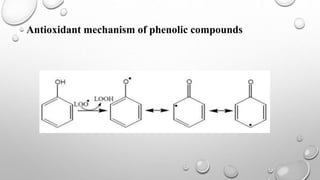
Antioxidant mechanism of phenolic compounds
Alkaloids
• Heterocyclic containing nitrogen atoms
• First phytochemicals
• Vegetable alkalis
• Activity of alkaloids
In human: antihypertensive effects, antiarrhythmic effect, antimalarial activity,
anti cancer actions, stimulant property.
Terpenoids
• Volatile substances
• General formula (C5H8)N
• Sources: carrots, orange peels, pines,
lemons, grapes.
• Activity: anticarcinogenic, antimalarial,
antiulcer, fragrance agents in food and
cosmetics.
Saponins
• Surfactant
• Two parts: aglycones and glycosides.
Triterpenoid saponins
Steroidal saponins
• Sources: beans and legumes
• Activity: decrease cholesterol level, anti inflammatory, anti-cancer,
anti-diabetic, act as surfactant, flavoring agents
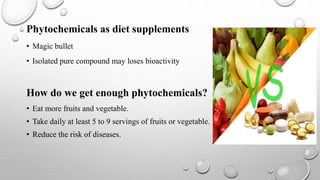
Phytochemicals as diet supplements
• Magic bullet
• Isolated pure compound may loses bioactivity
How do we get enough phytochemicals?
• Eat more fruits and vegetable.
• Take daily at least 5 to 9 servings of fruits or vegetable.
• Reduce the risk of diseases.
Conclusion
• Nature is a unique source of phytochemical with high diversity
• It is difficult to establish clear functionality and structure activity relationships
regarding the effects of phytochemicals in biological systems activity.
• With the advances in synthetic method and the development of more
sophisticated isolation and analytical techniques, many new phytochemicals
might be identified.
Phytochemicals

Phytochemicals

  • 1.
  • 2.
    Phytochemicals • Phyto +Chemicals = plant + any compound • Secondary metabolites • Phytochemicals are biologically active, naturally occurring chemical compounds which provide health benefits for humans and protect plants from environmental hazards.
  • 3.
    History • More than5000 years ago, the Chinese used Phytochemicals as Medicine. • Hippocrates (460-377 BC) and Aristotle (384-322 BC) introduced Phytochemicals as herbal medicine. • In 1982, National Academy Of Sciences report on diet and cancer. • In 1989, National Academy Of Sciences report on diet and health recommended consuming 5 or more servings of fruits and vegetables daily for reducing the risk of both cancer and heart diseases.
  • 4.
    Importance • against heartdiseases • acts as detoxify substances • help to prevent DNA damage • protect the body from microbial activities
  • 5.
    • Balance betweenoxidants and antioxidants • Oxidative stress • Antioxidants need to be consumed
  • 8.
    Phenolic compounds • Largestcategory of phytochemicals 1.Flavonoids 2.Phenolic acids 3.Tannins • Sources of phenolic compounds: tea, coffee, blueberries, plums, cherries, apples, apple cider vinegar, grapes etc. • Activity of phenolic compounds: antiulcer, anti-inflammatory, antioxidant, antimicrobial, antitumor, and antidepressant activities, production of ink.
  • 9.
    Antioxidant mechanism ofphenolic compounds
  • 10.
    Alkaloids • Heterocyclic containingnitrogen atoms • First phytochemicals • Vegetable alkalis • Activity of alkaloids In human: antihypertensive effects, antiarrhythmic effect, antimalarial activity, anti cancer actions, stimulant property.
  • 11.
    Terpenoids • Volatile substances •General formula (C5H8)N • Sources: carrots, orange peels, pines, lemons, grapes. • Activity: anticarcinogenic, antimalarial, antiulcer, fragrance agents in food and cosmetics.
  • 12.
    Saponins • Surfactant • Twoparts: aglycones and glycosides. Triterpenoid saponins Steroidal saponins • Sources: beans and legumes • Activity: decrease cholesterol level, anti inflammatory, anti-cancer, anti-diabetic, act as surfactant, flavoring agents
  • 13.
    Phytochemicals as dietsupplements • Magic bullet • Isolated pure compound may loses bioactivity How do we get enough phytochemicals? • Eat more fruits and vegetable. • Take daily at least 5 to 9 servings of fruits or vegetable. • Reduce the risk of diseases.
  • 14.
    Conclusion • Nature isa unique source of phytochemical with high diversity • It is difficult to establish clear functionality and structure activity relationships regarding the effects of phytochemicals in biological systems activity. • With the advances in synthetic method and the development of more sophisticated isolation and analytical techniques, many new phytochemicals might be identified.