Downloaded 29 times


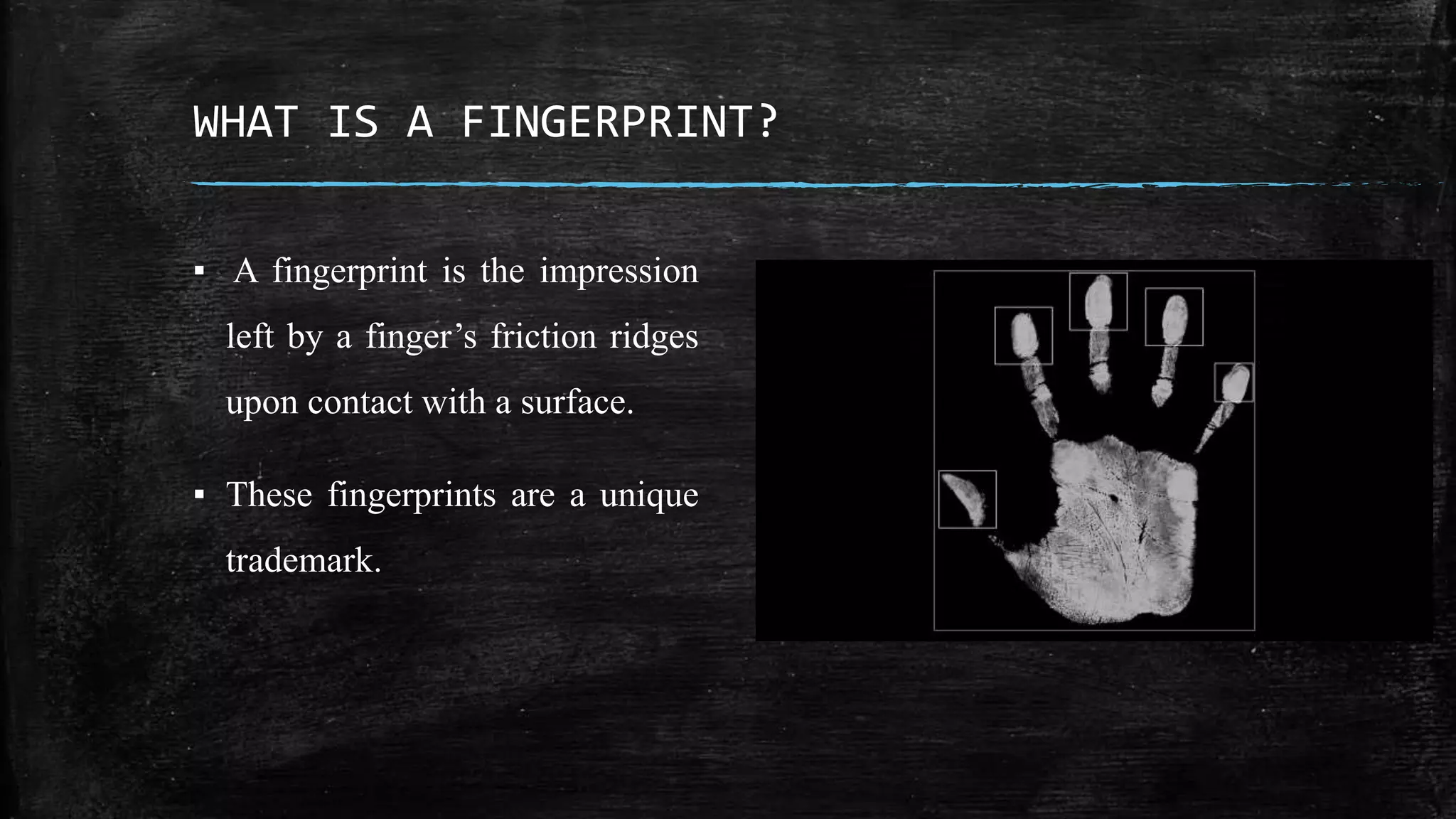

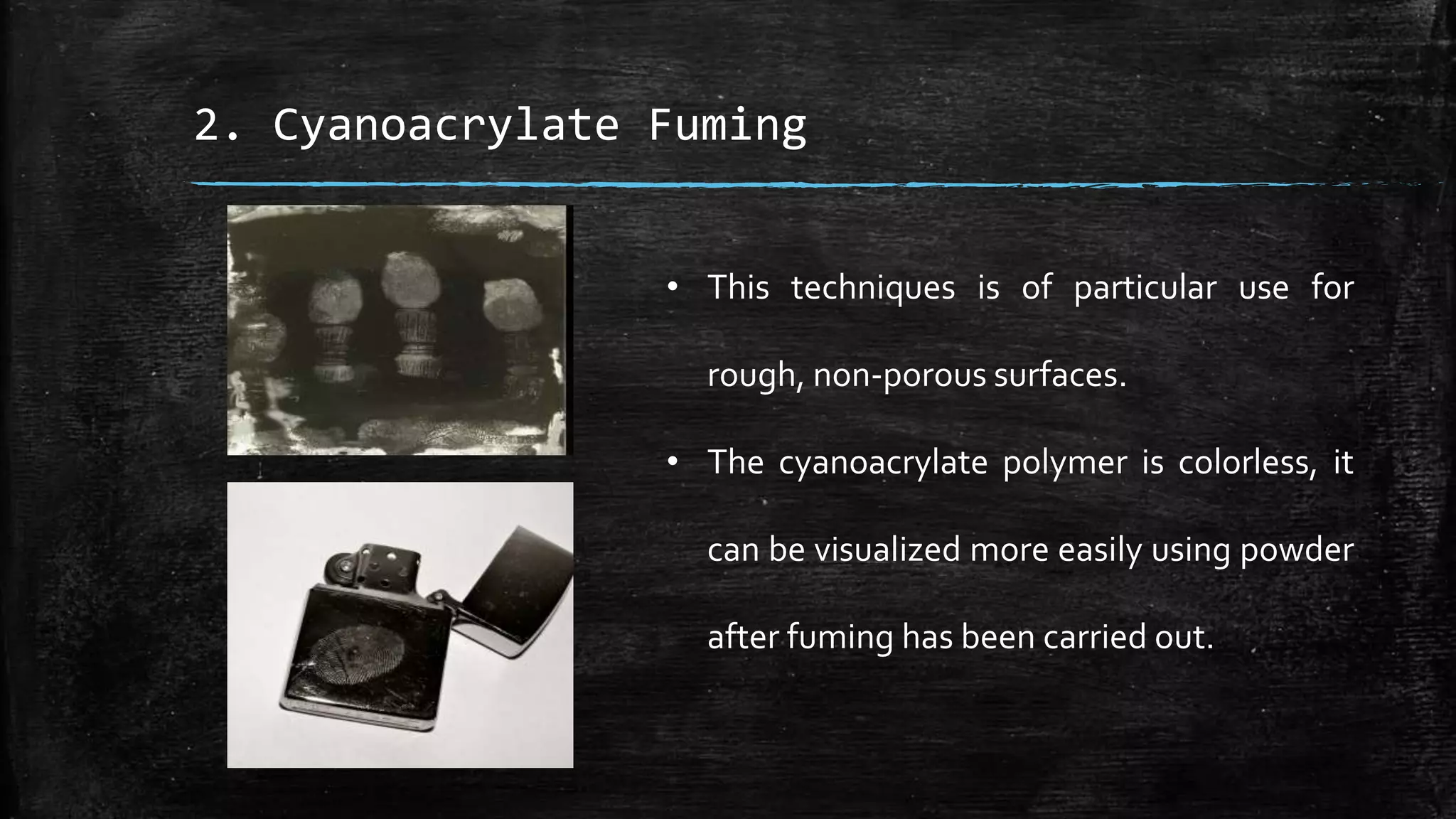
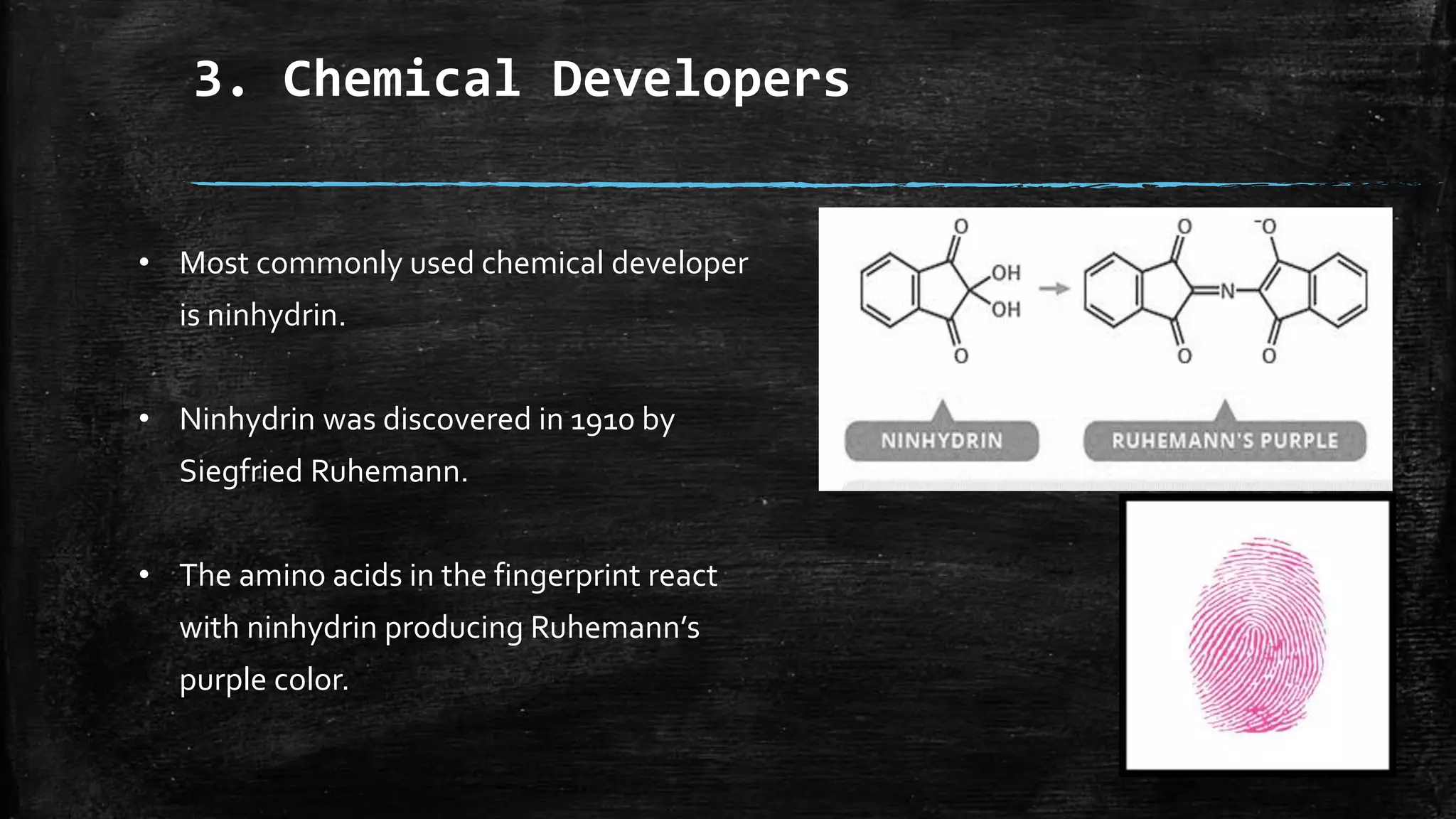
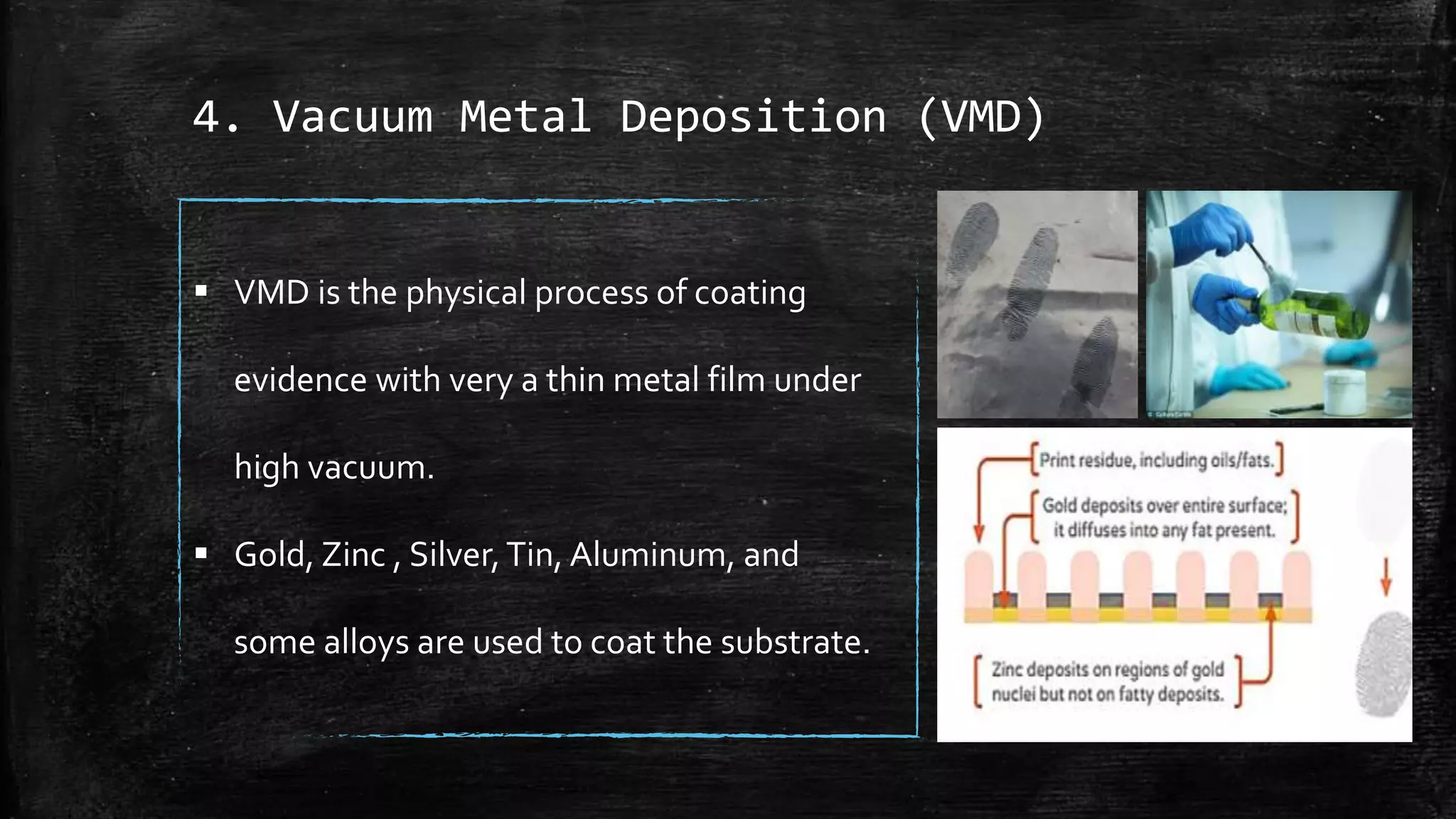




Fingerprints are unique impressions left by friction ridges on the fingers. They have been used for identification since the 19th century. There are various techniques to develop latent fingerprints including powdering, cyanoacrylate fuming, chemical developers like ninhydrin, and vacuum metal deposition. Fingerprints can be classified based on patterns of loops, whorls and arches. They are widely used for criminal identification, improving security through biometric authentication, and enhancing device security through automatic recognition.
Fingerprint detection involves unique impressions left by friction ridges. These are vital biometric identifiers.
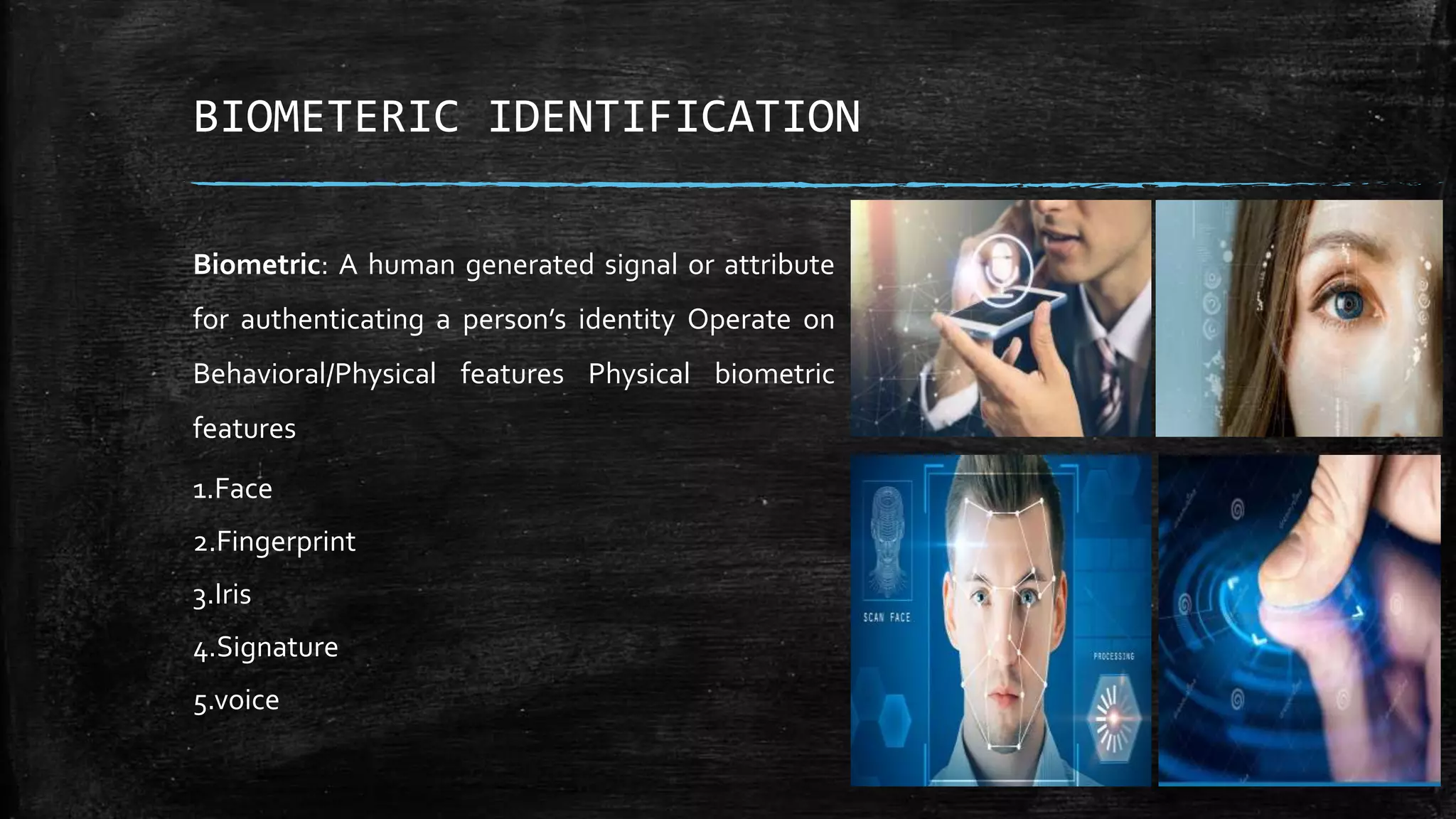
Biometric identification includes physical features like fingerprints, iris, and signature for personal authentication.
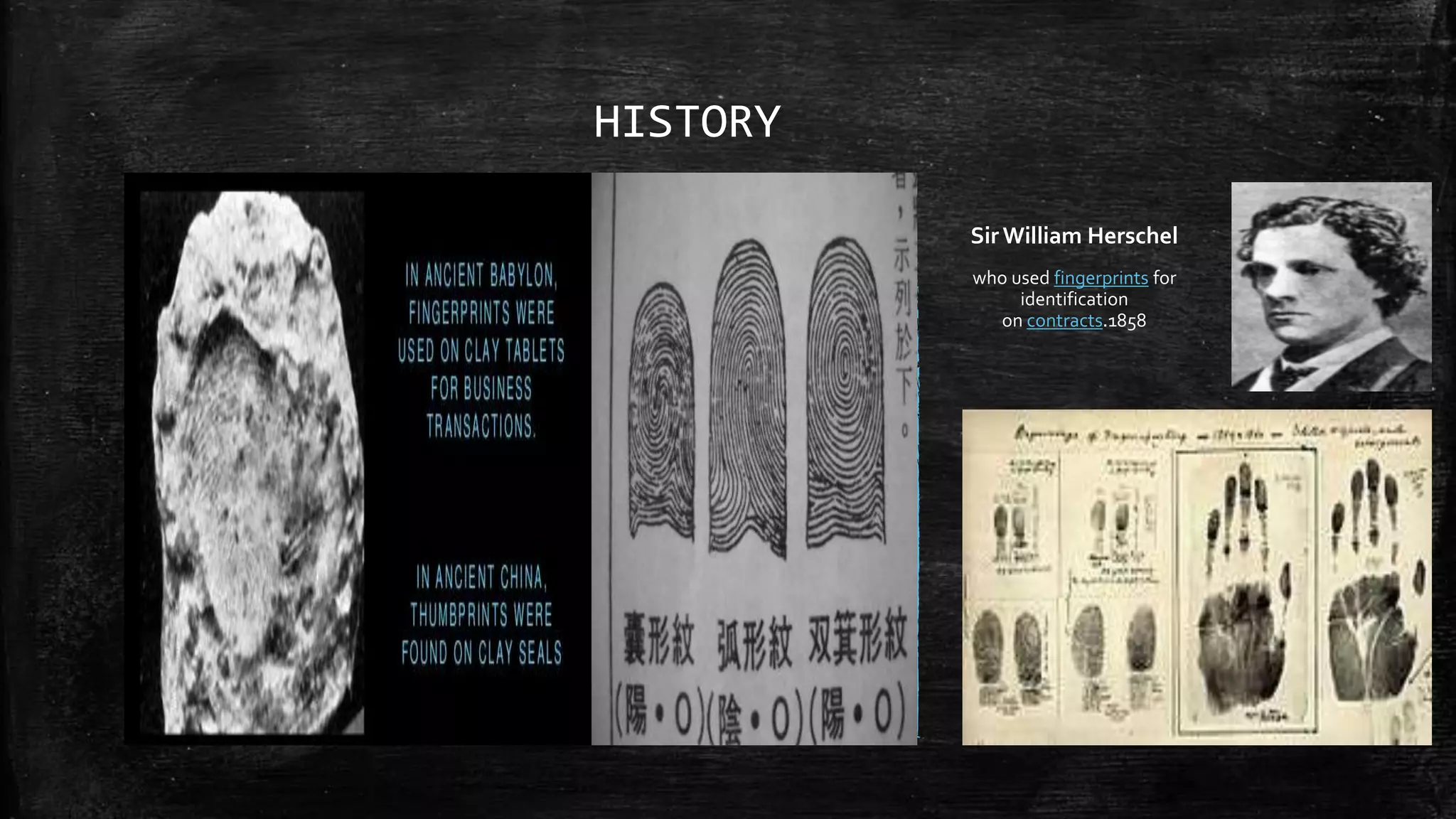
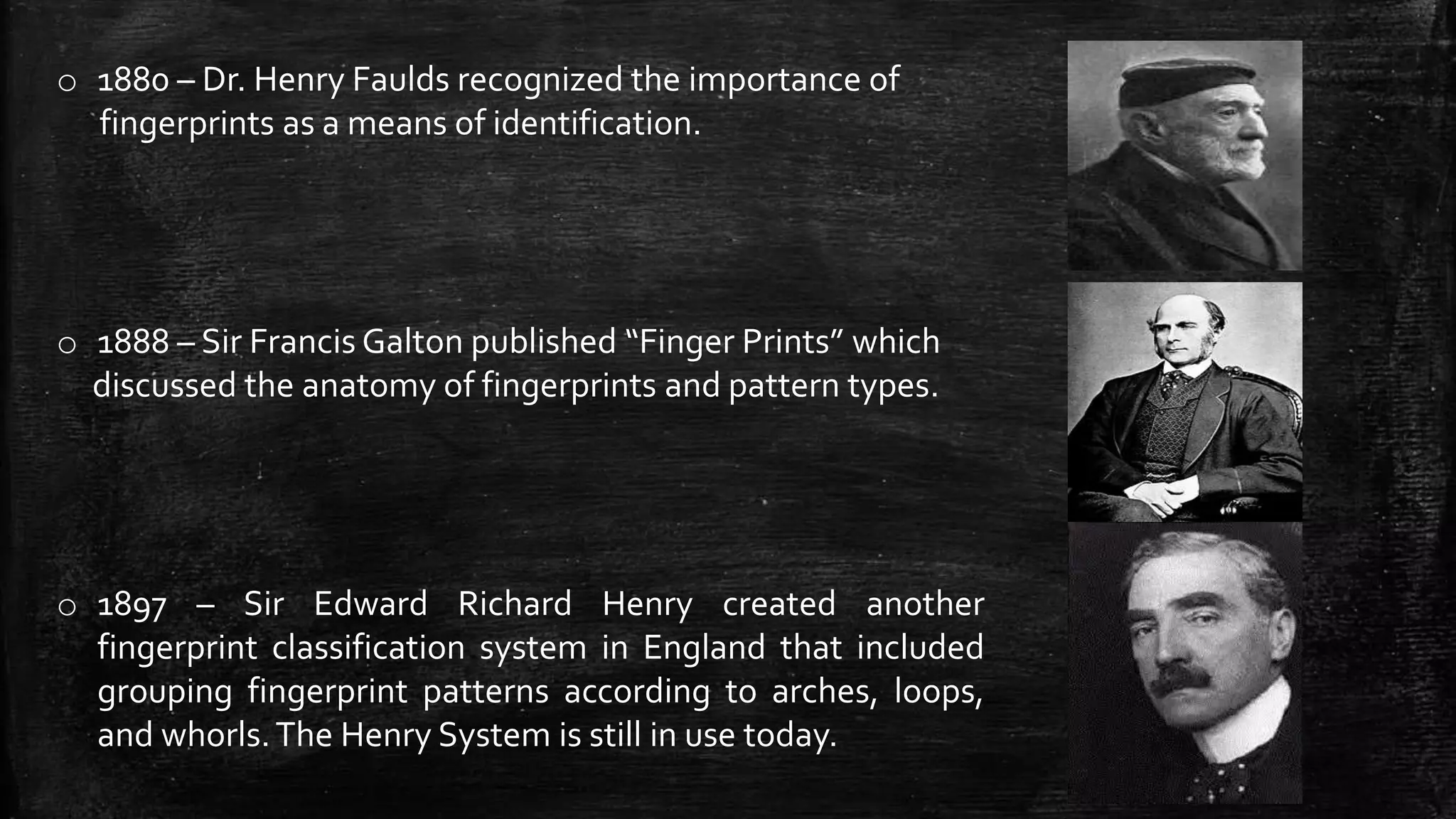
The history traces back to Sir William Herschel in 1858, with key contributions from Faulds, Galton, and Henry.
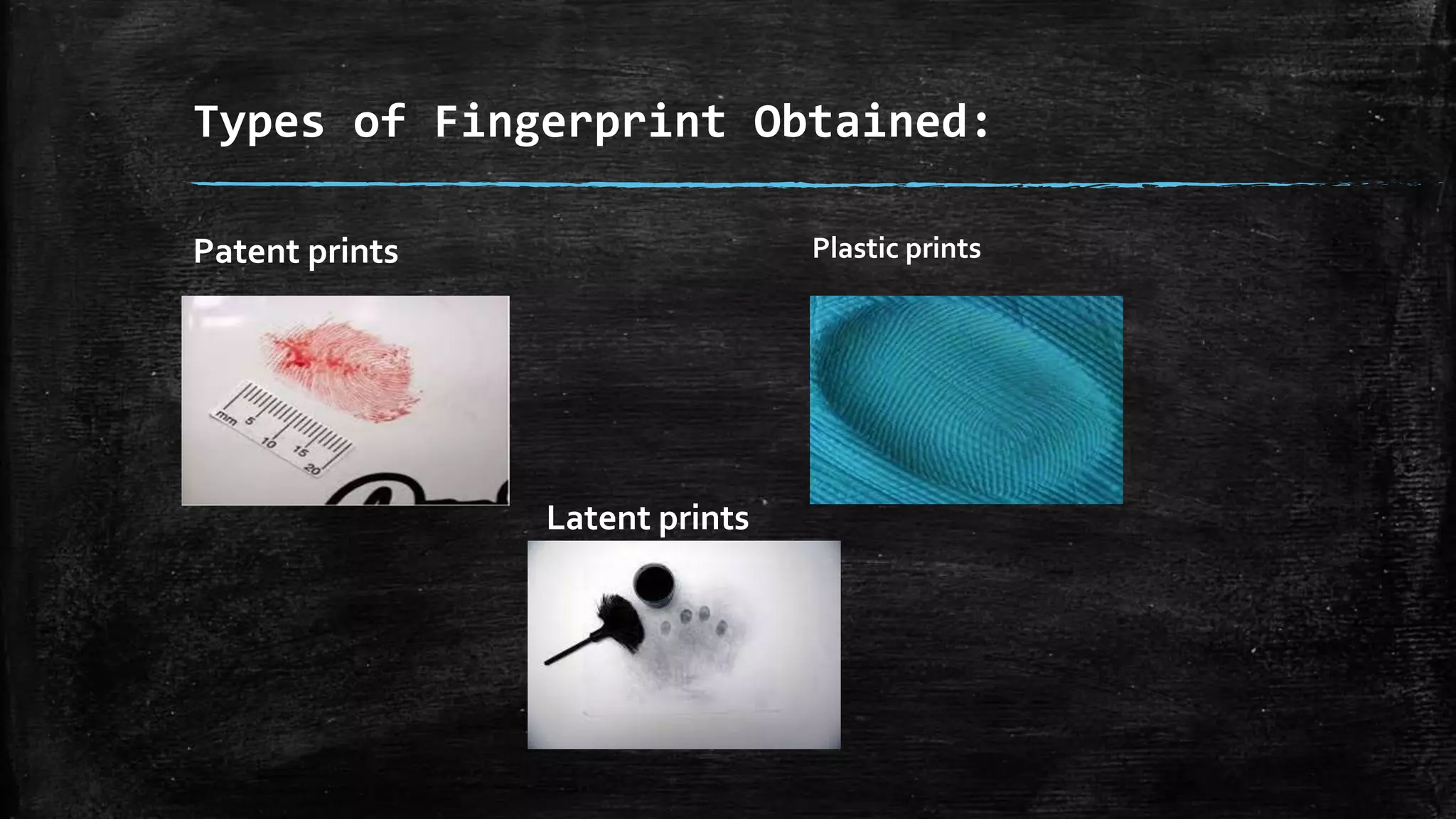
Fingerprints can be categorized into patent, latent, and plastic prints based on their visibility and formation.
Various chemical techniques like powder method, fuming, ninhydrin, and VMD are employed for fingerprint detection.
Fingerprint detection is essential for identifying criminals, enhancing security, and enabling automatic recognition.
Fingerprints provide a consistent means of personal identification, remaining unchanged over time compared to other features.


