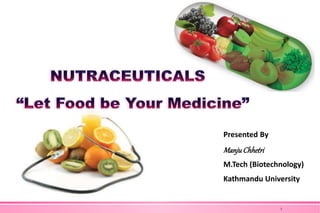



Presented By
ManjuChhetri
M.Tech (Biotechnology)
Kathmandu University
1
Background
2
3
History
Definition
Introduction
Classification
Scope
Area covered by nutraceuticals
Marketed products
Conclusion
▪ The Greek physician Hippocrates, often known as the “father of
medicine” said “Let thy food be thy medicine, and the medicine be
thy food.”. The Philosophy behind is:
“Focus on Prevention”
▪ The term "Nutraceutical" was coined by combining the terms
"Nutrition" and "Pharmaceutical" in 1989 by Dr. Stephen De Felice.
MD, Founder and Chairman of the Foundation for Innovation in
Medicine (FIM).
4
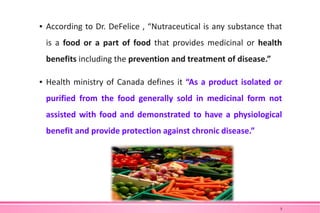
▪ According to Dr. DeFelice , “Nutraceutical is any substance that
is a food or a part of food that provides medicinal or health
benefits including the prevention and treatment of disease.”
▪ Health ministry of Canada defines it “As a product isolated or
purified from the food generally sold in medicinal form not
assisted with food and demonstrated to have a physiological
benefit and provide protection against chronic disease.”
5
▪ A nutraceutical is any substance considered as a food, or its part which,
in addition to its normal which, in addition to its normal nutritional value
provides health benefits including the prevention of disease or
promotion of health.
▪ It is “any non-toxic food component that has scientifically proven
health benefits, including disease treatment or prevention” .
▪ The functional component of the food must be standardized in the
nutraceutical product and produced under good manufacturing practices
(GMPs).
6
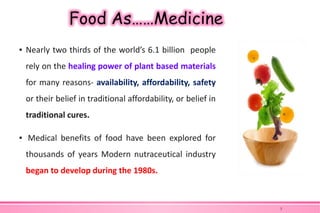
▪ Nearly two thirds of the world’s 6.1 billion people
rely on the healing power of plant based materials
for many reasons- availability, affordability, safety
or their belief in traditional affordability, or belief in
traditional cures.
▪ Medical benefits of food have been explored for
thousands of years Modern nutraceutical industry
began to develop during the 1980s.
7
8
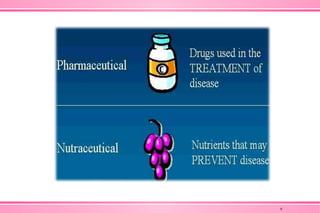
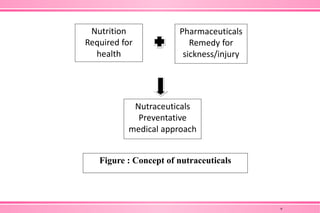
Nutrition
Required for
health
Pharmaceuticals
Remedy for
sickness/injury
Nutraceuticals
Preventative
medical approach
Figure : Concept of nutraceuticals
9
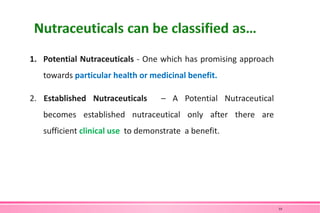
1. Potential Nutraceuticals - One which has promising approach
towards particular health or medicinal benefit.
2. Established Nutraceuticals – A Potential Nutraceutical
becomes established nutraceutical only after there are
sufficient clinical use to demonstrate a benefit.
10
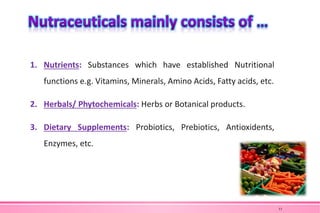
1. Nutrients: Substances which have established Nutritional
functions e.g. Vitamins, Minerals, Amino Acids, Fatty acids, etc.
2. Herbals/ Phytochemicals: Herbs or Botanical products.
3. Dietary Supplements: Probiotics, Prebiotics, Antioxidents,
Enzymes, etc.
11
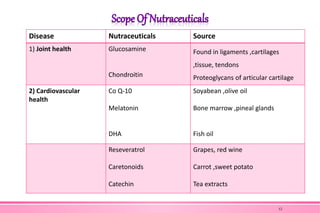
Disease Nutraceuticals Source
1) Joint health Glucosamine
Chondroitin
Found in ligaments ,cartilages
,tissue, tendons
Proteoglycans of articular cartilage
2) Cardiovascular
health
Co Q-10
Melatonin
DHA
Soyabean ,olive oil
Bone marrow ,pineal glands
Fish oil
Reseveratrol
Caretonoids
Catechin
Grapes, red wine
Carrot ,sweet potato
Tea extracts
12
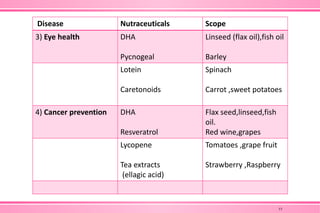
Disease Nutraceuticals Scope
3) Eye health DHA
Pycnogeal
Linseed (flax oil),fish oil
Barley
Lotein
Caretonoids
Spinach
Carrot ,sweet potatoes
4) Cancer prevention DHA
Resveratrol
Flax seed,linseed,fish
oil.
Red wine,grapes
Lycopene
Tea extracts
(ellagic acid)
Tomatoes ,grape fruit
Strawberry ,Raspberry
13
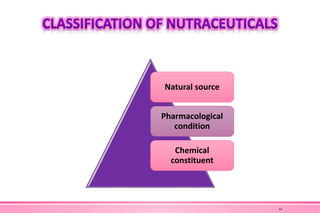
Natural source
Pharmacological
condition
Chemical
constituent
14
15
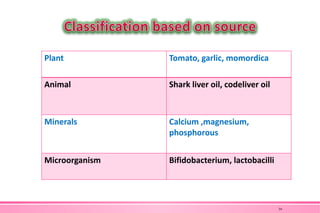
Plant Tomato, garlic, momordica
Animal Shark liver oil, codeliver oil
Minerals Calcium ,magnesium,
phosphorous
Microorganism Bifidobacterium, lactobacilli
16
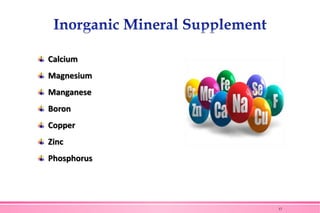
Calcium
Magnesium
Manganese
Boron
Copper
Zinc
Phosphorus
17
 Calcium: Essential for bone and teeth, maintaining bone
strength, nerve, muscle and glandular function, blood clotting.
 Iron: Energy production, Hb, oxygen transport.
 Magnesium: For healthy nerve and muscle function, bone
formation.
 Phosphorous: Energy production, phosphorylation process, bone
and teeth, for genetic material.
18
o Cobalt: Component of vit. B 12 and B 12 coenzymes.
o Copper: Hb and collagen production, function of heart, energy
production, absorption of iron.
o Iodine: Proper function of thyroid gland.
o Chromium: With insulin it helps in conversion of carbohydrate and fat
into energy, treatment of diabetes.
o Selenium: Antioxidant, functioning of heart muscle, part of GPX enzyme,
o Zinc: Essential for cell reproduction, for development in Neonates, wound
healing, production of sperm and testosterone hormone,
19
Fat Soluble Vitamins
 Vitamin A: Acts as antioxidant, essential for growth and
development, maintains healthy vision, skin and mucous
membranes, may aid in the prevention and treatment of
certain cancers and in the treatment of certain skin disorders.
 Vitamin D: Essential for formation of bones and teeth, helps the
body to absorb and use calcium.
 Vitamin E: Antioxidant, helps to form blood cells, boost immune
system.
 Vitamin K: Essential for blood clotting
20
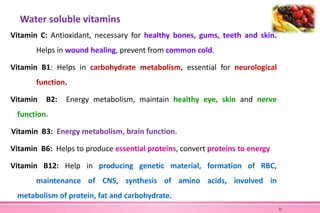
Water soluble vitamins
Vitamin C: Antioxidant, necessary for healthy bones, gums, teeth and skin.
Helps in wound healing, prevent from common cold.
Vitamin B1: Helps in carbohydrate metabolism, essential for neurological
function.
Vitamin B2: Energy metabolism, maintain healthy eye, skin and nerve
function.
Vitamin B3: Energy metabolism, brain function.
Vitamin B6: Helps to produce essential proteins, convert proteins to energy
Vitamin B12: Help in producing genetic material, formation of RBC,
maintenance of CNS, synthesis of amino acids, involved in
metabolism of protein, fat and carbohydrate.
21
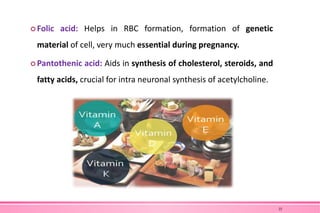
 Folic acid: Helps in RBC formation, formation of genetic
material of cell, very much essential during pregnancy.
 Pantothenic acid: Aids in synthesis of cholesterol, steroids, and
fatty acids, crucial for intra neuronal synthesis of acetylcholine.
22
Probiotics
Live microorganisms which, when administered in adequate
amounts, confer a health benefit on the host
Species of Lactobacillus
Bifidobacterium
yeast Saccharomyces cerevisiae
some E. coli and Bacillus species are also used as probiotics
23
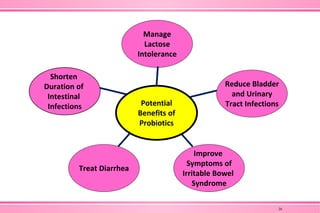
Shorten
Duration of
Intestinal
Infections
Treat Diarrhea
Improve
Symptoms of
Irritable Bowel
Syndrome
Reduce Bladder
and Urinary
Tract Infections
Manage
Lactose
Intolerance
Potential
Benefits of
Probiotics
24
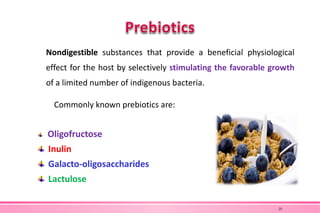
Nondigestible substances that provide a beneficial physiological
effect for the host by selectively stimulating the favorable growth
of a limited number of indigenous bacteria.
Commonly known prebiotics are:
Oligofructose
Inulin
Galacto-oligosaccharides
Lactulose
25
Herbs
Aloe vera: Anti-inflammatory, emollient, wound healing,
Evening Primrose oil: Dietary supplement of linoleic acid,
treatment of atopic eczema.
Garlic: Antibacterial, antifungal, antithrombotic, antiinflammatory
Ginger: carminative, antiemetic, treatment of dizziness.
Ginseng: Adaptogen
26
Green tea: Antioxidant, reduces risk of CVD, enhances humoral
and cell mediated Immunity.
Vegetables, fruits, whole grain, herbs, nuts and various seeds
contain an abundance of phenolic compounds, terpenoids,
sulphur compounds, pigments etc. that has been associated
with protection / treatment of certain disease conditions.
27
28
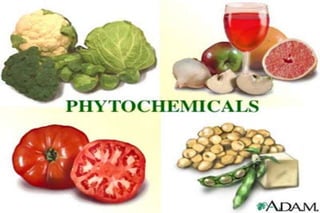
 Phytochemicals could provide health benefits as:
Substrate for biochemical reactions
Cofactors of enzymatic reactions
Inhibitors of enzymatic reactions
Absorbents that bind to & eliminate undesirable constituent
in the intestine
Scavengers of reactive or toxic chemicals
29
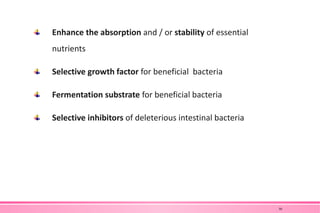
Enhance the absorption and / or stability of essential
nutrients
Selective growth factor for beneficial bacteria
Fermentation substrate for beneficial bacteria
Selective inhibitors of deleterious intestinal bacteria
30
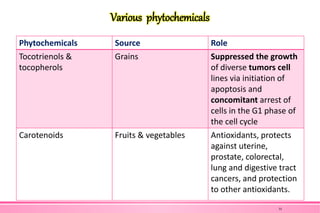
Various phytochemicals
Phytochemicals Source Role
Tocotrienols &
tocopherols
Grains Suppressed the growth
of diverse tumors cell
lines via initiation of
apoptosis and
concomitant arrest of
cells in the G1 phase of
the cell cycle
Carotenoids Fruits & vegetables Antioxidants, protects
against uterine,
prostate, colorectal,
lung and digestive tract
cancers, and protection
to other antioxidants.
31
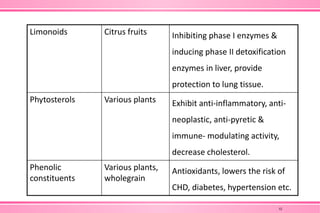
Limonoids Citrus fruits Inhibiting phase I enzymes &
inducing phase II detoxification
enzymes in liver, provide
protection to lung tissue.
Phytosterols Various plants Exhibit anti-inflammatory, anti-
neoplastic, anti-pyretic &
immune- modulating activity,
decrease cholesterol.
Phenolic
constituents
Various plants,
wholegrain
Antioxidants, lowers the risk of
CHD, diabetes, hypertension etc.
32
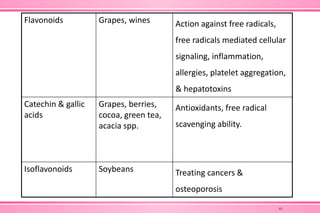
Flavonoids Grapes, wines Action against free radicals,
free radicals mediated cellular
signaling, inflammation,
allergies, platelet aggregation,
& hepatotoxins
Catechin & gallic
acids
Grapes, berries,
cocoa, green tea,
acacia spp.
Antioxidants, free radical
scavenging ability.
Isoflavonoids Soybeans Treating cancers &
osteoporosis
33
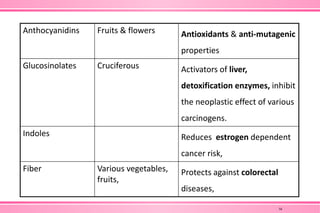
Anthocyanidins Fruits & flowers Antioxidants & anti-mutagenic
properties
Glucosinolates Cruciferous Activators of liver,
detoxification enzymes, inhibit
the neoplastic effect of various
carcinogens.
Indoles Reduces estrogen dependent
cancer risk,
Fiber Various vegetables,
fruits,
Protects against colorectal
diseases,
34
fruits
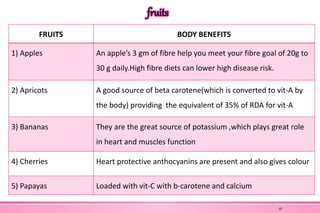
FRUITS BODY BENEFITS
1) Apples An apple’s 3 gm of fibre help you meet your fibre goal of 20g to
30 g daily.High fibre diets can lower high disease risk.
2) Apricots A good source of beta carotene(which is converted to vit-A by
the body) providing the equivalent of 35% of RDA for vit-A
3) Bananas They are the great source of potassium ,which plays great role
in heart and muscles function
4) Cherries Heart protective anthocyanins are present and also gives colour
5) Papayas Loaded with vit-C with b-carotene and calcium
35
vegetables
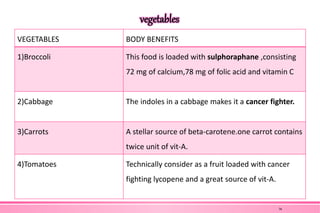
VEGETABLES BODY BENEFITS
1)Broccoli This food is loaded with sulphoraphane ,consisting
72 mg of calcium,78 mg of folic acid and vitamin C
2)Cabbage The indoles in a cabbage makes it a cancer fighter.
3)Carrots A stellar source of beta-carotene.one carrot contains
twice unit of vit-A.
4)Tomatoes Technically consider as a fruit loaded with cancer
fighting lycopene and a great source of vit-A.
36
Dietary fibre
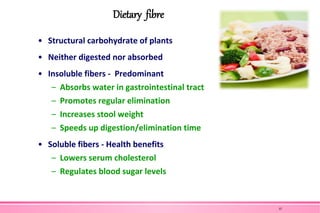
• Structural carbohydrate of plants
• Neither digested nor absorbed
• Insoluble fibers - Predominant
– Absorbs water in gastrointestinal tract
– Promotes regular elimination
– Increases stool weight
– Speeds up digestion/elimination time
• Soluble fibers - Health benefits
– Lowers serum cholesterol
– Regulates blood sugar levels
37
Intake of Dietary Fiber
• Increased fiber intake may reduce risk of:
– Gastrointestinal diseases
– Hypertension
– Diabetes
– Heart disease
– Several types of cancer (Colon)
• Recommended: 20-35 g daily
• Best sources: fruit, vegetables, whole grain breads/cereals, beans,
rice, nuts, seeds.
• Adequate water intake is important.
38
Areas covered by Nutraceuticals
All therapeutic areas such as,
1. Anti- Arthritic (Rheumatoid Arthritis)
2. Sleeping disorders
3. Digestion problems
4. Prevention of certain cancers (Colorectal cancer)
5. Osteoporosis
6. Blood pressure
7. Cholesterol lowering (garlic)
8. Neurological disorders (Autism)
9. Diabetes etc..
39
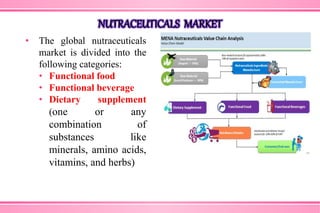
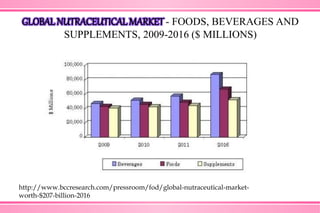
• The global nutraceuticals
market is divided into the
following categories:
• Functional food
• Functional beverage
• Dietary supplement
(one or any
combination of
substances like
minerals, amino acids,
vitamins, and herbs)
NUTRACEUTICALS MARKET
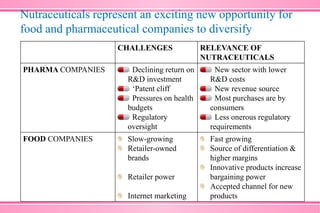
Nutraceuticals represent an exciting new opportunity for
food and pharmaceutical companies to diversify
CHALLENGES RELEVANCE OF
NUTRACEUTICALS
PHARMA COMPANIES Declining return on
R&D investment
‘Patent cliff
Pressures on health
budgets
Regulatory
oversight
New sector with lower
R&D costs
New revenue source
Most purchases are by
consumers
Less onerous regulatory
requirements
FOOD COMPANIES Slow-growing
Retailer-owned
brands
Retailer power
Internet marketing
Fast growing
Source of differentiation &
higher margins
Innovative products increase
bargaining power
Accepted channel for new
products
GLOBALNUTRACEUTICAL MARKET - FOODS, BEVERAGES AND
SUPPLEMENTS, 2009-2016 ($ MILLIONS)
http://www.bccresearch.com/pressroom/fod/global-nutraceutical-market-
worth-$207-billion-2016
Predictedgrowthrate of nutraceutical usageThe global nutraceutical ingredient market is
estimated to experience a growth rate of 7.2%
from 2013 to 2018.
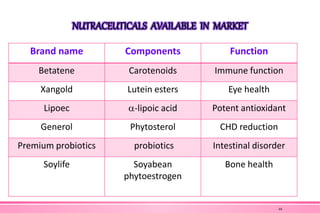
NUTRACEUTICALS AVAILABLE IN MARKET
Brand name Components Function
Betatene Carotenoids Immune function
Xangold Lutein esters Eye health
Lipoec -lipoic acid Potent antioxidant
Generol Phytosterol CHD reduction
Premium probiotics probiotics Intestinal disorder
Soylife Soyabean
phytoestrogen
Bone health
44
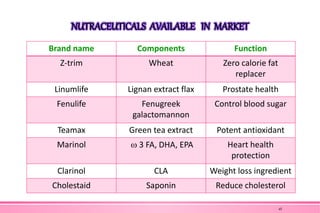
NUTRACEUTICALS AVAILABLE IN MARKET
Brand name Components Function
Z-trim Wheat Zero calorie fat
replacer
Linumlife Lignan extract flax Prostate health
Fenulife Fenugreek
galactomannon
Control blood sugar
Teamax Green tea extract Potent antioxidant
Marinol  3 FA, DHA, EPA Heart health
protection
Clarinol CLA Weight loss ingredient
Cholestaid Saponin Reduce cholesterol
45
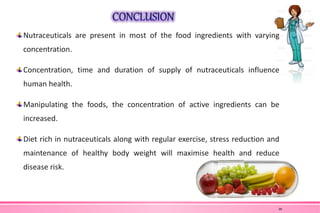
Nutraceuticals are present in most of the food ingredients with varying
concentration.
Concentration, time and duration of supply of nutraceuticals influence
human health.
Manipulating the foods, the concentration of active ingredients can be
increased.
Diet rich in nutraceuticals along with regular exercise, stress reduction and
maintenance of healthy body weight will maximise health and reduce
disease risk.
46
1. Brower V. “Nutraceuticals: poised for a healthy slice of the healthcare market”
Nat. Biotechnol.1998, 16, 728-731.
1. http://www.hc-sc.gc.ca/sr-sr/biotech/about.apropor/gloss-eng.php(assessed on 23
sep 2010)
2. Raaz .M; Priyanka S; Bina R; Chauhan AK. “Healthy living with Nutraceuticals”
International Research Journal of Pharmacy 2011,2(12),12-14
3. Bahadoran Z; Parvin M; Fereidoun A. “Dietary polyphenols as potential Nutraceuticals
in management of diabetes” Journal of Diabetes & Metabolic Disorders 2013,12:43
4. Mahima ; Amit K; Ruchi T; K Karthik” Nutraceuticals from fruits and vegetables at
glance” . Journal of Biological sciences 2013,13(3):38-47
47
48

Nutraceuticals

  • 1.
  • 2.
  • 3.
  • 4.
    ▪ The Greekphysician Hippocrates, often known as the “father of medicine” said “Let thy food be thy medicine, and the medicine be thy food.”. The Philosophy behind is: “Focus on Prevention” ▪ The term "Nutraceutical" was coined by combining the terms "Nutrition" and "Pharmaceutical" in 1989 by Dr. Stephen De Felice. MD, Founder and Chairman of the Foundation for Innovation in Medicine (FIM). 4
  • 5.
    ▪ According toDr. DeFelice , “Nutraceutical is any substance that is a food or a part of food that provides medicinal or health benefits including the prevention and treatment of disease.” ▪ Health ministry of Canada defines it “As a product isolated or purified from the food generally sold in medicinal form not assisted with food and demonstrated to have a physiological benefit and provide protection against chronic disease.” 5
  • 6.
    ▪ A nutraceuticalis any substance considered as a food, or its part which, in addition to its normal which, in addition to its normal nutritional value provides health benefits including the prevention of disease or promotion of health. ▪ It is “any non-toxic food component that has scientifically proven health benefits, including disease treatment or prevention” . ▪ The functional component of the food must be standardized in the nutraceutical product and produced under good manufacturing practices (GMPs). 6
  • 7.
    ▪ Nearly twothirds of the world’s 6.1 billion people rely on the healing power of plant based materials for many reasons- availability, affordability, safety or their belief in traditional affordability, or belief in traditional cures. ▪ Medical benefits of food have been explored for thousands of years Modern nutraceutical industry began to develop during the 1980s. 7
  • 8.
  • 9.
  • 10.
    1. Potential Nutraceuticals- One which has promising approach towards particular health or medicinal benefit. 2. Established Nutraceuticals – A Potential Nutraceutical becomes established nutraceutical only after there are sufficient clinical use to demonstrate a benefit. 10
  • 11.
    1. Nutrients: Substanceswhich have established Nutritional functions e.g. Vitamins, Minerals, Amino Acids, Fatty acids, etc. 2. Herbals/ Phytochemicals: Herbs or Botanical products. 3. Dietary Supplements: Probiotics, Prebiotics, Antioxidents, Enzymes, etc. 11
  • 12.
    Disease Nutraceuticals Source 1)Joint health Glucosamine Chondroitin Found in ligaments ,cartilages ,tissue, tendons Proteoglycans of articular cartilage 2) Cardiovascular health Co Q-10 Melatonin DHA Soyabean ,olive oil Bone marrow ,pineal glands Fish oil Reseveratrol Caretonoids Catechin Grapes, red wine Carrot ,sweet potato Tea extracts 12
  • 13.
    Disease Nutraceuticals Scope 3)Eye health DHA Pycnogeal Linseed (flax oil),fish oil Barley Lotein Caretonoids Spinach Carrot ,sweet potatoes 4) Cancer prevention DHA Resveratrol Flax seed,linseed,fish oil. Red wine,grapes Lycopene Tea extracts (ellagic acid) Tomatoes ,grape fruit Strawberry ,Raspberry 13
  • 14.
  • 15.
  • 16.
    Plant Tomato, garlic,momordica Animal Shark liver oil, codeliver oil Minerals Calcium ,magnesium, phosphorous Microorganism Bifidobacterium, lactobacilli 16
  • 17.
  • 18.
     Calcium: Essentialfor bone and teeth, maintaining bone strength, nerve, muscle and glandular function, blood clotting.  Iron: Energy production, Hb, oxygen transport.  Magnesium: For healthy nerve and muscle function, bone formation.  Phosphorous: Energy production, phosphorylation process, bone and teeth, for genetic material. 18
  • 19.
    o Cobalt: Componentof vit. B 12 and B 12 coenzymes. o Copper: Hb and collagen production, function of heart, energy production, absorption of iron. o Iodine: Proper function of thyroid gland. o Chromium: With insulin it helps in conversion of carbohydrate and fat into energy, treatment of diabetes. o Selenium: Antioxidant, functioning of heart muscle, part of GPX enzyme, o Zinc: Essential for cell reproduction, for development in Neonates, wound healing, production of sperm and testosterone hormone, 19
  • 20.
    Fat Soluble Vitamins Vitamin A: Acts as antioxidant, essential for growth and development, maintains healthy vision, skin and mucous membranes, may aid in the prevention and treatment of certain cancers and in the treatment of certain skin disorders.  Vitamin D: Essential for formation of bones and teeth, helps the body to absorb and use calcium.  Vitamin E: Antioxidant, helps to form blood cells, boost immune system.  Vitamin K: Essential for blood clotting 20
  • 21.
    Water soluble vitamins VitaminC: Antioxidant, necessary for healthy bones, gums, teeth and skin. Helps in wound healing, prevent from common cold. Vitamin B1: Helps in carbohydrate metabolism, essential for neurological function. Vitamin B2: Energy metabolism, maintain healthy eye, skin and nerve function. Vitamin B3: Energy metabolism, brain function. Vitamin B6: Helps to produce essential proteins, convert proteins to energy Vitamin B12: Help in producing genetic material, formation of RBC, maintenance of CNS, synthesis of amino acids, involved in metabolism of protein, fat and carbohydrate. 21
  • 22.
     Folic acid:Helps in RBC formation, formation of genetic material of cell, very much essential during pregnancy.  Pantothenic acid: Aids in synthesis of cholesterol, steroids, and fatty acids, crucial for intra neuronal synthesis of acetylcholine. 22
  • 23.
    Probiotics Live microorganisms which,when administered in adequate amounts, confer a health benefit on the host Species of Lactobacillus Bifidobacterium yeast Saccharomyces cerevisiae some E. coli and Bacillus species are also used as probiotics 23
  • 24.
    Shorten Duration of Intestinal Infections Treat Diarrhea Improve Symptomsof Irritable Bowel Syndrome Reduce Bladder and Urinary Tract Infections Manage Lactose Intolerance Potential Benefits of Probiotics 24
  • 25.
    Nondigestible substances thatprovide a beneficial physiological effect for the host by selectively stimulating the favorable growth of a limited number of indigenous bacteria. Commonly known prebiotics are: Oligofructose Inulin Galacto-oligosaccharides Lactulose 25
  • 26.
    Herbs Aloe vera: Anti-inflammatory,emollient, wound healing, Evening Primrose oil: Dietary supplement of linoleic acid, treatment of atopic eczema. Garlic: Antibacterial, antifungal, antithrombotic, antiinflammatory Ginger: carminative, antiemetic, treatment of dizziness. Ginseng: Adaptogen 26
  • 27.
    Green tea: Antioxidant,reduces risk of CVD, enhances humoral and cell mediated Immunity. Vegetables, fruits, whole grain, herbs, nuts and various seeds contain an abundance of phenolic compounds, terpenoids, sulphur compounds, pigments etc. that has been associated with protection / treatment of certain disease conditions. 27
  • 28.
  • 29.
     Phytochemicals couldprovide health benefits as: Substrate for biochemical reactions Cofactors of enzymatic reactions Inhibitors of enzymatic reactions Absorbents that bind to & eliminate undesirable constituent in the intestine Scavengers of reactive or toxic chemicals 29
  • 30.
    Enhance the absorptionand / or stability of essential nutrients Selective growth factor for beneficial bacteria Fermentation substrate for beneficial bacteria Selective inhibitors of deleterious intestinal bacteria 30
  • 31.
    Various phytochemicals Phytochemicals SourceRole Tocotrienols & tocopherols Grains Suppressed the growth of diverse tumors cell lines via initiation of apoptosis and concomitant arrest of cells in the G1 phase of the cell cycle Carotenoids Fruits & vegetables Antioxidants, protects against uterine, prostate, colorectal, lung and digestive tract cancers, and protection to other antioxidants. 31
  • 32.
    Limonoids Citrus fruitsInhibiting phase I enzymes & inducing phase II detoxification enzymes in liver, provide protection to lung tissue. Phytosterols Various plants Exhibit anti-inflammatory, anti- neoplastic, anti-pyretic & immune- modulating activity, decrease cholesterol. Phenolic constituents Various plants, wholegrain Antioxidants, lowers the risk of CHD, diabetes, hypertension etc. 32
  • 33.
    Flavonoids Grapes, winesAction against free radicals, free radicals mediated cellular signaling, inflammation, allergies, platelet aggregation, & hepatotoxins Catechin & gallic acids Grapes, berries, cocoa, green tea, acacia spp. Antioxidants, free radical scavenging ability. Isoflavonoids Soybeans Treating cancers & osteoporosis 33
  • 34.
    Anthocyanidins Fruits &flowers Antioxidants & anti-mutagenic properties Glucosinolates Cruciferous Activators of liver, detoxification enzymes, inhibit the neoplastic effect of various carcinogens. Indoles Reduces estrogen dependent cancer risk, Fiber Various vegetables, fruits, Protects against colorectal diseases, 34
  • 35.
    fruits FRUITS BODY BENEFITS 1)Apples An apple’s 3 gm of fibre help you meet your fibre goal of 20g to 30 g daily.High fibre diets can lower high disease risk. 2) Apricots A good source of beta carotene(which is converted to vit-A by the body) providing the equivalent of 35% of RDA for vit-A 3) Bananas They are the great source of potassium ,which plays great role in heart and muscles function 4) Cherries Heart protective anthocyanins are present and also gives colour 5) Papayas Loaded with vit-C with b-carotene and calcium 35
  • 36.
    vegetables VEGETABLES BODY BENEFITS 1)BroccoliThis food is loaded with sulphoraphane ,consisting 72 mg of calcium,78 mg of folic acid and vitamin C 2)Cabbage The indoles in a cabbage makes it a cancer fighter. 3)Carrots A stellar source of beta-carotene.one carrot contains twice unit of vit-A. 4)Tomatoes Technically consider as a fruit loaded with cancer fighting lycopene and a great source of vit-A. 36
  • 37.
    Dietary fibre • Structuralcarbohydrate of plants • Neither digested nor absorbed • Insoluble fibers - Predominant – Absorbs water in gastrointestinal tract – Promotes regular elimination – Increases stool weight – Speeds up digestion/elimination time • Soluble fibers - Health benefits – Lowers serum cholesterol – Regulates blood sugar levels 37
  • 38.
    Intake of DietaryFiber • Increased fiber intake may reduce risk of: – Gastrointestinal diseases – Hypertension – Diabetes – Heart disease – Several types of cancer (Colon) • Recommended: 20-35 g daily • Best sources: fruit, vegetables, whole grain breads/cereals, beans, rice, nuts, seeds. • Adequate water intake is important. 38
  • 39.
    Areas covered byNutraceuticals All therapeutic areas such as, 1. Anti- Arthritic (Rheumatoid Arthritis) 2. Sleeping disorders 3. Digestion problems 4. Prevention of certain cancers (Colorectal cancer) 5. Osteoporosis 6. Blood pressure 7. Cholesterol lowering (garlic) 8. Neurological disorders (Autism) 9. Diabetes etc.. 39
  • 40.
    • The globalnutraceuticals market is divided into the following categories: • Functional food • Functional beverage • Dietary supplement (one or any combination of substances like minerals, amino acids, vitamins, and herbs) NUTRACEUTICALS MARKET
  • 41.
    Nutraceuticals represent anexciting new opportunity for food and pharmaceutical companies to diversify CHALLENGES RELEVANCE OF NUTRACEUTICALS PHARMA COMPANIES Declining return on R&D investment ‘Patent cliff Pressures on health budgets Regulatory oversight New sector with lower R&D costs New revenue source Most purchases are by consumers Less onerous regulatory requirements FOOD COMPANIES Slow-growing Retailer-owned brands Retailer power Internet marketing Fast growing Source of differentiation & higher margins Innovative products increase bargaining power Accepted channel for new products
  • 42.
    GLOBALNUTRACEUTICAL MARKET -FOODS, BEVERAGES AND SUPPLEMENTS, 2009-2016 ($ MILLIONS) http://www.bccresearch.com/pressroom/fod/global-nutraceutical-market- worth-$207-billion-2016
  • 43.
    Predictedgrowthrate of nutraceuticalusageThe global nutraceutical ingredient market is estimated to experience a growth rate of 7.2% from 2013 to 2018.
  • 44.
    NUTRACEUTICALS AVAILABLE INMARKET Brand name Components Function Betatene Carotenoids Immune function Xangold Lutein esters Eye health Lipoec -lipoic acid Potent antioxidant Generol Phytosterol CHD reduction Premium probiotics probiotics Intestinal disorder Soylife Soyabean phytoestrogen Bone health 44
  • 45.
    NUTRACEUTICALS AVAILABLE INMARKET Brand name Components Function Z-trim Wheat Zero calorie fat replacer Linumlife Lignan extract flax Prostate health Fenulife Fenugreek galactomannon Control blood sugar Teamax Green tea extract Potent antioxidant Marinol  3 FA, DHA, EPA Heart health protection Clarinol CLA Weight loss ingredient Cholestaid Saponin Reduce cholesterol 45
  • 46.
    Nutraceuticals are presentin most of the food ingredients with varying concentration. Concentration, time and duration of supply of nutraceuticals influence human health. Manipulating the foods, the concentration of active ingredients can be increased. Diet rich in nutraceuticals along with regular exercise, stress reduction and maintenance of healthy body weight will maximise health and reduce disease risk. 46
  • 47.
    1. Brower V.“Nutraceuticals: poised for a healthy slice of the healthcare market” Nat. Biotechnol.1998, 16, 728-731. 1. http://www.hc-sc.gc.ca/sr-sr/biotech/about.apropor/gloss-eng.php(assessed on 23 sep 2010) 2. Raaz .M; Priyanka S; Bina R; Chauhan AK. “Healthy living with Nutraceuticals” International Research Journal of Pharmacy 2011,2(12),12-14 3. Bahadoran Z; Parvin M; Fereidoun A. “Dietary polyphenols as potential Nutraceuticals in management of diabetes” Journal of Diabetes & Metabolic Disorders 2013,12:43 4. Mahima ; Amit K; Ruchi T; K Karthik” Nutraceuticals from fruits and vegetables at glance” . Journal of Biological sciences 2013,13(3):38-47 47
  • 48.