Core-shell nanoparticles and its biomedical
applications
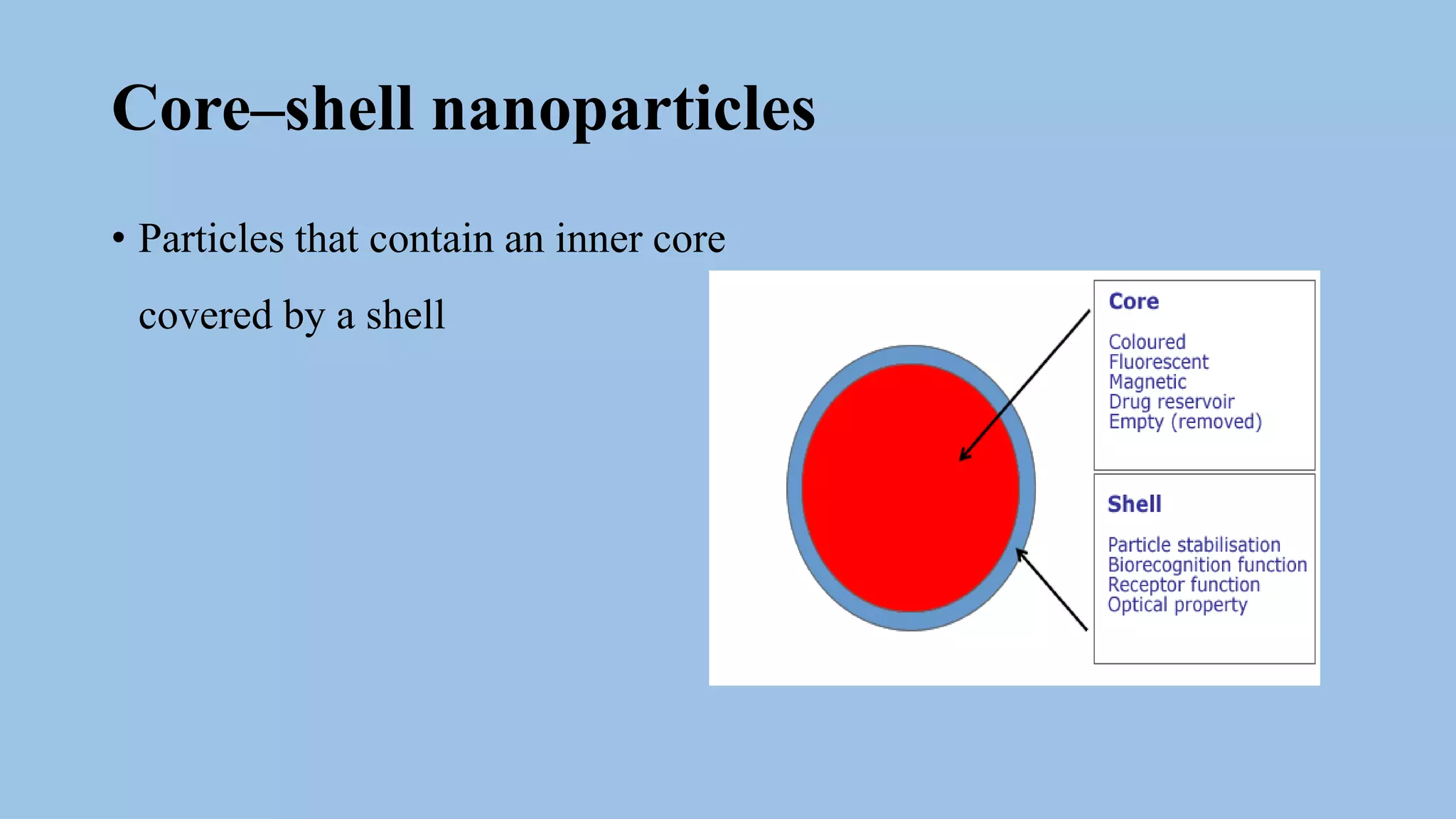
Core–shell nanoparticles
• Particles that contain an inner core
covered by a shell
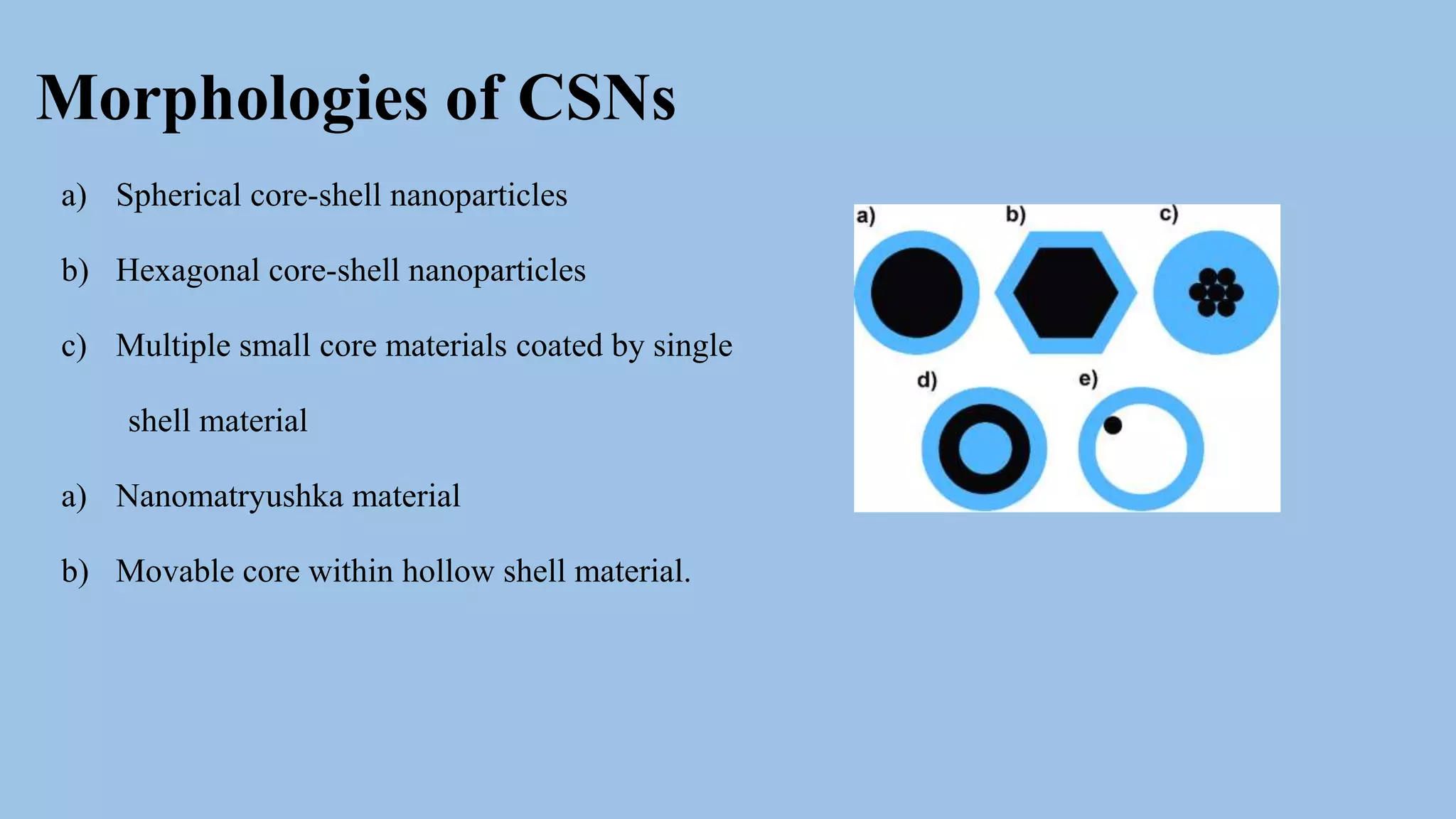
Morphologies of CSNs
a) Spherical core-shell nanoparticles
b) Hexagonal core-shell nanoparticles
c) Multiple small core materials coated by single
shell material
a) Nanomatryushka material
b) Movable core within hollow shell material.
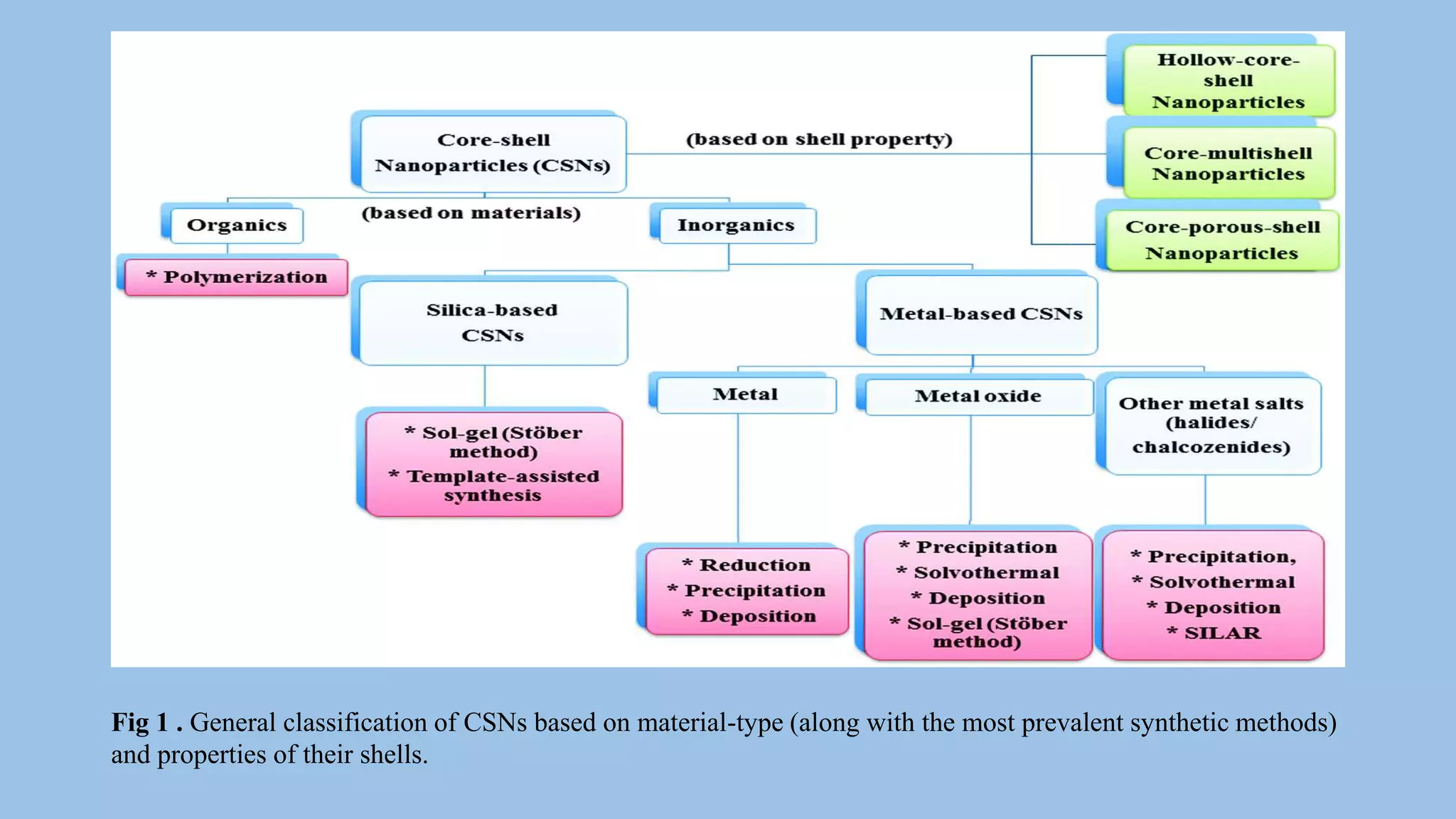
Fig 1 . General classification of CSNs based on material-type (along with the most prevalent synthetic methods)
and properties of their shells.
Classification of core-shell nanoparticles
Depending on their material properties
1) Inorganic-inorganic (Fe3O4@SiO2)
2) Inorganic-organic (Fe@PIB)
3) Organic-inorganic (PEG@SiO2)
4) Organic-organic (PS@NIPA )
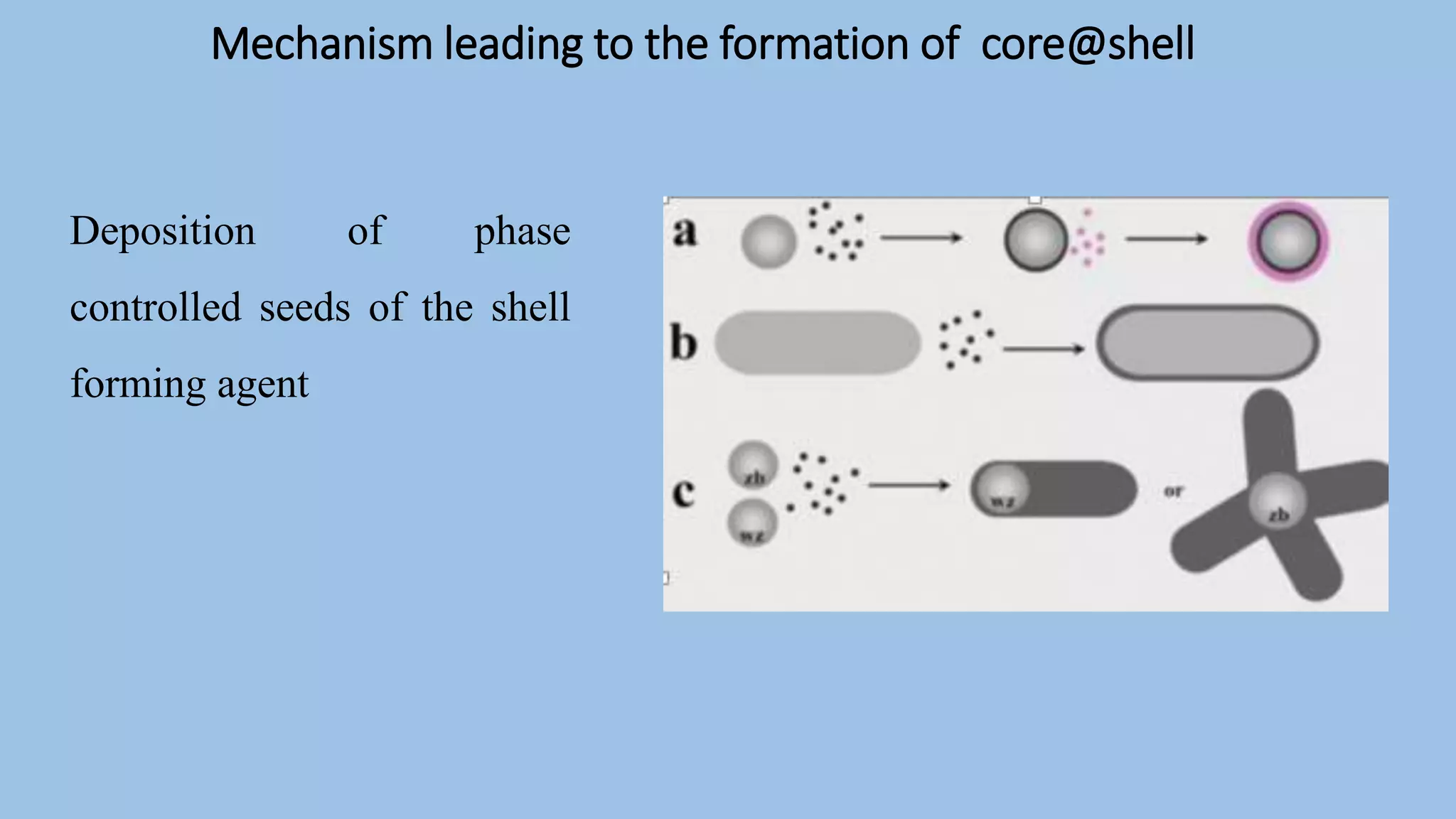
Mechanism leading to the formation of core@shell
Deposition of phase
controlled seeds of the shell
forming agent
Importance of core-shell nanoparticles
Core-shell nanoparticles are widely used in different applications such as
• Biomedical and pharmaceutical applications
• Catalysis
• Electronics
• Enhancing photoluminescence
• Creating photonic crystals
• Sensors
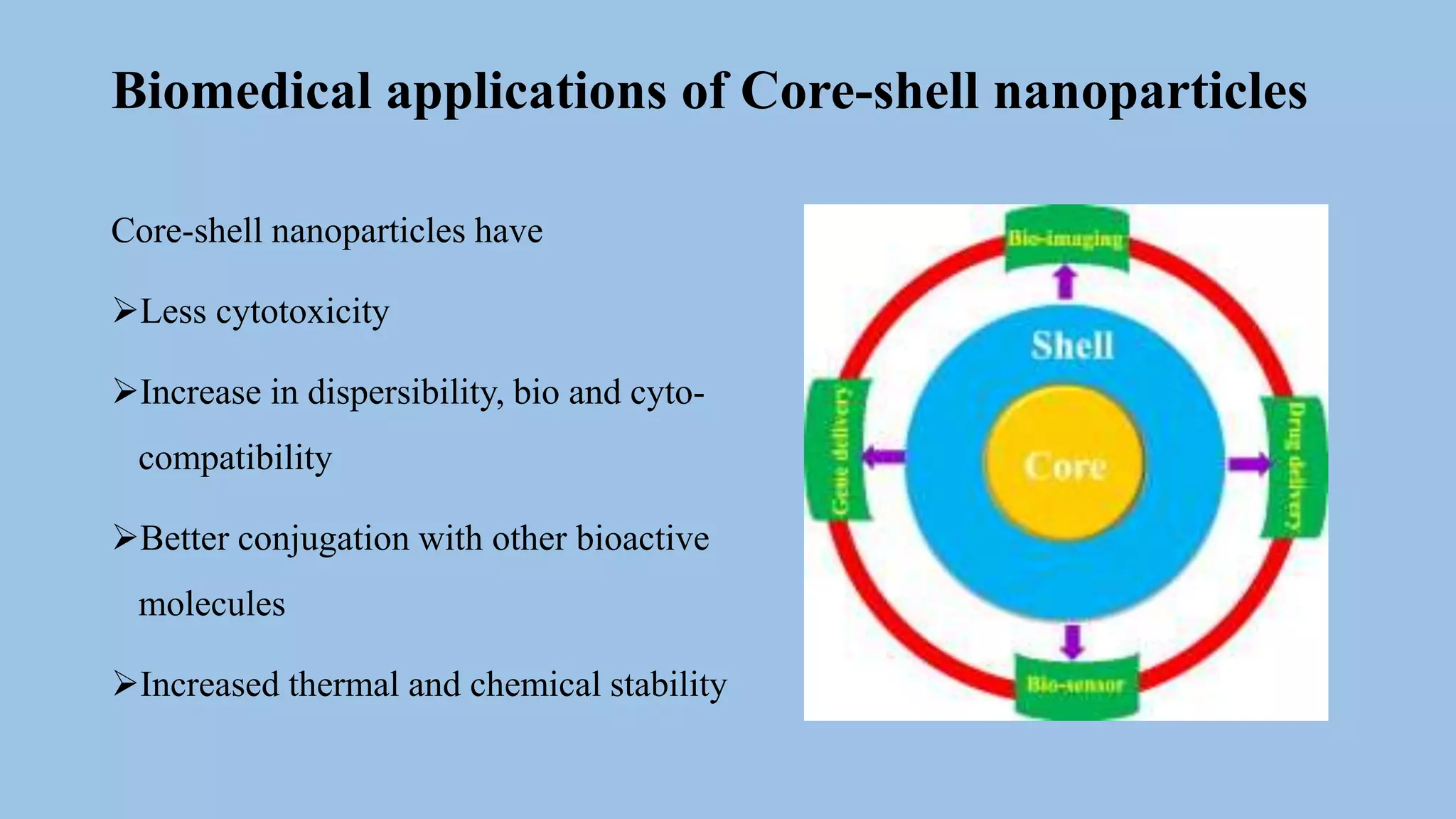
Biomedical applications of Core-shell nanoparticles
Core-shell nanoparticles have
Less cytotoxicity
Increase in dispersibility, bio and cyto-
compatibility
Better conjugation with other bioactive
molecules
Increased thermal and chemical stability
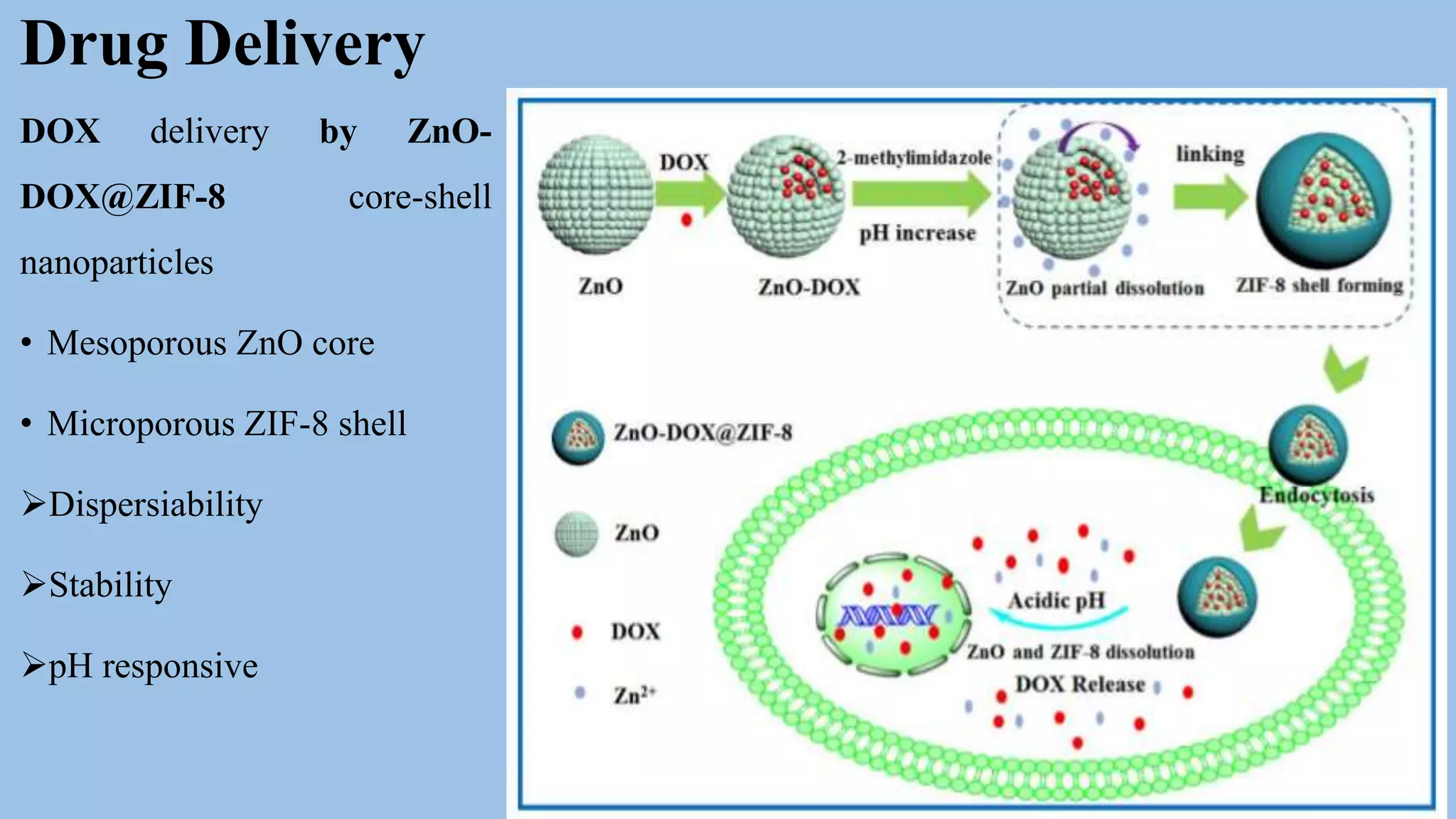
Drug Delivery
DOX delivery by ZnO-
DOX@ZIF-8 core-shell
nanoparticles
• Mesoporous ZnO core
• Microporous ZIF-8 shell
Dispersiability
Stability
pH responsive
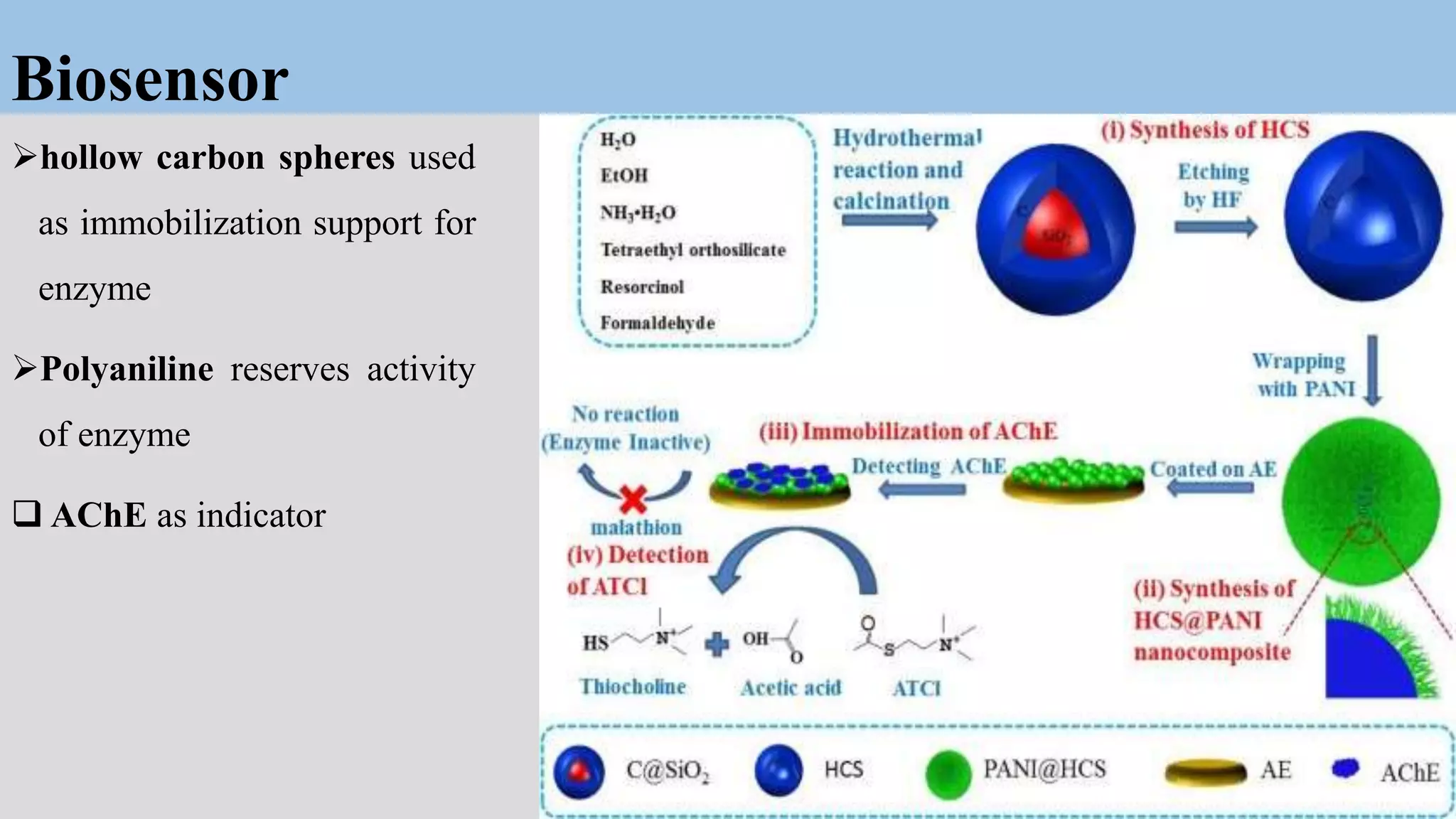
Biosensor
hollow carbon spheres used
as immobilization support for
enzyme
Polyaniline reserves activity
of enzyme
 AChE as indicator
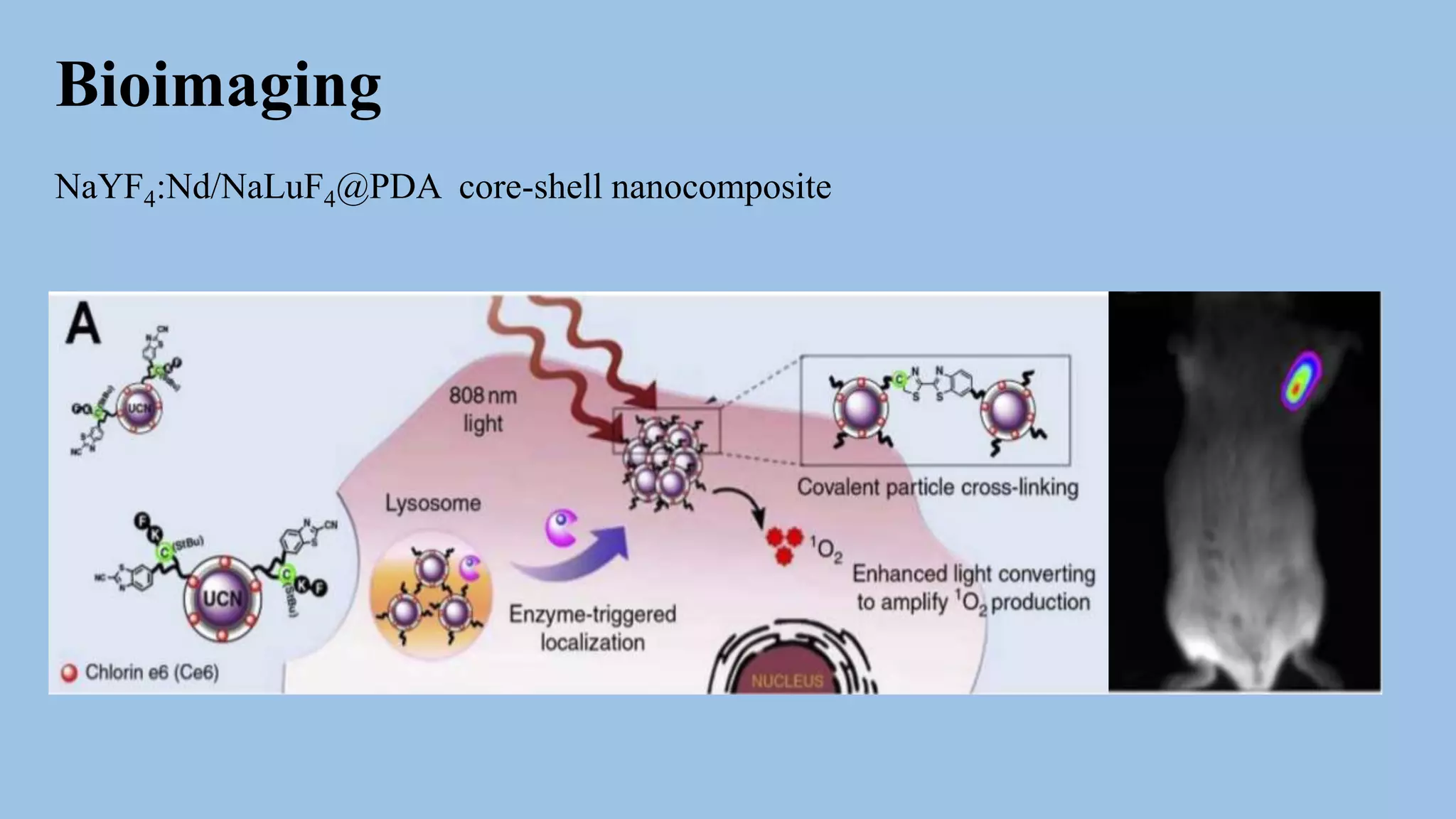
Bioimaging
NaYF4:Nd/NaLuF4@PDA core-shell nanocomposite
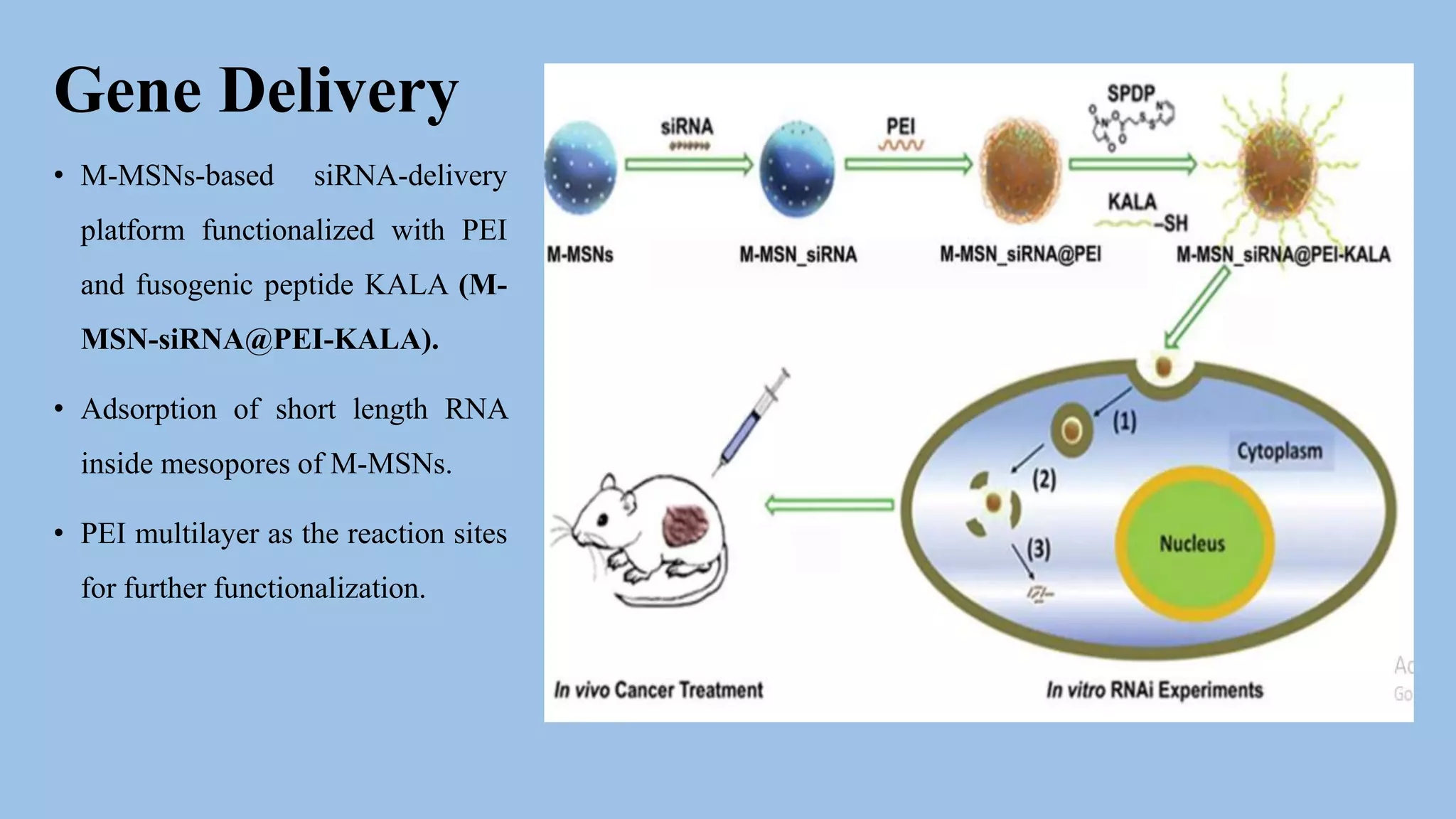
Gene Delivery
• M-MSNs-based siRNA-delivery
platform functionalized with PEI
and fusogenic peptide KALA (M-
MSN-siRNA@PEI-KALA).
• Adsorption of short length RNA
inside mesopores of M-MSNs.
• PEI multilayer as the reaction sites
for further functionalization.
Conclusion
Due to enhanced properties and less toxicity core/shell nanoparticle
have better biomedical applications over nanoparticles.
Core shell nanoparticles and its biomedical applications

Core shell nanoparticles and its biomedical applications

  • 2.
    Core-shell nanoparticles andits biomedical applications
  • 3.
    Core–shell nanoparticles • Particlesthat contain an inner core covered by a shell
  • 4.
    Morphologies of CSNs a)Spherical core-shell nanoparticles b) Hexagonal core-shell nanoparticles c) Multiple small core materials coated by single shell material a) Nanomatryushka material b) Movable core within hollow shell material.
  • 5.
    Fig 1 .General classification of CSNs based on material-type (along with the most prevalent synthetic methods) and properties of their shells.
  • 6.
    Classification of core-shellnanoparticles Depending on their material properties 1) Inorganic-inorganic (Fe3O4@SiO2) 2) Inorganic-organic (Fe@PIB) 3) Organic-inorganic (PEG@SiO2) 4) Organic-organic (PS@NIPA )
  • 7.
    Mechanism leading tothe formation of core@shell Deposition of phase controlled seeds of the shell forming agent
  • 8.
    Importance of core-shellnanoparticles Core-shell nanoparticles are widely used in different applications such as • Biomedical and pharmaceutical applications • Catalysis • Electronics • Enhancing photoluminescence • Creating photonic crystals • Sensors
  • 9.
    Biomedical applications ofCore-shell nanoparticles Core-shell nanoparticles have Less cytotoxicity Increase in dispersibility, bio and cyto- compatibility Better conjugation with other bioactive molecules Increased thermal and chemical stability
  • 10.
    Drug Delivery DOX deliveryby ZnO- DOX@ZIF-8 core-shell nanoparticles • Mesoporous ZnO core • Microporous ZIF-8 shell Dispersiability Stability pH responsive
  • 11.
    Biosensor hollow carbon spheresused as immobilization support for enzyme Polyaniline reserves activity of enzyme  AChE as indicator
  • 12.
  • 13.
    Gene Delivery • M-MSNs-basedsiRNA-delivery platform functionalized with PEI and fusogenic peptide KALA (M- MSN-siRNA@PEI-KALA). • Adsorption of short length RNA inside mesopores of M-MSNs. • PEI multilayer as the reaction sites for further functionalization.
  • 14.
    Conclusion Due to enhancedproperties and less toxicity core/shell nanoparticle have better biomedical applications over nanoparticles.