
Phytochemicals- Are they essential?
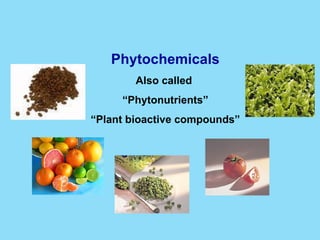
Phytochemicals Also called  “ Phytonutrients” “ Plant bioactive compounds”
What are Phytochemicals Phyto- greek word for plants Substances in plants that may help prevent diseases like cancer and heart disease.  So far, scientists know of 3,000 different phytochemicals with possible health benefits.
Compounds in plants not recognised as nutrients  (ie. Not   “essential dietary factors such as vitamins, minerals, amino acids and fatty acids” ) No deficiency syndromes May affect mammalian biological functions Phytochemicals +/- Health
General Functions of phytonutrients They have enzymes that detoxify the body and strengthen the liver. They strengthen red blood cells Enhance the immune system. Protects from cardiovascular diseases. They create vital sources of nutrients which fight cancer cells. Fight infections in the body that lead to inflammation, which in turn leads to  fat storage.
cont. They provide a power boost to the thyroid and adrenal glands. They empower the genes that turn off fat storage and promote fat burn. Reduce premature aging. They trigger the body's internal mechanism to eat less, yet have the feeling of being full.
Main types of phytochemicals Terpenoids Alkaloids Sulphur compounds Phenolics/polyphenols
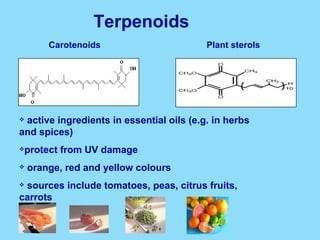
Terpenoids  active ingredients in essential oils (e.g. in herbs and spices) protect from UV damage orange, red and yellow colours sources include tomatoes, peas, citrus fruits, carrots Carotenoids Plant sterols
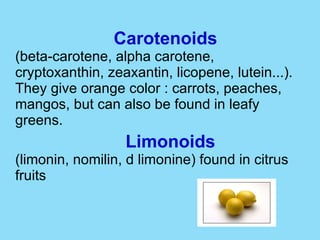
Carotenoids (beta-carotene, alpha carotene, cryptoxanthin, zeaxantin, licopene, lutein...). They give orange color : carrots, peaches, mangos, but can also be found in leafy greens. Limonoids (limonin, nomilin, d limonine) found in citrus fruits
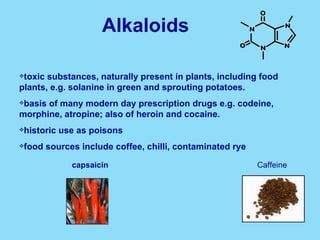
Alkaloids  toxic substances, naturally present in plants, including food plants, e.g. solanine in green and sprouting potatoes.  basis of many modern day prescription drugs e.g. codeine, morphine, atropine; also of heroin and cocaine. historic use as poisons food sources include coffee, chilli, contaminated rye capsaicin Caffeine
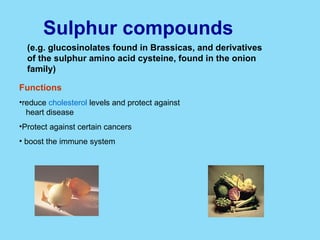
Sulphur compounds   (e.g. glucosinolates found in Brassicas, and derivatives of the sulphur amino acid cysteine, found in the onion family) Functions reduce  cholesterol  levels and protect against  heart disease  Protect against certain cancers  boost the immune system
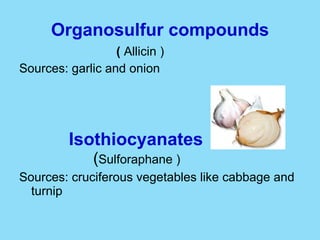
Organosulfur compounds (  Allicin ) Sources: garlic and onion Isothiocyanates   ( Sulforaphane ) Sources: cruciferous vegetables like cabbage and turnip
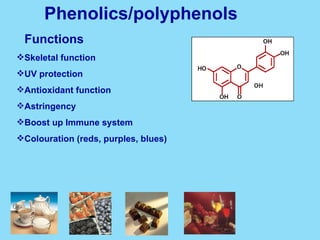
Phenolics/polyphenols Functions Skeletal function UV protection Antioxidant function Astringency  Boost up Immune system Colouration (reds, purples, blues)
Flavonoids   (Anthocyanins, anthocynidins,  isoflavonoids, flavonols, flavones) Sources :   vegetables, fruits, green tea,  soybeans, berries,  cherries. Isoflavones (phytoestrogens) Sources- beans, legumes, especially soybeans and soy products.
Phenolic acids (Ferulic acid, caffeic acid, ellagic acid and gallic acid) Sources : whole grains, berries, cherries, grapes, citrus fruits. Tannins   ( Catechins) Sources : lentils, beans, tea, grape, wine.
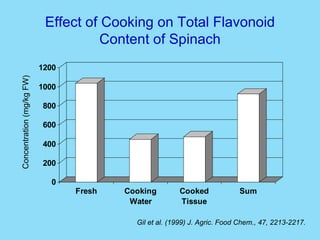
Green leafy vegetables contain flavonoids. The flavonoid content is effected by different processing techniques. One of the study showing the effect of cooking on flavonoid content of spinach.
Effect of Cooking on Total Flavonoid Content of Spinach Concentration (mg/kg FW) Gil et al. (1999) J. Agric. Food Chem., 47, 2213-2217.
Specific functions of phytonutrients with their mechanism
Chemopreventive agents May reduce risk for certain cancers by detoxifying drugs toxins carcinogens Neutralize free radicals and act as antioxidants.  Inhibit enzymes that activate carcinogens.
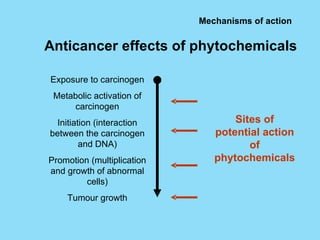
Mechanisms of action Anticancer effects of phytochemicals Exposure to carcinogen Metabolic activation of carcinogen Initiation (interaction between the carcinogen and DNA) Promotion (multiplication and growth of abnormal cells) Tumour growth Sites of potential action of phytochemicals
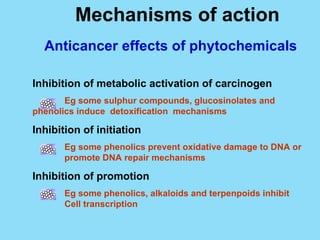
Mechanisms of action Anticancer effects of phytochemicals Inhibition of metabolic activation of carcinogen Eg some sulphur compounds, glucosinolates and  phenolics induce  detoxification  mechanisms Inhibition of initiation Eg some phenolics prevent oxidative damage to DNA or  promote DNA repair mechanisms Inhibition of promotion Eg some phenolics, alkaloids and terpenpoids inhibit  Cell transcription
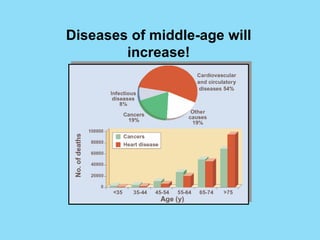
Diseases of middle-age will increase!
A study shows that the Consumption of tomato products has been linked to a decreased risk of prostate cancer. Men had about a 35% decrease in risk of prostate cancer. Giovannucci, et. al. Journal of the National Cancer Institute 1995; 87; 1767)
Flax seeds Contains lignans, compounds converted into biologically active phytoestrogens by bacteria that normally reside in the human intestine. Studies of populations suggest that women who excrete more have phytoestrogens in the urine (an indicator of phytoestrogen intake from flaxseed and other sources)  have lower rates of breast cancer Animal studies show a decrease in tumors of the breast and lung when fed flaxseed
polyphenolic extracts from cranberry inhibit the growth of breast, colon, prostate, lung, and other tumors, as do flavonols from the fruit. The unique combination of phytochemicals found in cranberry fruit may produce synergistic health benefits. These findings suggest a potential role for cranberry as a dietary chemopreventive.  © 2007  The American Society for Nutrition  J. Nutr. 137:186S-193S, January 2007
Several studies have specifically linked apple consumption with a reduced risk for cancer, especially lung cancer.   In this Study, involving over 77,000 women and 47, 000 men, fruit and vegetable intake was associated with a 21% reduced risk in lung cancer risk in women, but this association was not seen in men.  Very few of the individual who ate fruits and vegetables had a significant effect on lung cancer risk in women, however apples were one of the individual fruits associated with a decreased risk in lung cancer.  Women who consumed at least one serving per day of apples and pears had a reduced risk of lung cancer. Nutrition Journal  2004,  3: 5doi:10.1186/1475-2891-3-5
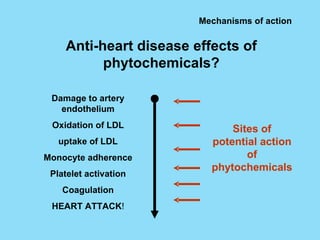
Mechanisms of action Anti-heart disease effects of phytochemicals? Damage to artery endothelium Oxidation of LDL uptake of LDL  Monocyte adherence Platelet activation Coagulation HEART ATTACK ! Sites of potential action of phytochemicals
Epidemiologists concluded that high consumption of flavonoids from apples and onions was directly associated with the lowest risk for coronary mortality. This conclusion was based on the analysis of diet and health outcomes of a study of 5,133  men and women aged 30-69 who were initially free of heart disease when the study began in 1967.  (Source:  British Medical Journal , 1996, 312: 478-481)
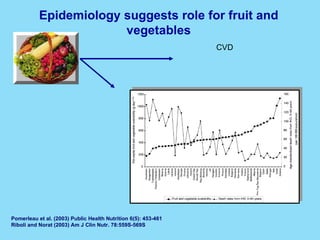
Pomerleau et al. (2003) Public Health Nutrition 6(5): 453-461  Riboli and Norat (2003) Am J Clin Nutr. 78:559S-569S   Epidemiology suggests role for fruit and vegetables CVD
This study concluded that Each increment of three daily servings of fruits and vegetables equated to a 22% decrease in the risk of stroke, including ischemic attack. Gillman, et.al. Journal of American Medical Association, 1995; 273;1113).
1999: FDA approved claim that 25 gm of soy protein per day may reduce your risk of heart disease 2000: AHA endorsed soy as a heart healthy food 2006: AHA reevaluating endorsement due to conflicting research
Work as antioxidant The American Heart Association's nutrition committee has issued a science advisory discussing relationships between antioxidants and heart disease. The statement concludes: “ Considerable evidence now suggests that oxidants are involved in the development and clinical expression of coronary heart disease and that antioxidants may contribute to disease resistance. Consistent with this view is epidemiological evidence indicating that greater antioxidant intake is associated with lower disease risk. Although this increased antioxidant intake generally has involved increased consumption of antioxidant-rich foods.”
Apples are a widely consumed, rich source of phytochemicals, apples have been found to have  very strong antioxidant activity , inhibit cancer cell proliferation, decrease lipid oxidation, and lower cholesterol.  Apples contain a variety of phytochemicals, including  catechin, and chlorogenic acid, all of which are  strong antioxidants.  3: 5doi:10.1186/1475-2891-3-5 Nutrition Journal  2004,
Phytonutrients- Promote fat burn These phytonutrients have also been proven to be a powerful blow to fat. A study was conducted  included women eating raw fruits and vegetables, verses another set of women, who ate health food bars. The results were pretty astounding. On an average, the women who ate the raw fruits and vegetables (filled with phytonutrients) lost 22% more fat than the group who ate less.  journal of Nutrition Research :
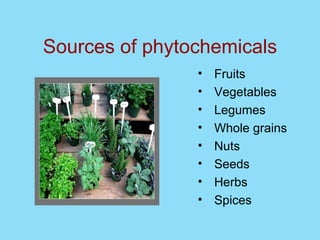
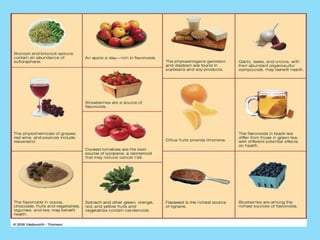
Sources of phytochemicals Fruits  Vegetables Legumes Whole grains Nuts Seeds Herbs Spices
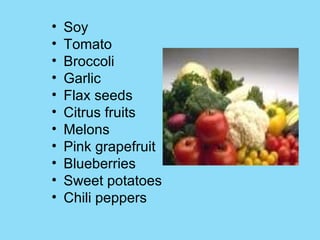
Soy Tomato  Broccoli  Garlic  Flax seeds  Citrus fruits  Melons Pink grapefruit  Blueberries  Sweet potatoes  Chili peppers
Different foods and their benefits
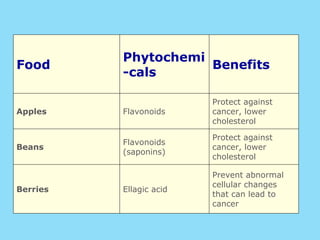
Food Phytochemi-cals Benefits Apples Flavonoids Protect against cancer, lower cholesterol Beans Flavonoids (saponins) Protect against cancer, lower cholesterol Berries Ellagic acid Prevent abnormal cellular changes that can lead to cancer
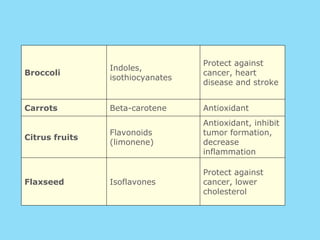
Broccoli Indoles, isothiocyanates Protect against cancer, heart disease and stroke Carrots Beta-carotene Antioxidant Citrus fruits Flavonoids (limonene) Antioxidant, inhibit tumor formation, decrease inflammation Flaxseed Isoflavones Protect against cancer, lower cholesterol
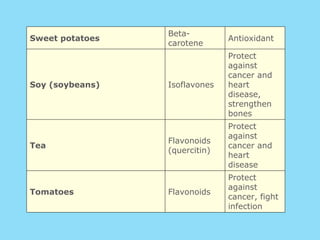
Sweet potatoes Beta-carotene Antioxidant Soy (soybeans) Isoflavones Protect against cancer and heart disease, strengthen bones Tea Flavonoids (quercitin) Protect against cancer and heart disease Tomatoes Flavonoids Protect against cancer, fight infection
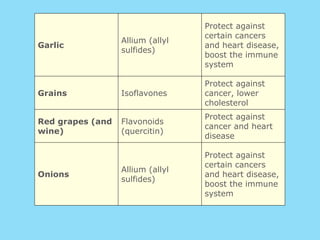
Garlic Allium (allyl sulfides) Protect against certain cancers and heart disease, boost the immune system Grains Isoflavones Protect against cancer, lower cholesterol Red grapes (and wine) Flavonoids (quercitin) Protect against cancer and heart disease Onions Allium (allyl sulfides) Protect against certain cancers and heart disease, boost the immune system
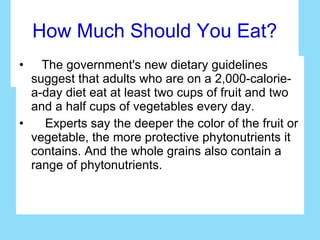
How Much Should You Eat? The government's new dietary guidelines suggest that adults who are on a 2,000-calorie-a-day diet eat at least two cups of fruit and two and a half cups of vegetables every day. Experts say the deeper the color of the fruit or vegetable, the more protective phytonutrients it contains. And the whole grains also contain a range of phytonutrients.
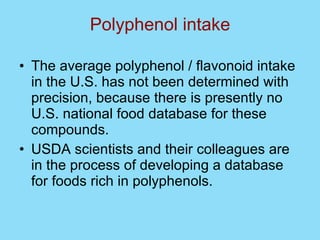
Polyphenol intake The average polyphenol / flavonoid intake in the U.S. has not been determined with precision, because there is presently no U.S. national food database for these compounds.  USDA scientists and their colleagues are in the process of developing a database for foods rich in polyphenols.
Cont. Scientists at the Food Composition Laboratory, Beltsville Human Nutrition Research Center are currently developing new methodology for the accurate measurement of polyphenols in foods.
Benefits of supplements Phytonutrient supplements are made from the skins of many vegetables and fruits  helpful in maintaining and promoting good health in all of us. Phytonutrient supplements can increase the strength of your immune system and they may play a role in the prevention of certain cancers.
Cont. These supplements are only the extract of the fruits and vegetables without the extra sugars and calories.  Neutralize any free radical damage that may be occurring in your body.
Phytonutrient supplements Zyflamend Easycaps  is a small sized, easy swallowing capsule that promotes a healthy inflammation response and is a useful way to increase healthy joint functioning and normal cell growth.  Phytonutrients , when correctly extracted and blended in proper proportions also help to promote a healthy inflammation response.  Zyflamend contains 8 of those phytonutrients.   Zyflamend Liquid  -- same as Easy Caps but in a easy-to-swallow liquid form for those who do not take capsules.
 
Conclusion . Phytonutrients research is experiencing remarkable growth. Hopefully, more specific information on Phytonutrient consumption and human health will be forthcoming in the future. Increase the consumption of Phytonutrient-rich foods including fruits, vegetables, grains and teas to be healthy and disease free.
Thank You

Phytonutrients

  • 1.
  • 2.
    Phytochemicals Also called “ Phytonutrients” “ Plant bioactive compounds”
  • 3.
    What are PhytochemicalsPhyto- greek word for plants Substances in plants that may help prevent diseases like cancer and heart disease. So far, scientists know of 3,000 different phytochemicals with possible health benefits.
  • 4.
    Compounds in plantsnot recognised as nutrients (ie. Not “essential dietary factors such as vitamins, minerals, amino acids and fatty acids” ) No deficiency syndromes May affect mammalian biological functions Phytochemicals +/- Health
  • 5.
    General Functions ofphytonutrients They have enzymes that detoxify the body and strengthen the liver. They strengthen red blood cells Enhance the immune system. Protects from cardiovascular diseases. They create vital sources of nutrients which fight cancer cells. Fight infections in the body that lead to inflammation, which in turn leads to fat storage.
  • 6.
    cont. They providea power boost to the thyroid and adrenal glands. They empower the genes that turn off fat storage and promote fat burn. Reduce premature aging. They trigger the body's internal mechanism to eat less, yet have the feeling of being full.
  • 7.
    Main types ofphytochemicals Terpenoids Alkaloids Sulphur compounds Phenolics/polyphenols
  • 8.
    Terpenoids activeingredients in essential oils (e.g. in herbs and spices) protect from UV damage orange, red and yellow colours sources include tomatoes, peas, citrus fruits, carrots Carotenoids Plant sterols
  • 9.
    Carotenoids (beta-carotene, alphacarotene, cryptoxanthin, zeaxantin, licopene, lutein...). They give orange color : carrots, peaches, mangos, but can also be found in leafy greens. Limonoids (limonin, nomilin, d limonine) found in citrus fruits
  • 10.
    Alkaloids toxicsubstances, naturally present in plants, including food plants, e.g. solanine in green and sprouting potatoes. basis of many modern day prescription drugs e.g. codeine, morphine, atropine; also of heroin and cocaine. historic use as poisons food sources include coffee, chilli, contaminated rye capsaicin Caffeine
  • 11.
    Sulphur compounds (e.g. glucosinolates found in Brassicas, and derivatives of the sulphur amino acid cysteine, found in the onion family) Functions reduce cholesterol levels and protect against heart disease Protect against certain cancers boost the immune system
  • 12.
    Organosulfur compounds ( Allicin ) Sources: garlic and onion Isothiocyanates ( Sulforaphane ) Sources: cruciferous vegetables like cabbage and turnip
  • 13.
    Phenolics/polyphenols Functions Skeletalfunction UV protection Antioxidant function Astringency Boost up Immune system Colouration (reds, purples, blues)
  • 14.
    Flavonoids (Anthocyanins, anthocynidins, isoflavonoids, flavonols, flavones) Sources : vegetables, fruits, green tea, soybeans, berries, cherries. Isoflavones (phytoestrogens) Sources- beans, legumes, especially soybeans and soy products.
  • 15.
    Phenolic acids (Ferulicacid, caffeic acid, ellagic acid and gallic acid) Sources : whole grains, berries, cherries, grapes, citrus fruits. Tannins ( Catechins) Sources : lentils, beans, tea, grape, wine.
  • 16.
    Green leafy vegetablescontain flavonoids. The flavonoid content is effected by different processing techniques. One of the study showing the effect of cooking on flavonoid content of spinach.
  • 17.
    Effect of Cookingon Total Flavonoid Content of Spinach Concentration (mg/kg FW) Gil et al. (1999) J. Agric. Food Chem., 47, 2213-2217.
  • 18.
    Specific functions ofphytonutrients with their mechanism
  • 19.
    Chemopreventive agents Mayreduce risk for certain cancers by detoxifying drugs toxins carcinogens Neutralize free radicals and act as antioxidants. Inhibit enzymes that activate carcinogens.
  • 20.
    Mechanisms of actionAnticancer effects of phytochemicals Exposure to carcinogen Metabolic activation of carcinogen Initiation (interaction between the carcinogen and DNA) Promotion (multiplication and growth of abnormal cells) Tumour growth Sites of potential action of phytochemicals
  • 21.
    Mechanisms of actionAnticancer effects of phytochemicals Inhibition of metabolic activation of carcinogen Eg some sulphur compounds, glucosinolates and phenolics induce detoxification mechanisms Inhibition of initiation Eg some phenolics prevent oxidative damage to DNA or promote DNA repair mechanisms Inhibition of promotion Eg some phenolics, alkaloids and terpenpoids inhibit Cell transcription
  • 22.
    Diseases of middle-agewill increase!
  • 23.
    A study showsthat the Consumption of tomato products has been linked to a decreased risk of prostate cancer. Men had about a 35% decrease in risk of prostate cancer. Giovannucci, et. al. Journal of the National Cancer Institute 1995; 87; 1767)
  • 24.
    Flax seeds Containslignans, compounds converted into biologically active phytoestrogens by bacteria that normally reside in the human intestine. Studies of populations suggest that women who excrete more have phytoestrogens in the urine (an indicator of phytoestrogen intake from flaxseed and other sources) have lower rates of breast cancer Animal studies show a decrease in tumors of the breast and lung when fed flaxseed
  • 25.
    polyphenolic extracts fromcranberry inhibit the growth of breast, colon, prostate, lung, and other tumors, as do flavonols from the fruit. The unique combination of phytochemicals found in cranberry fruit may produce synergistic health benefits. These findings suggest a potential role for cranberry as a dietary chemopreventive. © 2007 The American Society for Nutrition J. Nutr. 137:186S-193S, January 2007
  • 26.
    Several studies havespecifically linked apple consumption with a reduced risk for cancer, especially lung cancer. In this Study, involving over 77,000 women and 47, 000 men, fruit and vegetable intake was associated with a 21% reduced risk in lung cancer risk in women, but this association was not seen in men. Very few of the individual who ate fruits and vegetables had a significant effect on lung cancer risk in women, however apples were one of the individual fruits associated with a decreased risk in lung cancer. Women who consumed at least one serving per day of apples and pears had a reduced risk of lung cancer. Nutrition Journal 2004, 3: 5doi:10.1186/1475-2891-3-5
  • 27.
    Mechanisms of actionAnti-heart disease effects of phytochemicals? Damage to artery endothelium Oxidation of LDL uptake of LDL Monocyte adherence Platelet activation Coagulation HEART ATTACK ! Sites of potential action of phytochemicals
  • 28.
    Epidemiologists concluded thathigh consumption of flavonoids from apples and onions was directly associated with the lowest risk for coronary mortality. This conclusion was based on the analysis of diet and health outcomes of a study of 5,133 men and women aged 30-69 who were initially free of heart disease when the study began in 1967. (Source: British Medical Journal , 1996, 312: 478-481)
  • 29.
    Pomerleau et al.(2003) Public Health Nutrition 6(5): 453-461 Riboli and Norat (2003) Am J Clin Nutr. 78:559S-569S Epidemiology suggests role for fruit and vegetables CVD
  • 30.
    This study concludedthat Each increment of three daily servings of fruits and vegetables equated to a 22% decrease in the risk of stroke, including ischemic attack. Gillman, et.al. Journal of American Medical Association, 1995; 273;1113).
  • 31.
    1999: FDA approvedclaim that 25 gm of soy protein per day may reduce your risk of heart disease 2000: AHA endorsed soy as a heart healthy food 2006: AHA reevaluating endorsement due to conflicting research
  • 32.
    Work as antioxidantThe American Heart Association's nutrition committee has issued a science advisory discussing relationships between antioxidants and heart disease. The statement concludes: “ Considerable evidence now suggests that oxidants are involved in the development and clinical expression of coronary heart disease and that antioxidants may contribute to disease resistance. Consistent with this view is epidemiological evidence indicating that greater antioxidant intake is associated with lower disease risk. Although this increased antioxidant intake generally has involved increased consumption of antioxidant-rich foods.”
  • 33.
    Apples are awidely consumed, rich source of phytochemicals, apples have been found to have very strong antioxidant activity , inhibit cancer cell proliferation, decrease lipid oxidation, and lower cholesterol. Apples contain a variety of phytochemicals, including catechin, and chlorogenic acid, all of which are strong antioxidants. 3: 5doi:10.1186/1475-2891-3-5 Nutrition Journal 2004,
  • 34.
    Phytonutrients- Promote fatburn These phytonutrients have also been proven to be a powerful blow to fat. A study was conducted included women eating raw fruits and vegetables, verses another set of women, who ate health food bars. The results were pretty astounding. On an average, the women who ate the raw fruits and vegetables (filled with phytonutrients) lost 22% more fat than the group who ate less. journal of Nutrition Research :
  • 35.
    Sources of phytochemicalsFruits Vegetables Legumes Whole grains Nuts Seeds Herbs Spices
  • 36.
    Soy Tomato Broccoli Garlic Flax seeds Citrus fruits Melons Pink grapefruit Blueberries Sweet potatoes Chili peppers
  • 37.
    Different foods andtheir benefits
  • 38.
    Food Phytochemi-cals BenefitsApples Flavonoids Protect against cancer, lower cholesterol Beans Flavonoids (saponins) Protect against cancer, lower cholesterol Berries Ellagic acid Prevent abnormal cellular changes that can lead to cancer
  • 39.
    Broccoli Indoles, isothiocyanatesProtect against cancer, heart disease and stroke Carrots Beta-carotene Antioxidant Citrus fruits Flavonoids (limonene) Antioxidant, inhibit tumor formation, decrease inflammation Flaxseed Isoflavones Protect against cancer, lower cholesterol
  • 40.
    Sweet potatoes Beta-caroteneAntioxidant Soy (soybeans) Isoflavones Protect against cancer and heart disease, strengthen bones Tea Flavonoids (quercitin) Protect against cancer and heart disease Tomatoes Flavonoids Protect against cancer, fight infection
  • 41.
    Garlic Allium (allylsulfides) Protect against certain cancers and heart disease, boost the immune system Grains Isoflavones Protect against cancer, lower cholesterol Red grapes (and wine) Flavonoids (quercitin) Protect against cancer and heart disease Onions Allium (allyl sulfides) Protect against certain cancers and heart disease, boost the immune system
  • 42.
    How Much ShouldYou Eat? The government's new dietary guidelines suggest that adults who are on a 2,000-calorie-a-day diet eat at least two cups of fruit and two and a half cups of vegetables every day. Experts say the deeper the color of the fruit or vegetable, the more protective phytonutrients it contains. And the whole grains also contain a range of phytonutrients.
  • 43.
    Polyphenol intake Theaverage polyphenol / flavonoid intake in the U.S. has not been determined with precision, because there is presently no U.S. national food database for these compounds. USDA scientists and their colleagues are in the process of developing a database for foods rich in polyphenols.
  • 44.
    Cont. Scientists atthe Food Composition Laboratory, Beltsville Human Nutrition Research Center are currently developing new methodology for the accurate measurement of polyphenols in foods.
  • 45.
    Benefits of supplementsPhytonutrient supplements are made from the skins of many vegetables and fruits helpful in maintaining and promoting good health in all of us. Phytonutrient supplements can increase the strength of your immune system and they may play a role in the prevention of certain cancers.
  • 46.
    Cont. These supplementsare only the extract of the fruits and vegetables without the extra sugars and calories. Neutralize any free radical damage that may be occurring in your body.
  • 47.
    Phytonutrient supplements ZyflamendEasycaps is a small sized, easy swallowing capsule that promotes a healthy inflammation response and is a useful way to increase healthy joint functioning and normal cell growth. Phytonutrients , when correctly extracted and blended in proper proportions also help to promote a healthy inflammation response. Zyflamend contains 8 of those phytonutrients. Zyflamend Liquid -- same as Easy Caps but in a easy-to-swallow liquid form for those who do not take capsules.
  • 48.
  • 49.
    Conclusion . Phytonutrientsresearch is experiencing remarkable growth. Hopefully, more specific information on Phytonutrient consumption and human health will be forthcoming in the future. Increase the consumption of Phytonutrient-rich foods including fruits, vegetables, grains and teas to be healthy and disease free.
  • 50.