CONTENT:
 Introduction
 Types of development
 Defining metamorphosis
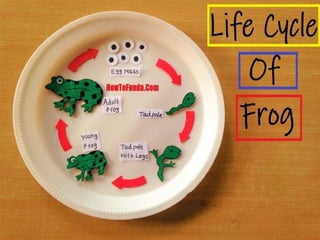
 Life cycle of a frog
 Video showing frog’s life cycle
 Role of hormones in metamorphosis
 Worksheet
 Activity for kids
LEARNING OUTCOMES:
 Students will be able to :
 Define metamorphosis.
 Differentiate between direct and indirect
development.
 List the changes that take place when a
tadpole changes into an adult frog.
 Develop the skill of drawing using methods
like clay modelling .
 Explain the role of iodine in the process of
metamorphosis.
INTRODUCTION
• There are two different types of
animals depending on whether female
gives birth to young ones or lay eggs i.e:
• OVIPAROUS
• VIVIPAROUS
• All young ones grow to form adults
regardless of whether they have
hatched from an egg or are born
directly.
TYPES OF DEVELOPMENT
 Different organisms show different
development pattern depending on
whether the young one at birth is
miniature version of adult form or not.
 There are two types of development
shown by the organisms:
1. Direct development
2. Indirect development
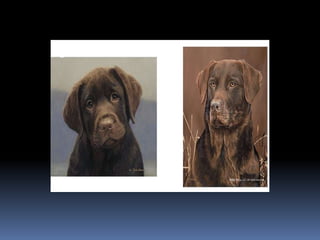
DIRECT DEVELOPMENT
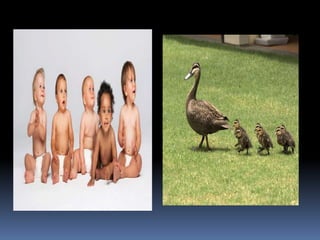
 Young one at birth is a miniature version
of the adult form.
Example : birds and mammals
INDIRECT DEVELOPMENT
 Young ones are initially very different
from their adults.
 Also there are number of features in adult
form which are not present in larval stages
or in initial stages.
Example :
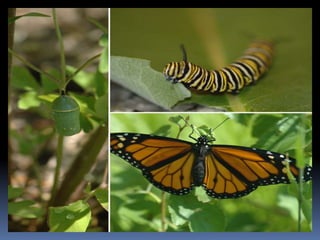
1. Tadpole looks very different from a frog.
2. A caterpillar looks very different from a
butterfly.
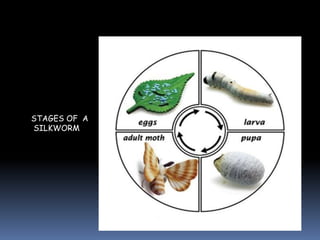
STAGES OF A
SILKWORM
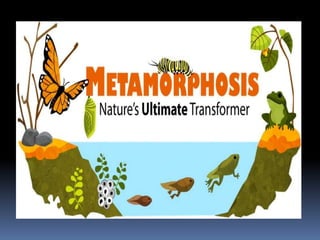
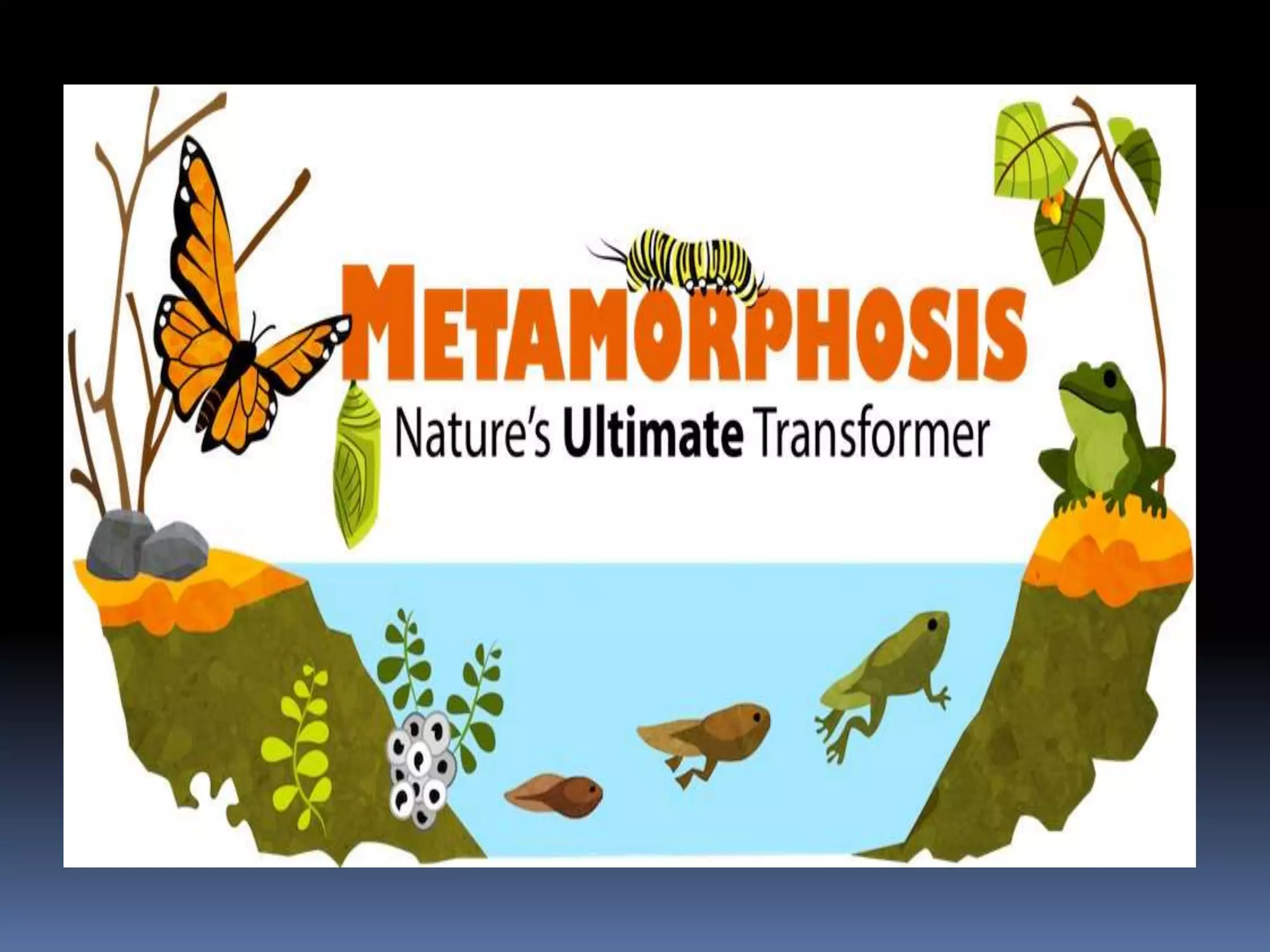
METAMORPHOSIS
DEFINITION :
 A radical change in structure and habit of
an animal (as in case of butterfly or a
frog) during its life cycle is termed as
metamorphosis.
OR
 Transformation of a young one into an
adult through number of drastic changes
in its form and structure.
JOURNEY
FROM
A
YOUNG ONE TO ADULT
Learning through video
KEYPOINTS :
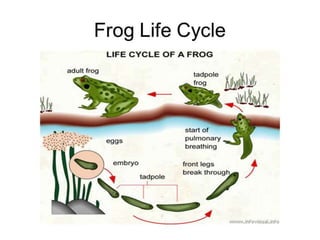
 Eggs are laid in water.
 Tadpole emerges from the egg and swims
freely in water.
 Tadpole has gills, a tail and a small circular
mouth.
 Tadpole grows until it begins
metamorphosis.
 Metamorphosis is marked by the
development of hind legs followed by the
front legs.
 Lungs develop and tadpole begins to swim
to the surface of water to breathe.
 Intestine shortens to adapt the animal to
a carnivorous diet.
 Tail gets absorbed by the body during the
last stages of metamorphosis.
This way a tailed tadpole changes into a tail-
less frog.
HORMONES AND METAMORPHOSIS
 Thyroxine produced by thyroid gland of
frog is essential to carry out the process
of metamorphosis in frogs.
 Iodine is needed for the production of
thyroxine and is present in water in which
tadpoles are growing.
 In insects also, hormones control
metamorphosis and is produced by some
cells present their brain and glands
located elsewhere in their body.
WORKSHEET
 Define metamorphosis.
 Differentiate between direct and
indirect development.
 List three changes that take place when
a tadpole changes into a frog.
 What will happen to a tadpole if iodine
is deficient in the water where tadpoles
are growing?
 A tadpole is different from frog. How?
SELF ASSESSMENT
USING
GOOGLE FORMS
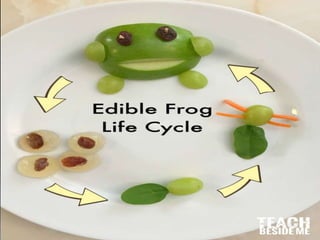
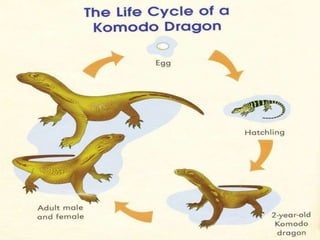
ART INTEGRATION ACTIVITY
 Draw the life cycle of a dragon or a frog or
any other organism using any of the following
technique/ method:
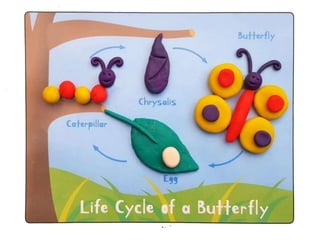
1. clay modelling art
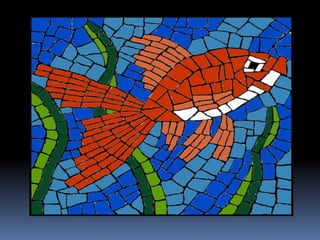
2. mosaic art
NOTE:
• You can use A4 size sheet/ paper plates/
cardboard for the activity.
RUBRICS:
Creativity: 2 marks
Presentation: 2 marks
Content : 1 marks
SAMPLES
Metamorphosis in frog

Metamorphosis in frog

  • 2.
    CONTENT:  Introduction  Typesof development  Defining metamorphosis  Life cycle of a frog  Video showing frog’s life cycle  Role of hormones in metamorphosis  Worksheet  Activity for kids
  • 3.
    LEARNING OUTCOMES:  Studentswill be able to :  Define metamorphosis.  Differentiate between direct and indirect development.  List the changes that take place when a tadpole changes into an adult frog.  Develop the skill of drawing using methods like clay modelling .  Explain the role of iodine in the process of metamorphosis.
  • 4.
    INTRODUCTION • There aretwo different types of animals depending on whether female gives birth to young ones or lay eggs i.e: • OVIPAROUS • VIVIPAROUS • All young ones grow to form adults regardless of whether they have hatched from an egg or are born directly.
  • 5.
    TYPES OF DEVELOPMENT Different organisms show different development pattern depending on whether the young one at birth is miniature version of adult form or not.  There are two types of development shown by the organisms: 1. Direct development 2. Indirect development
  • 6.
    DIRECT DEVELOPMENT  Youngone at birth is a miniature version of the adult form. Example : birds and mammals
  • 9.
    INDIRECT DEVELOPMENT  Youngones are initially very different from their adults.  Also there are number of features in adult form which are not present in larval stages or in initial stages. Example : 1. Tadpole looks very different from a frog. 2. A caterpillar looks very different from a butterfly.
  • 11.
  • 12.
    METAMORPHOSIS DEFINITION :  Aradical change in structure and habit of an animal (as in case of butterfly or a frog) during its life cycle is termed as metamorphosis. OR  Transformation of a young one into an adult through number of drastic changes in its form and structure.
  • 13.
  • 15.
  • 16.
    KEYPOINTS :  Eggsare laid in water.  Tadpole emerges from the egg and swims freely in water.  Tadpole has gills, a tail and a small circular mouth.  Tadpole grows until it begins metamorphosis.  Metamorphosis is marked by the development of hind legs followed by the front legs.
  • 17.
     Lungs developand tadpole begins to swim to the surface of water to breathe.  Intestine shortens to adapt the animal to a carnivorous diet.  Tail gets absorbed by the body during the last stages of metamorphosis. This way a tailed tadpole changes into a tail- less frog.
  • 18.
    HORMONES AND METAMORPHOSIS Thyroxine produced by thyroid gland of frog is essential to carry out the process of metamorphosis in frogs.  Iodine is needed for the production of thyroxine and is present in water in which tadpoles are growing.  In insects also, hormones control metamorphosis and is produced by some cells present their brain and glands located elsewhere in their body.
  • 20.
    WORKSHEET  Define metamorphosis. Differentiate between direct and indirect development.  List three changes that take place when a tadpole changes into a frog.  What will happen to a tadpole if iodine is deficient in the water where tadpoles are growing?  A tadpole is different from frog. How?
  • 21.
  • 23.
    ART INTEGRATION ACTIVITY Draw the life cycle of a dragon or a frog or any other organism using any of the following technique/ method: 1. clay modelling art 2. mosaic art NOTE: • You can use A4 size sheet/ paper plates/ cardboard for the activity. RUBRICS: Creativity: 2 marks Presentation: 2 marks Content : 1 marks
  • 24.

Editor's Notes

  • #13 Meta means change and morphosis means physical structure and form.
  • #15 There are number of changes in the life cycle of a frog after which it changes into an adult frog.
  • #18 When tadpole is newly hatched it is herbivorous and it feeds on algae growing on rocks and in water and later it becomes carnivorous and feeds on dead insects, spiders and water fleas.
  • #19 Gland is a group of cells that synthesizes chemical substances called hormones which help to perform specific functions in the body.
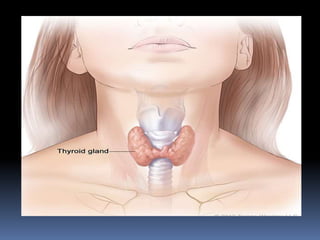
  • #20 Just to give you an idea of where is thyroid gland located and how does it look like!
  • #22 This has been created on google forms and can be given to the kids for testing themselves.
  • #26  this is just to give an idea of mosaic art to children.