The ICZN, the rules and how they
result in name changes
Everyone loves a good noun
● Talking about things without giving them names
is hard
● Naming things is a natural part of language, as
is classification
Folk nomenclatures
● Collections of nouns for describing related
things
● Still widely used: common names
● Precedence given to useful things
An aside
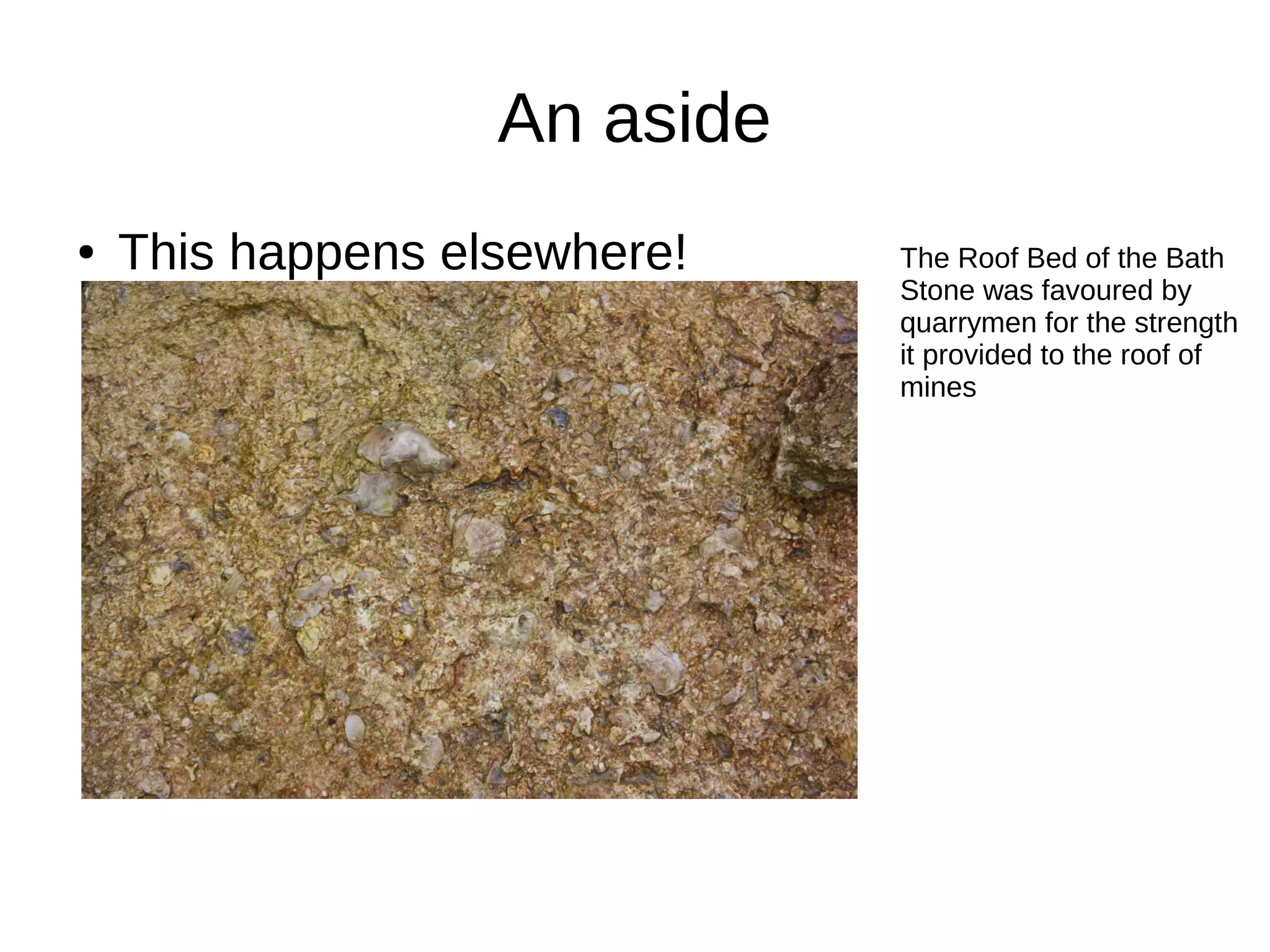
● This happens elsewhere! The Roof Bed of the Bath
Stone was favoured by
quarrymen for the strength
it provided to the roof of
mines
An aside
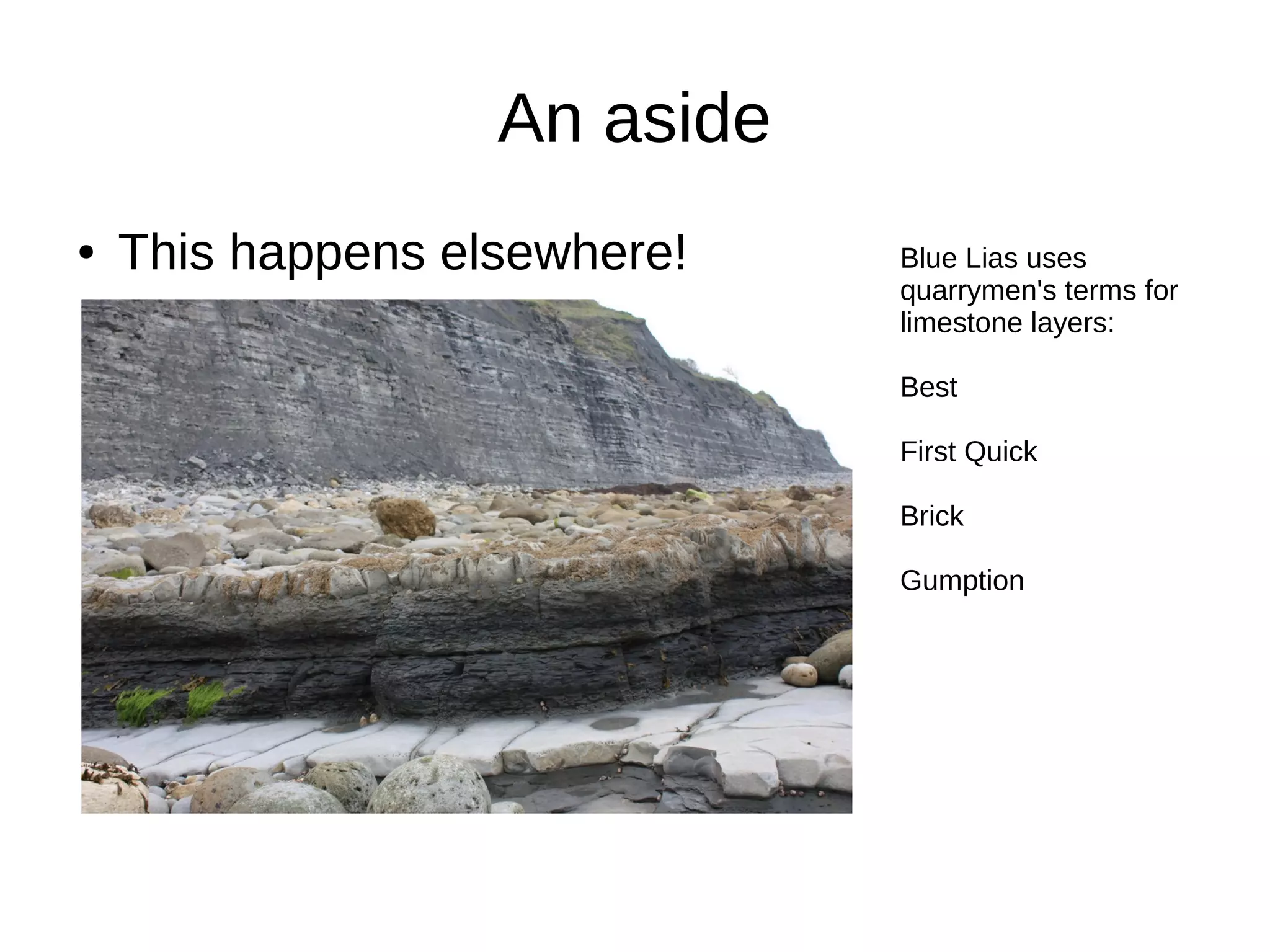
● This happens elsewhere! Blue Lias uses
quarrymen's terms for
limestone layers:
Best
First Quick
Brick
Gumption
An issue
● One thing can have many folk names
● Regional variations
● Spelling variations (particularly when
transcribing oral traditions)
Zoological Nomenclature
Formalises this so that:
● One animal has one (correct) name
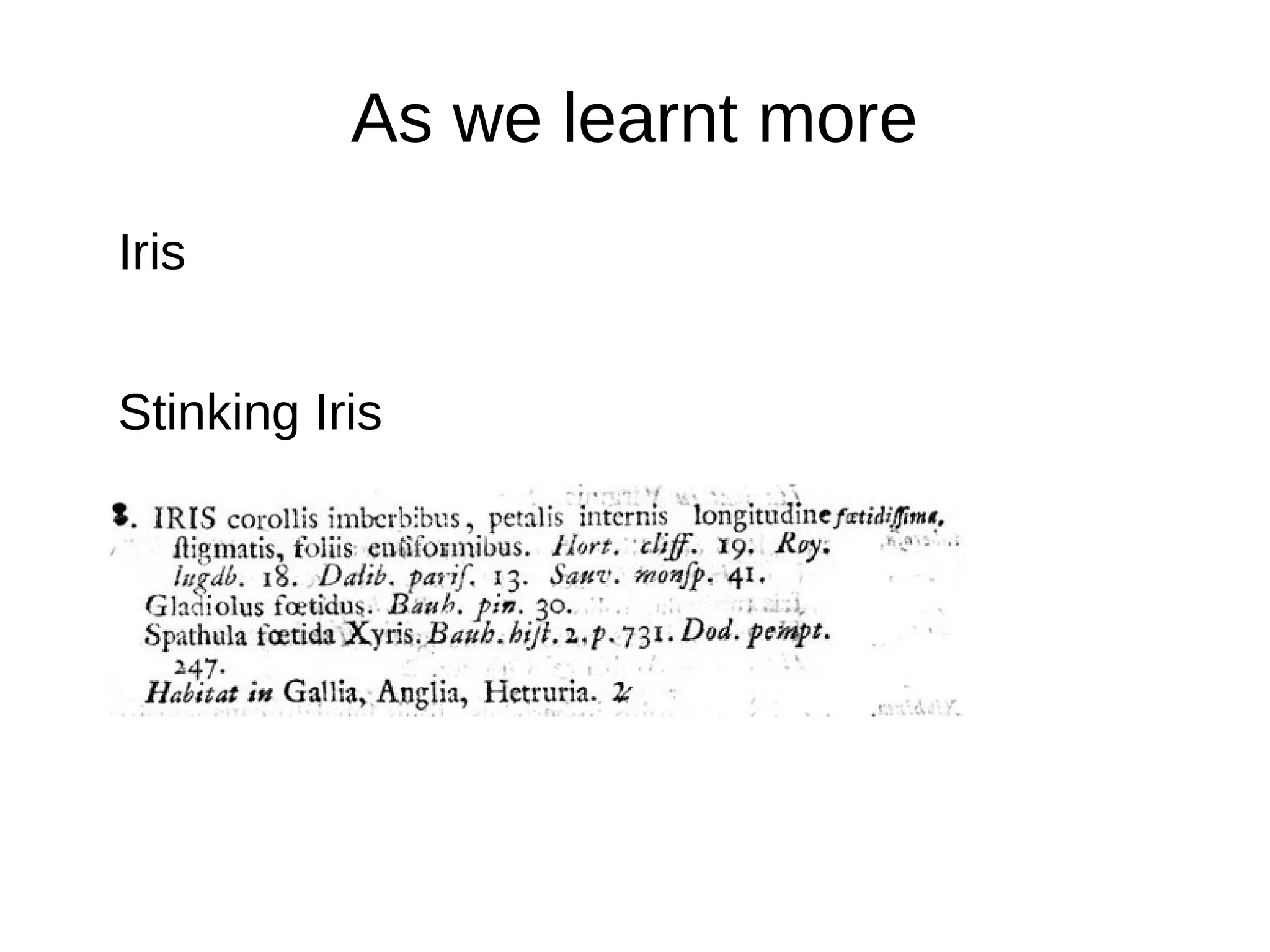
As we learnt more
Iris
Stinking Iris
Why we like Linnaeus
Iris foetidissima
Move from descriptions that would get ever
longer to binominals
That seems simple...
… why do we need a Commission on animal
names?
… why do they keep changing?
...hold on, what is a species?
An aside on species concepts
● Phenetic
● Biological/Reproductive
● Phylogenetic
● Ecological
● Cohesion
Classification
Implicit in a binominal name is a grouping of
related species
Carex divulsa
Carex pendula
Cyperus papyrus
So names change
● When we learn something that causes our definition
of a species to change
● When we learn something that means the grouping
(higher classification) of a species to change (only at
generic level)
● Or when someone did something wrong (almost
always accidental, and understandable)
Rules about name changes: priority
Generally (one animal, one name):
● If an animal has two names: the oldest wins
● If two animals have the same name: the first one to get it keeps it
● If the species name is an adjective, it describes the genus and if in a
language that uses gender must agree in gender.
*Lepidopterists by convention ignore the last rule, and many people
are keen for this to disappear.
Availability & Validity
● An available name has been correctly published
(has a type specimen, adequate description, etc). If
a name has not been correctly published it is
considered not to exist in relation to priority.
● A valid name is the currently correct name.
An animal may have many available names, but only
one is valid.
Change in species definition 1
Two species are found to be the same:
● The older name is valid (senior synonym)
● The younger name is a junior synonym
If both names were published in the same
publication the choice of which to use goes to
the 'First Reviser'.
Changes in species definition 2
A species is found to be two species
● The original species still exists, the name still
applies
● A new name is described with a new type
specimen
A note on types
There are two kinds:
● Primary types (Holotypes, Lectotypes Neotypes, Syntypes)
● Secondary types (Paratypes, Paralectotypes)
Primary types define a species, secondary types show within
species variation (in phasmids generally include opposite
sex to primary type, eggs, nymphs, etc)
Genus changes
Sometimes a species needs to be moved to a
different genus, this can cause name changes
● Every species must have a unique name, so if there
is a species with the same specific epithet in that
genus the name must change (junior homonym)
● If an adjective the name may need to change to
reflect the gender of the new genus
Mistakes
The same species is described twice:
● The second name becomes a junior synonym
A type specimen is lost/destroyed
● A neotype must be designated
A species is inadequately described
● It should be redescribed from the same primary types
Subspecies
When a species is split into subspecies
● The subspecies containing the original type is
nominotypical and the subspecific epithet is the
same as the specific epithet (Conocephalus
hastatus hastatus)
● The other species is given a unique subspecific
epithet (Conocephalus hastatus bodenheimeri)
Species group
So far we have discussed names in the
species-group
Some notes on the Genus group
Genera should have a type species the process of creating a
type species is called fixation
● Original designation: the author of the genus name sets the
type species explicitly
● Subsequent designation: a later author sets the type species
of an unfixed genus as First Reviser
● Indication: by original monotypy when a genus is originally
described with a single species. By absolute tautonymy when
a genus is described including a species with a specific
epithet identical to the genus name (Conocephalus
conocephalus)
Subgenera
Used to split genera into groups
● The subgenus containing the type-species of
the genus is nominotypical and takes the name
of the genus (analogous to subspecies)
The Family Group
Highest level controlled by ICZN:
● Covers Superfamily down to Tribe
● Names are based on a generic name
● All carry the authorship of the first person to
use that genus name as the root of a name in
the family group
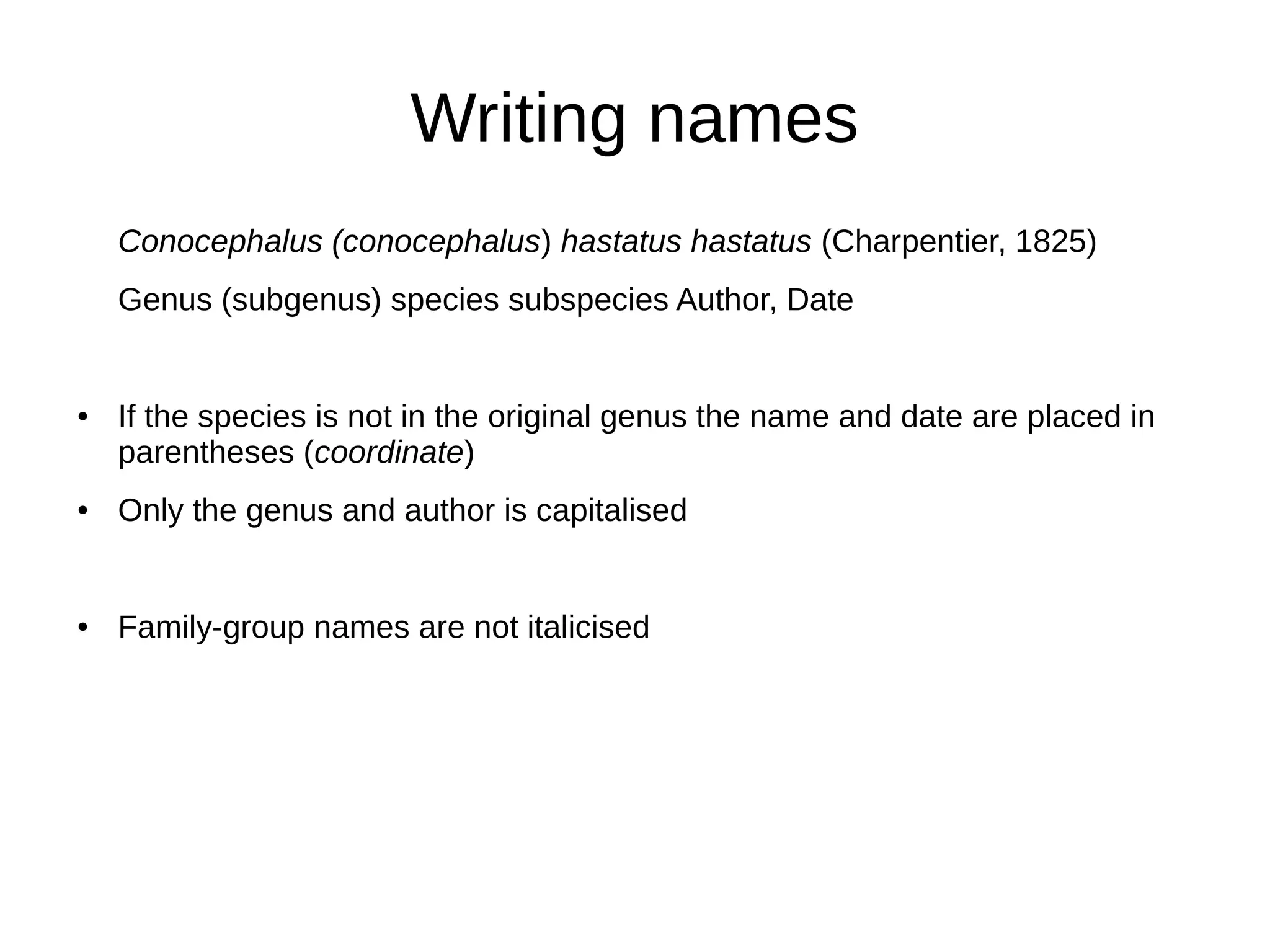
Writing names
Conocephalus (conocephalus) hastatus hastatus (Charpentier, 1825)
Genus (subgenus) species subspecies Author, Date
● If the species is not in the original genus the name and date are placed in
parentheses (coordinate)
● Only the genus and author is capitalised
● Family-group names are not italicised
So far...
These things can be done by anybody publishing a
scientific paper following the International Code of
Zoological Nomenclature
The Code describes how species should be
described, types designates, and problems solved
Standards, Sense and Stability
Stability
The International Commission on Zoological Nomenclature has the plenary
power to suspend the rules of nomenclature in the case where not doing so
would lead to instability
●
An older available name is discovered for a well-known species (reversal of
precedence – name added to The Official List of Names and Works in
Zoology)
●
The type specimen of a species still exists but may be considered no longer
adequate (Archaeopteryx lithographica)
●
To suspend all priority for a group of organisms based on a List of Available
Names (new – currently in progress for Rotifera)
Process
● Authors prepare a Case for the Commission which is
published in the Bulletin of Zoological Nomenclature
● Others may comment via the BZN supporting (or
otherwise) the Case or proposing alternative solutions
The Commission votes on the Case and issue an Opinion
in the BZN.
Cases
● Generally relate to names or groups of names
of animals
● May relate to publications – making names in
some publications unavailable or making pre-
1758 names available
Further Notes 1
● Special rules for ichnotaxa
● Botanists have a separate code (as do
microbiologists and virologists)
● Also International Code of Nomenclature for
Cultivated Plants (cultivar, Group, grex)
Further Notes 2
● There are a lot more rules – but hopefully you
get the general idea
● A lot more has been written about
nomenclature, taxonomy and classification
● The history of nomenclature is quite interesting

Phasmid Study Group: Name changes talk (Summer Meeting 2014)

  • 1.
    The ICZN, therules and how they result in name changes
  • 2.
    Everyone loves agood noun ● Talking about things without giving them names is hard ● Naming things is a natural part of language, as is classification
  • 3.
    Folk nomenclatures ● Collectionsof nouns for describing related things ● Still widely used: common names ● Precedence given to useful things
  • 4.
    An aside ● Thishappens elsewhere! The Roof Bed of the Bath Stone was favoured by quarrymen for the strength it provided to the roof of mines
  • 5.
    An aside ● Thishappens elsewhere! Blue Lias uses quarrymen's terms for limestone layers: Best First Quick Brick Gumption
  • 6.
    An issue ● Onething can have many folk names ● Regional variations ● Spelling variations (particularly when transcribing oral traditions)
  • 7.
    Zoological Nomenclature Formalises thisso that: ● One animal has one (correct) name
  • 8.
    As we learntmore Iris Stinking Iris
  • 9.
    Why we likeLinnaeus Iris foetidissima Move from descriptions that would get ever longer to binominals
  • 10.
    That seems simple... …why do we need a Commission on animal names? … why do they keep changing? ...hold on, what is a species?
  • 11.
    An aside onspecies concepts ● Phenetic ● Biological/Reproductive ● Phylogenetic ● Ecological ● Cohesion
  • 12.
    Classification Implicit in abinominal name is a grouping of related species Carex divulsa Carex pendula Cyperus papyrus
  • 13.
    So names change ●When we learn something that causes our definition of a species to change ● When we learn something that means the grouping (higher classification) of a species to change (only at generic level) ● Or when someone did something wrong (almost always accidental, and understandable)
  • 14.
    Rules about namechanges: priority Generally (one animal, one name): ● If an animal has two names: the oldest wins ● If two animals have the same name: the first one to get it keeps it ● If the species name is an adjective, it describes the genus and if in a language that uses gender must agree in gender. *Lepidopterists by convention ignore the last rule, and many people are keen for this to disappear.
  • 15.
    Availability & Validity ●An available name has been correctly published (has a type specimen, adequate description, etc). If a name has not been correctly published it is considered not to exist in relation to priority. ● A valid name is the currently correct name. An animal may have many available names, but only one is valid.
  • 16.
    Change in speciesdefinition 1 Two species are found to be the same: ● The older name is valid (senior synonym) ● The younger name is a junior synonym If both names were published in the same publication the choice of which to use goes to the 'First Reviser'.
  • 17.
    Changes in speciesdefinition 2 A species is found to be two species ● The original species still exists, the name still applies ● A new name is described with a new type specimen
  • 18.
    A note ontypes There are two kinds: ● Primary types (Holotypes, Lectotypes Neotypes, Syntypes) ● Secondary types (Paratypes, Paralectotypes) Primary types define a species, secondary types show within species variation (in phasmids generally include opposite sex to primary type, eggs, nymphs, etc)
  • 19.
    Genus changes Sometimes aspecies needs to be moved to a different genus, this can cause name changes ● Every species must have a unique name, so if there is a species with the same specific epithet in that genus the name must change (junior homonym) ● If an adjective the name may need to change to reflect the gender of the new genus
  • 20.
    Mistakes The same speciesis described twice: ● The second name becomes a junior synonym A type specimen is lost/destroyed ● A neotype must be designated A species is inadequately described ● It should be redescribed from the same primary types
  • 21.
    Subspecies When a speciesis split into subspecies ● The subspecies containing the original type is nominotypical and the subspecific epithet is the same as the specific epithet (Conocephalus hastatus hastatus) ● The other species is given a unique subspecific epithet (Conocephalus hastatus bodenheimeri)
  • 22.
    Species group So farwe have discussed names in the species-group
  • 23.
    Some notes onthe Genus group Genera should have a type species the process of creating a type species is called fixation ● Original designation: the author of the genus name sets the type species explicitly ● Subsequent designation: a later author sets the type species of an unfixed genus as First Reviser ● Indication: by original monotypy when a genus is originally described with a single species. By absolute tautonymy when a genus is described including a species with a specific epithet identical to the genus name (Conocephalus conocephalus)
  • 24.
    Subgenera Used to splitgenera into groups ● The subgenus containing the type-species of the genus is nominotypical and takes the name of the genus (analogous to subspecies)
  • 25.
    The Family Group Highestlevel controlled by ICZN: ● Covers Superfamily down to Tribe ● Names are based on a generic name ● All carry the authorship of the first person to use that genus name as the root of a name in the family group
  • 26.
    Writing names Conocephalus (conocephalus)hastatus hastatus (Charpentier, 1825) Genus (subgenus) species subspecies Author, Date ● If the species is not in the original genus the name and date are placed in parentheses (coordinate) ● Only the genus and author is capitalised ● Family-group names are not italicised
  • 27.
    So far... These thingscan be done by anybody publishing a scientific paper following the International Code of Zoological Nomenclature The Code describes how species should be described, types designates, and problems solved Standards, Sense and Stability
  • 28.
    Stability The International Commissionon Zoological Nomenclature has the plenary power to suspend the rules of nomenclature in the case where not doing so would lead to instability ● An older available name is discovered for a well-known species (reversal of precedence – name added to The Official List of Names and Works in Zoology) ● The type specimen of a species still exists but may be considered no longer adequate (Archaeopteryx lithographica) ● To suspend all priority for a group of organisms based on a List of Available Names (new – currently in progress for Rotifera)
  • 29.
    Process ● Authors preparea Case for the Commission which is published in the Bulletin of Zoological Nomenclature ● Others may comment via the BZN supporting (or otherwise) the Case or proposing alternative solutions The Commission votes on the Case and issue an Opinion in the BZN.
  • 30.
    Cases ● Generally relateto names or groups of names of animals ● May relate to publications – making names in some publications unavailable or making pre- 1758 names available
  • 31.
    Further Notes 1 ●Special rules for ichnotaxa ● Botanists have a separate code (as do microbiologists and virologists) ● Also International Code of Nomenclature for Cultivated Plants (cultivar, Group, grex)
  • 32.
    Further Notes 2 ●There are a lot more rules – but hopefully you get the general idea ● A lot more has been written about nomenclature, taxonomy and classification ● The history of nomenclature is quite interesting