Nomenclature for
the Future:
The power and
challenges for
stable and
sensible scientific
names for
animals
Ellinor Michel1,2,3
Richard Pyle1,3,4
Daphne Fautin1,3,5
David Patterson1,3,6
Jon Todd2,3
11
Int’l Commission on Zoological NomenclatureInt’l Commission on Zoological Nomenclature
22
The Natural History Museum, London UKThe Natural History Museum, London UK
33
Int’l Committee on BionomenclatureInt’l Committee on Bionomenclature
44
Bishop Museum, HI, USABishop Museum, HI, USA
55
University of Kansas, USAUniversity of Kansas, USA
66
Arizona State Univ, AZ, USAArizona State Univ, AZ, USA
All accumulated information of
a species is tied to a scientific
name, a name that serves as a
link between what has been
learned in the past and what we
today add to the body of
knowledge.
- Grimaldi & Engel, 2005
Names and the information revolution
Note: they don’t say THE scientific name (i.e., singular)
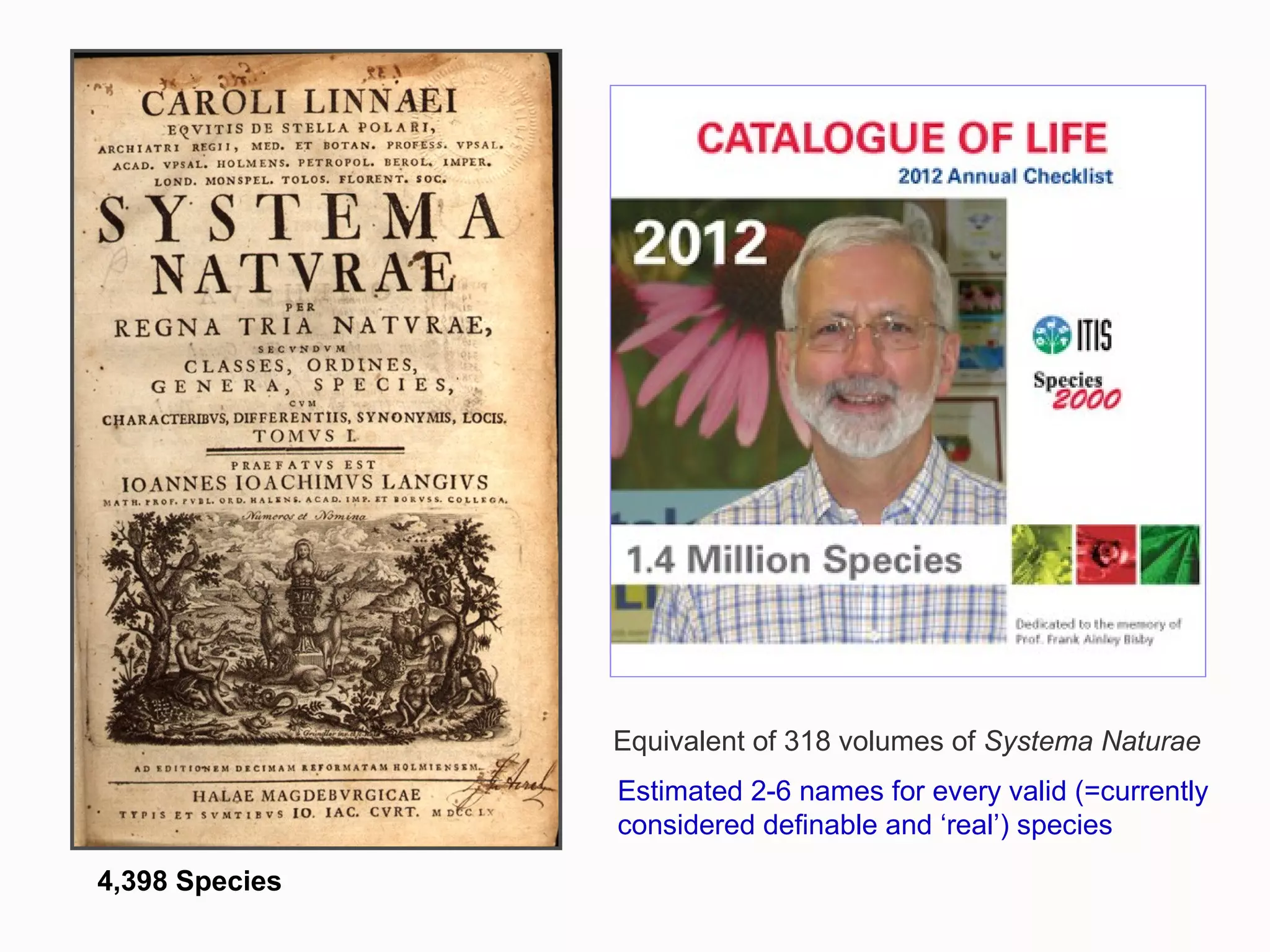
Equivalent of 318 volumes of Systema Naturae
Estimated 2-6 names for every valid (=currently
considered definable and ‘real’) species
4,398 Species
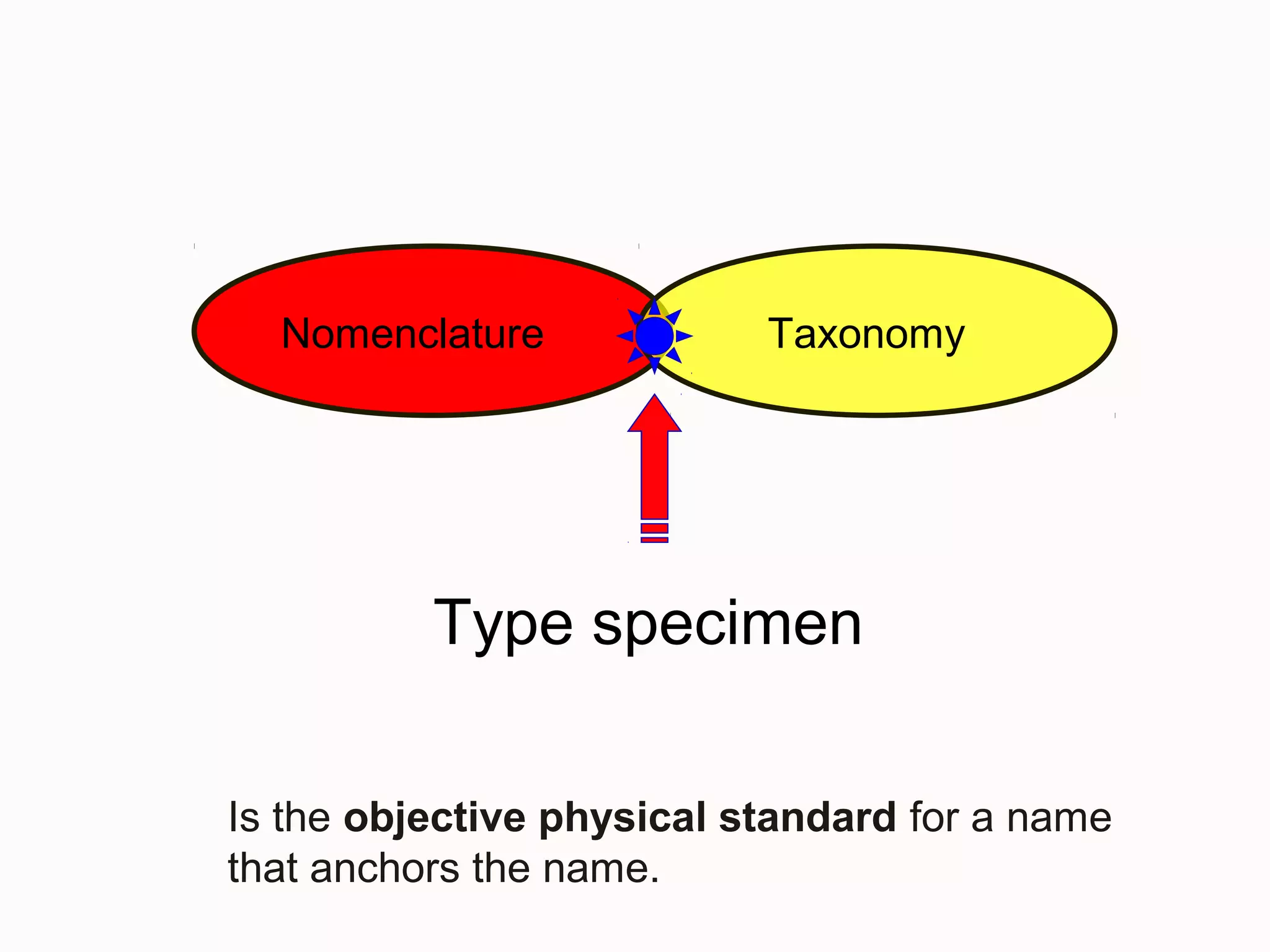
Nomenclature Taxonomy
Type specimen
Is the objective physical standard for a name
that anchors the name.
✔
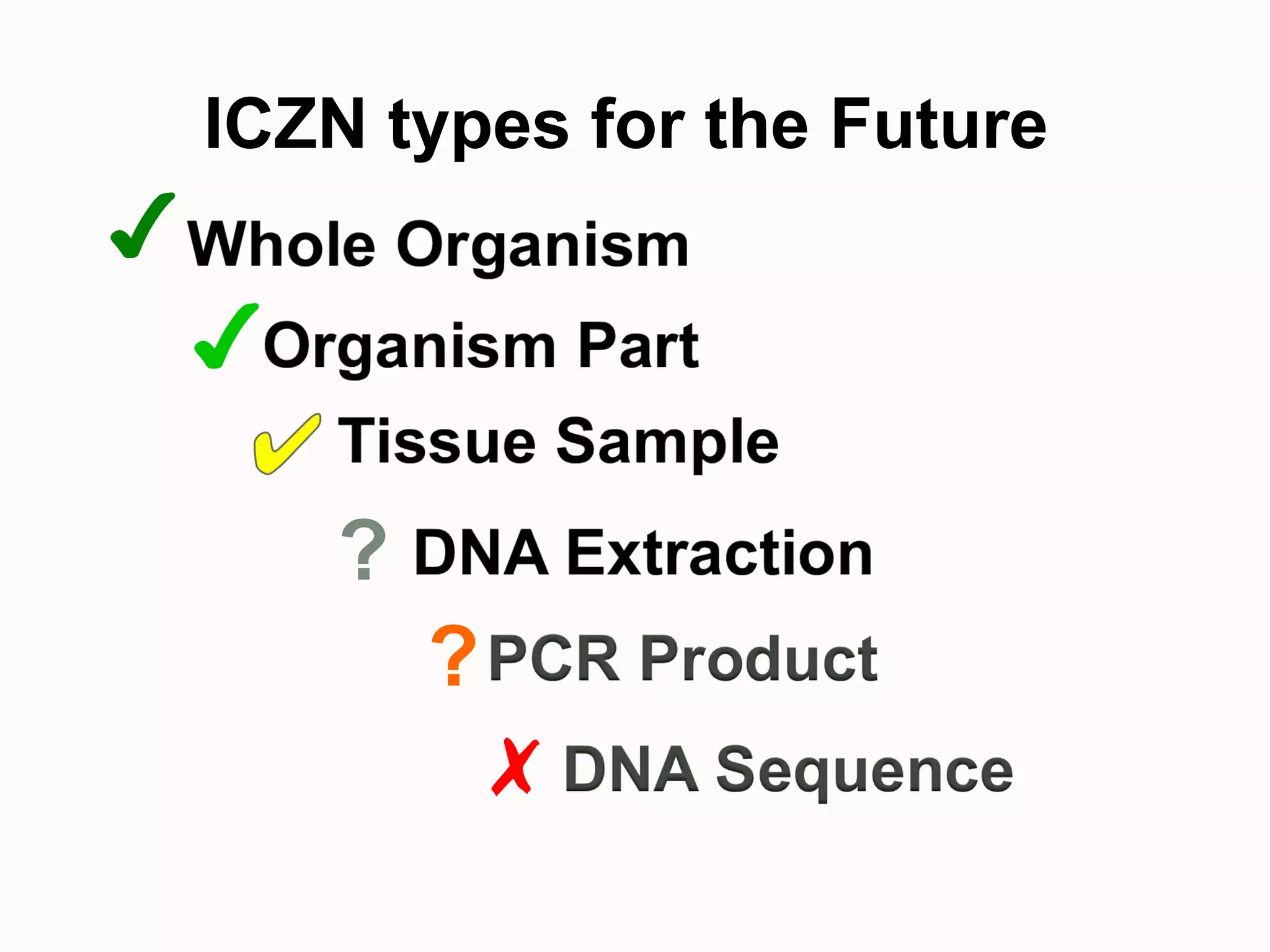
ICZN types for the Future
✔
?
✗
?
✔
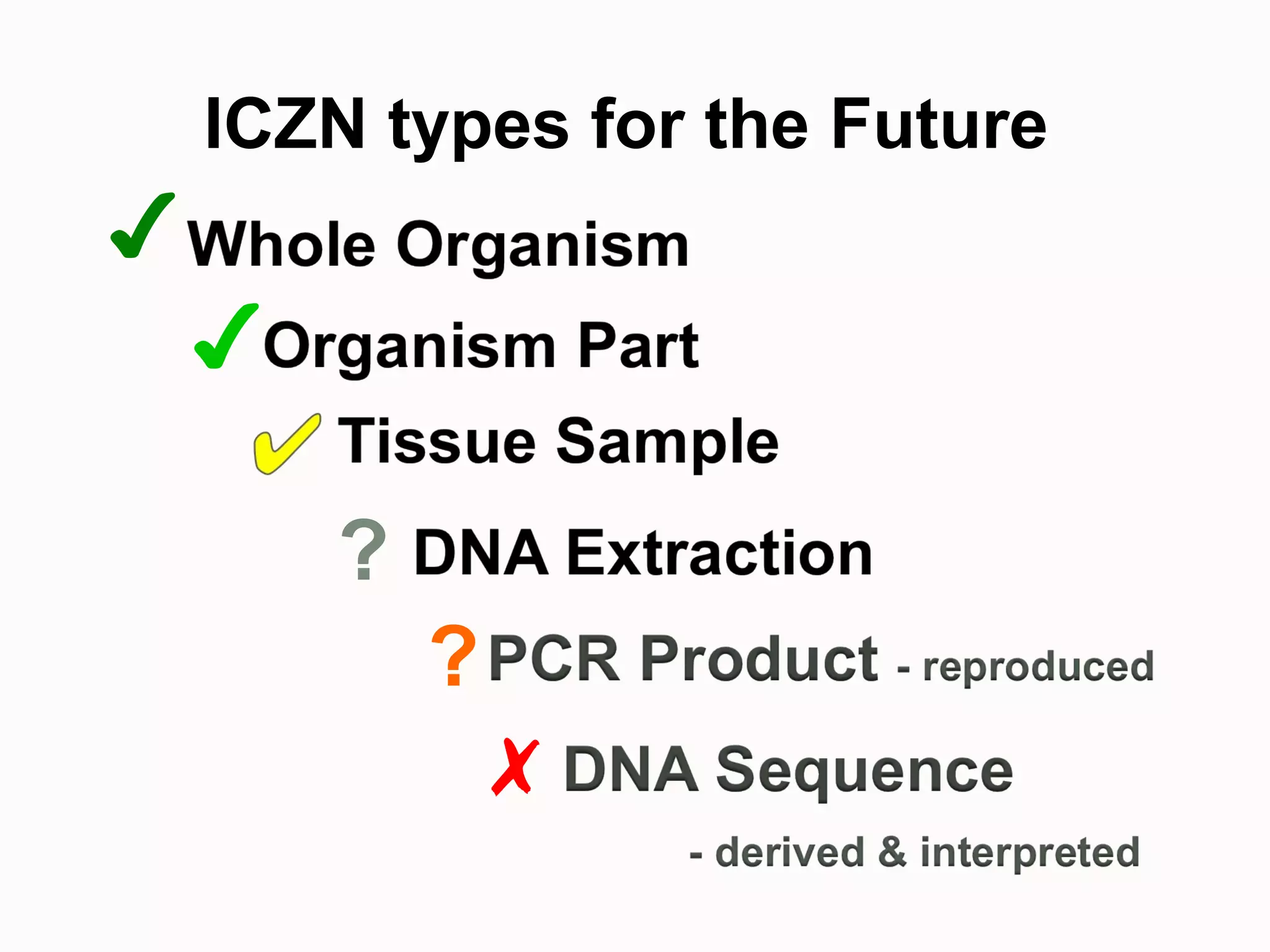
ICZN types for the Future
✔
?
✗
?
✔
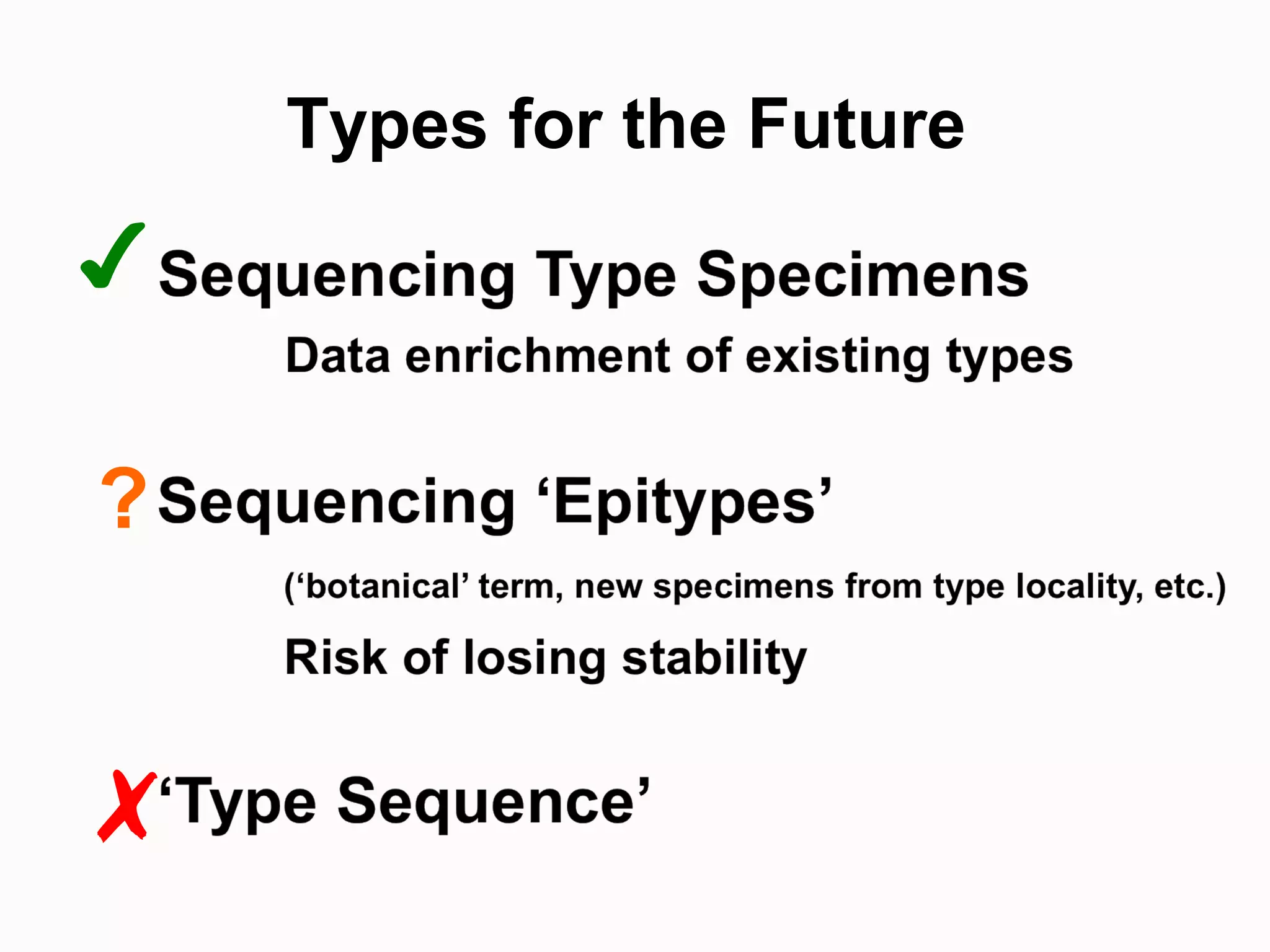
Types for the Future
?
✗
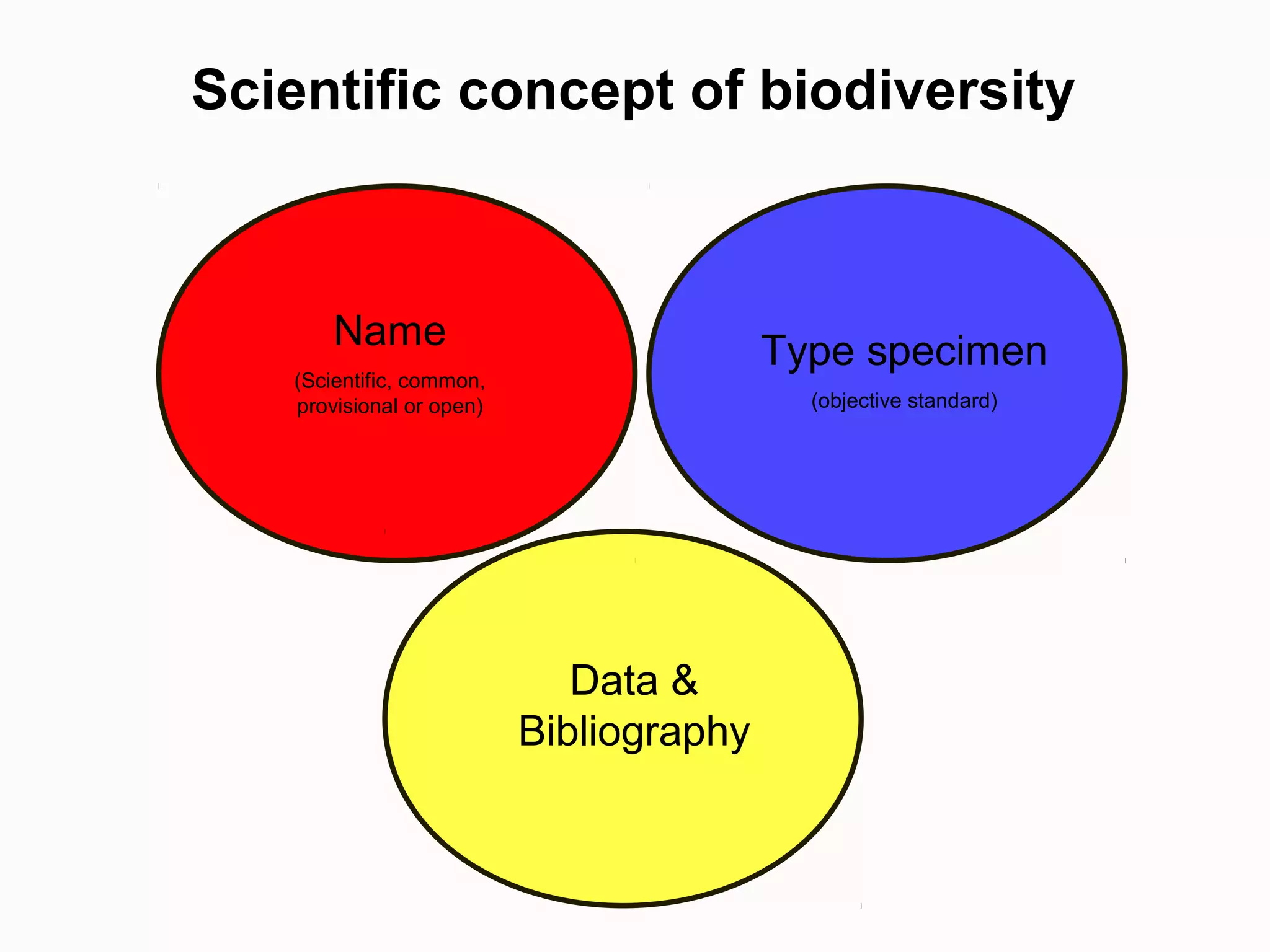
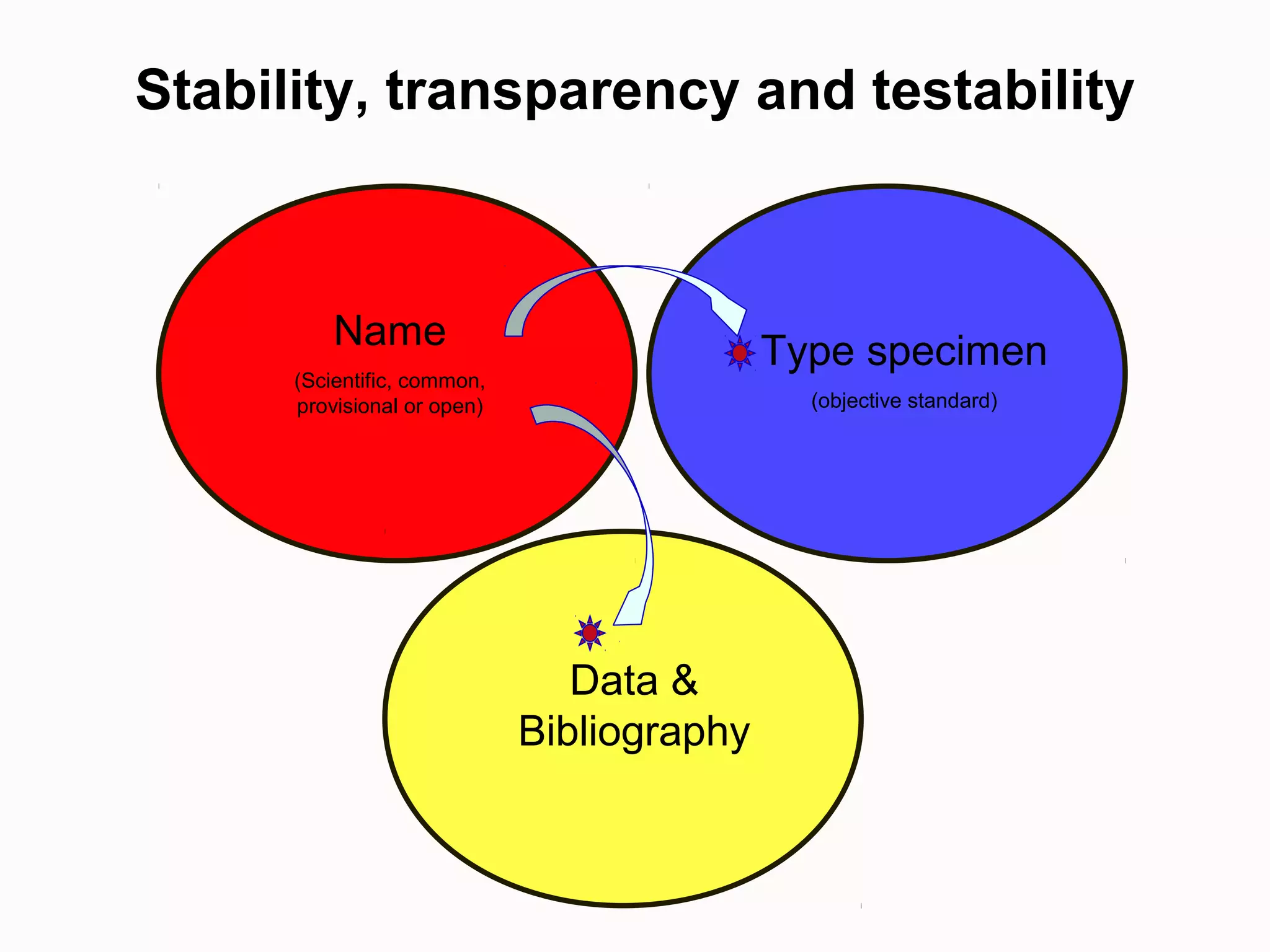
Scientific concept of biodiversity
Name
(Scientific, common,
provisional or open)
Type specimen
(objective standard)
Data &
Bibliography
Stability, transparency and testability
Name
(Scientific, common,
provisional or open)
Type specimen
(objective standard)
Data &
Bibliography
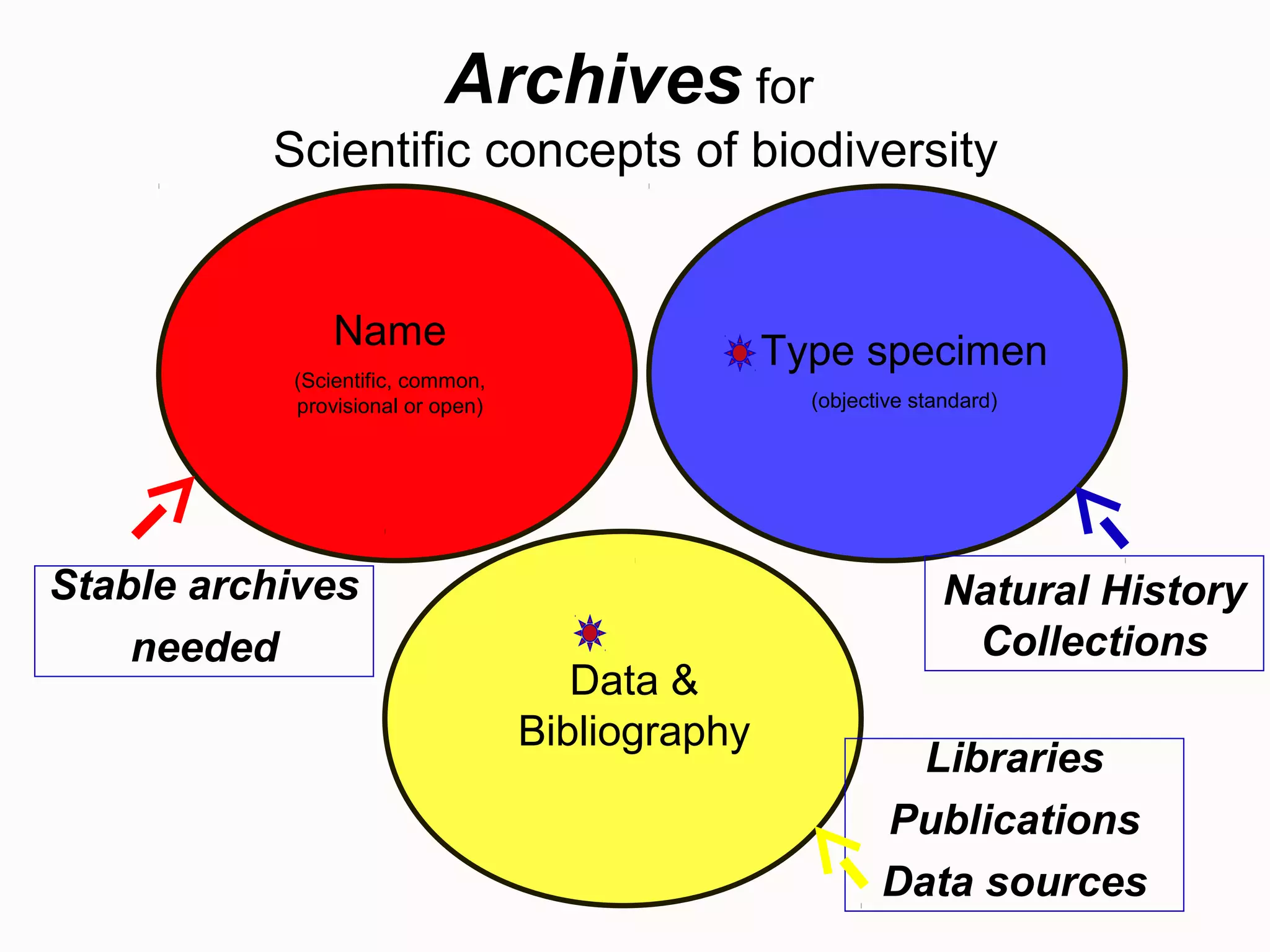
Archives for
Scientific concepts of biodiversity
Name
(Scientific, common,
provisional or open)
Type specimen
(objective standard)
Data &
Bibliography
Stable archives
needed
Natural History
Collections
Libraries
Publications
Data sources
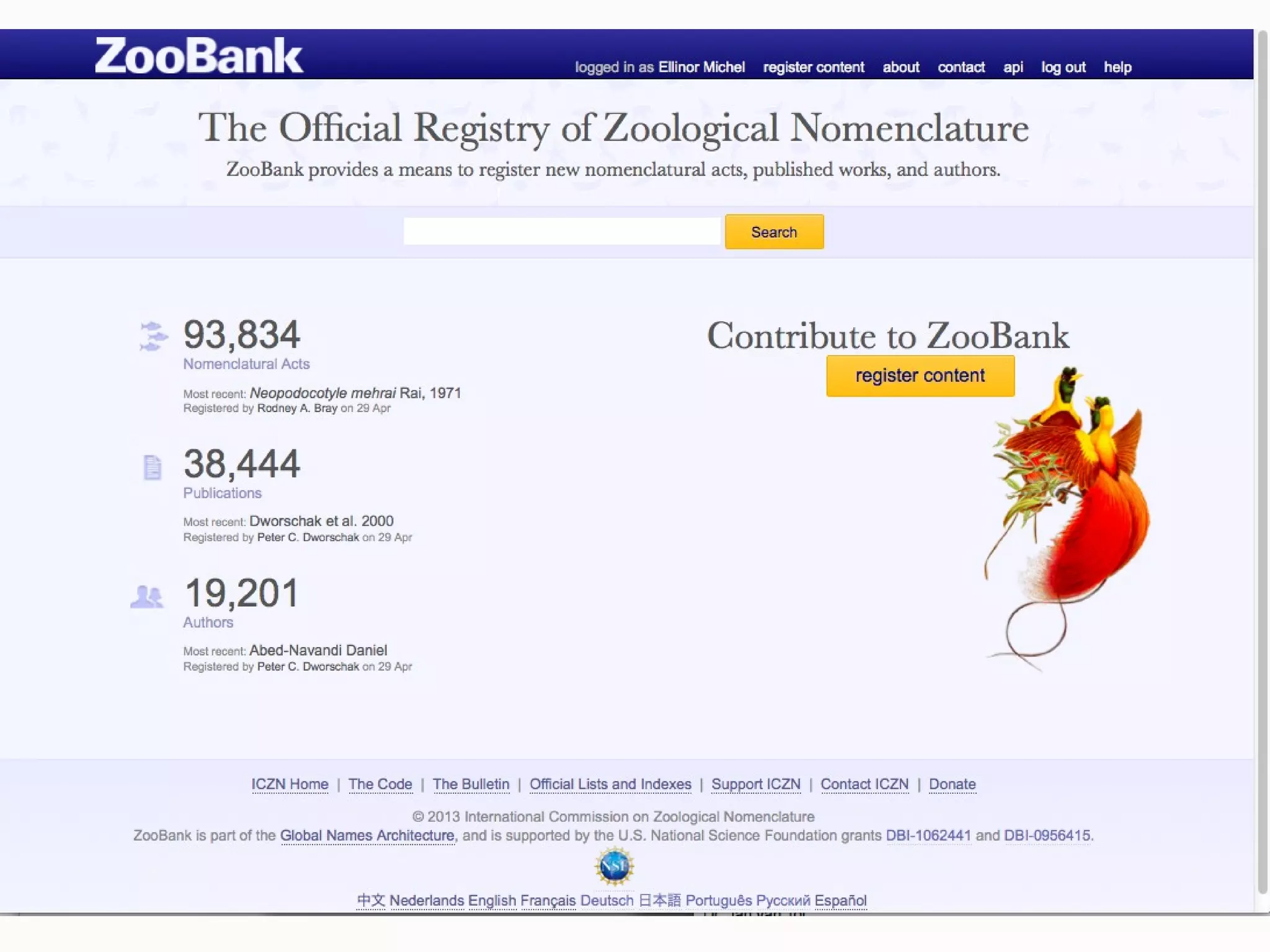
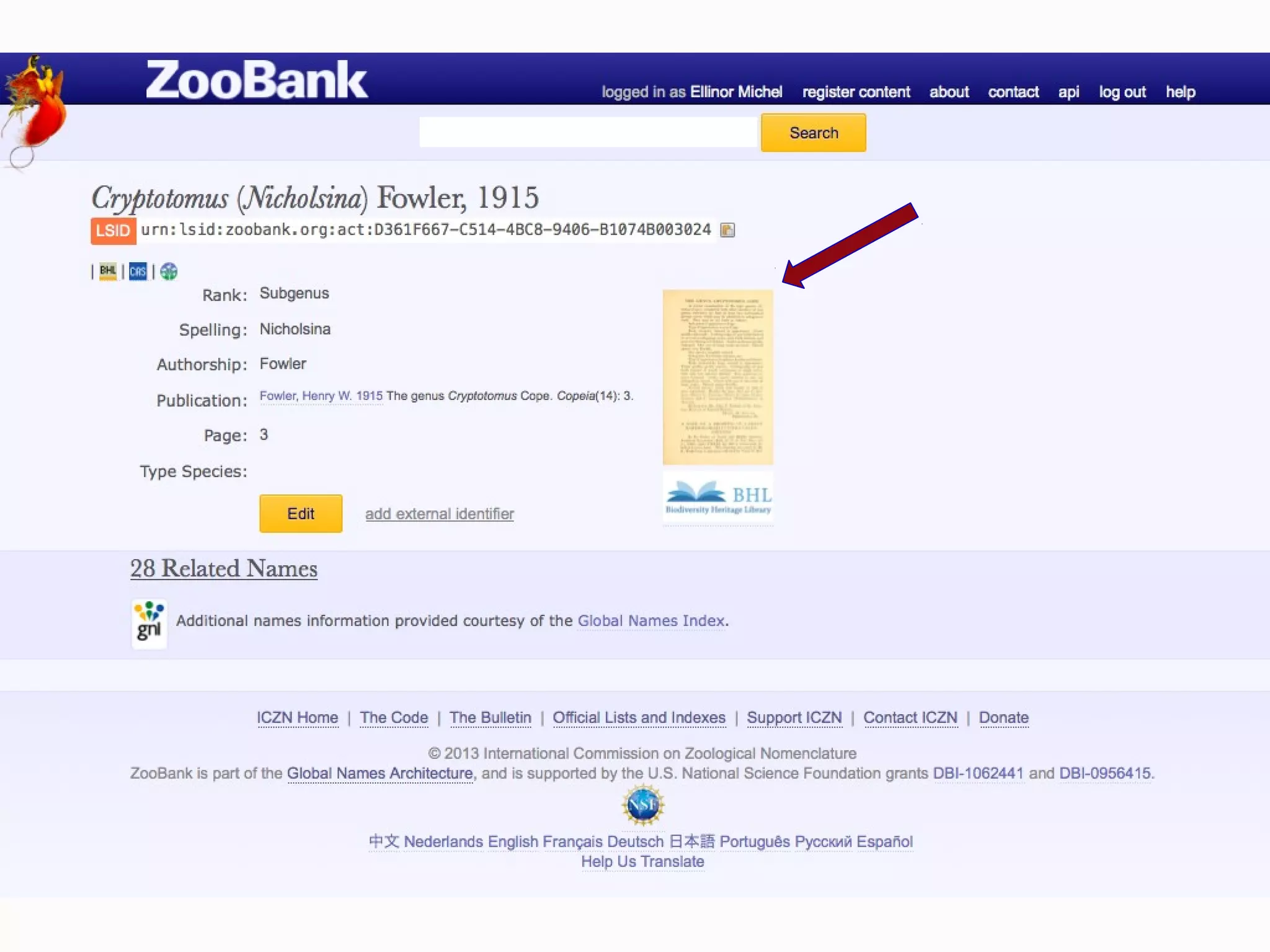
Registration in ZooBank
• Now required for e-only publications
• Has general community support
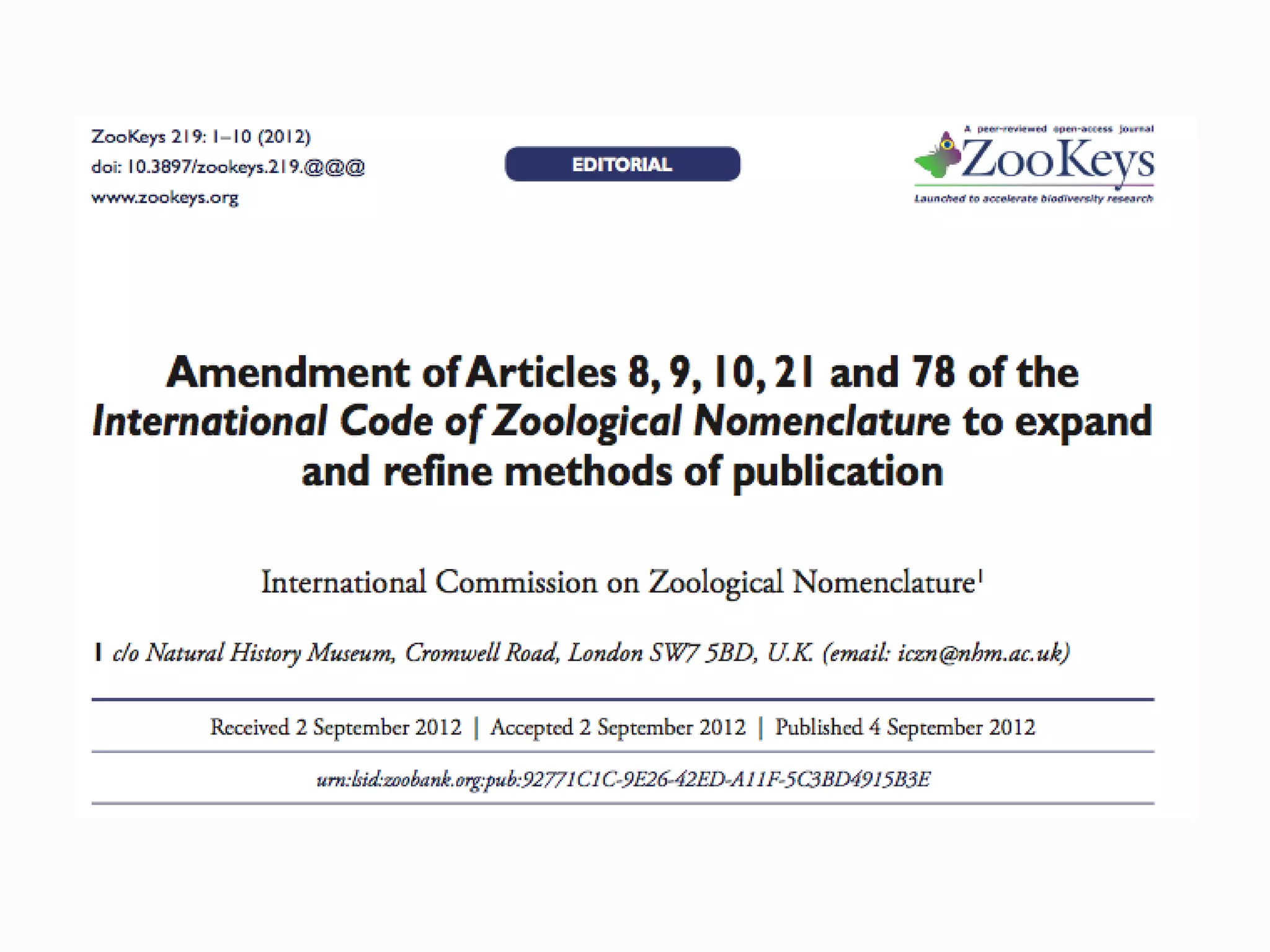
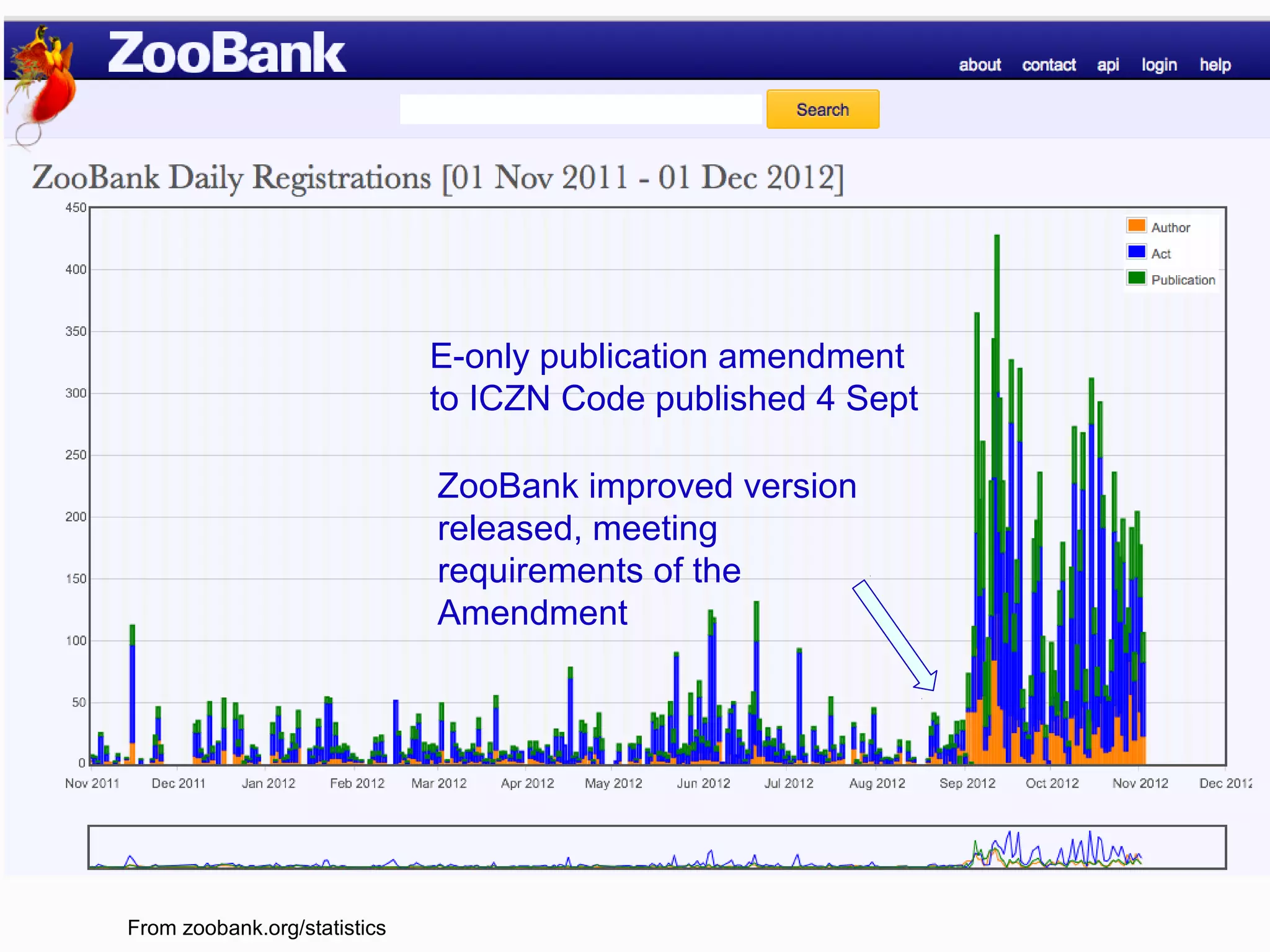
E-only publication amendment
to ICZN Code published 4 Sept
ZooBank improved version
released, meeting
requirements of the
Amendment
From zoobank.org/statistics
• Now required for e-only publications
• Has general community support
• Registration of all names and nomenclatural
acts is strongly encouraged and being rapidly
implemented
• Next Step: ALL names (historical and future)
registered and cross-linked!
Registration in ZooBank
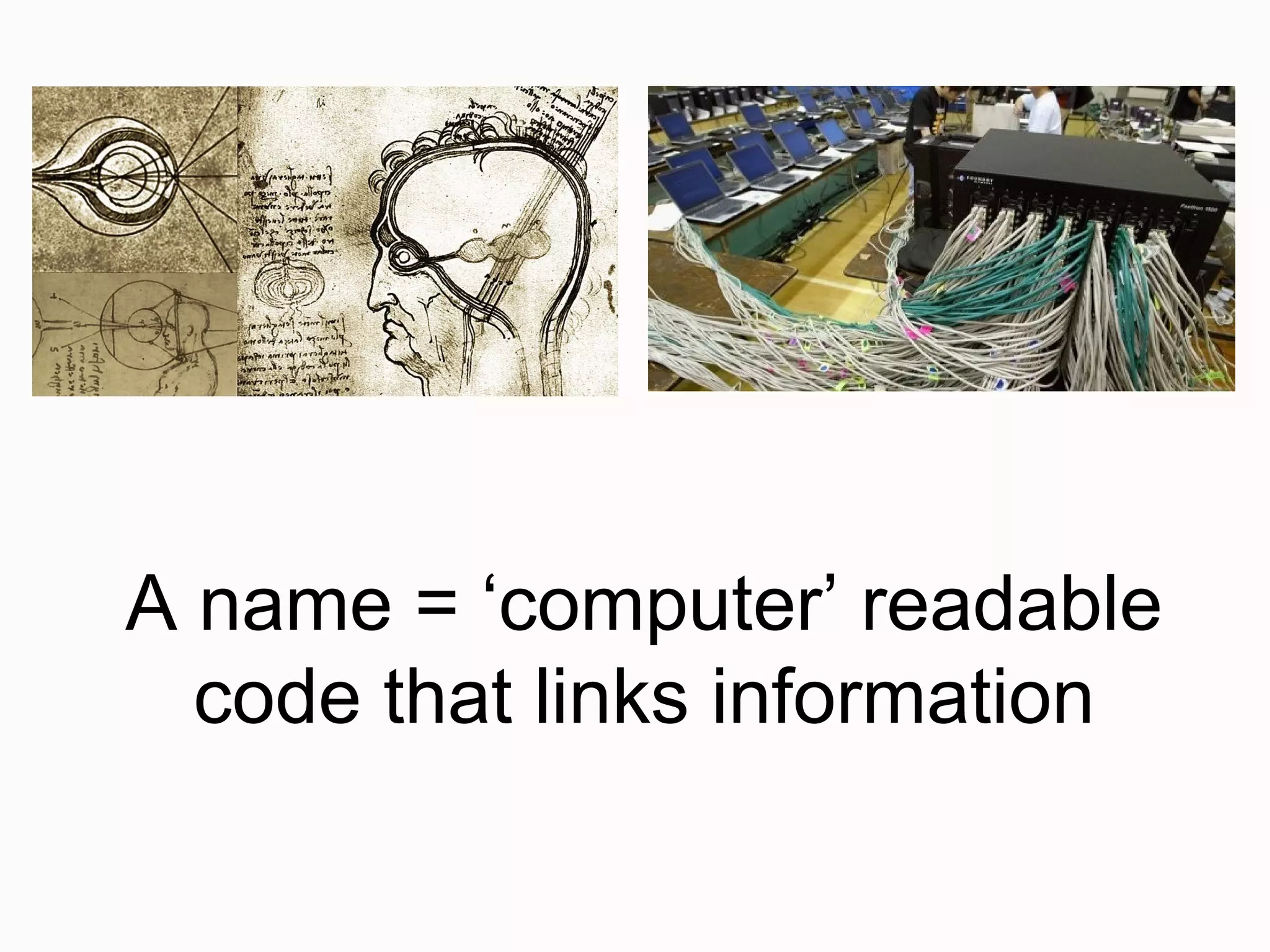
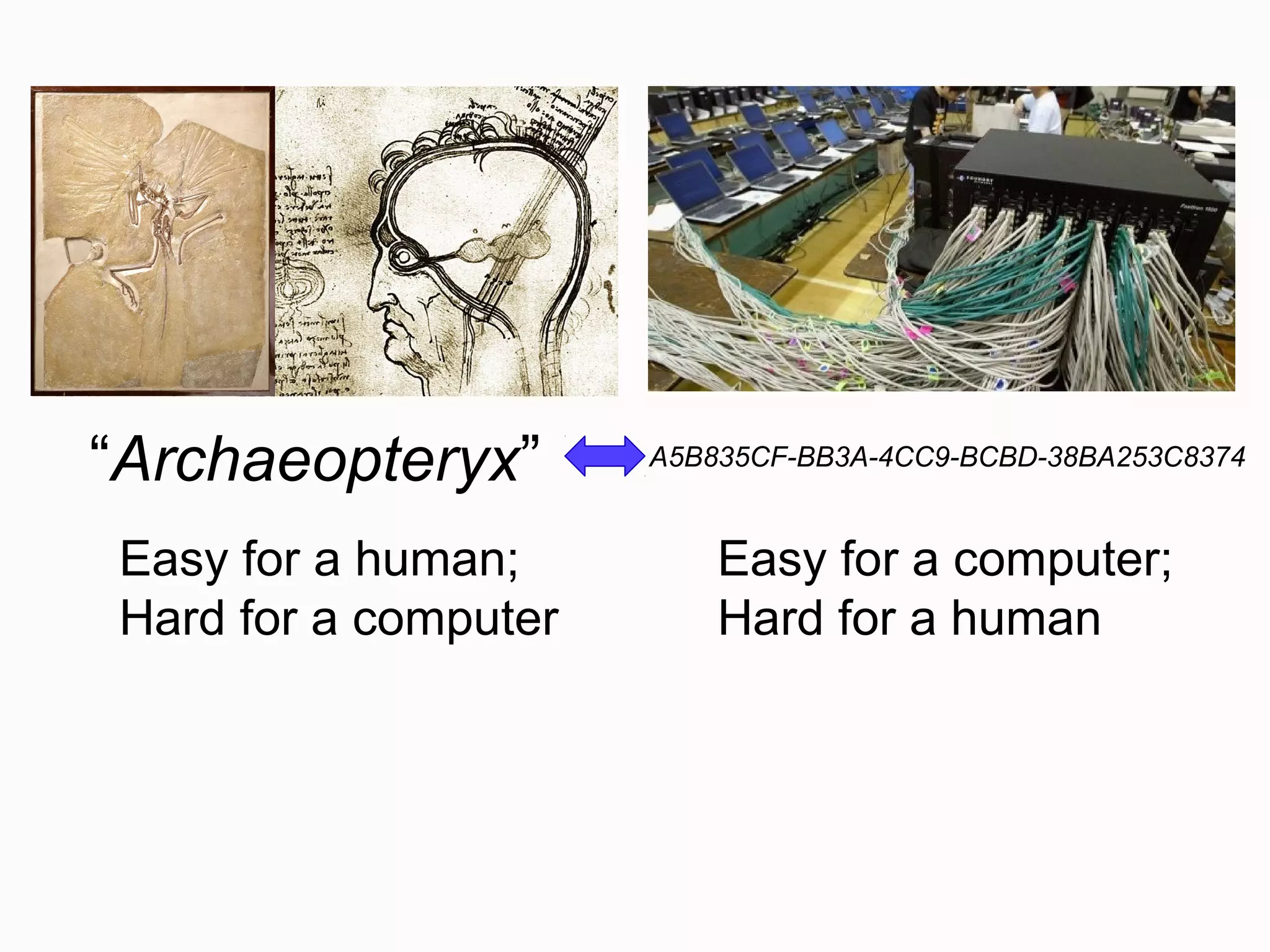
A name = ‘computer’ readable
code that links information
A5B835CF-BB3A-4CC9-BCBD-38BA253C8374
Easy for a computer;
Hard for a human
Easy for a human;
Hard for a computer
“Archaeopteryx”
GenBank
Hymenoptera
Name
Server
BDWB
CalPhotos
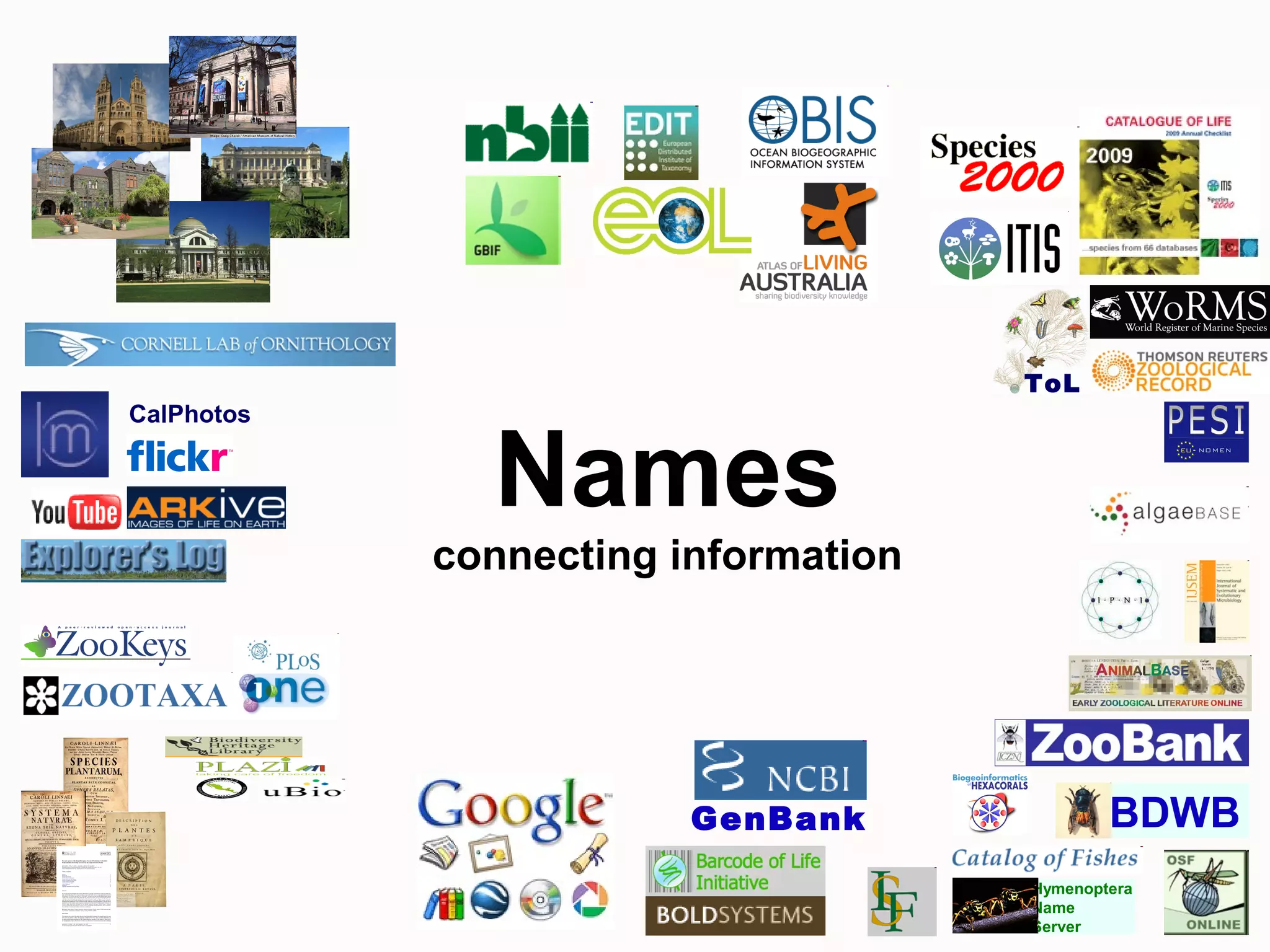
Names
connecting information
ToL
GenBank
Hymenoptera
Name
Server
BDWB
CalPhotos
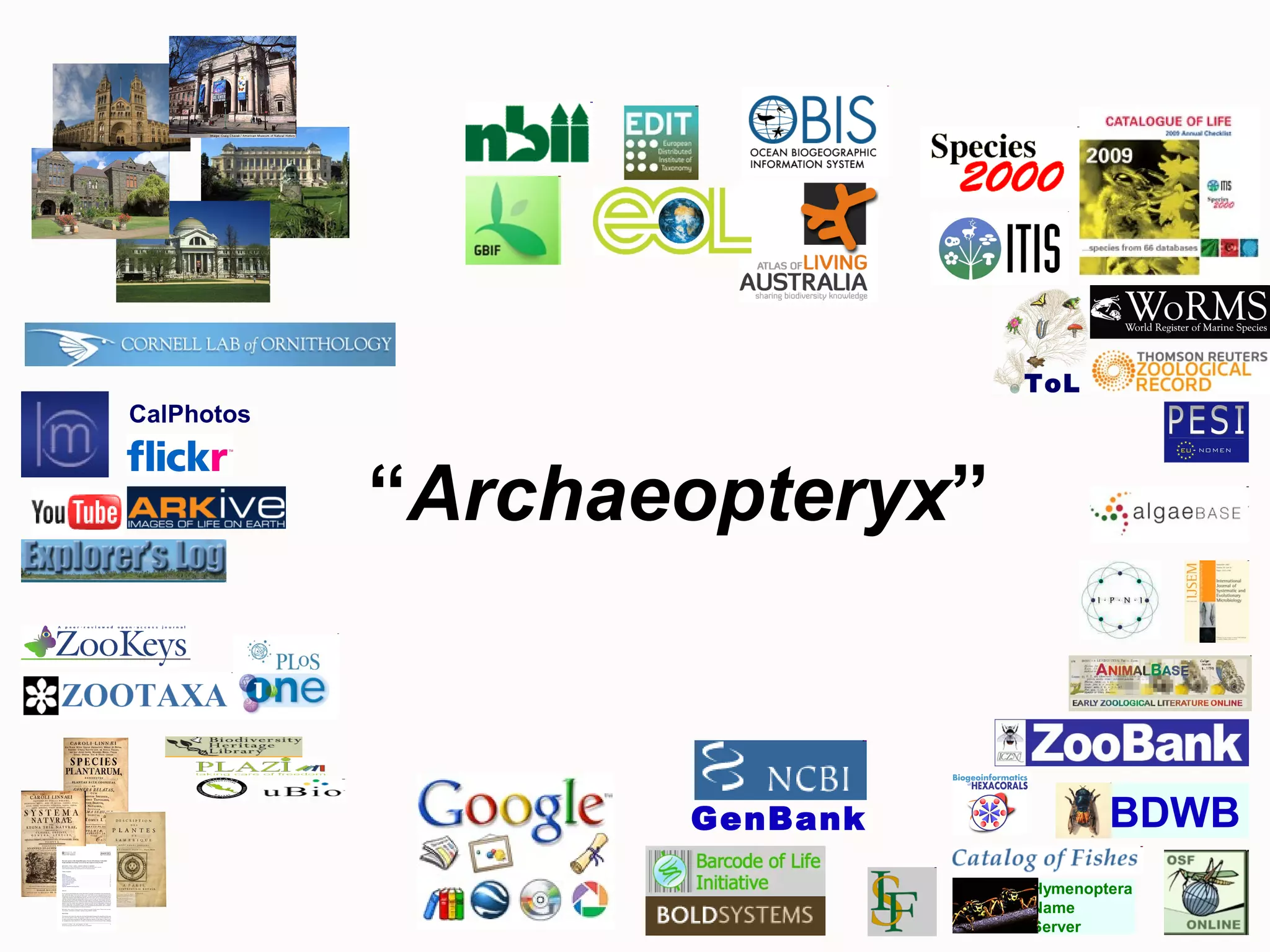
“Archaeopteryx”
ToL
GenBank
Hymenoptera
Name
Server
BDWB
CalPhotos
ToL
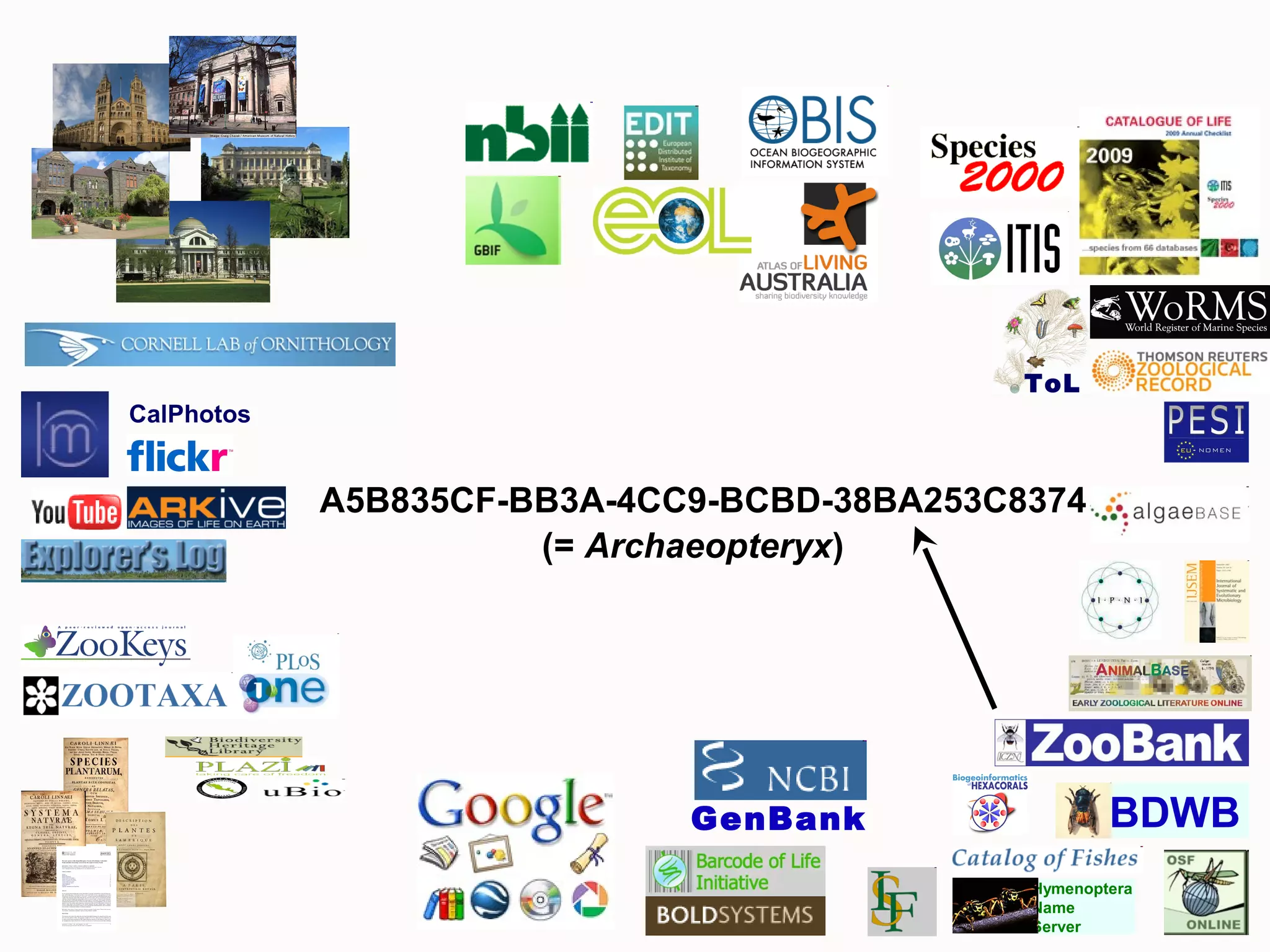
A5B835CF-BB3A-4CC9-BCBD-38BA253C8374
(= Archaeopteryx)
ToL
GenBank
Hymenoptera
Name
Server
BDWB
CalPhotos
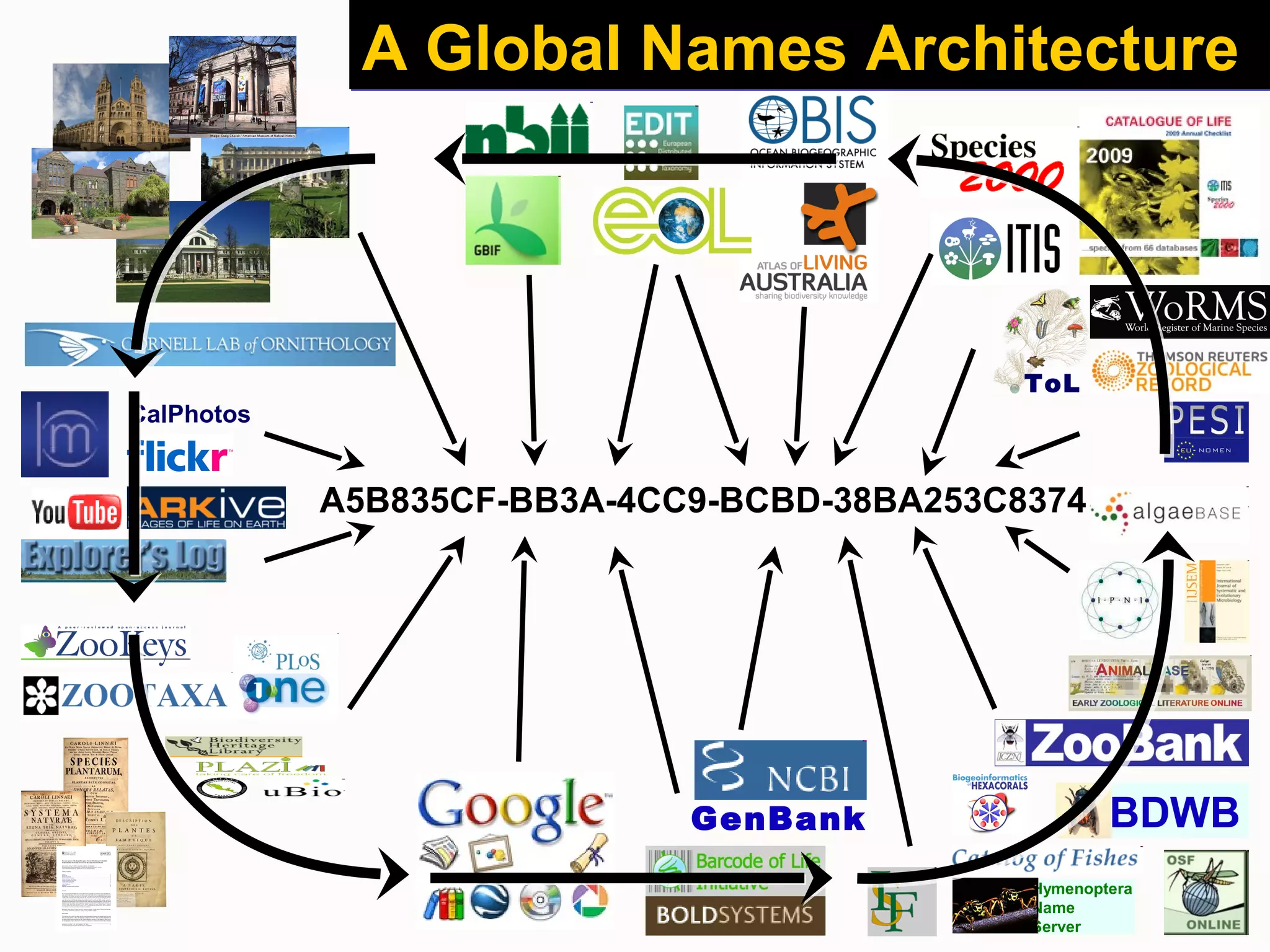
A Global Names ArchitectureA Global Names Architecture
A5B835CF-BB3A-4CC9-BCBD-38BA253C8374
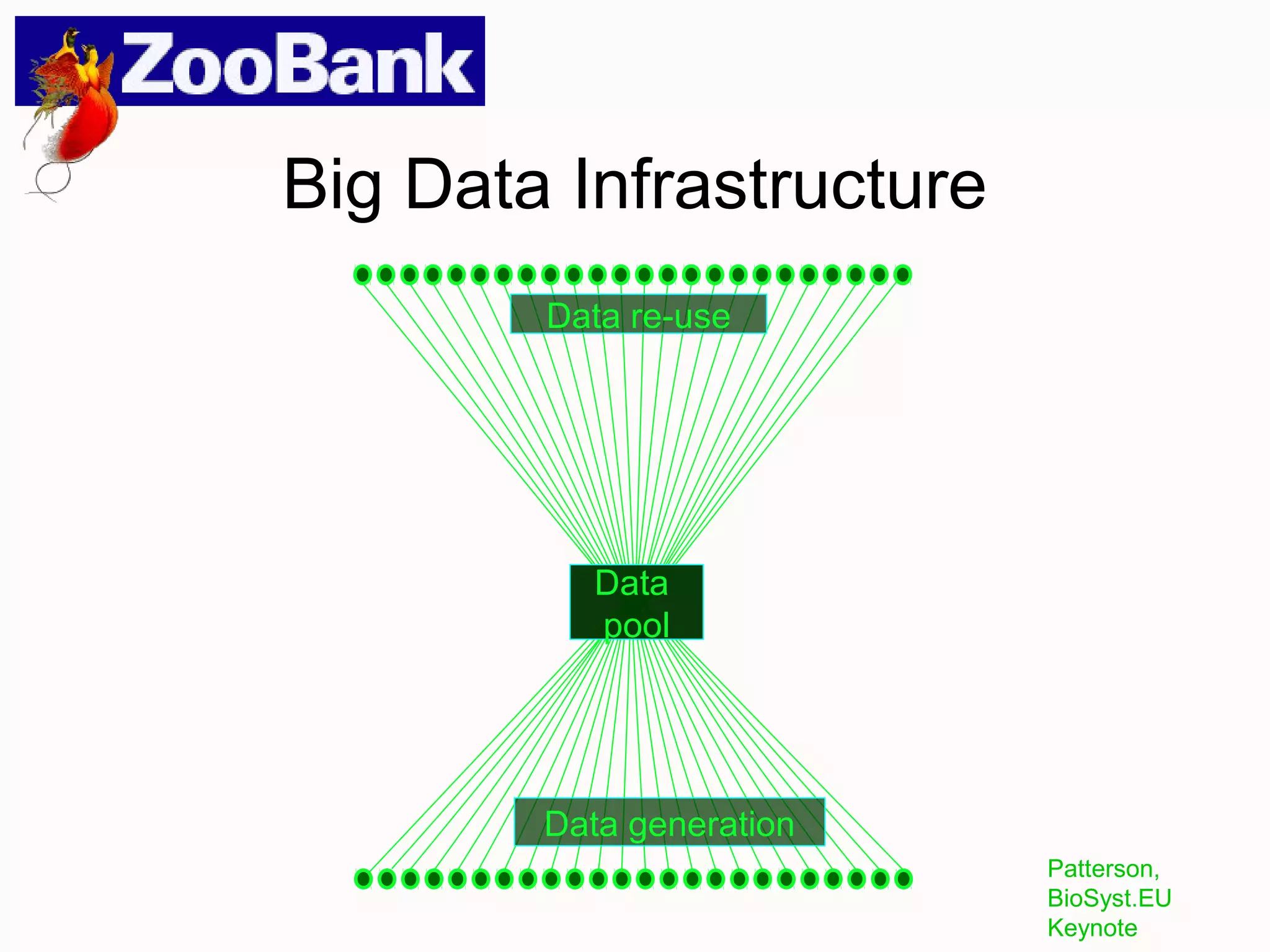
Big Data Infrastructure
Data re-use
Data generation
Data
pool
Patterson,
BioSyst.EU
Keynote
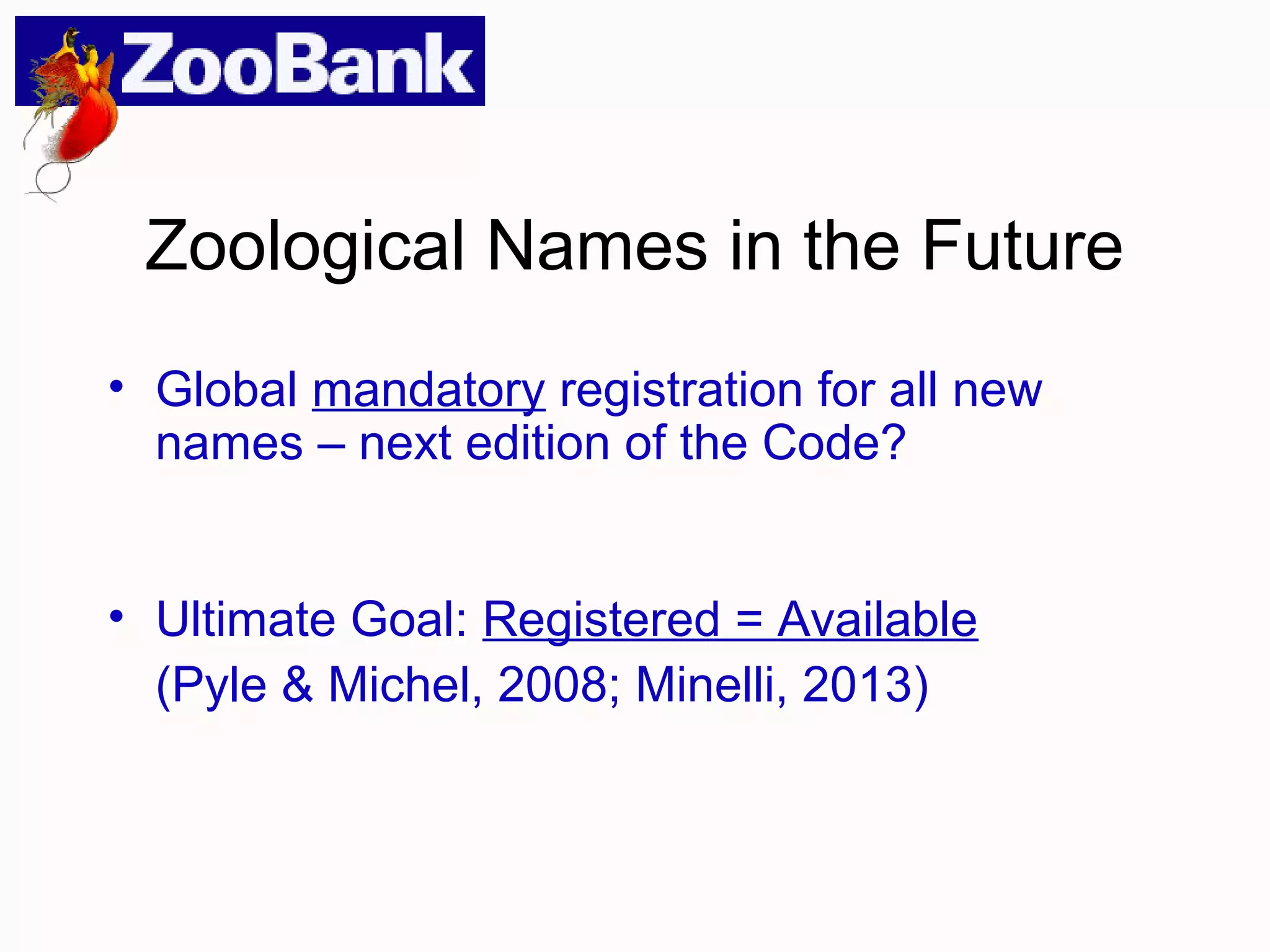
Zoological Names in the Future
• Global mandatory registration for all new
names – next edition of the Code?
• Ultimate Goal: Registered = Available
(Pyle & Michel, 2008; Minelli, 2013)
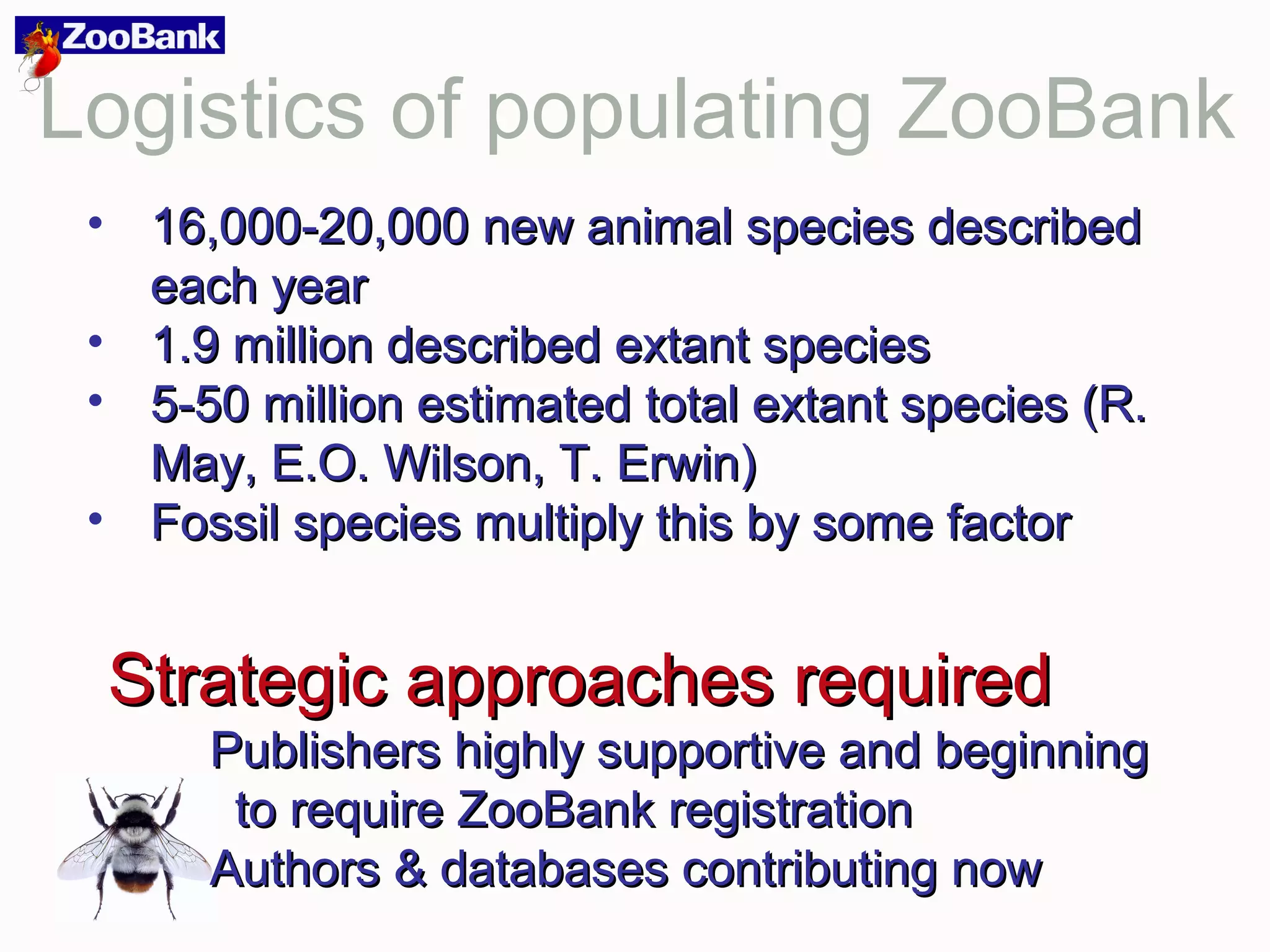
Logistics of populating ZooBank
• 16,000-20,000 new animal species described16,000-20,000 new animal species described
each yeareach year
• 1.9 million described extant species1.9 million described extant species
• 5-50 million estimated total extant species (R.5-50 million estimated total extant species (R.
May, E.O. Wilson, T. Erwin)May, E.O. Wilson, T. Erwin)
• Fossil species multiply this by some factorFossil species multiply this by some factor
Strategic approaches requiredStrategic approaches required
Publishers highly supportive and beginningPublishers highly supportive and beginning
to require ZooBank registrationto require ZooBank registration
Authors & databases contributing nowAuthors & databases contributing now
Logistics of populating ZooBank
Building tools to streamline the capture of prospective
content
•Publishers pipelines with XML tools
•Requested and required ZooBank registration by authors of
new papers
•(all e-only publications must be registered to be available)
Populating with retrospective content
•Major sources – Sherborn, Hymenoptera Names Server,
Hexacorallians of the World, etc.
•Committed individuals – Rod Bray, Takafumi Nakano
•Lists of Available Names (LANs)
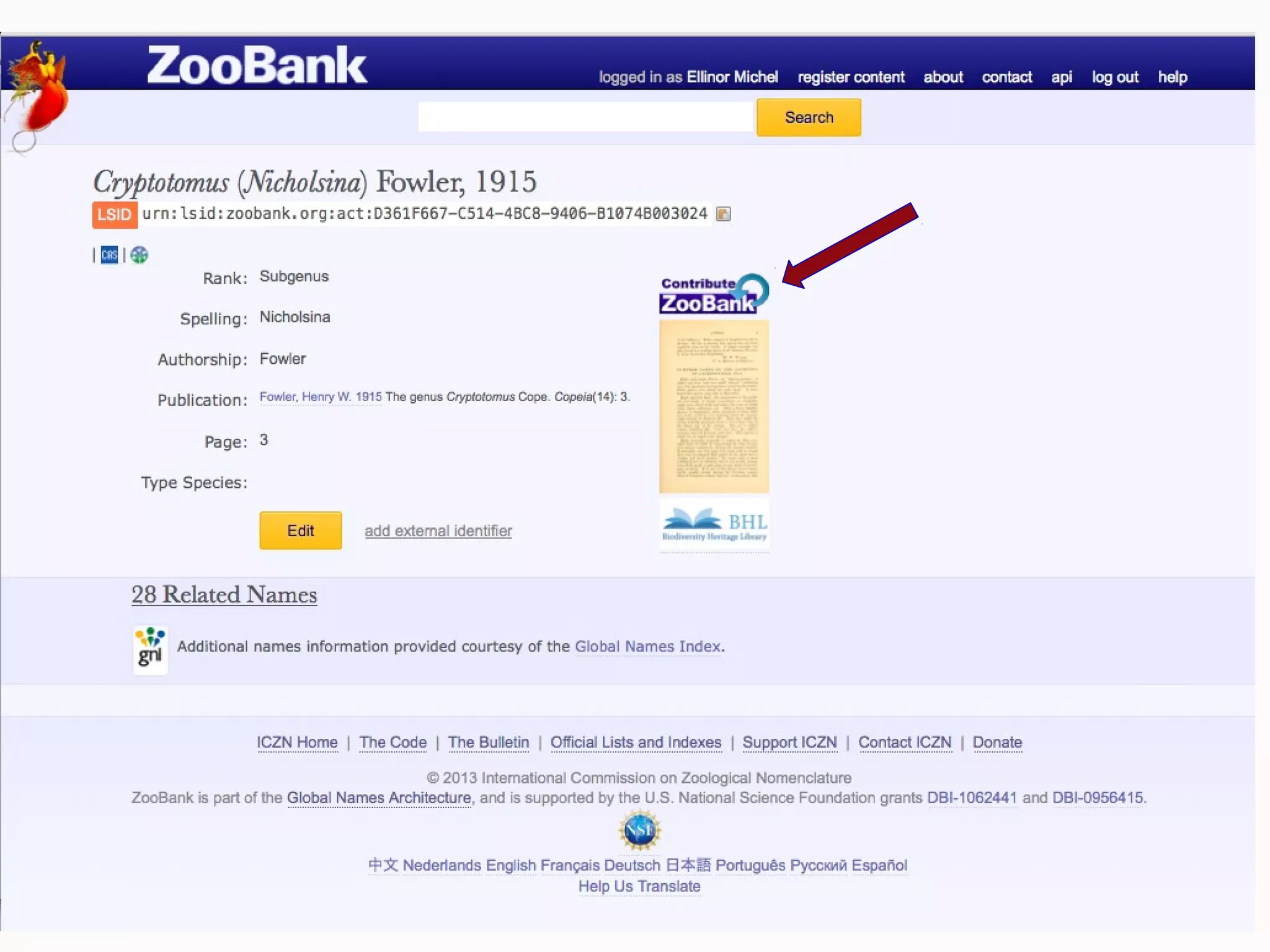
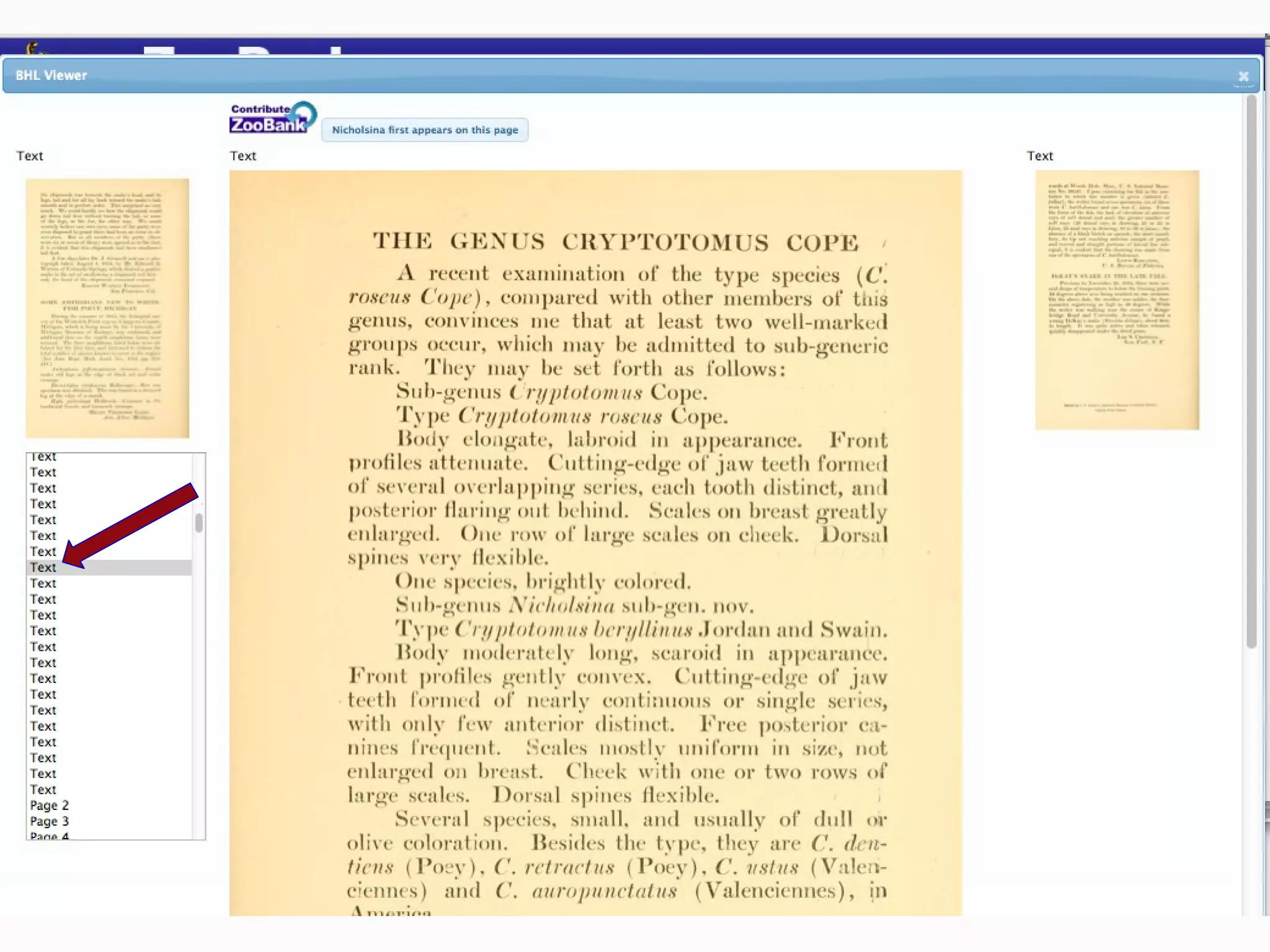
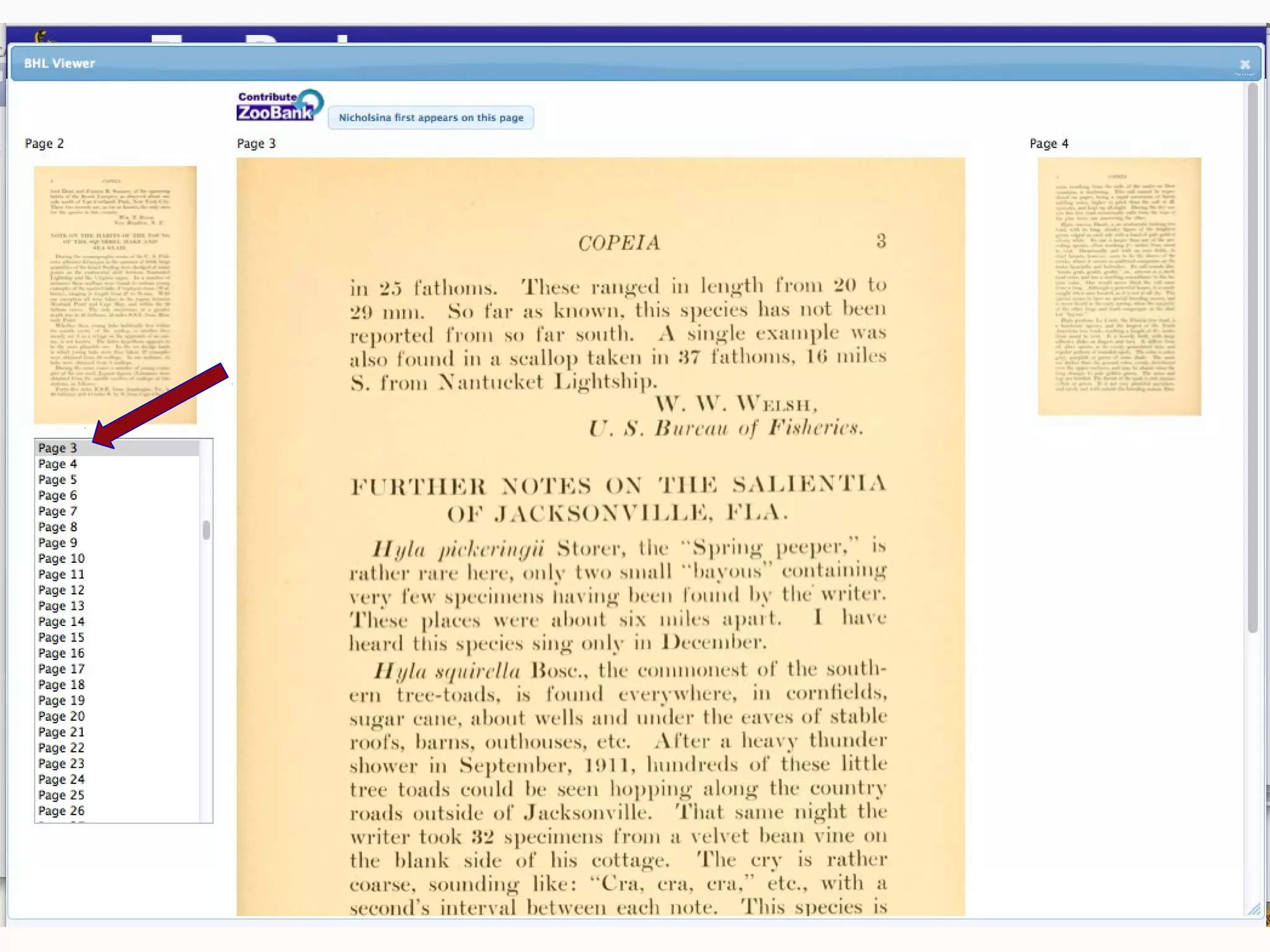
ZooBank links with the Biodiversity Heritage Library
LANs – Lists of Available Names
• Critical assembly of large
numbers of names
• Community debate
• Commission authoritative
ruling
Article 79 - An international body of
zoologists… in consultation with the
Commission may propose that the Commission
adopt for a major taxonomic field (or related
fields) a Part of the List of Available Names in
Zoology. The Commission will consider the
proposal and may adopt the Part subject to the
proposing body and the Commission meeting
the requirements of this Article.
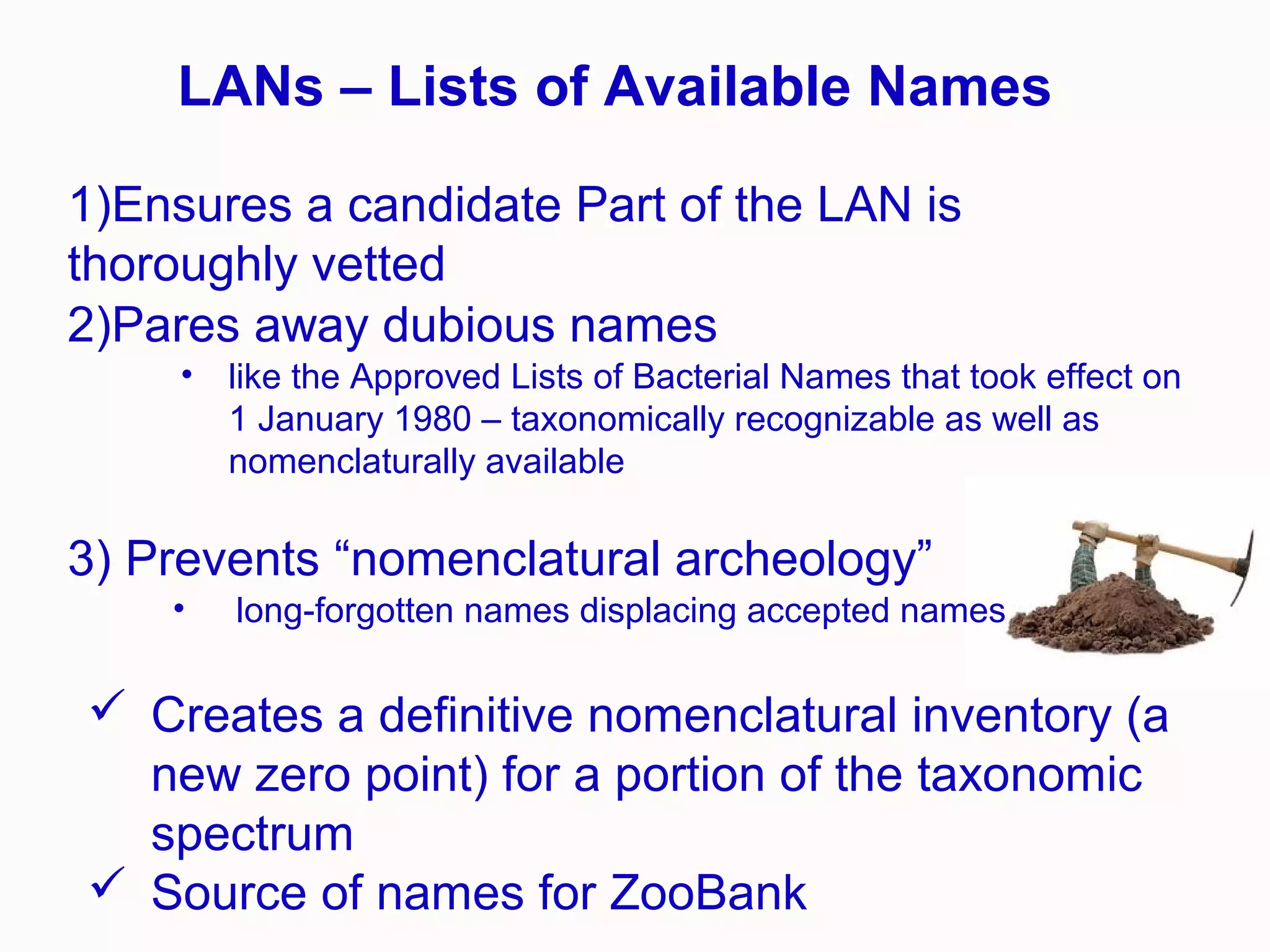
1)Ensures a candidate Part of the LAN is
thoroughly vetted
2)Pares away dubious names
• like the Approved Lists of Bacterial Names that took effect on
1 January 1980 – taxonomically recognizable as well as
nomenclaturally available
3) Prevents “nomenclatural archeology”
• long-forgotten names displacing accepted names
 Creates a definitive nomenclatural inventory (a
new zero point) for a portion of the taxonomic
spectrum
 Source of names for ZooBank
LANs – Lists of Available Names
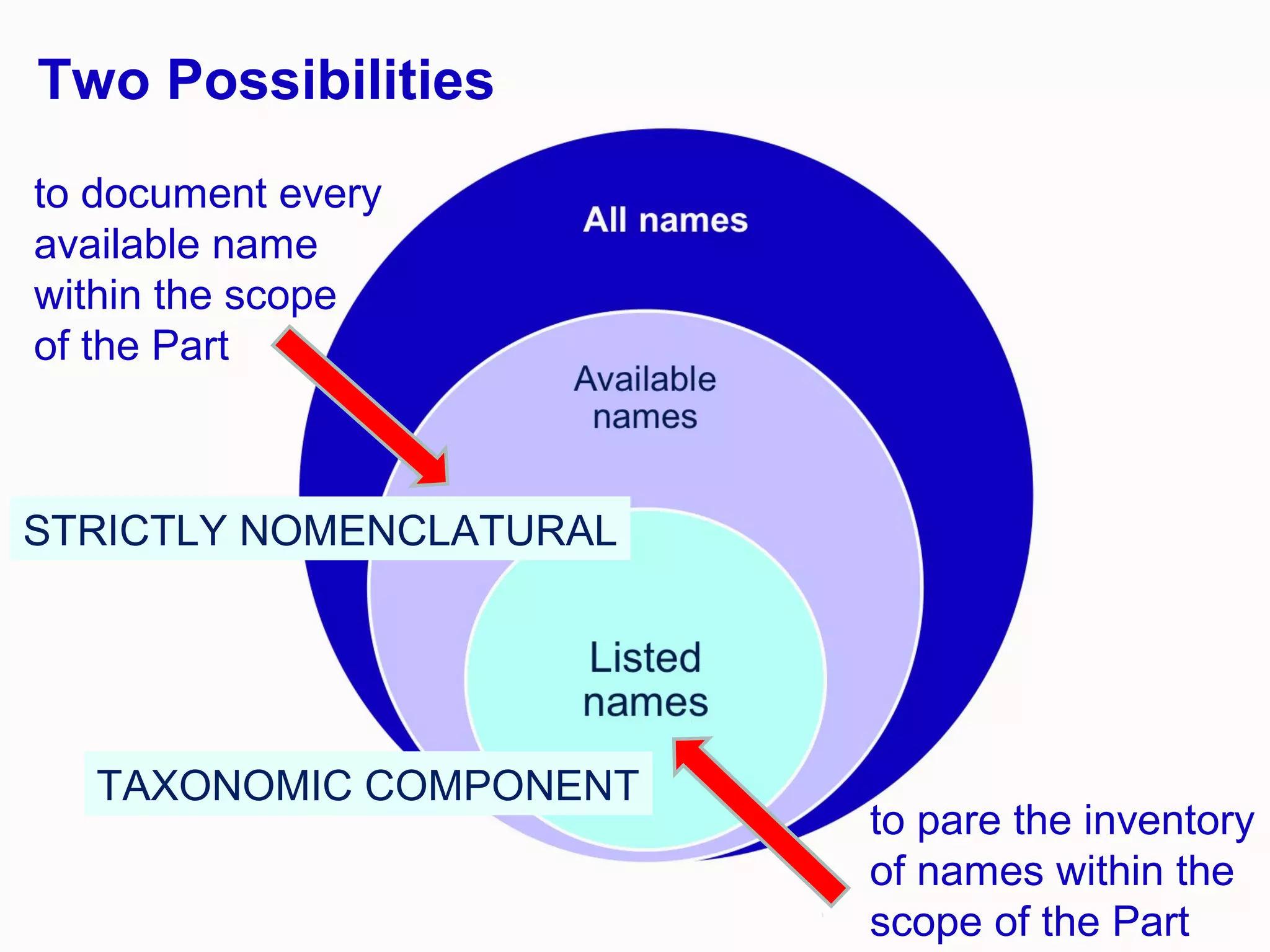
Two Possibilities
to document every
available name
within the scope
of the Part
to pare the inventory
of names within the
scope of the Part
STRICTLY NOMENCLATURAL
TAXONOMIC COMPONENT
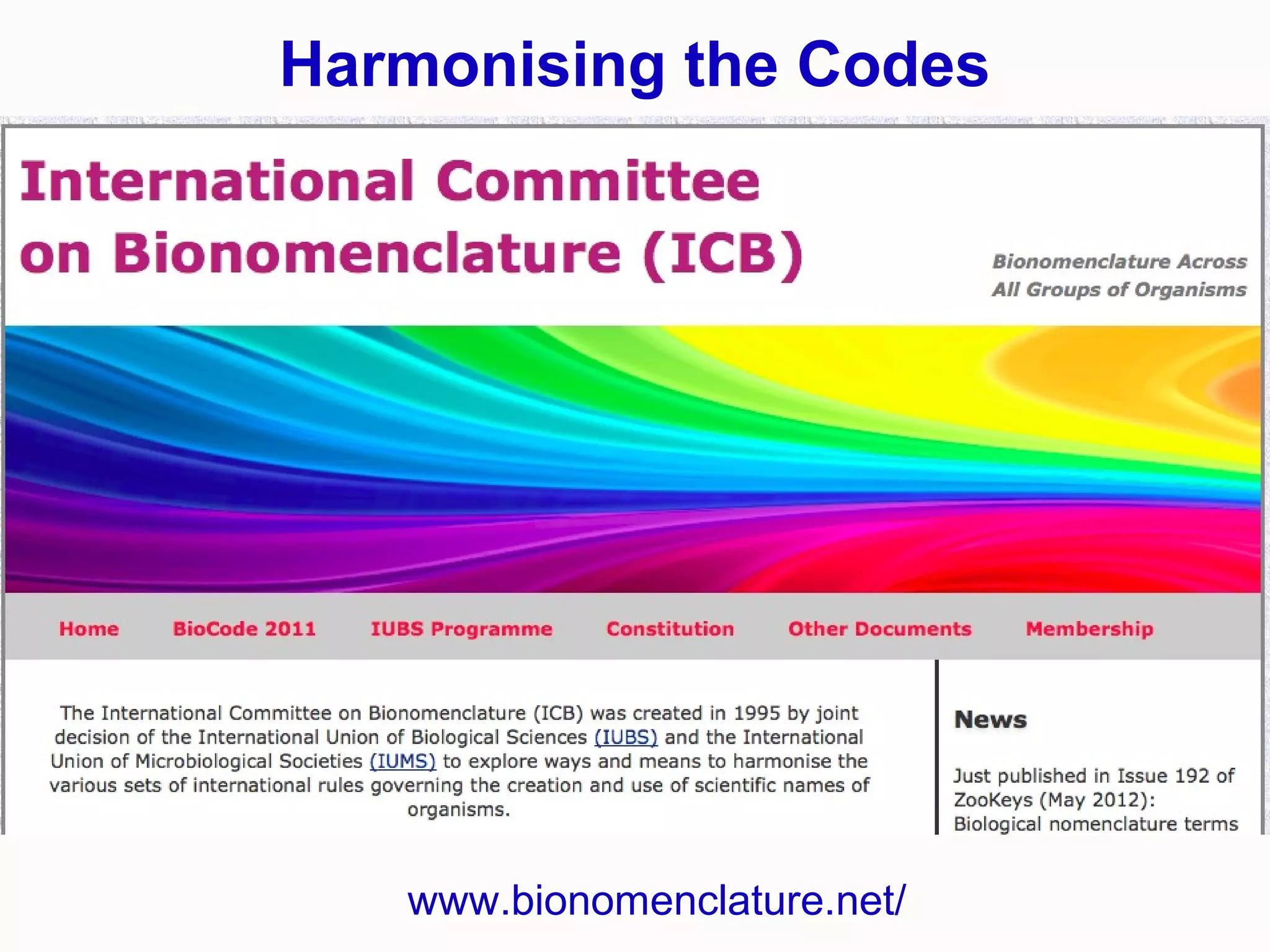
www.bionomenclature.net/
Harmonising the Codes
• Names are the anchor and link for biodiversity information
exchange
• Types provide stability and meaning for taxon names
• An stable archive of names is a critical taxonomic
infrastructure
• ZooBank aims to be the authoritative source for scientific
names of animals and is growing rapidly
• The future of nomenclature includes a harmonization of
biological codes, especially through technical tools such as
ZooBank and the Global Names Architecture
Conclusions
Natural History Museum, London
Bishop Museum, Hawaii
ITCN/ITZN supporting institutions
(MNHN (France), Senckenberg
(Germany), Naturalis, RBINS
(Belgium), AAZN (USA))
The Commissioners & Trustees of
ICZN / ITZN
ICB – International Committee on
Bionomenclature
Everyone pitching in on building
ZooBank content
THANKS
Let’sdiscuss!

Nomenclature for the Future: The power and challenges for stable and sensible scientific names for animals-v2

  • 1.
    Nomenclature for the Future: Thepower and challenges for stable and sensible scientific names for animals Ellinor Michel1,2,3 Richard Pyle1,3,4 Daphne Fautin1,3,5 David Patterson1,3,6 Jon Todd2,3 11 Int’l Commission on Zoological NomenclatureInt’l Commission on Zoological Nomenclature 22 The Natural History Museum, London UKThe Natural History Museum, London UK 33 Int’l Committee on BionomenclatureInt’l Committee on Bionomenclature 44 Bishop Museum, HI, USABishop Museum, HI, USA 55 University of Kansas, USAUniversity of Kansas, USA 66 Arizona State Univ, AZ, USAArizona State Univ, AZ, USA
  • 2.
    All accumulated informationof a species is tied to a scientific name, a name that serves as a link between what has been learned in the past and what we today add to the body of knowledge. - Grimaldi & Engel, 2005 Names and the information revolution Note: they don’t say THE scientific name (i.e., singular)
  • 3.
    Equivalent of 318volumes of Systema Naturae Estimated 2-6 names for every valid (=currently considered definable and ‘real’) species 4,398 Species
  • 4.
    Nomenclature Taxonomy Type specimen Isthe objective physical standard for a name that anchors the name.
  • 5.
    ✔ ICZN types forthe Future ✔ ? ✗ ?
  • 6.
    ✔ ICZN types forthe Future ✔ ? ✗ ?
  • 7.
    ✔ Types for theFuture ? ✗
  • 8.
    Scientific concept ofbiodiversity Name (Scientific, common, provisional or open) Type specimen (objective standard) Data & Bibliography
  • 9.
    Stability, transparency andtestability Name (Scientific, common, provisional or open) Type specimen (objective standard) Data & Bibliography
  • 10.
    Archives for Scientific conceptsof biodiversity Name (Scientific, common, provisional or open) Type specimen (objective standard) Data & Bibliography Stable archives needed Natural History Collections Libraries Publications Data sources
  • 13.
    Registration in ZooBank •Now required for e-only publications • Has general community support
  • 14.
    E-only publication amendment toICZN Code published 4 Sept ZooBank improved version released, meeting requirements of the Amendment From zoobank.org/statistics
  • 15.
    • Now requiredfor e-only publications • Has general community support • Registration of all names and nomenclatural acts is strongly encouraged and being rapidly implemented • Next Step: ALL names (historical and future) registered and cross-linked! Registration in ZooBank
  • 16.
    A name =‘computer’ readable code that links information
  • 17.
    A5B835CF-BB3A-4CC9-BCBD-38BA253C8374 Easy for acomputer; Hard for a human Easy for a human; Hard for a computer “Archaeopteryx”
  • 18.
  • 19.
  • 20.
  • 21.
    ToL GenBank Hymenoptera Name Server BDWB CalPhotos A Global NamesArchitectureA Global Names Architecture A5B835CF-BB3A-4CC9-BCBD-38BA253C8374
  • 22.
    Big Data Infrastructure Datare-use Data generation Data pool Patterson, BioSyst.EU Keynote
  • 23.
    Zoological Names inthe Future • Global mandatory registration for all new names – next edition of the Code? • Ultimate Goal: Registered = Available (Pyle & Michel, 2008; Minelli, 2013)
  • 24.
    Logistics of populatingZooBank • 16,000-20,000 new animal species described16,000-20,000 new animal species described each yeareach year • 1.9 million described extant species1.9 million described extant species • 5-50 million estimated total extant species (R.5-50 million estimated total extant species (R. May, E.O. Wilson, T. Erwin)May, E.O. Wilson, T. Erwin) • Fossil species multiply this by some factorFossil species multiply this by some factor Strategic approaches requiredStrategic approaches required Publishers highly supportive and beginningPublishers highly supportive and beginning to require ZooBank registrationto require ZooBank registration Authors & databases contributing nowAuthors & databases contributing now
  • 25.
    Logistics of populatingZooBank Building tools to streamline the capture of prospective content •Publishers pipelines with XML tools •Requested and required ZooBank registration by authors of new papers •(all e-only publications must be registered to be available) Populating with retrospective content •Major sources – Sherborn, Hymenoptera Names Server, Hexacorallians of the World, etc. •Committed individuals – Rod Bray, Takafumi Nakano •Lists of Available Names (LANs)
  • 26.
    ZooBank links withthe Biodiversity Heritage Library
  • 30.
    LANs – Listsof Available Names • Critical assembly of large numbers of names • Community debate • Commission authoritative ruling Article 79 - An international body of zoologists… in consultation with the Commission may propose that the Commission adopt for a major taxonomic field (or related fields) a Part of the List of Available Names in Zoology. The Commission will consider the proposal and may adopt the Part subject to the proposing body and the Commission meeting the requirements of this Article.
  • 31.
    1)Ensures a candidatePart of the LAN is thoroughly vetted 2)Pares away dubious names • like the Approved Lists of Bacterial Names that took effect on 1 January 1980 – taxonomically recognizable as well as nomenclaturally available 3) Prevents “nomenclatural archeology” • long-forgotten names displacing accepted names  Creates a definitive nomenclatural inventory (a new zero point) for a portion of the taxonomic spectrum  Source of names for ZooBank LANs – Lists of Available Names
  • 32.
    Two Possibilities to documentevery available name within the scope of the Part to pare the inventory of names within the scope of the Part STRICTLY NOMENCLATURAL TAXONOMIC COMPONENT
  • 33.
  • 34.
    • Names arethe anchor and link for biodiversity information exchange • Types provide stability and meaning for taxon names • An stable archive of names is a critical taxonomic infrastructure • ZooBank aims to be the authoritative source for scientific names of animals and is growing rapidly • The future of nomenclature includes a harmonization of biological codes, especially through technical tools such as ZooBank and the Global Names Architecture Conclusions
  • 35.
    Natural History Museum,London Bishop Museum, Hawaii ITCN/ITZN supporting institutions (MNHN (France), Senckenberg (Germany), Naturalis, RBINS (Belgium), AAZN (USA)) The Commissioners & Trustees of ICZN / ITZN ICB – International Committee on Bionomenclature Everyone pitching in on building ZooBank content THANKS
  • 36.

Editor's Notes

  • #4 In 1758 it was feasible to create a catalog of life using ink on paper. <click> Today, it would require the equivalent of nearly 264 volumes of Systema Naturae to achieve the same thing. Or, you could fit the whole thing on a tiny memory card.
  • #19 It’s no surprise that the biodiversity community is going digital. <click> Many Natural History Museums are databasing their collections. <click> Historical literature is being digitized by the Biodiversity Heritage Library and others… <click> … and many modern scientific journals are embracing the digital age directly. <click> Authoritative Nomenclators have been built, <click> and a variety of groups are working to distill the taxonomic concepts from the sea of names. <click> Databases of observation records are growing at a fast rate, <click> as are genomic databases. <click> The internet has made feasible the cheap and easy dissemination of multimedia files related to biodiversity. <click> And, of course there is biodiversity content spread across the billions of web pages indexed by Google. <click> To make sense of it all, several organizations serve as aggregators of all this diverse content. And this is just a small sample of icons that could fit on a slide. This massive effort to digitize biodiversity information is a great step in the right direction. But it is only one step. We must now focus our energies on integrating all of this information in a coordinated, cohesive way. <click> The critical informatic piece to this puzzle is Taxonomy, because almost all of these data providers link their content to taxon names one way or another.
  • #20 It’s no surprise that the biodiversity community is going digital. <click> Many Natural History Museums are databasing their collections. <click> Historical literature is being digitized by the Biodiversity Heritage Library and others… <click> … and many modern scientific journals are embracing the digital age directly. <click> Authoritative Nomenclators have been built, <click> and a variety of groups are working to distill the taxonomic concepts from the sea of names. <click> Databases of observation records are growing at a fast rate, <click> as are genomic databases. <click> The internet has made feasible the cheap and easy dissemination of multimedia files related to biodiversity. <click> And, of course there is biodiversity content spread across the billions of web pages indexed by Google. <click> To make sense of it all, several organizations serve as aggregators of all this diverse content. And this is just a small sample of icons that could fit on a slide. This massive effort to digitize biodiversity information is a great step in the right direction. But it is only one step. We must now focus our energies on integrating all of this information in a coordinated, cohesive way. <click> The critical informatic piece to this puzzle is Taxonomy, because almost all of these data providers link their content to taxon names one way or another.
  • #21 To overcome these and other problems, we need to build a Global Names Architecture. The first and perhaps most critical component to integrating all of this biodiversity information is the broader adoption of Globally Unique Identifiers, or GUIDs. <click> If you already know about GUIDs, then the question of whether we should use LSIDs or DOIs or Handles, or PURLs or UUIDs is of secondary importance to their more general implementation. If you don’t already know about GUIDs, then learn about them, or trust your IT staff when they say then need support to implement them. Also, always keep in mind that they are intended for use by computers, not humans, so don’t worry about how ugly they may appear. But while GUIDs make things a lot easier, they do not, by themselves, solve the problem of linking the world’s biodiversity information.
  • #22 GUIDs are globally unidque identifiers, readable only to computers The two major components of the Global Names Architecture currently under development are the Global Names Index, or “GNI”… <click> And the Global Names Usage Bank, or “GNUB”. <click> The GNI is optimized to manage information from content providers that treat names as text-string attributes of other data objects. For example, it provides a species-level index of content within data bases and facilitates linking of disparate data sources through species names. <click> The GNUB is designed to manage taxon names and their usages as curated data objects in and of themselves. These components will not only help build links among their own contributing data providers, but also to bridge the gap between them. <click> Services will allow the GNI to serve as a “gateway” into the GNUB. And, of course, the GNUB will serve as a source of validated taxon name strings back to GNI. The Global Names Architecture is currently in development with support from GBIF, the Encyclopedia of Life, and National Biological Information Infrastructure. A prototype of GNI is already available at globalnames.org, and the GNUB is currently being populated with content from Index Fungorum and ZooBank, the latter of which will include content from many of these taxon-specific nomenclators. <click> Ultimately, all of these content providers will be plugged into the Global Names Architecture, and the biodiversity data content will start to flow.
  • #34 The good news is that Taxonomic names represent one of the greatest and long-lasting examples of true international cooperation in all of science, if not all of human history. <click> This is a result of the various Codes of Scientific Nomenclature; two of which have been in place for more than a century, and apply to all names going back to Linnaeus. In a sense, the Codes of Nomenclature represent our saving grace for organizing biodiversity information. Without their existence, longevity, and near-universal adoption, the prospects for integrating biodiversity information would be orders of magnitude more difficult today. Unfortunately, as important as these Codes of nomenclature have been and continue to be, there are still some issues to overcome.