Biodiversity
Citizen Science –
Projects in Europe


                     Sarah Faulwetter (HCMR)
                              Ed Baker (NHM)
citizen science

    “scientific research conducted, in whole or in part, by
          amateur or nonprofessional scientists, often by
                               crowdsourcing” [wikipedia]
●   Data gathering vs. data analysis
     –   observations in nature vs. online recognizing patterns
         of whale songs, the sea floor, galaxies...
●   Single researcher vs. combined efforts
     –   amateurs describing new species vs. participation in
         crowdsourcing projects
●   “Top-down” vs. “bottom up” approaches in projects
●   One day events (e.g BioBlitz) vs. ongoing initiatives
characteristics

●   Major driver: Interest and enthusiasm of the citizen
●   No commercial interest
●   Cannot be “forced” - varying levels of participation, but
    always volunteering!
●   Broad range of level of expertise
●   Individuals, teams, or networks of volunteers
●   Often very localized (e.g. my local insect fauna, butterflies in
    my garden)
●   Varying levels of professionalism - from uploading photos to
    the web to collaborations with professional scientists
why involve citizens?

●   Professional science: not enough
    resources for many projects
●   Added value from mass collection /
    analysis of data (detection of trends)
●   Knowledge of “amateurs” often very high
●   Communication between the “ivory tower”
    and the “normal world”
why involve citizens?

●   Professional science: not enough
    resources for many projects
●   Added value from mass collection /
    analysis of data (detection of trends)
●   Knowledge of “amateurs” often very high
●   Communication between the “ivory tower”
    and the “normal world”
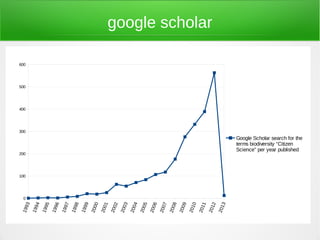
google scholar

600


500


400


300
                                                                                                                                                    Google Scholar search for the
                                                                                                                                                    terms biodiversity “Citizen
                                                                                                                                                    Science” per year published
200


100


  0
  3

         4


                                                                        3

                                                                               4


                                                                                                                                              3
                5

                       6

                              7

                                     8

                                            9

                                                   0

                                                          1

                                                                 2


                                                                                      5

                                                                                             6

                                                                                                    7

                                                                                                           8

                                                                                                                  9

                                                                                                                         0

                                                                                                                                1

                                                                                                                                       2
 1 99

        1 99

               1 99

                      19 9

                             19 9

                                    19 9

                                           19 9

                                                  20 0

                                                         20 0

                                                                20 0

                                                                       2 00

                                                                              2 00

                                                                                     2 00

                                                                                            20 0

                                                                                                   20 0

                                                                                                          20 0

                                                                                                                 20 0

                                                                                                                        20 1

                                                                                                                               20 1

                                                                                                                                      20 1

                                                                                                                                             2 01
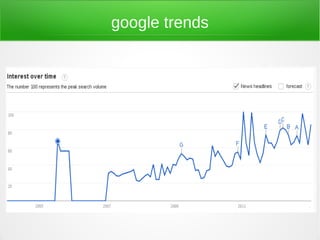
google trends
some examples...

●   Biodiversity monitoring projects (recording a taxon at a locality
    at a certain time)
●   Large projects (→ what is the “recipe for success”?)
●   Different aspects:
    –   associated to official organizations/important NGOs / used for
        policy-making vs. “just for fun”
    –   Independent sites vs. delivering data to “official” databases
    –   Different tools for the user
    –   All are “bottom-up” approaches
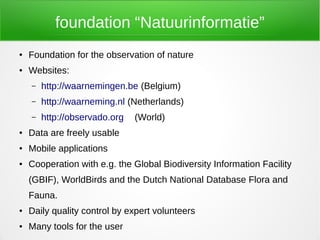
foundation “Natuurinformatie”
●   Foundation for the observation of nature
●   Websites:
    –   http://waarnemingen.be (Belgium)
    –   http://waarneming.nl (Netherlands)
    –   http://observado.org   (World)
●   Data are freely usable
●   Mobile applications
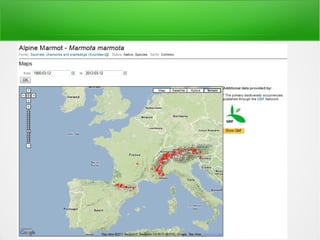
●   Cooperation with e.g. the Global Biodiversity Information Facility
    (GBIF), WorldBirds and the Dutch National Database Flora and
    Fauna.
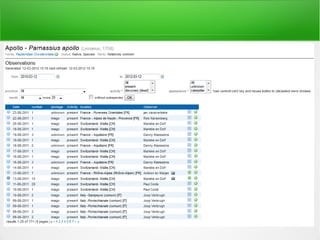
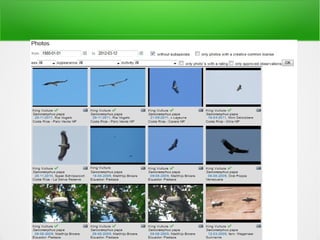
●   Daily quality control by expert volunteers
●   Many tools for the user
12


10


8


                                     Column 1
6                                    Column 2
                                     Column 3


4


2


0
     Row 1   Row 2   Row 3   Row 4
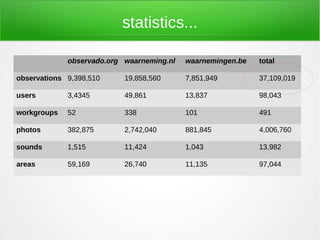
statistics...

             observado.org waarneming.nl   waarnemingen.be   total

observations 9,398,510     19,858,560      7,851,949         37,109,019

users        3,4345        49,861          13,837            98,043

workgroups   52            338             101               491

photos       382,875       2,742,040       881,845           4,006,760

sounds       1,515         11,424          1,043             13,982

areas        59,169        26,740          11,135            97,044
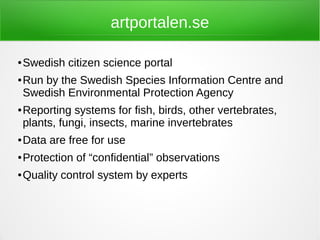
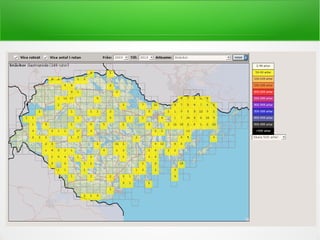
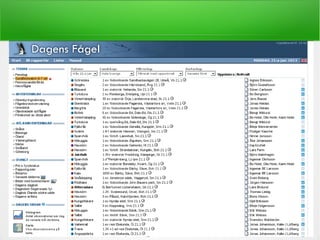
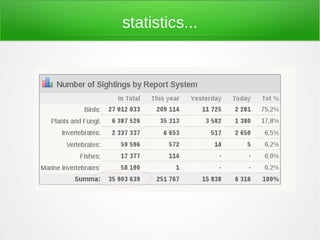
artportalen.se

●   Swedish citizen science portal
●   Run by the Swedish Species Information Centre and
    Swedish Environmental Protection Agency
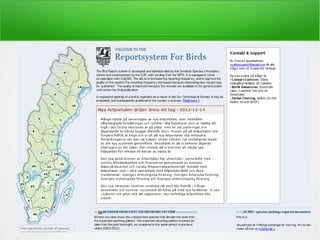
●   Reporting systems for fish, birds, other vertebrates,
    plants, fungi, insects, marine invertebrates
●   Data are free for use
●   Protection of “confidential” observations
●   Quality control system by experts
statistics...
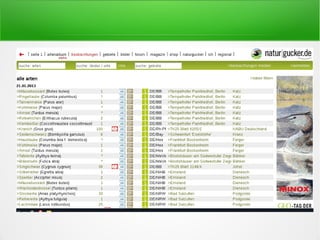
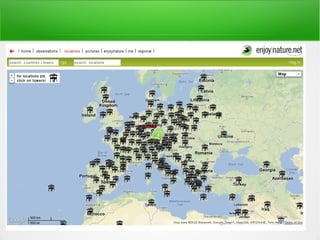
http://www.naturgucker.de /
                   http://enjoynature.net
●   “Network for nature observations” (Germany, Austria, worldwide)
●   Aims:
    –   publish data that usually would live in personal computers and notebooks
        only
    –   Help nature conservation work
    –   Inspire people to observe nature
●   Free data access
●   Protection of “confidential” observations
●   Tools for the user (“personalized data centre”)
●   Community-based quality control plus additional advisory board of experts
●   Cooperation with NABU (NAture and Biodiversity Conservation Union of
    Germany, Birdlife Germany) and other NGOs
12


10


8


                                     Column 1
6                                    Column 2
                                     Column 3


4


2


0
     Row 1   Row 2   Row 3   Row 4
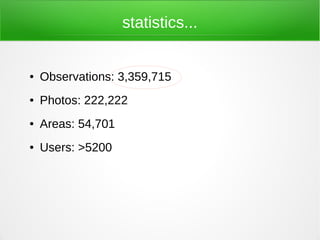
statistics...


●   Observations: 3,359,715
●   Photos: 222,222
●   Areas: 54,701
●   Users: >5200
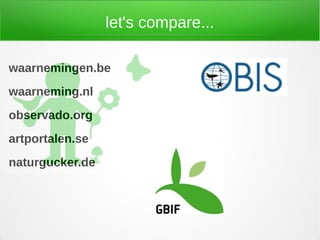
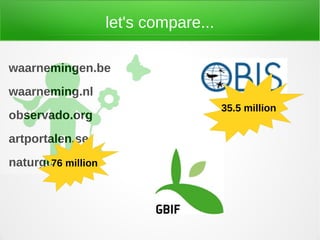
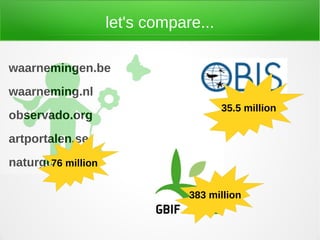
let's compare...

waarnemingen.be
waarneming.nl
observado.org
artportalen.se
naturgucker.de
let's compare...

waarnemingen.be
waarneming.nl
observado.org
artportalen.se
naturgucker.de
       76 million
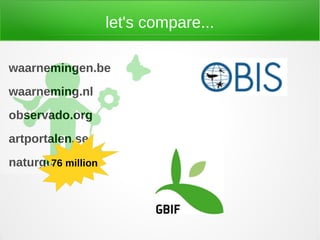
let's compare...

waarnemingen.be
waarneming.nl
                                       35.5 million
observado.org
artportalen.se
naturgucker.de
       76 million
let's compare...

waarnemingen.be
waarneming.nl
                                       35.5 million
observado.org
artportalen.se
naturgucker.de
       76 million


                                383 million
other projects & initiatives

●   COBWEB – EU-funded project with 13 partners to enable citizens to collect
    environmental data using mobile devices from UNESCO Biosphere Reserves

●   Citizen Science Alliance – Collaboration of 7 partners to create online citizen
    science projects to involve the public in academic research

●   EveryAware - EU-funded project, with 5 partners, intending to integrate
    environmental monitoring, awareness enhancement and behavioural change by
    creating a new technological platform combining sensing technologies, networking
    applications and data-processing tools.

●   Zooniverse - framework to support and host citizen science projects, as well as a
    committed and enthusiastic host of volunteers.

●   anymals+plants: funded by German government, develops mobile apps &
    provides social network for nature observations

●   Naturewatch/EyeOnEarth: collaboration between the European Environmental
    Agency and communities of voluntary citizen scientists in pilot European Countries
food for thought...

●   Role of ViBRANT / Scratchpads
●   Functionality of software
●   Collaborations / interoperability between projects
●   How to unlock / reuse the data → GBIF / BDJ / … ?
●   Quality control
●   Target communities / user analysis
●   Outreach
●   Possibilities for funding?

European initiatives

  • 1.
    Biodiversity Citizen Science – Projectsin Europe Sarah Faulwetter (HCMR) Ed Baker (NHM)
  • 2.
    citizen science “scientific research conducted, in whole or in part, by amateur or nonprofessional scientists, often by crowdsourcing” [wikipedia] ● Data gathering vs. data analysis – observations in nature vs. online recognizing patterns of whale songs, the sea floor, galaxies... ● Single researcher vs. combined efforts – amateurs describing new species vs. participation in crowdsourcing projects ● “Top-down” vs. “bottom up” approaches in projects ● One day events (e.g BioBlitz) vs. ongoing initiatives
  • 3.
    characteristics ● Major driver: Interest and enthusiasm of the citizen ● No commercial interest ● Cannot be “forced” - varying levels of participation, but always volunteering! ● Broad range of level of expertise ● Individuals, teams, or networks of volunteers ● Often very localized (e.g. my local insect fauna, butterflies in my garden) ● Varying levels of professionalism - from uploading photos to the web to collaborations with professional scientists
  • 4.
    why involve citizens? ● Professional science: not enough resources for many projects ● Added value from mass collection / analysis of data (detection of trends) ● Knowledge of “amateurs” often very high ● Communication between the “ivory tower” and the “normal world”
  • 5.
    why involve citizens? ● Professional science: not enough resources for many projects ● Added value from mass collection / analysis of data (detection of trends) ● Knowledge of “amateurs” often very high ● Communication between the “ivory tower” and the “normal world”
  • 6.
    google scholar 600 500 400 300 Google Scholar search for the terms biodiversity “Citizen Science” per year published 200 100 0 3 4 3 4 3 5 6 7 8 9 0 1 2 5 6 7 8 9 0 1 2 1 99 1 99 1 99 19 9 19 9 19 9 19 9 20 0 20 0 20 0 2 00 2 00 2 00 20 0 20 0 20 0 20 0 20 1 20 1 20 1 2 01
  • 7.
  • 8.
    some examples... ● Biodiversity monitoring projects (recording a taxon at a locality at a certain time) ● Large projects (→ what is the “recipe for success”?) ● Different aspects: – associated to official organizations/important NGOs / used for policy-making vs. “just for fun” – Independent sites vs. delivering data to “official” databases – Different tools for the user – All are “bottom-up” approaches
  • 9.
    foundation “Natuurinformatie” ● Foundation for the observation of nature ● Websites: – http://waarnemingen.be (Belgium) – http://waarneming.nl (Netherlands) – http://observado.org (World) ● Data are freely usable ● Mobile applications ● Cooperation with e.g. the Global Biodiversity Information Facility (GBIF), WorldBirds and the Dutch National Database Flora and Fauna. ● Daily quality control by expert volunteers ● Many tools for the user
  • 12.
    12 10 8 Column 1 6 Column 2 Column 3 4 2 0 Row 1 Row 2 Row 3 Row 4
  • 13.
    statistics... observado.org waarneming.nl waarnemingen.be total observations 9,398,510 19,858,560 7,851,949 37,109,019 users 3,4345 49,861 13,837 98,043 workgroups 52 338 101 491 photos 382,875 2,742,040 881,845 4,006,760 sounds 1,515 11,424 1,043 13,982 areas 59,169 26,740 11,135 97,044
  • 14.
    artportalen.se ● Swedish citizen science portal ● Run by the Swedish Species Information Centre and Swedish Environmental Protection Agency ● Reporting systems for fish, birds, other vertebrates, plants, fungi, insects, marine invertebrates ● Data are free for use ● Protection of “confidential” observations ● Quality control system by experts
  • 18.
  • 19.
    http://www.naturgucker.de / http://enjoynature.net ● “Network for nature observations” (Germany, Austria, worldwide) ● Aims: – publish data that usually would live in personal computers and notebooks only – Help nature conservation work – Inspire people to observe nature ● Free data access ● Protection of “confidential” observations ● Tools for the user (“personalized data centre”) ● Community-based quality control plus additional advisory board of experts ● Cooperation with NABU (NAture and Biodiversity Conservation Union of Germany, Birdlife Germany) and other NGOs
  • 21.
    12 10 8 Column 1 6 Column 2 Column 3 4 2 0 Row 1 Row 2 Row 3 Row 4
  • 22.
    statistics... ● Observations: 3,359,715 ● Photos: 222,222 ● Areas: 54,701 ● Users: >5200
  • 23.
  • 24.
  • 25.
    let's compare... waarnemingen.be waarneming.nl 35.5 million observado.org artportalen.se naturgucker.de 76 million
  • 26.
    let's compare... waarnemingen.be waarneming.nl 35.5 million observado.org artportalen.se naturgucker.de 76 million 383 million
  • 27.
    other projects &initiatives ● COBWEB – EU-funded project with 13 partners to enable citizens to collect environmental data using mobile devices from UNESCO Biosphere Reserves ● Citizen Science Alliance – Collaboration of 7 partners to create online citizen science projects to involve the public in academic research ● EveryAware - EU-funded project, with 5 partners, intending to integrate environmental monitoring, awareness enhancement and behavioural change by creating a new technological platform combining sensing technologies, networking applications and data-processing tools. ● Zooniverse - framework to support and host citizen science projects, as well as a committed and enthusiastic host of volunteers. ● anymals+plants: funded by German government, develops mobile apps & provides social network for nature observations ● Naturewatch/EyeOnEarth: collaboration between the European Environmental Agency and communities of voluntary citizen scientists in pilot European Countries
  • 28.
    food for thought... ● Role of ViBRANT / Scratchpads ● Functionality of software ● Collaborations / interoperability between projects ● How to unlock / reuse the data → GBIF / BDJ / … ? ● Quality control ● Target communities / user analysis ● Outreach ● Possibilities for funding?