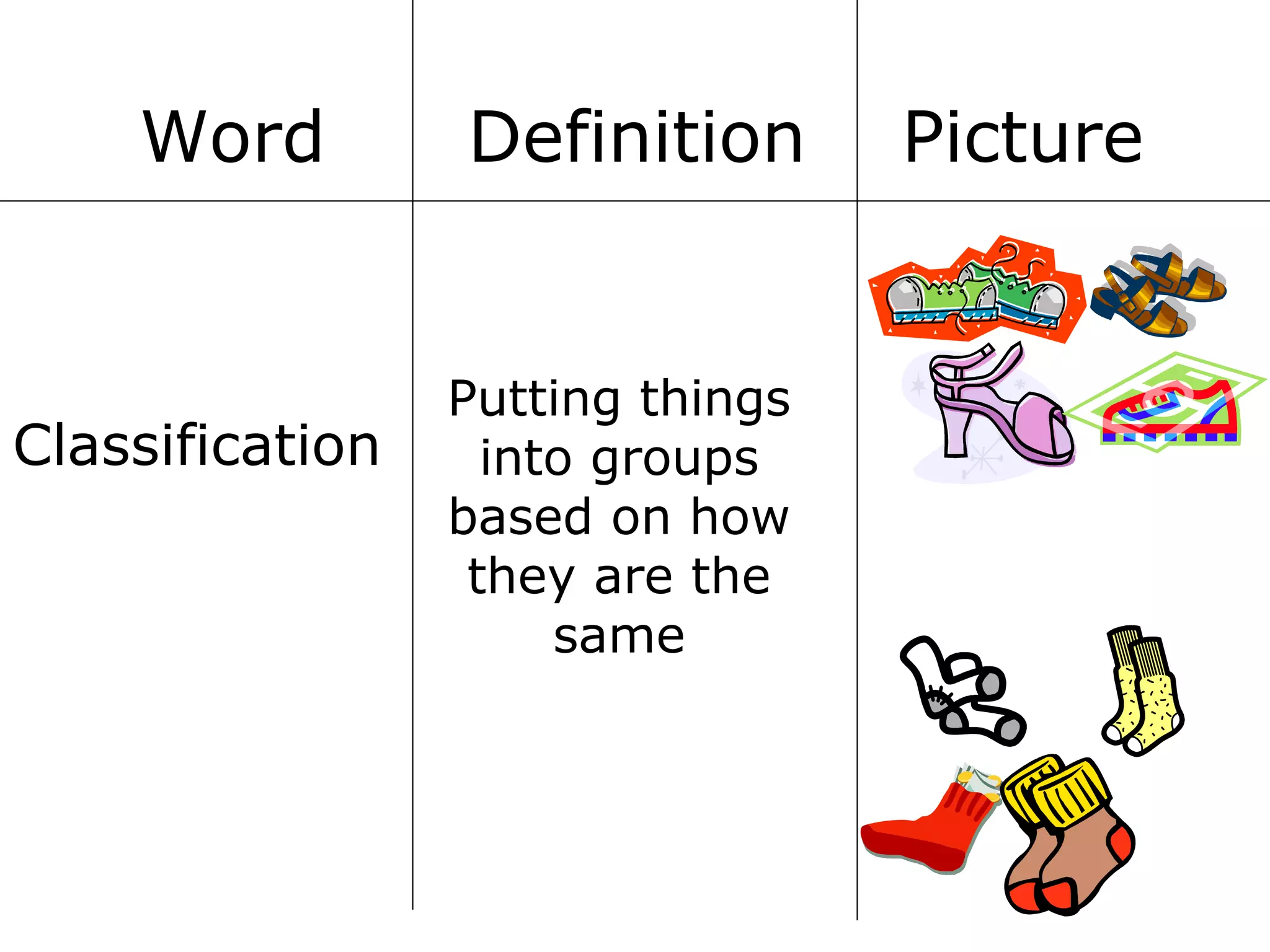
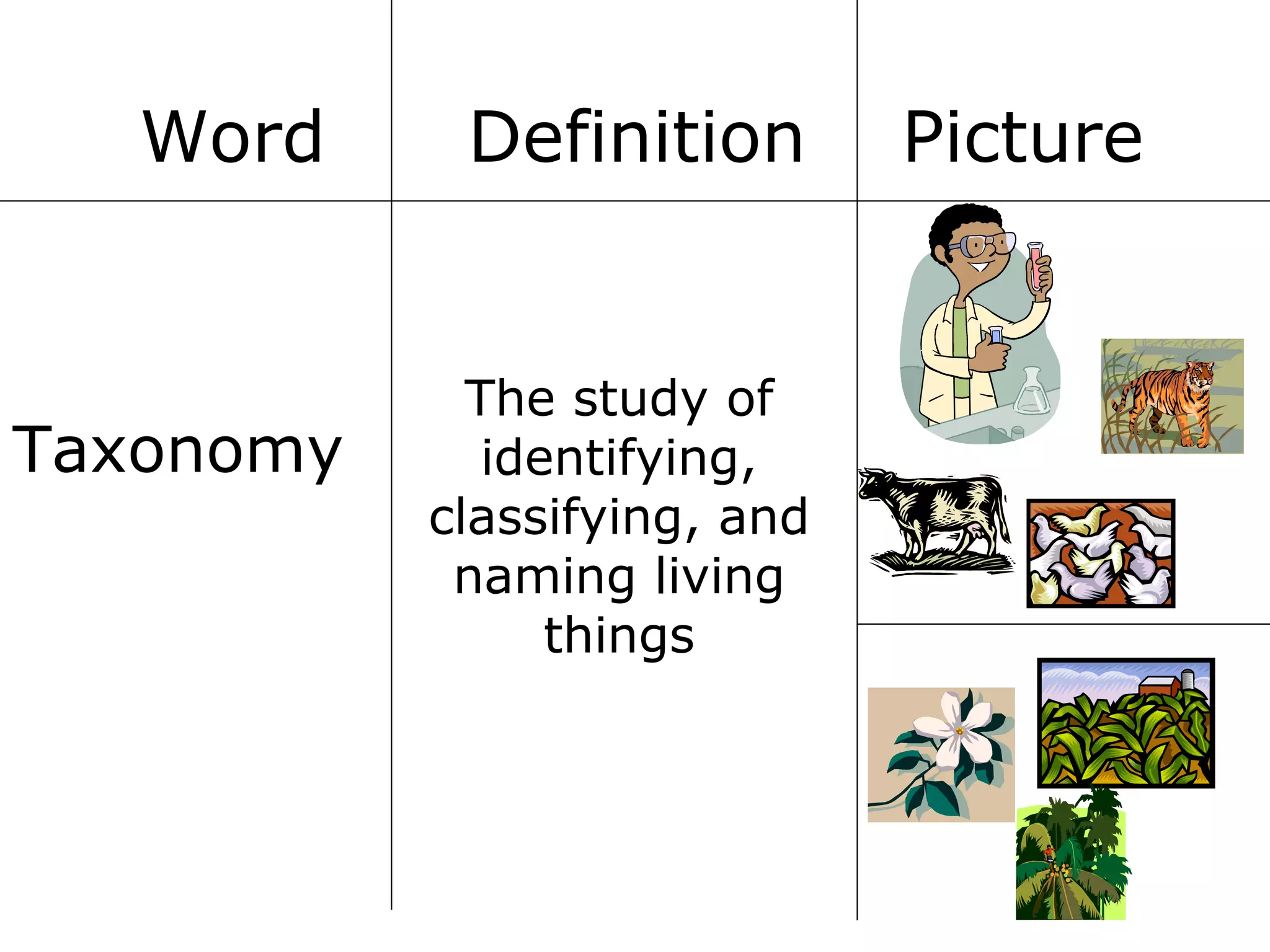
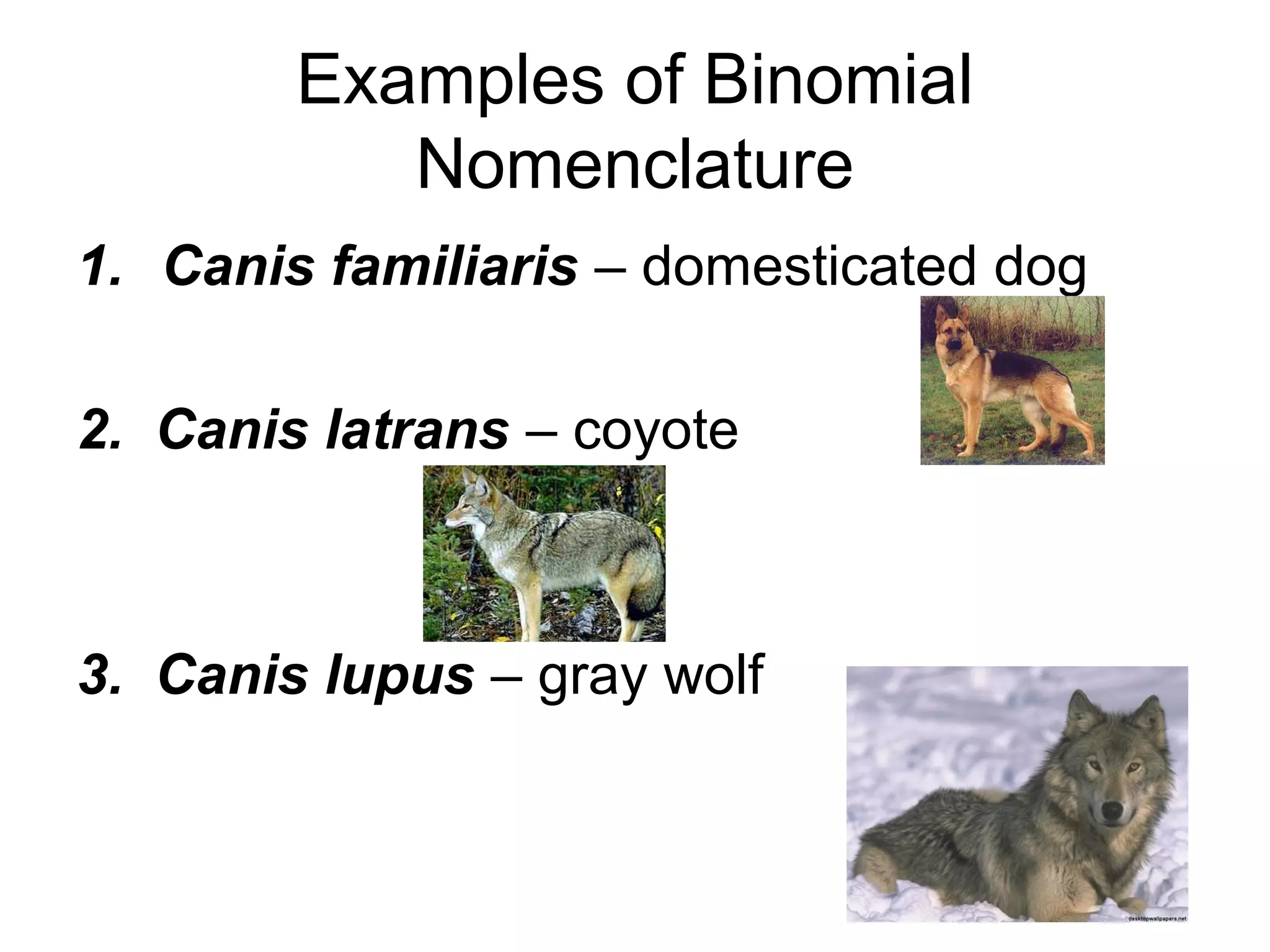
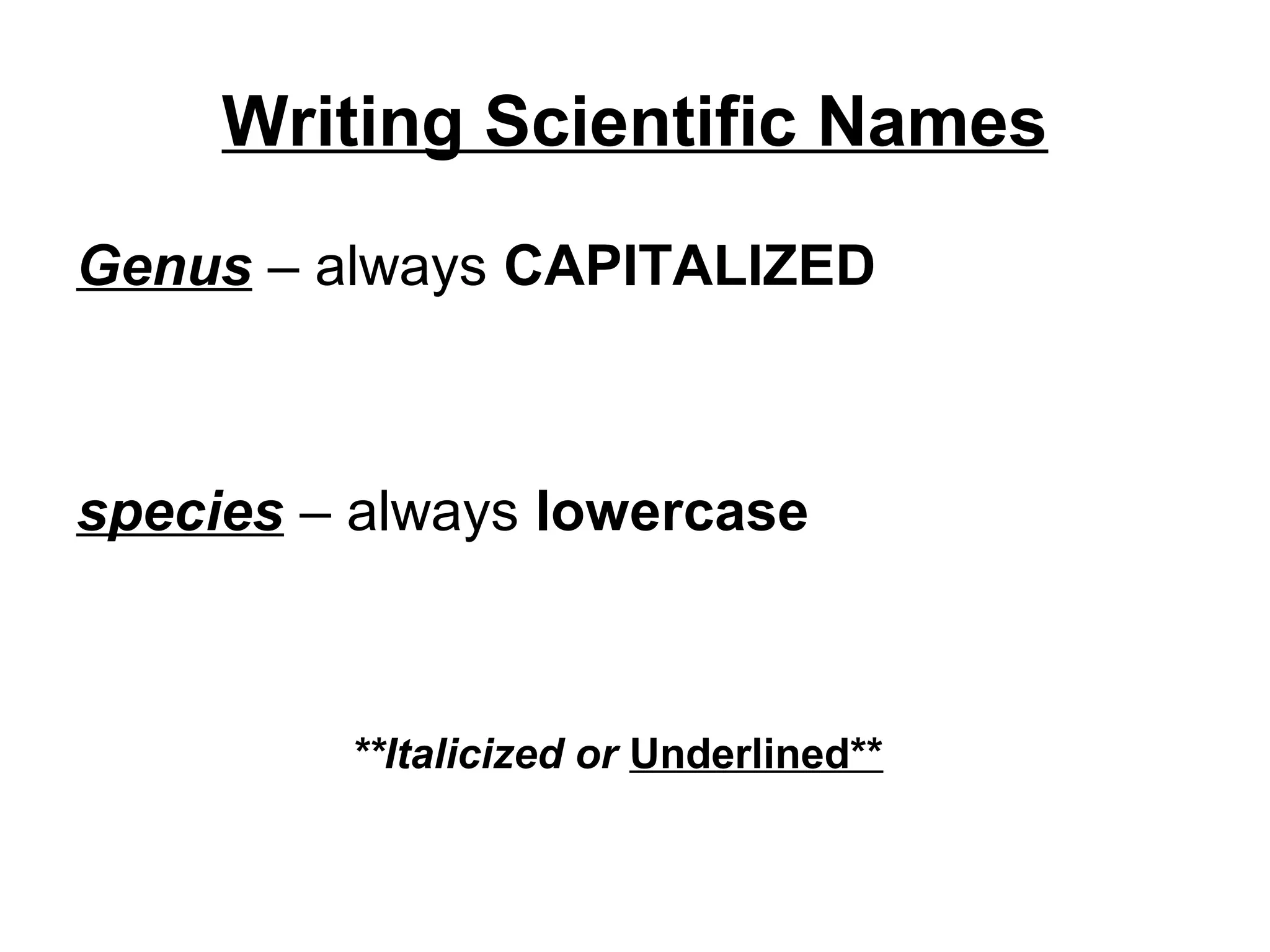
Classification involves grouping things together based on similarities. There are two main types of classification: taxonomy, which classifies living things; and systems created by Aristotle and Carolus Linnaeus. Linnaeus developed binomial nomenclature, using a two-word Latin naming system with the genus as the first word and specific epithet as the second to precisely classify organisms. This scientific naming convention using capitalized genus and lowercase specific epithet is still used today.
History of Classification
1.Aristotle – ancient Greek, 1st
to develop a
system of classification
• Created Kingdoms: - Plant and animal
• Plants: divided by size and structure
• Animals: divided on
where they lived
7.
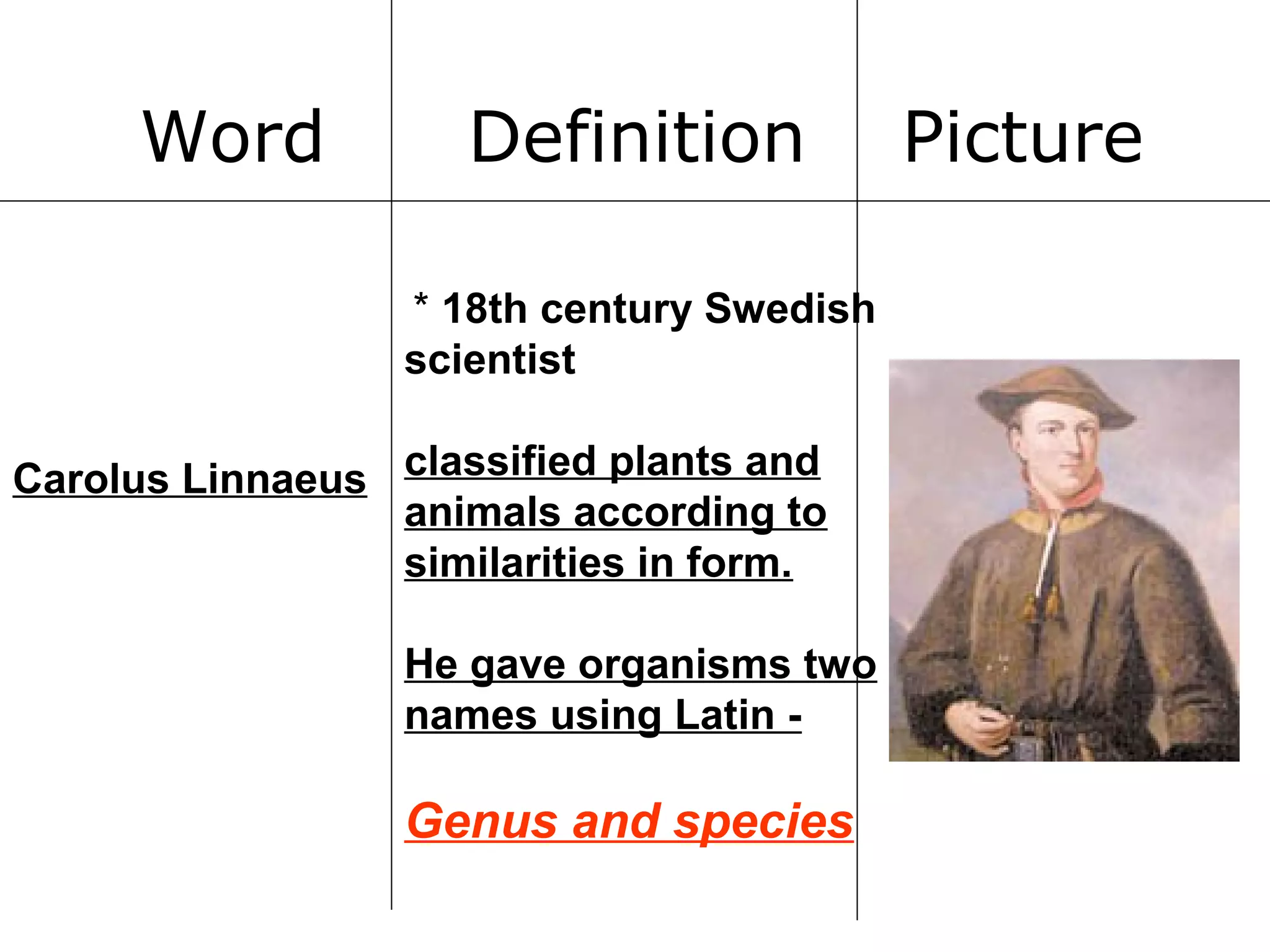
Word Definition Picture
CarolusLinnaeus
* 18th century Swedish
scientist
classified plants and
animals according to
similarities in form.
He gave organisms two
names using Latin -
Genus and species
8.
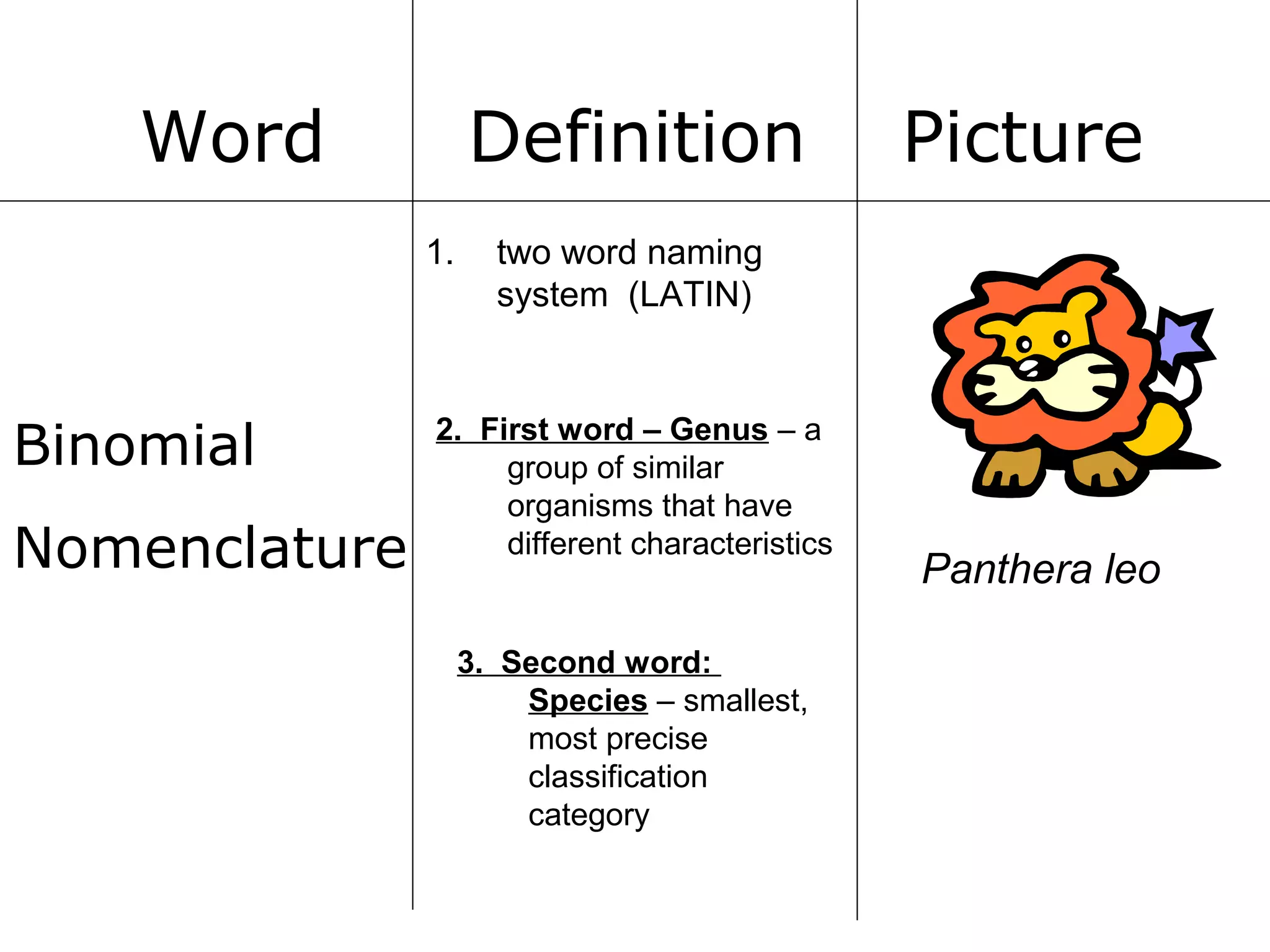
Word Definition Picture
Binomial
Nomenclature
1.two word naming
system (LATIN)
Panthera leo
2. First word – Genus – a
group of similar
organisms that have
different characteristics
3. Second word:
Species – smallest,
most precise
classification
category
Practice by writingdown the
scientific name
Genus: Felis
Common
Name
Species Scientific
Name?
Chinese
Mountain Cat
bieti
Jungle Cat chaus
Wild Cat silvestris
12.
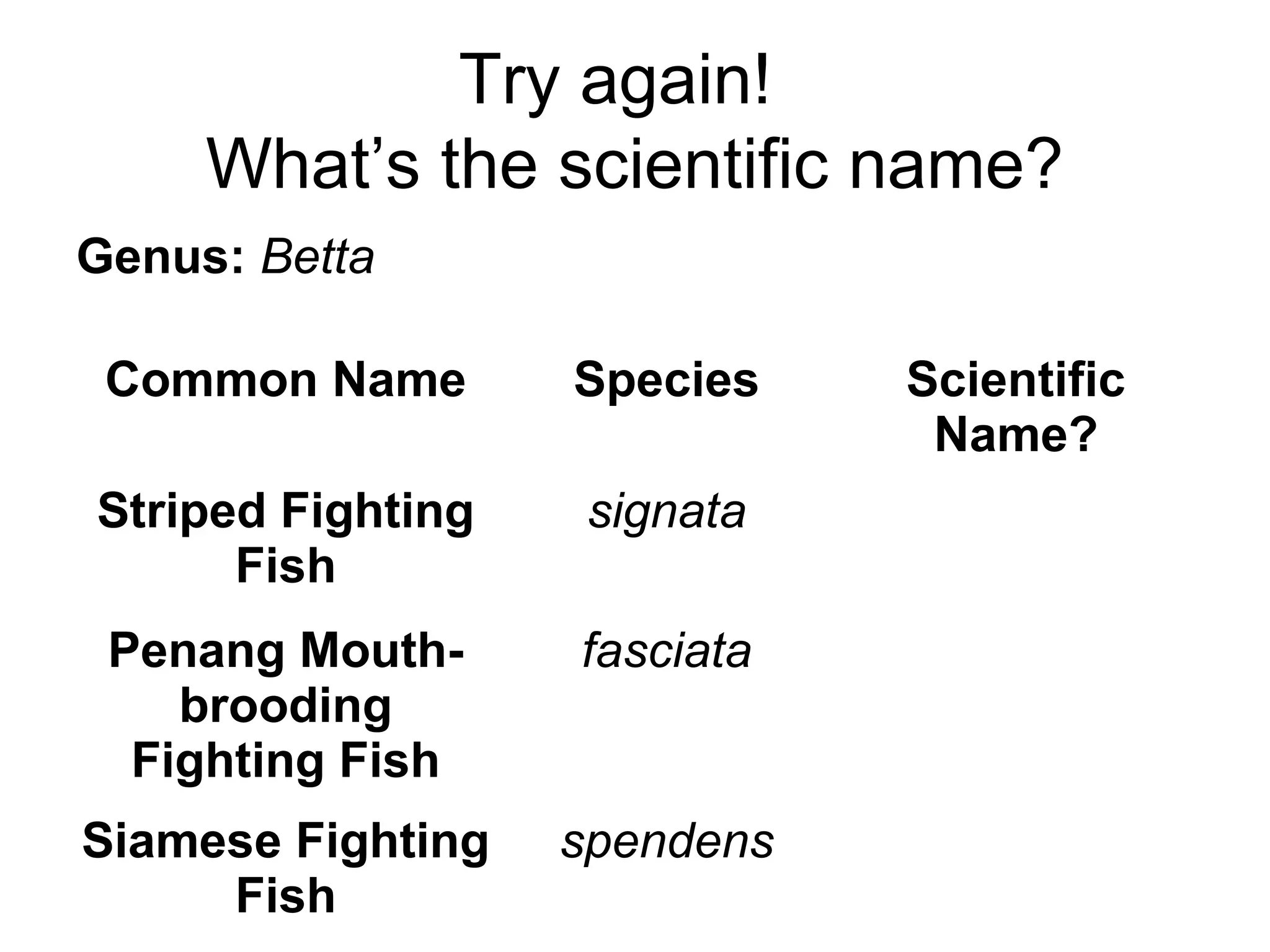
Try again!
What’s thescientific name?
Genus: Betta
Common Name Species Scientific
Name?
Striped Fighting
Fish
signata
Penang Mouth-
brooding
Fighting Fish
fasciata
Siamese Fighting
Fish
spendens





![1 taxonomy intro[1][1]](https://cdn.slidesharecdn.com/ss_thumbnails/1-taxonomyintro11-131223121311-phpapp02-thumbnail.jpg?width=640&height=640&fit=bounds)


