pH
determination
By,
Jahanvi P. Tankaria
B.Pharm. Sem 3
Akshar Preet Institute of
Pharmacy
“ Electrometric
method
Introduction:
The pH of a solution can be
determined by means of an
electrode, whose potential depends
on the hydrogen activity. The
hydrogen and glass electrodes are
the typical pH electrodes, though the
later one is commonly used.
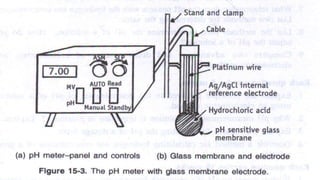
Glass electrode is a condensed or
combined electrode, i.e., this incorporates a
reference electrode junction next to the glass
membrane (indicator electrode) so that both
electrodes are kept in one unit. The pH
sensitive glass bulb is made of lithia glass,
which is suitable over entire range.
•Principle:
 The potential difference exists at the
interface between glass and a solution
containing hydrogen ions.
 The magnitude of this difference varies
with the concentration of the hydrogen
ions.
 Glass electrode is used for the pH
measurement.
 The glass electrode consists of a thin
glass bulb of a special glass blown at the
end of glass tube.
 The bulb is fitted with 0.1 N HCl, which
furnishes a constant hydrogen ion
concentration.
 A silver-silver chloride electrode (a silver
wire coated with silver chloride) makes
the necessary electrical connection with
the acid
 The standard reference buffer solutions
are used to calibrate the pH meter, i.e.,
to set the reference pH.
 Then the pH of the unknown solution can
be read directly from the panel of the pH
meter.
7
•Method:
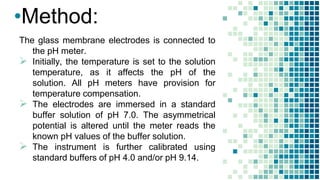
The glass membrane electrodes is connected to
the pH meter.
 Initially, the temperature is set to the solution
temperature, as it affects the pH of the
solution. All pH meters have provision for
temperature compensation.
 The electrodes are immersed in a standard
buffer solution of pH 7.0. The asymmetrical
potential is altered until the meter reads the
known pH values of the buffer solution.
 The instrument is further calibrated using
standard buffers of pH 4.0 and/or pH 9.14.
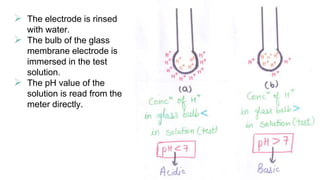
 The electrode is rinsed
with water.
 The bulb of the glass
membrane electrode is
immersed in the test
solution.
 The pH value of the
solution is read from the
meter directly.
•Advantages:
 Glass electrode is not affected by
oxidation-reduction systems, since there
is no exchange of electrons.
 Sensitivity of electrometric method is
high, as accurate measurements can be
obtained.
 Electrode establishes equilibrium rapidly.
 The solution is uncontaminated, because
the addition of indicator is avoided.
 pH range of measurement is high.
•Disadvantages:
 Electrometric method is not suitable for
viscous solutions and gels, because of
poor ion mobility.
 Initial cost of pH meter is high to the
colorimetric method.
In this method, glass electrode is
specified for the pH determination.
Several types of electrode are available
which can be used.
THANKS!

pH determination (electrometric method)

  • 1.
    pH determination By, Jahanvi P. Tankaria B.Pharm.Sem 3 Akshar Preet Institute of Pharmacy
  • 2.
  • 3.
    Introduction: The pH ofa solution can be determined by means of an electrode, whose potential depends on the hydrogen activity. The hydrogen and glass electrodes are the typical pH electrodes, though the later one is commonly used.
  • 4.
    Glass electrode isa condensed or combined electrode, i.e., this incorporates a reference electrode junction next to the glass membrane (indicator electrode) so that both electrodes are kept in one unit. The pH sensitive glass bulb is made of lithia glass, which is suitable over entire range.
  • 5.
    •Principle:  The potentialdifference exists at the interface between glass and a solution containing hydrogen ions.  The magnitude of this difference varies with the concentration of the hydrogen ions.  Glass electrode is used for the pH measurement.  The glass electrode consists of a thin glass bulb of a special glass blown at the end of glass tube.  The bulb is fitted with 0.1 N HCl, which furnishes a constant hydrogen ion concentration.
  • 6.
     A silver-silverchloride electrode (a silver wire coated with silver chloride) makes the necessary electrical connection with the acid  The standard reference buffer solutions are used to calibrate the pH meter, i.e., to set the reference pH.  Then the pH of the unknown solution can be read directly from the panel of the pH meter.
  • 7.
  • 8.
    •Method: The glass membraneelectrodes is connected to the pH meter.  Initially, the temperature is set to the solution temperature, as it affects the pH of the solution. All pH meters have provision for temperature compensation.  The electrodes are immersed in a standard buffer solution of pH 7.0. The asymmetrical potential is altered until the meter reads the known pH values of the buffer solution.  The instrument is further calibrated using standard buffers of pH 4.0 and/or pH 9.14.
  • 9.
     The electrodeis rinsed with water.  The bulb of the glass membrane electrode is immersed in the test solution.  The pH value of the solution is read from the meter directly.
  • 10.
    •Advantages:  Glass electrodeis not affected by oxidation-reduction systems, since there is no exchange of electrons.  Sensitivity of electrometric method is high, as accurate measurements can be obtained.  Electrode establishes equilibrium rapidly.  The solution is uncontaminated, because the addition of indicator is avoided.  pH range of measurement is high.
  • 11.
    •Disadvantages:  Electrometric methodis not suitable for viscous solutions and gels, because of poor ion mobility.  Initial cost of pH meter is high to the colorimetric method. In this method, glass electrode is specified for the pH determination. Several types of electrode are available which can be used.
  • 12.