Qualitative tests for Phenols
1.Litmus test
2. Ferric chloride test
3. Liebermann's test
4. Bromine water test
5. Phthalein Dye test
1.Litmus test:
Principle: Phenol is acidic in nature it convert blue litmus into red litmus
paper.
Procedure:
 Carboxylic acid also gives this test. Compare to carboxylic acid phenol is
weakly acidic and it does not give an effervescence with aqueous sodium
carbonate.
Observe the change in color of paper
Place a drop of organic solution or small crystal on moist blue litmus paper
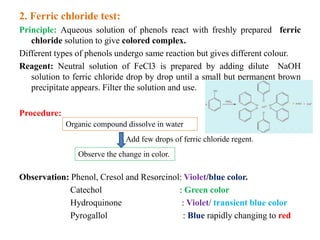
2. Ferric chloride test:
Principle: Aqueous solution of phenols react with freshly prepared ferric
chloride solution to give colored complex.
Different types of phenols undergo same reaction but gives different colour.
Reagent: Neutral solution of FeCl3 is prepared by adding dilute NaOH
solution to ferric chloride drop by drop until a small but permanent brown
precipitate appears. Filter the solution and use.
Procedure:
Observation: Phenol, Cresol and Resorcinol: Violet/blue color.
Catechol : Green color
Hydroquinone : Violet/ transient blue color
Pyrogallol : Blue rapidly changing to red
Organic compound dissolve in water
Add few drops of ferric chloride regent.
Observe the change in color.
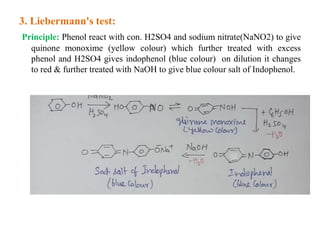
3. Liebermann's test:
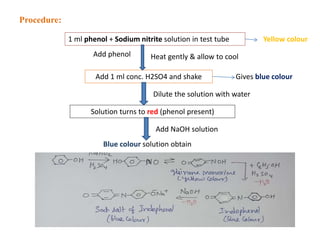
Principle: Phenol react with con. H2SO4 and sodium nitrate(NaNO2) to give
quinone monoxime (yellow colour) which further treated with excess
phenol and H2SO4 gives indophenol (blue colour) on dilution it changes
to red & further treated with NaOH to give blue colour salt of Indophenol.
Procedure:
1 ml phenol + Sodium nitrite solution in test tube
Add 1 ml conc. H2SO4 and shake
Solution turns to red (phenol present)
Blue colour solution obtain
Heat gently & allow to cool
Add phenol
Yellow colour
Gives blue colour
Dilute the solution with water
Add NaOH solution
4. Bromine water test:
Principle: Phenol undergo electrophilic substitution with bromine.
When bromine water is added to the aqueous solution of phenol the brown
colour of bromine disappears & a white precipitate of 2,4,6tribromo phenol
if formed.
Reagent: Take 5ml of bromine add 100 ml of distilled water and shake well.
Procedure:
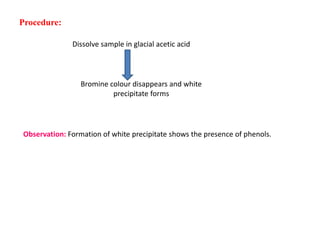
Dissolve sample in glacial acetic acid
Bromine colour disappears and white
precipitate forms
Observation: Formation of white precipitate shows the presence of phenols.
5. Phthalein Dye test:
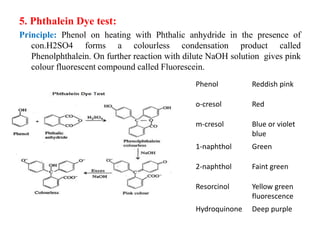
Principle: Phenol on heating with Phthalic anhydride in the presence of
con.H2SO4 forms a colourless condensation product called
Phenolphthalein. On further reaction with dilute NaOH solution gives pink
colour fluorescent compound called Fluorescein.
Phenol Reddish pink
o-cresol Red
m-cresol Blue or violet
blue
1-naphthol Green
2-naphthol Faint green
Resorcinol Yellow green
fluorescence
Hydroquinone Deep purple
Procedure:
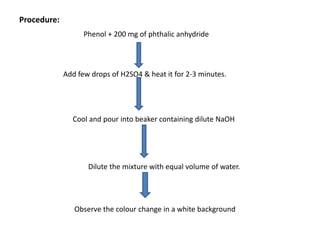
Phenol + 200 mg of phthalic anhydride
Add few drops of H2SO4 & heat it for 2-3 minutes.
Cool and pour into beaker containing dilute NaOH
Dilute the mixture with equal volume of water.
Observe the colour change in a white background
• Structure and uses of Phenol, Cresol,
Resorcinol, Naphthols
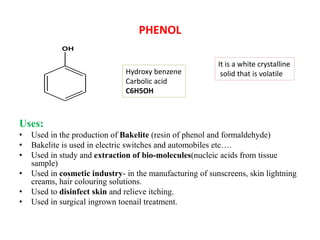
PHENOL
Uses:
• Used in the production of Bakelite (resin of phenol and formaldehyde)
• Bakelite is used in electric switches and automobiles etc….
• Used in study and extraction of bio-molecules(nucleic acids from tissue
sample)
• Used in cosmetic industry- in the manufacturing of sunscreens, skin lightning
creams, hair colouring solutions.
• Used to disinfect skin and relieve itching.
• Used in surgical ingrown toenail treatment.
OH
Hydroxy benzene
Carbolic acid
C6H5OH
It is a white crystalline
solid that is volatile
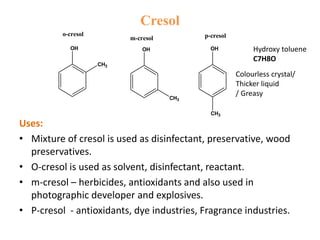
Cresol
Uses:
• Mixture of cresol is used as disinfectant, preservative, wood
preservatives.
• O-cresol is used as solvent, disinfectant, reactant.
• m-cresol – herbicides, antioxidants and also used in
photographic developer and explosives.
• P-cresol - antioxidants, dye industries, Fragrance industries.
OH
CH3
OH OH
CH3
CH3
o-cresol
m-cresol p-cresol
Hydroxy toluene
C7H8O
Colourless crystal/
Thicker liquid
/ Greasy
Resorcinol
Uses:
• Used as antiseptic
• Used in treatment of gastric ulcer
• Used in vaginal itching and irritation
• Used in production of di azo dyes and used as analytic reagent.
White solid, turns pink upon
exposure to air.
Resorcin
Benzene diol
1,3-benzene diol
C6H6O2
OH
OH
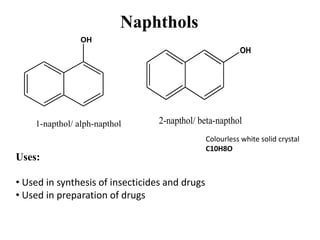
Naphthols
OH
1-napthol/ alph-napthol
OH
2-napthol/ beta-napthol
Colourless white solid crystal
C10H8O
Uses:
• Used in synthesis of insecticides and drugs
• Used in preparation of drugs
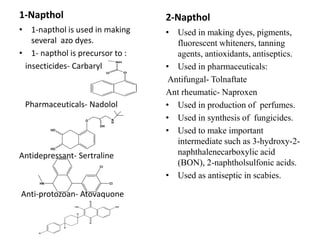
1-Napthol
• 1-napthol is used in making
several azo dyes.
• 1- napthol is precursor to :
insecticides- Carbaryl
Pharmaceuticals- Nadolol
Antidepressant- Sertraline
Anti-protozoan- Atovaquone
2-Napthol
• Used in making dyes, pigments,
fluorescent whiteners, tanning
agents, antioxidants, antiseptics.
• Used in pharmaceuticals:
Antifungal- Tolnaftate
Ant rheumatic- Naproxen
• Used in production of perfumes.
• Used in synthesis of fungicides.
• Used to make important
intermediate such as 3-hydroxy-2-
naphthalenecarboxylic acid
(BON), 2-naphtholsulfonic acids.
• Used as antiseptic in scabies.
O
NH
O
O N
H
HO
HO
OH
HN
Cl
Cl
OH
O
O
HO
H
Cl
H

Qualitative test for phenol .pptx

  • 1.
  • 2.
    1.Litmus test 2. Ferricchloride test 3. Liebermann's test 4. Bromine water test 5. Phthalein Dye test
  • 3.
    1.Litmus test: Principle: Phenolis acidic in nature it convert blue litmus into red litmus paper. Procedure:  Carboxylic acid also gives this test. Compare to carboxylic acid phenol is weakly acidic and it does not give an effervescence with aqueous sodium carbonate. Observe the change in color of paper Place a drop of organic solution or small crystal on moist blue litmus paper
  • 4.
    2. Ferric chloridetest: Principle: Aqueous solution of phenols react with freshly prepared ferric chloride solution to give colored complex. Different types of phenols undergo same reaction but gives different colour. Reagent: Neutral solution of FeCl3 is prepared by adding dilute NaOH solution to ferric chloride drop by drop until a small but permanent brown precipitate appears. Filter the solution and use. Procedure: Observation: Phenol, Cresol and Resorcinol: Violet/blue color. Catechol : Green color Hydroquinone : Violet/ transient blue color Pyrogallol : Blue rapidly changing to red Organic compound dissolve in water Add few drops of ferric chloride regent. Observe the change in color.
  • 5.
    3. Liebermann's test: Principle:Phenol react with con. H2SO4 and sodium nitrate(NaNO2) to give quinone monoxime (yellow colour) which further treated with excess phenol and H2SO4 gives indophenol (blue colour) on dilution it changes to red & further treated with NaOH to give blue colour salt of Indophenol.
  • 6.
    Procedure: 1 ml phenol+ Sodium nitrite solution in test tube Add 1 ml conc. H2SO4 and shake Solution turns to red (phenol present) Blue colour solution obtain Heat gently & allow to cool Add phenol Yellow colour Gives blue colour Dilute the solution with water Add NaOH solution
  • 7.
    4. Bromine watertest: Principle: Phenol undergo electrophilic substitution with bromine. When bromine water is added to the aqueous solution of phenol the brown colour of bromine disappears & a white precipitate of 2,4,6tribromo phenol if formed. Reagent: Take 5ml of bromine add 100 ml of distilled water and shake well.
  • 8.
    Procedure: Dissolve sample inglacial acetic acid Bromine colour disappears and white precipitate forms Observation: Formation of white precipitate shows the presence of phenols.
  • 9.
    5. Phthalein Dyetest: Principle: Phenol on heating with Phthalic anhydride in the presence of con.H2SO4 forms a colourless condensation product called Phenolphthalein. On further reaction with dilute NaOH solution gives pink colour fluorescent compound called Fluorescein. Phenol Reddish pink o-cresol Red m-cresol Blue or violet blue 1-naphthol Green 2-naphthol Faint green Resorcinol Yellow green fluorescence Hydroquinone Deep purple
  • 10.
    Procedure: Phenol + 200mg of phthalic anhydride Add few drops of H2SO4 & heat it for 2-3 minutes. Cool and pour into beaker containing dilute NaOH Dilute the mixture with equal volume of water. Observe the colour change in a white background
  • 11.
    • Structure anduses of Phenol, Cresol, Resorcinol, Naphthols
  • 12.
    PHENOL Uses: • Used inthe production of Bakelite (resin of phenol and formaldehyde) • Bakelite is used in electric switches and automobiles etc…. • Used in study and extraction of bio-molecules(nucleic acids from tissue sample) • Used in cosmetic industry- in the manufacturing of sunscreens, skin lightning creams, hair colouring solutions. • Used to disinfect skin and relieve itching. • Used in surgical ingrown toenail treatment. OH Hydroxy benzene Carbolic acid C6H5OH It is a white crystalline solid that is volatile
  • 13.
    Cresol Uses: • Mixture ofcresol is used as disinfectant, preservative, wood preservatives. • O-cresol is used as solvent, disinfectant, reactant. • m-cresol – herbicides, antioxidants and also used in photographic developer and explosives. • P-cresol - antioxidants, dye industries, Fragrance industries. OH CH3 OH OH CH3 CH3 o-cresol m-cresol p-cresol Hydroxy toluene C7H8O Colourless crystal/ Thicker liquid / Greasy
  • 14.
    Resorcinol Uses: • Used asantiseptic • Used in treatment of gastric ulcer • Used in vaginal itching and irritation • Used in production of di azo dyes and used as analytic reagent. White solid, turns pink upon exposure to air. Resorcin Benzene diol 1,3-benzene diol C6H6O2 OH OH
  • 15.
    Naphthols OH 1-napthol/ alph-napthol OH 2-napthol/ beta-napthol Colourlesswhite solid crystal C10H8O Uses: • Used in synthesis of insecticides and drugs • Used in preparation of drugs
  • 16.
    1-Napthol • 1-napthol isused in making several azo dyes. • 1- napthol is precursor to : insecticides- Carbaryl Pharmaceuticals- Nadolol Antidepressant- Sertraline Anti-protozoan- Atovaquone 2-Napthol • Used in making dyes, pigments, fluorescent whiteners, tanning agents, antioxidants, antiseptics. • Used in pharmaceuticals: Antifungal- Tolnaftate Ant rheumatic- Naproxen • Used in production of perfumes. • Used in synthesis of fungicides. • Used to make important intermediate such as 3-hydroxy-2- naphthalenecarboxylic acid (BON), 2-naphtholsulfonic acids. • Used as antiseptic in scabies. O NH O O N H HO HO OH HN Cl Cl OH O O HO H Cl H