R. PATRICIA SANCHEZ GOMEZ
Profa.: Ruth Xicotencatl Torres
31- MARZO- 2017
Perspectivas on the role of
interpreter
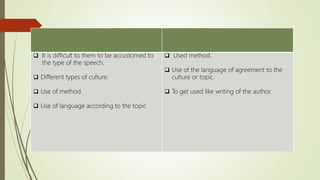
 It is difficult to them to be accustomed to
the type of the speech.
 Different types of culture.
 Use of method.
 Use of language according to the topic
 Used method.
 Use of the language of agreement to the
culture or topic.
 To get used like writing of the author.
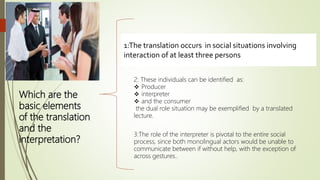
1:The translation occurs in social situations involving
interaction of at least three persons
Which are the
basic elements
of the translation
and the
interpretation?
2: These individuals can be identified as:
 Producer
 interpreter
 and the consumer
the dual role situation may be exemplified by a translated
lecture.
3:The role of the interpreter is pivotal to the entire social
process, since both monolingual actors would be unable to
communicate between if without help, with the exception of
across gestures..
roles of the interpreter and some
hypotheses abaut his behavior
the interpreter as bilingual
The interpreter owes 2
languages (mother tonge)
and a foreign language
-
First consequence linguistics to understand a language that to
speaks it with facility, of follow that a bilingual translating to
his dominant language is more successful.
The second consequence refers to the probable identification of the
interpreter with his clients, is more probable than an interpreter identify with
the speakers of the dominant language instead of clients who speak another
language.
ambiguities and conflicts of the
interpreter role
When they all speak simultaneously, the
interpreter is simply unable to translate
the whole flow of speech.
.
When the activity of translation is
carried out during a too long
period, the fatigue and the mental
tension interferes.
When a client speaks untimely with
few pauses or too much time
between(among) pauses
The interpreter commonly serves two clients at
the same time. He is “ the man in the middle”
belongs interhappened two persons or more,
with obligations to both clients and these
obligations they cannot be totally shareable
Power and the interpreter
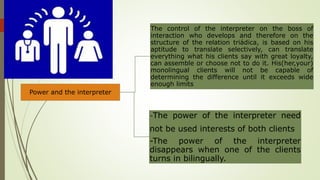
The control of the interpreter on the boss of
interaction who develops and therefore on the
structure of the relation triádica, is based on his
aptitude to translate selectively, can translate
everything what his clients say with great loyalty,
can assemble or choose not to do it. His(her,your)
monolingual clients will not be capable of
determining the difference until it exceeds wide
enough limits
-The power of the interpreter need
not be used interests of both clients
-The power of the interpreter
disappears when one of the clients
turns in bilingually.
conclusions
The function of the interpreter is to support a face-to-face
communication.
1.-the interpreter as a bilingual
2.-the interpreter as a man in the middle , subject to client
expectations that are often conflicting
3.-the interpreter as a power figure exercising power as a
result of monopolization of the means of communication

Perspectivas

  • 1.
    R. PATRICIA SANCHEZGOMEZ Profa.: Ruth Xicotencatl Torres 31- MARZO- 2017
  • 2.
    Perspectivas on therole of interpreter
  • 3.
     It isdifficult to them to be accustomed to the type of the speech.  Different types of culture.  Use of method.  Use of language according to the topic  Used method.  Use of the language of agreement to the culture or topic.  To get used like writing of the author.
  • 4.
    1:The translation occursin social situations involving interaction of at least three persons Which are the basic elements of the translation and the interpretation? 2: These individuals can be identified as:  Producer  interpreter  and the consumer the dual role situation may be exemplified by a translated lecture. 3:The role of the interpreter is pivotal to the entire social process, since both monolingual actors would be unable to communicate between if without help, with the exception of across gestures..
  • 5.
    roles of theinterpreter and some hypotheses abaut his behavior
  • 6.
    the interpreter asbilingual The interpreter owes 2 languages (mother tonge) and a foreign language - First consequence linguistics to understand a language that to speaks it with facility, of follow that a bilingual translating to his dominant language is more successful. The second consequence refers to the probable identification of the interpreter with his clients, is more probable than an interpreter identify with the speakers of the dominant language instead of clients who speak another language.
  • 7.
    ambiguities and conflictsof the interpreter role When they all speak simultaneously, the interpreter is simply unable to translate the whole flow of speech. . When the activity of translation is carried out during a too long period, the fatigue and the mental tension interferes. When a client speaks untimely with few pauses or too much time between(among) pauses The interpreter commonly serves two clients at the same time. He is “ the man in the middle” belongs interhappened two persons or more, with obligations to both clients and these obligations they cannot be totally shareable
  • 8.
    Power and theinterpreter The control of the interpreter on the boss of interaction who develops and therefore on the structure of the relation triádica, is based on his aptitude to translate selectively, can translate everything what his clients say with great loyalty, can assemble or choose not to do it. His(her,your) monolingual clients will not be capable of determining the difference until it exceeds wide enough limits -The power of the interpreter need not be used interests of both clients -The power of the interpreter disappears when one of the clients turns in bilingually.
  • 9.
    conclusions The function ofthe interpreter is to support a face-to-face communication. 1.-the interpreter as a bilingual 2.-the interpreter as a man in the middle , subject to client expectations that are often conflicting 3.-the interpreter as a power figure exercising power as a result of monopolization of the means of communication