Respiratory
Stimulants
[ANALEPTICS]
Almas J. Momin
• Definition:
 These Are Those Drugs Which Can Stimulate The
Respiration And Can Have Resuscitative Value In
Coma And Fainting.
[Resuscitative Value – Property To Restore Consciousness]
 Lungs Are Unable To Eliminate Carbon Dioxide(CO2)
Or Do Not Get Sufficient Amount Of Oxygen(O2).
 Margin of Safety Is Narrow when They Stimulate The Respiration.
 Intake Of High Dose In Coma Patient Which May Get Convulsions.
 They May Help To Stimulate Coughing Which Help To Patient For Expel
Out Secretion.
 Mechanical Support To Respiration which is more effective And Safe.
 Stimulation Of Respiratory Organ And Their Functions.
 Respiratory Stimulants Occurs With Multiple Factors Like,
Allergens,
Neurological Functions,
Hypoxia, Etc.
• Role Of Analeptics:
 Overdose With Sedative/ Hypnotic.
 Suffocation On Drowning.
 Acute Respiration Insufficiency.
 Apnea In Premature Infants.
• Classification Of Respiration:
 Drugs Directly Acting On Respiratory Centre:
1. Caffeine
2. Bemegride
3. Etimizole
Drugs Acting By Reflex Action:
1. Cytition
2. Lobeline
 Drugs Shows Mixed Type Of Action:
1. Nikethamide
2. Carbogen
• Mechanism Of Action:
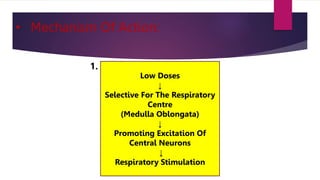
Low Doses
↓
Selective For The Respiratory
Centre
(Medulla Oblongata)
↓
Promoting Excitation Of
Central Neurons
↓
Respiratory Stimulation
1.
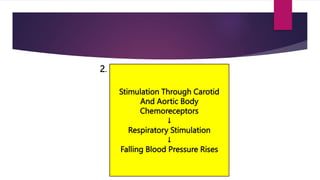
Stimulation Through Carotid
And Aortic Body
Chemoreceptors
↓
Respiratory Stimulation
↓
Falling Blood Pressure Rises
2.
• Adverse Drug Reactions:
1. Overdose ( Blood Pressure Increases)
2. Tachycardia (Heart Rate Increases)
3. Insomnia (Trouble Falling a Sleep)
4. Perspiration (Sweating)
5. Headache
6. Vomating
7. Cough
8. Convulsions
9. Hallucination
• Uses:
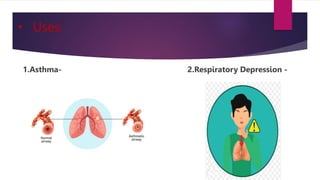
1.Asthma- 2.Respiratory Depression -
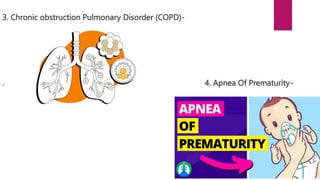
3. Chronic obstruction Pulmonary Disorder (COPD)-
. 4. Apnea Of Prematurity-
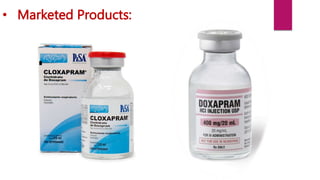
• Marketed Products:
Respiratory Stimulants. Pharmacology -3.

Respiratory Stimulants. Pharmacology -3.

  • 1.
  • 2.
    • Definition:  TheseAre Those Drugs Which Can Stimulate The Respiration And Can Have Resuscitative Value In Coma And Fainting. [Resuscitative Value – Property To Restore Consciousness]  Lungs Are Unable To Eliminate Carbon Dioxide(CO2) Or Do Not Get Sufficient Amount Of Oxygen(O2).
  • 3.
     Margin ofSafety Is Narrow when They Stimulate The Respiration.  Intake Of High Dose In Coma Patient Which May Get Convulsions.  They May Help To Stimulate Coughing Which Help To Patient For Expel Out Secretion.  Mechanical Support To Respiration which is more effective And Safe.
  • 4.
     Stimulation OfRespiratory Organ And Their Functions.  Respiratory Stimulants Occurs With Multiple Factors Like, Allergens, Neurological Functions, Hypoxia, Etc.
  • 5.
    • Role OfAnaleptics:  Overdose With Sedative/ Hypnotic.  Suffocation On Drowning.  Acute Respiration Insufficiency.  Apnea In Premature Infants.
  • 6.
    • Classification OfRespiration:  Drugs Directly Acting On Respiratory Centre: 1. Caffeine 2. Bemegride 3. Etimizole Drugs Acting By Reflex Action: 1. Cytition 2. Lobeline  Drugs Shows Mixed Type Of Action: 1. Nikethamide 2. Carbogen
  • 7.
    • Mechanism OfAction: Low Doses ↓ Selective For The Respiratory Centre (Medulla Oblongata) ↓ Promoting Excitation Of Central Neurons ↓ Respiratory Stimulation 1.
  • 8.
    Stimulation Through Carotid AndAortic Body Chemoreceptors ↓ Respiratory Stimulation ↓ Falling Blood Pressure Rises 2.
  • 9.
    • Adverse DrugReactions: 1. Overdose ( Blood Pressure Increases) 2. Tachycardia (Heart Rate Increases) 3. Insomnia (Trouble Falling a Sleep) 4. Perspiration (Sweating) 5. Headache 6. Vomating 7. Cough 8. Convulsions 9. Hallucination
  • 10.
  • 11.
    3. Chronic obstructionPulmonary Disorder (COPD)- . 4. Apnea Of Prematurity-
  • 12.