Pediatric Emergencies

pediatrics
Fever
– Common Causes
Infections
Neoplasm (cancer)
Drug ingestion
Collagen vascular disease
High environmental temperatures

pediatrics
Emergency Care for Fever
Ensure BSI
Begin passive cooling
– Remove clothing/coverings
– Damp towels

No ice
No alcohol
No cold water baths
pediatrics
Febrile Seizures
common in children 6 months to 6
years
caused by high fever
history of infection
generalized grand mal seizure
less than 15 minutes

pediatrics
Treatment
ABC’s
protect patient
recovery position
high flow oxygen
suction prn
Passive cooling measures
transport
pediatrics
Dehydration
Dry lips and gums
Fewer wet diapers
Sunken eyes
Poor skin turgor
Sleepy or irritable
Sunken fontanels

pediatrics
Care for Dehydration
Assess the ABCs
Obtain baseline vital signs
ALS backup may be needed for
IV administration

pediatrics
Airway Obstruction
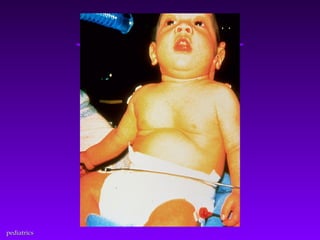
Croup
– An infection of the airway below the
level of the vocal cords, caused by a
virus

Epiglottitis
– Infection of the soft tissue in the area
above the vocal cords

Foreign body Aspiration
pediatrics
Croup
barking cough
stridor
wheezing
rales
accessory muscle use
nasal flaring
grunting
pediatrics
Epiglottitis
severe dyspnea
stridor
inability to swallow - DROOLING
fever
tripod position

pediatrics
pediatrics
pediatrics
Foreign body aspiration
Partial
Blockage
– coughing
– accessory
muscle use
– nasal flaring
– wheezing
pediatrics

Complete
Blockage
-

no sound
no cry
stridor
cyanosis
loss of
consciousness
treatment
ABC’s
high flow oxygen
position of comfort
do not attempt to visualize the throat!
do not put anything into patient’s mouth.
pediatrics
Asthma
dyspnea
wheezing
accessory muscle use
nasal flaring
respiratory rate - observe

pediatrics
Treatment
ABC’s
high flow oxygen
position of comfort
transport

pediatrics
What is the most frequent
cause of cardiac arrest in
pediatrics?

pediatrics
Respiratory arrest!

pediatrics
Meningitis
Inflammation of meninges
Bacterial or viral
Permanent brain damage/death

pediatrics
Signs and Symptoms of
Meningitis
Fever
ALOC
Headache
Seizure
Nuchal
rigidity
pediatrics

Vomiting
Photophobia
Irritability
Bulging
fontanel
Treatment
BSI (Body substance Isolation)
ABC’s
protect patient
high flow oxygen
passive cooling for fever
monitor for shock
Transport
Call ALS for backup if unstable
pediatrics
Submersion Injury
Drowning or near drowning
Second most common cause of
unintentional death
ABC’s
May be in respiratory or cardiac
arrest
C-spine precautions?

Be ready to suction
Keep warm
pediatrics
Poisoning
Poisoning is common in children
Ask specific questions of caregivers
Focus on the ABCs
Give oxygen
Provide transport
Child’s condition could change at any
time
pediatrics
Sudden Infant Death
Syndrome
SIDS - “crib death”

pediatrics
SIDS
Definition - unexplained death of
an apparently healthy infant.
7500+ cases per year in U.S.
Leading cause of death in infants
<1 year old
more cases in winter months
pediatrics
Sudden Infant Death
Syndrome (SIDS)
Several known risk factors:
–
–
–
–
–

pediatrics

Mother younger than 20 years old
Mother smoked during pregnancy
Low birth weight
Putting babies to sleep on stomach
Siblings of SIDS babies
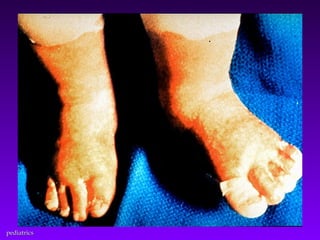
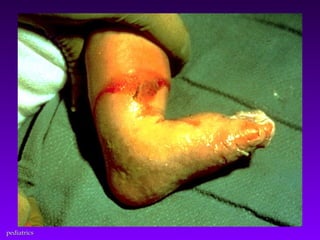
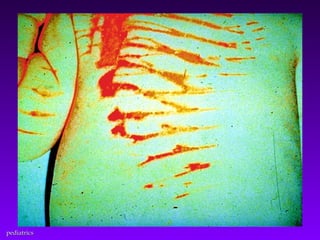
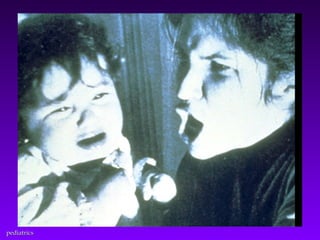
Child Abuse
Any improper or excessive action that
injures or harms a child or infant
physical, sexual, emotional abuse and
neglect
More than 2 million cases reported
annually
Be aware of signs of child abuse and
report it to authorities

pediatrics
pediatrics
pediatrics
pediatrics
pediatrics
pediatrics
pediatrics
Emergency Medical Care
ABCs
Transport if you suspect child
abuse
Do not make accusations
EMT-Bs must report all
suspected cases of child abuse

pediatrics
Sexual Abuse
Children of any age or either gender
can be victims
Limit examination
Do not allow child to wash, urinate, or
defecate
Document carefully
Transport
pediatrics
Thank you

pediatrics

Pediatric emergencies