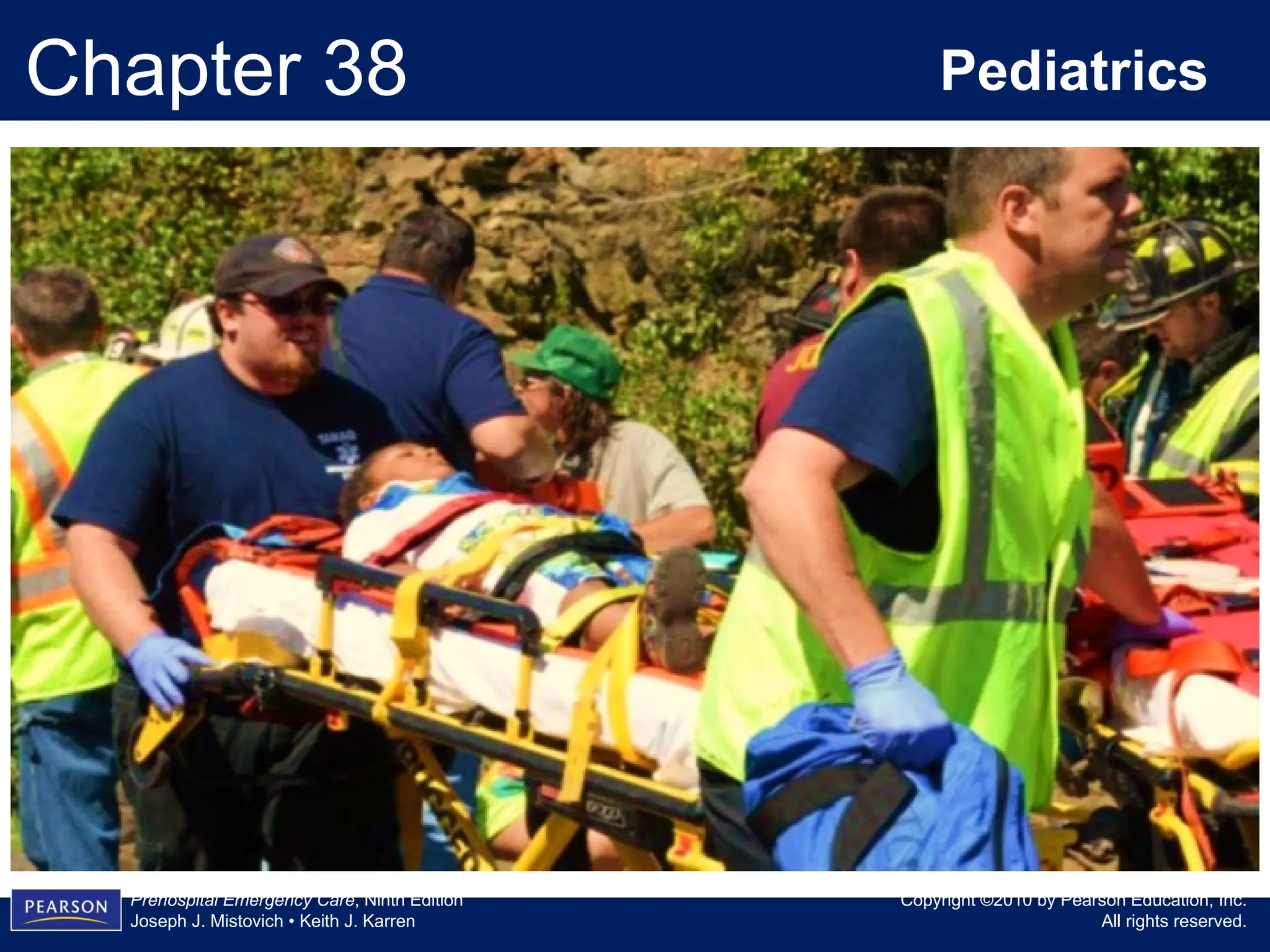
Chapter 38 Pediatrics
Copyright ยฉ2010 by Pearson Education, Inc.
All rights reserved.
Prehospital Emergency Care, Ninth Edition
Joseph J. Mistovich โ€ข Keith J. Karren
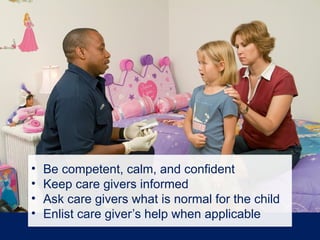
Dealing with Care
Givers
โ€ข Be competent, calm, and confident
โ€ข Keep care givers informed
โ€ข Ask care givers what is normal for the child
โ€ข Enlist care giverโ€™s help when applicable
Dealing with the Child
Developmental Characteristics
Neonates
(Newborn to One Month
of Age)
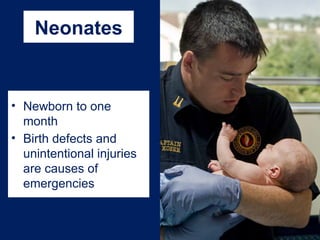
Neonates
โ€ข Newborn to one
month
โ€ข Birth defects and
unintentional injuries
are causes of
emergencies
Developmental Characteristics
Infants
(One Month to One Year
of Age)
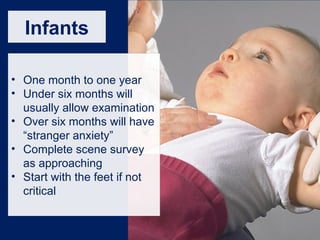
Infants
โ€ข One month to one year
โ€ข Under six months will
usually allow examination
โ€ข Over six months will have
โ€œstranger anxietyโ€
โ€ข Complete scene survey
as approaching
โ€ข Start with the feet if not
critical
Developmental Characteristics
Toddlers
(One to Three Years
of Age)
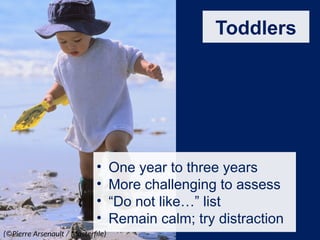
Toddlers
โ€ข One year to three years
โ€ข More challenging to assess
โ€ข โ€œDo not likeโ€ฆโ€ list
โ€ข Remain calm; try distraction
(ยฉPierre Arsenault / Masterfile)
Developmental Characteristics
Preschoolers
(Three to Six Years
of Age)
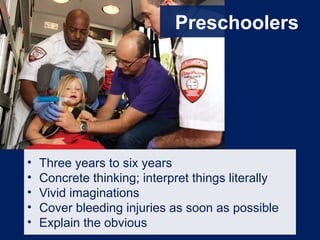
Preschoolers
โ€ข Three years to six years
โ€ข Concrete thinking; interpret things literally
โ€ข Vivid imaginations
โ€ข Cover bleeding injuries as soon as possible
โ€ข Explain the obvious
Developmental Characteristics
School Age
(Six to Twelve Years
of Age)
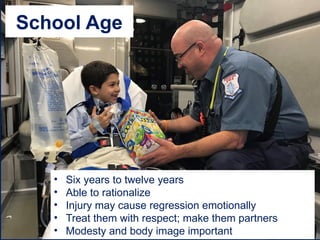
School Age
โ€ข Six years to twelve years
โ€ข Able to rationalize
โ€ข Injury may cause regression emotionally
โ€ข Treat them with respect; make them partners
โ€ข Modesty and body image important
Developmental Characteristics
Adolescents
(12 to 18 Years of Age)
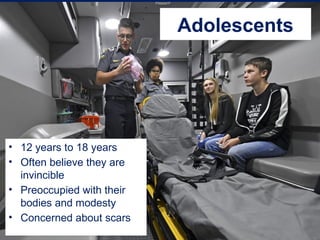
Adolescents
โ€ข 12 years to 18 years
โ€ข Often believe they are
invincible
โ€ข Preoccupied with their
bodies and modesty
โ€ข Concerned about scars
Anatomical and Physiologic
Differences
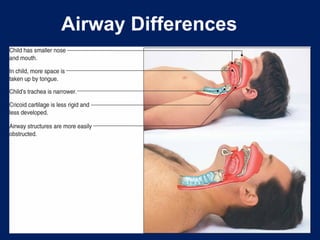
Airway Differences
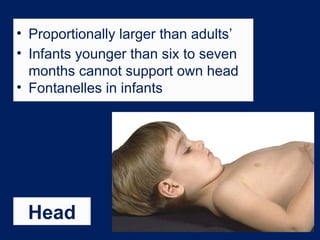
Head
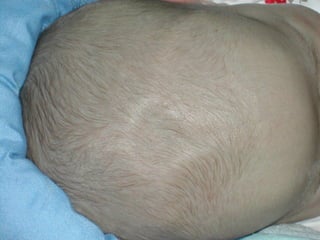
โ€ข Proportionally larger than adultsโ€™
โ€ข Infants younger than six to seven
months cannot support own head
โ€ข Fontanelles in infants
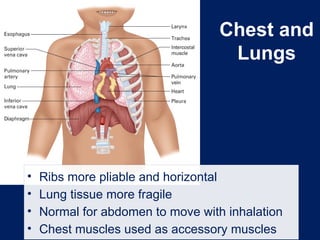
Chest and
Lungs
โ€ข Ribs more pliable and horizontal
โ€ข Lung tissue more fragile
โ€ข Normal for abdomen to move with inhalation
โ€ข Chest muscles used as accessory muscles
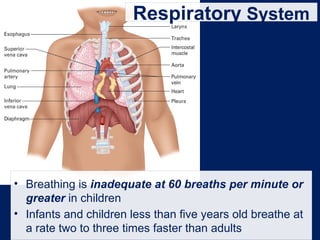
Respiratory System
โ€ข Breathing is inadequate at 60 breaths per minute or
greater in children
โ€ข Infants and children less than five years old breathe at
a rate two to three times faster than adults
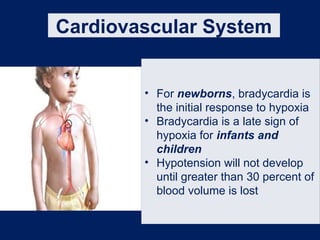
Cardiovascular System
โ€ข For newborns, bradycardia is
the initial response to hypoxia
โ€ข Bradycardia is a late sign of
hypoxia for infants and
children
โ€ข Hypotension will not develop
until greater than 30 percent of
blood volume is lost
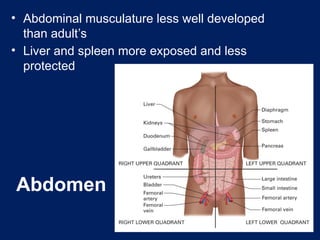
โ€ข Abdominal musculature less well developed
than adultโ€™s
โ€ข Liver and spleen more exposed and less
protected
Abdomen
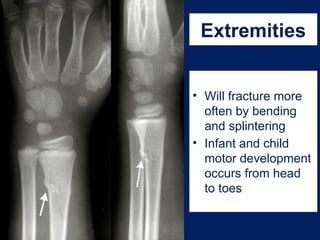
Extremities
โ€ข Will fracture more
often by bending
and splintering
โ€ข Infant and child
motor development
occurs from head
to toes
Metabolic Rate
โ€ข Infants and children
have a much faster
metabolic rate, even at
rest
โ€ข Pediatric patients are at
significant risk for acute
hypoglycemia
Skin and Body
Surface Area
โ€ข Childโ€™s skin surface is
large compared to his
body mass
โ€ข Skin is thinner and
much more delicate
than in adults
Assessment-Based
Approach to Pediatric
Emergencies
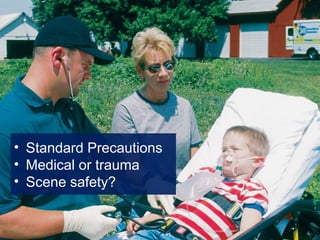
Scene Size-Up
โ€ข Standard Precautions
โ€ข Medical or trauma
โ€ข Scene safety?
Primary Assessment
Pediatric Assessment
Triangle โ€œPATโ€
(forming a general
impression)
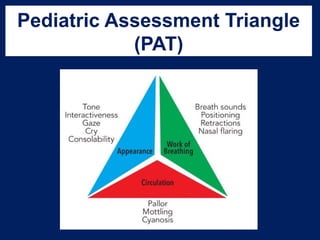
Pediatric Assessment Triangle
(PAT)
Primary Assessment
Assessing the Level of
Consciousness (AVPU)
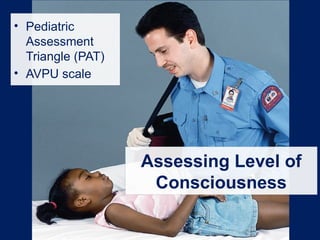
Assessing Level of
Consciousness
โ€ข Pediatric
Assessment
Triangle (PAT)
โ€ข AVPU scale
Primary Assessment
Airway Assessment
Airway
Assessment
โ€ข Number one cause of death is hypoxia
โ€ข Remember anatomical and physiologic differences
Primary Assessment
Breathing Assessment
Breathing
Assessment
โ€ข Count respirations for 30 to
60 seconds
โ€ข Consider any cessation of
breathing longer than 10
seconds abnormal
โ€ข Rapid breathing
โ€ข Noisy breathing
โ€ข Diminished breathing
Primary Assessment
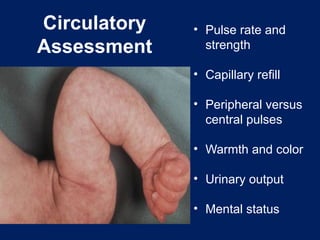
Circulatory Assessment
Circulatory
Assessment
โ€ข Pulse rate and
strength
โ€ข Capillary refill
โ€ข Peripheral versus
central pulses
โ€ข Warmth and color
โ€ข Urinary output
โ€ข Mental status
Primary Assessment
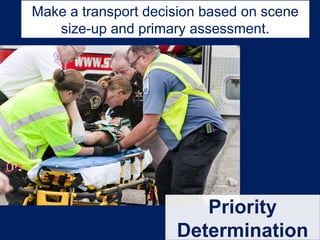
Priority Determination
Make a transport decision based on scene
size-up and primary assessment.
Priority
Determination
Secondary Assessment
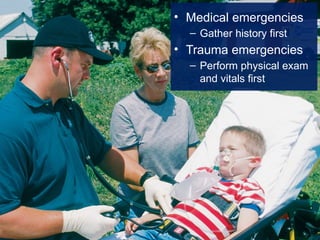
โ€ข Medical emergencies
โ€“ Gather history first
โ€ข Trauma emergencies
โ€“ Perform physical exam
and vitals first
Special Considerations for the
Physical Exam
Pediatric Glasgow Coma Score
Assessing Lung Sounds
Pulse Oximtery
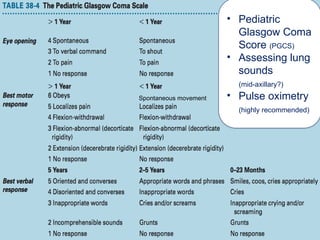
โ€ข Pediatric
Glasgow Coma
Score (PGCS)
โ€ข Assessing lung
sounds
(mid-axillary?)
โ€ข Pulse oximetry
(highly recommended)
Spontaneous movement
Special Considerations for the
Physical Exam
Other Physical Exam
Considerations
Other Physical Exam
Considerations
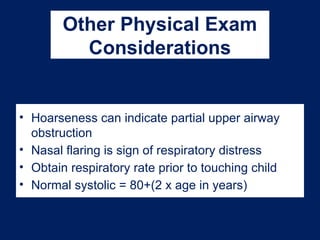
โ€ข Hoarseness can indicate partial upper airway
obstruction
โ€ข Nasal flaring is sign of respiratory distress
โ€ข Obtain respiratory rate prior to touching child
โ€ข Normal systolic = 80+(2 x age in years)
Special Considerations for
Assessing the Vital Signs
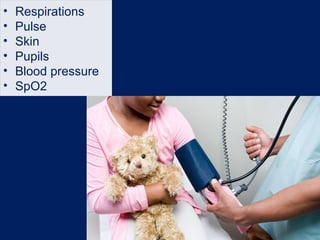
โ€ข Respirations
โ€ข Pulse
โ€ข Skin
โ€ข Pupils
โ€ข Blood pressure
โ€ข SpO2
Special Considerations for
Taking a History
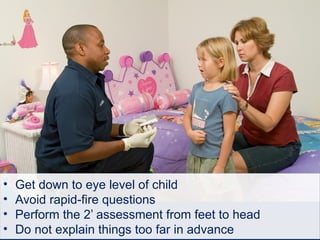
โ€ข Get down to eye level of child
โ€ข Avoid rapid-fire questions
โ€ข Perform the 2โ€™ assessment from feet to head
โ€ข Do not explain things too far in advance
Reassessment
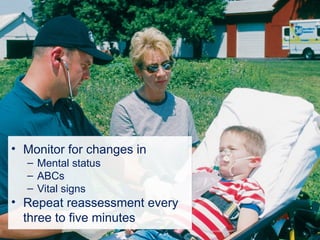
โ€ข Monitor for changes in
โ€“ Mental status
โ€“ ABCs
โ€“ Vital signs
โ€ข Repeat reassessment every
three to five minutes
Airway and
Respiratory Problems
in Pediatric Patients
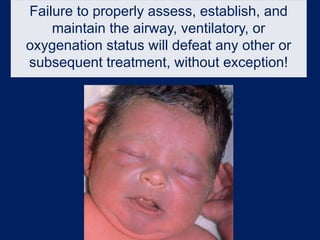
Failure to properly assess, establish, and
maintain the airway, ventilatory, or
oxygenation status will defeat any other or
subsequent treatment, without exception!
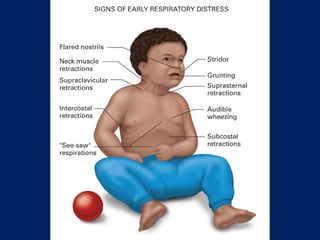
Early Respiratory Distress
(compensated resp distress)
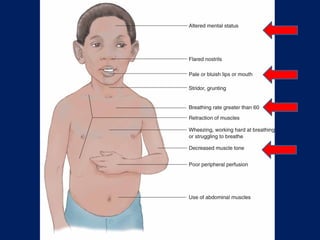
Decompensated Respiratory
Failure
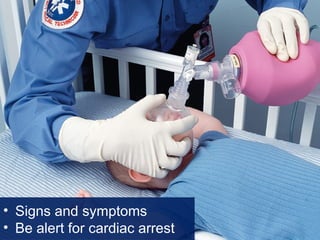
Respiratory Arrest
โ€ข Signs and symptoms
โ€ข Be alert for cardiac arrest
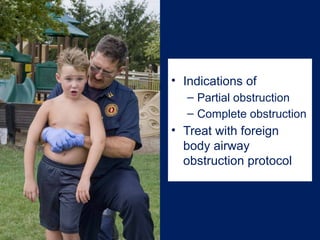
Airway Obstruction
โ€ข Indications of
โ€“ Partial obstruction
โ€“ Complete obstruction
โ€ข Treat with foreign
body airway
obstruction protocol
Signs and Symptoms
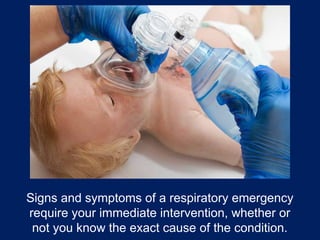
Signs and symptoms of a respiratory emergency
require your immediate intervention, whether or
not you know the exact cause of the condition.
Emergency Medical Care
Respiratory Emergencies
โ€ข Establish and maintain a patent airway
โ€ข Suction fluid from airway
โ€ข Assist ventilation; use OPA or NPA
โ€ข Initiate positive pressure ventilation
โ€ข Maintain O2 therapy
โ€ข Position patient for transport
โ€ข Transport and REASSESS
General Guidelines
Emergency Medical Careโ€”
Foreign Body Airway
Obstruction
Infant or Child with a
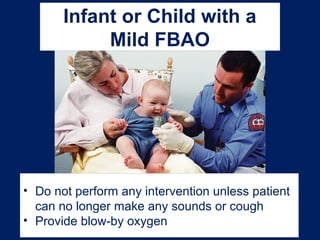
Mild FBAO
โ€ข Do not perform any intervention unless patient
can no longer make any sounds or cough
โ€ข Provide blow-by oxygen
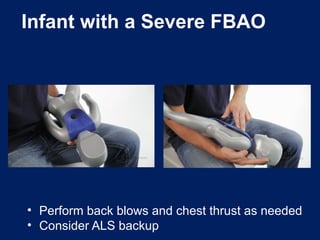
Infant with a Severe FBAO
โ€ข Perform back blows and chest thrust as needed
โ€ข Consider ALS backup
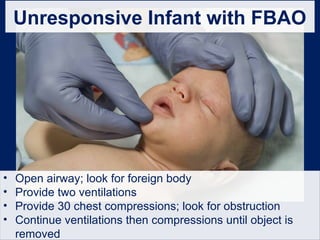
Unresponsive Infant with FBAO
โ€ข Open airway; look for foreign body
โ€ข Provide two ventilations
โ€ข Provide 30 chest compressions; look for obstruction
โ€ข Continue ventilations then compressions until object is
removed
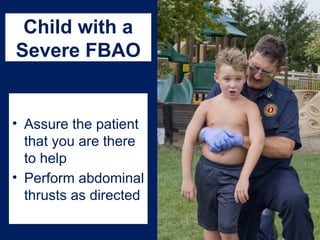
Child with a
Severe FBAO
โ€ข Assure the patient
that you are there
to help
โ€ข Perform abdominal
thrusts as directed
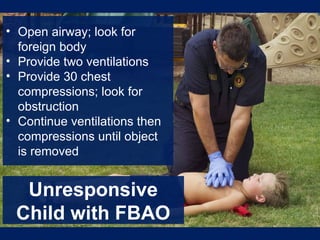
Unresponsive
Child with FBAO
โ€ข Open airway; look for
foreign body
โ€ข Provide two ventilations
โ€ข Provide 30 chest
compressions; look for
obstruction
โ€ข Continue ventilations then
compressions until object
is removed
Specific Pediatric
Respiratory and
Cardiopulmonary
Conditions
Croup
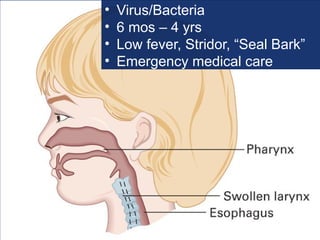
โ€ข Virus/Bacteria
โ€ข 6 mos โ€“ 4 yrs
โ€ข Low fever, Stridor, โ€œSeal Barkโ€
โ€ข Emergency medical care
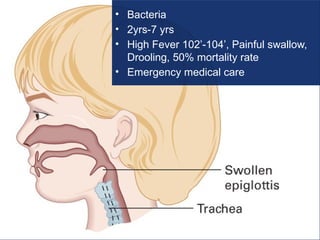
Epiglottitis
โ€ข Bacteria
โ€ข 2yrs-7 yrs
โ€ข High Fever 102โ€™-104โ€™, Painful swallow,
Drooling, 50% mortality rate
โ€ข Emergency medical care
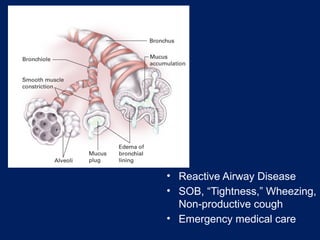
Asthma
โ€ข Reactive Airway Disease
โ€ข SOB, โ€œTightness,โ€ Wheezing,
Non-productive cough
โ€ข Emergency medical care
Bronchiolitis
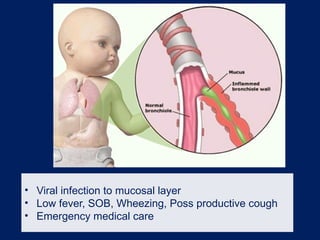
โ€ข Viral infection to mucosal layer
โ€ข Low fever, SOB, Wheezing, Poss productive cough
โ€ข Emergency medical care
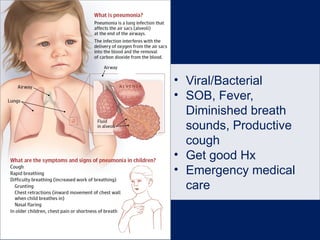
Pneumonia
โ€ข Viral/Bacterial
โ€ข SOB, Fever,
Diminished breath
sounds, Productive
cough
โ€ข Get good Hx
โ€ข Emergency medical
care
Congenital Heart Disease
(CHD)
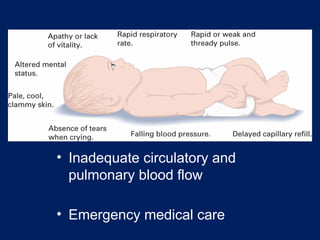
โ€ข Inadequate circulatory and
pulmonary blood flow
โ€ข Emergency medical care
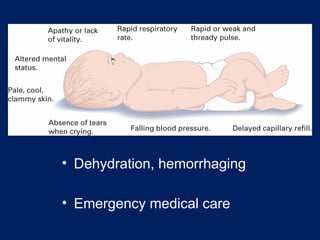
Shock
โ€ข Dehydration, hemorrhaging
โ€ข Emergency medical care
Cardiac Arrest
Cardiac Arrest
CAUSE IN PEDS?
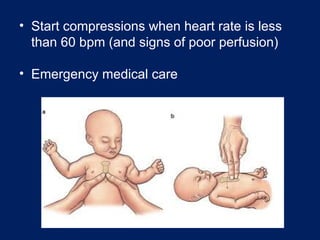
โ€ข Start compressions when heart rate is less
than 60 bpm (and signs of poor perfusion)
โ€ข Emergency medical care
Other Pediatric
Medical Conditions
and Emergencies
Seizures
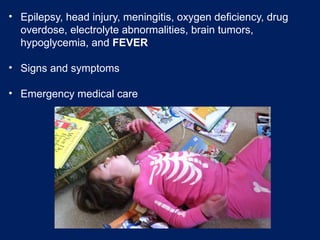
โ€ข Epilepsy, head injury, meningitis, oxygen deficiency, drug
overdose, electrolyte abnormalities, brain tumors,
hypoglycemia, and FEVER
โ€ข Signs and symptoms
โ€ข Emergency medical care
Altered Mental Status
โ€ข Causes?
โ€ข Assessment considerations
โ€ข Emergency medical care
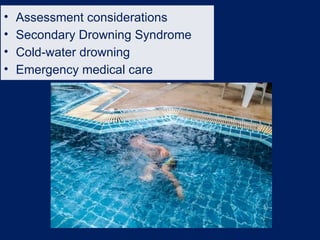
Drowning
โ€ข Assessment considerations
โ€ข Secondary Drowning Syndrome
โ€ข Cold-water drowning
โ€ข Emergency medical care
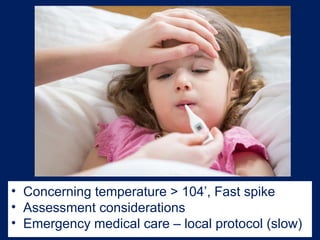
Fever
โ€ข Concerning temperature > 104โ€™, Fast spike
โ€ข Assessment considerations
โ€ข Emergency medical care โ€“ local protocol (slow)
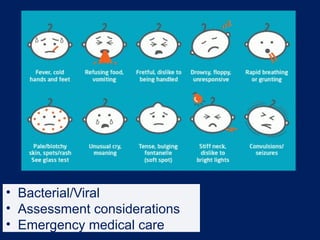
Meningitis
โ€ข Bacterial/Viral
โ€ข Assessment considerations
โ€ข Emergency medical care
Gastrointestinal Disorders
โ€ข Definition
โ€ข Types
โ€ข Assessment
considerations
โ€ข Emergency medical
care
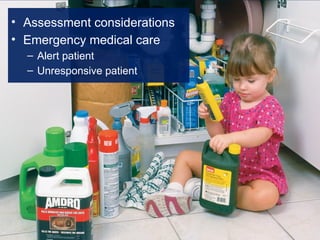
Poisoning
โ€ข Assessment considerations
โ€ข Emergency medical care
โ€“ Alert patient
โ€“ Unresponsive patient
Apparent Life-Threatening
Events (ALTE)
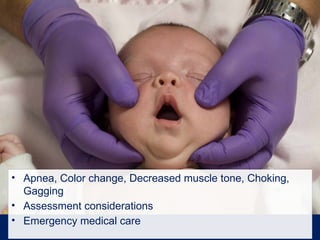
โ€ข Apnea, Color change, Decreased muscle tone, Choking,
Gagging
โ€ข Assessment considerations
โ€ข Emergency medical care
(Sudden Unexpected Infant Death Syndrome - SUIDS)
Assessment Considerations
Emergency Medical Care
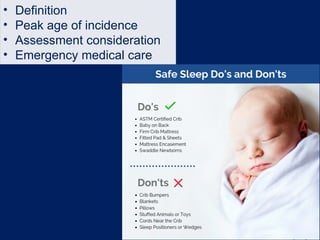
Sudden Infant Death Syndrome
โ€ข Definition
โ€ข Peak age of incidence
โ€ข Assessment consideration
โ€ข Emergency medical care
Sudden Infant Death Syndrome
Aiding Families in SIDS
Emergencies
Presence of Parents During
Pediatric Emergencies
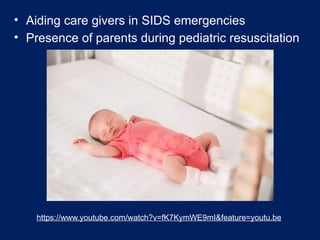
โ€ข Aiding care givers in SIDS emergencies
โ€ข Presence of parents during pediatric resuscitation
https://www.youtube.com/watch?v=fK7KymWE9mI&feature=youtu.be
Pediatric Trauma
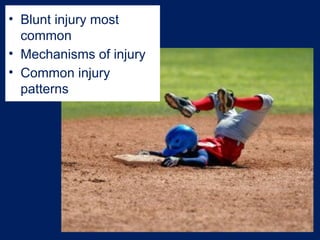
โ€ข Blunt injury most
common
โ€ข Mechanisms of injury
โ€ข Common injury
patterns
Trauma and the Pediatric Anatomy
Assessment
Considerations
Assessment
Considerations
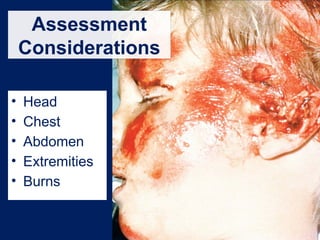
โ€ข Head
โ€ข Chest
โ€ข Abdomen
โ€ข Extremities
โ€ข Burns
Trauma and the Pediatric Anatomy
Emergency Medical Careโ€”
Pediatric Trauma
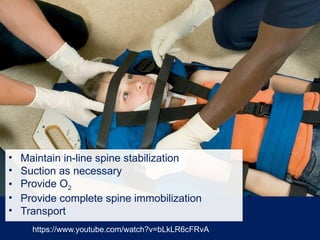
โ€ข Maintain in-line spine stabilization
โ€ข Suction as necessary
โ€ข Provide O2
โ€ข Provide complete spine immobilization
โ€ข Transport
https://www.youtube.com/watch?v=bLkLR6cFRvA
Infant and Child Car Seats
in Trauma
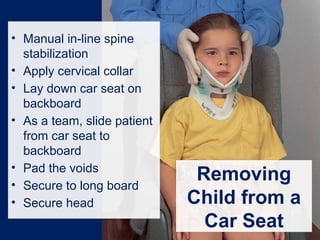
Removing
Child from a
Car Seat
โ€ข Manual in-line spine
stabilization
โ€ข Apply cervical collar
โ€ข Lay down car seat on
backboard
โ€ข As a team, slide patient
from car seat to
backboard
โ€ข Pad the voids
โ€ข Secure to long board
โ€ข Secure head
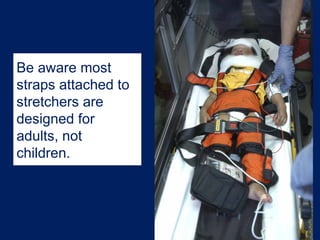
Four-Point Immobilization of
an Infant or Child
Be aware most
straps attached to
stretchers are
designed for
adults, not
children.
Injury Prevention
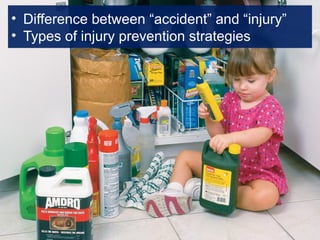
โ€ข Difference between โ€œaccidentโ€ and โ€œinjuryโ€
โ€ข Types of injury prevention strategies
Child Abuse and
Neglect
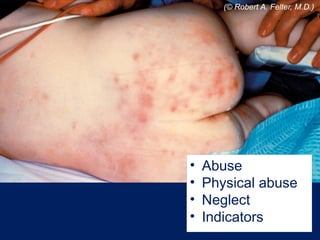
โ€ข Abuse
โ€ข Physical abuse
โ€ข Neglect
โ€ข Indicators
(ยฉ Robert A. Felter, M.D.)
Child Abuse And Neglect
Emergency Medical Care
Guidelines for Child
Abuse
Emergency Medical Care
โ€ข Gaining entry
โ€ข Dealing with the child
โ€ข Examining the child
โ€ข Dealing with the care givers
โ€ข Transporting the child
โ€ข Providing documentation
Special Care
Considerations
Emergency Medical Services
for Children (EMSC)
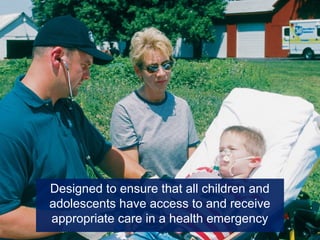
Designed to ensure that all children and
adolescents have access to and receive
appropriate care in a health emergency
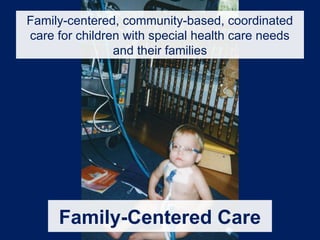
Family-Centered Care
Family-centered, community-based, coordinated
care for children with special health care needs
and their families
Taking Care of Yourself
โ€ข Sources of anxiety
โ€ข Alleviating stress

Chapter 38 Pediatrics patients for EMT students

Editor's Notes

  • #1ย Advance Preparation Review local protocols on the management and transportation of pediatric patients. Bring all needed equipment for students to practice realistic pediatric emergency scenarios. Research local or state EMS for children-funded projects to discuss in class. Prepare a set of index cards, each listing a separate cardiopulmonary problem in the text. (See slide 99.) Arrange for assistant instructors to help supervise students in lab scenarios. A ratio of one instructor for every four students is recommended. Consult with your medical director for suggestions on speakers qualified to speak on pediatric topics such as abuse and neglect or SIDS.
  • #2ย Teaching Time 15 minutes Points to Emphasize Be confident, caring, and competent. Care givers may experience feelings of guilt, anger, concern, and apprehension that must be acknowledged. Use your best judgment in selecting the vocabulary with which you communicate with the care givers. Teaching Tip Solicit student volunteers, if they are willing, to discuss their feelings when their child has been sick or injured. Or, if appropriate, share your experiences. Discussion Questions What are likely reactions of the care givers of sick or injured children? What do the care givers of sick or injured children need from the EMTs caring for their children?
  • #3ย Talking Points Parents and care givers of children need to see us competent, calm, and confident. Avoid displaying doubt or indecision. Keep them informed about what you are doing and about the condition of the child. Keep your language jargon free, do not lie to the care giver, and never give false assurances by saying, โ€œEverything will be okay.โ€ Listen to what care givers say; they know the child best. Ask them how their child normally acts and whether particular characteristics uncovered during the assessment are normal for the child. If possible, enlist their help in treating their child by allowing them to hold the child, when appropriate, or assist in administering oxygen. Critical Thinking Discussion Why might care givers feel guilty when a child is sick or injured? Knowledge Application Students should be able to apply the principles of interacting with care givers to their care of sick and injured pediatric patients.
  • #4ย Teaching Time 50 minutes
  • #6ย Talking Points A neonate ranges in age from zero (newborn) to one month. Newborn babies are totally dependent on others for their survival. While neonates are a subgroup of infants, recognize that the first four weeks of life are a very different time as far as growth and development are concerned. Birth defects (or congenital anomalies) and unintentional injuries are common causes of emergencies in this age group.
  • #7ย Points to Emphasize Infants over six months old typically become distressed and cry when separated from their care giver. If possible, allow the care giver to hold the child while you assess him.
  • #8ย Talking Points Infants are one month to one year in age. Up to 6 months, babies will usually let you undress them, lay them on a warm, flat surface, and touch them with warm hands and equipment (stethoscope, splints, and so on). Infants can recognize their caregiverโ€™s face and voice and are emotionally tied to that person. Older infants (older than six months) will be distressed and almost always cry if separated from their care giver, a response commonly referred to as โ€œstranger anxiety.โ€ Complete your scene size-up and primary assessment as thoroughly as possible while you view the infant from across the room. Then, if possible, allow a familiar person to hold the baby while you complete your examination unless the infant is critically injured or ill. Your assessment should start with the feet or the trunk and end with the head if the infant is not critically ill or injured. Initial stimulation around the highly sensitive area of the face will frighten infants and small children and may precipitate extreme anxiety and crying.
  • #9ย Point to Emphasize Toddlers present many challenges to assessment and management because they do not like to be touched, separated from care givers, have their clothing removed, or have an oxygen mask on the face.
  • #10ย Talking Points Toddlers will be more challenging to assess. They have numerous โ€œdo not like . . .โ€ considerations that will challenge your skills. They often donโ€™t like: โ€“ To be touched, so limit your touch to necessary assessment and management needs. โ€“ To be separated from their care giver, so keep the care giver present and in view of the toddler at all times. โ€“ Having their clothing removed, so only remove clothing as necessary, examine, and replace the clothing. Enlist the help of care givers. โ€“ Having an oxygen mask over their face. To them it is frightening and noisy, and they will resist it. โ€“ Needles. They fear pain and may actually believe that the injury or illness they have is a punishment. An injured or crying toddler may apologize for being hurt. Remain calm, speak soothingly, and try to distract the child with a favorite toy or somehow engage his interest.
  • #11ย Discussion Questions What is the best way to approach assessment in a preschool-age child? How is the concrete thinking of children different from the more abstract thinking of adults? What are the implications for communicating with children?
  • #12ย Talking Points Children in this age group have concrete thinking and interpret literally what they hear. They have vivid imaginations and are able to dramatize events. They still believe that an illness or injury is their own fault and will view it as punishment. They are modest, resisting your attempt to unclothe them for assessment. Allow the child to see your equipment in full view before you use it, if possible, and let the child touch the stethoscope or other equipment. Put it first on the childโ€™s leg or the care giverโ€™s hand so that the preschooler can see it is not threatening. If you use a stethoscope with a rubber ring on the diaphragm, it will not be as cold. Children these ages are aware of death and are afraid of pain, blood, and permanent injuries. They also fear loss of body integrity. Be tactful and direct in dealing with physical fears. Cover bleeding injuries as soon as possible. Explain the obvious: โ€œYour arm is hurt, but it can be fixed. Weโ€™ll take you to the hospital where they can help fix you.โ€
  • #13ย Point to Emphasize Children six years and older are typically cooperative, and honesty and respect are important to them.
  • #14ย Talking Points Usually children from age six on are more cooperative, even curious. They are able to rationalize. This age group can be the easiest to manage because most school-age children have an understanding of what EMS is about. They understand that you are there to help them. Keep in mind that an illness or injury may cause children to regress emotionally. A six-year-old may throw a temper tantrum like a two-year-old after an injury. On the other hand, the child may act exceptionally mature. Maturity levels are highly individualized and variable at this age. Honesty is very important with school-age children. Treat them with respect and try to make them partners in their care. Information is reassuring to them and may need to be repeated until they understand, so explain each procedure in detail using appropriate language. Concerns about death and disability emerge at this age. Children this age and even younger know that they need to take care of what they are wearing and sometimes get very anxious if you cut their clothes. Modesty and body image also are issues at this age.
  • #15ย Point to Emphasize Establish trust with adolescent patients. Acknowledge their friends, if present. Discussion Question What are the concerns of adolescents regarding illness and injury?
  • #16ย Talking Points Adolescents use concrete thinking but are developing their abstract thinking skills. Children in this age group also generally believe that nothing bad can happen to them, or in other words, that they are invincible. Hence, they may take risks that lead to trauma. However, if injured or ill, they still fear the possibility of disability and disfigurement. Some experts suggest using a relaxed, rather than a professional, approach when performing a history and secondary assessmentโ€”especially if the situation involves conflict with an authority figure such as a teacher, police officer, or care giver. If critically ill or injured, use a rapid and systematic approach to assessment and emergency care. Asking the adolescent the same questions when he is alone with you may generate very different answers than when he is with an authority figure. Smile, speak softly, and speak slowly. Adolescents are preoccupied with their bodies and extremely concerned about modesty. An injury intensifies this preoccupation. They may ask about their greatest fearsโ€”for example, whether a facial cut will leave a scar or whether a broken leg signals the end of their basketball career.
  • #17ย Points to Emphasize The pediatric trachea is small and pliable and may be easily obstructed or collapsed. A respiratory rate greater than 60 does not allow for adequate breathing. Children have smaller blood volumes and may not become hypotensive until 30 percent of the volume is lost. Children use oxygen and glucose at a rate two to three times faster than adults. Pediatric patients are prone to developing hypoglycemia and hypothermia. Teaching Tip Draw a grid on the board to compare and contrast the characteristics of adults and children.
  • #18ย Talking Points Infants have proportionally larger tongues than adults as compared to the size of the mouth. The larger tongue leaves little room for airway swelling. The diameter of a newbornโ€™s trachea is only about four to five mm, about one-third the diameter of a dime or the size of a straw, compared to the 20 mm diameter of the adult trachea. Injury or inflammation to the trachea can cause life-threatening airway swelling not only faster but with less exposure. The pediatric trachea is more pliable leading to complete or partial occlusion of the airway when the neck is hyperextended or hyperflexed. Newborns and infants are obligate nose breathers. That is, they prefer to breathe through their nose and not their mouth. They do not automatically open their mouth when secretions, blood, or other substances obstruct their nose. If the nares are obstructed or inflamed because of infection, the newborn or infant can easily develop respiratory distress. The epiglottis is much higher in the airway than in an adult. This may lead to a higher incidence of aspiration, especially when the neck is hyperextended.
  • #19ย Talking Points Childrenโ€™s heads are proportionally larger than adultsโ€™ heads. This predisposes them to head injuries when involved in falls, auto accidents, and other types of trauma. The large occiput (back) of the childโ€™s head causes the neck to flex forward if the child is supine on a flat surface. Infants younger than six to seven months old typically cannot fully support their own heads. Always support an infantโ€™s head when you pick him up. Be careful when handling an infant not to press on or poke into the fontanelle. Typically, the anterior fontanelle closes between 12 and 18 months of age, and the posterior fontanelle closes by two months of age. Discussion Question What are some characteristics of the pediatric head that must be considered in assessment and management?
  • #21ย Talking Points The childโ€™s ribs are much more pliable than the adultโ€™s. This means that the rib cage cannot protect the internal organs as effectively. The childโ€™s ribs are more horizontal than they are rounded. This prevents the degree of lift that is necessary for an attempt to increase the volume of air within the chest. Thus, the child must rely much more on the diaphragm to compensate for changes in demands on breathing. Lung tissue is much more fragile, which may lead to a higher incidence of pulmonary contusion with blunt trauma to the chest. The chest moves minimally with respiration in the healthy child because of the immaturity of the ribs and flexibility of the rib cage. The abdomen rises with inhalation and falls with exhalation. The chest muscles are underdeveloped and used more as accessory muscles in infants and young children. This leads to early retractions in respiratory distress.
  • #22ย Talking Points In children breathing is inadequate once the respiratory rate reaches 60 breaths per minute or greater. If the respiratory rate begins to decrease, it may be an indication of respiratory failure. Infants may have episodes of apnea in response to stress. Parents may report that their infant stopped breathing for a short period of time and turned blue. This is a very concerning sign and should prompt a rapid transport. Infants and children less than five years of age breathe at a rate two to three times faster than the adult patient. The breaths are also shallower than in the adult since less volume and pressure are required to ventilate the lungs. The muscles of the diaphragm in the infant are prone to fatigue. Since this is the primary muscle of respiration, working to breathe is very costly. The oxygen consumed by the infant who is working to breathe may not be there to supply other organ function. Typically this infant is too lethargic or tired to respond appropriately. This lack of โ€œattitudeโ€ or normal behavior signifies a very ill infant who needs advanced care immediately. Discussion Question Why do infants and children fatigue so easily when they are in respiratory distress?
  • #23ย Talking Points Heart rate typically increases in response to fear, fever, anxiety, hypoxia, activity, and hypovolemia. In infants and children, bradycardia is a late response to hypoxia. In newborns, bradycardia is the initial response to hypoxia. Infants and children have a smaller circulating blood volume than adults because of their smaller size. This means you must stop any bleeding as quickly as possible since what is a comparatively small blood loss in an adult is a major hemorrhage for a child. Hypotension does not usually develop in infants and children until greater than 30 percent of the blood volume has been lost. The onset of the hypotension is sudden once the compensation falls.
  • #24ย Talking Points The childโ€™s abdominal musculature is less well developed than the adultโ€™s, increasing the likelihood of internal organ damage with blunt trauma to the abdomen. Until the child reaches puberty, the liver and spleen are more exposed and less protected by the ribs in the abdominal cavity. This offers less protection to the organs against injury.
  • #25ย Talking Points The bones of the extremities in a child will fracture more often by bending and splintering (referred to as a Greenstick fracture). The infant and young childโ€™s motor development occurs from the head to the toes. The head is one of the first things the infant can control. The lack of coordination leads to frequent injury from falls. Discussion Question What are some consequences of the undeveloped pediatric skeleton?
  • #26ย Talking Points Infants and children have a much faster metabolic rate, even at rest. Cells in their body use oxygen and glucose from the bloodstream two to three times faster than in adults, and any period of apnea, hypoventilation, or poor oxygenation is extremely dangerous. Central nervous system damage can occur more quickly with more serious injuries, affecting respiratory function and resulting in poor ventilation and/or oxygenation. Pediatric patients may be at a significant risk for the development of acute hypoglycemia because of any of the following: โ€“ Poor glucose stores โ€“ Inability to stimulate the release of glucose stores from an immature liver โ€“ Increased metabolic rate, resulting in the utilization of large quantities of glucose โ€“ Known history of diabetes
  • #27ย Talking Points A childโ€™s skin surface is large compared to his body mass, making children more susceptible to hypothermia in cold environments. You should take great care in protecting the young patient from extremes in the environment. The skin is thinner and much more delicate than in an adult. Much less subcutaneous tissue is present. Less subcutaneous tissue along with a poorly developed hypothalamus leads to temperature regulation problems and hypothermia in newborns. The lack of subcutaneous tissue leads to a higher incidence of hypothermia in infants and young children. Knowledge Application Students should be able to apply the knowledge in this section to scenarios involving assessment and management of pediatric patients.
  • #28ย Teaching Time 75 minutes
  • #29ย Point to Emphasize Donโ€™t assume the scene is safe because it involves a child.
  • #30ย Talking Points The first component of the assessment process is the scene size-up. As with the adult patient, take the necessary Standard Precautions prior to assessment. The scene size-up can provide many clues to the nature of the emergency, the initial status of the infant or child, and obstacles that may hamper extrication to the ambulance. Determine if the pediatric patient is a medical or trauma patient, if there is only one patient, and if any additional resources are needed at the scene. Determine if the scene is safe for you to enter. Sometimes the EMT may believe that because the call involves a child, no threat to EMS providers is present (as compared to a bar fight, auto accident, or unknown medical emergency). Never get a false sense of security that the scene is safe. The child may be a victim of violence that is ongoing or can erupt again; adults at the scene may be prone to hysterical or violent responses because of the stress of the emergency; or the child may have fallen victim to a poison or hazardous substance that can also affect EMS workers and others at the scene. Keep in mind that scene safety is a dynamic condition that must be constantly considered while you are at the scene.
  • #31ย Points to Emphasize Because pediatric patients can deteriorate so quickly, immediately identify and manage problems with the airway, breathing, and circulation. Use the Pediatric Assessment Triangle to form a general impression of the patient. The Pediatric Assessment Triangle consists of overall appearance, work of breathing, and circulation to the skin. Discussion Question Describe the Pediatric Assessment Triangle.
  • #32ย Talking Points Use the PAT to form a general impression as to whether this is a โ€œwellโ€ versus a โ€œsickโ€ child. Observe the overall appearance, work of breathing, and circulation to skin. Specifically, does the patient: โ€“ Display normal behavior for his age (as discussed earlier)? โ€“ Move about spontaneously? Or seem lethargic? โ€“ Appear attentive and recognize the parents or care givers? โ€“ Maintain any eye contact (appropriate for the patientโ€™s age)? โ€“ Seem easily consoled by the parents or care giver? Or seem inconsolable? โ€“ Respond to parent or care giver calling him? Or respond inappropriately? Or not respond at all? A โ€œwellโ€ baby will be interactive with both the care giver and the environment, be actively moving, have good color, and have a good, strong cry. Although noisy and upsetting at times, a crying baby is (at least) a breathing baby. A โ€œsickโ€ baby at first sight will be limp or flaccid, have a weak or absent cry, not interact with the environment or parents, possibly have poor skin color, and will not seem to notice your approach.
  • #34ย Talking Points Following the general impression using the Pediatric Assessment Triangle (PAT), you must assess the childโ€™s level of consciousness. The simplest method for determining the level of consciousness in a pediatric patient is the AVPU scale. It is a variation of the adult AVPU scale.
  • #36ย Talking Points The number one cause of death in children is hypoxia. One cause of hypoxia is an obstructed airway. When opening and assessing the airway, keep the pediatric anatomical and physiologic differences in mind.
  • #37ย Points to Emphasize An infantโ€™s respiratory rate should be assessed for 30 to 60 seconds. A child who stops wheezing without treatment may have stopped moving air in and out of the lungs.
  • #38ย Talking Points In adults, we count respiratory rates for 15 seconds and multiply by four. However, variability of respiration in infants may not produce an accurate rate when observed for only 15 seconds. Therefore, assess respiratory rates for a minimum of 30 seconds but ideally for 60 seconds. Note that the normal variable rate of respiration in infants may include cessation in breathing for up to a maximum of 20 seconds. However, any cessation in breathing of greater than ten seconds should be considered abnormal and requires intervention. Rapid breathing: The key to recognizing rapid breathing is to be familiar with normal ranges of respirations (25โ€“30 per minute in an infant; 15โ€“30 per minute in a child) and to repeat assessment of respiratory rate frequently, each time counting the rate over a complete minute. Noisy breathing: Coughing, gagging, gasping, crackles, wheezing, and stridor are all sounds associated with underlying respiratory problems. Diminished breathing: When something (blood, fluid, or air) prevents the lungs from inflating, youโ€™ll notice a loss of breath sounds. The causes of diminished breathing can include obstruction, medical problems, or injuries.
  • #39ย Talking Points Like pediatric respiratory rates, pediatric heart rates are variable. In small children, obtain peripheral pulses at the brachial artery (inside of the bicep). In the older child, check the radial pulse. Obtain central pulses at either the femoral or carotid arteries. If no pulses can be palpated, consider auscultating the heart with a stethoscope. If you can hear a heartbeat, the child likely has a pulse, but the presence of a pulse does not mean that there is adequate perfusion. Points to Emphasize Check the pulse of a small child at the brachial artery along the medial arm. Capillary refill time is a good indicator of circulation in children. Discussion Question How is the assessment of circulation different in pediatric patients than in adults?
  • #40ย Talking Points Pulse rate and strength: Infants and children maintain cardiac output by adjusting the heart rate. While tachycardia has many causes in the child (e.g., fever, pain, hypoxia, anxiety), do not exclude a compensated shock state and assume the potential for decompensation when tachycardia is present. Capillary refill time is typically quite an accurate measurement in children and is considered to be reliable in most cases. Assess capillary refill time closer to the core in areas like the kneecap or forearm. Strength of peripheral versus central pulses: Weak or absent peripheral pulses typically indicate poor perfusion status, a decrease in cardiac output, and shock. Assess warmth and color of the hands and feet. Urinary output is a sign of the adequacy of kidney perfusion. Ask if there have been more or fewer diaper changes than normal. Mental status: Poor mental status may indicate poor cerebral perfusion and may be another indication of shock.
  • #42ย Talking Points From the information gathered thus far, make a determination whether or not the patient should be a priority for immediate transport. Base the decision on the scene size-up and primary assessment, including the general impression using the Pediatric Assessment Triangle. Consider any patient a priority who has signs and symptoms of early respiratory distress, decompensated respiratory failure, respiratory arrest, or poor perfusion.
  • #43ย Point to Emphasize A toe-to-head approach to physical exam of young children can reduce the childโ€™s anxiety.
  • #44ย Talking Points If it is a medical emergency, gather the history first, then perform the physical exam including baseline vital signs. If it is a trauma emergency, perform the physical exam and gather vital signs before obtaining the history. If two EMTs are working together, some of these steps can be performed simultaneously. When performing the physical exam on an infant or young child, you should follow a toe-to-head or trunk-to-head approach. This means you will assess the extremities and core of the patientโ€™s body prior to the head. Although this is age- and situation-dependent, it allows you to gather the most physical exam information while, at the same time, increasing the infantโ€™s or childโ€™s anxiety level as little as possible. If the child is older or is unresponsive, follow the traditional head-to-toe assessment format performed in the adult patient to identify any life threats as early as possible.
  • #45ย Point to Emphasize For noncommunicative children, use the Pediatric Glasgow Coma Score. Discussion Question What is the role of pulse oximetry in assessing pediatric patients?
  • #46ย Talking Points The standard Glasgow Coma Score, used to determine and quantify the level of consciousness in adults, must be modified for the noncommunicative child. For this purpose, the Pediatric Glasgow Coma Score (PGCS) has been developed. Auscultate lung sounds in a quiet environment and take into consideration that the child has a very small and thin chest wall. Auscultate lung sounds in the midaxillary region (below the armpits) to ensure that referred breath sounds are not heard. The use of pulse oximetry in children is highly recommended and often very reliable. A pulse oximetry reading of greater than 95 percent is generally adequate. If a child cannot maintain a saturation above 95 percent on room air, the child requires supplemental oxygen. If the childโ€™s saturation remains below 95 percent on a nonrebreather mask, this is an indication that the child is experiencing consistent hypoxia and probably a ventilation or oxygenation compromise. Critical Thinking Discussion Why do pediatric patients tend to compensate well and then deteriorate suddenly?
  • #47ย Talking Points Other special considerations for the physical exam include the following:ย  Look at the interest of the child in the situation to determine the mental status and level of orientation. The greater the interest, the better the mental status. Children three years of age and older will obey your commands to move fingers, squeeze fingers, wiggle toes, or push up against your hands when you are doing the neurologic exam. Make the assessment into a game to gain the most cooperation from the child. If the child is not cooperating and is crying, look at the quality (strong and full or weak and shallow) of the cry; inspect for the presence of tears in the eyes (no tears may indicate severe dehydration); assess the color, temperature, and condition of the skin; auscultate the breath sounds in between the cries when the child gasps for a breath; and inspect the face for symmetry (equality on both sides). Grunting may indicate severe respiratory distress. Grunting is typically seen with labored breathing. A child in respiratory distress who is no longer grunting is in impending respiratory failure and must be emergently transported. Special considerations continued on the next slide.
  • #48ย Talking Points Hoarseness can indicate a partial upper airway obstruction. Moaning may indicate shock or a decreased mental status. An increase in intracranial pressure may produce a high-pitched cry in the infant. An anxious child with nasal flaring who is very focused on his breathing is probably in respiratory distress. Obtain the respiratory rate prior to examining the child since touching the child will cause anxiety and an increase in the respiratory rate. The heart rate normally increases when the child takes in a breath and decreases with exhalation. To estimate the normal systolic blood pressure in a child who is one to ten years of age, take 80 + (2 ๏‚ด age in years) for the median average systolic blood pressure limit. The diastolic pressure should be approximately two-thirds of the systolic pressure.
  • #49ย Point to Emphasize Vital signs play a more limited role in pediatric assessment. A general impression of how sick the child appears is more useful. Discussion Question Why are vital signs not as useful in the assessment of pediatric patients as they are in adults?
  • #50ย Talking Points A childโ€™s condition can deteriorate rapidly. Special considerations for assessing the vitals are: Respirations: Obtain the respiratory rate at regular intervals, based on techniques and normal ranges discussed earlier. Pulse: To assess circulation, use the radial pulse in a child and the brachial pulse in an infant. Alternatives are the femoral pulse and the apical pulse. To evaluate circulation status, compare central with peripheral pulses. Skin: Check skin color (e.g., pink, blue, flushed, yellow), relative temperature (the back of your hand on the patientโ€™s forehead or abdomen), and condition (dry or sweaty). Also assess capillary refill. Pupils: Check for size, equality, and reactivity of pupils by shining your penlight into the eyes, especially if trauma is suspected or the patient is unresponsive. Blood pressure: Do not attempt to take the blood pressure of a child under the age of three. Instead, rely on other indicators of perfusion discussed earlier. In children over age three, be sure that you check the blood pressure with a correctly sized cuff; it should cover about two-thirds of the upper arm. Do not take a blood pressure if the appropriate equipment is not available.
  • #51ย Talking Points History taking requires a different approach in the child than in the adult. You may learn some very valuable information from the child who provides his own history information. Additional valuable information may be gained by watching the childโ€™s reactions and activities. Seek a history from the parent or primary care giver until the child reaches four years of age. At this point, the child should be able to provide the history information relevant to the complaint or injury. The following are special considerations when obtaining a history in a child: โ€“ Children will usually seek out the parent or care giver for reassurance. If the child has a normal mental status but appears not to seek out the parents or care giver when injured, consider the possibility of child abuse. โ€“ If no life threats are present, try to gain the childโ€™s trust by allowing the child to become more familiar with you. You may use a teddy bear or doll to gain the childโ€™s trust. If the child has critical injuries or is seriously ill, however, do not waste time trying to gain trust. โ€“ Use a reassuring and calm voice when speaking to the child. Include the child in the conversation with the parent or care giver, especially if the child is four years of age or older. The special considerations are continued on the next slide.
  • #52ย Talking Points The following are additional special considerations when obtaining a history in a child: Get down to the eye level of the child. This reduces the โ€œauthoritarianโ€ posture you may present when you are so much bigger than the child and make the child more comfortable and willing to provide information. Smile frequently and do not stare. Staring will threaten the child. Avoid rapid-fire yes and no questions. Ask open-ended questions: What happened? Are you feeling any pain? What does the pain feel like? Avoid certain words that increase the anxiety of the child such as โ€œcutโ€ (cutting implies pain, as in cutting off an arm); โ€œtakeโ€ (implies that you are taking something away, as in โ€œtaking a blood pressure; say โ€œmeasureโ€ instead of โ€œtakeโ€); or โ€œbleedingโ€ (children think that they will lose all of their blood). Perform the secondary assessment from the feet to the head. If you start with the head and face first, the child often becomes frightened and cries. Do not explain things too far in advance. This causes confusion and will not be understood by the child. Explain things one step at a time.
  • #53ย Point to Emphasize Continual reassessment of the pediatric patient is essential.
  • #54ย Talking Points Perform the reassessment on all patients to continuously monitor for changes in the patientโ€™s mental status, airway, breathing, and circulation status. Assess and record the vital signs and check interventions. Repeat the reassessment at least every three to five minutes or as frequently as possible for the pediatric patient with any airway or cardiopulmonary compromise. Communicate your findings and treatment to the receiving medical facility. Teaching Tips Allow ample opportunity for students to practice pediatric assessment scenarios under supervision. Arrange a tour of a pediatric emergency department, or if not available, consider a tour of the area of the ED in which pediatric patients are treated. Knowledge Application Given a series of scenarios, students should be able to assess pediatric patients.
  • #55ย Teaching Time 60 minutes Points to Emphasize The primary goal in treating any pediatric patient is anticipating and recognizing respiratory problems and providing support for lost vital functions. The leading cause of cardiac arrest in children is respiratory failure.
  • #56ย Talking Points The primary goal in treating any infant or child patient is anticipating and recognizing respiratory problems and supporting any function that is compromised or lost. This is because failure to properly assess, establish, and maintain the airway, ventilatory, or oxygenation status will defeat any other or subsequent treatment, without exception! Make no mistakes regarding this aspect of prehospital care. While cardiovascular disease is the leading medical cause of cardiac arrest in the adult, the leading medical cause of cardiac arrest in the infant or child patient is failure of the respiratory system. Compensatory mechanisms, which attempt to maintain normal physiological functioning, often run at maximum in infants and children until total exhaustion occurs, leading to rapid respiratory deterioration and cardiac arrest. Therefore, even when the primary assessment of the respiratory status appears normal, maintain a high index of suspicion regarding the patency of the airway and adequacy of respiratory function.
  • #57ย Teaching Tip Create three columns on the board and label them: Respiratory Distress, Respiratory Failure, and Respiratory Arrest. List and discuss the features of each.
  • #58ย Talking Points Early respiratory distress, also known as โ€œcompensated respiratory distress,โ€ means the infant or child is displaying the compensatory signs but still is maintaining an adequate respiratory depth and rate. This patient is in serious trouble and can progress from early respiratory distress to decompensated respiratory failure and respiratory arrest in minutes. A patient in early respiratory distress is in respiratory distress but his breathing has not yet failed. His respiratory rate and tidal volume are still adequate to meet his requirementsโ€”for the time being. Place the patient on high-flow, high-concentration oxygen. Assisted ventilations may not be necessary because the breathing rate and tidal volume remain adequate. Prompt transport to the hospital is indicated. If at any time the respiratory rate or the tidal volume becomes inadequate, the patient has progressed from compensated respiratory distress to decompensated respiratory failure.
  • #59ย Point to Emphasize Children can progress rapidly from early respiratory distress to decompensated respiratory failure.
  • #60ย Talking Points Decompensated respiratory failure occurs when the infant or child no longer compensates for the impaired respiratory condition and is unable to maintain adequate breathing. Either the respiratory rate or the tidal volume is inadequate. The patient requires immediate intervention, which may include suctioning, repositioning, administering high-flow, high-concentration oxygen, delivering nebulized therapies, or ventilating with a bag-valve-mask device or other ventilation device. Deliver supplemental oxygen via the ventilation device. Decompensated respiratory failure is characterized by the signs of early respiratory distress listed in the previously slide, plus any of the following: โ€“ Respiratory rate greater than 60 per minute โ€“ Cyanosis โ€“ Decreased muscle tone โ€“ Severe use of accessory muscles to aid in respirations โ€“ Poor peripheral perfusion โ€“ Altered mental status โ€“ Grunting โ€“ Head bobbing
  • #61ย Discussion Question What are indications of respiratory arrest in children? Knowledge Application Given a series of scenarios, students should be able to assess and manage respiratory distress, respiratory failure, and respiratory arrest in pediatric patients.
  • #62ย Talking Points Respiratory arrest occurs when the compensatory mechanisms designed to maintain oxygenation of the blood have failed. Signs and symptoms of respiratory arrest include: โ€“ Respiratory rate less than ten per minute (or absent breathing) โ€“ Irregular or gasping respirations โ€“ Limp muscle tone โ€“ Unresponsiveness โ€“ Slower than normal or absent heart rate โ€“ Weak or absent peripheral pulses โ€“ Hypotension (low blood pressure) in patients over three years of age Cardiopulmonary arrest in children is usually preceded by the progressive failure of the respiratory system. If any of the conditions listed here are present, treat the patient aggressively with oxygenation and positive pressure ventilation, and transport immediately to the hospital.
  • #63ย Point to Emphasize Partial and complete airway obstruction can occur easily in children. Discussion Questions Why are pediatric patients prone to airway obstruction? Why are manual maneuvers avoided in pediatric patients with partial foreign body airway obstruction?
  • #64ย Talking Points In a partial airway obstruction, some air is still getting past the obstruction. Indications of a partial airway obstruction include: โ€“ Alert and pink with peripheral perfusion โ€“ Normal or slightly pale skin with peripheral perfusion present โ€“ Stridor โ€“ Retractions of intercostal, supraclavicular, and subcostal tissues โ€“ Possible crowing or other noisy respirations โ€“ Crying โ€“ Forceful cough Administer oxygen, encourage the patient to cough, and limit your exam. Indications of a complete airway obstruction include: โ€“ No crying or talking โ€“ Ineffective or absent cough โ€“ Altered mental status, including possible loss of responsiveness โ€“ Probably cyanosis Follow foreign body airway obstruction procedures for an infant or child.
  • #66ย Talking Points When present, signs and symptoms of a respiratory emergency require your immediate intervention, whether or not you know the exact cause of the condition. The next two sections discuss emergency medical care for respiratory emergencies in general and emergency medical care for foreign body airway obstruction.
  • #67ย Points to Emphasize Do not hyperextend the childโ€™s head to establish an airway. Avoid the use of nasopharyngeal airways in children. A BVM mask must fit the pediatric patient. Provide a tidal volume of six to eight mL/kg. Teaching Tip Ensure adequate opportunity for students to practice pediatric airway management with feedback from instructors.
  • #68ย Talking Points Establish and maintain a patent airway. Suction any secretions, vomitus, or blood. If you need to assist ventilations, maintain a patent airway with an oropharyngeal or nasopharyngeal airway. Initiate positive pressure ventilation. Maintain oxygen therapy. If the patient is breathing adequately but has other signs of early respiratory distress, administer oxygen at 15 lpm via a nonrebreather mask. If the patient will not tolerate the mask, try a โ€œblow-byโ€ method. Push the oxygen tubing through a hole created in the bottom of a disposable cup, and hold it near the patientโ€™s mouth. It may be less frightening to kids who may be curious and interested in the cup. Position the patient. Transport. Any pediatric patient with a respiratory complaint, or with evidence of respiratory distress, needs to be transported to an appropriate medical facility for further evaluation, preferably a childrenโ€™s hospital or hospital with specialized pediatric practitioners.
  • #69ย Point to Emphasize Perform manual maneuvers to relieve foreign body airway obstruction in children who can no longer cough or make sounds.
  • #70ย Talking Points In a mild foreign body airway obstruction, the infant or child will still be able to cough and make sounds. He will be moving air. Allow the infant or child to continue to cough in an attempt to remove the obstruction on his own. Do not perform any intervention in mild foreign body airway obstruction. Provide blow-by oxygen to the infant or oxygen by nonrebreather mask to the child with a mild obstruction. You must constantly and closely assess the infant or child with a mild obstruction for signs of a developing severe obstruction. If the infant or child can no longer make any sounds or cough, indicating a severe obstruction, you must react quickly in an attempt to remove the obstruction.
  • #71ย Talking Points If the infant is unable to cough or make any sounds, suspect a severe foreign body airway obstruction. You must intervene immediately in an attempt to remove the obstruction. Perform the following steps: โ€“ Position the patient prone on your forearm in a head-down position, supporting the infantโ€™s head with your hand and supporting your arm on your thigh. โ€“ Deliver five sharp back blows between the shoulder blades. โ€“ Transfer the patient to a supine, head-down position on your other forearm, and deliver five chest thrusts using two fingertips positioned one finger-width beneath the nipple line. โ€“ Continue to repeat the steps en route until the obstruction is dislodged, the infant becomes unresponsive, or you arrive at the medical facility. Consider ALS backup. If the infant becomes unresponsive, go to the steps on relieving an airway obstruction in an unresponsive infant.
  • #72ย Talking Points If the infant is unresponsive and you suspect a foreign body airway obstruction, immediately perform the following steps: Open the airway, using a head-tilt, chin-lift maneuver. Open the mouth and look for the foreign body. If you see one in the oropharynx, attempt to remove it. Do not perform blind finger sweeps. Provide two ventilations over a one-second period. Provide 30 chest compressions at a rate of 100 per minute. Visualize the mouth again. Remove anything visible. Provide two ventilations followed by another set of 30 compressions. Continue this sequence until you remove the foreign body. Then transport the patient without delay. Be sure to connect oxygen to the bag-valve-mask device to deliver the highest possible concentration of oxygen. If the foreign body cannot be visualized and/or removed, continue chest compressions and attempted ventilations.
  • #73ย Talking Points If the patient is older than one year of age, has a severe foreign body airway obstruction, and is no longer able to cough or make sounds, perform abdominal thrusts (Heimlich maneuver) as follows: Assure the patient that you are there to help. Position yourself behind the child and reach your arms around his abdomen. Locate the navel and place the thumb side of one clenched fist midway between the navel and the xiphoid process. Wrap the other hand over the clenched hand. Deliver five abdominal thrusts inward and upward, at a 45-degree angle toward the head Continue to deliver sequential series of five abdominal thrusts until the object is dislodged, you arrive at the medical facility, or the patient becomes unresponsive.
  • #74ย Talking Points If the child is unresponsive and you suspect a foreign body airway obstruction, immediately perform these steps: Open the airway, using a head-tilt, chin-lift maneuver. Open the mouth and look for the foreign body. If you see the foreign body in the oropharynx, attempt to remove it. Do not perform blind finger sweeps. Provide two ventilations over a one-second period. Provide 30 chest compressions at a rate of 100 per minute. Inspect the mouth again. Remove anything visible. Provide two ventilations followed by another set of 30 compressions. Continue this sequence until the foreign body is removed. Transport the patient without delay. Be sure to connect oxygen to the bag-valve-mask device to deliver the highest possible concentration of oxygen. If the foreign body cannot be visualized and/or removed, continue chest compressions and attempted ventilations.
  • #75ย Teaching Time 45 minutes
  • #76ย Talking Points Croup is a common infection of the upper airway, usually caused by a virus but sometimes by bacteria. It has a slow onset of symptoms, is accompanied by a low-grade fever, and is most common in children between six months and four years of age. Points to Emphasize Croup produces hoarseness, a โ€œseal barkโ€ cough, and stridor on inhalation. Provide humidified oxygen for patients with croup. Discussion Question What is croup? How does it cause airway obstruction?
  • #77ย Talking Points Signs and symptoms: The infection causes swelling beneath the glottis and progressively narrows the airway. The child is typically hoarse, coughs with a harsh โ€œseal bark,โ€ and produces stridor with inhalation. High-pitched squeaking sounds may also be present. As the condition worsens, further obstructing the airway, you will see the classic signs of respiratory distress: nasal flaring, tugging at the throat, retraction of muscles around the rib cage, restlessness, tachycardia, and cyanosis. Emergency medical care: Severe attacks can be dangerous. Treat as follows: โ€“ Apply humidified oxygen by a nonrebreather mask. โ€“ Keep the patient in a position of comfort, propped up or in care giverโ€™s arms. โ€“ Transport the patient to the hospital with as little disturbance as possible. In severe cases, consider ALS. โ€“ Be aware that cool night air may reduce the swelling in the airway, bringing relief. You may need to explain the original signs to emergency department personnel if the patient appears much better after transport.
  • #78ย Talking Points A condition that resembles croup, epiglottitis is caused by a bacterial infection that inflames and causes swelling of the epiglottis. Epiglottitis is life threatening; if left untreated it has a 50 percent mortality rate. The onset is usually rapid and is accompanied by a high temperature. Epiglottitis has been traditionally referred to as a disease of children ages two to seven. This is no longer necessarily the case. Vast progress has been made in the reduction of epiglottitis since the mid-1980s, and this is primarily attributed to the introduction of the Hib (Haemophilus influenzae type B) vaccine. Hib previously caused the majority of epiglottitis cases. As a result of the Hib vaccine, epiglottitis is currently being seen more in young adults than in children. The exception to this rule is in those areas where immunizations are not commonplace. Point to Emphasize Epiglottitis is less common than in the past but can occur with a high fever, pain on swallowing, drooling, and difficulty breathing.
  • #79ย Talking Points Signs and symptoms include pain on swallowing, high fever (102 degrees to 104 degrees Fahrenheit), a โ€œtoxicโ€ ill-appearing child, drooling (because it is painful to swallow), mouth breathing, changes in voice quality and pain upon speaking, tripod position, thrust forward chin and neck, inspiratory stridor, and respiratory distress. As the attack worsens, the patient may appear strikingly still. Emergency medical care is as follows: โ€“ Do not place anything in the childโ€™s mouth since this can increase swelling of the epiglottis and cause laryngospasm that can completely block the airway. โ€“ Allow the child to assume a position of comfort. โ€“ Provide oxygen at 15 lpm by a nonrebreather mask. Provide blow-by oxygen if the child does not tolerate the mask. Be careful that it does not cause irritation or coughing. โ€“ Consider ALS backup if it does not delay transport. Patients with epiglottitis may need endotracheal intubation or a surgical airway, and this should be done in a controlled setting such as an emergency department or operating room by skilled personnel. โ€“ Transport.
  • #80ย Points to Emphasize An asthma patient who is sleepy or has an altered mental status is hypoxic, acidotic, and retaining carbon dioxide. Consult with medical direction about assisting an asthma patient with his MDI. Discussion Question What is the significance of asthma in the pediatric population?
  • #81ย Talking Points Asthma is an inflammatory process characterized by increased production of mucous and an acute narrowing of the airways through inflammation of airway tissue, leading to edema within the airways. Narrowing of the airway increases airway resistance in the bronchioles. As the bronchiolar smooth muscle contracts and the airways narrow, air moves forcefully through the tiny passages, producing the wheezing that is heard upon auscultation. Signs and symptoms include shortness of breath, chest tightness, wheezing, and nonproductive, โ€œtightโ€ coughing. Emergency medical care includes: โ€“ Apply humidified oxygen at 15 lpm by nonrebreather mask. Assist ventilations if breathing is not adequate. โ€“ Allow the child to assume a position of comfort. โ€“ If the child has a prescribed inhaler, follow the same emergency care procedures for administration of the medication via MDI as for the adult. Be sure to consult medical direction for permission to administer it. โ€“ Usually, you will need to transport the patient for further care.
  • #82ย Talking Points Bronchiolitis typically occurs in children less than two years of age. The younger the age, the more severe the symptoms such that infants with the disease typically require hospitalization and, often, mechanical ventilation. To prehospital care providers, the best known infectious form of bronchiolitis is respiratory syncytial virus (RSV). Point to Emphasize Bronchiolitis has signs and symptoms similar to asthma but is caused by a viral infection, often RSV. Discussion Question How would you recognize a child with bronchiolitis?
  • #83ย Talking Points Bronchiolitis is caused when the mucosal layer within the bronchioles in the lungs become inflamed by a viral infection. During exhalation, the child will wheeze loudly. He will also have other signs similar to those of asthma. Symptoms of bronchiolitis include a low-grade fever, tachycardia and/or tachypnea, shortness of breath, chest tightness, wheezing, and coughing. Emergency medical care for bronchiolitis is almost identical to emergency care for other types of respiratory distress: โ€“ Apply humidified oxygen at 15 lpm by nonrebreather mask, and assist breathing as necessary. โ€“ Let the child assume a position of comfort or place him in a Fowlerโ€™s position with his neck slightly extended if this position is more comfortable. โ€“ Monitor the pulse rate and mental status while you transport the child to the hospital.
  • #84ย Point to Emphasize Assess the child with a respiratory problem for signs of dehydration.
  • #85ย Talking Points Viral pneumonia results from spread of infection along the airways resulting in airway obstruction from swelling, abnormal secretions, and cellular debris. Smaller airways make children particularly susceptible to severe infection. Signs and symptoms include dyspnea, chest tightness, diminished breath sounds, and a dry, hacking, productive-sounding cough. A variation often seen in children is a tendency for children to lie on their side with their knees drawn up to their chest to minimize pleuritic pain and improve ventilation. Obtain history from care givers by asking: โ€“ How long has the child been ill? Has he had a fever? โ€“ How much fluid has he taken during this period? โ€“ Has the child had any recent cold or infection, particularly one involving the respiratory tract? โ€“ Has he had any treatment for this current illness? What is it? When? Emergency medical care includes: โ€“ Apply humidified oxygen at 15 lpm by nonrebreather mask. Assist ventilations if breathing is not adequate. โ€“ Allow the child to assume a position of comfort.
  • #86ย Talking Points Congenital heart defects are responsible for more deaths in the first year of life than any other birth defects, the National Institutes of Health reports. The initial presentation of the infant with CHD can be inconsistent, looking like respiratory distress, infection, failure-to-thrive, and shock. Point to Emphasize Congenital heart defects can cause inadequate or excessive pulmonary blood flow.
  • #87ย Talking Points The best way to think about CHD is in terms of the presenting symptoms in the infant or child: inadequate pulmonary blood flow resulting in cyanosis and hypoxia; excessive pulmonary blood flow resulting in congestive heart failure, hypoperfusion, and systemic shock; or respiratory distress with or without cyanosis or shock. Since the defect can be due to abnormal valves, vessels, or chambers, diagnosing the defect is less important than recognizing the abnormality on assessment, initiating emergency care, and transporting rapidly to an appropriate medical facility. Emergency medical care includes: โ€“ Ensure an open airway and provide oxygen at 15 lpm by nonrebreather mask. โ€“ Provide positive pressure ventilation via bag-valve-mask with supplemental oxygen if breathing is inadequate. โ€“ Support the cardiovascular system as necessary. Consider ALS support.
  • #88ย Point to Emphasize Shock and cardiac arrest in pediatric patients is often caused by a respiratory problem.
  • #89ย Talking Points Newborns have been known to go into shock from loss of body heat. They have immature thermoregulatory systems and cannot shiver or warm themselves through muscular activity. Additionally, their skin surface area is large in relation to their body weight, which increases their rate of heat loss. Shock can also be precipitated by certain medical problems that can cause the same response in adults, such as diarrhea and dehydration, trauma, vomiting, blood loss, infection, and abdominal injuries. The goal of treatment is to correct any abnormalities that may compound the hypoperfusion state. Emergency medical care includes: โ€“ Ensure an open airway and provide oxygen at 15 lpm by nonrebreather mask. Call for ALS intercept if available. โ€“ Provide positive pressure ventilation via bag-valve-mask with supplemental oxygen if breathing is inadequate. โ€“ Control any bleeding if present. โ€“ Place the patient in a supine position. โ€“ Keep the patient warm and as calm as possible. โ€“ Transport to the emergency department quickly.
  • #90ย Talking Points Although cardiac arrest is not a respiratory problem per se, it is a very real concern if the patientโ€™s respiratory status deteriorates. Almost all cardiac arrests in children result from airway obstruction or respiratory distress leading to respiratory arrest; most of the remaining are caused by shock. Be sure to aggressively manage both respiratory problems and shock before they progress to cardiac arrest. Provide positive pressure ventilation if breathing is inadequate or signs of respiratory failure are present. Point to Emphasize Perform efficient CPR with minimal interruption and apply the AED to patients in cardiac arrest who are over one year old. Class Activity Randomly hand out index cards prepared ahead of time to students. Students will explain the signs, symptoms, and management of the condition listed.
  • #91ย Talking Points Although cardiac arrest is not a respiratory problem per se, it is a very real concern if the patientโ€™s respiratory status deteriorates. Almost all cardiac arrests in children result from airway obstruction or respiratory distress leading to respiratory arrest; most of the remaining are caused by shock. Be sure to aggressively manage both respiratory problems and shock before they progress to cardiac arrest. Provide positive pressure ventilation if breathing is inadequate or signs of respiratory failure are present. Point to Emphasize Perform efficient CPR with minimal interruption and apply the AED to patients in cardiac arrest who are over one year old. Class Activity Randomly hand out index cards prepared ahead of time to students. Students will explain the signs, symptoms, and management of the condition listed.
  • #92ย Talking Points Start chest compressions if the heart rate drops below 60 beats per minute and signs of poor perfusion are evident. Signs of cardiac arrest in a child are unresponsiveness, gasping or no respiratory sounds, no audible heart sounds, no chest movement, pallor or cyanosis, and absent pulse. Emergency medical care includes: โ€“ Provide positive pressure ventilation with supplemental oxygen. โ€“ Perform CPR effectively with minimal interruption. AED should always be applied to a child 1 year of age or older. โ€“ Call for ALS backup. โ€“ Transport rapidly to the closest medical facility capable of handling a patient in cardiac arrest. Knowledge Application Given a series of scenarios, students should be able to assess pediatric patients with respiratory and cardiopulmonary problems.
  • #93ย Teaching Time 60 minutes Critical Thinking Discussion Why are pediatric patients susceptible to a variety of infectious illnesses?
  • #94ย Point to Emphasize Most childhood seizures are brief and generally not harmful but may be a sign of an underlying condition that needs medical attention. Discussion Question What are some causes of seizures in children?
  • #95ย Talking Points Seizures in infants and children may be caused by any condition that would also produce seizures in adults: epilepsy, head injury, meningitis, oxygen deficiency, drug overdose, electrolyte abnormalities, brain tumors, and hypoglycemia. However, adults seldom have febrile seizures. Signs and symptoms: arms and legs become rigid; back arches; muscles twitch or jerk in spasm; eyes roll up and become fixed; pupils dilate; and breathing is often irregular or ineffective. The patient may lose bladder and bowel control and be completely unresponsive. If the seizure lasts long enough, the skin can turn cyanotic from ineffective respirations. Muscle spasms may prevent the child from swallowing effectively, and excessive saliva coming from the mouth is a common finding. Emergency medical care includes: โ€“ Ensure the airway is open and be prepared to suction. โ€“ Position the patient on his side if there is no possibility of spine trauma. Make sure the child does not strike nearby objects and injure himself. โ€“ Provide oxygen or ventilate as appropriate. โ€“ Transport. Although brief seizures are generally not harmful, a more dangerous underlying condition may be the cause.
  • #96ย Talking Points An altered mental status can be the reason for the emergency call (Mother informs you the baby โ€œjust isnโ€™t acting rightโ€). It may also be a sign or a result of the initial reason for the emergency call (a patient with a diabetic condition who becomes unresponsive). In any instance, assess and treat any life threat to the airway, breathing, oxygenation, or circulation associated with the altered mental status. Point to Emphasize A child with an altered mental status is a high priority for transport.
  • #97ย Talking Points Your pediatric patient could have an altered mental status for the same reason an adult patient would, such as hypoglycemia, poisoning, post seizure, or severe blood infection. Assessment considerations: If your protocol permits, assess the blood glucose in any patient presenting with an altered mental status. Note that if the altered mental status is associated with poor brain perfusion or brain injury, all three PAT findingsโ€”appearance, work of breathing, and circulation to skinโ€”may be abnormal. Use the Pediatric Glasgow Coma Scale. To assess the unresponsive infant or child, shout to elicit a response to verbal stimulus. Inflict a pinch to see if the child responds to pain. Never shake an infant or child for any reason. Emergency medical care includes: โ€“ Ensure patency of the airway, using manual and mechanical airway procedures as appropriate. โ€“ Be prepared to suction the airway. โ€“ Administer oxygen at 15 lpm or positive pressure ventilation with supplemental oxygen, as needed. โ€“ Expedite transport. A pediatric patient with an altered mental status is always a high priority.
  • #98ย Talking Points Drowning can occur in any amount of waterโ€”from the ocean, to the bathtub, to a bucket. The main cause of death in infants or children who are submerged is not the aspiration of fluid (although it can occur in some patients). Rather, it is the hypoxia that occurs secondary to glottic closure reflex, which occurs when the water comes in contact with the glottic opening. In other words, the majority of deaths are โ€œdry drowningsโ€ where the person dies from suffocation, and fluid does not enter the lungs.
  • #99ย Talking Points When confronted with a drowning emergency, be aware of the possibility of trauma and/or hypothermia. Infants and children are especially prone to hypothermia. In any drowning emergency, also be on the alert for secondary drowning syndrome, a deterioration that takes place after normal breathing is restoredโ€”from minutes to hours after the event. In the case of a cold-water drowning, be particularly aggressive and persistent about resuscitating a pediatric patient. In response to the cold water, the mammalian dive reflex, which is pronounced in children, may slow blood perfusion and metabolism. Perform the following emergency medical care: โ€“ Remove the patient from the water. Be sure that the person who rescues the patient is properly trained and equipped for water rescue. Remove clothing, provide passive warming with blankets, and warm the ambulance. โ€“ Provide full immobilization while establishing an airway. โ€“ Clear the airway, and provide positive pressure ventilation via a bag-valve-mask with supplemental oxygen connected to the ventilation device if breathing is inadequate or absent. โ€“ Check circulation. Provide CPR as needed. Attach the AED. If you suspect hypothermia, deliver only one defibrillation. โ€“ Maintain the treatment en route, and monitor the airway closely for regurgitation and aspiration. Have suction readily available.
  • #100ย Point to Emphasize A fever of 104 to 105 degrees Fahrenheit or higher is concerning. Discussion Question What should the EMT do for the child with a fever?
  • #101ย Talking Points Fevers in children of 104 to 105 degrees Fahrenheit are concerning. Causes of high temperature include infection (including meningitis) and heat exposure (from being left in a hot car, for instance). The degree of temperature is not always of the greatest concern, but how quickly the temperature โ€œspikesโ€ is important. If the temperature rises rapidly, a febrile seizure may result. Not all high temperatures produce seizures. Apply emergency medical care as follows: Lower the body temperature based only on local protocol, administer oxygen at 15 lpm via a nonrebreather mask, and remove excess layers of clothing. If the fever is a result of exposure to a hot environment, conduct cooling if the core temperature is excessive. Remove the child from the hot environment and avoid extreme cooling and causing the patient to shiver while cooling. Sponge the childโ€™s skin with tepid water. Transport the patient and remain alert for seizures. Perform cooling in a slow, controlled manner unless the child has a temperature over 106.9 degrees Fahrenheit. If a child with a fever is cooled too quickly, the brain will be overstimulated, and the child may seize.
  • #102ย Discussion Question What are signs and symptoms of meningitis?
  • #103ย Talking Points In meningitis, the lining of the brain and spinal cord (the meninges) are infected by either bacteria or viruses. These infections can be rapidly fatal, so they must be assessed promptly and treated in a timely and appropriate manner. Consider fever in a child younger than three months to be meningitis until proven otherwise. Signs and symptoms of meningitis in children include recent ear or respiratory tract infection, high fever, lethargy, irritability, or vomiting. Children generally do not have headaches or stiff necks but are lethargic and will not eat. The fontanelle may be bulging unless the child is dehydrated. Movement is painful, so the care givers may report that โ€œhe cries every time we pick him up.โ€ Rash may or may not be present. Emergency medical care: If you suspect meningitis, wear a mask, gloves, and possibly a gown. Complete the assessment rapidly and transport to the hospital. If the child is in shock, provide oxygen at 15 lpm via a nonrebreather mask.
  • #104ย Discussion Question What are the concerns for a child with a gastrointestinal disorder?
  • #105ย Talking Points Diarrhea, which is characterized by frequent and watery bowel movements, is often caused by gastrointestinal infections; however, it can also come from other illnesses or changes in diet. The most common cause of diarrhea in children is an infection of the gastrointestinal tract, also known as gastroenteritis, and is a leading cause of dehydration in young children. Appendicitis is an inflammation of the vermiform appendix, most commonly seen in young adults. Acute appendicitis is the most common surgical emergency you will encounter in the field, mostly in older children and young adults. Appendicitis commonly presents with diffuse, crampy pain surrounding the umbilicus. Other symptoms may include nausea and vomiting and sometimes a low-grade fever. The pain may become localized to the right lower quadrant but not always. Once the appendix actually ruptures, the pain again becomes diffuse and the patient can become critically ill with septic shock and signs of hypoperfusion. Apply emergency medical care as follows: For acute abdominal pain where you suspect appendicitis, provide oxygen via a nonrebreather mask or blow-by, as appropriate to the age of the child. Place the patient in a position of comfort, usually with knees flexed. If the patient is vomiting, place him on his side. Transport without delay.
  • #106ย Talking Points Poisonings constitute a large number of emergency runs for pediatric patients. Because of children's inquisitive nature, they are always moving about and getting into things. Some recent scientific studies have suggested that the greatest incidence of poisonings occurs in children between one and two years of age. Poisonings in children less than four years of age account for approximately 46 percent of all poison exposures. Point to Emphasize Poisoning is a significant reason for EMS calls involving children. Follow local protocols for treating ingested poisons.
  • #107ย Talking Points A thorough secondary assessment is critically important because poisons can enter the body through numerous routes (ingestion, inhalation, absorption, injection). Gather as much information as possible about the type of overdose prior to transporting the patient to the hospital. Emergency medical care for poisoned patients is geared toward the effects of the poisoning on the patient rather than the specific poison itself. If the patient is alert: โ€“ Contact medical direction or the local poison control center for direction. โ€“ Provide positive pressure ventilation by bag-valve-mask if the respiratory rate or tidal volume is inadequate. If breathing is adequate, administer oxygen based on the SpO2 reading and the patientโ€™s signs and symptoms. โ€“ Transport any patient who has been poisoned. If the patient is or becomes unresponsive: โ€“ Establish and maintain an open airway, and be prepared to suction. โ€“ Administer oxygen at 15 lpm or positive pressure ventilation with supplemental oxygen, as needed. โ€“ Expedite transport.
  • #108ย Discussion Question What are the characteristics of an apparent life-threatening event (ALTE)? Point to Emphasize An apparent life-threatening event involves apnea, skin color change, changes in muscle tone, and unexplained choking or gagging.
  • #109ย Talking Points ALTE is defined as โ€œan episode that is frightening to the observer and that is characterized by some combination of apnea, color change, marked change in muscle tone, choking, or gagging. In some cases, the observer fears that the infant has died.โ€ This is relevant to EMS because EMS units are often called for these episodes to evaluate the infant. Apparent life-threatening events (ALTE) may include a combination of symptoms (often transient) including: โ€“ Apnea โ€“ Skin color change โ€“ Changes in muscle tone โ€“ Unexplained choking or gagging Emergency medical care for an infant exhibiting any of these transient signs is immediate transport to a medical facility for further evaluation.
  • #110ย Point to Emphasize SIDS is the sudden and unexpected death of an infant in which autopsy fails to identify a cause. Resuscitate unless you note obvious signs of death. Teaching Tip Consider a guest speaker on SIDS. Discussion Question What observations of the scene should be documented in an infant death?
  • #111ย Talking Points Sudden infant death syndrome (SIDS), commonly known as โ€œcrib death,โ€ is defined as the sudden and unexpected death of an infant (under one year of age) in which an autopsy fails to identify the cause of death. It is the leading cause of death among infants between one month and one year of age, with a peak incidence at two to four months. SIDS is a postmortem diagnosis, not one that can be made in the field. Since this may be a potential crime scene rather than a medical case of SIDS; be very careful not to convey any suspicion that the parents or care givers may be responsible for the childโ€™s condition. Emergency medical care includes: โ€“ Immediately try to resuscitate. Attempt aggressive resuscitation of the infant. The exceptions are rigor mortis and dependent lividity (in which case the patient should be left in the position found and authorities should be called). โ€“ Encourage the care givers to talk and tell their story. โ€“ Do not provide false reassurances. โ€“ Transport, encouraging the patientโ€™s care givers to have someone else drive them, and remind them to arrange for care of any siblings.
  • #112ย Talking Points The reactions of family members to the SIDS incident will be varied. One of the most common immediate reactions of care givers to SIDS is shock and disbelief. This may cause family members to become immobilizedโ€”incapable of making decisions. This may also cause them to act as if they are cold and unfeeling. It is not that they do not care, just that they are having a hard time facing reality. Dealing with extreme reactions may be difficult for you. Some care givers may physically act out their emotions, resulting in hysteria, crying, or wailing. Care givers may be confused and overwhelmed with guilty feelings, unfairly venting their anger and frustration on each otherโ€”or on you. Point to Emphasize Studies suggest that the presence of parents during resuscitation of a child is beneficial to both parents and child. Discussion Question How should the EMT interact with the parents of an apparent SIDS infant?
  • #113ย Talking Points While you are there to give medical care and not to become personally โ€œinvolved,โ€ you must still understand that these care givers and family members need your care also. Small, often nonverbal, gestures on your part are very important. Several scientific studies conducted within the recent past suggest that the presence of parents during resuscitation is beneficial to both children and the parents. Class Activity Assign students a topic from this section for further research. Have students bring their research findings to the next class for discussion. Knowledge Application Given a series of scenarios, students should be able to assess and manage pediatric medical emergencies.
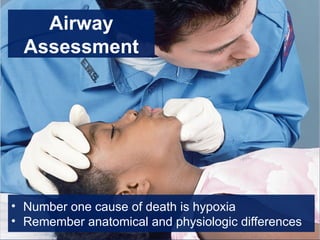
  • #114ย Teaching Time 45 minutes Points to Emphasize Trauma is the number one killer of children age one to 14 years. Fifty percent of trauma deaths occur within the first hour after the injury. Consider both the mechanism of injury and the anatomy of the pediatric patient in forming an index of suspicion for injury. Discussion Question What are the most common causes of injury in children?
  • #115ย Talking Points Blunt trauma is the most common injury in children. Quite frequently, a child will be severely injured but display no early, obvious signs. At the scene, try to reconstruct the incident and understand the mechanism of injury. When assessing mechanism of injury during the scene size-up, remember not only to look at the vehicle (or other object) that caused the trauma but to look at the size of the patient in relation to what they came into contact with. Common patterns of injury to expect in infants and children: โ€“ Unrestrained children in cars will probably suffer head and neck injuries because the childโ€™s head is proportionally larger than the adultโ€™s, and it is likely to come into contact with the interior of the car. โ€“ Restrained passengers will probably suffer abdominal and/or lumbar injuries from the stress applied by the seat belt during the accident. โ€“ If struck while riding a bike, head injuries, spine injuries, and abdominal injuries occur because these areas are the same height as the bumper. โ€“ If injured diving into water or falling from a height, suspect head and spine injuries. โ€“ Sports injuries typically involve injuries to the head and neck.
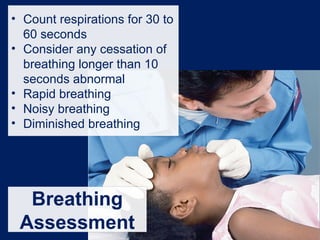
  • #116ย Discussion Questions What anatomical differences affect injury patterns in children? What are the priorities of assessment and management of the pediatric trauma patient? Points to Emphasize A facial or scalp laceration can cause enough blood loss to result in hypoperfusion. A childโ€™s anatomy does not provide as much protection for the abdominal organs.
  • #117ย Talking Points Head injuries are common because of the relatively larger size of the childโ€™s head compared to the body. The weight of the head will carry it forward in advance of the body. The head is often the first thing to strike an object. Chest injuries: Infants and children have ribs that are more pliable than adult ribs and while they are less likely to suffer rib fractures, they are more likely to sustain internal damage (lung injury, heart wall injury) because the ribs do not protect these structures very well from forces applied to the chest. Abdominal injuries: The abdominal muscles are not as developed and do not offer as much protection from blunt trauma. If your patient is deteriorating rapidly without external signs of injury, suspect hidden abdominal injuries. Extremity injuries: The presentation of injuries to the extremities is the same for infants, children, and adults, and assessment and treatment of them is essentially the same. Use appropriately sized immobilization equipment. Burns: Infants and children under the age of five suffer more severe consequences from burns than do older children and adults. They are more at risk for hypothermia, fluid loss, and other effects, partly because of their greater skin surface in relation to body mass.
  • #118ย Point to Emphasize Establish and maintain in-line manual stabilization of the spine, using a jaw-thrust to open the airway.
  • #119ย Talking Points Establish and maintain in-line spine stabilization and the airway, using a jaw-thrust maneuver. Suction as necessary. Constantly reassess for hemorrhage into the mouth. Provide oxygen at 15 lpm by nonrebreather mask if ventilations are adequate, or initiate positive pressure ventilation with supplemental oxygen if breathing is inadequate. Provide complete spine immobilization. Transport to a hospital. Pediatric emergencies often involve charged emotions. Remember that the safety of everyone is crucial during transport. Properly restrain all passengers, limit use of lights and sirens, and adhere to safe driving practices.
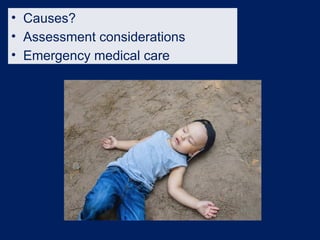

  • #120ย Talking Points If the car seat the child was in was also involved in the motor vehicle crash, do not use it to transport the child. Once a car seat has been involved in a crash, the structural integrity is in question. The child must be removed from the car seat and immobilized on a backboard. Point to Emphasize Do not transport a child in a car seat that has been involved in a crash. Teaching Tip Consider a demonstration by a certified child car seat technician.
  • #121ย Talking Points Establish cervical spine stabilization manually while your partner cuts the restraining straps and lifts the front guard of the car seat. Apply a cervical spine immobilization collar. Position the entire car seat in the center of the backboard to which the patient will ultimately be secured. Tilt the car seat backward until resting on the backboard. Take care not to let the patient slide out. The EMT at the head calls for a coordinated movement, following the long axis of the body, sliding the patient out head first onto the backboard, maintaining in-line stabilization, and supporting the head, neck, and trunk. Place a small, folded towel beneath the shoulders of the patient to prevent flexion of the head and neck. While you maintain manual in-line spine stabilization, have your partner place rolled-up towels on both sides of the patient to help pad spaces prior to securing the patient with straps. Secure the patient to the board using straps or wide tape. Position the securing straps across the chest, hips, and legs. Finish the immobilization by placing a cervical immobilization device, or other such device, on each side of the patientโ€™s head. Finally, secure the head to the backboard using tape across the forehead and cervical collar.
  • #123ย Talking Points If you follow some very simple rules of immobilization, you can modify adult equipment (such as a Kendrick Extrication Device [KED] or like product) to immobilize the child properly. When you must immobilize an infant or child to a stretcher, be aware that most straps attached to stretchers are designed to accommodate an adult. Knowledge Application Given a series of scenarios, students should be able to assess and manage pediatric trauma patients.
  • #124ย Point to Emphasize Injury prevention is a high priority for EMS. Class Activity Have students use or develop a child injury prevention program plan. Critical Thinking Discussion Why, despite the programs that have been implemented, does pediatric trauma continue at such an alarming rate? Discussion Question What is the role of EMS in pediatric trauma prevention?
  • #125ย Talking Points Because injury is the leading cause of death and disability in children and adolescents, an intentional process for identifying and preventing pediatric injuries is necessary. The term โ€œinjury" is not synonymous with "accident." Unlike an accident, a childhood injury is an understandable, predictable, and preventable occurrence. Pediatric injury prevention is one of the most important and challenging aspects of child health care. Young children inherently lack mature decision-making skills to protect themselves from injury while some older children and adolescents engage in risky behaviors. Statistics show that preventable childhood injuries account for 44 percent of all deaths in individuals ages one to 19 years. In 2002, unintentional injury resulted in the death of 20,000 children, adolescents, and young adults. Injury prevention must be of paramount concern to EMS providers. Common injury prevention strategies currently employed by EMS providers across the country include child safety seat education and inspections, fire safety programs, and community CPR training, among others.
  • #126ย Teaching Time 20 minutes Talking Points The estimated number of children who are abused and/or neglected in the United States is staggering. Estimates range between 500,000 and four million cases annually, with thousands dying. In fact, child abuse has been the only major cause of infant and child death to increase in the last 30 years.
  • #127ย Talking Points Physical abuse takes place when improper or excessive action is taken so as to injure or cause harm. Neglect is the provision of inadequate attention or respect to someone who has a claim to that attention. General indicators of abuse and/or neglect include: โ€“ Multiple abrasions, lacerations, incisions, bruises, or broken bones โ€“ Multiple injuries or bruises in various stages of healing โ€“ Injuries on both the front and back or on both sides of the childโ€™s body โ€“ Unusual wounds (such as cigarette burns) โ€“ A fearful child โ€“ Injuries to the genitals โ€“ Injuries, often lethal, to the brain or spinal cord that occur when the infant or child is violently shaken (known as โ€œshaken baby syndromeโ€) โ€“ Injuries that do not match the mechanism of injury described by the care givers โ€“ Untreated chronic illnesses (e.g., no medication for a child with asthma) โ€“ Malnourishment and unsafe living environment โ€“ Delay in reporting injuries โ€“ Implausible explanations (a six-month-old pulling boiling water onto himself)
  • #128ย Talking Point You should be familiar with several important guidelines when called to a possible child abuse situation. While the care steps on the next slide assume that a care giver is the abuser, remember that a child may also be abused by a relative, sibling, or neighbor. Points to Emphasize Abuse occurs when improper or excessive action is taken so as to injure or cause harm. Neglect is the provision of inadequate attention or respect to someone who has a claim to the attention. Typical accidental bruises are found on the lower arms, knees, shins, iliac crests, forehead, and under the chin. Remember that the scene is dynamic and can become dangerous. Donโ€™t ask the child what happened in front of the suspected abuser. Ask care givers what happened, but do not question them about abuse. Know your local protocols concerning reports of suspected abuse and neglect. Teaching Tip Bring examples of any forms that must be filled out if abuse or neglect is suspected.
  • #129ย Talking Points Gaining entry: If the call came from outside the family, the care givers may resist, and entry should be handled by the police. If you are asked to help the child, calm the care givers and indicate that you are there to help. Dealing with the child: Speak softly and call the child by his first name. Do not ask the child to tell what happened while he is still in the crisis environment, with the possible abuser still present. Examining the child: If you have reason to suspect abuse, perform a head-to-toe rapid trauma assessment, for evidence of and clues to internal injury. Dealing with the care givers: After administering emergency care, tell the care givers that the child should be taken to the hospital for further care. In a separate room from the child, ask the care givers to describe how the injury occurred. (This will permit the hospital staff, social service workers, or others later to compare the childโ€™s account with that of the care givers.) Transporting the child: Do not allow the child to be left alone with the suspected abuser, which may allow for further abuse or intimidation. Providing documentation: Know your stateโ€™s reporting laws for child abuse but also know that federally you are mandated to reported any suspected child abuse. Document everything; be objective, not subjective.
  • #130ย Teaching Time 15 minutes Critical Thinking Discussion What can be done to ensure sick and injured children receive the best care possible?
  • #131ย Point to Emphasize EMSC is designed to ensure that all children and adolescents have access to appropriate care in a health emergency. Teaching Tip Discuss any local or state EMSC funded projects. Discussion Question What is the purpose of EMS for Children?
  • #132ย Talking Points The federal Emergency Medical Services for Children (EMSC) program is designed to ensure that all children and adolescents, no matter where they live, attend school, or travel, have access to and receive appropriate care in a health emergency. The program is jointly administered by the Maternal and Child Health Bureau of the United States Department of Health and Human Services Health Resources and Services Administration and the National Highway Traffic Safety Administration of the United States Department of Transportation. Since its establishment in 1984, the EMSC Program has provided grant funding to all 50 states, the District of Columbia, and five United States territories.
  • #133ย Discussion Question What is the idea behind family-centered care? Point to Emphasize A major principle of family-centered care is the need for an understanding of normal growth and development.
  • #134ย Talking Points The concept of family-centered care was introduced in 1987 as a component of former United States Surgeon General C. Everett Koop's initiative for family-centered, community-based, coordinated care for children with special health care needs and their families. Family-centered care suggests that health care providers acknowledge and make use of the familyโ€™s knowledge of the family memberโ€™s condition and make use of the familyโ€™s abilities to communicate with the family member. Although the concept of family-centered care is not new, it is new to EMS as an initiative championed by Emergency Medical Services for Children (EMSC). A major principle of family-centered care is the need for a comprehensive understanding of normal growth and development, enabling the EMS provider to better anticipate the physiologic and emotional needs of the child who is affected by illness or injury.
  • #135ย Talking Points Taking care of a critically ill or injured child is one of the most challenging facets of an EMS career. The death of a child has a profound effect on each and every one of us. Almost half of the children in the United States who die from unintentional injuries are pronounced dead either at the scene or in the emergency department. Discussion Question What are some common reactions to caring for ill and injured children? Point to Emphasize EMTs commonly experience stress and anxiety related to caring for critically ill or injured children. Be prepared by practicing skills critical to reducing anxiety. Seek help if you need to talk to someone about the incident.
  • #136ย Talking Points EMTs who treat infants or children experience stress and anxiety from: โ€“ Lack of experience in treating children (from the relative infrequency of treating children) โ€“ Fear of failure โ€“ Identifying patients with their own children (โ€œThis could be my daughter . . .โ€) To help alleviate stress: โ€“ Understand that much of what you learned about adults does apply to children. Itโ€™s not what you do but how you do it that varies when your patient is an infant or child. โ€“ Learn skills and practice using equipment with children; the best defense against anxiety is preparation, practice, and more practice. โ€“ Focus on the task at hand while treating infants and children. In other words, temporarily separate how you feel from what you must do. โ€“ Most EMS systems have ready access to mental health services that can help defuse the stress that certain events can create. Use them. If not, find a trusted friend who will listen to you and allow you to talk about the EMS field.